Posts Tagged ‘Experimental’

Tavern Eightieth – TVEI24 – 29th April 2016

Christopher Nosnibor

Described as ‘a large compilation of diverse and exciting music from new and exciting artists,’ VA1+2 is, first and foremost, a fundraiser for Alzheimer’s Research UK. Arguably, that’s reason to purchase it in itself, but of course, in truth, any compilation sells on the basis of the music. The immense range of music on offer on VA1+2 is its real strength, and offering over two hours of music (that’s 22 tracks by 22 different artists packing out a brace of discs), it’s a veritable boon of contemporary electronic, ambient, experimental, electro-acoustic, improvisational and more.

From the semi-ambience of Midoro Hirano’s ‘Regrowth’ and the swampy Latina stylings of Manouchi Bento’s ‘Anpre dans tanbou lou’, there’s much to soak in on disc one. Band Ane’s bleepy, space-age ambient Krautock is particularly intriguing.

Disc two spans the dolorous yet delicate piano-led instrumental of International Debris’ ‘Translucent Orb’ to the eerily ominous ‘Kiki and Bouba’ by Isnaj Dui, via the ethereal transcendental post-punk folk hymnals of ‘This Thought Won’t Last’, the contribution from Zelienople and Glacis’ elegiac epic ‘As long as water flows’.

One of the common pitfalls of compilations, and in particular compilations to raise funds for charity, is that they’re often a bit of a hotch-potch mess, no better than the naff giveaway discs that come with magazines (or used to come with magazines: I don’t know as I stopped buying magazines some time ago, at the point when the quality of features and reviews vs cover price became unfavourably skewed toward the latter) plugging whatever was hot at that moment in the eyes of that publication, with a bunch of album tracks and B-sides taking up the majority of the space. VA 1+2 feels – and sounds – very different. Tavern Eightieth haven’t just taken anything that’s been floating around, and while I despise the overuse of the word in our post-postmodern hipsterised word, there’s a sense that they’ve actually curated a compilation which represents the label. There’s clearly a lot of thought and effort gone into this, from the selection of material itself to the mixing and sequencing of the tracks. And so, while it is a fundraiser, and for an extremely meritorious cause (I’ll spare the lecture here on the underfunding of research into Alzheimer’s given the number of people it affects).

Finally, mastered by Fraser McGowan with an ear on optimal clarity and dynamic range over volume, there’s a sense that every aspect of this release is about doing the music justice. And in turn, they do the charity and the listener justice. Everyone wins.

Tavern Eightieth VA1 2

Tavern Eightieth – VA1+2 at Bandcamp

1empreintes DIGITALes – IMED 16137 – 5th May 2016

Christopher Nosnibor

It looks like a box set. But it is, in fact, simply a CD in a box. A very elaborate box at that. It works a little like a matchbox, the interior of which folds out to reveal extensive liner notes in French and English, written by Parmerud himself, and which provide interesting and instructive insight into the four compositions. Created between 2005 and 2011, the extended pieces are united not so much thematically as compositionally, the sounds collected and collaged rather than being shaped into conventional musical frameworks.

‘Dreaming in Darkness’ is forged primarily from small sounds, spaced apart from one another. A chime, a chink or a clunk, and then silence before a scrape or a click or a bump. It’s fragmentary, the origins of the sounds unclear. Taking the question of what a person who cannot see dreams about, Parmerud explains that the piece is an attempt to create surrealistic fragments of a blind person’s dreams. As the piece progresses, the sounds become increasingly densely packed, and with longer durations and overlaid, building sinister abstract scenes: in fact, not so much scenes as shifting shadows and variations in light.

The bubble of conversation marks the opening moments of ‘Crystal Counterpoint’: a recording which sounds like a restaurant or party, the chinking of classes and general hubbub of people grows and stops abruptly with the chime of a glass. Inspired by the sounds of the parties Åke’s parents used to host, and which he would hear from upstairs, the piece uses the very same glasses to create a wealth of sounds, from long, low drones to higher hums, elongated undulations and quick, bright glissandos. Grand swells of sound rise and cease suddenly, replaced by strange, quiet drifts of sound: it’s very easy to forget exactly what you’re listening to. But if anything, awareness of the origin of the sounds only heightens the experience, as you’re likely to marvel and wonder just how glasses could sound like an oboe or high winds across mountain tops. In his notes, Parmerud notes that there already exist a large number of recordings which explore glass sounds, and it is, indeed, an interesting piece to place alongside Miguel Frasconi’s ‘Standing Breakage (for Stan Brakhage)’ (clang records, 2016).

‘ReVoiced’ moves away from musical abstraction and instead uses the voice as its instrument. A single voice is layered up on top of itself exponentially until a whole crowd of one voice is speaking. It’s actually quite a disconcerting experience. Voices are subject to all kinds of manipulation: sped up, slowed down, pitch adjusted, stretched, overlaid, echoed and delayed, in myriad permutations. Chants and dialogue and ululations, crowds and multiple languages meld together, and gradually, extraneous sounds – hard, heavy slabs of sound – crash in, while sharp-edged sounds slash for create a dull, percussive element to the slow-building torture of the familiar becoming twisted, distorted, abstracted and unfamiliar.

The final track, ‘Necropolis – City of the Dead’, is a musical tour through the catacombs of an imaginary city which contain the remains of some of the greatest music of all time. ‘But the condition of the musical bodies that rest in the crypts is unfortunately in various states of decomposition’. As such, in combining a well-worn joke (which is usually about Mozart when I’ve heard it) with a project to assimilate and deconstruct fragments of existing works, ‘Necropolis’ is a sort of a collage. Classical, jazz, film soundtracks, many renowned and bordering on recognisable, at least in essence, all fade in and out and collide against one another.

While the title track may pick over the bones of musical history, it equally breathes new life, and the same is very much true of the work as a whole: the parts are disparate, fragmentary, scattered in origin from around the globe and individually amount to not very much at all. But the sum is spectacular, an experience which is thought-provoking and which has the capacity to be quite unexpectedly affecting.

Ake Parmerud

Åke Parmerud  Online

Gizeh Records – GZH65DP – 18th March 2016

Christopher Nosnibor

Gizeh is a label which grasps the importance of the complete music experience, and never stint on their packaging. Anyone purchasing their product can feel a tangible sense of both art and artefact, and Anders Brørby’s brooding instrumental album Nihil, the second release in their ‘Dark Peaks’ series, is no exception, housed as it is in a textured gatefold sleeve, the radiating sunburst design raised from the surface, in heavy black ink on a matt black background. How much more black could it be? The answer is none. None more black (the white paper band printed with the artist’s name and album title which much be carefully slid from around the sleeve in order to access the contents notwithstanding).

The presentation provides a suitable indication as to the sonic experience it prefaces. Nihil meaning nothing: while it has, since the 19th Century come to connote a negativity, manifesting as antagonism or rejection through the widespread use of ‘nihilism’, as of and in itself, ‘nihil’, or ‘nothing’ implies an absence. Neither positive or negative, it is simply a lack. Absolute nothing is beyond the human ken, and so, in artistic terms, there is a need to portray nothing, absence, with something. This is something Norwegian composer sound artist Brørby achieves on the 10 pieces which comprise Nihil.

Primarily, the music is dark. There is a lack, an absence, of light, at least in terms of the overall sensation it conveys. Melding elements of drone and dark ambient with more abrasive sounds, the compositions infer an experimental bent which places atmosphere at the fore. The structures are almost subliminal, the shapes of the pieces largely evolve and emerge briefly through a succession of transitions as layers of sound overlap and drift across one another almost imperceptibly. Musical forms are therefore explicitly absent, expounding the concept of ‘nihil’. As such, Nihil is a work of subtlety, and a work which bears theoretical scrutiny, and sits alongside works by the likes of Christian Fennesz, Lawrence English and Tim Hecker.

But subtlety should not be read as a synonym for sedate or tranquil. ‘As Dead as the Stars We Watched at Night’ builds layers of dark noise and swelling drones scrape and torment the nerves, and while the gentle, chimes which ripple in cadence through ‘I Will Always Disappoint You’ offer a glimmer of light and warmth, ‘Put Your Ear to the Ground’ finds a harsh, thick distorted fuzz that obliterates the smooths contrails beneath and accentuates the unrest on which Nihil is constructed. Likewise, the serrated howl of ‘From the Window Above the Lake’ conveys the anguish of emptiness.

Through the medium of sound, Brørby creates a conceptual absence (not to be confused with an absence of concept). There is no message, and Brørby does not purport to convey anything through the work beyond ‘raw atmospheres’. ‘Raw’ implies unfiltered, unadulterated, without manipulation nor refinement, and while this may not be strictly true of Anders Brørby’s creative process, Nihil nevertheless presents itself as being self-contained, a work about absence of anything but the sounds it contains. It is not ‘about’ Anders Brørby, and if anything, the artist is, if not completely absent, then very much hiding in the shadows.

It’s an album that’s best appreciated in a semi-present state, to allow the sounds to slowly wash over the senses and most of all, to be heard without preconceptions or expectations. Because nothing can often leave you with so much more than something.

Anders Brorby - Nihil


https://bandcamp.com/EmbeddedPlayer/album=4022471447/size=large/bgcol=ffffff/linkcol=0687f5/tracklist=false/transparent=true/


Anders Brørby Bandcamp

keitkratzer productions (zkr0020) (CD) / Karlrecords (KR027) (Vinyl) – 26th February 2016

Christopher Nosnibor

Reinhold Friedl’s keeping it in-house with this one, with the Zeitkratzer collective which he helms performing a reworking of one of his own pieces. Kore is a development of his earlier Xanakis [a]live! (2007), which was an homage to French-Greek composer Iannis Xanakis. Originality may be dead, but artistic evolution is not, and here we see Friedel engage fully with the organic processes of influence and appropriation, and the idea that a work is never complete but continually subject to re-evaluation, reinterpretation, reconfiguration.

Pained screeching of tortured strings, form long, agonized screams and wails. On the lower register, cavernous rumblings and ominous echoes. It quakes and trembles and teeters and bucks, crashing and lashing, a sustained and calamitous wall of sound akin to how one may reasonably imagine a galactic storm. And it goes on for what feels like an eternity, light years of shuddering textural depth stretching out and fully enveloping the senses.

While the CD track-listing shows ‘Kore’ as being presented in just two parts, its mastering in fact replicates the vinyl edition’s four sides, with each piece between 11 and 16 minutes in length. As a single entity, it crashes and grates, squalls and shrieks, grunts and groans. And it never lets up, a sustained crescendo of sonic and psychic disturbance, a tempest of clashing noise, a raging storm.

The segmented arrangement works well: for while ‘Kore’ is clearly a single body of work, there are distinguishable differences between the four tracks. The second is comparatively quieter and less intense than the first, but the tones still forge sharp shards which slice into the cerebellum. Trilling and tweeting shrilly in the upper reaches of the spectrum, dark scrapes create perilous undercurrents which build in density.

Vast crashes of sound, immense gongs of violence slice the atmosphere in the third, more percussively-orientated part. It shudders and heaves, before finally screaming onwards through the tumultuous final 11 minutes. A blasting wall of noise which assails the listener with all sounds all at once, it’s an immense sound and an immense sensation that sounds like no orchestral work you’re likely to have heard before, and, quite conceivably, nothing else you may have experienced, period.

Zeitkratzer - Kore

zeitkratzer Online

Britney – Britn3y

Posted: 16 February 2016 in Albums
Tags: , , , , , , ,

Superstar Destroyer – 11th March 2016

James Wells

Not so much a drone as a collective groaning sigh prefaces the thunderous barrage of brutal rage that splits the speaker cones with pummelling drums and bursts of screaming vocal anguish and stop/start guitar judders. ‘Fully Ben’ assails the lugholes like Truman’s Water having been tortured, brutally murdered, butchered and cast forth to crawl around in purgatory. Fuck me. Three minutes in and I’m dizzy, punch-drunk, giddy and utterly bewildered – in the kind of way I like. And that pretty much sets the tone for this most manic, frenzied albums.

Where do you even begin with this white-hot torrent of noise? The tempos, man! The jolting, jarring, spasmodic guitars! What is this? It’s not metal, that’s for sure. Noisy math-rock? Math-rock is about intricacy, and this is intricate in terms of structure and changing tempos and time-signatures, but at the same time, it’s violent, frenetic. The vocals aren’t your regular shouty, screamy effort, either– this is the sound of pure mania, derangement to the power of 10. Not so much psychedelic as psychotic, the songs – the majority of which clock in at under two minutes – melt into one another, a crazed blur of spasmodic noise.

It’s intense, but not conventionally heavy: the guitars are warped, elastic, and don’t rely on hefty distortion. ‘Neon Python’ sounds like a collision of early Pulled Apart by Horses and second-album These Monsters – only with more drugs. Seriously, what are these guys on?

There are occasional breaks – ‘Sleep Now Dogman’ provides two minutes of respite in the form of some woozy percussion-free experimentalism while someone chunders their guts up, presumably a physical reaction to the exertion of the preceding track – but ultimately, this is beyond full-on, Especially after the, er, ‘interlude’.

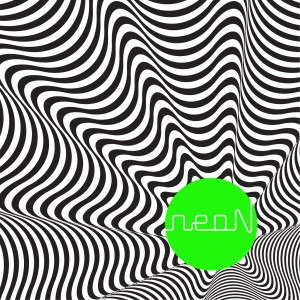
‘Boss Moggy’ goes electro-math-screamo – or something and ‘Gum’ ups the tempo and the racket even further, achieving the effect of a sonic blizzard. You don’t know where you are or what you’re listening to, it’s a total whiteout. Britn3y isn’t an album – it’s a convulsive, abrasive explosion of noise, the aural equivalent of someone’s brains bursting from their skull while they twitch uncontrollably having been connected to an open mains electrical circuit. In short, it sounds exactly the way the cover looks.

If you’re in any doubt, I mean it’s good. Mental, but really, really good.

Britn3y

Britn3y by Britney Online

clang records – clang032

Christopher Nosnibor

Stan Brakhage was an experimental filmmaker who sometimes closely shot glass objects. A huge influence on Frasconi, who sometimes makes music with glass instruments. The album title is a play on words, in reference not only to his artistic forebear but also the cracked quartz crystal bowl which was used to make this 20-minute musical work.

Having previously given the instrument a rather too vigorous workout during a rehearsal, Frasconi decided to explore its absolute limits. As Frasconi himself observes, ‘Glass is fragile. Glass is easily broken. Most glass instruments ignore these fact and instead focus on the material’s delicate beauty’.

Standing Breakage captures the artist’s efforts to complete the job he unintentionally began when the instrument – pictured on the front cover – became fractured. Ironically, despite labouring at the fracture in order to bring about the bowl’s ultimate destruction, he failed to achieve the desired moment of breakage. As such, for all its fragility, the glass held firm against a sustained assault.

An awareness of the circumstances of the album’s creation is, in this instance, integral to its appreciation, first and foremost, because if you didn’t know it was made using only the sounds created with a glass bowl, you would never guess that it was made using only the sounds created with a glass bowl. Because it doesn’t sound like it was made using only the sounds created with a glass bowl. In fact, it doesn’t sound like anything organic, or even of this world.

Standing Breakage finds Frasconi create an intriguing blend of chimes, rings, swirls and twangs, scrapes and chatters. Heavy, bulbous bass tones resonate, twisting and spinning upwards. Percussive thumps and sounds like scraping violin strings all emerge from the single instrument under the musician’s interrogation. Clanging, gong-like sounds crash. Eerie sounds that defy any obvious description, and sound alien and other-worldly in their origin drift. Booming synth-like notes balloon outwards, expanding in the air.

Tension mounts and builds. You sit, teeth on edge, fists clenched. You’ve no idea what will come next. You will twist and squirm. You’ll conjure myriad images in response to the strange sounds. But never once will you think ‘this sounds like someone pissing about with a glass bowl with a crack in it.’

Miguel Frasconi

Miguel Frasconi’s Website

Gizeh Records – 12th February 2016

Christopher Nosnibor

Æmaeth is the project of Owen Pegg (A-Sun Amissa / Hundred Year Old Man), and he’s already scored a number of films. Independent flick The Roman is a silent work which to which ten segments of improvisational drone-based passages played on guitar and piano were composed by way of an accompaniment.

Since the film premiered in May 2014, its soundtrack has been evolving, developing, accruing layers and details, until finally, the ten pieces came together to form a fluid, brooding sequence that stands as a whole, and as a powerful sonic journey. It’s fitting for a film which is no gung-ho Hollywood take on history based on a succession of cast off-thousand battle scenes. Simon Rawson’s movie, shot in Yorkshire, is outlined as a story of two men, lost, who are ‘challenged and tested by nature, each other and the inner most conflicting primordial affiliations with man’s body and mind’.

Pegg’s soundtrack conveys so much, its dark, tense tones resonate as they connote psychological drama. The battles fought within the mind, the conflict and the uncertainty. The barren, unforgiving landscapes, shadowy woodlands and bleak moors. These are the scenes portrayed within the compositions, which are spacious, often sparse. Delicate piano notes drift airily but ponderously, gradually eclipsed by deep, dark, thunderous rolling drones, stormy and threatening. At times, the sheer weight and density of the ominous tones are oppressive, the sounds so large as to create a sensation of a pressure being applied to the skull.

That isn’t to say the soundtrack lacks subtlety: far from it. There are passages of quiet, so hushed as to compel the listener to strain their ears listening for some faint sound – and invariably, there is something, something small, soft, indistinct. Or there are layers of sound, often in the upper frequencies, needling the senses, tugging at the peripheries of the psyche, somewhere in the background or half-hidden, off to one side. These, like the brief moments of light which occasionally present themselves, are integral to the soundtrack’s dynamics, and the power of its effect.

There is torment, there is discomfort. There is also an ever-present sense of danger, sometimes distant, sometimes heart-stoppingly close.

The final passage, the nine-minute ‘Neptune’ is vast, built on a slowly turning vortex of sound. A rumbling rhythm lingers as it pulses just beneath the surface of its soft tonality and offers a hint of redemptive relief at the conclusion of a journey which is most worthy of the term ‘epic’.

Æmaeth - Roman


Æmaeth – The Roman at Gizeh