Posts Tagged ‘Experimental’

Gizeh Records – 23rd November 2018

Christopher Nosnibor

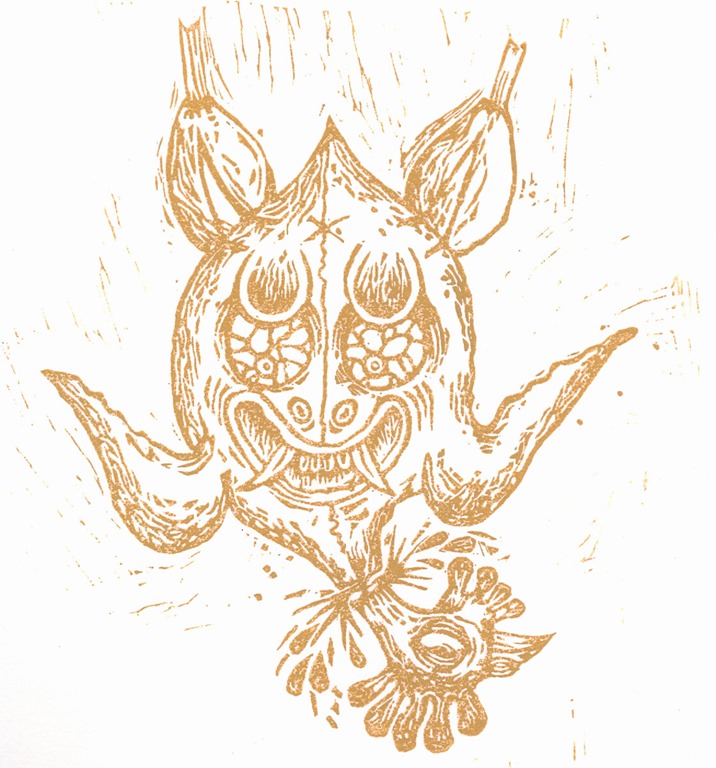
In their biography, FOUDRE! are described as ‘a telluric drone quartet composed of Frédéric D. Oberland (Oiseaux-Tempête, Le Réveil des Tropiques, The Rustle Of The Stars, FareWell Poetry), Romain Barbot (Saåad), Grégory Buffier (Saåad, Autrenoir) and Paul Régimbeau (Mondkopf, Autrenoir, Extreme Precautions) who meet punctually for sessions of ritual improvisation where they invoke noise and drone and the deities of chaos.’

I’m not sure I’m entirely convinced by the punctual meetings given my years of experience dealing with musicians, but no matter: KAMI , the collective’s fourth album, was improvised and recorded live at Le Rex de Toulouse while supporting French doom metal band Monarch! at their tenth anniversary show.

The five compositions which comprise the forty-five minute set are expansive, as much is sonic breadth and depth as duration, and as such, extend in all directions as the players audibly feed off one another intuitively to create immense aural vistas which are every bit as enigmatic as the titles, all of which reference Shinto gods.

Opening with a twelve-minute epic that evolves from dark, low rumblings and sparse down-tuned scraping string-like drones, tremulous, haunting, and hesitant, to a simmering ripple of waves that forge a subtle but sustained crescendo, ‘Raijin’ very much evokes images and sensations worthy of a god of lightning, thunder, and storms. ‘Raijin’ indeed.

Disembodied voices rise wordlessly, ghostly and demonic, against a heartbeat-pulsing beat. It’s all about the atmosphere, and it’s all about the slow burn. And because the shifts are so gradual, so slight, the listener’s attention becomes focused on the detail, attenuated to the tonality and texture of the individual sounds.

‘Ame-no-Uzume’ inches toward a pulsating hybrid of ambience and chillwave, with the eerie motifs of ‘Tubular Bells’ twisting into a funnel of extraneous noise against a stammering beat, and the pieces all segue seamlessly into one another, with an elongated organ drone rising up on ‘Fujin’ (the Japanese god of the wind) before the final piece, ‘Hachiman’, opens with a heavy, head-crushing crescendo of discord. All hell breaks lose amidst feedback and screeds of extraneous noise as the volume intensifies and things get ugly. Unintelligible screams and barks, distorted and inhuman, tear the air across a clattering industrial beat and blistering electronics forging a whorl of sound in a brutal blast reminiscent of Prurient.

If ever the opening and conclusion of a set emerged leagues apart, KAMI carves a most extreme trajectory, taking the full duration of the set to build from a whisper to a terrifying scream. And it’s this arc that makes KAMI so accomplished and so exciting.

More often than not, live recordings leave the impression that something is missing, and that being distant from the actual event is to subtract from the experience. KAMI is different, in that the hi-fidelity recording means it doesn’t sound like a live album, and sitting back while the sound in all its detail emanates from the speakers affords the opportunity to take in those details, the layers, the textures, and to reflect in a way that the in-the-moment experience simply cannot allow. This highlights the differences of the way we as an audience receive and experience different media and modes of delivery; the in-the-moment intensity may offer catharsis, instant gratification, and a sense of immediate impact, but when there is this much to absorb, the distance and benefit of time to reflect and repeat is invaluable. And KAMI is a work to digest at leisure.

AA
FOUDRE! – KAMI 神

28th September 2018

Christopher Nosnibor

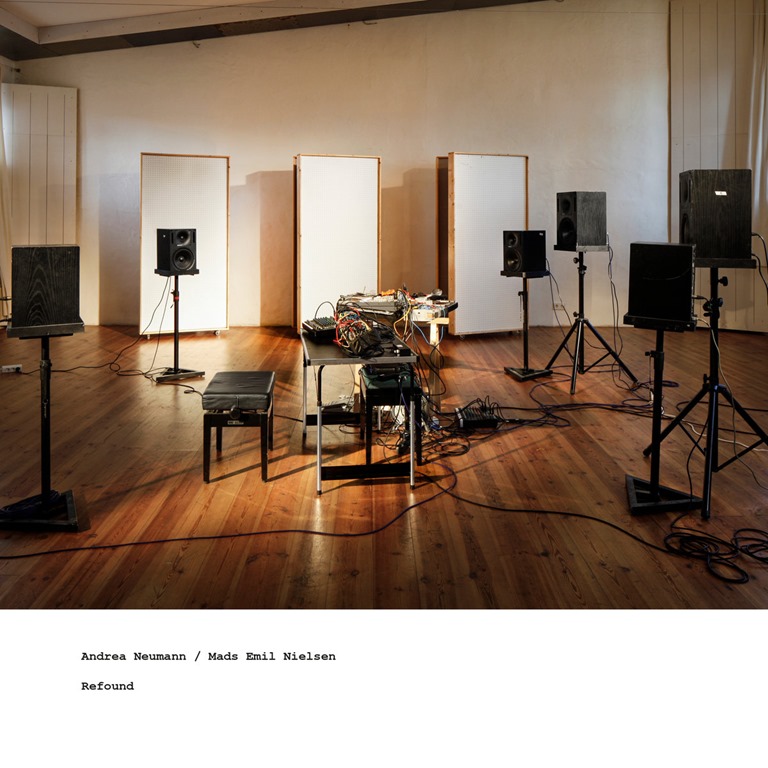
Disjointed. Fragmentary. Fractured. Sketchy. Incomplete. The ten pieces (untitled other than by numbers 1-10) on Refound are vague in structure, minimal in form, non-linear in trajectory, and often unclear in purpose. Hardly surprising, given that they emerged from improvisational sessions made with electronics and ‘inside piano’. I’m not sure if this is becoming increasingly popular as an instrument of choice in avant-garde circles, or I’m simply evermore aware of its use in the making of experimental music since I received a copy of Reinhold Freidl’s immense Inside Piano double CD four years ago.

But what are they doing to the piano to achieve these sounds? Precisely what ‘inside piano’ actually is remains is shade unclear. The liner notes to Friedl’s debut solo which effectively set the mark for and so defined the technique, is spectacularly oblique and vague in its definition of ‘inside piano’: The good old grand piano plays aggressive noise attacks, choir-like symphonic movements, strange complex sound fibrillations, sometimes lighting up single prepared piano notes, juxtaposed with the tremendous bass of the nearly three-meter long strings…

For Refound, Neumann and Neilsen’s improvised experimentations were remixed and realigned by the two contributing artists themselves to create something… well something. I was tempted to say that conveyed their joint vision, although what that vision is, assuming there was a vision beyond seeing what their playing together produced, is unclear.

Refound manifests as a succession of tweets, hisses, rumbles… skittering, bird-like treble and yawning mid-tone feedback. There’s no discernible trajectory, the pieces break off and stand separately from one another as a series of sketches rather than as a coherent, cohesive album.


AA


Andrea Neumann Mads Emil Nielsen – Refound

Karl Records – 21st September 2018

James Wells

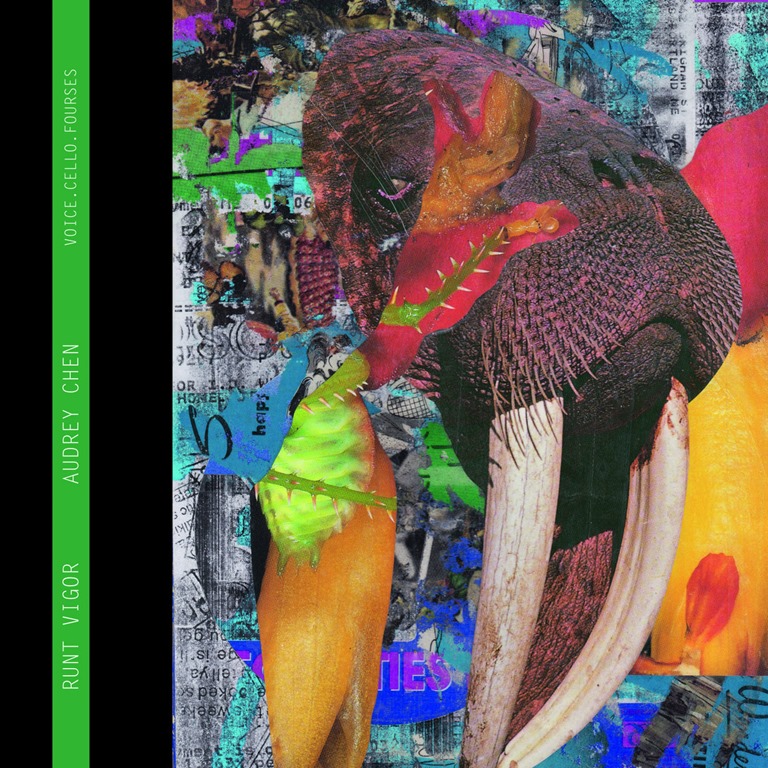
There’s nothing like an intriguing title, or one which ignites the imagination to generate interest in an album – or maybe it’s just me. And so the curious selection of the pairing of ‘runt’ with ‘vigor’ piqued my interest: the idea and image of a runt, smaller and weaker than nature intended, flailing feebly but energetically… Paired with the collage cover art, it all points toward something far-out – and I’m not mistaken or misled.

Now, I’m more accustomed and adjusted to music from the furthest, most extreme fringes, avant-gardism that redefines bizarre, inexplicable, outré. Chen is so outré that she’s bypassed me for all of 30 years, which includes a prodigious solo career punctuated by myriad collaborations that accounts for the last 15.

While much of her output is centred around cello, voice, and analogue electronics, vocal explorations have been at the heart of her most recent works including this four-track offering, which contains forty minutes of gulps, clicks, gargles and hums all emanating from the mouth and throat. Ululations and stuttering glottal stops create the very fabric of the compositions and occupy the foreground, along with asthmatic, gasping breaths, atonal, meandering whistles, and strangulation sounds.

While it’s more overtly ‘musical’ than Mike Patton’s Adult Themes for Voice which stands by way of a relatively obvious comparison, it’s not less disturbing or strange, and it’s impossible to distinguish the origins of all of the sounds here; the whispering hums, drones and wavering gusts of wind are, I would assume, as likely to originate from the artist’s body as from an instrument. It’s the way in which everything is rendered obscure, the voice twisted, pushed, pulled, distorted and disfigured beyond all recognition from the conventional utterances of speech, song, or even flatulence, which is so awestriking.

You may hear albums which share the same sonic territory, but I’d wager none will have been created in the same way.

AA

Audrey Chan

Bearsuit Records – 20th October 2018

Christopher Nosnibor

The word ‘poets’ would seem to imply plural, but according to the accompanying text, The Moth Poets is the work of Edinburgh based musician, Billy Gilbert, who’s played in a few local indie bands and released a split LP with Japanese artist / musician Swamp Sounds, whose presence has graced this site on a previous Bearsuit release, as well as featuring in another Bearsuit-released act, Anata Wa Sukkari Tsukarete Shimai (AWSTS). Yes, once again, Bearsuit is the conduit for all of this uber-fringe creative activity from around the world, but mostly bringing Scotland and Japan together.

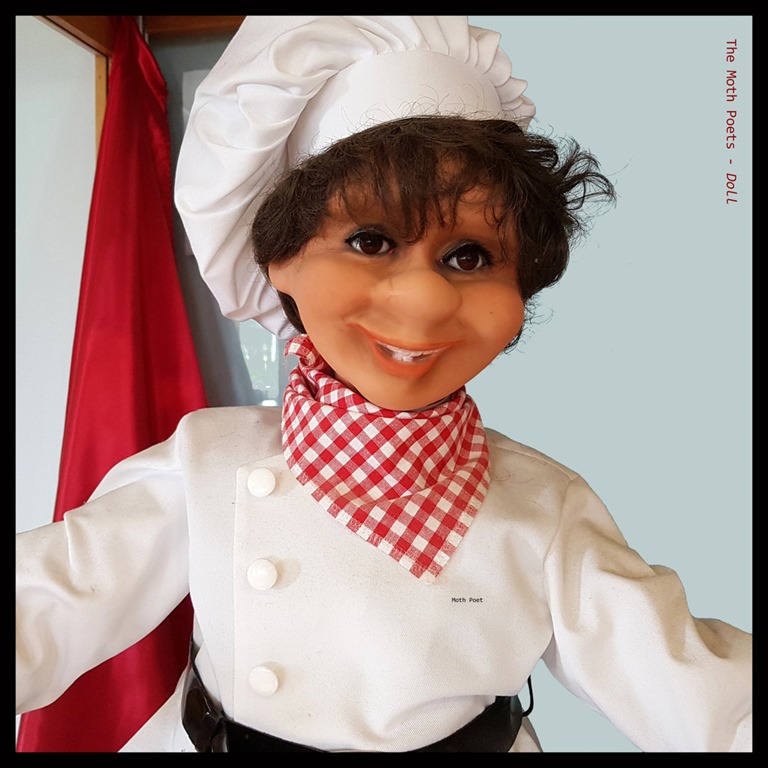
Doll is a magnificently idiosyncratic work which assimilates a broad range of styles and influences, and as a consequence, belongs nowhere specific or readily positionable. The eight compositions, in their titles and in their sound, convey a certain sci-fi undercurrent, infused with a twist of surrealism and plain abstraction.

‘A Hole in the Mothship’ starts the album with some spaced-out, opiate prog, a mellow, reverby instrumental which plods ponderously before trickling into the title track, where the drum machine kicks into overdrive and the soporific guitar mutates into a wildly meandering fizz of fuzz that sounds like J Mascis on a cocktail of acid and amphetamine. And this provides the backdrop for a vocal that sits somewhere between shoegaze and slacker, pitched low in the mix so as to render the lyrics indistinct. It doesn’t detract, and if anything, adds to the blurred, lo-fi layering that imbues the song with a hazy, dreamy quality.

As the title suggests, ‘Mothship Song’ is something of a companion to the opener, laying some echo-heavy guitar picking over a muffled heartbeat drum track and low, buzzing synth bass before going a different kind of strange, sort of like the into to ‘Frenz’ by The Fall, but with an oriental vibe and some synth stylings stolen from Stereolab.

‘Orange Peel Teeth’ goes grainy ambient with slanted analogue synth scrapes slipping through the rumbling atmospherics at skewed angles, and it’s this juxtaposition of tones and textures which provides Dolls with a much-needed sense of cohesion. Whether it’s prog, pop, or ambient – all performed with an experimental edge and an overt rejection of convention – Gilbert renders the pieces with an attention to less-obvious details that’s nothing if not distinctive.

All of the album’s disparate elements coalesce on the noodly, whacky weirdo wig-out of ‘Someone Put a Time Bomb in My Submarine’, the vintage drum machine sound – thudding bass, whip-crack treble top end snare – bounce it along nicely and keep things pinned to a groove that’s consistent and insistent. And because of this, however far-out The Moth Poets go, here’s always something to cling to. This is perhaps the key to keeping Doll on the right side of the line of (in)accessibility, and the reason it’s ultimately a success.

AA

The Moth Poets – Doll

Mamka Records – MAM01 – 1st November 2018

Christopher Nosnibor

‘Language becomes sound, and sound becomes language. Out of the fragmentary, the density is weaved. From the depths of the fragile, the whole is born. Time structures are questioned and assembled through loops. Field recording from Mexico meet Osojnik’s singing. Spoken language turn into melodies, whole noise turns into bittersweet rancheras.’ The words from the text – more of a short essay – which accompanies this release resonate: as a long-time student and practitioner of cut-up methodologies, I’m a firm believer in the unusual power of the fragmentary, the capacity for those broken, ruptured pieces of discontinuity to unlock experiences and emotions direct approaches to narrative and the channelling of experience cannot. similarly, I’ve long maintained that the language of sound has the capacity to transcend the language of words, to touch deep and difficult parts of the soul and the psyche irrespective of the tongue or tongues in the listener’s ken.

And so it is that the first release on Mamka records, the label established by Maja Osojnik – whose work I’ve not only covered previously but greatly admire – is something really quite special. My download arrives – personally addressed, handwritten, stamped, embellished – all the way from Vienna, in an envelope 7” square and therefore resembling a 7” single, accompanied by a six-sided press release packed with words far more engaging than the usual hyperbole. There’s also a numbered cut-vinyl print, 7” square included in the package, and it all adds up to a multisensory experience – sonic, tactile, visual – which above all conveys a real sense of commitment, a passion, to making something tangible, something that’s not ephemeral or disposable, but something that matters. The medium is the message, and Maja has found a way – labour-intensive as it is – which goes beyond the medium of the audio release to create… art. The same approach applies to the ‘commercial’ release, a 7” available in a super-small run of 150 copes, only 120 of which are available for public consumption. But better target a small, passionate niche than a large indifferent mainstream if art is your pursuit.

Finding a way to render digital media tactile, visual, and above all, personal, in giving the digital listener a large portion of the vinyl experience, Maja is quite possibly breaking new ground, or at least standing at the forefront of something new. For me, it’s less about nostalgia and more about recovering some of what’s been lost with the demise of physical media.

Said release finds Maja performing with Rdeča Raketa (together with Matija Schellander, she’s integral to the duo who go by the name of Rdeča Raketa) and author Natascha Gangl to deliver a brace of tracks – very much a replication of the classic 7” A and B sides.

‘Chicken’ opens with a frenzy of analogue synth noise. It simmers to a grating buzz and pulsating electro beat before Maja barrels in with a deep-throated monotone with a barrage of lyrics about a chicken in her heart which bleeds and bleeds, and while clucking electronic bleeps twitter and bleep here, there, and everywhere. It’s weird, it’s noisy, it bumps and thrums, but still has an off-kilter pop sensibility partially submerged in the layers of noise and oddness.

‘Die Toten’ (that’s ‘the dead’ in translation) is rather less accessible, but no less intriguing, engaging, or odd, and in fact, introduces a new level of strangeness to proceedings. It’s low, slow, lugubrious.

Simultaneously weird and wonderful, ‘Chicken’ is everything you want – and need – by way of an introduction to partially-accessible, highly idiosyncratic, and extremely engaging weird shit.

AA

Natasha Gangl & Rdeča Raketa – Chicken

The CAVE rave has really livened up since we announced their new album Allways, their first since the time-fractaling opus, Threace. Following their five-year hiatus, the quintet of Cooper Crain, Rex McMurry, Rob Frye, Dan Browning, and Jeremy Freeze hasn’t missed a beat – in fact, CAVE have fearlessly dug down into their repetitive groove and emerged with a funk-flavoured colour that expands the palette well beyond what you may have come to crave from CAVE previously. No better example from Allways exists than their new single ‘Beaux’, an illustration of just how purely the moods can come together in a single day of a CAVE recording session.

Listen to ‘Beau’ here:

LP/DL Rekem Records REKEM12/Fragment Factory FRAG45

Christopher Nosnibor

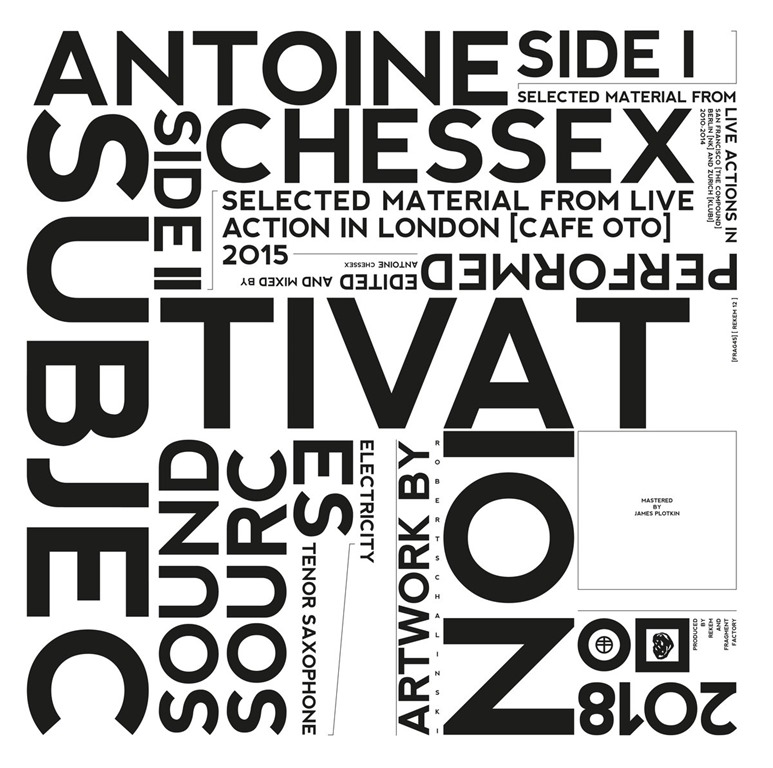
The music this album contains causes as much of a sense of overload as the cover art, with its perpendicular textual tessellations. Chessex has long pushed the tenor sax beyond the realms of conventional jazz or even overt compositional forms, and Subjectivation, a collection of live actions (a term also used by the notorious noisemakers Whitehouse). Side 1 takes pieces recorded in San Francisco, Berlin, and Zurich between 2010 and 2014, while Side 2 documents a performance at London’s Café Oto in 2015.

It’s all about the low frequencies at the front-end: the album begins with earth-moving, bowel churning bass tones that grind and snarl maliciously, and this, coupled with the conveyance of extreme volume places this in Sunn O))) territory, the atmosphere of creeping doom delivered at a pace and volume that punish slowly. And gradually – although not nearly so gradually – things intensify as additional layers of volume and frequency are added. The accompanying text describes it as a ‘field of distortion’, but it doesn’t come close. It seems unfeasible that such a raging sonic force could be sustained for any time, let alone increase, but increase it does, until there is nothing but a dense wall of obliterative noise. It’s impossible to discern there being any saxophone – or indeed any music instrument – in this vast, screaming whorl. I’m staring at the speakers in awe, wondering just how much sound they can actually carry, and moreover, how much sound could be created in pure physical terms. Seven minutes into the fourteen-minute sonic barrage – something akin to standing next to an RAF Vulcan preparing for take-off without earplugs or protective clothing, I’m wondering if my skull might not implode and my brain before the end. It’s a perverse pleasure the pain of this sonic assault provides.

The London side is less full-on, although it would surely be difficult to be more full-on. Nevertheless, it matches Side 1 in terms of intensity. It builds quickly from an irritated hornet buzz into an infinite echo, a thousand horns, honking in unison to create a rippling reverberation of sound. Some time around themed-point, the sustained crescendo fades, leaving eardrum-fluttering feedback notes, shrilly quivering on and on, before the air is rent with shards of scraping industrial noise, the grinding of metal on metal on a fast, rotational plane. It’s as if with each shift, Chessex introduces a pitch and tone more unbearable than the one before. The tiny sound that hangs where there should be silence mimics tinnitus, creating one final torture in the album’s closing seconds. There’s something cruel – and unquestionably uncompromising – about the way Chessex executes his sonic blitzkriegs, and for that, I admire him enormously.

AA

Chessex

Forking Paths PF0013 – 13th July 2018

Christopher Nosnibor

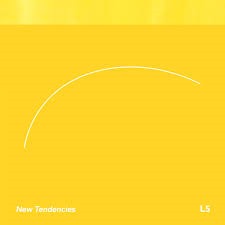
With a title referencing William Gibson’s Neuromancer, L5 finds maker of experimental minimal electronica New Tendencies explore an array of textures and tones with a real focus on the space around the sound. Sonar bleeps warp into whistles of feedback, consumed by underwater monsters and sonic detonations that linger like a heavy cloud of smoke, dust and rubble.

The shifts aren’t always delicate, the tones rarely gentle: the listener is dragged and hurled from high to low, abrasive, serrated edges sharpening the intensity of upper frequencies juxtaposed with rumbling, muffled lower ranges which pull at the pit of the stomach. The album’s ten compositions – which, given the way New Tendencies pull, drag, stretch, twist, and manipulate, are perhaps as well described as decompositions – are affecting by virtue of the physicality of the sound, and this in turn provokes a cerebral response.

Ordinarily, I find abstraction gives rise to an analytical rather than emotive response, but L5 is a different beast. The beats and rhythms – however diversely they manifest (and they range from distorted, crunching poundings to EQ-tweaked whiplash cracks via blasts of static) – create a sense of structure, however vague, a frame on which to hang the infinite varieties of noise, and thus draw the pieces back from absolute abstraction. And with the combination of structure and sonic impact comes a different type of response. Instead of seeking to analyse the technique, L5 invites the listener to feel the effects. And the effect becomes emotional on a certain level: the rippling waves and vibrations test the tension levels, pushing the up and pulling them down. Tense, intense, and at the very least, interesting.

AA

New Tendencies – L5

Constellations – 24th August 2018

Christopher Nosnibor

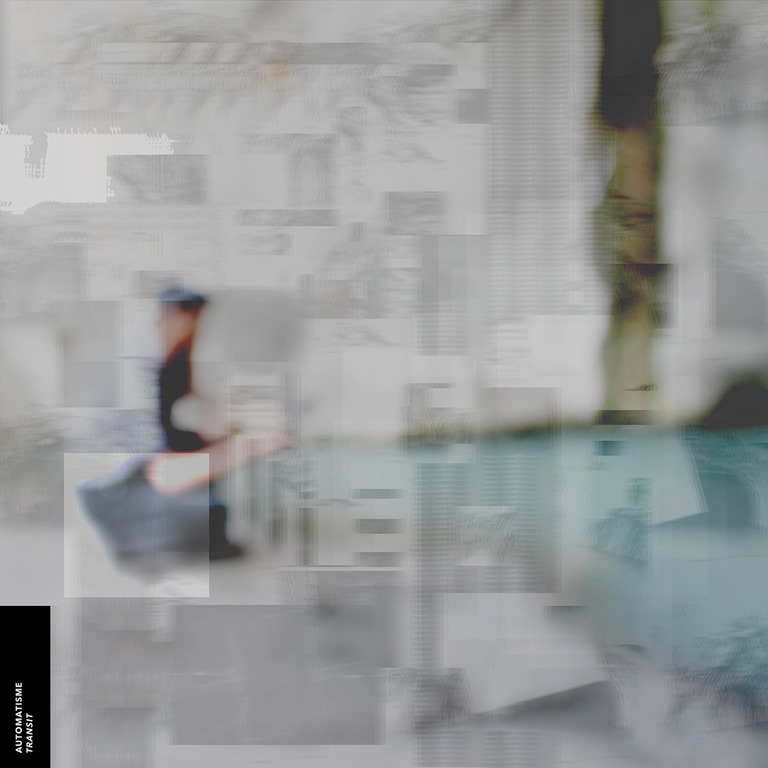
Automatisme is the moniker of reclusive glitch artist and electronic music producer William Jourdain. Transit is the follow-up to 2016 debut Momentform Accumulations, and has been formulated using modular synth racks and a vast library of field recordings.

As the title suggests, Transit is an album of movement. In transit are not only the creators, but the listener, who finds themselves being taken – often at pace – to unexpected destinations. But there is no stopping – each port of call is no more than a glance and a wave out of the window, perhaps a quick photo, before you’re on the move again.

The first suite – ‘Bureau’, a work in four movements, combines ambience and rhythm to often disorientating effect, and explores brooding expanses of sound and juxtaposes them with often jolting beats. ‘Bureau 0’ rapidly shifts from softly swirling cloudlike ambience to snarling, grating overloading noise – and back again. Blast of distorted beats and speaker-crackling overdrive create some disturbing kind of Dalek disco. ‘Bureau 1’ casts shades of gloopy glitchtronica which crackles and hisses, before bleeding into the more overtly groove-orientated ‘Bureau 2’. Groove is all relative, of course, and there are natural non-beat-orientated rhythms, too: shuddering oscillations swell like thunder on ‘Bureau 3’.

‘Registrariat’ stands alone between the ‘Bureau’ and ‘Bateau’ suites, and forges a more overtly dance beat. Only, the tempos shift erratically and sampled voices echo in the swirling sonic mists, and it gets too fast and before long, you feel your heart race increasing and instead of wanting to get down, you’re on the edge of panic.

The two-part ‘Bateau’ builds tonal intensity and volume, culminating in a dense eddying swell of noise that fills the cranium and creates an all-encompassing throb.

And it’s only at the final destination – a roar that abruptly leaves silence – that the album’s overall route becomes clear, a deleterious course from A to B via Z, Q and an unexpected assortment of curious places. You cast your eyes back over the map but it by no means conveys the experience of the territory. And after a pause, a moment of quiet reflection, you can’t quite recall the sequence of events that brought you here. You turn, and start to retrace your steps…

AA

cover_1528731707797039

Nonclassical – cnclss024

Christopher Nosnibor

Langham Research Centre originated through late-night experimental gatherings at the BBC studios, and have evolved to produce long-form radiophonic works, of which 2014’s Muffled Ciphers was inspiredby JG Ballard’s seminal novel -which challenged the very notion of the form – The Atrocity Exhibition. Created with an accumulation of rare and obsolete instruments and devices, and inspired by early electronic composers spanning John Cage, Alvin Lucier, and Delia Derbyshire, Tape Works Vol. 1 is pitched as ‘a collection of modern musique concrète.’

The first thing I noticed was that my copy is number 11 of an edition of 30 promos. This knowledge spurs me to get my finger out and provide some coverage. The second thing I notice, on scanning the track listing, before reading the biography containing the above, is that it features tracks with the titles ‘The Voices of Time’ and ‘The Terminal Beach’ – the former of which is a collection of short stories by Ballard, and the latter of which is the title of one of the stories in that collection, which first appeared in 1963 under the title The Four-Dimensional Nightmare.

On Tape Works Vol. 1, the Langham Research Centre (and doesn’t that sound so Ballardian in itself… I’ve spent hours scanning my collection to see if there’s a character named Langham in Ballard’s oeuvre and have drawn blanks before ultimately deciding it’s better to actually get the work done than disappear down another rabbit-hole of research) explore all the dimensions. And while at times it confirms to the template of so much experimental analogue work, at times it ventures in the truly weird.

‘LOL, Pt 1’ mixes monkey chatters and R2D2 bleeps with eerie abstractions, bibbling bloops, fractured vocal snippets and small samples of laughter enter the mix alongside the kitchen sink to from an uncomfortable, disorientating sound collage.

There’s a lot of stopping and starting, whistling and droning, woe and flutter and infinite disruption. This is the sound of dislocation, a soundtrack designed to induce maximum disorientation.

Bleeps and squiggles, trilling squeals rising to a high-pitched hum collide with woozy, groaning bass frequencies. Notes bend as if on a stretched tape, and tape whips back and forth through heads. There are moments which recall the head-spinning cut-up and drop-in tape experiments conducted by William Burroughs, Brion Gysin, and Iain Sommerville in the late 50s and early 60s.

Birdsong. New snippets. A plane roars overhead. A conglomeration of voices. Static. Interference. A howling wind. Sparse, arrhythmic beats clatter and clang. Yes, this is life: fractured discordant, difficult. Simultaneous. Overwhelming. This is essentially how I feel about it. I cannot compute. I feel dislocated, alienated. I feel tense. Nothing new there. But Just as reading Ballard makes me feel uncomfortable in my own skin, so Langham Research Centre’s fucked-up sampling of old adverts and blending them with minimalist dark ambient twists me into a state of discomfort.

At time gentle, at others abrasive and bordering on the attacking treble whistles and white/pink noise crackle of early Whitehouse and Merzbow, Tape Works Vol. 1 is at no point accessible, easy, cuddly. But it does push the senses and question linearity and accessibility and even the boundaries of musicality. And as such, it fulfils its objective.

AA

Langham