Posts Tagged ‘Expansive’

Scandinavian post-rock giants SPURV have announced the release of new track ‘Som skyer’ via Germany’s Pelagic Records. The penultimate single from Brefjære, the band’s fourth full-length release due September 22nd; ‘Som skyer’ sees the band layer orchestral grandeur over a shimmering, glacial guitar refrain as thunderous drums push the five and half minute piece to ever greater heights.

Having recently moved to Tromsø, a remote northern province far above the Arctic Circle, principal songwriter Gustav Jørgen Pedersen took inspiration from the forces of nature he found himself surrounded by. Despite the overwhelming presence of the mountains and the unrelenting Arctic winds, Pedersen was struck by the resilience and sheer determination of life, from the birch trees outside his window to a single butterfly battling the breeze.

This delicate balance is perfectly captured in the sheer euphoria of ‘Som skyer’ and its accompanying video. SPURV take us soaring through the sky as the sun peers over the jagged Norwegian fjørds; finding the joy of life in even the most desolate places.

Brefjære sees the band take their latent exploration of neo-classical composition even further. Throughout ‘Som skyer’, guitarist Herman Otterlei’s celestial, spiralling motif is complemented by glockenspiels, a brass section and a 14-voice choir; adding further depth to the incredible dynamic sensitivity that SPURV have carved out over their decade at the forefront of international post-rock.

Gustav Jørden Petersen on ‘Som Skyer’:

“’Som skyer’ is Spurv at its perhaps most ethereal. The song is about the wind that flies over the earth, rustles in the treetops, and plunges down over the mountain. It represents time and fleeting memories, words and ideas that are shared across generations. The song contains old melodies combined with new arrangements, and was finally realized as part of Brefjære after many years.”

Watch the immersive video here:

AA

MclyUEoQ

Room40 – 30th June 2023

Christopher Nosnibor

There is no quick way to consider this album. And for many reasons – the first being that it needs to be heard in its entirety before being able to summarise and pass critical comment. The second being that after hearing it, one needs to drag themselves from the wreckage of their psyche and process an experience that is likely akin to a week being subjected to psychological experiments at the hands of the CIA under MK Ultra. Brace yourself…

As his bio points out, ‘Tony Buck is no stranger to the realm of durational performance and composition. As a part of Australian unit The Necks he has been central to defining a reductive, but rich sound language that equally interrogates timbre and time…[and] with Environmental Studies he moves even further into these longitudinal pursuits.’

Longitudinal is one word to describe this album. It’s a single, continuous piece, some two hours in duration, and while there are a couple of five-minute excerpts designed to give potential listeners an indication of what it’s like, it’s simply impossible to convey the experience in snippets. The snippets are lifted from the album’s lighter moments: that doesn’t mean they’re mellow, melodic, but the multi-layered clattering percussion that’s evocative of some kind of space-jungle and brief segment of avant-jazz feedback is nothing in the wider context. And – as I always say – context counts.

While chart music – geared toward snappy three-minute cuts which are 90% chorus – and the inclusion of streams when compiling charts, has effectively killed the album in the mainstream, further afield (and to be fair, you can’t get much further afield than this), the album is still very much a cherished format for both artists and listeners alike. In fact, it’s interesting to observe the rise of the really long album. I will often harp on about Swans releases from the last decade, but they’re not isolated. Frank Rothkkaramm released an album as a 24-hour CD box set – which couldn’t be much more different from Throbbing Gristle’s 24 hours box – as he explored sounds which helped with his tinnitus. Numerous doom, drone, and ambient albums in recent years have really pushed the parameters of an album thanks to digital releases not being subject to the same limitations of physical formats – or the same production costs. Is the medium the message? Perhaps, at least to an extent.

The recorded medium was always an issue: even going back to the height of the classical era, once recording became possible, the media limited what could be released, meaning to hear a full performance of, say, Handel’s Messiah, you had to be there, since even a recording which required a box-set album release required truncation. It also, of course, required the turning of records and the segmentation of the work.

In its day, Earth’s groundbreaking Earth 2 challenged the conventional notion the ‘the album’ – more even than any monster prog releases like Yes’ eighty-one minute Tales from Topographic Oceans and the two-hour plus, sprawling triple YesSongs. Because what differentiates these is the fact that Yes was a lot of noodling wank, while Earth did something different, with a specific desired effect intended, and its duration was in fact integral to its cumulative effect, namely that of a sonic blanket of suffocation. Anyway: the point is that Environmental Studies is an absolutely immense album, and it’s a work that needs to be heard as an album. You may find yourself drifting in and out, but it feels as if this is part of the experience: better to drift than experience in fragments.

The accompanying notes describe Environmental Studies as ‘An incredibly dense matrix of interwoven voices and layers, each occupying and exploiting a unique space within the fabric of the sound-environment, co-existing to slowly reveal themselves in multiple interconnected relationships.’

Immediately from the start, the listener is assailed by a deluge of discord and dissonance and streams of noise. It gradually drifts through an ever-evolving, eternally-shifting journey, where mellow jazz piano and slow-melting notes emerge and drip slowly over cascading cymbals and an infinite array of extraneous sounds which wash in and out. There are passages of supple, strummed acoustic guitar – which get harder and more challenging at times but also explore mellow passages –– and gurgling extraneous nose, straining, clattering. There are sections which so tense, straining and submerged by noise that as feedback twists and turns and groans and hums, that the enormity of Environmental Studies finally hits.

There are infinite layers of percussion rattling shakes and clangerous curiousness, with errant twangs and all kinds of shades of strange, with dingy distortion crashing in heavy amidst the a maelstrom of noise that sounds like a hundred pianos being thrown down a hundred flights of stairs at the same time while someone in the top floor flat blasts a Sunn O))) album at wall-cracking volume and there’s a fire broken out in the basement and it’s rapidly escalating upwards.

An hour in, we’re in sonic purgatory – and it’s absolutely magnificent. The polytonal percussion builds and builds; industrial, tribal, everything all at once, with sonorous drones and crushing distortion and noise and wailing feedback whistling and screaming all the while, it’s a relentless barrage of sound – but not noise, and that’s an important distinction here. There are noises, and they’re collaged into something immense, with the rattling of cages and furious beating of skins.

When it does simmer down, some time further in, we find ourselves in an alien landscape, that’s strangely spacey and tense before the next round of percussion barrels in. Environmental Studies is big on beats, but not all of the beats are big: insectoid skittering and scratchy flickers are as integral to the complex interweaving as the thunderous floor toms and reverberating timpanis, and everything melts together to weave a thick sonic tapestry.

While there is nothing about Environmental Studies which is overtly heavy in the conventional sense, to immerse yourself in the album is an exhausting experience, both physically and mentally. But if art doesn’t challenge, what is it for? It’s merely entertainment. This is not entertainment. But it is an incredible work of art.

AA

a1038790420_10

7th July 2023

Christopher Nosnibor

A year after unveiling ‘The Nature of Light’ with the promise of a debut album in September 2022, Celestial North’s Otherworld is finally with us. With the title track and ‘Yarrow’ having also built a level of anticipation, it’s left like an album that’s been a long time coming.

Some things simply cannot be rushed, and Otherworld is appropriately-titled, as Celestial North creates songs which sound as if transported from another world, and another time. A she says of the album’s evolution, “I imagined that I was time-traveling through different and exciting worlds. Wandering through the ancient, sacred stone circles at Machrie Moor and then jumping straight into an underground rave in the forest.” And on Otherworld, she transports the listener on these journeys alongside her.

The album opens with the sweeping dreampop of ‘Are You Free’, which begins as a spoken word piece with misty synths, her Scottish accent strong and honest, before piano ripples in and she slides with grace and elegance into her lilting singing voice. It’s a question phrased as a statement, and I suppose it serves to remind us that whatever society’s constraints, we can, to an extent, choose our freedoms.

And yet, for all this ethereality and otherness, Otherworld has a deep-seated earthiness or sense of nature flowing through it. I don’t mean it feels like Celestial North is connected to nature: she is nature, and channels it through her ever molecule.

Raised in Scotland and now residing in Cumbria, Celestial North channels her natural surroundings and their rich, ancient history and heritage. Many artists have promotional photos shot by standing stones and in stone circles, but she describes her music as ‘pagan euphoria’, and listening to Otherworld, you feel that this isn’t image or posturing: these are the spaces where she belongs, and draws the energy from these places. Some – many – will likely dismiss the notion, but many of these locations do possess a unique and indescribable power that goes beyond mere awe. Castlerigg, near Keswick, is one which surprises me every time I visit; yet I have also felt something, like a crackle of electricity, on stumbling upon a minor circle, only half-intact, while in Scotland; the landscape was barren, and gorse had grown beside it, but the full circle was marked by a ring of nettles and a chill ran over me. These are the sensations which emanate from Otherworld.

Her piano-led rendition of REM’s ‘Nightswimming’ is a magnificently-realised slice of quintessentially dreamy indie. Ordinarily, I’d question placing a cover as the third track on an album, but context counts: this featured on a lauded and band-backed charity compilation released by God is in the TV – but moreover, it just works. ‘Olympic Skies’ is breezy, wistful, easy, airy, with a lilting melody that brings folk and dreamy indie into perfect alignment.

The aforementioned title track packs pitter-batter rhythms and sweeping synths and soaring backing vocals which wrap themselves around a fragile, yet confident-sounding lead vocal as it floats on air, before the more overtly 80s electro-sounding ‘Restless Spirit’, another paean to freedom, this time driven by a thumping dance beat. Her voice is unique and complex: it’s quiet, reserved, breathy, with hints of Suzanne Vega and The Corrs, but also Cranes’ Allison Shaw but also Maggie Riley on ‘Moonlight Shadow’. It makes for compelling listening, especially on songs like ‘The Stitch’, which convey powerful, wild-outdoors Celtic pagan vibes – but again, in an understated fashion. ‘Yarrow’ plays the album out with a rolling piano-based post-rock piece that’s sedate and soothing. Otherworld avoids the bombastic clichés which tend to mar much so-called pagan folk or electronic folk: many acts overdo the gothic leanings, and go for bold (melo)drama, which feels contrived and emotionally empty, simply because it’s trying too hard.

For Celestial North, it all comes naturally, and the dancier elements feel comfortable because one doesn’t get a sense of the artist trying to be simultaneously ‘hip’ and ‘deep’; this is simply her music, her style. Otherworld demonstrates that ‘powerful’ doesn’t have to be heavy or hard, and that ‘light’ doesn’t have to mean lightweight or flimsy. It’s accessible, but complex, deep but not dark or difficult. Sit back and let it carry you.

AA

856085

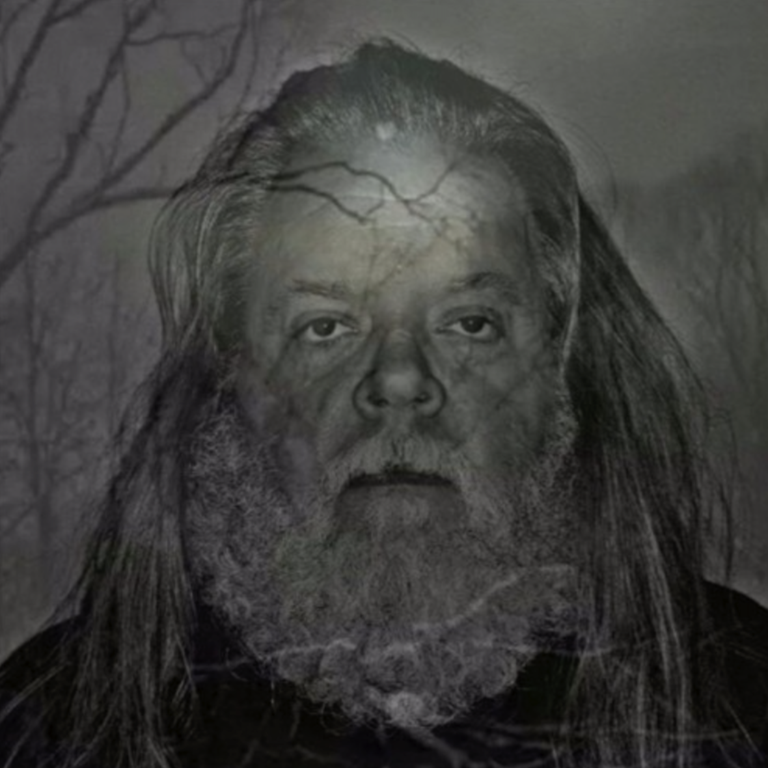
Forgotten Sciences is the seventh solo full-length by the Grunge Grandfather who brought us the bands TAD, the punk aesthetics of HOG MOLLY, and the heavier doom-metal of
BROTHERS OF THE SONIC CLOTH.

In this new release, Doyle flexes his musical prowess yet again with trail-blazing vocal styles in a never-before-utilized way. The result is Forgotten Sciences showcasing his many vocal and multi-instrumental talents. The songwriting and lyrical content delve into the darker side of human existence, yet the underlying message is a positive one. As the song progresses, one’s sense of time is suspended and gives way to tonal fractals of interwoven rhythms, melodies, and motifs.

Doyle states, “This album is a note to self to stay in the moment and clear of the trappings of time. It is an affirmation that everything important happens in the present moment. Everything is an inside job, and there are no solutions to be found outside our indomitable spirit.

Check the teaser here:

AA

Screenshot_2023-04-05_at_9.05.30_AM

Thrill Jockey – 24th March 2023

Christopher Nosnibor

Wikipedia, and most other sources for that matter, will tell you that ‘Liturgy is an American black metal band from Brooklyn, New York’. The band’s own bio, which explains how their brand of ‘“transcendental black metal” exists in the space between metal, experimental, classical music and sacred ritual’ and that ‘The band is simultaneously a platform for fine art and theology’ is rather more illuminating in explaining how they have vastly expanded their horizons and those of the genre to create a form which is truly unique.

93696 is very much a concept-based work, which is best explained by quoting: ‘93696 is a number derived from the religions of Christianity and Thelema, a numerological representation of heaven, or a new eon for civilization. Hunt-Hendrix composed the album as an exploration of eschatological possibility divided by the four “laws” that govern her own interpretation of heaven, “Haelegen”: Sovereignty, Hierarchy, Emancipation, and Individuation. These laws constitute the four movements of 93696 which act as dramas all their own within the framework of the record.’

And what a record. ‘Epic’ barely touches it. It’s immense in every way, not least of all duration, with fifteen tracks spanning the best part of an hour and a half, this is expansive on a scale akin to SWANS (who they’ve previously supported). It’s also every bit as dynamically charged as latter-day SWANS albums, with tracks anything up to a quarter of an hour in length powering though a succession of crescendos, via sweeping choral soundscapes.

‘Djeennaration’ packs everything in early, presenting eight-and-a-half minutes of frenetic fretwork and thunderous percussion, over which vocals switch from angelic to demonic and back in the blast of a beat. It’s powerful, and quite bewildering in both its force and cinematic scope.

Done differently, this could feel overlong and pretentious, but the execution is so precise and the great ambition so focused on realisation that everything feels remarkably organic and despite making gigantic leaps between passages, changing tempo and tone here, there, an everywhere, it flows. Shuddering slabs of power chords that crunch like quartz while blasts off pure noise tear the air, but as ‘Haelegen II’ shows, with the incorporation of piano, there’s so much more texture and detail than plan fast-as-fuck fret attacks – then, from out of nowhere, things take a turn into folksy post-rock.

The savage squall of ‘Before I Knew the Truth’, released as a single a few weeks ago distils the potent force of the entire album into four and a half flooring minutes. There are some brief – and strange – moments of respite, such as the quavering woodwind tones of the brief interlude that is ‘Red Crown II’ and the delicate keys of ‘Angel of Emancipation’, and they’re most necessary, as the majority of 93696 is a force beyond nature.

The fifteen-minute title track is nothing short of an absolute monster, and as much as it’s n obliterative squally, it’s also a dynamic and wide-ranging sonic and cerebral experience, culminating in a vast orchestral sweep that’s nothing short of stunning.

This does feel very much like an absolute pinnacle and a definitive and exhaustive – and, it has to be said, exhausting – statement. Transcendental indeed.

AA

146782

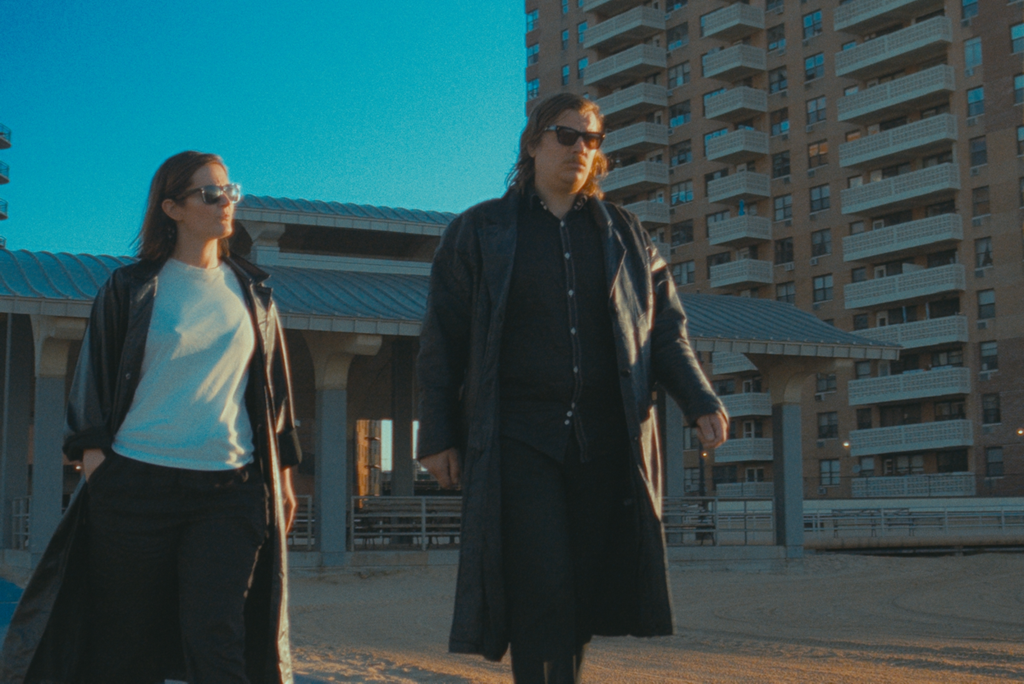
‘Terzo’ : an Italian word translating as ‘the third’, it represents an additional presence that new darkwave/shoegaze/post-rock duo Terzo sensed inhabiting their most creative moments when they began working together.

Karl Clinton (former bassist in post-punk act Diskoteket, plus co-founder of improvisational project Tsantsa) and Billie Lindahl (lead singer and guitarist in dream pop/dark folk act Promise and the Monster) share a mutual penchant for dark sounding music in all its forms. They have also both been itching to free the shackles binding them to strict timelines; not only those of the music industry, but society in general. “Terzo was born out of a discussion about songs we mutually liked and a wish to try a different work process to our then current projects,” they state. “We wanted to do whatever we wanted without restrictions, using our obsession and gut feeling as guidance.”

Their preference for music and art that embodies a degree of doom and gloom is evident on their upcoming self-titled debut album, with its central theme of ‘love and death’ linking all six tracks. Their very first studio session yielded the 10+ minute post-rock epic ‘Cymbeline’ (available now as a debut single), while in the midst of recording it they both had the sensation that a third presence was keeping them company. Intrigued by the thought, “we started talking about the appearance of a third element, in sleep and in dreams,” they explain. “Terzo is about acknowledging this, the swirl that light in the darkness generates, opening ourselves out toward our own weaknesses.”

‘Cymbeline’ is actually a unique cover of a 1991 song by the Celtic/world music singer-songwriter and composer Loreena McKennit, which has a lyric lifted from the William Shakespeare play of the same name. “We had a feeling that we could make something interesting with it,” says Lindahl. “Karl did most of the instrumental work, guitars and programming, while I recorded my vocal in one take. This song means so much to us because it was the first thing we did as a duo and I think we just sort of understood that we could do great things together.”

Terzo travelled to New York in the summer of 2022 to play their first live shows, with the video maker and photographer Johan Lundsten accompanying them to document the trip. Footage from this can be seen in the video for ‘Cymbeline’, with Lindahl adding that “we always pictured something in documentary style for this song. Johan filmed everything that we did, even just hanging around. It is very raw, but it feels right.”

Watch the captivating video to this immense song here:

AA

09fa22087a77c50ec64bf5bfc0b1abdd4f21a26c

TERZO | photography by Johan Lundsten

Christopher Nosnibor

Coldwell’s own notes which accompany this – truly epic – album explains and articulates it best, when he writes ‘This new retrospective is certainly not your typical album. Each track is almost an album in its own right! The material sees CC at his most experimental, stripped back, noisy and immersive. Following on from last year’s Music for Documentary Film, this collection gathers together some of Michael C Coldwell’s sound art work and music written for exhibition and gallery contexts.’

This is very much one of the benefits of the digital format: there is no restriction of duration on account of data capacity. Time was when physical formats restricted the running time of a release, with a vinyl LP optimally running for around forty-five minutes but having the capacity to squeeze in about an hour, with CDs being able to hold seventy-two minutes and while a cassette could – precariously – take two hours, no-one released a two-hour single cassette.

Conflux Coldwell’s collection of installation works is immense, and with a running time of around two-and-a-quarter hours, it’s in the realms of recent Swans albums. While it’s by no means a brag, I’ve endured longer, notably Frank Rothkamm’s twenty-four-disc, twenty-four-hour Werner Process, and am also aware of Throbbing Gristle’s legendary 24 Hours cassette box set, but the point is, Coldwell has really made the most of the space available to him here.

I sometimes differentiate albums as being foreground or background, and Music for Installation is very much background, the very definition of ambient. That isn’t to say it’s uninteresting or unengaging. It’s simply a vast set of field recordings and sound collages that make you feel as if you’re in a certain environment. Unlike the aforementioned Swans albums, which I find are difficult to listen to because they require a commitment of time to sit with them and focus, to actively listen, Music for Installation is a very different beast which works while rumbling on while you’re doing other things. And as an experience, this very much works.

The fifty-five minutes excerpt (!) of Remote Viewer is exemplary. Passing cars, scrapes, drones, the sound of metal on metal, clanking, indistinguishable muttered dialogue, and extraneous sounds that range from – possibly – the rush of wind to the sound of feet gently passing on creaking timbers, all sit side by side and overlap in various shapes to create a latticework of real-life founds the likes of which you probably would ignore if you even noticed them at all under normal circumstances. Of course, if this is an excerpt, where’s the rest? It’s the kind of immersive soundwork that could run for hours and that would be perfectly fine.

The live performance of ‘Dead Air’, which runs for an album-length headline performance is superb. It’s testing, but it’s also magnificently executed. The sounds and textures are balanced, but the overall sound is gloopy. The result is a piece that’s creepy, evocative, and dissonant, and built around wailing whistles and pulsating drones that coalesce intro their own organic rhythms, drawing together elements of Kraftwerk and Throbbing Gristle to conjure a dark, dingy soundscape.

‘Dismantle the Sun’, running for fourteen minutes feels concise in comparison. It’s barely there for the most part, the most ambient of field recordings. It’s hard to identify any of the individual sources, but again, there are rhythms that emerge from the rumble off passing cars and the whisper of the wind, and the piece transitions both sonically and spatially as it progresses, at times evolving from a whisper to a howl. One feels a sense of movement, which in turn creates a sense of disorientation, although the voiceover detailing ‘solar oscillations’ in the closing minutes provides a certain grounding.

The final brace of compositions, ‘Alternating Current’ and ‘The Specious Present (How Long is Now?), which have a combined time of around ten minutes feel like barely snippets or sketches in comparison to the other three immense pieces, but what they lack in duration, they compensate in depth, being richly textured and showcasing some interesting beats and conjuring some dark, confined spaces. And for all its vastness, Music for Installation is quite a dense, claustrophobic experience at times – and it’s a quite remarkable experience, too.

AA

cover