Posts Tagged ‘electronica’

Kranky – 11th November 2016

Christopher Nosnibor

In researching and considering Loscil’s latest offering, I returned briefly to the previous album, 2014’s Sea Island. An album that was broadly ambient, it was also firmly a work of electronica, an album that was big on ideas, and engaging rather than immersive or entirely background.

Monument Builders expands on this, and while texture and tone continue to play central roles in the formation of the individual pieces which make up the album, it’s also an album on which the individual tracks are built on dynamic and contrast, and the structures of each piece are clearly defined. While the overarching tone is gentle, subtle, there’s much variation between the tracks, and the way in which sounds suddenly emerge in the foreground means there is a continual sense of movement within each piece and across the album as a whole.

Delicate beats thump like a heartbeat against the ticking clock: the soft notes which form a repeating motif through ‘Drained Lake’ may not in themselves build tension, but there’s something beneath the surface. All is not well, all is not calm. You sit, on edge, as an elongated drone undulates like a distant siren wail.

‘Red Tide’ is very much rhythmic in its focus, a cyclical synthesised bass loop – part Kraftwerk, part ‘I Feel Love’ – forms the spine of the track. ‘Anthropocene’, the album’s penultimate track, stands as something of a companion and counterpart to this, with a similar bubbling motif murkily pulsating beneath, while mournful brass conjures black and white or sepiatone scenes of bygone days. It’s an interesting contrast well executed.

Monument Builders is very much a ‘next stage’ work, which continues to expand Loscil’s sonic horizons in a host of directions. But equally as important as recognising the artistic developments, one has to consider the listening experience, and this is ultimately where Monument Builders triumphs. In switching between background and foreground musical dynamics and building and reducing the degrees of tension, Scott Morgan (aka Loscil) has masterfully created a work which demands attention without being excessively obtrusive.


KRANK204_10x10_300dpi

n5MD – MD248 – 16th September 2016

Christopher Nosnibor

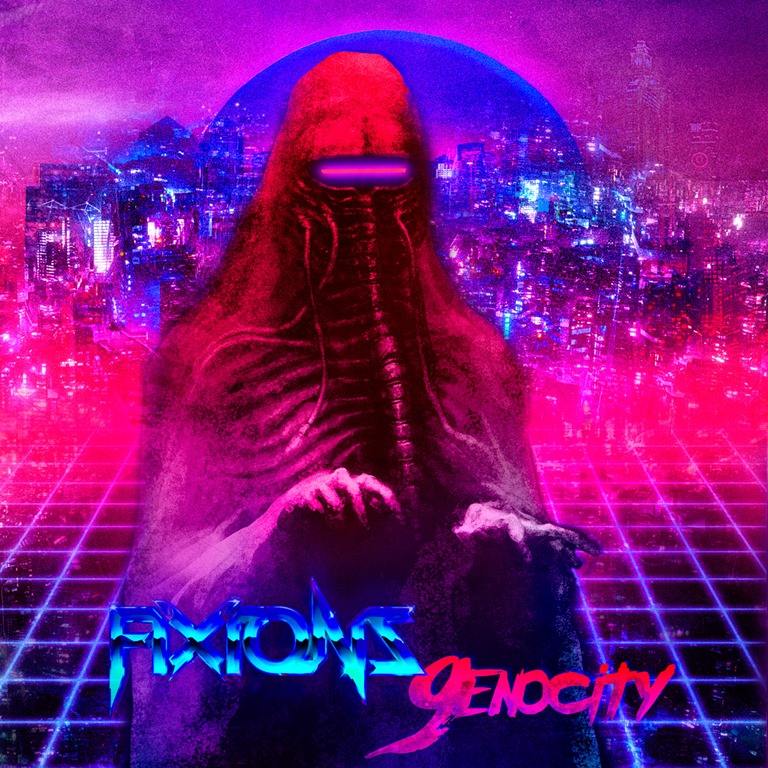
The arrival of Collapsing Horizons piqued my interest considerably: the cover art gives away little, but the write-up for the Netherlands-based duo describes their sound as ‘deep ambient’. I’m more than familiar with dark ambient, but just what constitutes deep ambient? On the basis of this album, the depth refers to both the emphasis on the lower ranges, as billowing winds funnel beneath the upper tones and bassy beats resonate low in the mix, and also the contemplative nature of the music. The sounds in themselves do not create dark, foreboding atmospheres, and the broad sonic brushstrokes are, in the main, light, gentle, delicate and soothing. And yet there is detail: a lot of detail. Microbeats and subtle, but fuller, beats pulse in the background, while crackles and scratches bring texture.

Occasionally, as on ‘Gravitational Singularity’, rumbling bass and immense rhythms drive what one might call abstract drum ‘n’ bass grooves at a low BPM. Elsewhere, the dulcimer chime and stuttering rhythm of ‘Fracture’ also alludes to the trappings of drum ‘n’ bass, dissected and deconstructed to its sparsest of forms. And yet there are juxtaposing sensations of light and dark, with shadows moving cloud-like across the surface. There’s a definite sense of movement within each of the compositions (as the title suggests: these horizons are in the process of collapsing: they are not yet fully collapsed: this is not a past-tense work), and while the pace is at times tectonic, there are some nice, dainty oscillations and some soft, descending chimes that intimate more progressive leanings, as well as sharing ground with the likes of Tangerine Dream. Then again, ‘Hyperbolic Motion’ incorporates static and space-age bleeps over a heavy, stuttering kick beat that resembles a palpating heart, creating a subtle tension and a sound more closely related to minimal techno.

Because the individual tracks are comparatively short – only two extend beyond the five-minute mark – and are mastered separately instead of running together to forge a large, single body of sound, Collapsing Horizons feels much more focused than many ambient works. The individual tracks are distinct sonically, too, with clear identities, and the structures therefore are more self-contained and do not require the listener to absorb and assimilate the album as a whole. The effect of this is that Collapsing Horizons succeeds in holding the attention, and feels quite concise despite its forty-eight minute running time.

Tangent Online

Tangent - Collapsing Horizons

Gizeh Records – GZH68 – 2nd September 2016

Christopher Nosnibor

Richard Knox’s musical career is marked by works which are ponderous and atmospheric. Howeevr, his latest venture in colaboration with Claire Brentnall, is distinguished by a leaning toward material which feels more focused, compositionally, and more direct. It’s all relative, of course, and Mirror Breathing is, as the title implies, a work which is hazy, misty, the songs grasping, just for a second, at the ephemeral and reflecting the moments back, refracted and rarefied. Following on from debut album Contour Lines (2014) and 2015’s Violet EP, Mirror Breathing marks a step further into dark pop territory, although dark is indeed the operative word here, and it’s clear that in Brentnall he’s found the perfect collaborator: a person with not only an amazing voice, but an equal understanding of what it takes to forge ponderous, nuanced, atmospheric music. It’s not a matter of drawing out which each brings to each composition: Shield Patterns are built on collaboration and intuition, more of a case of a creative space emerging from a collective ‘third mind’ than the simple coming together to two musicians. 

The musical backing the pair create is atmospheric, and captures elements of light and shade which contrast magnificently; dark, rumbling low-end and industrial scrapes are tempered by ethereal ambient sounds of indeterminate origin. Claire Brentnall’s breathy vocal hangs, spine-shiveringly, over the drifting soundscape. The whole production is draped in a soft-focus feel, a mist which partially obscures the shapes and forms and renders them vague, unfamiliar and ambiguous. This ambiguity and unfamiliarity is an unsettling sensation, and while the graceful vocals superficially soothe, the emotional tension and overall sonic disquiet ultimately leave the listener pulled in different directions, peering into the shadows and wondering what lies just out of view. Arrhythmic percussion echoes in the dark, detonations which send shuddering vibrations through the ground. There’s a stark beauty to ‘This Temporary Place’ that calls to mind Zola Jesus, and elsewhere, dark industrial grumbling tremors contrast with the dreamy, otherworldly atmosphere of ‘Cerulean’.

Julia Kent is an artist who has a tendency to crop up in all sorts of places and with remarkable frequency: a respected solo artist in her own right, she is also a one-time member of Black Tape for a Blue Girl, as well as performing as a member of Rasputina and Anthony and the Johnson, he cello work on three of the tracks here adds further texture to the arrangements. Ultimately, though, it’s the balance of the instrumentation which really makes the album work: there’s a lot going on, with many incidental sounds blended in, but it’s seamless and no one aspect or sound dominates at any point.

Again returning to the connotations of the title, if the image of a steamed mirror can be read as a twist on the ‘smoke and mirrors’ metaphor, then there is an element of deception in the way the compositions seem sparse, but are in fact constructed from manifold layers which form strata of remarkable sonic depth and density. The drums may be distant-sounding and low in the mix, but they roll like thunder. In Claire’s vocals, you don’t hear every word, but you feel them. Sometimes she soars so high as to be barely audible to the human ear. Sometimes, it’s less about the actual lyrical content than the delivery, and her voice as of and in itself conveys more than mere words ever could. There’s a quality in Claire Brentnall’s voice which communicates on a subconscious, subliminal level. Her voice echoes in the recesses between the beats, drifts along, enveloped in the gauze-like textures, and occupies invisible spaces between the notes. Hers is a voice which is delicate, but by no means weak; yet the strength of her delivery lies in her ability to convey vulnerability.

From the alluring ‘Dusk’ to the dolorous chimes of ‘Blue Shutters’ and the sinister depths of ‘Balance & Scatter’ with its dark jazz intimations, via the tranquil and sedate(d)‘Sleepdrunk’, the songs conjure scenes of both anguish and ecstasy and often explore the pull of existing in both states simultaneously. Haunting, hypnotic and disquieting, Mirror Breathing is an impressive work that warrants time for thought and reflection.

Shield Patterns - Mirror Breathing

Rock is Hell – RIP67

Christopher Nosnibor

This one’s been out a little while now but has only recently landed with me. I can’t feel too much guilt: Regolith aren’t exactly the fastest of movers, however you look at it. They’ve been going for a full decade, and despite having racked up a substantial catalogue of EPs and split releases, it’s taken until now to get around to a proper album (although, arguably, 2009’s Music for Hot Air Balloon, with its three tracks spanning a full hour, would constitute an album by most people’s reckoning). Musically, they’re not exactly about pace, either, trading in crawling ambient drone of almost incomprehensible proportions.

Their debut album proper isn’t exactly about the immediate hit, the hooks or the general accessibility, either, and necessarily requires time to engage, cogitate and digest.

I is a monster work: a double album comprising just four tracks. And the sound is as immense as the album’s duration, inching toward the 80-minute mark, with each of the tracks clocking in around 20 minutes in duration. But it’s not just about the length: feel the weight. The sounds may be produced electronically using analogue synths and a vast array of effects, and Regolith may describe themselves as ‘tech freaks’, but the material is heavily steeped in the tropes of doom. Having spent my childhood living on the flight path of the takeoff / landing of the RAF Vulcans, I feel qualified to make the analogy of the drones sounding like jet engines rumble and roar, a spectrum of lower-end frequencies that focus on the ribcage, the particle-splitting noise is also more than enough to terrorize the most dulled eardrums. ‘Platinum’ sounds like my young recollections of the Falklands War. The molecule-destroying, air-shredding sound engulfs the listener; the experience is immersive and annihilative.

‘Comet Tails’ is a far sparser affair, echoed beats decaying into the void, the space between the sounds comparable to the distance between planets. Gradually, as slowly as a planet on the outer reaches of a solar system orbits its sun, a low drone begins to rise and swell, a dark, large sonorous body of sound, a black hole cruising closer with inexorable determination. The hum continues to grow until its edges begin to distort and disintegrate and bleeds into ‘Star Trails’. One benefit of hearing this in a digital format is the two tracks do run together. Of course, the downside is simply that however enormous the sound, the full enormity can only really be conveyed via the medium of vinyl, and ideally on a decent set-up with a solid amp and some fuck-off powerful speakers. It’s an album that has the capacity to make the earth move.

The sound is more than fitting for a band named after ‘a layer of loose, heterogeneous superficial material covering solid rock, which includes dust, soil, broken rock, and other related materials and is present on Earth, the Moon, Mars, some asteroids, and other terrestrial planets and moons,’ and whose objective is to create ‘music on a geological scale; music of mountains, shifting like glaciers, slow and relentless processes on grand timescales’. The tracks on I are at once heavy on the ground, and beyond gravity, simultaneously tectonic in their movement and of galactic proportions.

Regolith

Regolith Online

Someone Good – RMSG – 18th March 2016

Christopher Nosnibor

Reading the info accompanying the album, I was relieved to learn that it has nothing to do with football. Granted, it says more about me than it does anything or anyone else, but I’ve never been a huge fan of sport. It probably never helped that apart from being quite a handy medium-pace bowler with a nifty Yorker, and a decent cross-country runner (I discovered early on that by getting a move on, I could be back in the changing rooms, showered and reading a book before anyone else got halfway round the course. I loved reading, and hated communal showers), I was shit at sport. It also happens that many of the kind of people who are big sports enthusiasts simply aren’t my kind of people, and I consider fantasy football leagues the biggest, stupidest waste of time going. But let’s not focus too much on the cover art (I’m thinking that despite Tuttle’s Australian background that it’s baseball rather than Aussie rules, but what do I know? And what do I want to know? It could be squash or lacrosse for I care. What matters is that Andrew Tuttle’s fantasy league is about a utopian environment. Said environment sets social interaction against total isolation, self-reflexivity against self-confidence.

It’s an interesting proposition, and Tuttle plays an interesting and rather unusual array of instruments in order to create the sonic structures by which to explore this concept: computer, synthesiser, banjo, and acoustic guitar. Hardly your average configuration for music making. But then, Fantasy League is not an average album, in any respect.

Broadly speaking, it’s an ambient work. Banjo and guitar are present, but woven subtly into shifting, drifting soundscapes of drones and undulating widescreen sounds. Bubbling, bleeping electronics, ripples and swishes are all fundamental parts of the album’s sonic fabric. The strummed and picked strings add a unique slant amidst the burrs of fizzing treble bursts which erupt, wibbling every which way: with hints of hillbilly blues over a static hiss on ‘Forgtten Username?’ and gentle folk motifs informing ‘Forgotten Password? before insect scutters scrabble all over and devour them, the resultant output sounds like country music from another dimension. Elsewhere, there are Tangerine Dream-like moments, notably on ‘Public League’, where multiple time signatures pulse and interweave to form a sonic latticework.

What renders Fantasy League so intriguing and compelling is the way in which Tuttle distorts the familiar: the sounds themselves are no challenge to compute or comprehend, but the way in which they’re juxtaposed and twisted together is uncanny, as if Fantasy League is a soundtrack from a parallel universe. And it sounds like a place well worth visiting.


Andrew-Tuttle_thumb.jpg