Posts Tagged ‘Drone’

Essence – 9th December 2016

Christopher Nosnibor

The circumstances of this release are rooted in the kind of rock mythology that usually surrounds cult acts of the 60s and 70s: the kind of band known to only a few people, but spoken of with reverence and a messianic enthusiasm which, through time, finds the band achieving a legendary status which far exceeds their actual audience.

Unusually, Expo Seventy are a post-millennium band. Formed in 2003, this album captures a brief moment in their history from around 2010, when they featured a second drummer. Expo Seventy played only a handful of shows in Kansas City, and Chicago at the Neon Marshmalow festival in this four-piece iteration. Born out of a series of experimental jams laid down in the studio for an at ‘experience’ project in Kansas which would see the funding lost and the project dropped, this release accounts for the entirety of their recorded work. Recorded over the course of three weeks, the album contains two longform movements (with the CD version featuring a third).

The first section builds a steady desert rock vibe and a simmering groove emerges. Through a succession of meandering detours, breakdowns, breaks and diversions, the track holds down a thunderous rhythm, solid, and rides through a series of sustained, surging crescendos. The twenty-six minute second movement begins as a long, slow drone, an interminable hum throbbing on some six minutes in with no sign of abatement. It’s a real patience-tester, but gradually, one becomes drawn into the textures, and then, subtly, synth notes creep into the mix. A flicker of cymbals. Around the ten-minute mark, the slow build begins to step up, rolling toms building tension: it’s only a matter of time before the wall breaks. It’s all about time. And it’s all about the double-drummer lineup. They rumble like thunder, cymbals explode over the deep, augmented drone. The third movement picks up where the second leaves off, pitching a darkly atmospheric rumble. Tribal drumming thunders while analogue synths bubble through the battering beats.

For an album of its length, not a lot happens, but then, it doesn’t need to.

Finally, it’s worth mentioning the artwork and packaging. It’s truly outstanding: not only does it capture the vintage vibe beautifully, but the heavy stock makes this release feel like something special.

http://www.exposeventy.com/

Expo Seventy

6th October 2016

Christopher Nosnibor

How exactly does one locate the work of The Eagertongue? The vehicle of Glaswegian artist Graham Macmillan-Mason, who describes his mode of work style as ‘spoken punk’, there’s nothing remotely Kate Tempest about the gritty poetics of The Eagertongue. There are no limp appropriations of hip-hop stylings for a start, no elongated vowels to intimate a sense of beat, no couplets, no doggerel – no rhymes, in fact – and there’s no pretence of speaking to or for the masses with high-minded socio-political thematics, either. But he does have an undeniable sense of rhythm which carries the pieces along nicely, and arguably, his straight-talking vignettes are far more real slices of life than the more commercially viable Tempest. No BRIT School priming here: the only privilege informing the work is the privilege of life lived as a means of gathering material, which provides instead, a first-hand grasp of the grubby day-to-day. Coupled with Macmillan-Mason’s knack for narrative, it makes for pieces which are vital and ultimately credible. But he’s not John Cooper-Clarke, either. I love JCC’s pithy poems and rapidfire delivery, but Macmillan-Mason’s brand of social commentary is darker, starker, harsher, and he isn’t out for laughs.

I referred to the material as gritty: Graham raps and raves about bodily fluids with a superabundance of cumstains and saliva and a moderate proliferation of vomit streaking his narratives. The characters who populate these insalubrious spaces are three-dimensional, believable, and presented warts and all. “She would always protest it was difficult to speak with a penis inside of her mouth,” he recounts on ‘Jesse’.

MacMillan-Mason has a remarkably calm, almost affable delivery, which is in some ways at odds with some of the dingier, grainier lines. But it’s this calm, measured approach (and that isn’t to say there’s no passion in his voice: there is, as well as a tangible sense of soul) which renders the words most effective: they’re enunciated with crystal clarity and stand out above the murky droning soundscapes – a mangling mix of guitars and amorphous electronic hum – which provide an appropriately unsettling backdrop.

Sharp, direct and unflinching, The Voices in Your Coma Sleep finds The Eagertongue bringing weight to the idea that literature was the original rock ‘n’ roll, and that literature is the new rock ‘n’ roll, too.


The Eager Tongue - Voices in Your Coma Sleep

VoxxoV Records – VXVCD011 – 19th September 2016

Christopher Nosnibor

The purpose, primarily, behind Aural Aggravation, was to give coverage to niche music produced by lesser-known artists and little labels. The idea was also to publish reviews geared toward a more long-form format, favouring more journalistic analyses than the soundbite snippets which dominate the mainstream music press (such as it exists now) and many of the more popular websites. Ultimately, of course, the ambition was to run a site which gave myself, as founder / editor and main contributor, free reign, to write about what I liked in a way I liked. It wasn’t so much the cliché that if other people liked it, it’s a bonus: I figure that if I like it, there’s an audience for it somewhere.

Vindication of this approach hasn’t just been in the traffic we’ve received – Aural Aggro will never achieve world-domination but after a year in existence, it’s built a steady and respectable readership – but in the labels and artists who’ve sought us out to submit releases for review because they like what we do. It’s mighty gratifying, and has led to the discovery of some fantastic acts and labels, too.

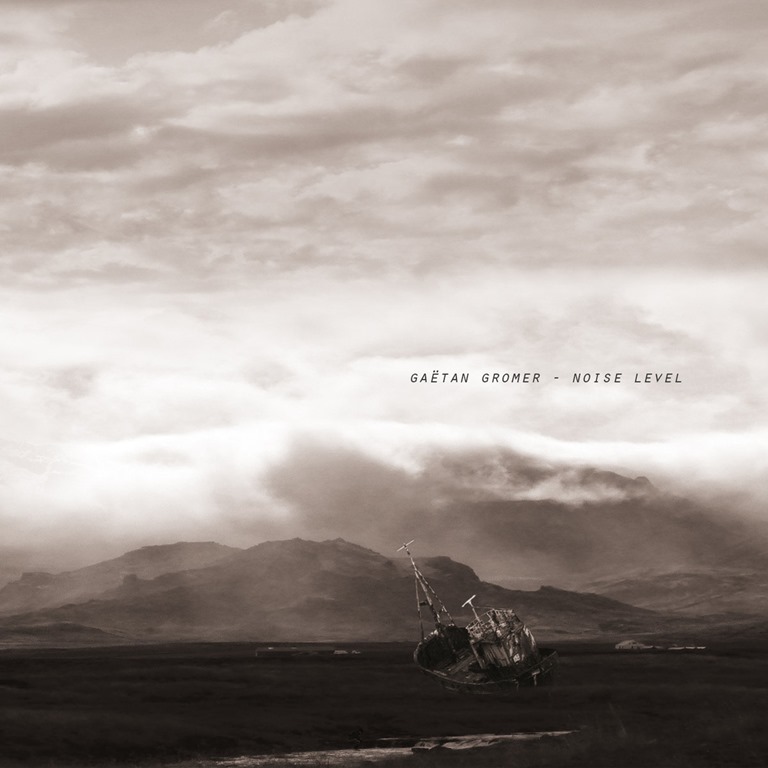
And so it was that microlabel VoxxoV found us and put their eleventh album, Noise Level by French artist Gaëtan Gromer our way. It’s about drone, noise and ambient music, and that’s what we dig here – amongst other things.

Noise Level is an album to get lost in, but also an album to listen to. The detail is what matters. For what seems like an eternity, so little happens/ but of course, a little is a world away from nothing. Then, amidst the elongated drones, small sounds, water-like drips and ripples disturb the tranquil surface. Barely audible, indecipherable vocal snippets and samples crackle through the airwaves. Notes bubble, drift and turn, wafting formlessly, invisible yet present, the subtlest ebb and flow forms an other-worldly soundscape. Burs of sharp static interfere with the flow, but fail to break out of the shadows. Gradually, so gradually, the notes turn and mutate, pulsate and undulate. Scratches of treble scour away and roughen the edges. Insectoid skitters flicker and clamour as circuitry bleeps, sonar calls and responses. Long, drawling notes sigh in resigned anguish on ‘Le Bibliotheque de Babel’.

The warmth hinted at by the soft-edged swells of sounds on the album’s final track, the ten-minute ‘Always Coming Home’ are countered by grazing guitar drones and clattering, arrhythmic percussive ruptures. Over time, it builds in volume and intensity, the guitar coming to the fore as the album’s only recognisable instrument, a bruising, dense mass of sound bringing the album to a powerful close. With this, Gromer is done, and goes whistling on his way.


Gaëtan Gromer – Noise Level

Opa Loka Records – OL160096

Christopher Nosnibor

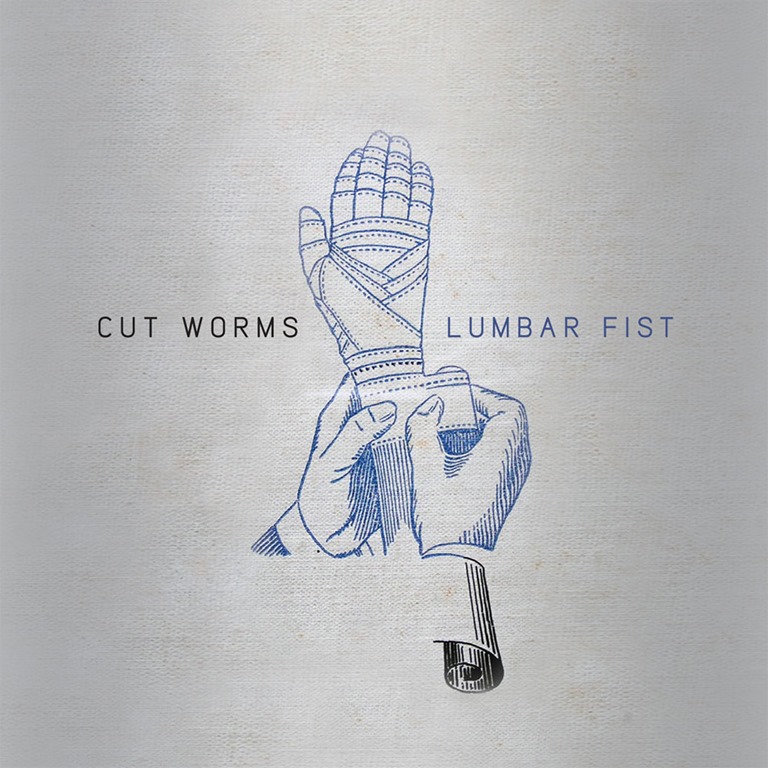
It begins with a long, low, ominous hum. The movement is so gradual as to be barely perceptible. Slowly, so slowly, it grows, swells, and turns, its density, depth and texture shifting, microtonal layers emerge and fade. Dolorous chimes ring and resonate in the sonic mist. The individual tracks are segued together to form an extended, evolutionary work. Brooding strings strike and organs waver on ‘Stone Ether’, and over the course of the album, Cut Worms stalls time to create space and distance, ethereal soundscapes drift, soft, sculpted, immersive.

The forms and structures are as subtle, fleeting and inscrutable as the infiniteness of space and the existence of dark matter. Equally, the origins of the sounds which fill the album seem wholly removed from one another: Lumbar Fist is an electroacoustic work, created with live generated and processed sounds, without any prefabricated beats or loops, and as such, the process entails considerably more than the all-too-common mechanical laptop machinations of ambient works.

Richard Van Kruysdijk – the man who alone is Cut Worms (and what an evocative moniker that is… not that the album title’s far behind) has spent a long time honing his craft, and Lumbar Fist stands alongside artists like Tim Hecker, Oren Ambarchi, Glenn Branca, Stephan Mathieu, Will Guthrie and Jim O’Rourke not just as an exemplar, but an outstanding example of atmospheric, drone-orientated ambience.


Cut Worms - Lumbar Fist


A year or so back, maybe, from the ashes of York-based psychedelic drone act Muttley Crew emerged York-based psychedelic drone act Soma Crew. Sort of. The same band in essence, it was undoubtedly time for a change of name, but there’s been something of a lineup reshuffle in the process, and, on the evidence of this, the first Soma Crew EP, a sonic evolution too. This means that while there are still heavy hints of Black Angels, and the songs are still built around two or three chord chugs swathed in layer upon layer upon layer which twist and turn over the course of six minutes or more, there’s new stuff going on which wasn’t present on the Muttley Crew album which came out in the Spring of 2015.

With a ragged guitar sound and Simon Micklethwaite’s vocals adopting a sneering, drawling tone, there’s a punk edge to the EP’s first cut, ‘Pulp’. After a left-turning detour around the mid-point, it bursts into a raging racket of dissonance. And all the while, the drums keep on hammering out a relentless mechanoid rhythm, holding it together while everything else collapses to beautiful chaos. The slow-burning ‘Path With Heart’ brings it down a notch or two and offers a more low-key and introspective aspect. It’s exactly the music you’d expect from a band named after a muscle relaxant which works by blocking pain sensations between the nerves and the brain.

‘Vital Signs’ is perhaps the first track here that’s truly representative of their live sound, a motoric droner, with murky, overdriven and reverby guitars yawning and veering across one another over a thumping locked-in groove with no let up for over six and a half minutes. The eight-minute ‘Prizefighter’ begins at a lugubrious crawl. It takes its time… and then the overloading lead guitar breaks in, noodling in a smog of a chugging rhythm to drive it to the end.

The rough edges and hazy production give the songs an immediacy, and beneath the layers of reverb and cavernous delay, there’s a pulsating energy that gives EP 01 (aka Soma) a rare vitality. Rebirthed, re-energised, this band may be habit-forming and should be used only by the person it was prescribed for.


Soma Crew

Gizeh Records – GZH70 –4th November 2016

Christopher Nosnibor

Aiden Baker’s name features on a staggering number of releases, and while Nadja – the duo consisting of Baker and bassist Leah Buckareff – may only be one of many side-projects, the discography they’ve amassed since 2003 is substantial, to say the least. On The Stone is Not Hit by the Sun, Nor Carved With a Knife, they offer three immense ambient doom tracks which make for a welcome addition to that discography.

‘The Stone’ opens the album with a deep, slow bass. A delicate guitar is soon obliterated in a deluge of overdrive. Over the course of the track’s imposing twenty-two minutes, they build a pounding groove, the drum machine and bass in combination emphasising the heavy rhythms. Baker’s vocals are low in the mix, and with the textured, picked guitar chords, they straddle the grinding abrasion of Godflesh and the majestic shoegaze of Jesu. The contrast between the mechanical, industrial drum sound and the rich, organic sound of the guitar is integral to the sound, while the space between the notes is a core aspect of the composition: the stop / start mid-section of ‘The Stone’ jars the senses.

‘The Sun’ provides the album’s colossal, megalithic centrepiece. It takes its time to rise, and a steady, soft, meandering clean guitar and gentle, reverb-heavy vocal owes more to psychedelia and shoegaze than ambient or doom. But there’s a simmering tension that builds slowly but surely. The textures and tones gradually transition from clean to distorted, before drifting out into an extended ambient segment. Yawning drones roll and rumble: these are vast expanses of sound, twisting out toward an infinite horizon. And when the guitar and bass return, it’s with an even greater, more crushing force. The drums are distant, partially submerged by the snarling, thunderous bass and immense guitar which carries the listener on am oceanic expanse of sound.

A subtle, amorphous drone hovers atmospherically through the final track,’ Knife’. Arguably the album’s most ‘pure’ ambient passage, it’s hushed, mellow, almost soporific and marks a real contrast with the previous two tracks. There’s a part of me that, on first hearing, found ‘Knife’ a shade disappointing in context of the album as a whole: ‘The Stone’ and ‘The Sun’ set a certain expectation that, at some point, devastatingly heavy, thunderous bass, crashing drums and cinematic drone guitar will hit like a landslide, but it simply doesn’t happen. However, on reflection – and this is an album which requires much reflection – it’s a well-judged change of form. In confounding expectation on the final track, Nadja show that they’re not tied to formula.

In exploring the contrasts of volume, texture and mood, The Stone is Not Hit by the Sun, Nor Carved With a Knife is a more considered and ultimately rewarding work.


Nadja - The Stone is Not Hit

Christopher Nosnibor

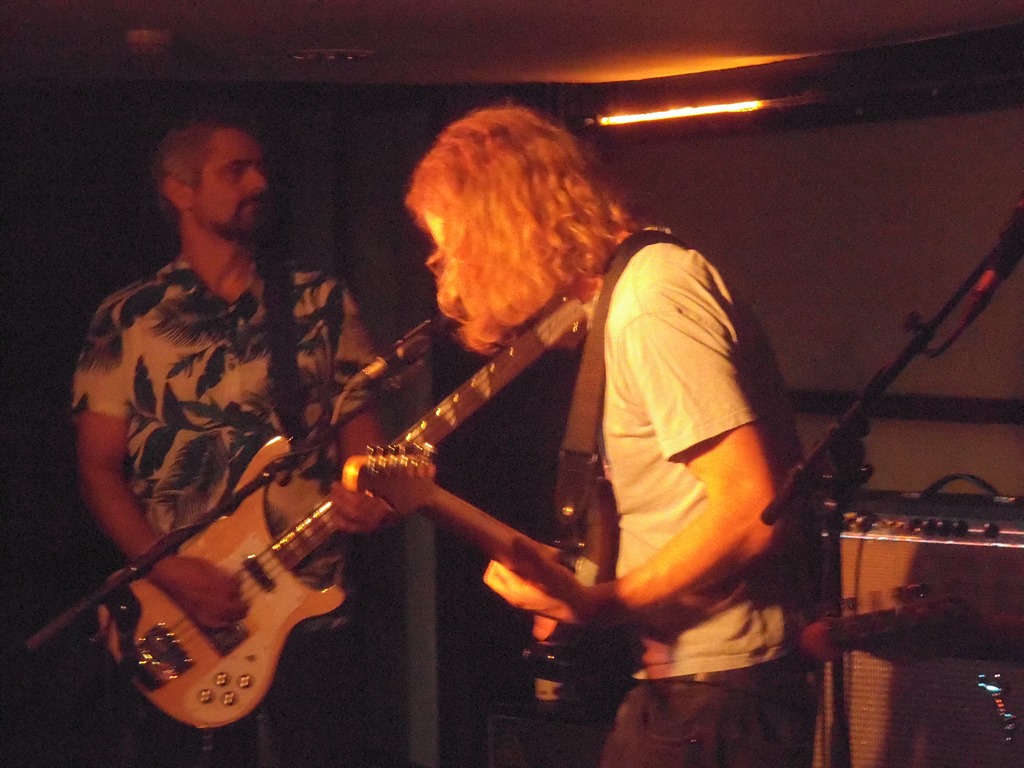
Soma Crew were an obvious and natural choice of support for cult psych at The Lucid Dream on their first visit to York in their nine-year career. I first heard The Lucid Dream back in 2010, when they set their stall out with a brace of impressive EPs. Since then, they’ve released two long-players, with a third out next week – hence the tour.

Soma Crew, playing their second set of the day, are on top form. They’re loud, and they’re in synch. In other words, they’re exactly as they need to be for an optimum performance, and they piledrive their way through a set which opens with the spiky, angular ‘Remote Control’ and culminates in a squall of feedback.

DSCF5938

Soma Crew

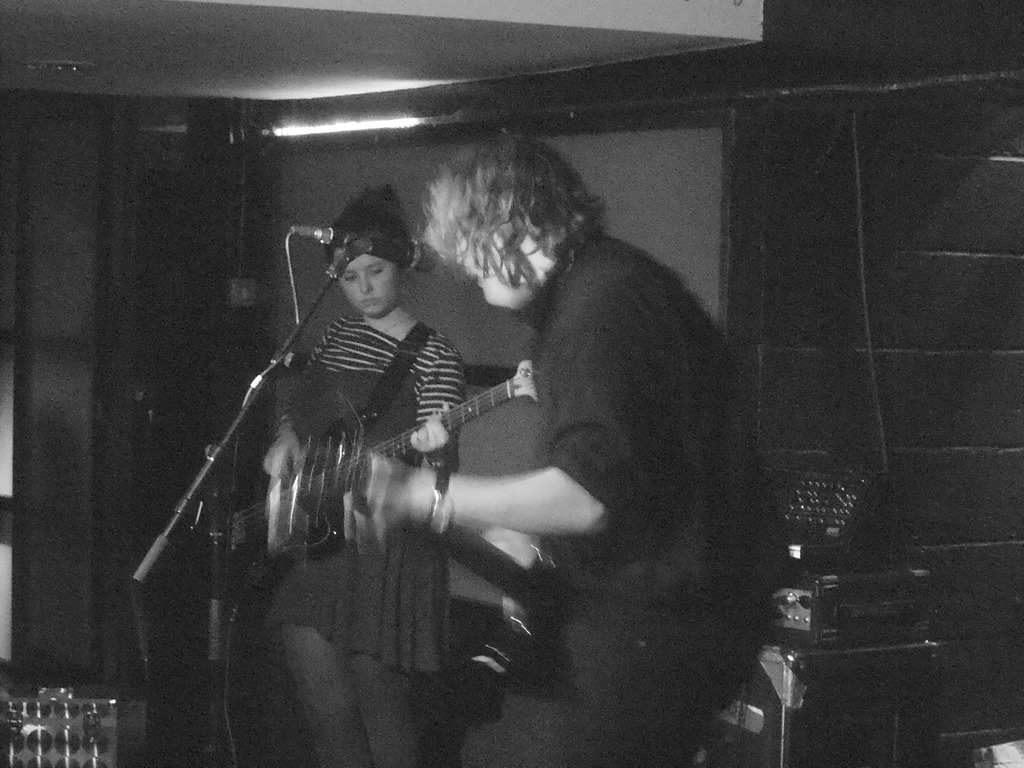
Call me prejudiced, but I had low expectations for Eugene Gorgeous. It’s a shocking name, for a start, never mind the fact the band members and the gaggle of mates they’ve brought along, who have little to no grasp of gig etiquette or what moshing is about, are barely old enough to drink but fuck me, they’ve got songs and, mannequin-like bassist notwithstanding, energy. Stylistically varied, there’s an alternative / punk edge to the bulk of an impressive set. And, credit to them and their fans, they don’t do the all-too-common thing of sodding off afterwards, and instead stick around for the headliners. It’s a wise choice.

DSCF5952

Eugene Gorgeous

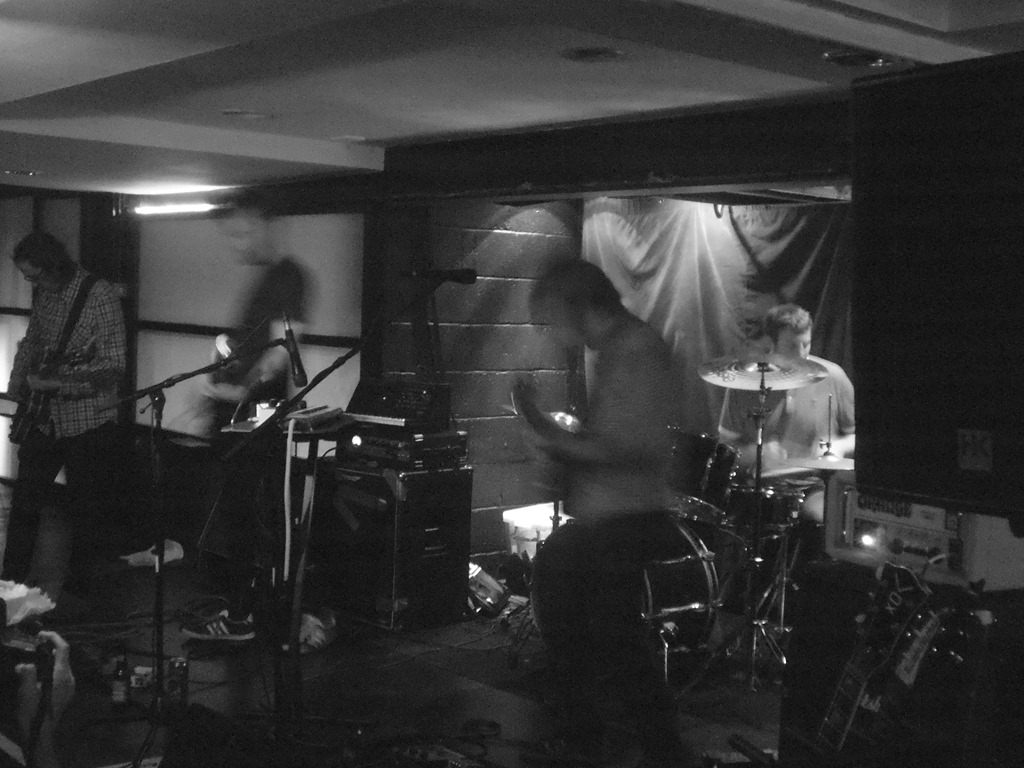
The Lucid Dream ae stunning, and seem determined to make their first trip to the city is memorable one. They may look mundane, but musically, they’re sublime, and they sizzle their way through a set of kaleidoscopic songs which are densely layered and deeply melodic. It’s hazy, blurred, hypnotic shoegaze par excellence. With an early start to the set, it looked like being an early finish, but The Lucid Dream have slowly but surely built a following based on slow-burning epics, and when they announce that they’ve got three songs left and they’re quite long, they’re not kidding: the segued three-track finale sees them lock into a sustained crescendo that explodes for the best part of half an hour. With the set crashing to a climactic close, it makes for an exhilarating and convincing performance. If only they’d had copies of the new album on sale…

DSCF5987

The Lucid Dream

Dronarivm – 18th July 2016

Christopher Nosnibor

Like most writers, and not just music journalists, I sustain myself financially with a demeaning, underpaid yet unduly stressful and arduous day-job in an office. The multinational firm who employ me, being fifteen years behind the times in terms of progressive thinking who have in the last year and a half decided halt the future is digital and that the place to pitch for market share in the coming years is on-line, have gone all blue-sky thinking and have fitted out a large rectangular room in each office with rising rows of seats, like some hideous postmodern parody of a colosseum in MDF. These ‘in the round’ meeting rooms, where the speakers stand in the middle (and consequently have their back to a quarter of the audience at any given time) have been preposterously named ‘agoras’. While throwing out quips about fluffy rabbits and jumpers, I’ve managed to decline all meetings in said room by claiming to be agoraphobic.

The reason for this preamble is that this album’s title is something of a play on words, a hybrid of ‘agoraphobia’ (a fear of public or open spaces) and the suffix ‘phone’, meaning sound. It only half works, in that phonia and phonic tend to refer specifically to speech. And, as anyone with access to a computer will likely know, ‘agora’ (in reference to either a space in an office or a word which simply means ‘public’ or ‘outdoor’) is a misnomer, in that the term ‘agoraphobia’, coined by the German psychiatrist Carl Friedrich Otto Westphal, was taken from the Greek ἀγορά, meaning ‘large public square/marketplace’ and -φοβία, -phobia, meaning ‘fear’. Still, based on the popular perception of the two terms, it makes an obvious punning sense which works in the context of what the album is about, in that it’s ‘a work which explores the relationships between people in given environments, and is specifically set in public spaces, namely the squares, or plazas’.

One might broadly classify this as a work of ‘ambient’ music, but in drawing together field recordings and manipulating the sounds and incorporating them into the rich sonic tapestry that constitutes samples and shimmering drones which form the material of Agoraphonia, Giannico and Aldinucci have gone far beyond the realms of background music and of atmospherics. Agoraphonia is a deeply evocative work, and one that requires a substantial degree of attention and focus.

Created using sounds submitted on-line, the album is a new kind of collaboration, and the end result is a work that requires attention and contemplation. Voices, passing cars and motorcycles and a low-level continuous chatter run through an indecipherable public speech seemingly made outdoors – at least judging by the trebly, tannoy echo – run through the first track, ‘Koutoubia’, as long, lingering drones simmer and eddy, building slowly in volume and intensity.

‘Plaza de Mayo’ finds the soft drones upscaled to vast, multitonal sonic washes which all but obliterate the voices audible at the start and end of the track. But this (im)balance is integral to the album’s purpose. In the world, the voice of man is not always dominant, and the relationship between human life and the environment it has created and inhabits is one which is infinitely variable and in constant flux.

There’s also the relationship between public and private, which at times is uneasy and for some extremely difficult and in some respects the recordings here are manifestations of that seemingly eternal fascination which surrounds the two states, which do not necessarily stand in diametric opposition or exist in binary formation. Giannico and Aldinucci do not offer answers here, but instead provoke thought as they lead the listener through the various locations.


agorophonia-500x500

Agoraphonia Online

Rock is Hell – RIP67

Christopher Nosnibor

This one’s been out a little while now but has only recently landed with me. I can’t feel too much guilt: Regolith aren’t exactly the fastest of movers, however you look at it. They’ve been going for a full decade, and despite having racked up a substantial catalogue of EPs and split releases, it’s taken until now to get around to a proper album (although, arguably, 2009’s Music for Hot Air Balloon, with its three tracks spanning a full hour, would constitute an album by most people’s reckoning). Musically, they’re not exactly about pace, either, trading in crawling ambient drone of almost incomprehensible proportions.

Their debut album proper isn’t exactly about the immediate hit, the hooks or the general accessibility, either, and necessarily requires time to engage, cogitate and digest.

I is a monster work: a double album comprising just four tracks. And the sound is as immense as the album’s duration, inching toward the 80-minute mark, with each of the tracks clocking in around 20 minutes in duration. But it’s not just about the length: feel the weight. The sounds may be produced electronically using analogue synths and a vast array of effects, and Regolith may describe themselves as ‘tech freaks’, but the material is heavily steeped in the tropes of doom. Having spent my childhood living on the flight path of the takeoff / landing of the RAF Vulcans, I feel qualified to make the analogy of the drones sounding like jet engines rumble and roar, a spectrum of lower-end frequencies that focus on the ribcage, the particle-splitting noise is also more than enough to terrorize the most dulled eardrums. ‘Platinum’ sounds like my young recollections of the Falklands War. The molecule-destroying, air-shredding sound engulfs the listener; the experience is immersive and annihilative.

‘Comet Tails’ is a far sparser affair, echoed beats decaying into the void, the space between the sounds comparable to the distance between planets. Gradually, as slowly as a planet on the outer reaches of a solar system orbits its sun, a low drone begins to rise and swell, a dark, large sonorous body of sound, a black hole cruising closer with inexorable determination. The hum continues to grow until its edges begin to distort and disintegrate and bleeds into ‘Star Trails’. One benefit of hearing this in a digital format is the two tracks do run together. Of course, the downside is simply that however enormous the sound, the full enormity can only really be conveyed via the medium of vinyl, and ideally on a decent set-up with a solid amp and some fuck-off powerful speakers. It’s an album that has the capacity to make the earth move.

The sound is more than fitting for a band named after ‘a layer of loose, heterogeneous superficial material covering solid rock, which includes dust, soil, broken rock, and other related materials and is present on Earth, the Moon, Mars, some asteroids, and other terrestrial planets and moons,’ and whose objective is to create ‘music on a geological scale; music of mountains, shifting like glaciers, slow and relentless processes on grand timescales’. The tracks on I are at once heavy on the ground, and beyond gravity, simultaneously tectonic in their movement and of galactic proportions.

Regolith

Regolith Online

Ritual Productions – 22nd April 2016

Christopher Nosnibor

The Poisoned Glass is the current musical venture of G. Stuart Dahlquist and Edgy59, formerly of Seattle doom metallers Burning Witch who called it a day in 1998. While former bandmates Stephen O’Malley and Greg Anderson have gone on to achieve world domination, Dahlquist and Edgy59 have maintained rather lower profiles. As such, The Poisoned Glass are unlikely to garner the kind of attention Sunn O))) receive, but this is no sleight on their output: 10 Swords is dark, heavy, textured, and immensely atmospheric.

The album begins sparse, stark and dark, with the six-and-a-half minute ‘Plume Veil’; a ringing drone hovers icily. Anguished vocals intonating impenetrable lyrics emerge amidst erratic percussion that hits like cracks of thunder, and bass notes that register the kind of vibrations that could cause mountains to crumble.

‘Toil and Trouble’ is an elegiac, spiritual piece, haunting in tone and vast in magnitude, its sepulchral tones rent by demonic howls of pain and extraneous crackles of surging noise which seemingly rise from the underworld.

It’s incredibly dark stuff that borders on the oppressive at times; drones and groans, rumbling piano chords echoing in empty rooms of crumbling castles. The vocal harmonies on ‘Verbatim’ are overtly rock in style, but set against a doomy bass trudge that’s as crushingly heavy as planets colliding.

CD bonus cut ‘The Still Air’ marks quite a departure from the rest of the album; it still features brooding, droning atmospherics, but is led by a soulful vocal acapella which is every bit as compelling as the cold noise that radiates from the other tracks.


New (March) PG album cover

The Poisoned Glass at Ritual Productions Online