Posts Tagged ‘Demonic’

Following on from our effervescent review of All Are to Return’s monumentally brutal harsh assault in the form of their new album III, we’re inordinately proud to present a video exclusive of the track ‘Archive of the Sky’.

As the duo’s bio sets out, this is bleak music born of bleak times:

‘We have entered a new age of extinction – of poisoned lands, habitat destruction and encompassing climate catastrophe. AATR III reflects the harshness of life laid bare to the vagaries of capital, of uncaring generations heaping misery on their successors and the life-forms with which they share a fragile biosphere… Manmade disasters borne from decades of unfettered greed, of carbon capital plundering the earth and choking its habitants – capital unleashed through self-interested short-sightedness, decades of
corruption and denial of clear fact.

‘Our habitats swallowed by rising seas, engulfed in flames. As we drown, burn, or slowly parch and wither, we remember. Oceans heat and corals die as pale sludge in bright blue waters – thousands of years of unfathomable complexity undone in decades. Forests burn and ancient trees that were young when the pharaohs build their monuments perish in the flames. Poisons have spread through all ecosystems. The product of profit-maximizing agriculture at war with life. As insects disappear they signal extinction on a massive scale.

‘What is lost, is lost forever.

‘We will remember you through your shattered bones, your battered skulls turned fossil. We will remember you through your plastic deposits, your carbon waste, your radio-active poisons still leaking into our bodies. We will remember your bright and brief existence – and the inevitability of your demise.’

Dark times call for dark music, and All Are to Return bring it.

We are proud to present the apex of bleak in the form of ‘Archive of the Sky’. It hurts and we love it. Watch it here:

AA

AATR III Promo photo © Dejavie

Pic: Dejavie

Sacred Bones – 1st December 2023

Christopher Nosnibor

Released simultaneously with the reissue of their eponymous debut, Khanate’s second album originally released in 2003 – which is, incomprehensibly, 20 years ago further evidences just how far out they were at the time. And the time is worth assessing: in 2003, Nu-Metal was in its final throes, and Post-Rock was in the early arc of its ascendency. It was something of a wilderness time in many respects, with no real dominant trend: it was the year Avril Lavigne and Evanescence broke and Muse exploded, amidst an ocean of limp indie and even shitter commercial pop and r’n’b. The underground was the only place of interest, but even in those underground circles, there wasn’t anything quite like this.

The bio accompanying the release points us toward the darkness that pervades the album and does so from the start: ‘“Pieces of us in my hands, on the floor, in my pockets/red glory,” Dubin howls on opener ‘Commuted,’ setting the stage for Khanate’s second installment of existential dread. Dripping in death, murder and desperation, the album is somehow less forgiving than its predecessor. Which was probably the point”.

On this outing, they really do seem to have gone all-out to engineer an album that’s as stark and brutal as is possible, and the four tracks are drawn out to torturous lengths to achieve maximum discomfort. The aforementioned opener, ‘Commuted,’ is over nineteen minutes long, and the instrumentation is sparse, minimal and heavy with lugubrious atmosphere, while Alan Dubin howls like he’s having his fingernails pulled out slowly and painfully, one by one. It’s as bleak and harrowing as one of Derek Raymon’s ‘Factory’ series novels. It’s not pleasant, not even slightly, it’s not even enjoyable, but it’s perversely compelling. When a rhythm and guitars do coalesce, it’s at a glacial BPM, the kind of crushing, feedback-strewn, bludgeoning grind of Swans around the time of Cop, but with the more paired-back, spacious sound of Greed and Holy Money. But Khanate didn’t simply take these as templates – they scrawled all over them and then trampled on them in order to forge something even more challenging and even more fucked-up. There are lengthy passages where there is little more than crackle and hum, and the occasional burst of percussion. It may employ the tropes of avant-garde jazz, but it ain’t jazz. But what it is is hard to define. It’s not industrial, and it’s not doom. It’s not really metal in any recognisable form. But it is heavy. And it is unsettling, harrowing, and an absolute endurance test.

By the end of ‘Commuted,’ you feel utterly beaten and find yourself wilting from the sheer brutality of it all. And then ‘Fields’ crawls in, lower and slower, taking obvious cues from Earth 2 and marking clear parallels with Sunn O))). This is sinister, chthonic, demonic, not so much other-worldly as nether-worldly. It’s almost ten minutes before the bowel-juddering billows of overdriven, low-tuned guitar slides in like a slow-crawling river of lava. It’s monstrous, ugly, explicitly outright horrible. The hovering hum that takes hold around the fifteen-minute mark isn’t in any way a calming pause, but a nuclear wasteland of tension that pressurises the skull. Dubin raves maniacally like a psychotic locked in a soundproofed cell, and there’s a sense that the whole of Things Viral is a prison, whereby the listener is trapped within walls of sound. ‘I did this for you’, he screams murderously. It doesn’t sound like a kind favour, but like it’s time for payback. It’s chilling and grotesque. This is a fair summary of Things Viral overall. Even the quiet segments – and there are many – are occupied by sections of such weight that make your body feel as if its being dragged down, not by gravity, but by a darker force, one which will suck your very soul.

‘Dead’, at ten minutes, is but an interlude, but it radiates serial killer raving lunatic mania vibes for its entire duration, as the guitars throb and burn. It’s messy, and so, so heavy: you feel the pressure in your ribs, a weight in your limbs. The final track, ‘Too Close Enough To Touch’ is an absolute monster, which sits more closely alongside the harsh noise and overt extremism of Whitehouse and the point at which industrial strains its mangled way into power electronics than anything even remotely metal. ‘Stay inside… stay inside’ Dubin snarls, his vocals distorted and crazed. You barely dare move a muscle, let alone leave the house.

Things Viral goes way beyond darkness, and plunges into purgatorial depths that would have terrified Milton, and 20 years on, still sounds like the dankest, nastiest thing you could hear in any given year.

AA

a2725064236_10

Transcending Obscurity Records – 10th November 2023

Christopher Nosnibor

Somehow, despite James Watts having about a dozen musical projects on the go, with each touring in support of recent releases in addition to running a label, Newcastle quartet Plague Rider have come together once more to record a new album. It’s been out a few weeks already, but now, in addition to the myriad packages which include all the merch bundles you could possibly want and more besides, from mugs to denim jackets, it’s available on some pretty lurid-looking coloured vinyl. One might describe the retina-singeing flame-coloured hues of the disc as intense, which is fitting, given not only the album’s title, but its contents.

All of the various outfits featuring Watts are at the noisy end of the spectrum: the man has been blessed – or cursed – with vocal chords which have the capacity to evoke the darkest, dingiest, most hellish pits of hell, and the ability to transform the least likely of objects, like radiators and so on, into ‘musical’ instruments capable of conjuring the kind of noise that would bring forth demons.

Whereas Lump Hammer are devotees of relentless, repetitive riffs, and Friend are heavy buy dynamic, Plague Rider are… Plague Rider.

This isn’t just about Watts, though: guitarist Jake Bielby is of Dybbuk, and ex-Live, Lee Anderson (no, not that one) on bass is ex-Live Burial, and ex-Horrified), as is Matthew Henderson on drums. They make for one mighty unit, who, according to the accompanying notes, exist to weave together ‘vile, repulsive, and challenging death metal music whose original influences are now twisted and decomposed beyond recognition. Sure, you can find bits and pieces here and there, traces of hair, fingernails, broken teeth fragments, but overall their music is too far gone for any obvious comparisons. And that’s only remarkable because it adds an element of uniqueness and unpredictability in their music, a rare thrill to be derived from this style these days.’

There is so much going on all at once, it’s brain-blowing. It’s not technical metal, because it’s simply too raw, to ragged, and it’s not jazz, because, well, it’s just not – but they apply the principles of jazz to extreme metal, resulting in a mess of abrasion that’s… I don’t know what. I’m left foundering for marks and measures, for adjectives and comparisons and find myself grasping at emptiness. ‘Temporal Fixation’ explodes to start the album, and within the first three minutes it feels like having done six rounds in the ring. It’s as dizzying an eight minutes as you’ll experience. When I say it’s not technical, it’s still brimming with difficult picked segments and awkward signatures – but to unpick things, the technicality is more jazz-inspired than metal, the drums switching pace and fitting all over. The vocals are low in the mix, lurching from manic frenzy to guttural growling at the crack of a snare.

And at times, those snare shots land fast and furious, but not necessarily regularly. The rhythms on this album are wild and unpredictable – but then the same is true of everything, from the instrumentation to the structures. The mania and the frenzied fury perhaps call to mind Mr Bungle and Dillinger Escape Plan, but these are approximations, at least once removed, because this is everything all at once.

It’s as gnarly as fuck, and if ‘An Executive’ is all-out death metal, it’s also heavily laced with taints of math rock, noise rock, jazz metal and grindcore. It’s a raging tempest, an explosion of blastbeats and the wildest guitar mayhem that sounds like three songs all going off at once, and that’s before you even get to the vocals, which switch between raging raw-throated ravings and growls so low as to claw at the bowels. The sinewey guitars and percussive assault of ‘Modern Serf’ are very Godflesh, but in contrast, immediately after, ‘Toil’ is rough and ragged, and dragged from the raw template of early Bathory.

The lyrics may be impossible to decipher by ear, but thanks to a lyric sheet, it’s possible to excavate a world that’s broadly relatable to the experience of life as it is: ‘Psychically exhausted / Yet still plugged in and wired’ (‘Temporal Fixation’);

‘An Executive’ nails the way corporate speak has come to dominate everyday dialogue:

‘Chant the slogans

With conviction

Doesn’t matter

What we tell them

All that is solid melts into PR’

Fuck this this shit and capitalism’s societal takeover. As if it’s not enough to dominate the means and the money, the cunts in suits are taking over the language, too. But they’re not taking over Plague Rider. No-one is touching them as they lay convention to waste with this most brutal album. ‘The Refrain’ takes the screaming noise to the next level and brings optimum metal power for almost ten minutes before, the last track, the twelve-and-a-half minute ‘Without Organs’ is grim and utterly relentless.

With Intensities, Plague Rider deliver a set that lives up to the title. It’s utterly brutal, frantically furious, and devastatingly dingy. It’s almost impossible to keep up with the rapid transitions between segments, and it’s likely many will move on swiftly because it’s simply too much. But that’s largely the point: Intensities spills the guts of dark, dirty metal. Utterly deranged, this is the best kind of nasty.

AA

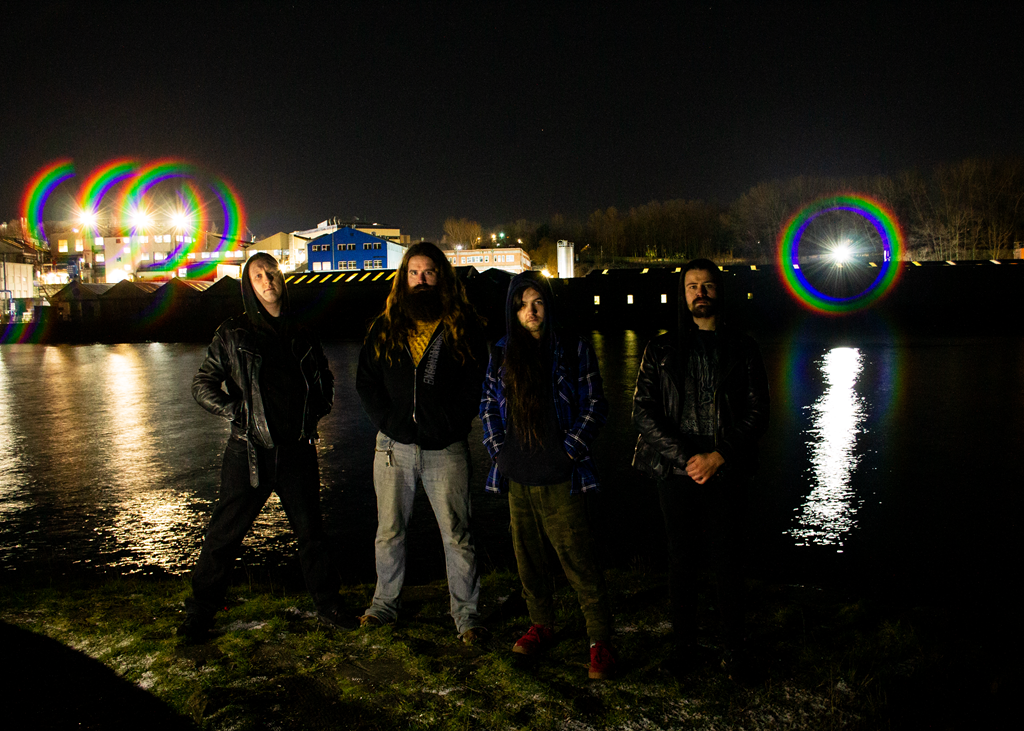
band photo

Century Media – 22nd July 2022

Christopher Nosnibor

New York’s enigmatic Imperial Triumphant are described as ‘avant-garde metal’. They’re certainly that. I mean, they’re overtly metal, with guttural, growling vocals, barrelling riffs, thunderous drums and booming bass – but Spirit of Ecstasy is a brain-lowling, bewildering affair that lumbers, lurches, and leaps between other genres within those solid metal parameters.

The tracks are all past the six-minute mark, and pack in a lot of action and a lot of range, to the extent that six minutes in, it’ll feel like the first three minutes were another song entirely. At least, that’s my experience – of an album that’s so expansive and diverse that it completely takes over. You stop following, and find yourself simply being transported on a journey with no clear trajectory, thrown this way and that, tossed about as if by turbulence, or something more.

Following the blistering percussive battering and jolting, sliding sonic deluge of the album’s opener, ‘Chump Change’, ‘Metrovertigo’ is exemplary: it slides into angular industrial discord, and there’s a lot going on – mostly jazz-leaning, but then there’s the megalithic bombast of the song’s climax which is more neoclassical, and ‘Tower of Glory, City of Shame’ also incorporates bold neoclassical elements along with samples and jarring, skewed guitar along with the demonic snarling.

When they go all-out on the riffage, the density is eye-popping, rib-cracking, skull-crushing. When they go the other way, into orchestral territories, as in during the into on ‘Merkurius Gilded’, it’s sweet, sublime. Of course, those delicate segments are obliterated in the blink of an eye in swathes of immolating black metal. And then, there’s the all-out experimental jazz / noise no-wave racket of ‘In the Pleasure of their Company’ that really does drill And lurch, showcasing the duo’s capacity to explore different sound and textures.

It’s not exactly technical in its musicality – although there’s no shortage of technical ability on display here – but compositionally, Spirit Of Ecstasy is something else. Each song condenses so many ideas, so many segments into a single piece that it’s utterly bewildering at times.

The most remarkable achievement is that it doesn’t sound forced or false or corny, when by rights, none of this should work and it should be awful. But it isn’t. It is, however, intense, and draining so. You’re tossed this way and that, samples crackle in the distance, and quiet passages are disrupted by detonating drums and squalls of noise.

Everything spews from the satanic caverns of hell, and leaves you feeling worn out, battered, beaten. And buzzing.

AAA

~ai-49c5e0dc-82d2-440c-b6f2-5e40d506cd09_

Panurus Productions – 29th May 2020

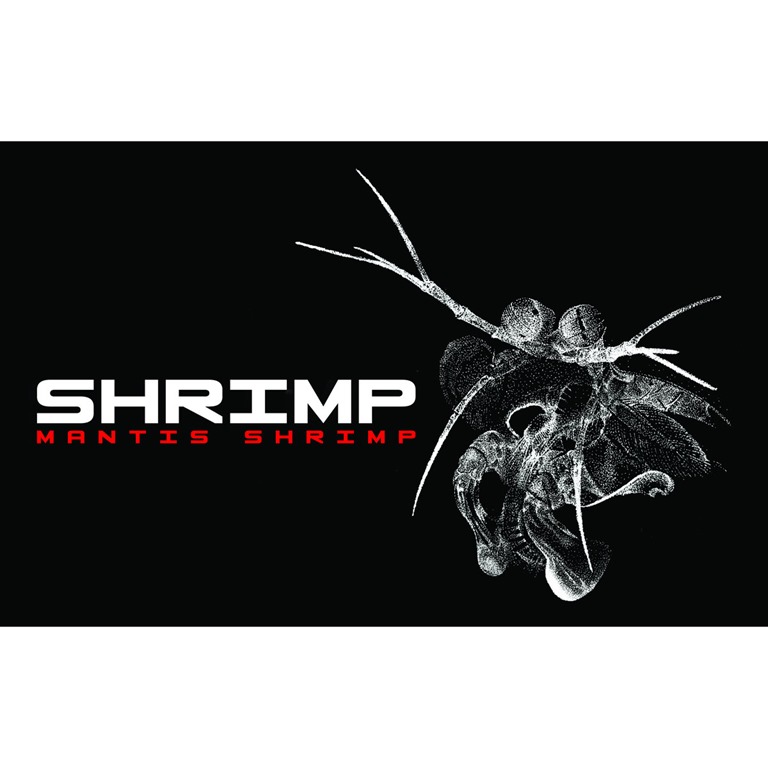
Mantis Shrimp is the second Shrimp release following their eponymous debut released just over a year ago, in January 2019. A collaboration between various luminaries of the underground scene in Newcastle, England, and Ryosuke Kiyasu, who has enough projects to his credit to render him a one-man music scene in Japan, they describe their sound as ‘chitinous free grind onslaught’.

Now, if ‘Shrimp’ has connotations of small fry, the proverbial puny weakling, and their debut laid waste to those associations with a devastating cacophony , then it’s perhaps worth approaching this instalment with the knowledge that the mantis shrimp is the brutal bastard of the small crustacean world: a violent predator, mantis shrimp typically eat fish, crabs, clams, snails, worms, shrimp and squid, and can take on animals significantly larger than themselves thanks to their ‘calcified clubs’

According to Wikipedia, these hard exoskeletal bastards are sometimes referred to as ‘thumb splitters’ ‘because of the animal’s ability to inflict painful gashes if handled incautiously…—mantis shrimps have powerful claws that are used to attack and kill prey by spearing, stunning, or dismembering’.

This pretty much how it feels listening to the four pieces here.

There’s a strain (and strain is an apposite word choice) of experimental jazz that sounds like the end of a piece, where the instruments all clatter and rumble as they wind down from a climax, only that is the piece, and each piece lasts an eternity. That’s this. Only with grating guitars and bowel-ripping guttural vocals, which add depth and detail to the calamitous, chaotic racket.

‘Sealed Explosion’ eases it in gently, with thirteen minutes of stop / start percussion and stuttering discord that crashes and stumbles in all directions. It’s an absolute headfuck, and it’s only more intensely difficult from hereon in, with the sludgy squall of ‘Grasping Pincers’ bubbling through a relentless racket of crashing cymbals and stammering anti-chords and screeding feedback. The lull after four and a half minutes feels like an immense relief – but then you realise there’s another ten minutes to go as Watts starts up the gasping growl (first mistyped amusingly but perhaps appropriately as ‘sharts up’) that will continues to rasp through the bewildering tempest of noise. There’s some wild funk bass played at a hundred miles an hour around the ten-minute mark, but it’s submerged beneath a brain-shredding wall of noise. That’s no criticism, just a mere statement of fact.

‘Boiling Swamp’ spring and spurs, eddying electronics and guitars that sound more like they’re tuning up than playing actual music dominate the thrumming, humming drone of feedback and bass groans and tweeting sonic contrails. It gradual descends into a bass drone miasma, while shrill top-end feedback shrieks all around. Not a lot happens, but amidst the turbulence, there are wordless howls and hollers. Or, if words, impenetrable. As they ought to be. Watts resorts to guttural snarls in the dying minutes of this chthonic noise dirge that evokes Sunn O))) minus the growling low end crossed with Whitehouse, and which leaves ‘Endless Collapsing Staircase’ in prospect.

It’s 28 minutes of trippy experimental electronica that straddles noise, power electronics and various ambient forms. Percussion rattles erratically amidst trilling industrial scrapes, gradually building through wordless vocal drones and swelling layers of extranea. Anguished howls, shrieks, and barks punctuate a mess of feedback and flailing percussion. It’s a fucking horrible mess of noise: there’s a stab at a fractured bass groove in amongst it all. It never quite gets going, and 14 minutes in, it sounds like it’s all over as it collapses into a mess of pedals, but we’re barely at the midpoint. Watts sounds like he’s being gutted in a ceremonial act that’s been incorporated into a Large Unit performance. Or something. It hurts. But it works.

a3330396040_10

Dio Drone – 9th December 2016

Christopher Nosnibor

OvO’s evolution over the last couple of albums has been substantial: the brutal, demonic mania of Cor Cordium was utterly terrifying in terms of just how dark and full-on it was. Not that Abisso was exactly a stroll in the park – in fact, it was truly petrifying – but some of the unbridled power of its predecessor was exchanged for a greater range, and a closer attention to nuance with the incorporation of texture and depth-bringing electronics.

Creatura marks another shift, and yet again, they’ve come up with something that sounds like it is not of this world. Pushing hard through the loud / quiet dynamic – with major emphasis on the loud, of course – the sound is has a dense, industrial quality. Combining live and programmed drums, with the bass and percussion tracks being first recorded live and then looped, sampled, overdubbed, overlayed and generally embellished, mangled and fucked with, it incorporates elements of black and industrial metal, but it’s so much more. And so much more spine-shakingly scary. This is beyond the realms of horror. It’s extreme, for sure. It’s an album that will smash your psyche.

The stop / start drums and snarling bass calls to mind early Pitch Shifter. Above all, it’s the percussion that dominates. The mechanised double-pedal bass drum sound pounds like fury while Stefano shrieks and howls through shards of feedback on opener ‘Satanam’. ‘Eternal Freak’ explodes with drums on drums, the snare sound approximating planets exploding, and guitars like jet engines roar with cranium-cracking intensity. The deep, snarling vocal on the title track is from beyond the bowels of hell and cannot possibly have emerged from the throat of anything with even a strand of human DNA. What kind of creatura is this? It’s a mutant beast from the deepest netherworld, and that’s for sure.

While the bulk of the material is driving and muscular, the sample-strewn experimental breakdown of ‘Matiarcale’ strips things back to a kind of mutant hip-hop. The fear chords which swim around the pulverizing drum track introduce another layer of disturbance.

The appropriately-titled ‘Zombie Stomp’ reveals a hitherto unseen facet of the band, manifesting as a glam rock boogie – OvO style, of course. It’s still loud, hard and heavy, but there’s even an approximation of a vocal melody, albeit one as performed by Alvin Stardust’s reanimated corpse after it’s been possessed by the spirit of Zuul.

‘Buco Nero’ continues in this vein, a post-punk track at heart, with a tune and everything, but churned to a gut-wrenching doom-filled sludge. Counerpart ‘Buco Bianco’ is a techno-disco behemoth, along the lines of Chris and Cosey collaborating with Bathory. It would be a danceable pop tune if it wasn’t so utterly fucked up. The same can’t be said of ‘Bell’s Hells’, which is a minute and a half of thunderous savagery. Closer ‘March of the Freaks’ has hints of Nine Inch Nails about it but the stuttering beats and gnarled vocals make even Broken sound like Soft Cell.

It’s the fact that Creatura so often hints at accessibility which never emerges in actuality which renders it such a fearsome and disturbing work. Whereas Cor Cordium and Abisso were truly other-wordly, Creatura inches close enough to recogniseable forms to offer a warped reimagining of the world we know and as such, is deeply uncanny, in the Freudian sense. Weird, dark and intense, it’s an album only OvO could spew out: it’s also eye-poppingly awesome.


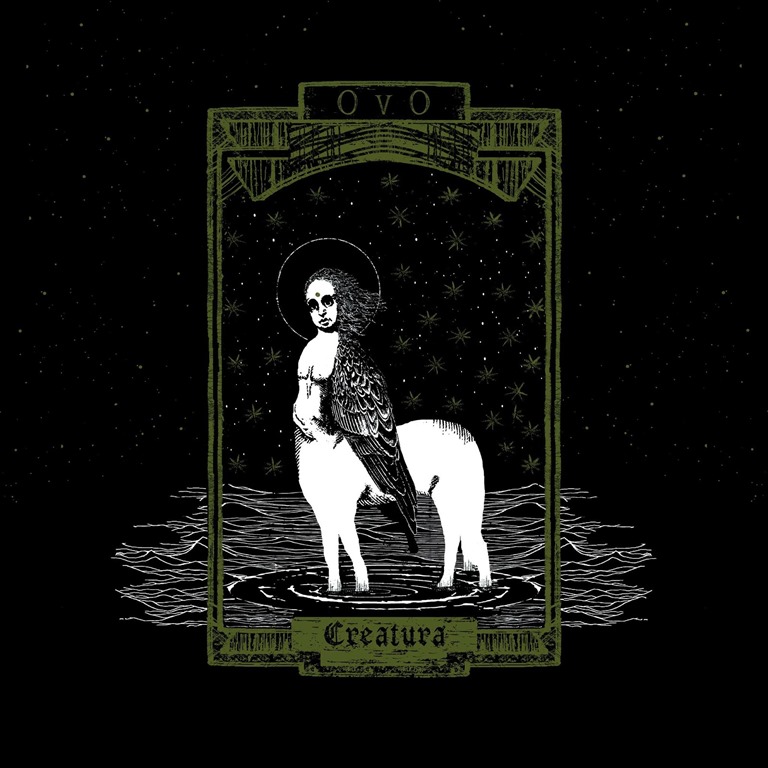
OvO cover