Posts Tagged ‘Crescendos’

New Heavy Sounds – 7th November 2025

Christopher Nosnibor

Cold in Berlin have come a long way over the course of fifteen years and now – after a six-year wait – five albums. Give Me Walls was sharp, defined by an angular post-punk sound which crackled with nihilistic fury. You wouldn’t exactly say they’ve mellowed over time, but they’ve become heavier, darker, and have evolved the ways in which they articulate themselves, musically, and lyrically.

January 2024 saw the release of the EP The Body is the Wound, which introduced the thematics of a new and significant project, and indicated where they were heading, and came with references to an album to follow later in the year. The year came and went, and here we are, at the dark end of 2025. But as lead single ‘Hangman’s Daughter’ and follow-up ‘The Stranger’ foreshadowed, Wounds was worth the wait. Perfection takes time, and that’s what Cold in Berlin have delivered here.

But more than that, this is an album which wrestles with difficult stuff. As the band explain, “Wounds is a series of songs about the different ways people live with and process ‘the wounds’ of their lives… A strange celebration of that formative pain we have all experienced in some way. The loss and joy of survival – the celebration of finding others like us, the gift of knowing life comes after fire.” For all the noise of how we need to talk more about mental health, the fact of the matter is that it’s really just that. There is still real stigmatisation surrounding the subject in real terms, with reactions to attempts at open dialogue tending to range from diminishment, to dismissal, to awkwardness and paralysis before moving on with an embarrassed cough. And yes, I’ve learned this from painful experience. Raise the subject of mental health, anxiety, and dealing with bereavement while adjusting to life as a single parent with a teenage daughter… it’s amazing how many people go quiet, how many friends seemingly vaporize. The simple fact is that the majority of people are afraid to touch on dark topics, to venture to dark places. They can’t handle it, and so… these are my personal wounds, and why this album reaches parts other albums don’t get close to.

It’s ‘Hangman’s Daughter’ that raises the curtain on the dark drama which will infold over the course of nine songs. The big riffery that’s become their signature – and nowhere more apparent on predecessor, 2019’s Rituals of Surrender – is very much present, but there’s a lot happening here, in terms of detail and dynamics and arrangement, with pulsating electronics which owe considerably more to Krautrock than glacial gothy / post punk traditions prominent in the mix, and some thunderous drumming (which does belong more to the post-punk lineage) and some spindly lead guitar work that’s classic trad goth – and at the same time, the song’s imagery leans more toward folk-horror. It’s a potent mix which sets the tone – and standard – for a phenomenally powerful album.

Piling straight in hard and rather faster, ’12 Crosses’ is another showcase of stylistic eclecticism: the tense, cyclical guitar straddles post-punk and noise rock, and creates a claustrophobic, airless atmosphere – then, seemingly from nowhere, there’s brass, which, in context, introduces something of a post-rock feel, which is a sharp contrast with the spiky, Siouxsie-like stylings of the song’s second half. It’s fierce, but there’s more than straight attack.

A mere two songs and ten minutes in, and I find myself reeling by just how much they’ve packed in, in terms of range and depth, and the attention to detail is superlative.

‘Messiah Crawling’ provides… not respite as such, but some headspace to be carried along by a thick, doomy, Sabbathesque riff. ‘They Reign’ marks a change of pace, bringing down the tempo and volume, leading by a more narrative lyrical form. After a slow-build, rolling drums and swathes of synth conjure a cinematic sonic expanse which is transportative. It makes you feel, on a spiritual, perhaps even primal level. Landing mid-album, ‘The Stranger’ is rather sparser and it’s the synths which take the lead on this shimmering prog-pop cut, which grows and twists as it progresses towards a surging climax. Final song, ‘Wicked Wounds’ is nagging, and somehow antagonistic and more overtly punk in its delivery

Throughout, Maya’s vocals are powerful, commanding, but equally, rich and emotive. Not only has she never sounded better, but never more suited to the music her vocals are paired with, running the gamut of emotions from anguish and torment to reflective and vulnerable.

With Wounds, Cold in Berlin have stepped up to another level – and in every aspect. It didn’t seem possible they could keep getting better… but here, they’ve surpassed expectations, and once again exploded beyond the walls of genre to deliver an album which is something else.

AA

Wounds_Cover_3000x3000

Lamour Records – 16th December 2024

Christopher Nosnibor

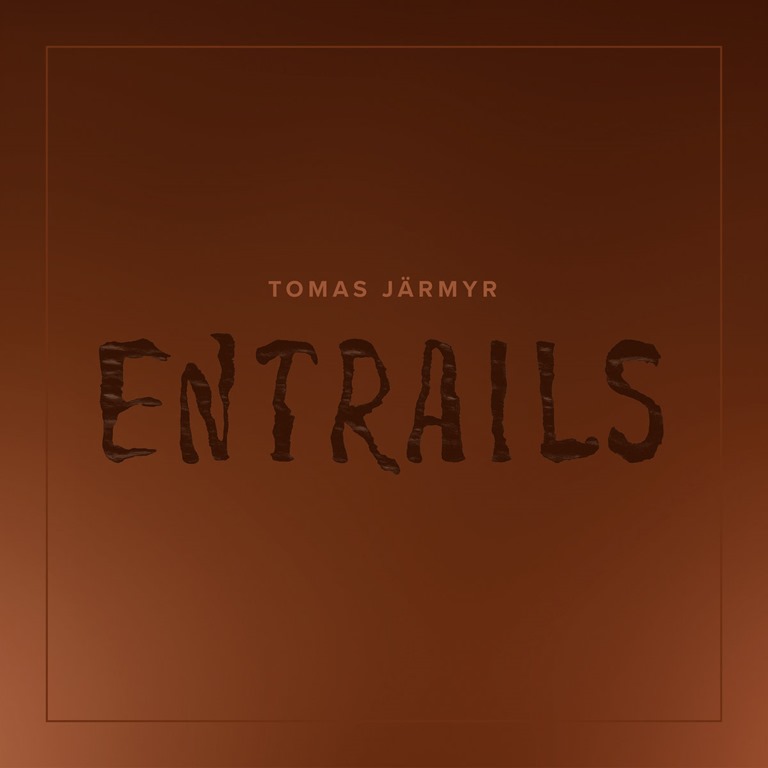
When you read that someone is exploring metal, the likely response is to think it’s a metal album in terms of genre. But not Tomas Järmyr: his explorations into ‘the deep frequencies of metal’ are quite literal. ‘Using only cymbals’, the notes accompanying the release explain, ‘Järmyr creates a slowly rotating musical sphere that holds beauty, deep emotion, and fierce heaviness… Entrails is an album that shows the core of his artistic expression and serves as the perfect introduction to Tomas Järmyr as a solo artist.’

As titles go, Entrails is unquestionably visceral in its connotations – another thing which would, for many, suggest a ‘metal’ album rather than a ‘metal’ album. But here we have an album containing a single track, which runs for thirty-eight minutes, consisting of nothing but cymbal work.

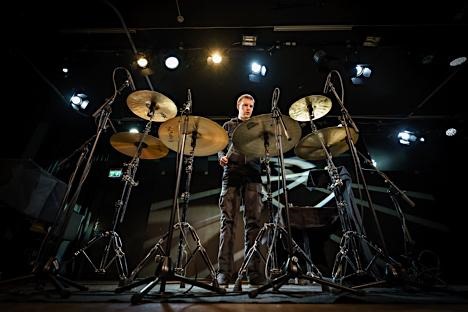
Thomas J

Photo: Thor Egil Leirtrø

In the context of a full drum kit, cymbals provide expression, and also an amount of ‘fill’ to the overall sound, not only of the kit, but the band, creating a wash of resonance in between the notes of the instruments and the beats of bass drum, snare, toms, etc. How do cymbals stand up when separated from everything else?

In the hands of Tomas Järmyr, we come to appreciate the range and versatility of the cymbal. Size certainly matters, and Järmyr’s setup which spans small, light crashes to huge, resonant, bell-like peels, against a backdrop which builds from a delicate clatter to a clashing, splashing tempest, is educational.

There are passages where the clatters and chimes diminish, and make way for dank, atmospheric reverberations which evoke the gloom of subterranean caverns, dark ambience which bears no discernible resemblance to anything remotely percussive, at least to the average ear – or mine.

Sometimes, with experimental music, the mystery is an integral part of the appeal: I prefer not to know which instruments have been used to create which sounds, and similarly, knowing how certain synths or laptop-based programmes have been used to conjure alien sounds feels like something of a spoiler, because I find myself scrutinising the sound and seeking to pick apart its construction. On Entrails, the opposite is true, because most of the sounds simply do not correspond to the source. So on the one hand, Entrails does lay bare the guts of the instrumentation: on the other, as I sit in the swirling drone which fills the room around the eighteen-minute mark, I find myself perplexed and in absolute awe at the creativity of the musicianship. How does anyone come to discover that cymbals have the capacity to be this versatile, to create sounds like these? Who has both ready access to this many cymbals and the time to explore their sounds and the way they interact with one another in such detail?

Sometimes the crescendos are delicate, slow-building: others, they explode unexpectedly. At others still, the sensation is more like an outflow of molten lava from a volcano.

Järmyr’s metal album may be devoid of guitars and guttural vocals – or, indeed, any vocals – bit it is still, for the most part, a heavy album, issuing forth an immensely dense, dark atmosphere, not to mention some quite challenging frequencies, spiking at the top end while rumbling heavily around the lower sonic regions. Ominous, oppressive, Entrails is not a fist-forward punch to the guts, but instead prods and pokes. The effect is no less potent.

AA

a3439715063_10

This is It Forever – 9th October 2020

Christopher Nosnibor

The years between 2004 and 2008 are something of a musical blur now, a period – well over a decade past – spent at the Brudenell and various other venues – immersed in endless post-rock sets. The similarness of so many bands wasn’t a problem: if any one band could be considered immersive, then the scene as a whole melted into one protracted wash of chiming guitars and a succession of crescendos that became almost an integral aspect of life itself as everything drifted into a mist that was pure escapism from the drudgery of work.

I didn’t actually manage to catch Bradford’s Falconetti, and instead came to them by way of a mate who picked up an EP – the self-released debut Oceanography – at Jumbo Records in Leeds on the basis of the staff write-up (Jumbo’s attention to detail with the inclusion of a blurb for everything they stock, coupled their support for local and regional acts really is special)

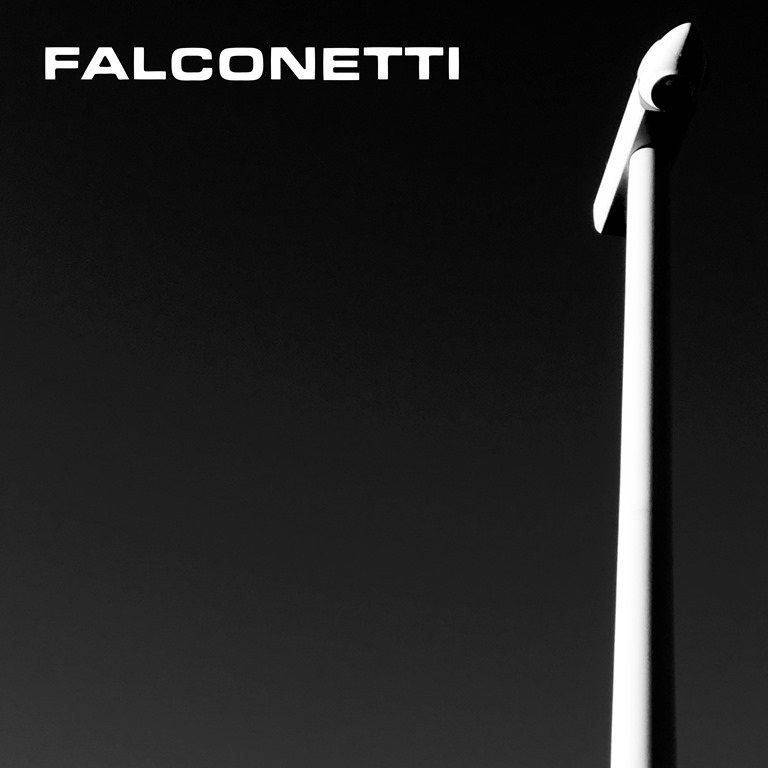
Falconetti were active between 2003 and 2008, and the fact A History of Skyscrapers contains just eight tracks while representing (almost) the entirety of their output (barring ‘Solid State’ from their last EP, given away at their final show in 2008, and the outlying hip-hop crossover collaboration ‘Falconetti vs The Enemy’), which emerged slowly along the way is evidence of just how they didn’t rush their work. It may or may not have hampered their short-lived career, but listening back now with fresh ears, it’s clear that the small legacy they have left is practically faultless.

If the title, and the connotations of ‘a history’ suggest chronology, then A History of Skyscrapers brings a certain disappointment, in that the tracks aren’t arranged in order of release, and do don’t provide a sense of the band’s evolution over time: the idea here is that A History of Skyscrapers approximates the debut album that never was.

‘Finisterre’ stays with the nautical themes that dominate their work, but breaks from the instrumental form to incorporate soaring, semi-operative female vocal curtesy of guest singer Emma Adams, against a shimmering, lustre-filled guitar.

‘Body of Water’, from the 2003 Oceanography is outstanding, building as it does from a delicate meandering into a full-on heavy riff noise that betrays their appreciation of Jesu and takes it further into lunging God/Godflesh territory with grinding guitars, lumbering bass, and some wild free jazz horns.

Lifted from that final EP, ‘Sonatine’ is lugubrious, spacious and the sound of a band expanding and experimenting, while the twelve-minute ‘Straits of Messina’, from 2007’s Finesterre is a slow-simmering exercise in subtlety and texture that’s minimal and mournful and moving, as is fitting for a composition about the site of a major earthquake in 1908, which had a magnitude of 7.1, almost completely destroying the cities of Messina and Reggio Calabria, with the loss of between 75,000 and 82,000 lives.

For all of the bleak history, there is a grace and elegance about Falconetti’s work, and while much of the sound of very much rooted in the time, not least of all the mournful brass and rolling guitar lines, softly picked and reverb-heavy, over a decade on, their brooding atmospherics and range, which incorporates elements of shoegaze and dream pop and ambient and even post-punk mean that Falconetti sound as fresh and exciting as ever.

There’s a strong temptation to reflect on what could have been, but knowing how fickle and chance-based the music industry is, it’s as likely they’d have stalled and faded around regional small-venue gigs as it is they’d have progressed to headlining 200+ capacity venues nationally and acquired the kind of cult following in mainland Europe that would have kept them going nicely. So instead, it’s better that A History of Skyscrapers is viewed with the appreciation for the music as it is: as ‘Magna Via’ builds to a cathedral of a crescendo, we’re reminded of just how cathartic and invigorating the best of post-rock was, and still is. And while Falconetti may be no more the music still remains – and is now considerably easier to access, thanks to This Is It Forever and this compilation.

cover hi res

Pelagic Records – 25th January 2019

Christopher Nosnibor

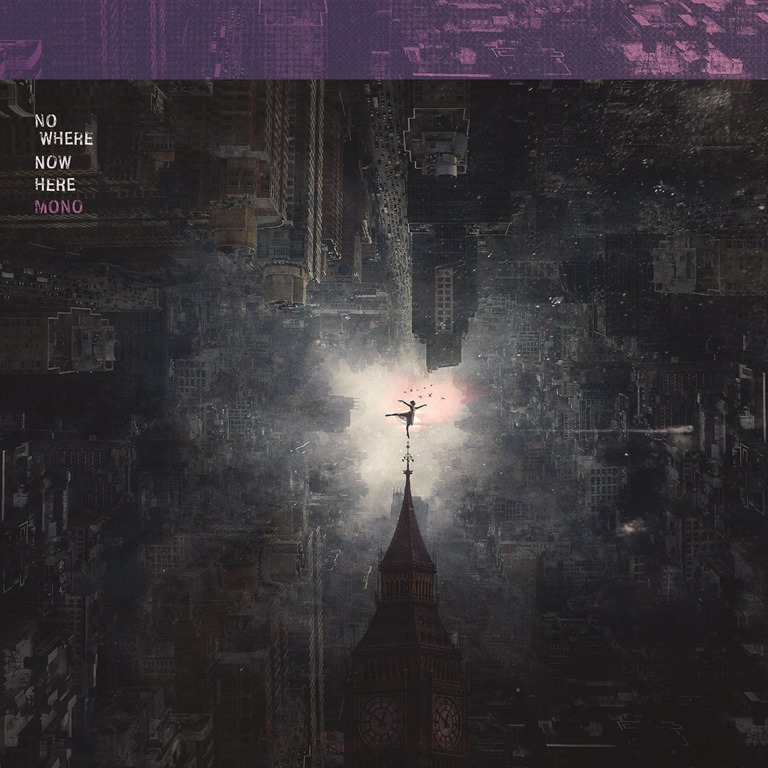
I’m something of a latecomer to the Mono party, although given their credentials, I can’t fathom for the life of me why I haven’t explored a single one of the nine albums they’ve released over the last twenty years. Too much music, too little time, is probably the only real reason. And, witnessing them live by way of an introduction, my initial impression was only middling: on the night, I found more in Jo Quail’s surging waves of cello and the gritty abrasion of A Storm of Light. But context matters, and I had gone for the other two acts, and so now, with a large gin and a candle for light, I’m ready to approach their latest, the Steve Albini-recorded Nowhere Now Here with fresh ears.

‘After You Comes the Flood’ lifts the curtain on a proggy post-rock crescendo that offers up every shade of grand. It’s a crescendo that doesn’t only sustain, but swell to even more monumental proportions, with layer upon layer of sound and richer, dirtier distortion filling the background.

Quite a deal was made when Mono featured vocals for the first time not so long ago, and the performance of songs with singing seemed to be a major topic of conversation when I caught them in Leeds last year. They’re used sparingly here, and on the vaporous, shoegaze drift of ‘Breathe’, they serve more as another instrument than a focal point.

The string-soaked epic that is the title track again follows what is by now a well-established post-rock formula of long, gradual builds and rapid drops that pull back from the precipice, but it’s so magnificently executed that it would be churlish to criticise. And herein lies the album’s success: much of the material does fall under the broad umbrella of ‘standard’ instrumental post-rock (although acknowledging that Mono were one of the bands who contributed to the creation of a genre whose tag they reject is important), the compositions and their performance are masterclasses in shifting dynamics and delayed gratification. As they lead the listener through ponderous passages of awe-inspiring grace only to reveal towering cathedrals of sound just around the corner, even the predictable forms hold unexpected twists, like the sonic supernova that explodes at 5’39” on ‘Sorrow’.

Steve Albini is perhaps more commonly associated with ‘noisy’ music, but his reluctance to be credited as a producer is a reflection of his abilities as a technician, and the fact he strives to capture the essence of any given band’s sound rather than impose his own vision on their work. With Mono’s method involving playing live in the studio, the pairing makes complete sense, and it’s fair to say that Nowhere Now Here very much captures not only the sound, but the feel of a live show, with the shifting tension, emotional resonance of chiming guitars brooding in the dark, and the exhilarating rush of catharsis that effuses through a truly blistering crescendo. It’s those indefinable, unmanipulable details which make Nowhere Now Here.

AA

Mono - Nowhere