Posts Tagged ‘comedy’

The Los Angeles-based punk band Sour Tongue was formed in the early days of the 2020 pandemic by Satori Marill and John Murphy, the mission of the alternative rock, grunge and riot grrrl influenced quintet remaining the same ever since their inception: “when it stops being fun, we’ll end it.” Fusing disco with grunge, hardcore punk with country, plus much more, Sour Tongue utilise humour and a degree of sonic absurdity to convey a deeper message of angst and desperation.

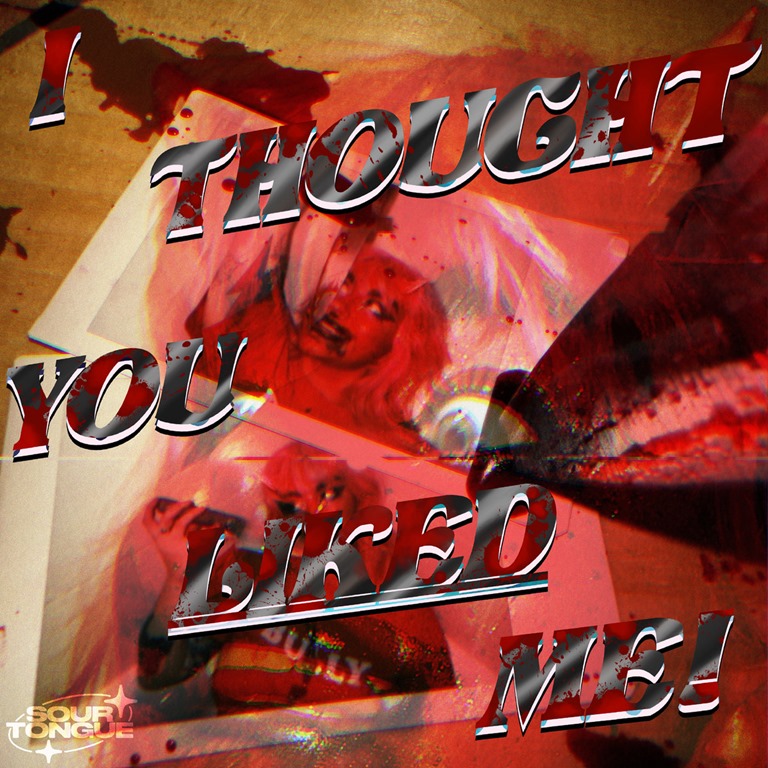
Having developed a global fanbase via four previous singles, an EP, plus a US tour with industrial rock heavyweights KMFDM, the band’s bright and breezy new single ‘I Thought You Liked Me!’ was written about a near universal experience felt by girls. “I wrote the song about being manipulated and lied to, getting fed up and reversing the roles,” states vocalist Marill. “I wanted to talk about reactive impropriety, but with a feeling of guilt tucked beneath it, because I think a lot of people are ashamed to admit when they do something out of spite. I think anyone who has ever had their heart broken and done something stupid in return can relate to it.”

The single is taken from a forthcoming EP entitled Final Girl, their most personal set of songs to date. Told as a story in four parts, it is about the intersection of grief, betrayal and heartbreak, yet loving through it all. It’s dark, it’s angry, it’s funny, it’s heartbreaking. It’s a horror comedy.

AA

a3781067620_10

25th July 2025

Christopher Nosnibor

2025 continues to be the year of the comeback. My remark earlier in the week, in context of the release of the new Curse Mackey album, that ‘three years is a long time’ pales rather when considering that just a few days before I’d covered the first Red Lorry Yello Lorry album since 1992, and reviewed The March Violets touring only their second album proper since their formation in 1981. And that’s before we consider the unexpected return of the Jesus Lizard… But somehow it’s been fifteen years since the last new material from the progenitors – and likely sole purveyors of – cack pop, Wevie Stonder.

2017 compilation The Beast of Wevie provided a potted history of their exercises in perversely calculated naffness, and since then… tumbleweeds.

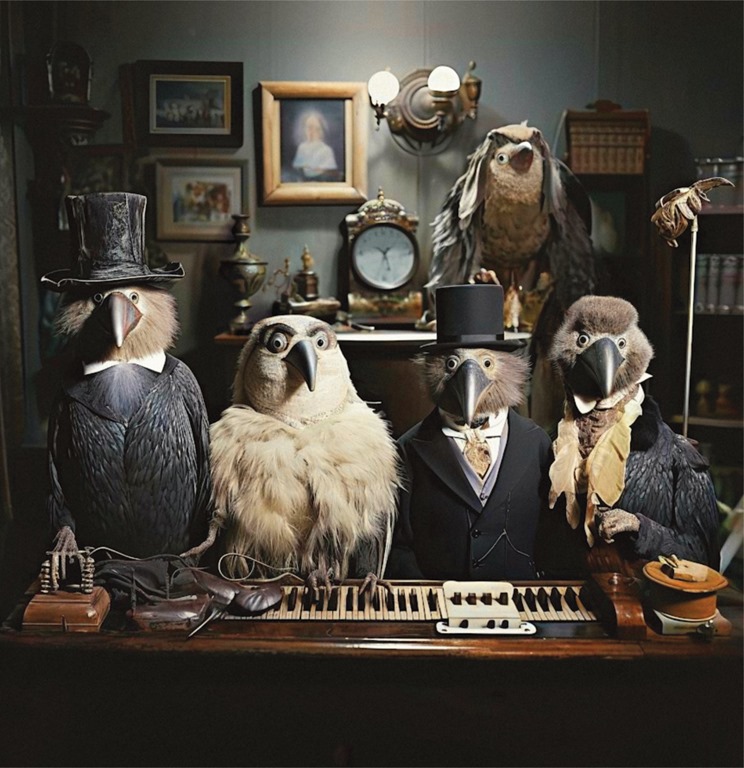
Sure Beats Living is every bit as bizarre as anything they’ve done previously, and successfully nudges beyond… and then accelerates over the horizon. It’s not so much cack as demented. Instrumentally, it’s a wide-ranging work, sometimes expansive, bold, ambitious, even cinematic – as the epic, widescreen ‘Piccolo’s Travels’ illustrates. But mostly, it’s a collection of lo-fi electronic dicking about with irreverent babbling in lieu of serious or meaningful lyrical content. So it’s a step up from previous outings…

It’s a sparse electro backdrop which frames the first track, ‘That’s Magic’, and no doubt fans will like it – but not a lot – as is immediately ventures into the domains of the strange, a Scots brogue narrating the steps for performing a magic trick which culminates in setting the cards alight, vacuuming the ashes and moulding polystyrene. What makes it all the stranger is that the delivery isn’t so different from that of a self-help tutorial, and reminds me of the guided relaxation CD I got given when I attended CBT some years ago.

‘Carpet Squares’ pitches the old-skool groove of Mr Oizo against crunching industrial beats… while providing detached directions for carpet-laying amidst a looping reverb-heavy collage of commentary on carpet. But then the urgent wibbly wobbly ping-pong bloopery of ‘Vanja and Slavcho’ takes things to another level. There’s storytelling, there’s cheesy Japanese-influenced pop and a whole lot more, and it’s quite bewildering – but then, so is the stomping glam beat of ‘Tiktaalik’, which kicks in hard and with all apparent intention of bringing something serious… As if these guys have a serious bone in their collective bodies.

In fairness, quirky humour and an overt lack of seriousness should never be seen as corresponding with a lack of ability to be serious. It’s often reported that comedians are in fact depressives who use humous as a way of deflecting their inner sadness, and clowns are often masking. And something in the title carries hints of a clowning subterfuge: you can almost picture a downbeat character in a US sitcom turning to the camera, breaking the third wall, with an exaggerated shrug, and declaring, ‘Well, it sure beats living’. And so it may just be my own state of mind which colours my perception of this, or maybe there really is something darker beneath the surface. ‘Push It’ inches towards funk, but ends up elsewhere completely, and in seemingly taking some of its lyrical inspiration from the game ‘Bop It’, it’s the epitome of irreverence. ‘Customer Services’ is a perfect pastiche of corporate phone line hold hell, down to the frustrated ‘shut up’ and tossing aside of the phone. Because beneath humour usually lies truth.

However you look at Sure Beats Living, this is a different kind of nuts. The core of the album is constructed around bleepy, shuffling electronica and spoken word… spoken word what? They’re not diatribes, they’re not really narratives, either. They’re words, often detached from meaning, or otherwise, where not abstract, designed to be daft, and Wevie explore words because they can.

Sure Beats Living is perverse, it’s stupid, and it know it is, because that’s what it sets out to be. And in these dark, depressing times, we need the wild irreverence of Wevie more than ever. Welcome back, you barmy buggers.

AA

AA

a3883920739_10

Panurus Productions – 6th October 2023

Christopher Nosnibor

Heavy music doesn’t have to be po-faced or excessively serious, and there have been a few comedy metal and noise bands through the years. Lawnmower Deth are one which swiftly spring to mind, but the likes of Municipal Waste, and lesser-known acts like Grindcore Cakemakers also make hard noise while being a far cry from the existential rage more commonly associated with their genres. And that’s good. The world needs variety, and there’s more than one way to alleviate the grimness of life on this sorry planet.

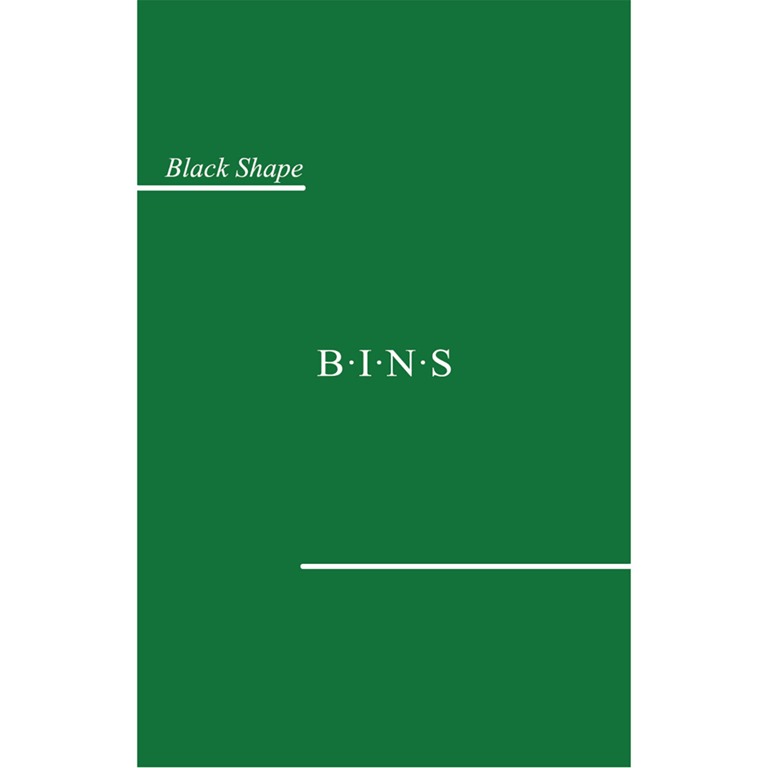
This album from Black Shape is perhaps the absolute antithesis of Godflesh’s seminal Streetcleaner. With the lumbering weight of a runaway bin lorry, Black Shape rumble their way through eleven tracks of bin themed absurdity, utilising their knack for writing material that is as colossally heavy as it is varied and comedic. Most of the tracks are around the two-minute mark, with just a couple of four-minute outliers. On the surface it’s a whole mess of noisy shit, but closer listening soon reveals a wildly varied album which incorporates jazz, spoken word, nu-metal, rap and thrash.

‘The Beast from the North East’ is a dirty, shouty punk effort – more Anti-Nowhere League than The Pistols. Dense, muscular, with filthy sludge guitars, pant-soiling bass, and a wild solo which occupies half the song’s duration. The production is rough and raw, and this works in its favour: the guitar on ‘I Wanna be a Binman’ positively tears from the speakers, and it’s like being at a gig and standing so close to the PA that your nostrils vibrate. If you’ve never done it, you need to at least once, although earplugs are recommended. You still feel the force without fucking your hearing for the rest of your life. It’s a throbbing stomper reminiscent of Ministry circa Psalm 69. Only instead of burning for the needle, it’s a hard craving for lugging refuse. They pillage every style going here: ‘Dogshit Bin Juice’ takes a turn for the choral in the verses between ball-busting glam stomp riff breaks. It’s hilarious, but also makes you think. You sometimes hear that binmen are pretty well-paid. But would you do this, for any money?

If ‘Put Me in the Bin’ is the most overtly old-school punk cut, the recording is again more industrial, which couldn’t be more at odds with the offbeat, off-the-cuff lyrics, while ‘Once a Binman, Always a Binman’ throws a curveball with a gentle intro and unlikely lift of ‘Love Lift us Up Where We Belong’ before going full-slugging nu-metal / grunge crossover, with the meaty heft of Tad bringing the blue collar grit to proceedings. There are some moments of astute observation and social critique which land quite unexpectedly, but it just goes to show that it’s a mistake to write of a so-called ‘comedy’ album – or indeed any comedy – as shallow, lacking in content, or emotional depth. ‘The Story of How I Died’ brings lilting harp and Pam Ayres style narrative.

Beyond bin-related themes, this is not an album that’s predictable in anyway, lyrically or stylistically, with piano ballads pressed against squalling hardcore assaults. And because of the punk / thrash / metal leanings, and the overall daftness of many of the lyrics and the overall concept, Black Shape’s musicianship is likely to be overlooked. But the range is a measure of immense versatility and competence. Black Shape are the Bill Bailey of dustbins, and BINS is a work of sheer brilliance.

AA

a2313098061_10

Christopher Nosnibor

Sometime during lockdown – which one, I can’t remember exactly, but likely the first, where here in England what initially looked like being a couple of weeks, ended up being more like a lifetime. After the lockdown announced on 23 March 2020 was extended on 16 April for ‘at least three weeks’ and in fact running into June, the fear surrounding the lifting of restrictions saw references to Stockholm Syndrome circulating with increasing frequency in the media.

Described as ‘a psychological response’ which occurs when hostages or abuse victims bond with their captors or abusers, and the victim may come to sympathize with their captors, and

may even begin to feel as if they share common goals and causes.

The name originates from a failed bank robbery staged in Stockholm in 1973, where Jan-Erik Olsson, and his charismatic accomplice Clark Olofsson held four employees as hostages, remaining captive for six days in one of the bank’s vaults, and when the hostages were released, none of them would testify against either captor in court; instead, they began raising money for their defence.

While the syndrome is disputed, the concept is something of a source of fascination. Personally, I had never been one of those who found themselves ‘loving lockdown life’, but found myself apprehensive about the easing of lockdown: what would be the ‘right’ way to behave in public, how would things ‘work’? I didn’t need to worry about pub and gig etiquette for a while, but was more fearful of other people than I was of Covid – because people are unpredictable, and after being cooped up for so long, who knows how many might have lost it?

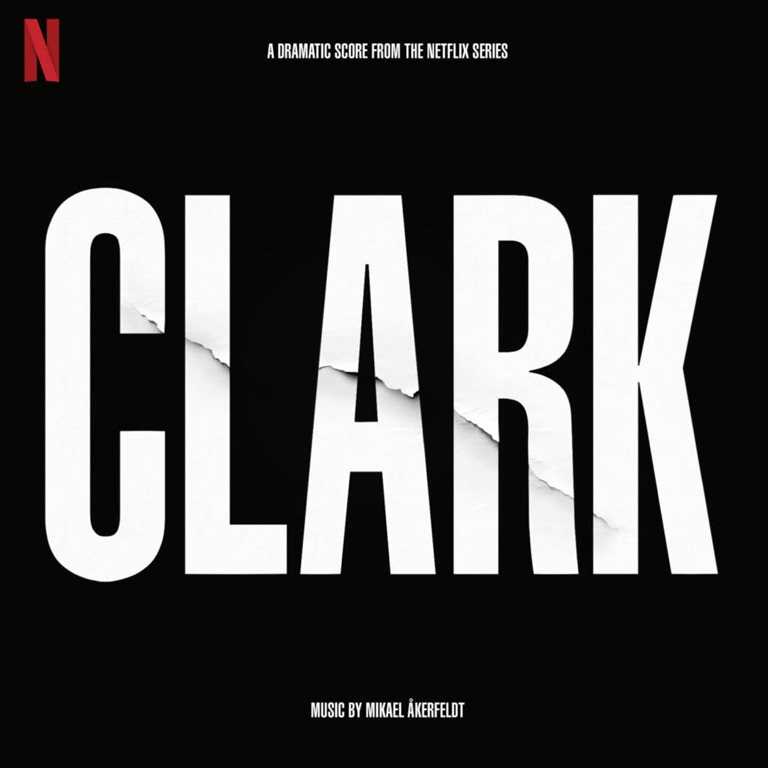
Swedish Netflix mini-series Clark is the story of Clark Olofsson, and while it’s won awards, I found its stylised and flippant comedy-drama approach to be pretty ‘meh’. There’s vague amusement to be had, but ultimately – and for obvious reasons – presents Olofsson as ‘cool’, a cheeky bad boy out for But then, just because it’s not what I would have wanted it to be doesn’t mean it’s no good, it’s just not my bag.

While there are some bold intercuts of ‘proper’ songs featured, it’s not a series where you find yourself really paying attention to the soundtrack for the majority of the time. Listening to the soundtrack independent of the series, it’s a mystery as to why this is.

Of course, much of the interest in the soundtrack will be the fact that it was scored by Mikael Åkerfeldt of progressive metal legends Opeth – and as much as this score is overtly cinematic, it draws equally on progressive rock, funk, laid-back jazz, and 70s cop shows. The last nine of the thirty-four tracks feature vocals, and this portion of the album feels separate again, and may have worked as a separate release or bonus CD or something, as it’s quite a leap. Hell, ‘Måndag I Stockholm’ goes full Sabbath. Incongruous is an understatement and it’s hard to know what to make of it all. Then again… why not?

AA

Varied, engaging and evocative, it’s imaginative and listenable and entertaining – and a lot less frustrating than the series itself.

 MikaelAkerfeld_Clark_LP_Gatefold.indd