Posts Tagged ‘Coaxial’

Cruel Nature Records – 6th February 2026

Christopher Nosnibor

It may be a ‘me’ issue that when an artist suddenly hits the world with a blunderbuss blast of output, I feel somewhat overwhelmed. There are some acts I know I like which I’ve simply avoided because of not knowing where to start. Overfaced is the word: a term I discovered perhaps in my early teens when presented with a large roast dinner. The sheer amount of food in front of me instantly killed my appetite, to the point that I felt queasy and, not knowing where to start, felt incapable of starting, meaning that I would fold before I’d barely consumed a forkful.

While I did manage to ease myself into The Fall after dipping a toe, I very much feel this way about the likes of Merzbow, among others, and, to a lesser extent, the Melvins – and the specific reason I come to them is because of their early 00s trilogy, when they cranked out The Maggot, The Crybaby, and The Bootlicker on top of one another. Ben Heal, aka Coaxial has truly splurged with his output this year, as Redux Trilogy is not even the total. My head swam. The prospect of listening to, and reviewing, three albums in one session, for one piece… No. Just no.

Having stepped back and broken things down to more bitesize chunks, I have come to Redux Media, which is in fact the second of the trilogy, first. This feels reasonable, since this is set of releases is sold as ‘a triptych of cassette releases conceived as a recombinatory system rather than linear statement’. I will return to the other releases in due course, but for now and content to dabble.

The seven tracks on Redux Media are soft, squelchy, electronic and experimental. ‘Onyaxial’ lifts the lid on the set with a bibbling, bubbling stroll that sits in the space between minimal techno and the pulsating grooves of Kraftwerk. It bends and warps a bit, and there’s some weird shit going on near the end as it battles with its own identity, but this is the very essence of this release – it’s about the exploratory, about swimming out of the lanes and venturing wherever the mood takes.

‘Tryxxial’ is mellow, an 80s drum machine sound plodding along while keyboard sounds trill along, mixing all shades of electronic action with no suggestion of a conclusion, and rightly, with the wonky babbling of ‘Peswyx’. ‘Pymediax’ wanders into eighties electropop, but without vocals, and it’s more DAF than Depeche Mode.

In the main, it’s entertaining, and despite the overarching connotations of seriousness, it’s quite good fun. Redux Media finds Ben Heal venturing every which way and drilling deep into different dimensions.

AA

a3334382171_10

27th July 2022

Christopher Nosnibor

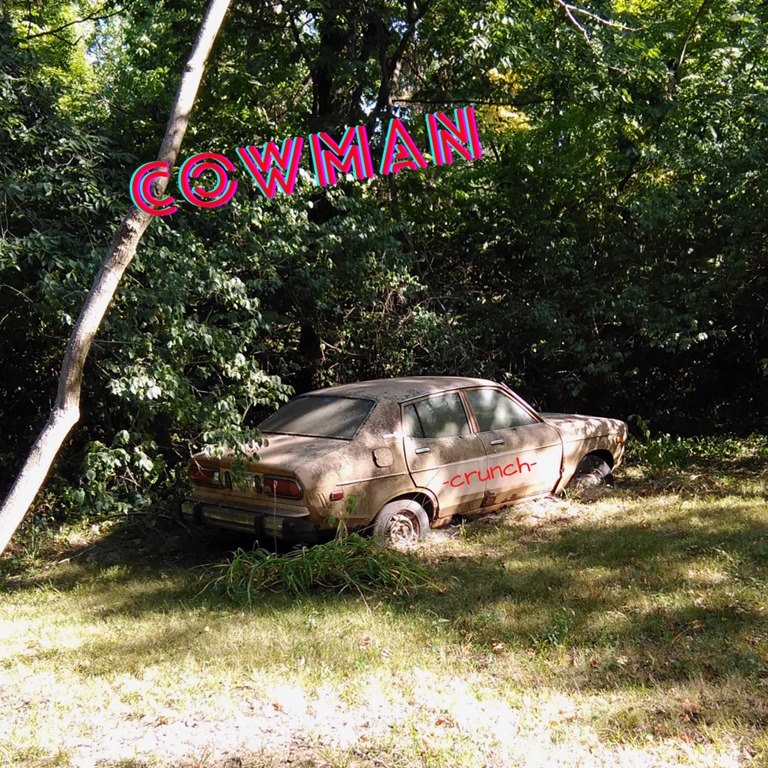
The multi-talented, multi-discipline and perhaps, sometimes, not-so-disciplined Benjamin Heal returns in his Cowman guise, under which he’s been operating since 2005 with a new EP, his first in a decade, after previous creative detours with Coaxial and various other projects.

Over the course of a sporadic and low-key career, li-fi, slackerist Cowman has – impressively, whether by fluke or by design – appeared on bills with a slew of cred cult acts, including Ack Ack Ack, Gum Takes Tooth, Cove, Pifco, and John Parish. These notable highlights are well-deserved, but it’s a pleasure to witness cowman making a comeback, instead of simply revelling over former achievements.

Crunch is a magnificently loose knockabout and if Pavement comparisons may seem lazy shortcuts, they’re also entirely justified. But then… then… there’s a whole lot more. The first track, ‘Concrete Eyes # Turpentine’ , with its inexplicable punctuation, starts out a fairly straightforward, if angular indie kicker in the vein of Slanted era Pavement, with wonky, off-kilter guitars that sound vaguely out of key, but then spins off into an epic swirling expanse of psychedelic post-rock. The whole thing is almost ten minutes long, drifting into a long, sluggish drone in the final minutes.

There’s an easygoing picked guitar line that contrasts with jittery drums on ‘Concrete pink Dots’ before the distortion kicks in, and it does so hard, creating a dense whorl of noise that almost buries the drums, until they surrender to the barrage of din, and we find ourselves drifting in a cloud of hazy shoegaze guitar. It’s mellow, but it’s loud, and that’s where the hypnotic ‘Bloody Diffuser’ picks up as it embarks on another ten-minute sonic journey, a slow-smouldering soundscape heavy on delay and reverb. Switching through a succession of segments, where the transitions are jolting, flicking changes rather than seamless transitions, it’s by turns doom drone and psychedelic drone, but ultimately, it’s all the drone – and that’s a good thing.

Ordinarily, two versions of one song on the same release feels a bit lazy, but then again, I spent the 90s buying singles on three formats in order to obtain all the versions and B—sides, and I have a hunch that Benjamin is also well-versed in the maxi-single and the like, and it so happens that the cropped version of ‘Tobacco Eyes’ that rounds it off actually feels like a single that had it been released circa 92 would have been lauded in the press as being in the vein of Pavement and Truman’s Water. And in fairness, that’s just as true in 2022.

AA

a2287012021_10

Christopher Nosnibor

Coaxial is one of a number of musical vehicles for musician and academic Benjamin J. Heal. For the uninitiated, it’s perhaps worth running some of his biographical information:

His prolific COWMAN project (2005-present) continues to plumb the depths of puerile noise-punk and a lo-fi trash aesthetic, following the footsteps of a more composed Hanatarash and early Boredoms. 2014’s acclaimed Tosokurui-no, under the pseudo-Japanese guise of Hitobashira-ni, illuminated the artistic potential found in exploring the limits of control and chaos in a band environment utilizing guitar, drums, synthesizer, sampler and gong. 2016’s The Brightness on Dead Water (as morimori) showcased contrasts between digital and analog, electric and acoustic, songs and sounds; nudging the chaotic themes of its predecessor into fields of more organic abstraction.

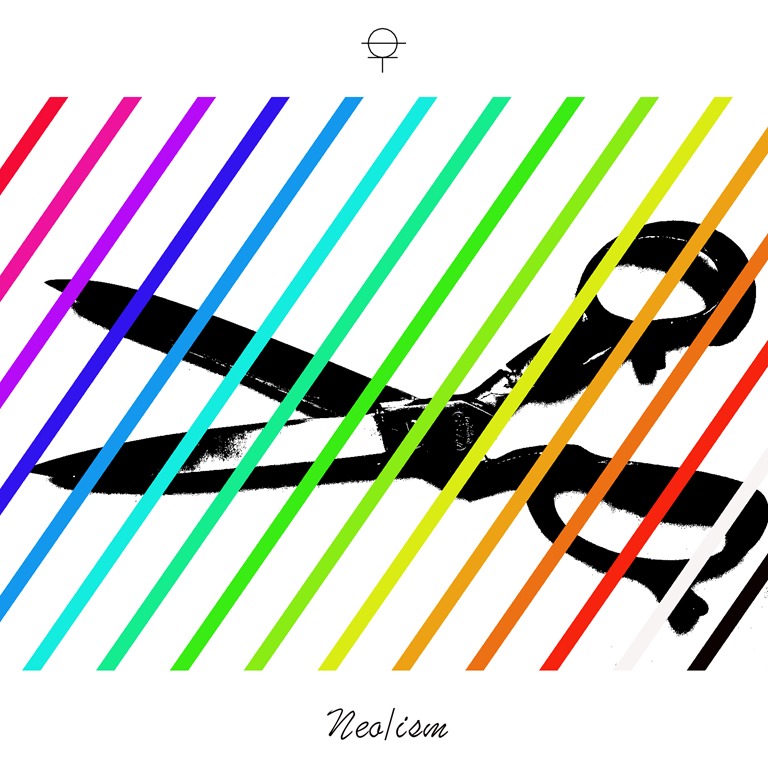
Coaxial – shortly to be reissued on casette by Cruel Nature represents the outlet for his explorations in instrumental electronica, and on Neo/ism there’s humour and wordplay not just in the song titles, but in the compositions themselves. This is apt, given that the Neoist art movement was largely satirical in its purpose, revelling in the depthlessness of postmodernism, and sometimes defined as ‘a prefix and a suffix with nothing in between’. Accordingly, the atmosphere on Neo/ism is denser than its light and airy predecessor, Ear Kites I (2018), but rather less heavy and sinister than 2017’s Reductio ad Absurdum.

It’s a vintage organ synth sound and even more vintage drum machine track that kicks starts the album with the seven-minute ‘Homobile’ (geddit? Linguistics jokes are always a nonstop laughriot). It lands between chillwave and krautrock, but some subtly de-synced chord changes have a vaguely disorientating effect at the start, before tapering off towards semi-ambience around halfway through and the beats dissolve to vapour.

‘Jocks v. Cocks’ is all about the juxtaposition: the track goes harder on the percussion, while the bubbling synths warp and twist, before ‘The Gay Gun’ plunges deeper into bloopy robotix territory, a melting pot of textures and tones swimming in a kind of sonic Brownian motion. ‘The Lonesome Onanist’ goes darker, and Heal’s application of long, grating drone notes that defines many of the tracks on Neo/ism is very much at the fore here.

There are strong technoindustrial elements in the mix, but then there’s a lot going on throughout, often simultaneously. Moreover, the composition seem to become increasingly strange and dislocated as the album progresses: ‘Homocrcy’ marks the mid-point with some spaced-out, space-age dubtronica, ‘Pink Noise’ crackles and pops in a time-shifting microtonal explosion, and ‘Gay Baby’ sounds like it should have featured on the soundtrack to an episode of Nathan Barley.

This all perhaps leads to the question of how serious any of this is, which in turn leads to the question of whether or not it actually matters whether or not the intent is parodic: one can’t hear intent in a recording, and can only engage with the contents of the recording itself. Given the way in which the sound of Neo/ism is characterised by contrast and variance, the experience elicits no one response, but many. And it’s quite a groove.

cover