Posts Tagged ‘Brutal’

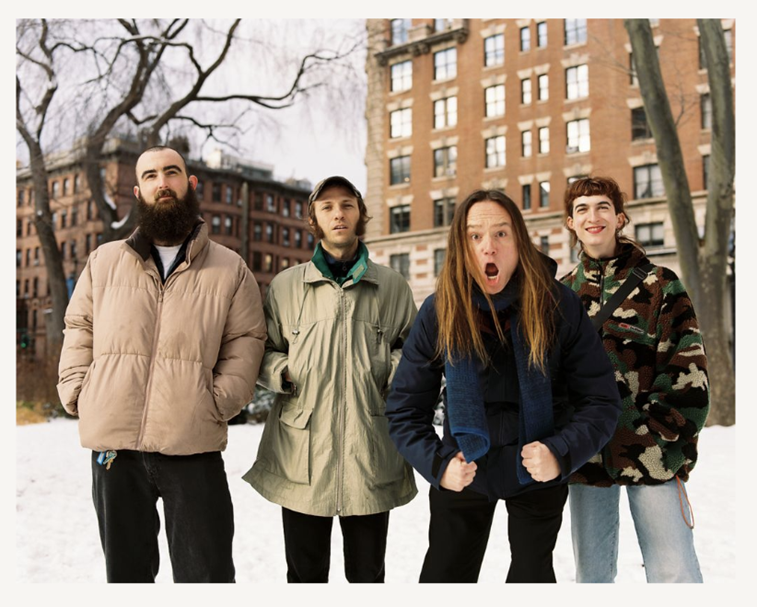
The forthcoming full-length from Los Angeles–based band Agriculture, The Spiritual Sound, traces a narrative arc through extremes.  The album is largely a fusing of the visions of its two principal songwriters: Dan Meyer and Leah Levinson.  Though distinct, their voices converge in a singular spiritual grammar—one that defines the totality of The Spiritual Sound, not as separate parts, but as one unified expression.

Dan writes like someone clawing toward the divine through noise, channeling Zen Buddhism, historical collapse, ecstatic grief. Leah’s songs move differently: grounded in queer history and AIDS-era literature, amid the suffocating fog of the present, they carry the weight of survival as daily ritual.  Levinson leads the charge on the album’s latest single ‘The Weight’  of which she comments:

“’The Weight’ is part of a series of songs on the album that bears witness to queer life. It was written reflecting on a particular month last year when so much seemed heightened. It seemed like many of my friends were being harassed in public—both verbally and physically—for being trans, for being queer, and/or for being women (it’s not always clear which). This was also a time when I was feeling a lot of love and a lot of community. I wanted this song and the songs around it to honestly reflect both these elements. I wanted to write about transness but didn’t want to rely on political aphorisms and indulgent images of suffering. I wanted to paint a holistic portrait of queer life.” – Leah Levinson

AA

image-990451000004513c

Photo credit: Olivia Crumm

AGRICULTURE LIVE DATES 2025:

Sep 3  Bristol, UK — The Exchange
Sep 4  Brighton, UK — Dust
Sep 5  London, UK — Oslo
Sep 6  Manchester, UK — White Hotel
Sep 7  Newcastle, UK — The Cluny 2
Sep 9  Leeds, UK — Brudenell Social Club
Sep 11  Dublin, IE — Workman’s Club
Sep 12  Cork, IE — Nudes
Sep 13  Belfast, NIR — Voodoo
Sep 14  Glasgow, SC — CORE. Festival
Sep 16  Paris, FR — Point Ephemere
Sep 17  Kortrijk, BE — Wilde Westen
Sep 18  Haarlem, NL — Patronaat

Oct 8  Brooklyn, NY — Union Pool (Record Release Show)

Oct 27  San Antonio, TX — Paper Tiger $
Oct 28  Austin, TX — Mohawk $
Oct 30  Atlanta, GA — Masquerade $
Oct 31  Saxapahaw, NC — Haw River Ballroom $
Nov 01  Silver Spring, MD — The Fillmore $
Nov 02  Philadelphia, PA — Union Transfer $

Nov 04  Louisville, KY — Zanzabar
Nov 06  Oklahoma City, OK — 89th Street
Nov 08  Albuquerque, NM — Launchpad
Nov 09  Phoenix, AZ — Valley Bar
Nov 11  Denver, CO — Hi-Dive
Nov 13  Salt Lake City, UT — The State Room
Nov 14  Boise, ID — Neurolux
Nov 16  Seattle, WA — Madame Lou’s
Nov 18  Vancouver, BC — Fox Cabaret
Nov 19  Portland, OR — Mississippi Studios
Nov 21  Sacramento, CA — Cafe Colonial
Nov 22  San Francisco, CA — The Chapel
Dec 04  San Diego, CA — Soda Bar
Dec 05  Los Angeles, CA — Lodge Room

$ with Boris

30th May 2025

Christopher Nosnibor

With mainstream music, all you have to do is stay tuned to prominent radio channels, watch TV, let Spotify recommend the next tune, and it lands in your lap. The further away from the mainstream you get, the more it becomes about keeping your ear to the ground, word of mouth, groups and forums – and occasionally, press releases and inboxing. Despite being a fan of a number of the acts involved, I discovered this one quite by fluke via a share in a Facebook group, which announced that ‘OMO DOOM , the Glasgow group who comprise members of Mogwai , The Twilight Sad , Desalvo , Areogramme and Stretchheads put out a new track this week, an intensely claustrophobic cover of a Head of David track – the brilliant late 80s UK Blast First act who everyone seems to have forgotten now’.

I’m perhaps one of the few who not only didn’t forget Head of David, but has a near-complete collection of their releases – and I can tell you it’s taken some years to assemble. While their first album – LP, released on Blast First in 1986, and later reissued as CD in 1990 isn’t too hard to find, and has a buzz around it on account of the fact that Justin Broadrick drummed with the band between leaving Napalm Death and forming Godflesh (although he didn’t actually play on any of their releases apart from their 1987 Peel Session, which features on the nigh-on impossible to find White Elephant compilation), their other releases are like rocking horse shit (as they used to say at record fairs in the 90s.

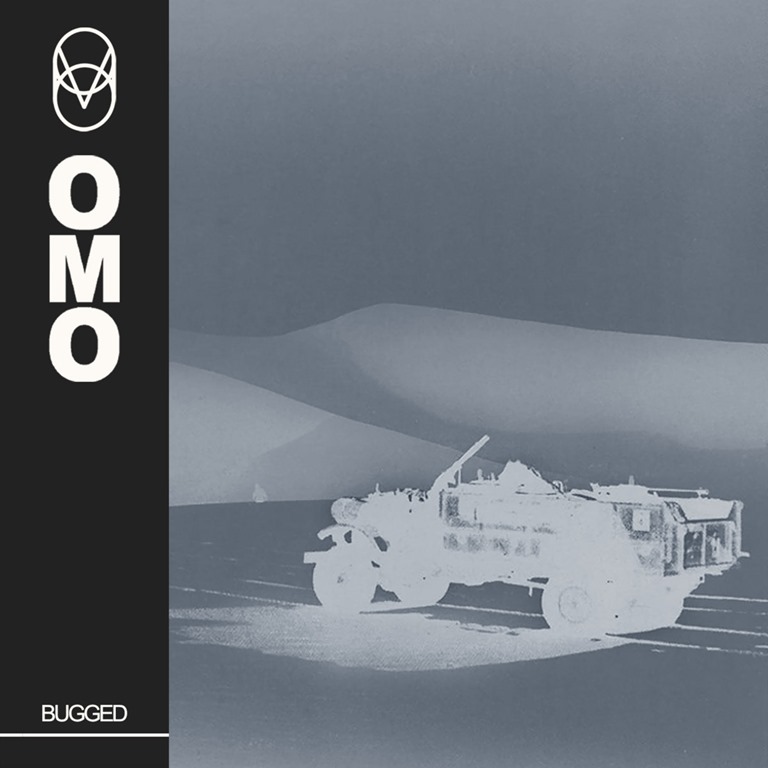
Their second LP, Dustbowl, which featured ‘Bugged’, was produced by Steve Albini and released in 1988. It’s a belter. While I snagged a vinyl copy in the 90s, I have never yet seen a CD copy in the wild, and it’s never been reissued, either. ‘Bugged’ also appeared on one of the 7” singles in ‘The Devil’s Jukebox’ Blast First 10-disc box set, and that’s hardly common or cheap either.

H.O.D.I.C.A. was a semi-official live album which captured Head of David playing at the ICA in London, delivering a purposefully unlistenable set with the explicit purpose of repelling EMI music execs who were sniffing around, and their final album, Seed State, released in 1991 lacked the same brutal force as its predecessors.

The reason for the history lesson is that they’re largely forgotten because their music is so hard to come by, and because Stephen R. Burroughs has pursued a very different musical trajectory subsequent to their demise, with both Tunnels of Ah and FRAG sounding nothing remotely like HoD.

But if you can hear Dustbowl, it’s aged well, a snarling mess of noise driven by pulverising drums and snarling, grinding bass that tears you in half. And this is where we resume the story, I suppose.

OMO DOOM’s version of ‘Bugged’ is slower, starker, more malevolent and menacing than the original which was ferocious in its unbridled brutality. Here, we get thick synths and punishing drum machines dominating the sound. The bassline is twisted around a way, and sounds for all the world like ‘Shirts’ by Blacklisters, and at around the two-minute mark is slumps into a low-frequency range that’s unsettling to the bowels as well as the ears. This sure as hell brings the dirt. The vocals are rabid. It’s gnarly, alright. Fans of Mogwai and The Twilight Sad and the late, lamented Aerogramme may be drawn to this, but probably won’t like it: it’s the work of a bunch of musicians trying something that’s nothing like their regular work, and it’s unfriendly and inaccessible and noisy and horrible… and of course, I absolutely love it. And maybe it could spearhead a Head of David Renaissance… We can hope.

AA

a2460593698_10

Room40 – 9th May 2025

Christopher Nosnibor

Merzbow is an artist who requires little to no introduction, and one with a catalogue so immense – with in excess of five hundred releases credited – it’s beyond daunting for not only a beginner, but even a keen noise-lover. This is the reasons I personally own very few releases, and have only picked up a few incidentally along the way.

As Masami Akita approaches seventy, and Merzbow marks forty-five years of noise, this output shows little sign of abating, but it does seem an appropriate time to reflect on some previous releases which may be considered either ‘classic’ or ‘pivotal’. 1994s Venereology has been receiving some retrospective coverage of late, revered largely on account of its reputation for being the loudest, harshest thing ever, ever.

But here we have a reissue of The Prosperity Of Vice, The Misfortune Of Virtue, released a couple of years later, a much lesser-known work, but still during what’s broadly considered to be the golden era of the 90s, and, as the accompanying notes suggest, it’s ‘one of a series of unique editions from his vast catalogue that reveals a side of his practice often under represented.’

During the late 1980s and into the 1990s, Masami Akita was sometimes working on film and theatre music. In this space he created a series of recordings that capture the full scope of his sound worlds.

Given the nature of these settings, his compositional approaches were varied, seeking to create both intensely crushing walls of sound and more spatial, and at times rhythmic, pieces that plot out an approach to sound making which atomises his universe of sound, and uncovered the singular detail that is often consumed in the whole.

The Prosperity Of Vice, The Misfortune Of Virtue is the soundtrack to the theatre piece Akutoku no Sakae/Bitoku no Fuko by Romantica. Based on Marquis de Sades’s Historie de Juliette ou les Prosperités du vice & Les Infortunes de la vertu, this recording was originally released with limited distribution and remains one of the lesser available Merzbow recordings.

Completely remastered and contains an additional cut from those original sessions, this reissue of The Prosperity Of Vice, The Misfortune Of Virtue presents nineteen blasts of noise and rumbling and shrieking, scraping discord and dissonance. Many of the pieces are brief – a couple of minutes or so – and there is so much texture and tonal rage here, its sonic vision is remarkable. To many, of course, it will just ne noise – horrible, nasty, uncoordinated noise. But listen closer, and there is a lot happening here. The noise is, indeed, nasty, and the output is, brain-blasting chaos, for sure. But what these untitled pieces showcase is an intense focus and an attention to detail which is so much more than brutal noise. The Prosperity Of Vice, The Misfortune Of Virtue is, comparatively speaking, not that harsh – although when it is harsh, it’s absolutely next-level brutal with shards of treble exploding in walls of ear-shredding punishment. It contains a lot of clattering and crashing, like bin lids being dropped, and cyclical, thrumming rhythmic pulsations. There are tweets and flutters, bird-like chirrups flittering above cement-mixer churning grind with gnawing low-end and splintering treble, overloading grind and would oscillations.

The Prosperity Of Vice, The Misfortune Of Virtue is the sound of a man pushing all the buttons and turning all the dials at once and seeing just how far he can tweak them. There are moments of minimalism, of slow, stuttering beats, of mere crackles, passages one might even describe as ambient – a word not commonly associated with Merzbow. But the way in which The Prosperity Of Vice, The Misfortune Of Virtue explores these dynamics, and contains quieter more delicate segments, not to mention some bleepy electronica that borders on beat-free dance in places, is remarkable: while so much noise is simply repellent to anyone who isn’t attuned to it, The Prosperity Of Vice, The Misfortune Of Virtue offers engagement and offers openings to listeners with a broader interest in experimental music.

Eclectic is the word: we hear a chamver orchestra at the same time we hear strings being bent out of shape and what sounds like a Theremin in distress. While a fire alarm squawks in the background. This is everything including the kitchen sink. Imaginative and experimental, it’s noise with infinite dimensions.

AA

RM4195 front

Lavadome Productions – 14th February 2025

Christopher Nosnibor

This is a release that’s certainly been a long time in coming: twelve years, in fact. Time flies when… life happens. Chaos Inception tore their way through two albums and then… they stopped. But now the Brazilian makers of supremely full-on black / death metal are making their return with eleven cuts of  brutal, two-hundred-mile-per-hour, gnarly, grunty metal, charged with the most relentless riffs and no apologies.

Sometimes, words feel somewhat futile in the face of such a monster attack. As you find yourself gasping for breath and your heart racing – because music can be so much more than something you listen to, and can be something that you feel, and even if death metal isn’t something you’re drawn to, there’s something to appreciate in the blistering force of a release like this.

Vengeance Evangel is everything they promise when they write that ‘The music channels an intensity that transcends mere aggression, evoking a spirit of triumph from within its seemingly chaotic energy.’ The energy does, indeed, seem chaotic: every track presents a maelstrom of churning guitars, blistering blastbeats, double-pedal bass drum attack, raw-to-the-core – but making music this frenetic also requires immense discipline and technical ability, and this is something that perhaps escapes the casual listener, or the non-listener who skips it and dismisses it as just so much frenzied metal noise.

The intensity of the sonic assault is matched by the intensity of focus in the performance on Vengeance Evangel. The solo work on ‘Falsificator’ is absolutely wild, a complete fretboard frenzy, swerving between a blanket of rapidfire notes and virtuoso mania, crazed tapping and squealy notes all over, while the drumming is nothing less than a raging tempest that goes way beyond timekeeping and hits a different platform of exploding, beat-heavy attack.

They slow things considerably on the slugging, chugging, ‘La Niebla en el Cementerio Etrusco’, but while the chords are low and slow the percussion blasts away at twice the speed, and the contrast alone is utterly brain-melting, and that’s before you get to the gut-punching guitar and vocals dredged from the pits of hell.

The title track is perhaps one of the weakest, by virtue of its predictability, being rather death-by-numbers – or perhaps it’s simply because of the strength of the tracks it finds itself in company with.

The jolting explosion of ‘Ultima Exitium’ is fast and furious, and it feels as if they crank everything up a few notches on the second half of the album for a pounding, punishing, relentless assault, pulling out unexpected stops/starts, swerving tempo changes, eye-popping solos – it’s got the lot, and all delivered with heartstopping precision. Vengeance Evangel is monster of an album, and the level of detail within each composition is remarkable. No wonder it took twelve years.

AA

a1483258639_10

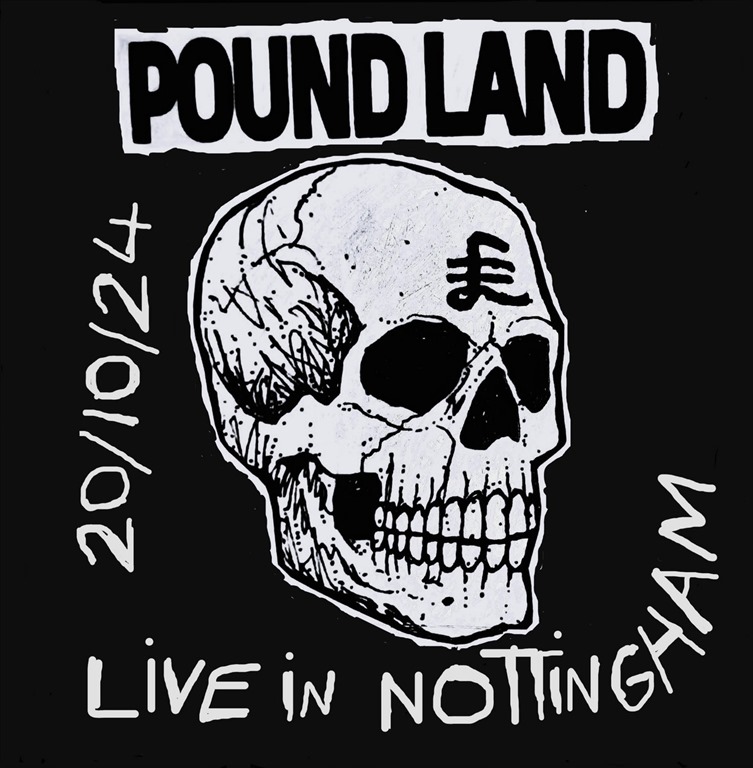
One of Aural Aggro’s favourite bands of recent years, Pound Land have kicked off 2025 with a live album recorded late last year, available at the bargain basement price of Pay What You Like and free to stream.

Their third live release, it captures them almost a year and a half on from Live at New River Studios, which featured an altogether different – and one off – iteration of the band, and on storming form, a mess of feedback, thunderous percussion and dingy bass. The majority of the set is lifted from Mugged, with a full-on rendition of ‘Pistol Shrimp’ and the trudging grind of ‘Power to the People’ bringing the pace to a mid-set crawl. It also provides the first live airing of new song ‘Cunt Do It’, which comes on like The Anti-Nowhere League’s Animal fronting Swans as they tackle a Hawkwind cover.

It’s pretty bloody brutal, and absolutely bloody brilliant.

AA

a3267585524_10

Dret Skivor – 6th December 2024

Christopher Nosnibor

Another Bandcamp Friday, and another release from Dret Skivor, Swedish microlabel specialising in noise and weird shit on super-limited cassettes. This time, they promise a ‘beast of a release with artwork by the manbear that is Christian Blandhoel’. Side A of this cassette is supposedly the ‘hard side’ and Side B the ‘soft side’, but these things are relative. Mellow it is not, and it really is a beast. I’d been forewarned that it was a long one, and landing the same day I received my copy of the new Swans live album, which clocks in at a solid two and a half hours, I kinda shrugged it off, thinking ‘yeah, it’s long, but it’s not that long…’ and while that’s true, I perhaps should have paid more heed. It’s not just about the length with this one. It’s about the intensity. For the records, Swans’ Live Rope is intense, and anyone who’s seen them live in the last couple of years will appreciate this. But the recordings simply do not capture the experience of being in the room, the decimating volume.

The thing is, there’s listening to music, and listening to music. I listen to music while I’m cooking, but it’s simply on, whereas listening to music with focus is a true commitment, and takes some energy. Listening to and knowing is half the battle takes a lot of energy.

Only a minute or two into ‘bad things keep happening’, the first of the album’s seventeen tracks, there’s some extreme panning that’s churning my guts and making me dizzy, and that’s without the feedback whistles that land just in the region of tinnitus. It’s a challenging six minutes, which culminates in a slugging blast of lung-rattling bass sludge.

‘Danger draws near to what you hold dear’ is an ominous piece of dark ambience with static and hum, crackles and horrific ruptures of noise. There’s a low-end mechanical thrum, low-end doom frequencies which flicker and throb, and nothing comfortable. Trilling feedback whistles for what feels like an age before more bass frequencies hit, and then static and distortion hums and hovers from left to right. This feels like an album designed to inflict optimal pain and anguish. ‘Loaded for bear what a nasty spectackle’ hums and drones and bursts distortion to a point at which is inflicts pain at first, before diminishing in its confrontational intensity.

Scraping strings and ominous drones and unsettling discord and dissonance are all the things one might expect from a track bearing the disturbing title ‘i always hope to find you fully dilated and bleeding’, and when it suddenly ruptures into a surge of fizzing distortion, the experience becomes quite overwhelming – and it only grows more intense and anguishing as it progresses.

‘rendering flesh’ is a horrible mess of buzzes and hums, feedback trills and screams, snarling whirls and blips and glitches. And the unpleasant frequencies, the serrated waves, the tension-building noise just keeps on coming, with the pieces packed back-to-back with no pause for decompression. At times it sounds like a bulldozer ploughing through the speakers, at others it’s more akin to the soundtrack to psychological torture or one of those anxiety dreams from which you wake, drenched in sweat, which fuck the entirety of your day.

Christian may be in pain, and and knowing is half the battle is his way of letting it out. Or perhaps he’s a sadist who derives pleasure from inflicting pain on others. Either way, and knowing is half the battle is likely to stand as an endurance test which many listeners will fail. Christian seems to have a knack for finding all the frequencies which resonate in the wrong way: every throb and click is a tension-building, gut-worrying microassault. ‘Abakan hyperburst’ again exploits both wild panning and distortion to distressing effect, before ‘the current trend of selective autism’ presents a sparse but challenging question. What is he trying to say here? Well, it does seem that a certain type of person will defend shitty behaviour by claiming that they may be on the spectrum – undiagnosed, of course – or have some other issue as a justification, which diminishes and undermines those who are truly autistic, in the same way as the people who shout loudest about their mental health and take time off work for mental health reasons aren’t necessarily those who are truly suffering. It is a minefield, and a topic which goes far beyond the reach of this review, but one that we shouldn’t ignore, since Christian has raised it.

Other titles are perhaps less provocative, and instead are more surreal – such as ‘mcdelivery plush trumpet’ and ‘the wonder of phosphorous burned eyeholes’, but ‘exploding heads in peacetime’ is a blistering trill of feedback worthy of Whitehouse, underlaid with billowing bass.

This would be a tortuous work regardless of duration, as Christian remorselessly pushes all the buttons for noise which is uncomfortable, distressing, but the fact this album seems to last a lifetime only heightens the tension. and knowing is half the battle is painful, horrible in every way – so needless to say, I love it, but I wouldn’t recommend it.

AA

a1827600571_10

Transylvanian Recordings – 31st October 2024

Christopher Nosnibor

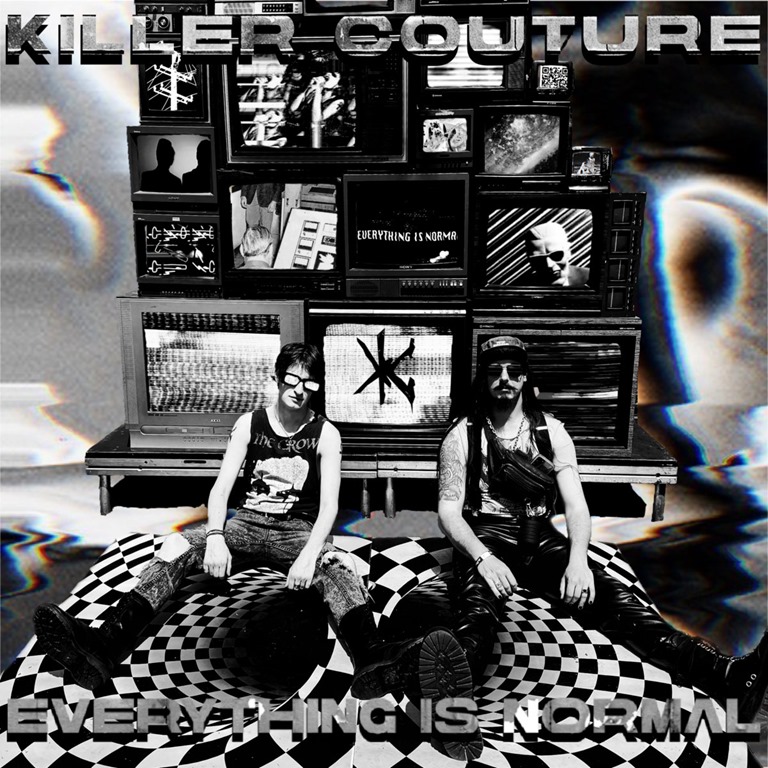
The title is, sadly, true. Somehow, recent years have ‘normalised’ everything, but not least the worst and most cuntish behaviour. Men being sleazy shits is just so normal that ‘grab ‘em by the pussy’ is an election-winning slogan, and a majority – however slim – in the US is ok with electing a convicted felon to the most powerful political position in the world. Somehow, billionaires have been normalised. Genocide has been normalised. These things have just become the backdrop to the every day. Many of us simply reel at this realisation.

But instead of reeling, we need to react. And if we ourselves find ourselves unable, it’s at least something to find there are other out there who are able to articulate on our behalfs. Enter Killer Couture, with their third album.

Gothface celebrate Everything Is Normal as being ‘Not overproduced; just back-to-basics angry, editorial of society style late 80’s/early-90’s music; the kind of stuff you could expect from Skinny Puppy’s and Ministry’s DGAF approach in the 80’s’. The band themselves describe it as ‘a 40-minute violent outburst of pent-up energy, challenging the concept that there ever was a status quo to begin with, the people who feel the need to try and uphold the illusion, and exploring the psychic maelstrom of living in the true chaotic reality beneath the mask.’

From a muffled cacophony of discord and a patchwork of samples emerges the first pulsating beat and blasting riff, from which ruptures forth squalling guitar and the intensity builds as the collage of snippety bits layers up to an unbearable level… and then ‘Terrible Purpose’ barrels in, the guitars thick and fat and dirty, overloading but with that digitally crisp edge, and as much as Ministry and Skinny Puppy so come to mind, while the speaker cone-shredding distortion hits like a two-footed flying kick to the chest, I’m thrown into recollections of early Pitch Shifter, of the searing industrial metal abrasion of Godflesh. The bass snarls, the percussion is simply devastating, and this is proper, full-tilt. If you need more comparisons, and more contemporary ones, I’d be placing this alongside Uniform for its uncompromising, full-on raw industrial attack.

Hot on its heels, the title track is a relentless percussive blast which propels a mess of noise, guitars set to stun, vocals set to rabid punk rage.

The guitars on ‘Teeth’ come on like a wall of sheet metal. If the refrain ‘I’d like to break your teeth’ lack subtlety, it achieves the desired impact. Everything Is Normal is not about subtlety or nuance: it’s about expunging that raw, brutal rage, it’s about catharsis, it’s about venting the fury, and Killer Couture are simply splitting their skins and breaking open their craniums with it.

‘KCMF’ brings another level of overload, the bass crunching and guitars churning and squalling against a relentless mechanised beat, and this is some furious, high-octane adrenalized noise shit. ‘Bastards’ speaks – or rather hollers – for itself, and ‘Composite Opposite’ is as gnarly as hell.

Everything Is Normal is one of the few self-professed ‘industrial’ albums I’ve heard of late which isn’t some Pretty Hate Machine lift, and isn’t essentially an electropop album with a dash of distortion. Killer Couture deliver on their promises with an album that’s brutal and uncompromising, heavy, and properly noisy.

‘Bad Waves’ brings things to a close, combining a certain shoegaze element with the hypnotic throb of suicide, and calls to mind The Sisters of |Mercy’s legendary live renditions of ‘Ghostrider’ circa 1984, often segued into ‘Sister Ray’ and / or ‘Louie Louie’ with the same relentless beat. And yes, my only complaint is that at 4’59”, it simply isn’t long enough by half. But then, the best songs always leave you wanting more, and despite Everything Is Normal being truly punishing album, a little more wouldn’t hurt that much… probably.

It’s important – and now sadly necessary – to distinguish between the red-faced outrage of those perpetuating hate and raging against all things supposedly ‘woke’ and those who are calling out the injustices, who are willing to stand up and point out that we need to be woke, that if you have an issue with antifa, you’re pro-fa, and you’re the problem.

Killer Couture are the voice of anger, the conduit of rage, and Everything Is Normal is precisely the album we need right now.

AA

a2402686568_10

26th November 2024

Christopher Nosnibor

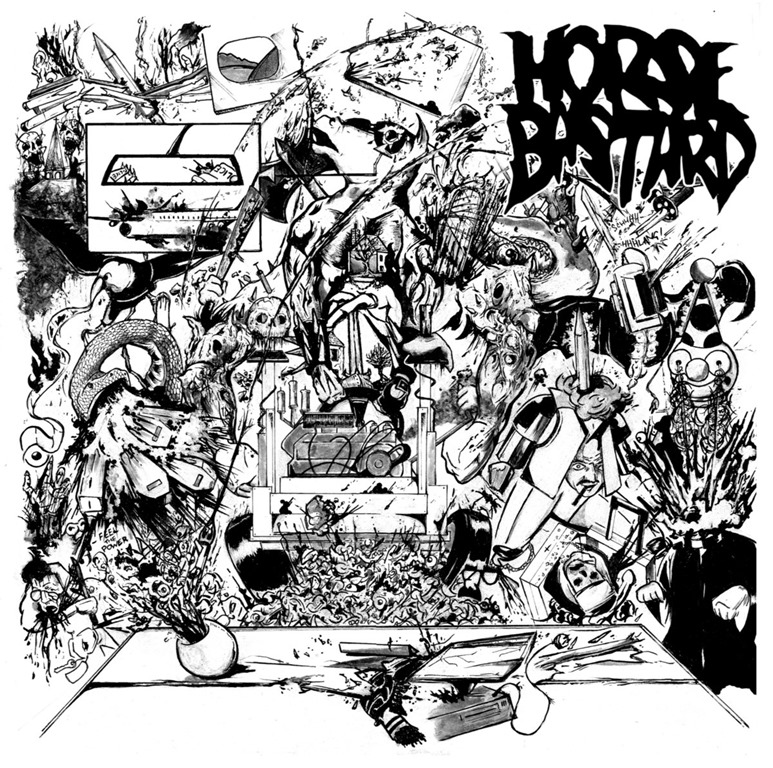
It’s eight and a half years since HORSEBASTARD last made the virtual pages of Aural Aggravation, when I witnessed their explosive set at the now sadly-gone CHUNK in Leeds in May 2016, with fellow equestrian favourers Palehorse (playing their last Leeds show), and the debut performance from future legends Beige Palace, who are also sadly missed). They’ve been going for donkeys, but despite a slew of EPs and split releases, this is their first long-player. Well, the track-list is long, at least, with twenty-eight tracks – but still only with a running time of seventeen minutes.

With the exception of the final track, ‘CORYBANTIC IDIOGLOSSIA’, the songs – or projective noise-vomits – are all around the half-minute mark, and with all of the titles set out in block capitals, it’s almost as hard on the eyes as on the ears. Almost. With titles spanning poor wordplay (‘CHAIRWOLF’, ‘FLIGHT OF THE ALLIGATOR’, ‘OLD TESTAMENTALITY’, ‘IRRELEPHANT’), the nihilistic (‘ANHEDONIA’, ‘MEANS TO A DEAD END’), and the straight-up daft (‘NOT ONCE. NOT TWICE. BUT THRONCE’, ‘INDEED RESUME COMMENCING’), it’s got everything you’d expect from a grindcore album, being a genre that recognises and revels in its absurdity, and while it can be serious, often pretends to be serious instead.

With a high-tuned snare cutting through the barrage of noise that bursts forth at two hundred miles an hour, while the vocals – as much given to screams as guttural growls – set them apart from many other acts. This means that ‘CRACK WASP’ sounds exactly how you’d expect it to, a twenty-nine second of squalling agony which assails the listener from all angles.

Guitars stop, start, stutter and lurch, and everything’s so hard and fast it’s almost impossible to distinguish between a chord change and the next song: they’re packed in with absolutely no gaps in between, resulting in the album being a continuous blur of brutal noise. There are details in the guitar playing, but they all pass so quickly it’s impossible to really register them. There’s something of a formula, in that songs tend to start with a rapid-fire drum fill before all the noise piles in on the back of it. With absolutely no let-up from beginning to end, HORSEBASTARD is a frenetic slab of face-melting ferocity.

AA

a3234403836_10

Ipecac Recordings – 4th October 2024

Christopher Nosnibor

The band’s very name carries considerable weight. It’s a phrase oft-used, but rarely really assessed and processed. But the band’s comments around their second album place it front and centre: “This is more of a statement about how things are going in the world right now.” says Spencer. “Things were pretty shitty before. I think things may actually have gotten a little bit worse.”

In the last week, here in the north of England, it’s rained. A lot. Here in York, the river breached its banks for the first time this autumn. Last year, this didn’t happen until sometime in October, although – despite multi-million-pound work being done on flood defences – vast swathes of land lay under water for the best part of six months thereafter. It’s also rained a lot in the south, too, with flash flooding. Yesterday, I turned on the news to see images from the US, which showed trucks being driven on rapid currents of rivers which hours earlier had been roads. And yet still people shrug and say ‘meh, it’s cyclical, we’ve had ice ages, we’ve had climate change before, I don’t see any evidence it’s man-made. Besides, we’ve just had the coldest summer in years, how’s that global warming, eh?’ When it comes to climate denial, denial is the operative word. Sure, climate is ever-changing, but not at this rate.

But as a species, we seem hell-bent on self-destruction: seeing things unfold in real time in the Middle East is terrifying, the mounting death toll in Gaza – or what’s left of it – a horror almost beyond words, while Russia continually alludes to a nuclear response. But this isn’t even a return to the Cold War climate, because a very hot war rages all the while, with no sign of abatement or a peaceful resolution.

So, have things ‘gotten a little bit worse?’ It would seem so. And the thing about history is that it happens – or is made – fast, and sometimes faster than others. As I type, I’m having to turn the volume up to drown the sound of fighter jets running night exercises – I like to hope they’re exercises – nearby and over the city. RAF Eurofighters – currently, it would seem there are seven running circuits around the area – and occasionally US planes, too, have been evermore present of late, and it’s hard not to feel nervous.

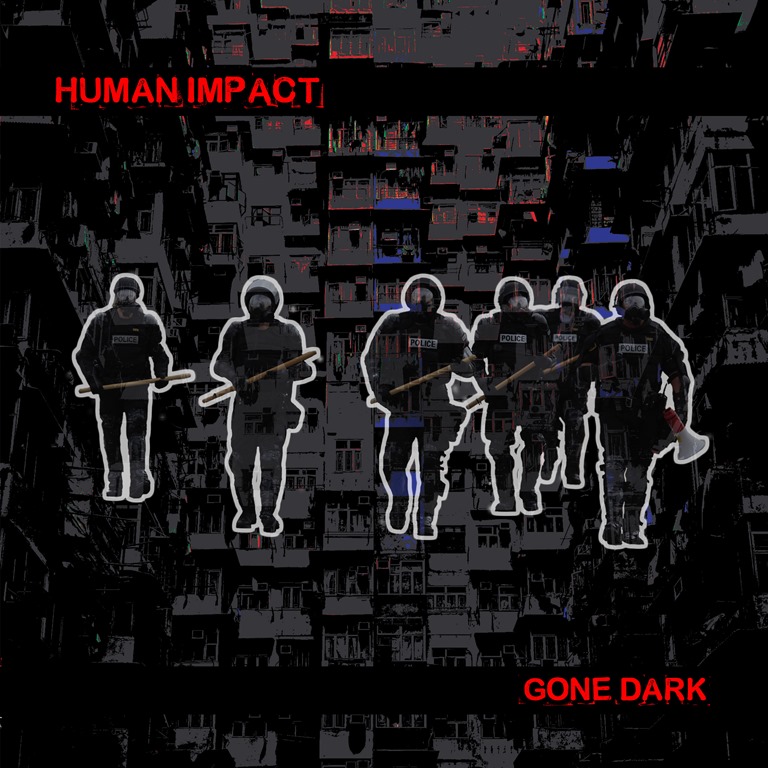
Turning up the volume on Gone Dark at least is no chore: it’s an album which needs to be heard at the kind of level it was played, the kind of level you know it would be played live. Seeing Unsane at The Brudenell in Leeds back in 2011 will forever be a standout for me. Nothing fancy or showy: they were simply relentless and brutal. And so it is that Human Impact bring the best of their component parts, consisting as they do of Unsane frontman Chris Spencer and Cop Shoot Cop squallmaker Jim Coleman, with bassist Eric Cooper (Made Out of Babies, Bad Powers) and drummer Jon Syverson (Daughters). These are four guys who know how to make the most punishing noise. And if noise has colour, the colour of Human Impact is a stark, steely grey, with the texture of sheet metal.

As the accompanying notes explain, ‘Gone Dark‘s songs emerge from a cinematic miasma of dark ambience, processed field recordings, street rants and industrial grinding. Like embers flickering from an inhospitable wasteland, Gone Dark‘s nine tracks provide paths away from total annihilation, with Spencer barking “Wake up or live on your knees” (‘Collapse’); “Now is the time to resist” (‘Destroy to Rebuild’) and “Follow the sound … the future is now” (‘Corrupted’)
“It’s just sort of the modern state of being, to me. From really a human perspective in terms of us being part of the masses, all of us together as one giant conglomerate of production and taxpayer bullshit,” says Spencer. “I make a conscious effort to try to think of things in terms of ‘we’ and ‘us’ and what’s happening to us as a whole instead of just my stupid problems.”

Understanding this context is integral to appreciating Gone Dark. There’s a pervading weight to every song, and the mood is of rage – the kind of rage that comes from a feeling of powerlessness. ‘Collapse’ sets the bleak, nihilistic tone as it hammers away, the guitar and bass meshing together to form a dense sonic sludge. It’s abrasive, but suffocating, conveying a sense of desperate confinement. Anger, anguish, anxiety. Gone Dark positively burns with all three.

It would be wrong to bemoan any lack of variety across the album’s nine punishing assaults: Gone Dark reflects life in the real world. There’s no respite, only relentless, brutal onslaught, kicking after kicking. You don’t get to catch your breath or mellow with some nice time out: no, you just have to endure the blows and do whatever it takes to stay afloat, and you stagger, punch-drunk, swaying on your feet wondering how much more you can actually take. It’s not a real question, since there is no option to do anything but plough on. Life is harsh, and this is a harsh album – not in the sense of harsh noise, but in its unyielding density. Gone Dark is the sonic equivalent of a good kicking. It’s so raw, so harrowing, and so intense it hurts.

AA

114481

Christopher Nosnibor

Well, this one landed unexpectedly. It’s a welcome arrival, although taking a second hit of material from Uniform’s latest and quite possibly most brutal and challenging album to date does feel like an exercise in Masochism. It’s also a superb example of alternative marketing, landing this alternative version of American Standard less than a month after the album’s release, on digital and tape formats.

Context, from Uniform’s bandcamp: ‘A companion piece to American Standard, Nightmare City is essentially the same record devoid of the rock elements. By removing the presence of traditional instruments, the synths, lap steel, and pianos that sit beneath the surface of the proper album are allowed room to breathe and speak for themselves. The end result straddles the worlds of Basic Channel influenced dub, Tangerine Dream inspired soundscapes, and brutal death industrial.’

It’s a bold move, befitting of Uniform, a band who have relentlessly pushed themselves to explore ever-wider horizons, switching from their original drum-machine driven raw industrial noise to adopting live drumming, undertaking a number of collaborative projects with the likes of The Body and Boris, and especially befitting of this album, where Michael Berdan tore away the last vestiges of artistic separation to rip off his skin and purge the rawest emotions stemming from his dealing with Bulimia.

Nightmare City is another step towards stripping away the layers and presenting the naked self. ‘The bedrock of American Standard stands upon the Nightmare City. It’s not the happiest of all places, but understanding the landscape yields its own rewards,’ they write alongside the Bandcamp release.

One thing about being in a band – even if there are only two of you – is that there’s somewhere to hide, somewhere to transfer the focus. Hell, even performing solo, if there’s noise, there’s something take shelter behind. I’ve always thought that solo acoustic and spoken word performers were the bravest: there is simply no place to hide, and nothing to blur or mask any fuck-ups. Nightmare City isn’t quite solo acoustic, but it is seriously minimal.

Removing the ‘rock’ elements to reveal the bare bones of the songs shows the inner workings of Uniform, and they’re unexpected, to say the least. One would expect them to build up from the elements of drums bass, guitar. But this leads us on a different journey.

Punishing riffs and pulverising percussion, rather than supple layers and swirling instrumental ambience. As the band put it, ‘Although the finished product stands as a culmination of cohesive sounds, the individual threads that weave songs together often provide necessary nuance and exposition all of their own. Each isolated stem might be part of a greater story, but the whole cannot stand as intended without a complex series of seemingly disparate elements.’

Hearing the swirl of these ‘seemingly disparate elements’ feels like hearing the ghost in the machine, a haunting, eerie, ethereal echo, which barely seems to correspond with the structured framework of the final versions of the songs. One might almost consider this a palimpsest, an album beneath the album, submerged by process of layering and erasure. The tracks are – and I shouldn’t be surprised, but still I find I am – completely unrecognisable. Instead of being the punishing beast the album version is, ‘American Standard’ sounds more like one of the epic instrumental segments of recent SWANS works. There’s a muffled thud like a heartbeat on ‘This is Not a Prayer’ which possesses something of a womb-like quality, while ‘Clemency’ feels like a moment caught between heaven and hell, soundtracking the struggle of being pulled between the two in some purgatorial space as ceremonial drums hammer out a doomy passageway and spluttering vocals spew raw anguish.

In common with American Standard is the darkness which looms large, the tension, the suffocating gloom, the discomfort which dominates, and hearing this spectral echo of the album brings a fresh understanding and appreciation of the process and the depth of layering and everything that goes into their material. ‘Permanent Embrace’, too, sounds both like an ascent to the light and a sepulchral sigh, a funereal scene in which the grave suddenly opens like a sinkhole sucking everything down into the bowels of the earth.

Nightmare City is appropriately titled: it is a truly hellish, tortuous listening experience – but at the same time quite remarkable. Uniform, in their quest to do something different, to push themselves and in refusing to conform to genre conventions, continually find new ways to articulate the pain of the human condition.

AA

a1449843444_10