Posts Tagged ‘Avant-garde’

25th April 2021

Christopher Nosnibor

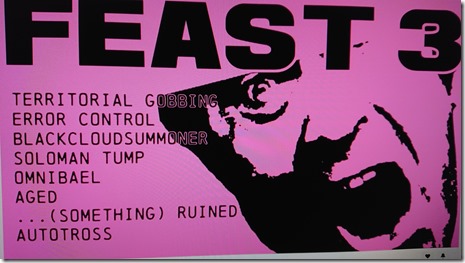
While real gigs still aren’t possible, nim_brut are keeping the fringe noise community together with their ‘FEAST’ streams – and it’s an appropriate moniker, as they offer a veritable smorgasbord of experimental, noisy, and weird shit that fans of this disparate (anti)scene can fill their boots with at one of these events – eclectic, engaging, and inclusive, with something for everyone (as long as they’re into this kind of niche). Admittedly, the lineup was predominantly white and male, but that’s by no means an issue unique to experimental / electronics / noise, and the chat that ran alongside the stream was both welcoming, supportive, and encouraging for all comers. And in terms of replicating the live experience, it’s pretty good: something obscure provides a backdrop as people arrive and there are greetings in the chat, much like turning up at a similar show in person: a fair few people know one another from the circuit, and it’s relaxed and accommodating. In real life, these are some of the places I feel happiest: there’s no pressure as such, and people are accepting and accommodating of others not feeling particularly sociable, and the shared appreciation of diverse and indigestible music is simply accepted as enough.

So we’re here, and it feels comfortable.

The gig poster is replaced by footage of a lot of knobs and wires… a lot of panning and close-ups of this complex kit accompany drippling, blipping, bleeps and whistles, trickling, babbling sounds create a light, skipping mood. It’s Autotross, and they certainly don’t outstay their welcome with this short set. A nice taster, it would be interesting to see what more they make of this setup.

Soloman Tump’s pulsating dark ambient electronica is quite a contrast, and the rumbling, droning groan is accompanied by a walk in the woods, blurred, rasterised and colourised to render it most uncanny and unsettling. Clicks and burrs spike through the murk, the thudding beats thick and heavy, slow and deliberate, while will-o-the-wisp lights flicker and skip in the upper tonal regions, bringing a full sonic spectrum with good separation. The walk ends in a strange place with what looks like pouring paint and the sound winds down slowly like the life is slowly being sucked from it. While it would no doubt he great to see and hear in a real live setting, it does work well through phones.
DSC_6899

Soloman Tump

I was rather anxious ahead of the slot reserved for …(something) ruined: technical difficulties meant that the intended set wasn’t good to go, and I had stepped in last minute with a solo track I’d been working on, which I had about an hour to add visuals to before submission, thus making the debut for instrumental offshoot …(everything) ruined. Seven minutes of gnarly digital distortion accompanied by an eight-second clip of a sink-unblocking chemical in action looped for seven minutes seemed to go down pretty well.

Grating electroindustrial and eye-bleeding, fit-inducing flickering visuals are the order of the day from AGED at the start of the set – and then things start getting really weird as skeletal birds begin to drift back and forth against low oscillating scrapes and hovering drones.

OMNIBAEL had threatened a set involving banging railings and that’s what they delivered. Somewhere between Test Dept and Einstürzende Neubauten, it’s a heavily percussive clanging racket, and it’s brutal and oppressive. Marking a significant shift from their previous FEAST appearance, it’s a short, sharp shock of a set, and its impact is immense.
DSC_6904

OMNIBAEL

Blackcloudsummoner’s set starts out dark and sense with a grimy, distorted bass booming. Not a lot happens: the drone drones on, as shrill whistles of feedback strain through a discoordinated chatter of sound that reminds of being in a crowded place… it’s unsettling and tense. Red lights drop like lava against a dark background in a loop, and in combination, the effect is hypnotic.

There’s a whole lot of gnarly nasty noise from Error Control, and there’s a definite sense of performance here too, as we see him twiddling the knobs on his compact but knob-dense kit while blindfolded. On one hand, this could be taken as a critical comment on the nature of harsh noise and the lack of technical prowess required to create it, as well as the S&M subculture associated with some corners of the scene, but I feel it’s more about exploiting the ransom elements of music making – and he works his patches well, generating some head-shredding tones with some abrupt tonal shifts.

DSC_6907

Error Control

Even if you ‘get’ and dig Territorial Gobbing, Theo Gowans’ outré approach can’t fail to evoke a certain ‘wtf’ response. Sonically, this set is very much standard territory, a series of groans, drones, bleeps, blips, burp and farts, with random samples flying in from all angles to dizzying and bewildering effect. Only this one, he’s dialled in from bed with a hot water bottle and some kind of elephant trunk hat thing made out of foam and paper mache or something. He coughs, splutters, wheezes, mutters, and snores, the din stops and starts and you wonder if he’s perhaps unwell, maybe delirious, but then you remember that’s just how he is, and he’ll probably be doing shit like this on his deathbed. It’s a cracking set that reminds us that there really isn’t anyone else doing anything quite like this.

DSC_6910

Territorial Gobbing

It’s a top end to a top night. At some point in the future, this will happen in a small room, at extreme volume and will be observed and appreciated with a fervent enthusiasm by a dozen or so people, and it will be aMAYzing. For the time being, it’s a real joy that the creativity continues and the sense of community remains.

And you can watch it all here:
DSC_6900

DRET 05 — 2nd April 2021

The fifth release on Swedish label Dret Skivor, which coincides with another Bandcamp Friday, is Blue Oblivion by Tore Honoré Bøe. Information about the artist or the material is non-existent, so everything is left open for the listener to extract and interpret from these layered sonic collages. My initial response is the ocean, being immersed in the vastness of the expanse – or, more specifically, drowning, before my thoughts turn upwards, to the eternal endlessness of the sky. Starring up on a cloudless say, it’s easy to lose yourself in the infinite space.

But the sonics captured here evoke neither. This is, for the most part, a snarling, swirling tempest of electronics pushed to – and beyond – their limits, a shrilled, shrieking assault on the senses that utterly engulfs: this is not a pleasurable or ecstatic oblivion, but the oblivion that arrives as a welcome relief from a relentless battering.

On the first piece, ‘Foosa!’ a piano note fades into the fog as a crackle of static builds to a sustained fizz. Scrapes and drones take on the presence of creeping chords in the absence of any overt musicality. It howls and wails and drills into the cranium randomly, one shill blast of noise replaced by another shrill blast of noise of a different frequency. Like cowboys armed with two pistols shooting from each hand alternately, Tore fires off drill-like frequencies one after the other, hand over hand, whirring and buzzing… and then it’s all down the toilet in a single plunge.

‘We Love King Julien!’ is less abrasive, at least initially, but no less challenging: a woozy, stammering mess of glitching drone that cracks and churns through a succession of misaligned subsequences that stammer and lurch, it’s a different kind of discoordinating. Metallic smashes scrape and buckle to forge brain-clenching streams of static noise that bubbles and churns. In time, it all breaks down into a mess of fractured noise and fizzing static, a horrible mass of treble that jumbles all focus. It descends into alternating drones and explosive blasts of speaker-shredding noise, and culminates is a tsunami of churning while noise and synapse-melting overload across a wheezing drone so flat it feels like it died a long time previous.

There is no kind or considered response to this, no neat finisher. It’s not an easy or pleasant release – but then, that’s not what Dret ‘do’, and seemingly, it’s not what Tore Honoré Bøe does either.

Blue Oblivion is unquestionably immersive, but it’s not entertainment: this is harsh, uncomfortable nose. It’s noise to lose yourself in.

AA

a3756016703_10

Bankrecords – blank037 – 12th March 2021

Christopher Nosnibor

In his everyday work, Tobias Vethake composes music for theatres, installations, radio plays, television and film, and while also participating in various collaborative projects, including Mini Pops Junior, his primary outlet for his experimental explorations is Sicker Man. With electric cello at the heart of the compositions, Vethake incorporates myriad additional sound sources and draws on a vast cultural spectrum spanning jazz and industrial, from east and from west to forge expansive and quite intense works of range and depth.

Like Jo Quail, Vethake plays the cello in ways that rarely sound recognisably cello-like: it’s apparent that the instrument’s versatility is severely underrated. So while there are certainly orchestral elements present on Dialog, it’s by no means an overtly orchestral album, and by absolutely no means an overtly ‘cello’ album. It’s more of an abstract, ambient, (post) rock work. Moreover, collaboration has a way of drawing different ideas and methods out of artists, with the potential to realise works which are infinitely greater than the sum of the parts, the product of the ‘third mind’, if you will.

Dialog contains a collection of pieces recorded in collaboration with different artists – all improvised and unarranged. The dialogs therefore represent the musical exchanges between the musicians in the moment as they respond, spontaneously and intuitively, to one another, often as they meet and ‘converse’ for the first time.

The album’s first track, ‘dialog with Manuel Klotz’ begins with a weaving air of eastern mysticism (a Turkish marriage orchestra Tobias would pass as they played on his way to the sessions), and I’m reminded of the Master Musicians of Joujouka, only with more prominent percussion – but before long, a yawning swell of noise engulfs it, the wave finally breaking to a heavy tidal drone with an instant beat. Eventually, everything collapses to a buzzing drone.

Each piece has its own distinctive style, indicating not only the merits of what each collaborator brings, but also Sicker Man’s versatility. There’s a swampy swagger to the piece recorded with Lip Smh, where drill-like drone buzzes vibrate against serpentine scales that twist enigmatically into a desert haze.

Aidan Baker gets everywhere, and here he is bringing brooding shadows of melancholy the a mournfully lugubrious piece, which is, for my money, one of the standouts. Of the others, there are lengthy passages of gentle, abstract ambience in succession, but the dialog with Kiki Bohemia brings all the dingy bass, as well as all the shimmering space-rock synths, while Scheider TM goes all out on the electro pulsations. Clocking in at over nine and a half minutes, it makes for one mighty finale, building into an immense wall of overdriven guitar that’s absolutely crushing in its weight and density. It has the elements of Earth 2 and Sunn O))), but played at pace, a swirling black metal vortex of overloading distortion. It’s absolutely punishing, and its relentless.

After the curious journey that is the rest of Dialogs, this is just a devastating finisher. There is nowhere to go from here, other than to turn out the light and stare at the ceiling.

AA

blank037_front

11th March 2021

Christopher Nosnibor

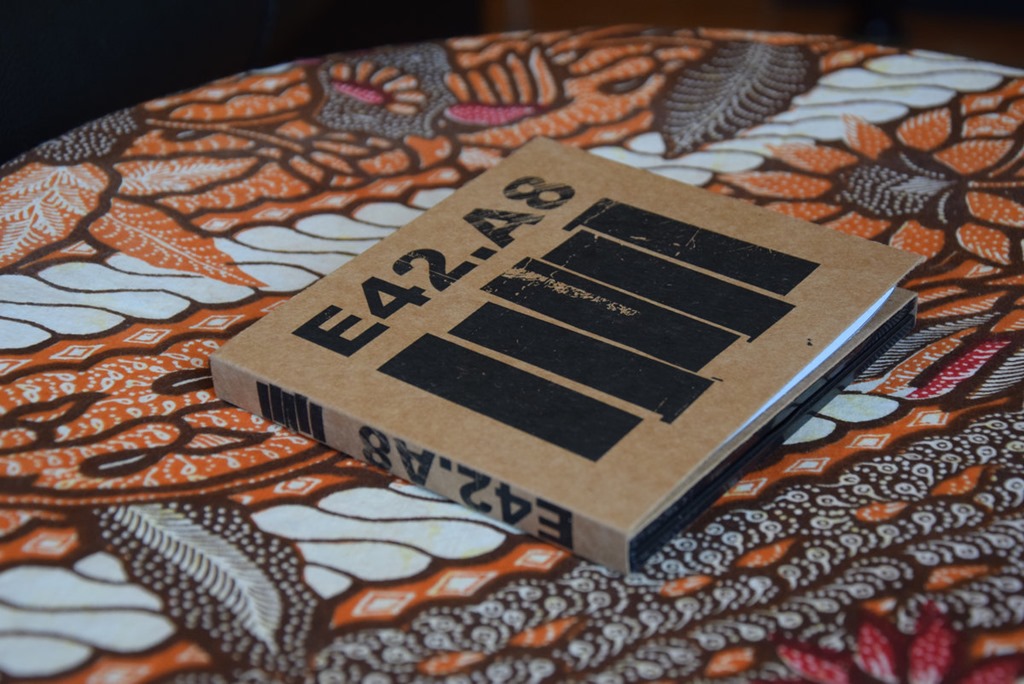
Sometimes I find myself in a state of confusion. Sometimes / often. Admittedly, work fatigue, lockdown fatigue, parenting, and beer on an evening are all likely contributors on many an occasion, but sometimes, I’m almost certain that life and situations are simply addling and that’s all there is to it. E42.A8’s press release is a source of a degree of bewilderment for me, as they outline their latest release thus:

‘E42.A8 lies between a place, a process, a group or several, or maybe as we were introduced in Frankfurt once: a Musikkapelle. We like to think that what matters are the following guiding notions: freedom, play with opening(s) & interaction, resulting in music marked by textures, variations between pulse & stretch, moments of varying intensities, détournements (Verwandlung?), oscillations in saturation and silence.’

IIIII is in fact a compilation, a double CD, which draws on a morass of releases spread across downloads, CDr and one tape, and features 21 musicians, in varying ensembles, from 2 to 9 people, recorded during the first five years of the collective’s existence. Said collective, which operates around a ‘disused farm/barn in the countryside in Picardie ( a region spread over the north of France +southern Belgium’ is centred around improvisational works, and as the fifteen pieces, which span a whopping 141 minutes – which isn’t far short of two and a half hours – and which makes listening to this in full a serious time commitment. The chances are that few listeners are likely to repeat it more than once or twice.

And while most of the compositions are under the eight or nine-minute mark, there are are handful of absolutely epic works that sit in the twelve to twenty-one minute mark that really illustrate the expansive plains E42.A8 ere capable of exploring when given the time and the space, and of course, the right atmospherics.

As one might expect from such a loose framework of musicians improvising over such a time-span, this is a pretty mixed bag, centred around immense drones, grinding organs and elongated oscillations. At its best, it’s haunting, evocative, unsettling, while at its worst its clunky, uncoordinated, experimental but without focus. And that isn’t a problem: the avant-garde and the postmodern so often delights in revealing its workings, demystifying the creative process, pulling apart the myth of the ‘creative genius’. IIIII reveals E42.A8 to be multi-faceted and willing to take risks in the interest of progression, of artistic evolution.

Insectoid skitters and creeping drones, scrapes, and all kinds of bleeps and twitters and stream-like trickles combine to forge the peaks and troughs, gulfs and chasms which make up this immense work. Heavy clanks like the sound if a blacksmith mishitting his equipment as shards shower everywhere in such an enclosed space. Chinks and stammers and fractured tonal cracks break the surface, and disruptions and discord and discombobulations abound.

A track-by-track analysis would be even more pointless than Brexit or an episode of Pointless, because this isn’t a work that has standout tracks: compilation it may be, but ultimately it’s an immense document which collates a vast library of experimental ambient electronic works which will shred your brain, make your eyes pop leave you feeling bewildered overwhelmed, which is, in context, a measure of artistic success.

AA

a3729120449_10

Dret Skivor – 5th March 2021

Christopher Nosnibor

Recently-launched Swedish label Dret Skivor has a fairly broad remit in its commitment to being ‘Locally focussed but stretching out to droneheads, noiseheads, ambientheads and weirdoheads across Scandinavia’. Stylistically, it’s pretty much a case of anything goes as long as it’s not remotely mainstream – but that certainly doesn’t mean that anything that’s vaguely accessible is off-limits, and Fern’s Inhibitory Shortcomings, described as ‘is a minimalistic digital multi-tracked adventure’ isn’t unpleasant or overtly challenging to any ear that’s accustomed to alternative electronica.

This set has something of a 90s vibe initially, a woozy wash of electronics, cracking static, and sampled dialogue and horns dominating the eclectic cut-up that is ‘in´ros50’. As such, while inspired granular looping, FM and different sampling techniques. AS such, while inspired by ‘the avant-garde music produced by the San Francisco Tape Center (among others) during the 1960’s’, William Burroughs’s tape experiments, as filtered through the prism of albums like Spare Ass Annie and Other Tales, produced with The Disposable Heroes of Hiphoprisy, also very much seem to inform the sonic collage pieces on offer here.

‘digi´al_r3alm pt1’ and counterpart ‘digi´al_r3alm pt2’ combine clacking, clattering tonal-based percussion with obscure oscillations and a static crackle like a downpour of rain: the latter drags down into gloomy, eerie atmospherics with a hesitant bass throb underpinning insectoid skitterings and dank sloshing washes that slop back and forth listelessly.

It’s a solid drum-based percussion that dominates the beginning of ‘dr3´_0032’ before the tape starts spooling backwards and everything gets sucked back towards it source.

None of the pieces are particularly long – only ‘digi´al_r3alm pt2’ exceeds four minutes – but each is rich in atmosphere and texture, packing in a dense array of sounds that collide against one another, bouncing off the wall of dark subterranean caverns of the mind to conjure some unsettling images. Flittering tweets and scraping squeaks abound, as do dripping sonic droplets that splash into spacious reverberations.

Closer ‘ou´ros51’ perhaps feel the most dislocated and dissonant of all of the compositions, a slow, decaying loop of an analgesic trip-hop beat and blooping laser sounds drags on repetitively, gradually slowing the senses to a slightly disorientated fog of drowsiness.

AA

a1991081555_10

Cruel Nature Recordings – 5th March 2021

Christopher Nosnibor

Live performances of experimental electronic work, particularly when involving an element of improvisation, can be somewhat hit and miss, and what’s more, sometimes, much of the wonder and appreciation is derived from witnessing the performance itself, as much as the sound.

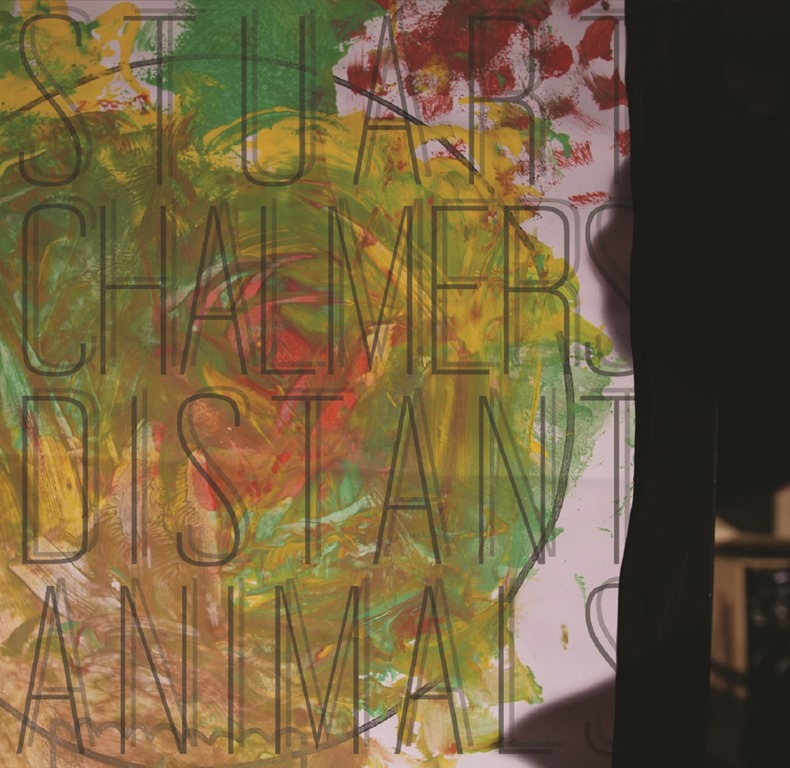
This album was recorded live at Cave 12 in Geneva in 2019, when Stuart Chalmers and Distant Animals shared a stage is a document of a moment in time, and is one that explores differences and similarities. Each act occupies one side of the limited-edition cassette (of which there are just 45 copies) and naturally, a track each on the digital version, and each track contains a full performance from each artist.

Chalmers’ set is a sparse, minimalist affair. Clanking chiming notes – partially atonal, and entirely arrhythmic plink, plonk, clatter and clink every which way. It is detuned strings? Is it a glockenspiel, xylophone, or similar? Whatever the sonic source, it increases in speed and urgency, but not in musicality, and a flat chord shreds and mangles as though strumming a washboard with relentless frustration. While the performance is brimming with energy, there’s a purposeful tonal flatness to this.

At times a clattering clang, a monotonous chang of deadened notes, and a tension-building thrum that grates away relentlessly, Chalmers’ set is never comfortable, never easy, never really breaking into the realms of melodic. The relentless scrapes and scuffles scratch away for twenty-three troublesome minutes. It’s rhythmic and does build in a certain way, but it’s slow progress that’s uncomfortable. One suspects that this uneasy sensation would only be heightened during the actual performance.

Distant Animals’ set is more overtly ambient, a twenty-minute piece that centres around twisting dronescapes and elongated crawls. The layers ripple and rub against one another to create not a dissonance as such, but a vibration of frequencies.. but suddenly, around the mi-section, the storm breaks and dissipates… there is a calm. Soothing synth waves of something that borders on electroprog crossed with chilled-out electroambient. Its trajectory is very different from Chalmers’ – instead of a single, linear trajectory that works its way to a specific end point, they navigate a series of passages and movements that segue into one another to form a meandering journey, which eventually tapers to a fade that leaves you wondering if it was all a dream, and wishing you had been there.

AA

COVER1

26th February 2021

Christopher Nosnibor

LA instrumentalists Teethers, centred around drummer and composer Andrew Lessman, brings together an unusual fusion for their debut release. With contributions straddling jazz, avant garde, and indie pop, for Teethers, Lessman has brought together an eclectic lineup, consisting of Graham Chapman on bass, guitarist Alexander Noise, Joe Sanata Maria and Ted Faforo on saxophones and Stefan Kac on tuba. The results are, as you might expect, unusual.

There’s a smooth, jazzy, swingy pop vibe that permeates the EP#s three tracks, and as ‘Goose Chasing’ indicates, they can locks down a tidy groove and create music you can bop to, nod along to, even dance to… and then they’re more than capable of – and willing to – drive that train straight off a cliff into a wild frenzy of horn-driven discord and madness. This is bit a brief introduction that sets the scene for what Teethers are really all about: the twelve-minute ‘Monopoly on Violence / Mushroom dance’ is a multi-faceted, shifting exploration of rippling shades and expansive soundscapes.

It’s rambling, at times immensely proggy in a vintage sense, and at times it just can’t seem to make up its mind as it ambles and weaves hither and thither, a mellow jazz meandering that hits some frenzies peaks and altogether more sedate intersections. It’s one of those pieces that transitions enticing and irritating in a mere blink – and that’s not even a criticism. Condensing so many elements into its space, it’s difficult to keep up.

The third track, ‘Love Poem’ is seven-and-a-half minutes of dappled sunlight painted in music, with a clean, picked guitar chiming in a simple, hypnotic sequence that’s a post-rock / contemporary prog crossover laced with soft, delicate strings. It’s perhaps the most focused and conventionally coherent of the three compositions, on what is a fairly wide-ranging set – so wide-ranging that it’s not easy to immediately assimilate, and even more difficult to pin down – not just stylistically, but in the most basic terms of formulating an opinion. Is it any good? Do I like it? Does it matter? There’s certainly no doubting the technical proficiency on display here, and having the confidence and audacity to make music that straddles so many boundaries and genuinely challenges the listener is an achievement worthy of recognition.

AA

a3152339815_10

Lustmord + Nicholas Horvath – The Fall / Dennis Johnson’s November Deconstructed

Sub Rosa – 20th November 2020

Christopher Nosnibor

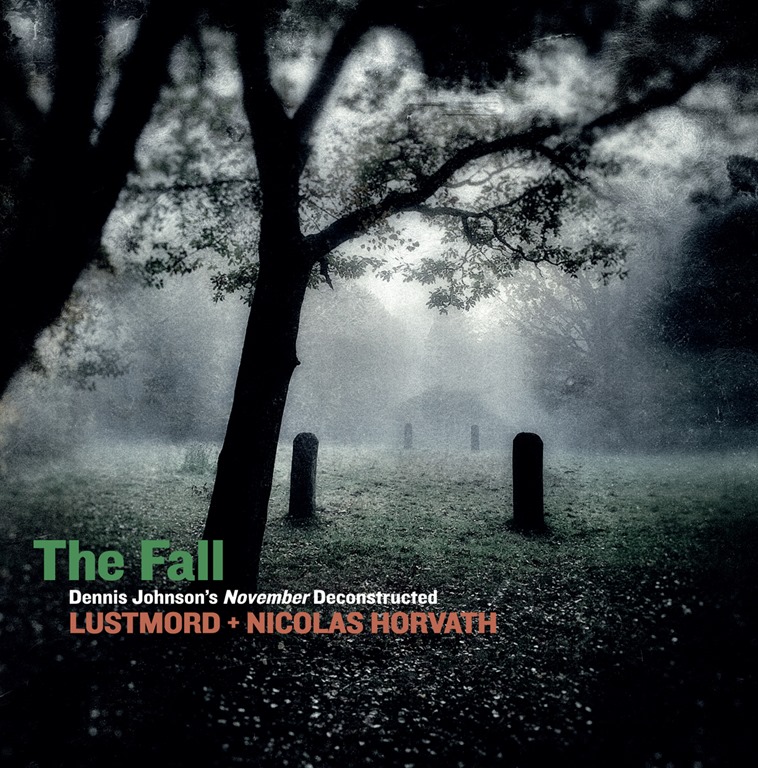
According to the press release and liner notes, The Fall is a deconstruction of November by Dennis Johnson. My knowledge of the source material is limited to the same, which explain that November was written for solo piano in 1959, and is the first example of minimalist music composition – and that it was also the inspiration for La Monte Young’s The Well-Tuned Piano (1964). This may or may not be useful information, as may or may not be the fact that this collaborative effort strives to ‘reduce Johnson’s original November to its core element and place it in a landscape of complimentary sound. And as such ‘echo’s [sic] November but with further resonance’.

It’s a sixty-six minute work split into four segments numbered I through IV, with classical pianist Nicolas Horvath playing the piano parts, while Lustmord brings the atmospherics. How that translates is that the album’s first piece is a full twenty minutes of instrumental piano work, played slowly and delicately, with an acre between each note as it drops and hangs in the air against a backdrop of a fierce gale that buffets against a microphone. If you’ve ever tied speaking to someone on their mobile phone on a windy day, you’ll be aware of how the gusting air’s buffeting creates a sense of disturbance, an interference. Around the midway point, the disturbance shifts from being breeze-like to a deep, surging groundswell, something dark and resonant, an amorphous sound that rumbles and expands, then fades and returns in waves, ebbing and flowing slowly, and all the while, the sparse piano plays on.

And that is pretty much it: slow, deliberate piano – individual notes, struck a bar apart – and a distant rumbling backdrop that fills the empty space, sometimes barely, leaving little but empty air, others more densely, a wash of sound filling the air with levels of abstraction. At times, like rumbles of thunder, and others, like unsettling fear chords and an ominous vibe, but never anything concrete or tangible.

It isn’t much to go on, and while it is atmospheric and intriguing, it’s not entirely enthralling either, and I suspect the same is likely true of the original, a work that’s more concerned with concept than reception – something that can be done, and so is done, and example of avant-gardism promoting the project for its own ends rather than a something to necessarily be appreciated. There are things to appreciate, as it happens: The fall counterpoints ominous and graceful nicely, while also paying tribute to and raising awareness of a seminal work that’s been largely forgotten, eclipsed by other works by other composers, with Dennis Johnson’s renown falling far short of the likes of John Cage and Philip Glass. And on that basis, and on the basis of the original work’s true significance, this is worth tuning into.

AA

SR502_front

Constellation Records share the eighth entry in their Corona Borealis Longplay Singles Series. "Je Vois / Non-Dit" by Montreal based avant-electronic artist Joni Void and featuring vocals by poet/singer and frequent collaborator N NAO, with an experimental film by Sonya Stefan.

"Je Vois / Non-Dit" combines live recordings by the duo into a single track longform where N NAO’s vocals are given unearthly yet organic treatments through Void’s warped manipulations, sampling, atmospheric textures and deconstructed beats – joined by Eddie Wagner on flute about halfway through the track’s 21-minute running time.

Listen to ‘Je Vois / Non-Dit’ here:

…and stream the video here.

thumbnail_JoniVoidimagebyThomasBoucherSonyaStefan2018lores

Photo by Thomas Boucher & Sonya Stefan, 2018

Hummus Records – 23rd October 2020

Christopher Nosnibor

Well of course my interest was piqued: Convulsif’s fifth album, pitched as a work of ‘self-inventing gloomy rock in the abyss between such subgenres as noise, metal, jazz and grindcore’ likely to appeal to fans of GOD, Godflesh, Swans, Naked City, Napalm Death, Painkiller, Boredoms, and Neurosis. It doesn’t get any more of my noisy industrial-favouring bag than that – not least of all because the referencing of short-lived Godflesh / Techno Animal offshoot GOD seems wilfully perverse. Let’s face it, what is the real scope for techno-hued jazz/grind crossover?

The Swiss quartet eschew conventional rock instrumentation with a lineup featuring bass, drums, bass clarinet and drums, and I can already hear many wailing about the lack of guitars. Hearing the cacophonous freeform racket they conjure, however, would be enough to make even more wail, and certainly not just about their unconventional band makeup, and just to enhance the album’s commercial appeal, the bleak set’s titles are all cut up and mashed up lines of Charles Darwin’s Beagle Diary.

The first cut, the seven-minute ‘Buried Between One’ is dominated by the gut-churning, nausea-inducing rhythm section stylings of Swans circa Filth and Cop – the drums explode like volcanic detonations, slow and sporadic, and the lumbering low end stops and starts and lurches woozily, while everything else on top is just discord, and as the track progresses, it all whips into a hellish maelstrom, a brutally sustained crescendo that leaves you wondering ‘where’s left to go from here?’

The elongated drone, low, sonorous, ominous, that introduces ‘Five Days of Open Bones’ provides some respite, , before dolour bass and brooding violin drift in; the atmosphere is dense and grows from a mist to a fog as the drumming builds… the tension increases… they sustain it, but you now it’s surely a matter of time before something yields… the clarinet ebbs and flows like a layer of synth, but the fact this is organic and orchestral somehow ads something else… and then… and then… Anyone familiar with the last incarnation of SWANS will now what it’s like to endure such a seemingly endless build. It’s exhilarating and torturous in equal measure. Your heart’s palpating and your lungs feel ready to burst and you think you might vomit… and then it all breaks into a frenetically frenzied jazz noise of parping horns and hundred mile-an-hour drumming. No, that’s not right. Surely. But then, this isn’t SWANS, this isn’t your regular avant-industrial: this is the kind of experimental freakout that’s right at home at Café Oto, and ‘Five days’ feels literal in its timespan.

A couple of brief, lurching interludes make for more difficult listening, with ‘Surround the Arms of the Revolution’ sounding like ‘A Screw’ played by a drunk jazz ensemble, paving the way for the fourteen-minute finale that is ‘The Axe Will Break’, which is constructed around a tight, cyclical bass motif, which is again, decidedly jazzy in a Sly and the Family Drone sense. The endless repetition is mesmerising, hypotonic, and the tension builds almost imperceptibly… but build it does. It grinds it way through a merciless squall of noise through which filters mournful woodwind that flickers hints of post-rock reflection before being submerged in the swelling surge of chaos. The final five minutes – an eviscerating sustained crescendo of monolithic proportions – is little short of devastating. Jazz isn’t always nice.

AA

a3431541039_10