Posts Tagged ‘Atmospheric’

25th November 2022

Christopher Nosnibor

Two years on from when I covered Open to the Sea’s Another Year Is Over, it transpires that Milan-based Matteo Uggeri and his cohorts are back with Tales from an Underground River. A lot has happened since then – and yet in many ways, not a lot has, and for some of us, it feels as if lockdown never ended.

Governments and employers seem to be content to peddle the idea that with vaccines rolled out and restrictions lifted, the switch had been flicked that restores normality – so much for the endless talk of a new normal not so long ago. This is likely true of some things, primarily retail and public services, but then, many office workers have only returned on a part-time basis, if at all. For me, personal circumstances have meant not at all, which is welcome – much as I miss people, I don’t miss those people.

I digress, but this context is what I bring in terms of my reception to this album, which was, recorded over the course of a couple of years, starting in the Winter of 2019 and spanning the pandemic period – a time that has drifted into near-unreality and feels almost dreamlike, unreal. And this is very much the sensation that Tales from an Underground River creates. Listening to it feels like listening to a dream.

The text which accompanies the release, they’re at pains to point out, is not a press sheet, but a diary, and that makes sense, as it charts the album’s long and convoluted evolution. It certainly isn’t a sales pitch. But then, art shouldn’t be about sales pitches: creatively, the journey to the end result – if indeed it even is the end result – is far more interesting, and of significantly more value.

Beginning life as two long and multi-layered sets of improvisation with piano, guitar and synths recorded by Enrico Coniglio, it was then completely reworked by a process of additions and subtractions by Matteo Uggeri, and over time, incrementally, it was picked apart and broken down into thirteen relatively short pieces, where soft, rolling piano and mournful brass merge with the sounds of thunder and rain and a host off subtle field recordings which add delicate layers to the sound. And they’re segued together in such a way as to render the album one continuous piece in a succession of movements.

The mood transitions incrementally through the segments, and the titles are beautifully descriptive: I found myself forming mental images of scenes while listening, the music providing the soundtrack to a slowly unfurling movie in my mind’s eye – a movie brimming with scenes of nature, as ‘Pebbles Clink, Fluffy Echoes Make the Air Colder’ and ‘Pebbles Clink, Fluffy Echoes Make the Air Colder.’

Indeed, reading the lengthy titles in sequence conjures a semi-narrative in itself. At times ponderous, contemplative, brooding, at others with flickering sun offering hope – sometimes within the space of a single piece, as on ‘Limpid Lights Dig Words in the Rocks’, you feel yourself carried on a current through different terrains and landscapes. ‘Emotions and Thoughts Climb over Years and Years, Always the Same’ brings droning guitar textures and a rather darker hue of ambience with post-rock leanings, and Tales from an Underground River is an album where the movement and changes never cease over the course of its journey. At times eerie and unsettling, at times ominous, and at others – for wont of a better word – cheerful, it’s a magical piece of creativity that shows vision and was very much worth the three years of work.

AA

cover

As anyone who ever listened to the legendary BBC radio DJ John Peel will know, hearing a favourite artist re-interpret a familiar song by another artist can bring new insights into both, as well as being a lot of fun.

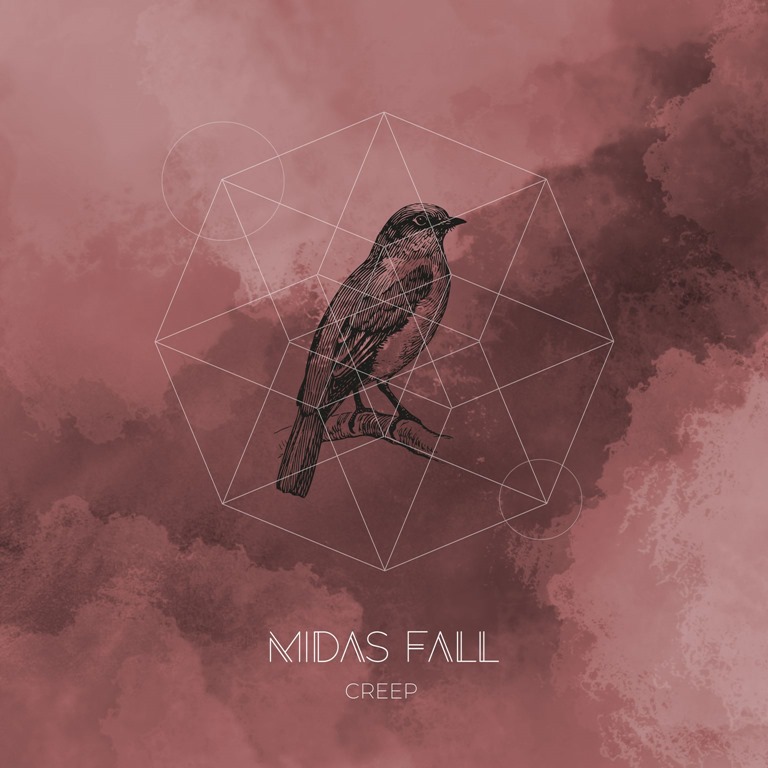
During a break from writing Midas Fall’s fifth album, Elizabeth Heaton took some ideas that had been incubating for a while and, along with bandmate Michael Hamilton, applied their own unique perspective to three well-loved songs by Bruce Springsteen (Dancing in the Dark), Radiohead (Creep) and Placebo (Every You Every Me).

Covers EP sees Springsteen’s driving rock anthem reimagined as a quieter, more introspective narrative, imbued with ‘80s synths and Heaton’s softly hopeful but uncertain vocals. Radiohead’s Creep is a dreamy, kaleidoscopic waltz that slowly builds to a raging climax. On Every You Every Me, the icy undertones of Placebo’s original version are magnified even further, evoking a bleak landscape cloaked in dark, haunting sounds.

For first single ‘Creep’ Liz from the band states,  “Creep, along with the other tracks on the upcoming EP were created during lockdown. We took some of our favourite tracks from growing up and gave them a different feel. As a teenager Radiohead were the first band to make me feel that music could be something more, so have been a massive influence to me musically, especially when I first started writing. I was listening to Creep and imagined it played in a waltz style time signature. With the aid of my keyboard and a glass of wine the vocals seemed to flow very easily and were captured in a single take. From there it grew arms and legs."

Listen here:

Covers EP will be released digitally worldwide by Monotreme Records on 7th April.

Kxz7TGiE

Fire and brimstone from Icelandic Black Metal band Altari, as their volcanic new album Kröflueldar erupts via Svart Records on 14 April 2023. Named after a series of eruptions that happened at Krafla in Iceland in 1975, Kröflueldar represents the constant threat of ash that Altari’s music lives under. Kröflueldar was a 9 year series of eruptions, and since the album took almost 9 years to create, Altari felt that it was a fitting title for their scalding and ferocious music.

Fans of Craft, Deathspell Omega, Blut Aus Nord and the more well known Icelandic Black Metal bands like Misþyrming and Sinmara will revel in digging into Kröflueldar’s rotten soil, but there is something far more experimental and avant-garde to be reaped within the whirlwind of sound that Altari produces. With their foundations of sound in the classic eras of early Judas Priest, songs like Leðurblökufjandinn call to mind the discordant soundclash of bands like Voivod, Virus and even Sonic Youth in the interplay of melody and disharmony. The bewildering, but utterly charming frenzy of taking the raw sound of metal to the limits breaks through from Altari’s literal geological location in a landscape in constant upheaval. Guitarist and Vocalist Ó.Þ.Guðjónsson notes that; “bands such as Blue Öyster Cult, Interpol, Killing Joke were a big inspiration for us as well for the use of clean guitars as the sound for leads. I expressed a desire to find some balance between the overdriven rhythm and melodic yet clean leads. These bands helped us find that.”

It is through these uncommon and almost blasphemous influences that Altari proves to be a rare gem in the much vaulted Icelandic Black Metal crown, giving Kröflueldar the dna of a band that feels they have so much potential and fervor brewing up in their molten kiln. Tracks like Sýrulúður with the vocals of Gyða Margrét are as delicate and subtle, cloaked in smoky atmosphere, as they are dark and brooding, giving hints of bands like This Mortal Coil and Cocteau Twins.

When Guðjónsson states that the intention was an “overall desire for us to get away from the sound that has been a gateway for others here in the scene” they imbued Kröflueldar with a beguiling essence that’s hard to pin down, but magnetically unique.

Listen to the title track here:

AA

w_72HiOQ

PNL Records – 16th December 2022

Christopher Nosnibor

Nice… as you’d probably expect from this three-way collaboration, Time Sound Shape is a work of atmospheric instrumental experimentalism with some strong jazz leanings. That’s not smooth or mellow jazz, of course: more the weirdy, spaced-out non-musical kind of jazz. So not so much nice, as awkward, uncomfortable, challenging. This is not jazz of the cardigan and slippers variety, and you certainly wouldn’t play it at a dinner party, apart from perhaps at thee point when your remaining guests have overstayed their welcome and you want them to fuck off home.

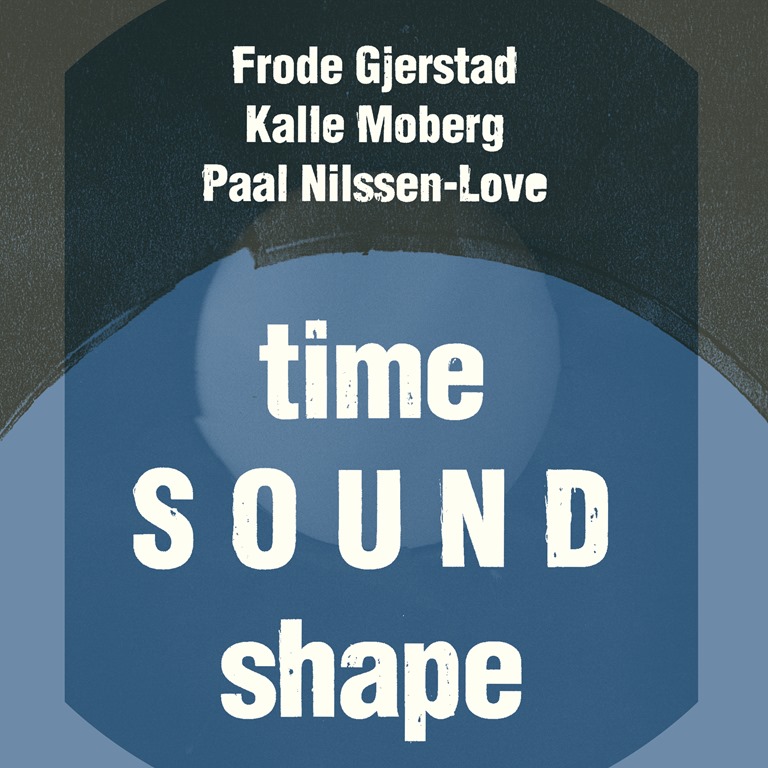
Time Sound Shape is a single continuous piece with a running time of a full-length album, clocking in at precisely forty-nine minutes, and it’s a great example of intuitive improvisational collaborative work, and it sounds far better than the clunky text-based cover art suggests.

There are some dissonant, discordant, even outright difficult to digest crescendos, and moments of queasy chamber orchestral meanderings, as they tweet and toot together in a sort of droning solidarity. It begins gently enough, with some trilling woodwind courtesy of Frode Gjerstad who brings flute, and clarinet to the party as well as sax, but it doesn’t take long before things shift in numerous different directions.

There are moments that almost feel ‘continental’ in vibe, perhaps not least of all on account of Kalle Moberg’s accordion work. And all the while, Paal Nilssen-Love brings texture and atmosphere with his application of a wide selection of Paiste gongs, bringing doomy dolorous chimes and rolling thunder. At times, the crashing gongs are strong enough to vibrate the internal organs within the ribcage.

In many respects, Time Sound Shape delivers precisely what you would expect from these three musicians coming together, and yet at the same time, it brings more. It’s a richly textured work, that evolves as it progresses, and it never stays stull, and yet the changes are often subtle. Time drifts and bends as the sounds transition, changing shape. Let yourself be carried.

AA

PNL052_front

Cruel Nature Records – 2nd December 2022

Christopher Nosnibor

Seems I’ve blinked and missed a while slew of releases from Ontario experimentalist Clara Engel since writing about Hatching Under the Stars in the spring of 2020. Then again, the spring of 2020 doesn’t so much feel like a lifetime ago, as much as it does another life. Released on 5th April 2020, we were only just over a week into the first lockdown here in England, and we had no sense of what was to come.

As the blurb outlines, the album was ‘recorded entirely at home / solo’ and ‘Their Invisible Hands presents 13 tracks of subtle dream-like beauty… A mystical work, mixing classical and dark folk wanderings with misty soundscapes, which creates an abstract, new world atmosphere.’ Self-released in April digitally and on CD, Cruel Nature are giving it a cassette release.

In a way, returning to Clara’s work now is a powerful, and grounding experience. What has happened in the space between? Everything…and nothing. As they explain in the accompanying text, replicated on their Bandcamp, “I’m not writing the same song over and over so much as writing one long continuous song that will end when I die.”

If the last couple of years or so have reminded us of anything, it’s our mortality. And the sound of Their Invisible Hands is both spiritual and earthy. To unpack that, the sparse instrumentation, which consists predominantly of creening woodwind, chiming, picked strings, and hand percussion, has a simple, primitive aspect to it, and the slow, rhythmic undulations are attuned to elements of nature, as grounded as the act of breathing. ‘Dead Tree March’ is exemplary, a long, expansive drone that pulses in and out, repetitively, hypnotically, a sparse guide to a meditation.

Engel’s vocals, meanwhile, are ethereal and other-worldly, with a primal folk leaning that moves effortlessly between narrative and incantation, both of which tap into that subconscious part of the mind that it seems only music and nature can reach.

These themes of nature and of the ancient, of thoughts and tales lost in time, are constants in Engel’s work, giving credence to their comment about writing one long continuous song. In this context, it’s easy to see their entire catalogue as an interrogation and exploration of a quite specific field. Engel’s world is one full of magic and mystery, cryptids and magic beans and magnificent birds which sing. These songs are steeped in atmosphere and wonderment.

‘Ginko’s Blues’ is perhaps the most overtly classical piece on the album, a sparse composition led by picked acoustic guitar that calls to mind a stretched, dispersed rendition of Beethoven’s ‘Ode to Joy’, as it’s slowly dragged into a sea of scratched strings and gauze-like reverb.

Dissecting Their Invisible Hands too hard is to misunderstand its nature. It’s not an album to pick apart for the various elements, or even to comprehend its structures, origins, or meanings: any attempt to do so is to demystify its resonance. ‘It’s all fun and games ‘till somebody shows you their heart.. on a platter on a stake on a riverbed rusted…’ they sing on ‘High Alien Priest’. The metaphorical and the literal blur unsettlingly.

You shiver and find yourself mute as Engel leads you through an array of evocative soundscapes. All you can do is let go, and to explore them.

AA

a0799919546_10

Edinburgh born Kendall based artist Celestial North has shared ‘Yarrow’, a haunting atmospheric ‘botanical’ soundtrack.  For fans of Nils Frahm, Olafur Arnalds or Sigur Ros, this reflective and meditative piece gently sways with a wash of pianos and sighing melodies. It’s a tantalizing other side of Celestial North’s artistry and a teaser for her album released later this year. 

Watch the video for ‘Yarrow’ here:

AA

She says of the song:  “I often think in ‘music’. My thoughts are usually awash with colours and sounds. I was sitting trying to meditate, or contemplate, beside the yarrow patch in my garden. I was finding it difficult to articulate how I was feeling and started to feel a bit frustrated. I decided to sit quietly and start again. I realised that I didn’t really have any words to write down as such but I did have a tune playing in my head. I decided to record this tune on my piano and added some other elements that I felt benefitted the song — a bodhran drum, a choir, the rustling of the yarrow patch and the roses recorded from my garden and some simple electronic sounds.  This botanical soundscape is representative of how I felt whilst I was sitting with the yarrow and the tune played on the piano is the tune that was playing in my head whilst sitting with the plant."

473734

Christopher Nosnibor

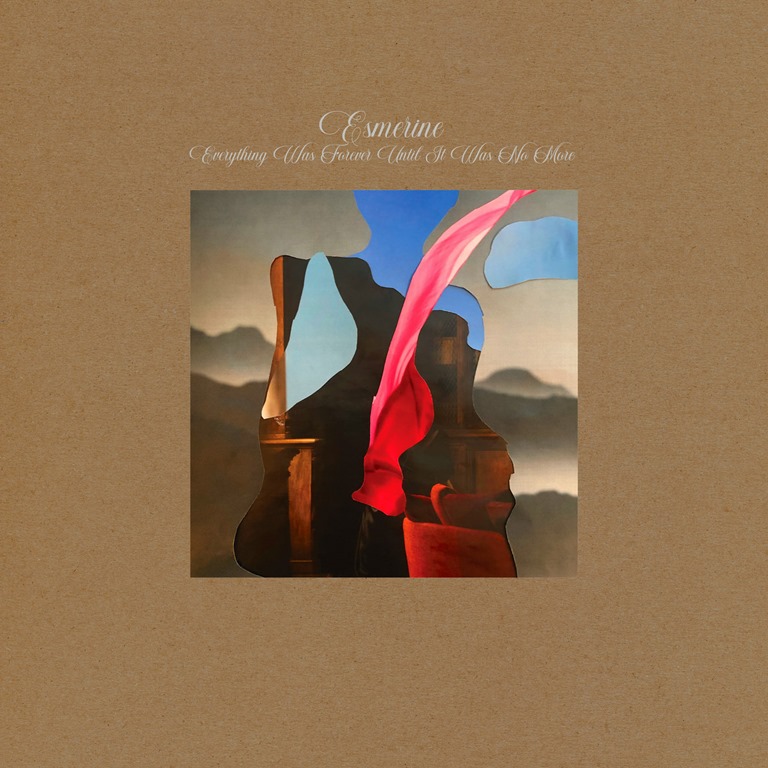
Everything Was Forever Until It Was No More is such a quintessentially post-rock album title: without hearing a note, it evokes the spirit of 2003-2006 or thereabouts. On listening, it’s perhaps not as overtly post-rock as all that – it’s not a slow-building crescendo-fest with chiming guitars like Explosions in the Sky or even lesser-known acts like And So I Watch You From Afar, but with ties to legends in the field, it is every inch of that milieu, with ‘the cello of Rebecca Foon (Saltland, Set Fire To Flames, Silver Mt Zion) and the marimba of ex-Godspeed You! Black Emperor percussionist Bruce Cawdron at its core’.

It’s been a full five years since their last album, 2017’s Mechanics of Dominion, and during this time the Montreal-based collective have been doing what, it seems, the Montreal post-rock scene does best – detaching themselves from the world and conjuring magnificent, magical soundscapes that offer a conduit to planes of pure escapism.

Everything Was Forever Until It Was No More presents a rich sonic tapestry that incorporates a broad range of elements. The press released makes mention of ‘emotive chamber works using threads of post-classical, post-rock, Minimalism, neo-Baroque, jazz, pop and a wide array of folk traditions’ as being Esmerine’s palette.

‘Blackout’ opens the album with a soft, elegant piano draped with brooding strings that’s graceful, subtly emotive, and easy on the ear. ‘Entropy: Incantation – Radiance – The Wild Sea’, the first of the two-part ‘Entropy’ suite is a nine-minute journey through atmospheric ambience, where one treads with trepidation, uncertain of what may be hidden in the shadows. There’s an aura of ancient mysticism that echoes before eventually, the track refocuses toward a driving prog rock finale.

The beauty and joy of such a work is that while there are undoubtedly inspirations and emotions poured into the compositions, such wide spaces without words offer the listener a vessel into which to empty their own experiences and interpretations, and as such, a piece like the seven-minute ‘Imaginary Pasts’ with its lilting piano, roiling drums, and textured guitar work which trips out into hazy space offers so much scope for the listener to invest and reflect upon their own imaginary pasts. Such invitations to meditate on life and to journey into inner space are extremely welcome when life is so relentless.

Despite the title seemingly alluding to a sense of nostalgia, Everything Was Forever feels more like a work that creates its own space in time, rather than reflecting on a time past. Three of the four final tracks are under three minutes each in length, and as such, are almost dream-like fragments, and the listener finds themselves wandering through chiming bells and rippling notes that dapple like sunlight through trees in a breeze on ‘Wakesleep’, before ‘Number Stations’ guides the way not towards the light, but through a murky sonic swamp or eerie echoes before taking its final magnificent form, and reminds us that, ultimately, nothing is forever, and everything is just a fleeting moment in the scheme of eternity.

AA

a2000110854_10

Last month, Mat Ball (BIG | BRAVE) announced his first full-length solo album, Amplified Guitar, arriving on The Garrote on 1st July on all formats.

Today he shares the entrancing and moving video for second single, ‘To Catch Light III’. Filmed and edited by Joshua Ford at The Garrote HQ in Illinois using the most simple elements, this video presents a remarkable visual analogue to the economy and elegance of the music and provides an astounding physical account of the sound.

Having recently stood transfixed watching Ball wring notes from his guitar and similar setup while on touch with BIG | BRAVE, this video is both mesmerising and representative of that experience. Calling to mind the expansive guitar workouts of Dylan Carlson’s solo work, ‘To Catch Light III’ hints towards and album that’s rich, textured, immersive.

Watch the video here:

Recorded at Hotel2Tango by Godspeed’s Efrim Manuel Menuck, Ball performed each of these beautiful songs in a single take. Plucking, strumming, bowing, or just slowly moving an electric guitar of his own construction in front of an array of amps, Mat Ball managed to expertly coerce some very deeply moving music from very little. 

Additionally, Mat Ball shall release a book, Accidents (with orders via www.thegarrote.com and Bandcamp). Operating as a visual analog to the Amplified Guitar LP, the work in Mat Ball’s book Accidents is also based on chance: chance in discovery, chance in process, or chance in accidental results. Whether found at rest and documented in that natural/untouched state, or assembled/touched by Ball’s hand, the aleatoric element in each piece is vital. First edition limited to 100 copies.

cosmicimg-prod.services.web.outlook.com

Photo Credit: Stacy Lee

Rocket Recordings – 10th June 2022

Christopher Nosnibor

International Treasure is the second album from the ‘collaborative collision’ of Steve Davis, Kavus Torabi, and Mike York. And, of course, much has – and will – be made of the Steve Davis factor: he may have kept his musical interests largely under wraps during the lengthy heyday of his snooker career, but the fact is that he’s long been a fan and supporter of ‘interesting; music, and this is a musical unit that stands on the strength of its work – and its work is (utopia) strong.

As the accompanying notes explain about the origins of International Treasure, ‘All three musicians here found themselves operating outside of their comfort zones – Torabi’s purchase of a guzheng (a Chinese plucked zither) led to Shepherdess’s lambent allure and York’s spectacular and evolving array of pipes and wind instruments contributed just as much as his ruthless editing. Davis meanwhile, whose speciality lies in rich tapestries of modular electronics, sums up their relationship in characteristically self-effacing fashion: “I see myself as a strong midfielder, or a centre back. Kavus and Mike are like the Lionel Messi or Ronaldo of the equation, and I’m setting situations up for them”.

Davis’ application of an extended football analogy is amusing in context, and one suspects it’s an intentional slice of drollery. The music itself is not amusing – as in, there are no chuckles to be found here – but instead is intensely focused, with magnificent results. There’s a tangible sense of an intuition flowing between the three of them on this album as the sounds ebb and flow and weave and quaver, the elongated drones and meandering organs melting together like a stream of butter.

There are some odd samples – probably animal, rather than vegetable or mineral – flow together into a soft mass, with no hard boundaries, no distinct edges… ‘Shepherdess’ is spacious, meditative, but shifts over time to emerge as a more pulse-based modular synth work, and ‘Disaster 2’ brings all of the various elements together perfectly, as well as bringing together ambient, post-rock, and folk. It’s a beautiful and uplifting experience, and one which acknowledges the pains, trials, and tribulations of life, how it may not be possible to function all day every day.

There’s something soothing, even soporific, about the slow, mellifluous tones that drift together smoothly, seemingly effortlessly, to coalesce into some form, however cloud-like and abstract, to create International Treasure. Even when deep, resonant notes hang like the slow decay of a chimed gong, as on the title track, the darkness is always tempered, by light.

It’s not ambient and it’s not Krautrock – but International Treasure finds the three musicians drawing on elements of both to conjure something magical, something mystical. The final track, ‘Castalia’ is a calypso party party, and if it at first feels somewhat at odds with the rest of the album, it’s worth bearing in mind that the album exists at all because the players are keen to explore different terrains and territories. And explore they do: International Treasure mines many seams, and excavates a wealth of listening pleasure.

AA

525397

After being involved with Heilung for two years, and more recently with the worldwide-acclaimed movie The Northman as songwriter and actor, Jonas Lorentzen decided to focus on his own musical expression, based on a reimagination of Nordic Folk and spiritually driven music. The result is Nebala, spearheaded by Jonas Lorentzen, but assisted and graced by powerful talents such as Sebastian Gainsbourough (Vessel, The Northman, Manchester Collective), Kjell Braaten (Wardruna, Origami Galaktika) as well as non-musician minds assisting in the conceptual development, Doctor Mathias Nordvig (Professor of Pre-Christian Religion at CU Boulder) and Philosopher Naina Gupta (University of Kingston).

Nebala unveils today the new single ‘Ant Mér Sjalfri Þér’, a song about unfulfilled love, desire and longing consuming us. It refers to the myth in which Wōdan sought the Billingas magwia, the Maiden of the Fleeting Moment. In this myth, love and desire are ripped away from the ones who have let themselves be consumed. The artist also releases a new video, a short film in which the songs ‘Ant Mér Sjalfri Þér’ and ‘Laþu’ merge to create ‘The Eternal Child’.

Jonas Lorentzen comments: "This is the entire art film as we originally intended. A story about a man trying to come to grips with his own demons and desires. Inspired by mythology and Jungian archetypes."

Watch the video here:

Using traditional frame drums, lyre, tagelharpa, Tibetan singing bowls, and throat singing, Jonas Lorentzen has developed a unique Indo-Nordic sound for Nebala that toys with timescapes, soundscapes, and cultural boundaries to bring you back to the primordial experience of music itself.

He comments on the album: “When you let yourself be taken by desire and lust, you will be consumed by what the ancient Germanic peoples called Laþu. The ancestor of our modern word “to let,” laþu suggests giving into natural desire and emotion. When Wōdan sought the deepest knowledge of the cosmos he had to brave the dangers of the deep caves in Hnitbjörg and let himself be taken by the desire of Gunlaþu, the forceful goddess of the underworld.”

AA

JL