Posts Tagged ‘Apocalyptic’

A1M Records – 29th November 2024

Christopher Nosnibor

For most bands, unexpectedly parting company with their record label on the eve of the release of an album, the lead-up to which has involved three well-received single releases on said label, would be a devastating blow. But not so The Battery Farm. Even before A1M Records swooped in to fund the CD release, they’d already announced that the album would be going ahead as planned. That’s resilience defined. It also encapsulates the spirit of this indefatigable, undefeatable band. The Battery Farm embody tenacity, stubbornness, bloody-mindedness, and graft. They’re not making music for fun, or as a hobby, but by compulsion, with dark themes and dark grooves being very much front and centre of their work.

Flies – released two years ago almost to the week of its successor – was a strong debut, one which showcased the work of a band unafraid of experimenting, of embracing a range of stylistic elements, or revealing literary leanings. They’ve gone deeper and darker on the follow-up.

‘Under the Bomb’ whips in with synths buzzing a crackling static electricity before a sparse acoustic guitar comes to the fore, a sonorous bass note sounding out as Benjamin Corry sings – an intimate croon – and paints a bleak scene that calls to mind the grim images of Threads, the revered BBC film marking its fortieth anniversary this year. Considered by many to be the bleakest and most harrowing film ever made, its anniversary is a reminder of just how recently cold war tensions were so high that the fear of nuclear annihilation was both real and justified, as well as of just how quickly things can escalate – and, indeed, have escalated already in recent years. The closing lines ‘Survival makes you wish you’d never been born / Envy the dead after the bomb’ articulate the sheer horror of the fallout and a nuclear winter, and the song creates the context for an album which is dark, tense, and – justifiably – paranoid, scared.

The band fire in hard in jittery, driving post-punk mode on ‘The Next Decade’, Corry roaring full-throated, raw, raging, then shifting to adopt a more theatrical, gothic-sounding tone. It’s an impressive performance, reminiscent of Mike Patten on Faith No More’s ‘Digging the Grave’, and the overall parallel feels appropriate here. It’s a punchy, sub-two-minutes-thirty cut that’s almost schizophrenic and bursting with tension, paving the way for single ‘Hail Mary’, which hits hard. Minimal in arrangement, it’s maximal in volume. It’s gritty and taut, and when the bass blasts in after the two-minute mark, the sheer force is like two feet in the chest.

The singles are packed in tight, with the mathy noise-rock crossover of the manic panic of ‘O God’ coming next. Again, it’s the lumbering bass that dominates the loud chorus, and it’s a strong hook that twitches and spasms its way from the tripwire tension of the verses. ‘O God, which way is hell?’ Corry howls in anguish. The answer, of course, is whichever way you turn. You’re doomed. We’re all doomed.

The title track lands unexpectedly, as a slow-paced rock ‘n’ roll piano ballad which sounds like it’s lifted from a musical, an outtake from Greece or maybe Crybaby. But midway through it springs into life and takes off in a burst of proggy bombast. As was the case with Flies, The Battery Farm are never predictable, never afraid to throw a curveball, and they get the impact of making such switches, meaning that ‘Stevie’s Ices’, which lands somewhere between Muse and Queens of the Stone Age. The squelchy strut of ‘Icicles’ is different again: part Pulp, part Arctic Monkey in the spoken-word verse, more Nirvana in chorus, the essence of the album as a whole comes together here. The songs, in presenting two almost oppositional aspects between verse and chorus reflect a world that’s torn in two, collapsed, pulling in different directions – and while its theme may not have been directly inspired by the most recent events, given that its writing and recording predate the US election, the circumstances which brought us here – via a political backdrop which sees the UK, US, and so many countries split almost 50/50 between hard-right and broadly centre-left, a situation that brought us Brexit, which brought us Reform and fourteen years of Conservatism, which means that speech in support of the Palestinian people is met with hostile calls of antisemitism… Division and polarity defines the age, and debate is dead.

Powering through the raw big-bollocked punk blast of current single ‘John Bull’s Hard Times’ and the moodier, more reflective ‘It’s a Shame, Thanks a Lot’, a song which confronts anguish and misery and the desire to die in the most direct and uncompromising lyrical terms against a backdrop that borders on anthemic, we stagger to the fractured trickling gurgle of the disembodied ‘After the Bomb’ which spirals towards a climax before it slumps into a wasteland of ruin.

As dark as it is, The Dark Web packs some meaty tunes and beefy grooves, which elevate it a long way above Threads bleakness, but by the same token, it’s by no means a lightweight, sugary confection. Once again, The Battery Farm balance dark themes and slugging noise with moments which are that bit lighter, and even sneak in some grabs and hooks. The Dark Web is a dark album for dark times, but steers wide of being outright depressing. This takes some skill, and The Battery Farm have skill to match their guts.
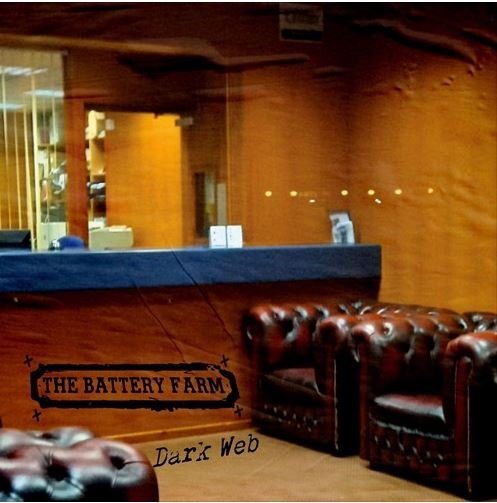
Battery Farm - Dark

FVNERALS have released a video clip for the track ‘For Horror Eats the Light’, which is the first single taken from the dark doom duo’s forthcoming new album Let the Earth Be Silent, which has been scheduled for release on February 3, 2023.

FVNERALS comment: “The track ‘For Horror Eats the Light’ is a lament about giving up all sense of hope, embracing the absence of light and a forced return to barren lands through devastation”, guitarist Syd Scarlet explains. “The song is about contemplating our lives coming to an end while accepting that nothing can save us and nothing should. It was written to include several movements that each mirror an emotional stage. The title of the song was inspired by a quote from Thomas Ligotti: ‘Not even the solar brilliance of a summer day will harbor you from horror. For horror eats the light and digests it into darkness’.”

Tiffany Ström adds: “The video was created by Simona Noreik, an amazing artist with whom we had previously collaborated on our live visuals”, the singer and bass player writes. “Simona’s artistic vision really complemented the apocalyptic nature of our song perfectly and she managed to portray desolation, extinction and nothingness with grace.”

Watch the video here:

AA

zYbnsRdQ

Los Angeles-based dark punk band The Wraith share the first single "Wing Of Night" from their incoming debut album, Gloom Ballet (Southern Lord, 29th Nov). Influenced by the likes of Killing Joke and 1919, The Wraith’s post-apocalyptic ‘Wing of Night’ juxtaposes a relentless verse groove – the ominous march of a spiritual death squad – with faint hope flickering amidst its expansive chorus.

“’Wing of Night’ is about not just surviving the pain and struggle of living in a dark world, but also welcoming these,” says The Wraith vocalist/lyricist Davey Bales. He continues, “Embracing hell and rejecting heaven as your reality, but in a positive way.”

Gloom Ballet delivers twelve infectious tracks drenched in the band’s ‘80s UK post-punk (Death Cult, Killing Joke, Chameleons) and SoCal deathrock (T.S.O.L., Samhain) influences. Recorded by Puscifer guitarist/producer Mat Mitchell, Gloom Ballet was mastered at Audiosiege by Brad Boatright (From Ashes Rise, Tragedy, Alaric) and the artwork by Rebecca Sauve.

Listen to ‘Wing of Night’ here:

Consouling Sounds – 5th October 2018

Christopher Nosnibor

It’s been five years since A Storm of Light graced us with Nation To Flames, released via Southern Lord. Anthroscene has a very different mood, and isn’t exactly a Southern Lord type of album. It’s still very much a metal album at heart, and still has the sharp, snarling throb of latter-day Ministry at its molten core – but on this outing, they’ve opened things up a way – without losing any of the fire.

Josh Graham’s take on the album is that “Anthroscene ignores genre and freely combines a lot of our early influences. Christian Death, The Cure, Discharge, Lard, Fugazi, Big Black, Ministry, Pailhead, Melvins, Pink Floyd, Killing Joke, NIN, Tool, etc. Where Nations to Flames was a very a focused sonic assault, this record has more time to breathe, yet still keeps the intensity intact. We allowed the songs to venture into new territory and push our personal boundaries. It’s heavy and intense, but always focuses on interwoven melodies, song structure and dynamic.”

It’s a slow build by way of a start: the six-minute-trudger that is ‘Prime Time’ is constructed around a stocky riff, choppy, chunky. The guitar overdriven and compressed, chops out a sound reminiscent of post-millennial Killing Joke. The vocals are more metal, and then it breaks into a descending powerchord sequence that’s more grunge. The overall feel, then, is very much late 90s and into the first decade of the noughties, and lyrically, we’re very much in the socio-political terrain of Killing Joke. Indeed, the shift in focus is as much about the album’s heart as its soul, as ASOL turn to face the world in all its madness and corruption and pick through the pieces of this fucked-up, impossible mess. It’s practically impossible not to be angry; it’s practically impossible not to feel angry, defeated.

‘Blackout’ grinds in with some big chuggage, and ‘Life Will be Violent’ is remarkably expansive as it howls through a barrage of percussion that blasts like heavy artillery for eight and a half minutes. There are no short songs here: Anthroscene is the post-millennial cousin of Killing Joke’s Pandemonium. Only, whereas Pandemonium was pitched as prophetic and prescient, Anthroscene is clawing its way through the wreckage that is the future now present. Yes, the damage is done, and we’re standing, looking into the rubble as the dust drifts across a barren wasteland. But we’re too busy on social media and with faces buried in smartphones and tablets to even contemplate what we’ve done, and our children, heading inexorably toward an existence bereft of meaning as they too bury their faces in smartphones and tablets and Netflix on the 50” flatscreen, have no idea.

But this is no by-numbers template-based regurgitation: Anthroscene is sincere, and original. The squalling guitars of ‘Short Term Feedback’ sizzle and squirm over a barrage of drums and throat-ripping vocals as A Storm of Light revisit industrial metal territory, tugging at Ministry and early Pitch Shifter by way of touchstones. Elsewhere, the lugubrious ‘Slow Motion Apocalypse’ fulfils the promise of the title, but perhaps with more emotional resonance than you might expect.

Anthroscene is harsh, but evokes steely industrial greyness in its dense, claustrophobic atmosphere. A challenging album for challenging times.

AA

289671