Posts Tagged ‘Ambient’

Field Records – 24th May 2024

Christopher Nosnibor

It’s funny to reflect on how things evolve, and how one evolves as an individual. Ten years ago, I was pretty underwhelmed on my first encounter with Celer, commenting on Zigzag that ‘aside from the occasional ripple and swell, there are no overt peaks or troughs, there is no drama. In fact, very little happens.’

Over time – a lot of time, in truth – I’ve come to appreciate that things happening aren’t always the maker of a quality album. And when it comes to more ambiently-inclined works, there’s not a lot that’s supposed to happen.

Released on 24th May, like every other album this year, Perfectly Beneath Us was originally released way back on CD in 2012, and now, 12 years on, it’s getting a well-deserved vinyl release, with four tracks spanning roughly thirty-four minutes occupying an album.

Each side contains a longform sonic expanse and a shorter piece, approximately three minutes in duration, and everything is segued to bring a connected flow the work. I’m not going to debate the pros and cons of the formats or how nigglesome some may be. If you buy the vinyl, you’ll need to turn it over after about a quarter of an hour. It’s exercise at least, and that’s a positive as this certainly isn’t ruining music.

Just as I complained that nothing much happens on Zigzag, nothing much happens on Perfectly Beneath Us, either, only now I’m not complaining.

Since the inception of Celer In 2005, initially as a collaborative project2005 between Will Long and Danielle Baquet, until the passing of Baquet in 2009, since when, as the Celer bio outlines, ‘Long opted to keep their project going, and Celer has continued to grow as an expansive exploration of purest ambient.’ Purest ambient is indeed a fair description of Perfectly Beneath Us, and to report that I found myself nodding off at my keyboard on more than one occasion while trying to pen my critique of the album is proof positive of a mission accomplished. It isn’t that Perfectly Beneath Us is dull, or boring – as I may have surmised many years ago – it’s just the very essence of ambience. It’s mellow, it’s background, it’s soporific, and it’s supposed to be.

a3346002469_10

InsideOutMusic is proud to announce the signing of Italian instrumental, prog-metal fusionists Asymmetric Universe to a new worldwide deal. The band, formed by brothers Federico Vese & Nicolò Vese, are also pleased to launch a brand new track titled ‘Don’t Go Too Early’, and you can watch the video for that here:

The band comment:

We are so excited to join such a big family as InsideOutMusic! Being part of a team with legendary artists and bands that we’ve been listening to since we started studying music, is a dream come true!

Our new single, “Don’t Go Too Early”, is a mixture of fusion-jazz, aggressive progressive metal, wind quartet arrangements and an avant-garde string quartet orchestration, that brings a unique colour to complex yet catchy music. We can’t wait to share with you all the music we are already working on!”

Freddy Palmer, InsideOutMusic, adds: “Asymmetric Universe are a perfect example of the kind of exciting, instrumental guitar music making waves right now, and we couldn’t be more thrilled to add them to the label’s roster, and be a part of their bright future.”

The band are currently confirmed to support Plini & Haken in Milan, Italy on the 5th July, as well as playing Arctangent Festival in the UK on the 16th August alongside Meshuggah, Animals As Leaders & many more.

Formed in 2018, with the goal of pushing the limit of modern prog and fusing disparate genres, they combine metal with jazz & ambient music, alongside chamber orchestration. In 2023, the band released their second EP ‘The Sun Would Disappear As I Imagined All The Stars’, which was mixed by Forrester Savell and mastered by Ermin Hamidovic. They also embarked on their first European tour as support to Australian progressive metallers Ne Obliviscaris, as well as opening for Caligula’s Horse in Italy.

Both brothers are mostly self-taught musicians, who have been heavily involved in composition and orchestration, as well as music production.

Federico has composed music for as wide ranging places as Radio Montecarlo (one of the biggest Italian radio stations), as well as one of the largest Italian amusement park Mirabilandia. He is a metal/rock producer and this background influences his work as a composer in the video game industry. He is also a professional music and guitar teacher with online students from different parts of the world.

Nicolò has composed pieces for various orchestral organisations (two pieces were performed in the latest symphonic season of Orchestra Sinfonica of Sanremo and one performed at Rome Jazz Festival in 2021 with a big band), worked as a composer in many Musicals and he is currently working in the video game soundtrack industry (also as a sound designer), ranging from indie games to bigger productions. He also professionally teaches composition, orchestration and adaptive music techniques for video games.

dFUOtV0g

Bearsuit Records – 31st May 2024

Christopher Nosnibor

There was a time – not so long ago – when I would come home from work and struggle to nudge the front door open with my shoulder for the mountain of CDs that had been dropped through my letterbox, along with the occasional ‘sorry we missed you’ card telling me I had a parcel at the depot awaiting collection or to arrange redelivery, and more often than not it would be some vinyl, and all of it promo material for review. I had a box – which was initially a shoebox, but later replaced with something larger – which was my ‘to-review’ box, after the pile kept falling over once it reached an unsustainable height. It was a storage nightmare, and I still have boxes containing quite literally thousands of promo CDs with press releases folded up with them, in boxes in the walk-in cupboard and the end of my office, which is, in truth, too stuffed with boxes of CDs to squeeze more than a toe into, rather than actually walk in.

Working in an office as I did then – rather than at home – I would take a bundle of CDs in a jiffy in my bag, and sit and listen to them as I worked. It beat enduring the often moronic drone of the people around me, and I’d tap out notes which I’d email home to myself to flesh out into full reviews in the evening.

My working method has changed rather since then, and while still working the dayjob, I’ve barely set foot in an office other than the one in the back bedroom of my house since lockdown. I haven’t received stacks of CDs in the post for a similar length of time, if not longer. For all of practical issues around the stacks of CDs, I do kinda miss it, and this is one of the reasons I always get a thrill at the arrival of a disc in the mail from Dave Hillary, who runs Bearsuit Records. The other, and not insignificant reason I always get a thrill at the arrival of a disc in the mail from Dave is that I’m eager to discover what mad genius work the label’s releasing next. I enjoy slipping the disc in the external CD drive I have attached to my laptop and soaking in the strangeness that spills from my speakers: I’m never disappointed.

I love the fact that I still get CDs in the mail, with promo cards and handwritten notes and so on, from Bearsuit, not just because of the joy of the physicality and the personal touch, but because it’s emblematic of the label as an entity. It does what it does, regardless of whatever else is happening, and it releases music the likes of which you simply won’t find anywhere else.

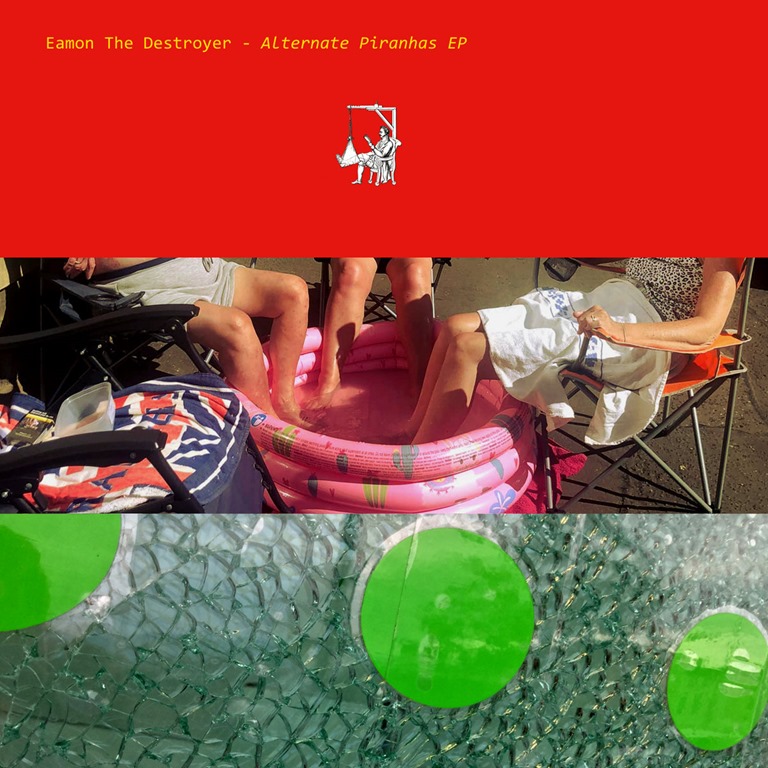
Eamon the Destroyer is a classic case in point. Another typically enigmatic artist in the Bearsuit tradition, Eamon the Destroyer has enjoyed a great run of releases to date. Debut album A Small Blue Car was a work of fuzzy, minimalist , downtempo brilliance. A sad, introspective work, it was unexpectedly touching for something so overtly odd, and follow-up We’ll Be Piranhas pushed further into forging songs that straddled the dreamlike and the nightmarish, a disorientating, discombobulating work that delved deep into the psyche in a way that felt like invisible fingers creeping inside the cranium and directly massaging the brain.

And now we come to the more or less obligatory counterpart release. Instead of the standard and expected remix EP, Alternative Piranhas gives us outtakes alternative takes of tracks from the album. A cynical voice might ask why they didn’t make the album cut, but there are myriad valid reasons: an album need to cohere and sometimes even the best tunes don’t fit with the flow, and similarly, the mood of one take or mix may in fact be better objectively, but not quite sit with the context.

And so it is with the five tracks here. All five appeared on We’ll Be Piranhas. While exactly the same length as its album counterpart, ‘A Pewter Wolf’ presents a quite different mix: the organ is much more boomy, more ‘churchy’ than on the album version, while the guitar sounds, almost buried on the album blurred and hazed out low in the mix, are more up-front and gritty here.

The version of ‘Rope’ on Alternate Piranhas seems to be in a different key, and is much grainer, murkier and messier than the more polished album take, and it’s more abrasive, more aggressive, with the vocals more up-front, and the result is that I found myself hearing thee song anew and soaking in the anger which permeates it, less obviously on the other version, tempered by the more mellow mix.

Overall, the versions on Alternate Piranhas are rougher, less ‘produced’, and it’s not difficult to discern why the versions chosen for the album were the ones they were. The album worked as a cohesive set, with an even, smoothed-out sound – well, in context – but Alternative Piranhas provides an insight into the process, which is never more apparent than on ‘The Choirmaster’. It’s not radically different… but it is different, while the alternative take of ‘My Stars’ is half the length of thee album and feels like a sketched-out demo. But again, it possesses qualities absent from the album version, just as the album version has elements which are absent here, including another five minutes of sound.

Alternate Piranhas feels more overtly rock than its progenitor, and perhaps it is, but above all, it’s a source of enjoyment to revisit these songs from a different perspective.

AA
a4099667252_10

Dret Skivor – 3rd May 2024

Christopher Nosnibor

Dret Skivor seem to have managed to sync their release schedule to Bandcamp Fridays pretty neatly. Meanwhile, the man behind the label, Dave Procter, has enough different musical projects to fill the entire label’s roster single-handedly.

Not content with pumping out harsh noise as Legion of Swine and ambient drone with mathematical divination as Fibonacci Drone Organ, and spoken word ramblings backed with dark noise as Trowser Carrier, or collaborating with countless other artists, notably Claus Poulsen with whom he (ir)regularly convenes for a release, and a brief excursion as twAt clAxon, Procter has also been operating as Klôvhôvve, a vehicle for ambient / glitch weirdness.

Following on from Is it? It is, an album containing two longform tracks which offered their own call and response, released in March, Live at JT Soar feels on one hand like a bit of a stop-gap, but on the other, a reasonable consolidation. More than reasonable, in fact, considering that Procter devotes a considerable amount of time to performing live – and is perhaps the only artist I can think of who will book a tour and not play under the same guise more than a couple of times, or for two consecutive shows. It is, undoubtedly, easier to get bookings if you have a broad range of styles to offer promoters, even if that range does sit under the wider umbrella of obscure electronic weirdy shit.

Before we ger to the obscure electronic weirdy shit of the recording, it’s worth a brief acknowledgement of the cover art, which is truly classic Procter (the photographs which grace the covers of his two collections of poetry / rants as Dale Prudent are strong cases in point). Gritty, unpretty, urban, and a bit off kilter, snapshots of the everyday strange. Here was have a shot of the outside of the venue, still with its signage for JT Soar, Wholesale Fruit and Potato Merchants, from which it takes its name. Unassuming is an understatement for this building, with graffiti on one door, and a piece of street art depicting Nottingham’s best-known polemicists, Sleaford Mods, replicating the artwork for their most recent and widely-acclaimed album, UK Grim on the garage door. The shot is some real-life documentary, its relevance heightened because the vocally socialist Procter departed the UK for Sweden post-Brexit because… well, Brexit.

Klôvhôvve’s set, which lasts twenty-four minutes, is mellow and mellifluous to begin with, but soon swerves into a melting together of soft tones with scratched, warping drones, the glitching eating into the surface of the looping tapes affected at first. Vocal snippets, fractured, fragmented, distorted, cut in and out, as the music ebbs in and out unpredictably.

There is a sense of nostalgia about this, but the overarching sensation is more that of a post-apocalyptic narrative, a bleak dystopia of degradation, of societal collapse whereby only damaged recordings and fragments of past technologies remain, twisted, rusted, malfunctioning. The set does have distinct segments, although they do flow together to form a continuous set, and as such, it makes sense that it’s released here as one single track. It’s not as if anyone is going to be skipping to hear the hit or their favourite song of the set, and it’s structured around transitions between evermore haunting atmospheres. It’s pretty unsettling stuff, dank and grumbling with thunderous rumblings away off in the background while a continuous slow of babbling and sharp scrapes cut into the foreground. But then there’s something resembling a trilling, twisted rendition of ‘Silent Night’ which crackles and stutters through static, and it warps and crackles its way to a slow fade.

There is some strong tonal separation here, and the interjections which appear unexpectedly are almost enough to make you jump But for the most part, it makes your skin crawl – slowly, in a state of curiosity and ponderous hesitation – as you winder where it may be heading.

Procter understands the importance of music which makes you feel uncomfortable, which tests your limits, and this release captures a live set which really teases at the tenterhooks.

AA

a3905712960_10

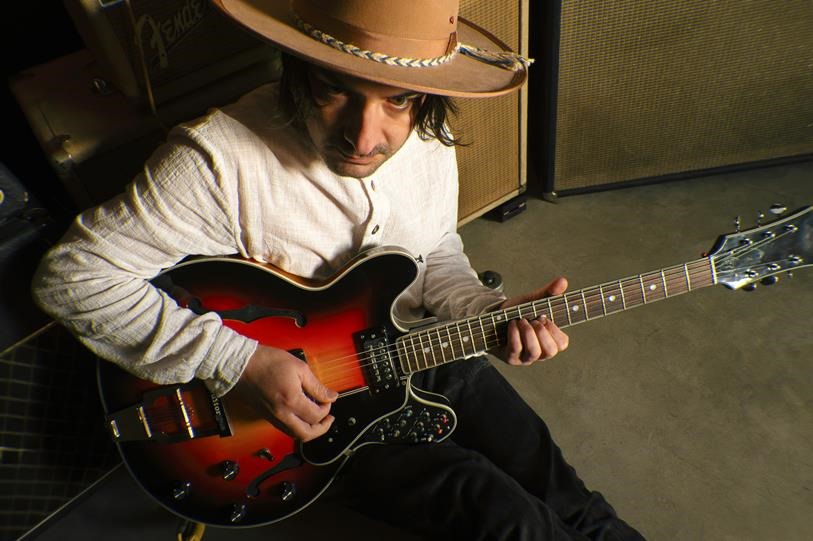
Today, we share the mysterious and poignant track ‘Moonshiner’ from the eponymous solo album by guitarist, producer and composer Alessandro ‘Asso’ Stefana. The album is due for release on 17th May 2024 via Ipecac Recordings, with PJ Harvey as Executive Producer. ‘Moonshiner’ is one of the track from the albums featuring the voice of Roscoe Holcomb taken from the Smithsonian Folkways archives.

Asso describes his use of the archives as “a powerful and moving testimony to a bygone era… I have always been fascinated by the idea of mixing folk, a music so intimately linked to the land, with something that goes beyond the boundaries of the genre.” One of Asso’s aims for this album was for it to feel “suspended between earth and sky” – the interplay between decades old recordings with new improvisations evokes feelings of being grounded and untethered at the same time. 

See the visualiser here:

AA

Moonshiner

Photo credit: Roberto Cavalli

Kranky – 5 April 2024

Christopher Nosnibor

Stars of the Lid are one of those acts who seem to have spent a – now lengthy – career on the fringe, an ultimate cult act who’ve built a substantial following without ever being well-known. Here in the UK, at least, they’re strictly a 6 Music act. With Brian McBride’s passing last year, their future remains unclear, but in the meantime, Adam Wiltzie, who had already been active for some time as a solo artist, offers up a new set of drifting, dreamy, discombobulating amorphous ambient works in the form of Eleven Fugues for Sodium Pentothal.

Sodium Pentothal is (to quote, unfortunately, Wikipedia), ‘an ultra-short-acting barbiturate and has been used commonly in the induction phase of general anesthesia’ and is also perhaps better known as a ‘truth serum’.

We recently aired the opening track, ‘Buried At Westwood Memorial Park, In An Unmarked Grave, To The Left Of Walter Matthau’ here at Aural Aggravation, and it’s inevitably tempting to infer connotations from this title in context of events – something the album’s title wouldn’t seem to necessarily counter. But Eleven Fugues for Sodium Pentothal seems to be preoccupied with memory and place in a broader sense.

We’re infirmed that the album ‘took shape following a move north from Brussels into the Flemish countryside, although it was initially inspired by a recurring dream wherein “if someone listened to the music I created, then they would die.” The album uniquely evokes and evades the allure of oblivion, keening between beauty and ruin, forever unresolved.”

Dreams have a way of staying with you, and of twisting your psyche in some unsettling way, the more vivid ones lingering and replaying for hours, even days on end, the vaguer ones leaving you feeling somehow disjointed and in a slip from being in step with the world, partially detached, partially disconnected, as if looking at your own life through a window. Recurring dreams can prove particularly unsettling, and have a way of encroaching on your waking hours, assuming a reality of sorts.

The track titles, in the main, tell us very little, presenting mere abstractions, although one suspect they carry significantly greater weight of meaning for the composer. Bereavement and loss has a way of bringing layers of meaning to the slightest things, often unsuspectingly – a sight, a sound, something not even remotely directly related, has the capacity to trigger a memory, which in turn has the capacity to elicit an emotion or some not-quite-definable internal response. It’s often fleeting, or otherwise vague and indefinable, something impalpable and beyond reach, leaving a certain pang of bereftness – in much the same way as if waking from a dream.

Eleven Fugues for Sodium Pentothal is not a dark or heavy album, but one which is dense in its atmosphere and carries a certain air of melancholic reflection in its drifting waves. This melancholy may well be as much a reflection of the way places – even unfamiliar locations – have the capacity to stir memories but indirect association – again, a sound, a smell, a certain shade of lighting, the angle of a tree, a riverbank – prods a deep corner of the memory most unexpectedly, causing memories we didn’t even know we had, or still had, to trickle forth, vaguely, out of focus, out of context, and sometimes you wonder if is really is a memory or a fragment of a dream.

There are some deep, rich, grainy textures to be found here, and ‘(Don’t Go Back To) Boogerville’ brings some dark, heavy strings and sonorous scrapes to close the album – which, incidentally, contains only nine tracks. Loop’s Robert Hampson was an inspired choice for the album’s mixing, bringing the layers of organic-sounding drones to the fore.

Returning to the press notes, ‘Wiltzie cites the barbiturate of the title as both muse and sacred escape: “When you are sitting face forward on the daily emotional meat grinder of life, I always wished I could have some, so I could just fall asleep automatically and the feeling would not be there anymore.”’ With Eleven Fugues for Sodium Pentothal, he has created that perfect escape. This is an album that lends itself well to listening – or half-listening – by candlelight with a slow-sipping drink, and to simply drift and nod to.

AA

547558

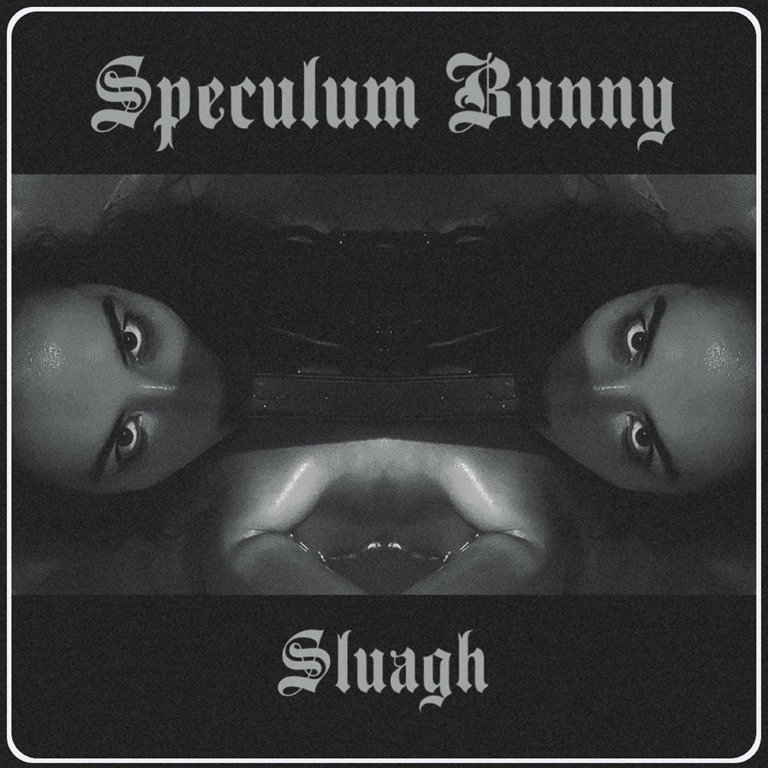
Having written music since she was a kitten, Speculum Bunny enjoys blending words and sound to provoke, enthral and mystify her audience. Inspired by the depraved nature of love in all of its majestic forms, her childhood,  masochism and devotion. Challenging mainstream narratives on motherhood and women’s expression she blends noise, synths, voices and field recordings. She pushes her her edges.

Featuring five tracks – three of which were recorded live at Radiophrenia, Sluagh is Speculum’s first release since Liminal Fluff in October of last year.

Combining abstract sounds and elongated wavering drones with murky noise and disturbing sound as backdrops to uncomfortable spoken word pieces, Sluagh is by no means easy to categorise, and it’s not the easiest of listens either – and that’s precisely why we’re recommending it.

Listen to Sluagh here:

AA

a0456756198_10

Mortality Tables – 8th March 2024

Christopher Nosnibor

Mortality Tables once again bring us a release that’s deeply immersed in the spirit of the avant-garde, and about setting defined parameters within which a project must function. When it comes to such things, it’s not about dictating restrictions, but about providing focus. Not all artists like to work to guidelines, although a prompt can open infinite possibilities for interpretation, and as such, there’s creative potential in working in such a way. And so it is that, as the accompanying notes explain, ‘Central Park: A Picture-In-Sounds is a site-specific performance piece, for one or more performers aged between ten and 95 years old. It is a tribute to the multi-disciplinary work of Charles Ives that will be published in 2024.’ We go on to learn that ‘To execute the piece, each performer will refer to a map of Central Park divided into areas representing the life expectancies listed in an 1874 US insurance industry mortality table. Each performer will identify an area of the Park corresponding to their life expectancy in 1874 and make a field recording lasting precisely eight minutes and thirty seconds.’

These are some highly specific instructions, but, once there, what performers are essentially looking at is eight and a half minutes to express as they feel appropriate, and of course, here, the possibilities are near-limitless. How one responds to a setting, a time, a space is, after all, a purely personal thing. Just as no two people’s lived experiences are the same, so no two responses will be identical.

This is a document of Mat Smith’s second performance, recorded on. 9 February 2024, at 16:13.

His own commentary is illuminating, and merits citation here, for context:

‘I was 47 years old when I performed ‘Central Park: A Picture-In-Sounds’ for the second time. Although I was a year older, when I looked at the life expectancies table and cross-referenced that with my divided Central Park map, it indicated that I should once again perform the piece near Strawberry Fields… The character of a place is in a continual state of mutability, and that was evident when I began the piece. It was a different season, the trees were barren and sleeping, snowdrops were springing up everywhere, and there were significantly more people in the park than the day I performed the piece in June the previous year. A carpet of dry leaves covered the area I set myself up in, crispy underfoot, waiting to crumble into dust.’

He recounts how ‘Someone at the John Lennon memorial began singing. Somewhere near the path, a street musician with what sounded like an amplified violin began playing a rendition of ‘Jingle Bells’, even though Christmas was retreating rapidly into the past. In between, he would play a plaintive wistful little coda that seemed so at odds with the relatively gleeful ‘Jingle Bells’. Often, his playing is accompanied by the harsh ringing bells of bikes as they whizz along the bike paths…’

His narrative creates a vivid – and moving – picture of the scene. It’s easy to think of these kind of performances taking place either with some sort of ‘arrangement’ and a cluster of observers who are ‘in the know’ gathered as witnesses, or in seclusion; it’s not so obvious to consider the actuality of creating sonic art in a public space, and all of the randomness and happenstance which that entails.

However, Central Park: A Picture In Sounds (Performance #2) captures this perfectly. The combination of the breeze and traffic creates a constant roar in the background. Birds chirp in abundance – far more than one might associate with February, at least here in England – and dogs yap and bark constantly. You can’t move for bloody dogs anywhere, in parks in fields, post-pandemic, it seems as if there are more dogs than people. But for all the ambience, all the thronging noise – and this really does remind that even quiet spaces really aren’t in large cities, with blaring radios and chatter and that constant roar – this is mostly eight and a half minutes of ‘Jingle Bells’ being played on a fiddle. In February. Bloody buskers.

But, as a snapshot field recording, Central Park: A Picture In Sounds (Performance #2), is absolutely alive, buzzing, bustling, busy – a slice of life.

AA

a3856078691_10

Mortality Tables are blasting out the second series of LIFEFILES releases at quite a pace, and LF17 is the seventh release in the season.

Describing LIFEFILES as ‘creative exchanges’; the premise is simple: ‘Recordings of places, people, objects, moments in time, environments and quotidian events are shared with a range of artists working with sound. Those artists are then free to respond to the recordings in any way they like, either through manipulation or composition.’

LF17/Edinburgh is Elizabeth Joan Kelly’s response to a set of recordings made in Edinburgh in August of 2021 by Mat Smith, namely Emeka Ogboh ‘Song Of The Union’ installation, Calton Hill (24.08.2021), Princes Street Gardens (24.08.2021), and Car on Calton Road cobblestones (25.08.2021).

The titles are plain, factual, locational, without any sense of the temporal or any indication of connotation, association, or resonance. And this is fitting, since the three compositions – ‘Calton Hill’, ‘Princes Street Gardens’, and ‘Calton Road Cobblestones’ are gentle, electroambient works which speak little of either the time or the place. These pieces are very much responses to the recordings themselves, rather than their location. Based in New Orleans, and purveyor of ‘post-apocalyptic junkyard drone pop’, Kelly has brought her own perspective to the source materials. Of course, this is precisely the spirit of the project – to see how each artist interacts with the material to forge something new, and the fact that each artist will have a completely different approach is what makes this so interesting. Because when given material and parameters, however much freedom an artist has, those parameters will also have a bearing on the output alongside the variables of the input itself and the artist’s methodologies.

In Elizabeth Joan Kelly’s hands, the sounds of a vibrant city are rendered, smoothed, with cross-hatching, delicate shading, some light smudging, a soft blending, by which everything clamorous is faded out to leave a slow hazing. There is, ultimately, no sense of Edinburgh itself here, and we find ourselves adrift, drifting on slow tides of sound with no connection to time or space. It’s not an unpleasant experience, by any means.

LF17/Edinburgh couldn’t be further removed stylistically from Ergo Phizmiz’s release, The Tin Drummer Has Collapsed, which came out only the week before. Where there was collaging, there is blending, mixing, reshaping, and where there was noise, there is calm. Neither release is in any way ‘better’ than the other – just different. And these differences are to be embraced.

AA

a2155768596_10

Hallow Ground – 7th February 2024

Christopher Nosnibor

Silent movies provide a perfect inspiration for musical scores: unencumbered not only by pre-existing scores, but also dialogue or incidental sound, they offer a completely blank canvas and space for musicians to fully explore – and articulate – the mood of the movie, the moments of drama, to become both immersed in and enhance, even create, atmosphere.

Following the split of Siouxsie and the Banshees in 1996, Steven Severin devoted much time to writing scores for old movies, and performing them as live soundtracks in movie theatres, and I was fortunate to catch him in around 2012 when touring Carl Theodor Dreyer’s 1932 Vampyr. It was a powerful and haunting experience, and one which clearly brought new dimensions to a very old film.

In the same vein, Musique Infinie – the collaborative project of Manuel Oberholzer a.k.a. Feldermelder and Noémi Büchi – present an improvised score for Alexander Dovzhenko’s groundbreaking 1930 silent movie Zemlya (Earth) created for the 24th edition of the VIDEOEX festival for experimental film.

For those unfamiliar – such as myself, the crib notes inform that ‘Frequently cited as a masterpiece of early 20th century filmmaking, the movie deals with the collectivisation of Ukraine’s agriculture.’

Now, the movie clearly holds up on its own to be so revered and still revisited almost a century on, but what of the soundtrack? How does it hold up without the visuals which inspired it?

The soundtrack is divided into two movements of roughly similar duration – ‘Creation’ (14:25) and ‘Destruction’ (12:54). It begins with big, bold, sweeping symphonia, synthesised choral soarings atop majestic, broad-sweeping synth tones. There is a palpable sense of grandeur, and with deep string sounds resonating low beneath big, emphatic surging drones, this feels immense and so strongly cinematic that it’s hard not to be caught up in the tide. A sudden droning downturn marks a temporary change of mood before we’re brought out into calmer waters and begin to regain our breath around the five-minute mark. Robotic, industrial glops and bleeps undulate and oscillate, cresting through the smooth surface. Over time, the piece transitions between organic-sounding orchestral manoeuvres to altogether more space-age sounding synthscapes, before fading rapidly at quite an interesting intersection.

‘Destruction’ – as one might well expect – steps up the drama and the dynamics, but perhaps less expectedly becomes more overtly electronic, with stuttering, glitching disturbances and cold, dark waves blasting in, bending and warping. At times haunting, disconsolate, others foreboding and unsettling, this is certainly the more challenging half of the album. But on the one hand, while it’s more exciting, in some respects, it’s also less fulfilling. Partly, it’s because of the way in which the organic-sounding strings rub against the more overtly electronic sounds, and as much as this juxtaposition and interplay is essential to the compositional form, it sometimes feels like a clash whereby the pair are seeking to achieve two separate ends. Given its improvised nature, this is perhaps to be expected, and the overall flow of the album as a whole is marked by moments of convergence and divergence.

There’s also the nagging sense of just how contemporary this feels in contrast to the visuals the sound is designed to accompany, although without being able to observe the intended setting, it’s difficult to fairly judge the level of success here.

One could – and probably should – see the film, and should also watch it with this accompanying it, as intended – but that isn’t this release, which must be judged on its audio content alone. And taken apart, in isolation, Earth is a stimulating and dynamic work, and one which demonstrates that Musique Infinie aren’t afraid to test themselves and to test boundaries, and to create a powerful and dramatic listening experience.

AA

HG2401_front