Posts Tagged ‘Ambient’

Nocturnal Rainbow Recordings – 4th October 2024

Christopher Nosnibor

Where does the time go? It’s a question one hears people ask often, and I often ask myself the same. Time, it seems, evaporates when you’re busy simply existing, keeping going from one day to the next, working, paying bills, shopping, eating, sleeping. All the things you want to do, but simply never get around to, for one reason or another.

Where does the time go? All too often, I’ll receive an album well in advance of release, and, because of life, and an endless inflow of upcoming releases and other diversions and distractions, I will take a long breath of relief on calculating that I have ages, weeks, before the release date, to listen, process, and digest the work, to write and refine my review, and still be ahead of time. The next thing I know, I’ve reordered my review schedule numerous times, perhaps drafted a few preliminary notes, and the album’s been out for almost a month.

It was only a little over six months ago that I covered Slavin’s seventeenth album, Oolong: Ambient Works.

New Dawns, we’re told ‘exemplifies Slavin’s nonconformity, commitment and expansion to his cultural roots of exploratory music, through early clicks and cuts electronica and instrumental ambient, highlighting an immediacy and necessity for musical independence, through which he hopes to reach attentive new audiences… The album is more than a collection of tracks. a cohesive blending of diverse influences and sounds into a unified experience. A beginning of a journey. As with his previous projects, New Dawns invites listeners to immerse in a unique and tropic sonic world, where the boundaries between acoustic traditional instruments, post leftfield electronica, east and west, are blurred.’

New Dawns comprises sixteen tracks, titled ‘Dawn 1’ to ‘Dawn 16’, each representing, I suppose a new dawn. Each composition is distinctive, and distinct: there is separation, rather than segue, and this very much determines how this feels as an album – in that it feels like an album rather than a single composition sliced into tracks. And as such, there is a sense that each piece, appropriately, starts afresh. And while the overall experience is mellow and broadly ambient, there are solid features which mark the territory, and actual, distinct instruments, too, which punctuate, and, indeed, provide form and structure to the wispy ambient soundscapes: strolling, jazzy double bass, haunting, twangy guitars, piano, irregular beats, and splashing cymbals all feature… to say they feature prominently may be something of an overstatement, but their presence is clear, and in context, powerful.

Just as the sun rises in the east, so the twang and drone of sitars colour some of Slavin’s dawns, and across the span of the sixteen pieces, the sense of mood changes every bit as the sense of geography. Oftentimes, the dawning is gradual, a slow emerging of gentle light, but then, for example, the more percussive ‘dawn 7’ arrives abruptly and unexpectedly, and simultaneously brings with it more overtly electronic vibes which bring together Krautrock and minimal techno. ‘dawn 8’ brings swaggering avant-jazz wrapped in a cloak of prog rock leanings, shrouded in a murky fog of obscurity. ‘dawn 11’ has the kind of murky robotic minimalism of late 70s industrial, hinting at the point where Chris and Cosey would go on to spawn trance.

Its total running time may be under seventy minutes, but New Dawns is an immersive work, and I find myself drawn deeper into the details as it progresses. And those details are abundant. There’s simply too much going on for this to be considered a truly ‘background’ work: zone out for a second, and something else will prod its way to the fore, nagging and needling for attention, before sinking below the surface, to be replaced by something else. Having found myself drawn into the scrapes and drones, the subtle – and not to subtle – details, the album slips by, and so does an hour and a bit. And that, I come to realise, is where the time goes.

AA

a2974132267_10

Trace Recordings – 11th October 2024

Christopher Nosnibor

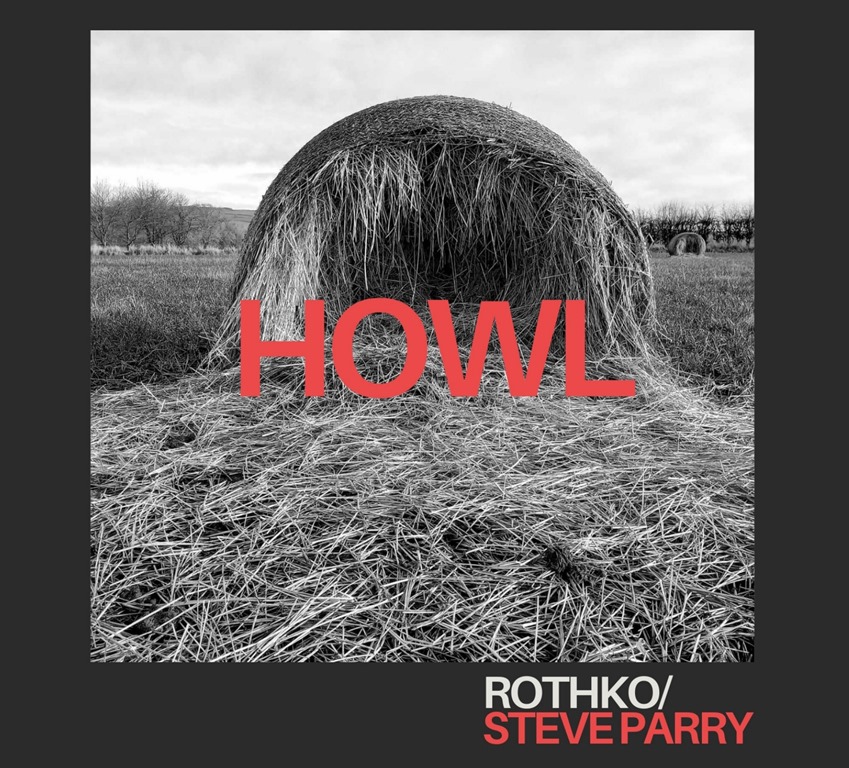
One might say that this collaboration has been a long time in coming: the pair have been friends for some twenty years, and have made contributions to one another’s recordings over that time. There’s no question that it was worth the wait. Their process and the way in which they each contributed is integral to the finished work, and here, not only to save typing, but to ensure nothing is lost in translation or paraphrase, I shall quote from the accompanying notes:

‘Emanating from the sounds of a church organ, with many short pieces recorded by Steve Parry in an ancient secluded church, and then embellished by Beazley, with his resonant bass tones, electric guitar and electronics, HOWL captures the senses of ambience, harmony, discordance and noise, with recordings of the churches space, of its emptiness, interspersed with the music.

‘The two, long, resulting pieces, create an almost ritualistic event, of something taking place that is mysterious, uplifting, and, in parts, unsettling.

‘The album reflects an emptiness, the echoes from ancient walls, a deep sense of place—and the refractions between these two artists. HOWL veers between moments of meditative beauty and unsettling discord, creating a soundworld that feels ritualistic, mysterious, and transformative.’

This is very much an accurate summary and fair description of the album, consisting as it does of two compositions each with a running time of around twenty minutes, but it’s more of a challenge to convey in fullness the resonant effects of this vaporous sonic drift. The first, ‘In the Season of Darkness’ is formed around elongated drones, but their organ origins isn’t immediately obvious in the ear. One associates the instrument with bold, piping swells which sing to the heavens, but here, it’s more subdued, almost a low, rumbling wheeze which provides an eddying undercurrent. Acoustic guitar and slow, meandering bass are far more dominant, and it’s very soon clear that this is by no means an ambient work, or a work without structure or form. The guitar and bass play distinct notes and motifs, often alternating with one another, but sometimes playing in co-ordination, and others still across one another. Treble strains like taut whines of restrained feedback filter through, these higher-end frequencies forming a counter to the resonating bass and the mid-range organ drone which slowly begins to emerge and take form a few minutes in.

The dissonant incidentals rupture the surface like lightning through a thick, rolling cloud cover. The mood is sombre, ominous. The fact it’s pitch black outside and has been since around 6:30, I’m feeling autumnal and writing by candlelight probably means I’m feeling it more, but this is music with a subliminal, subconscious pull. There’s a segment around the mid-point where there’s a pause, and there’s nothing but clatters and clanks, like tin cans rattling in the wind, before the drone returns, darker and denser than before, and with a sepulchral reverb, and it’s something which taps into something primitive and earth-born within. I can only really articulate it by way of a brief recollection of a time I visited an obscure stone circle in Scotland. Most of the stones were gone, but the shape of the circle was marked out by a ring of nettles. It was probably around twelve metres in diameter, and the few remaining stones were no more than three feet high. It was a little way off a minor road, in an unkept grazing field and as unremarkable as it was forgotten and neglected, and I had only paused by it because I had spotted it on the map. But, arriving at the place, something happened: the air temperature dropped a couple of degrees, the wind sped up and clouds obscured the sun; but more than this, there was an atmosphere which brought goosebumps and a shiver down my spine. The place had an atmosphere, and I almost felt as if I was for a brief moment splitting across millennia. The sensation was but fleeting, but it was palpable. The experience of hearing this piece is akin to that, resonating on a level beyond the sphere of commonplace experience.

Counterpart composition, ‘In the Season of Light’ is, again, constructed around a long, long, reedy drone, this time with piano and delicate scrapes and wind-like rustles and whooshes adding the additional layers and textures. It doesn’t feel our sound especially light or uplifting: dark sonorous tones and groaning creaks occupy the corners, before, again around the mid-point, a gentle guitar part, reminiscent of later Earth tunes, arrives, and there are some delicate strings, too. Finally, light begins to break through.

HOWL clearly has no correspondence with Allen Ginsberg’s seminal poem, but does very much tap into something primal and primitive, the way we feel the effects of the seasons, the sun, the moon, possessing what one might perhaps describe as a ‘spiritual intuition’, reaching elemental aspects of the human DNA. Understated, but powerful and moving, it’s a subtly intense work.

AA

6 page ECOpack with measurements.pdf

Dret Skivor – 4th October 2024

Christopher Niisnibor

Unlike Record Store Day, which has been hijacked by major labels and swamped with overpriced reissues to the point that it no longer benefits any of those it was initially intended to, Bandcamp Friday is something I wholly endorse.

Bandcamp’s model is rather different from other streaming services in that it provides a platform whereby people can pay to actually own the music, be it in digital or physical format. While purchase is available through some – Apple, Amazon – rates for artists aren’t great. Many people have ditched physical media form reasons of convenience and space, but the trouble with streaming – and this doesn’t only apply to music – is that it can be removed from a platform at zero notice, which is irksome when you’re halfway through a series or really want to watch a particular movie… or want to listen to an album. The Internet is not the infinite, permanent archive of everything ever we were promised it would be around twenty-five years ago, and the reason for this can essentially be summarised in one word: capitalism.

Maintaining a site costs. Everything costs. The Internet and – especially streaming services – do not exist for the benefit of either artists or end users, at least not anymore. But here, Bandcamp Friday represents the best of the Internet, in that all proceeds go to artists. And artists deserve, and need, to be paid. Because we need art. It may be massively underappreciated and taken for granted as wallpaper, but humanity needs creative art to survive. It does not need capitalism: if anything, capitalism is strangling culture and, moreover, killing the planet. Art predates not only capitalism, but houses, farming, even language.

This does mean that every Bandcamp Friday finds my inbox even more swamped than usual with notifications of new releases, and the run-up means a significant influx of emails for review of simply notification, and it can be quite overwhelming.

It’s with almost clockwork consistency that Swedish obscure noise label Dret Skivor drop a new release on Bandcamp Friday, and this one is no exception, arriving in the form of a collaborative work between the notorious cult noisemaking vehicle that is Legion of Swine and bøe under the portmanteau moniker of BØESWINE.

In classic Dret form, bøeswine offers two longform tracks – ‘bøe’ and ‘swine’ – each of which runs for approximately twenty minutes and occupies a side of the ultra-limited cassette release. And so it is that ‘bøe’ groans and drones and groans and clanks and clatters out an amorphous mess of noise with sparks of tinnitus-inducing treble cutting through the endless hum and scratching distortion for a full nineteen and a half uncomfortable minutes. It’s pretty harsh, and darkly uncomfortable. More than harsh noise, this level of churning grey noise is hard on the ear: it’s like standing next to a cement mixer at the edge of a demolition site as every window is smashed by a wrecking ball. Once ‘bøe’ has assaulted the eardrums and left you in a state of physical and psychological ruination – and it will, it’s that dingy, grindy, mangled, abrasive – we come to the twenty-one-and-a-half-minute ‘swine’, another monster epic driven by dark noise, strains of feedback and fizzing electronics, and this time it’s amped up to the power of eleven to render THE nastiest noise.

It’s a relentless force, as harsh as an atomic detonation in your back yard. So much noise, and so relentless. And I love it. Yes, it’s uncomfortable, unyielding, positively painful. But musical experiences are simply entertainment of they don’t test. This is like the ultimate test, a work of the darkest, most fucked-up, unstructured noise. Any comparisons to Throbbing Gristle are entirely valid. Bøeswine is equally punishing and magnificent.

AA

boeswine for bandcamp

Kalamine Records – 14th September 2024

Christopher Nosnibor

Whether it be solo works ranging from ambience to classical, or collaborations running the full gamut in the electronic field, Deborah Fialkiewicz’s output in recent years has been nothing short of prodigious, and spanning as many forms as her work does, there is never a dull moment. This latest work, under the POOCH moniker, in collaboration with Dan Dolby (Bassist in Mastiff, Noisemonger in Catafalque and Sulphur Nurse) is no exception. It offers a set of eight dark, stark electronic compositions which owe a considerable debt to early industrial and electronic works, bringing a combination of dark atmospherics and nagging beats. Although entirely instrumental, we’re in the kind of territory occupied by the likes of Cabaret Voltaire, Test Dept, and Chris and Cosey’s Trance.

As an opener, ‘Hades’ is as dark and subterranean as the title would suggest, a bleak, murky pulsation squelching around and leading the listener down, down, down. It serves as something of a primer, a mood-setter, but doesn’t fully prepare one for the altogether steelier, starker, more rhythmic and percussion-driven pieces which follow.

The title track pairs a dense, dirty bass with clattering, metallic percussion which assails the mind like a concerted assault with the contents of a cutlery drawer, and it bashes away relentlessly for four and a half minutes straight. On paper, it might not sound much, but as an experience, it’s pretty hard-hitting. Built around short, clipped repetitions, it creates a suffocatingly claustrophobic aural space. The word ‘pooch’ evokes a cuddly companion, something friendly, but there’s nothing cuddly or friendly about this, a listening experience closer to being whipped with a chain than fussing a canine buddy.

Each composition bears a one-word title (‘GameBoy’ being a forced blend-word (it doesn’t really qualify as a portmanteau) in order to maintain the theme. Funtime bit-tunes are bent with glitches and warping drifts of darkness here, before things begin to slide further into beat-orientated minimal techno.

The steady beat which dominates and defined the spartan ‘Quazar’ is almost soporific: the track assumes something of a background position as it clicks along nonchalantly, with a low, unshifting drone hovering just around the level of register. Nothing happens. It doesn’t need to. And while the thunder which heralds the arrival of ‘Midnite’ might initially serve as an alert, the piece soon melts into abstraction. The final track, ‘Stimpy’ may be missing Ren, but hits hard, built around a strong, thudding beat and looped electronic undulations.

For all of its cuddly connotations, Pooch is a pretty dark album. To my mind – and it could be to my mind alone – music which is heavily beat-orientated and instrumental feels impersonal somehow, and I find it somewhat disorientating, disconnecting, alien. And so it is that the pounding beats of Pooch leave me feeling somewhat dazed, detached, even dizzy. But it’s impossible to deny the detail, the quality of the execution, or the fact that this is an outstanding work.

AA

cover

Christopher Nosnibor

Well, this one landed unexpectedly. It’s a welcome arrival, although taking a second hit of material from Uniform’s latest and quite possibly most brutal and challenging album to date does feel like an exercise in Masochism. It’s also a superb example of alternative marketing, landing this alternative version of American Standard less than a month after the album’s release, on digital and tape formats.

Context, from Uniform’s bandcamp: ‘A companion piece to American Standard, Nightmare City is essentially the same record devoid of the rock elements. By removing the presence of traditional instruments, the synths, lap steel, and pianos that sit beneath the surface of the proper album are allowed room to breathe and speak for themselves. The end result straddles the worlds of Basic Channel influenced dub, Tangerine Dream inspired soundscapes, and brutal death industrial.’

It’s a bold move, befitting of Uniform, a band who have relentlessly pushed themselves to explore ever-wider horizons, switching from their original drum-machine driven raw industrial noise to adopting live drumming, undertaking a number of collaborative projects with the likes of The Body and Boris, and especially befitting of this album, where Michael Berdan tore away the last vestiges of artistic separation to rip off his skin and purge the rawest emotions stemming from his dealing with Bulimia.

Nightmare City is another step towards stripping away the layers and presenting the naked self. ‘The bedrock of American Standard stands upon the Nightmare City. It’s not the happiest of all places, but understanding the landscape yields its own rewards,’ they write alongside the Bandcamp release.

One thing about being in a band – even if there are only two of you – is that there’s somewhere to hide, somewhere to transfer the focus. Hell, even performing solo, if there’s noise, there’s something take shelter behind. I’ve always thought that solo acoustic and spoken word performers were the bravest: there is simply no place to hide, and nothing to blur or mask any fuck-ups. Nightmare City isn’t quite solo acoustic, but it is seriously minimal.

Removing the ‘rock’ elements to reveal the bare bones of the songs shows the inner workings of Uniform, and they’re unexpected, to say the least. One would expect them to build up from the elements of drums bass, guitar. But this leads us on a different journey.

Punishing riffs and pulverising percussion, rather than supple layers and swirling instrumental ambience. As the band put it, ‘Although the finished product stands as a culmination of cohesive sounds, the individual threads that weave songs together often provide necessary nuance and exposition all of their own. Each isolated stem might be part of a greater story, but the whole cannot stand as intended without a complex series of seemingly disparate elements.’

Hearing the swirl of these ‘seemingly disparate elements’ feels like hearing the ghost in the machine, a haunting, eerie, ethereal echo, which barely seems to correspond with the structured framework of the final versions of the songs. One might almost consider this a palimpsest, an album beneath the album, submerged by process of layering and erasure. The tracks are – and I shouldn’t be surprised, but still I find I am – completely unrecognisable. Instead of being the punishing beast the album version is, ‘American Standard’ sounds more like one of the epic instrumental segments of recent SWANS works. There’s a muffled thud like a heartbeat on ‘This is Not a Prayer’ which possesses something of a womb-like quality, while ‘Clemency’ feels like a moment caught between heaven and hell, soundtracking the struggle of being pulled between the two in some purgatorial space as ceremonial drums hammer out a doomy passageway and spluttering vocals spew raw anguish.

In common with American Standard is the darkness which looms large, the tension, the suffocating gloom, the discomfort which dominates, and hearing this spectral echo of the album brings a fresh understanding and appreciation of the process and the depth of layering and everything that goes into their material. ‘Permanent Embrace’, too, sounds both like an ascent to the light and a sepulchral sigh, a funereal scene in which the grave suddenly opens like a sinkhole sucking everything down into the bowels of the earth.

Nightmare City is appropriately titled: it is a truly hellish, tortuous listening experience – but at the same time quite remarkable. Uniform, in their quest to do something different, to push themselves and in refusing to conform to genre conventions, continually find new ways to articulate the pain of the human condition.

AA

a1449843444_10

24th May 2024

Christopher Nosnibor

Welcome… to The Royal Ritual! I simply felt the urge to open with that. It felt necessary, if only to me. But if you can’t please yourself…

In my case it’s something of a belated welcome, having been aware of the act and its founder, David Lawrie for quite some time, but having only recently come around to the actual music, with my introduction being their recent show in York. There’s something to be said for hearing a band live first, without knowing the songs, rather than the other way around: if they can grab you in that twenty minutes or half an hour, when you’re not necessarily primed to absorb songs and details, then there’s a strong chance they’ve won a fan, provided the recordings are up to scratch.

Where The Royal Ritual really stand out live is with the use of live guitar, which brings the benefit of not only an immediacy and human aspect to the predominantly digital music, but an additional body on stage, which creates not only a visual balance but a greater sense of movement.

Recorded, these elements are less essential, and the songs here are clearly the product of extreme focus and a meticulous attention to detail. When I wrote in my review of the York show that The Royal Ritual sound ‘produced’, I observed that ‘their approach to production owes more to the methods of Trent Reznor as pioneered in the early 90s on Broken and The Downward Spiral, balancing gritty live guitars with synths and fucked-up distortion and harnessing their tempestuousness in a way that creates a balanced yet abrasive sound.’ And so it is on record, also.

Pleasure Hides Your Needs is The Royal Ritual’s second full-length release, following MARTYRS in 2022. A lot has happened, and much has changed since then, and the project, born in lockdown, has evolved significantly – as have many of us. Life is different now: that’s a fact.

We learn that ‘Pleasure Hides Your Needs sees David contemplate his own life and experiences, adopting a distinctive, more personal tone than the expansive and outgoing approach of MARTYRS: “Pleasure Hides Your Needs is much more introspective when compared to the social and political commentary of MARTYRS,” says David. “For me, it is about the closing of three distinct chapters of my life. Finding the common threads through each of those chapters in order to represent them sonically, and in a consistent way, was a really interesting challenge – if at times quite emotionally exhausting.”

Life is exhausting, in every way, but there’s a tense energy to Pleasure Hides Your Needs. It builds from the instrumental intro piece, ‘Shadow Self’, where crashing waves erupt from soft ripples, dark rumbles and inaudible muttering contrast with chimes, before ‘Vantage Point’ opens a broad sonic vista paired with a solid kick drum beat. Just as it’s leaning into the proggier end of alternative rock, a gritty guitar kicks in and the mood immediately turns darker.

‘Fifteen 14’ lands as an unexpectedly pop tune, with a solid chorus, which softens the arrival of the album’s nine-and-a-half-minute centrepiece, ‘Sinner Gambler Fugitive’, which really does run the gamut for range, a sonic and emotional rollercoaster. It’s ‘Modes of Violence; that goes full industrial, with a metallic smash of a snare and snarling bass providing the backdrop or Lawrie’s wrought vocal as he wrestles with a veritable tempest of emotion, before he hollows himself on the bleak, minimal title track.

The album as a whole is more geared toward tension than release, always simmering but rarely bursting the floodgates. Muted isn’t the word: it’s more a case of clenching tightly to maintain a grip of control for fear of what may erupt otherwise.

Pleasure Hides Your Needs is dark and exploratory, but still eminently listenable. As The Royal Ritual evolves its sounds and expands its horizons, there remains much potential to explore myriad paths in the future, and recent touring will likely serve to open new avenues of exploration.

AA

a0879761406_10

Room40 – 20th September 2024

Christopher Nosnibor

Autumn is something of a difficult season to assimilate. As much as it can be filled with beautiful shades as the leaves turn and the sunlight takes on a softer hue, there can often be a hint of melancholy in the cooler air and darker evenings. Some may yearn for the heat of summer, but more than that is the reminder that we’re on a transition toward winter, and the passing of another year. The passing of time is something which creeps up on all of us with an inexorable inevitability, and while you’re busy living life – or, likely, battling just to keep on going through it – time slips by, and your twenties slide into your thirties slide into your forties… people, places, jobs all come and go. Go where? And what have you got to show for it?

As one of the most dismal summers in a long time – not to mention the coldest in six years – draws a close to the wettest eighteen months or so since records began here in the UK, where it’s felt like eighteen months of October, the arrival of the 15th Anniversary Edition of A Colour For Autumn is nothing if not timely. Anniversaries inevitably give pause for thought, inspiring reflecting on the time of the actual event, and the intervening period. And with in his reflections on A Colour For Autumn, and its context, Lawrence English makes some powerful observations:

‘Climate change, as a lived experience and not merely as a ‘possibility’, suddenly came into focus with reports flooding in about the climatic dynamics since the turn of the century and events like the Black Saturday fires here in Australia. It felt like, and continues to feel like, seasonality as some predictable measure of our world is relegated to the ‘before’ times. This record is not about these climatic shifts however, more a recognition of how we have used patterns and predictability to guide us over the centuries and perhaps a realisation that the way forward is not the path we have known historically.

‘Listening back to the record with fresh ears, a process made completely delightful by Stephan Mathieu who has carefully remastered it, I am struck by how minimal some of the structures were. There are moments that strike me as uncharacteristically patient and even generous, allowing one element to hold without interference. I’m grateful to still feel a deep connection to this edition and to the people and places that helped shape it.’

‘Droplet’ seems to start midway through: there is no intro, no fade-in, no slow-build. We find ourselves landing in the midst of a long swell of ethereal sound, a chorus of spectral voices drifting in vapour and carried on clouds. Sometimes, ambience carries something of greater depth than is readily apparent. More than a medium to meditation, a conduit to contemplation, seemingly formless, abstract sound resonates on a subconscious level with and unexpected force. Over the course of almost seven minutes, the track drifts and twists and a squall of dissonance and a whistle of feedback builds in the background.

Just as the pieces merge into one another, so the titles of some of the tracks link together to form phrases, albeit with only vague meanings: ‘The Prelude To’ leads into ‘The Surface of Everything’. Elsewhere, English departs the surface and transports the listener high above the atmosphere in ‘Galaxies of Dust’. You almost feel as if you’re floating, detached from everything, even time, hanging in suspension.

Much of the sound on A Colour For Autumn takes the form of hums and drones, and while gentle and delicate, there’s an ever-present discomfort, something just beyond perception, on the edge of the senses, which unsettles, nags and gnaws. It’s this uncertainty, this element of disquiet, which makes A Colour For Autumn such an enthralling and evocative listening experience.

AA

a2415743988_10

Dret Skivor – 6th September 2024

Christopher Nosnibor

Traditions are important: they’re grounding, they give us a sense of comfort and safety in their familiarity. In times of tumult, of confusion, during difficult times, they offer a raft to cling to in a sea of unrest. I’m not referring solely or specifically to old traditions, either, especially not the ones where Christianity has usurped pagan tradition, only for these traditions to in turn be usurped by the mechanisms of corporate capitalism. Christmas is the kind of tradition that should be tossed on the fire. What we need is to establish new traditions, traditions which are personal and meaningful – anniversary gigs or meet-ups, for example.

On a personal level myself, since one of the last holidays we made as a family saw us meet my late wife’s step-mum on Lindisfarne on August bank holiday week, and we had been due to stay there in accommodation with a view of the castle, we instead scattered some of her ashes with that view of the castle, and visit the spot around the same time each year before going to the pub we lunched in on that last visit. On the one hand it’s sad, but in such a magnificent and historically-rich location (we got married in Northumberland, and had Lindisfarne fruit wines obligingly delivered directly to the venue across the causeway), this new tradition of ours feels right, and in many ways positive.

The same is true – albeit in a different way, of course – of the traditional reconvening of the pairing of Procter and Poulsen. Something was written about it once, I seem to recall. Two friends, who see one another infrequently, but always make some noise together, and release the results, at some point or another. This is the kind of tradition which possesses real meaning, a symbol of connection. In a way, whatever music the session yields is irrelevant: this is about ritual, and interpersonal resonance.

As the title suggests, this is their eighth collaborative release, and contains two longform tracks, each occupying a full side of a C40 cassette, this time released in a limited edition of six.

There’s no way you’d describe the devastating soundtrack to nuclear annihilation that is ‘A’ as ambient: distorted, mangled vocals crackle out from the howling wails of feedback torn from shredded circuitry in a heavy gale which carries pure devastation. Once that raging storm dissipates, we’re still left with the sonic equivalent of a nuclear winter, the sounds drifting over shattered remains, fragments of things which existed before. Glitching beats fizz out in crackling walls of noise and fizzing distortion. Bleeps and wibbles pop and buzz and there are moments where it’s possible to catch a short breath. Sometimes it’s almost dubby, but it’s always a desert. It’s always desolate. The atmosphere is always thick, uninhabitable.

‘B’ is dronier, buzzier, more overtly electronic – but more like a giant bee hovering in suspension – sedate, bur trapped. As the track progresses – at least in terms of duration – it seems to degenerate, forms disintegrating, fracturing, crumbling, degrading. It’s not done elegantly, aesthetically, but presents as a greyening mess of murk and twisted wires, indistinct moans and Triffid-like clicks and clacks. It’s oppressive, and feels like crawling through the soundtrack to being a survivor of the apocalypse in a bleak 80s dystopian series.

Nothing is comfortable. Nothing is right. Tension and darkness are all around: every inch of this experience is eerie, uncomfortable. You don’t want to be here – but there is no escape. This is sheer horror, without words.

The shuffle into some sort of 80s industrial experimentation with a scratching guitar and stammering heartbeat percussion which soon slips into fibrillation, which comes to pass close to the end, only renders the experience all the stranger, before birdsong and groans hint that perhaps, this is it – you’re here, you’re dead. Perhaps we are all dead already, and life is an illusion. Perhaps this would be for the best.

AA

a3358540954_10

Room40 – 6th September 2024

Christopher Nosnibor

For an album that’s based solely on the sounds of the guitar, Dust Resonance sounds distinctly unlike a guitar album. As the title, Dust Resonance, suggests, this is a work of extended, drifting drones, a set that’s predominantly ambient in nature.

But as Norman Westberg’s recent solo releases – also released on ROOM40 – have demonstrated, it is quite possible to take the guitar into this territory, and to create expansive, subterranean drones with just six strings and some distortion pedals, and perhaps some reverb thrown in.

As Zimoun himself explains, he was interested in the guitar as a sound source for some time and have explored it on previous editions including Guitar Studies I-III. “On this work,” he says, “I’ve experimented with different methods and materials, specifically a Magnatone tube amplifier from the 1960s, and various speaker membranes covered with dust, soil, or small stones. The friction of these materials on the vibrating speaker membranes produced slight distortions and irregularities in the sounds, alongside the warm tube tones of the vintage amp.”

As such, the dust is rather more literal than metaphorical here, but the title and the substance of the sound presents a work that functions on multiple levels, with the connotations of dust settling as time elapses and the idea of dust and drones hazing together working alongside the physical interference of organic material with the mechanics of the recording process.

Zimoun’s approach, then, like Westberg’s, is similarly simple and sparse, but at the same time, adds an edge of experimentalism which is quite unique. The addition of materials to create friction and alter the texture of his guitar may take its cues from the ‘prepared piano’ pioneered by John Cage and taken forward as a career choice by Reinhold Friedl. I can’t think of so many examples of the guitar being twisted and mangled in such a way, or an artist taking such an organic, earthy approach to breaking down the fundamentals of the sound of their instrument of choice. It does, however, create the context for an album which features nine dronescapes which creep into one another to forge a continuous hum, scratching, scraping, quite literal earthworks. The thought of earthworks draws me to a place where I find myself reflecting on hut circles, tumuli, and the landscape of the iron age, something I was fascinated by in my early teens and have once again become drawn to having resumed, after a lengthy period, walking moorlands and studying the details of OS maps. And so it’s purple-hued heather-covered moors and outdoor expanses which occupy my mind as I listen to this, a work which evokes similarly vast and barren spaces.

The album contains nine numbered pieces, which hover low and heavy and segue into one another to create one single, monolithic work, and one of immense density. The colossal ‘DR Part 2’, which grinds on for almost nine minutes is exemplary.

I recently wrote on the experience of listening to the instrumental ambient release Ambient Short Stories by Bistro Boy, which slotted firmly into the ‘background’ ambient slot: soft, gentle, undemanding. This is most definitely not background: the dense, buzzing tones and uncomfortable frequencies of Dust Resonance place it firmly in the foreground. It’s impossible to settle back and let this drift over as you yawn and slowly relax into a space of tranquillity. Dust Resonance makes you squirm, sends tension down your spine. Throughout, there is a sense of unease, discomfort, of wrong, which rumbles in the guts.

Dust Resonance is a work which, beneath its smooth surface ambience, is grinding, rough-hewn, slow, and dragging, with billows of cloud accompanying the low-level churn. Something about this, paired with the slow-building spin, starts to feel a shade disorienting. You might sleep, but you may not sleep comfortably.

AA

a0068423991_10

Dret Skivor – 7th June 2024

Christopher Nosnibor

Legion of Swine trotted out for a few live exhibitions in the last few months, but Live at Plourac’h documents a show which was something of a one-off among these, with the performance having taken place in a studio (Soundfackery Studios in Brittany) and streamed live, followed by a Q&A, with audio from both featuring here.

Like many noise acts, T’ Swine tends to keep performances brief. The brevity is, in may respects, part of a tradition on the scene, and while Masonna’s explosive three-minute sets take this to an extreme – and why not? Noise is all about extremity, and finding new limits to push beyond. It’s all about the impact of the short, sharp, shock. Leave them wanting more – those who haven’t fled the room, hands clasped to their ears, while holding back the urge to vomit, anyway.

Even in the absence of the old performance aspects of Legion of Swine shows, whereby Dave Procter would be anonymous in a lab coat and latex pig mask, which means we get to witness the bearded, bespectacled northerner looking quite unassuming, sonically, LoS remains a formidable force.

Opening with strains of feedback and scratching buzzes of distortion, the set holds a single, undulating note of wailing, droning feedback noise for what feels like an eternity, the frequencies and tone changing but still offering nothing more than feedback for the first five minutes of the set. The level of strain and the tension builds, but still, holding back, holding back, testing the patience as well as the eardrums. To have been in a room with this, at gig volume would hurt. Then, unexpectedly, things drop in intensity, and it’s a heavy hum, a long, low, whine that nags and throbs.

As a noise sculpture, this is a restrained, patient piece which hovers within the parameters of a very limited range in terms of frequencies and particularly texturally, manipulating feedback in the mid- and lower-ranged for the bulk of the sixteen-minute duration.

Even recorded, with the separation from the actual event, the frequencies and volume are conveyed clearly here, and there’s a gut-trembling grind to the lower-end oscillations. The release notes summarise the kit as a ‘trusty metal roasting tin and a couple of effects pedals’, and whatever the truth of the facts around the gear involved – which I suspect would have been minimal – the racket created is significant.

There’s a long, long fade to nothing.

There is a certain amusement in the fact that the Q&A lasts twice the duration of the set itself. Dave speaks engagingly on the technical processes of his use of contact mics, and, yes a baking tin, and the mechanisms involved in changing pitch and creating feedback, and so on. It’s a nerdfest that Steve Albini would have been impressed by. He discusses room space, PA, body temperature. ‘Every time, it’s a different thing’, he says.

His recollection of room temperatures and their effect on sound is remarkable, and the dialogue is illuminating. Like so many noise artists, there is a yielding to the random, to circumstance, eventuality, accepting that no two performances will be alike as acoustics and the way sounds interact is spontaneous and unpredictable.

The interview is interesting and wide-ranging, but to discuss and dissect it at length here feels like a job for a longer, more academic discursion.

This is a niche release: that’s a given. Side one will inevitably receive more plays. But both warrant same time. Listen, and learn. Enjoyment is probably optional.

AA

a0816152283_10