Posts Tagged ‘Ambient’

Impossible Ark Records – 4th April 2025

Christopher Nosnibor

The jazzosphere has a way of throwing surprises, and in the most unexpected ways. Ledley’s eponymous debut, which sees acclaimed electroacoustic improvisational musicians Raph Clarkson (trombone, FX), Chris Williams (saxophone, FX) and Riaan Vosloo (electronics, post-production), is – let me check this – yes, a tribute to legendary Spurs footballer, Ledley King. You didn’t see that one coming, did you?

My knowledge of football is scant: I was born in Lincoln and so feel obliged to follow The Imps – by which I mean check on the scores on the BBC when I remember, and I sometimes watch England international, when I have time and can bear to – but clearly, this does not make me a football fan. But I do have a deep interest in music that’s out of the ordinary, the weirder the better. And this is pretty weird.

Ledley is pitched as ‘is a celebration of improvisation, friendship, and shared passions, blending music and sport into an exploration of community, belonging, and resilience – one of the most extraordinary tributes ever paid to a footballer.’

Although split into eleven tracks digitally, the album is essentially two longform compositions, corresponding with the two sides of the vinyl release, which contain loosely-defined segments, or passages, which flow into one another. Some of these are dramatic, film-score like, with the trappings of bold orchestral bursts, only without the full spectrum of instruments, lending these pieces the feel of somewhat stunted reimaginings of John Williams scores. But then there are the meandering straight-up jazz meanderings, trilling, tooting woodwind, and moments that sound more like some kind of noir soundtrack excerpt – you can envisage some old black and white movie version of something by Raymond Chandler – and then the more extravagant, indulgent moments, which are, it must be stressed, brief and infrequent, evoke the spirit of Kerouac and The Beats. The association with The Beat Generation is something I’ll park here, as The Beats were as stylistically diverse in their writing as The Romantics, and there was nothing jazz about Burroughs. I digress, but to do so feels appropriate: while it does have a musical flow to it Ledley is not a narrative album, and it in no way presents a sense of sequentiality.

The second half is most definitely more sedate, and more prone to abstract wanderings, as the instruments criss-cross, snake, and interweave through and around one another, before tapering down into spacious, semi-ambient, almost drone-line expanses which yawn and stretch in one direction and swoon and glide in the other. Towards the end, it feels as if the batteries are slowly winding down to a low drone. There are bird-like squawks and slow, heraldic horns ringing out, but it’s more the sound of mournful defeat than triumph and celebration. Perhaps this is intentional, and perhaps an understanding of the context is beneficial here Or maybe not: hearing the final tapering tones fade over the horizon, Ledley could as easily be a hymnal to seabirds as it is to a football player, and the beauty of music, particularly instrumental works, is that regardless of their intent, there is ultimately a sense of interpretation which lies with the receiver. Personal experiences, life in the moment, these things come to weigh on how we receive and interpret, and determine not only pour reaction and response but the relationship we have with a given work of art.

Having a knowledge of Ledley King and his career may, or may not, be beneficial when it comes to this album. Sonically, it’s interesting, it slides between moods and spaces, pulling the listener along through them. No naff sporting analogy is required in creating a punchline for this one: it’s simply intriguing, and the musicianship is of an undeniable quality.

AA

LEDLEY – Ledley artwork cover 1000px

Gizeh Records – 28th March 2025

Christopher Nosnibor

I sometimes wonder if Aidan Baker has secretly mastered cloning, since he has seemingly pursued multiple careers simultaneously. He’s been active for some time, it’s true, but even the compressed version of his bio makes for quite the read:

As a member of Nadja, Hypnodrone Ensemble, Noplace Trio, Tavare and a host of other projects and solo endeavours, Baker’s prolific output remains vital as he continues to explore a vast terrain of sounds and genres across a 30 year musical career.

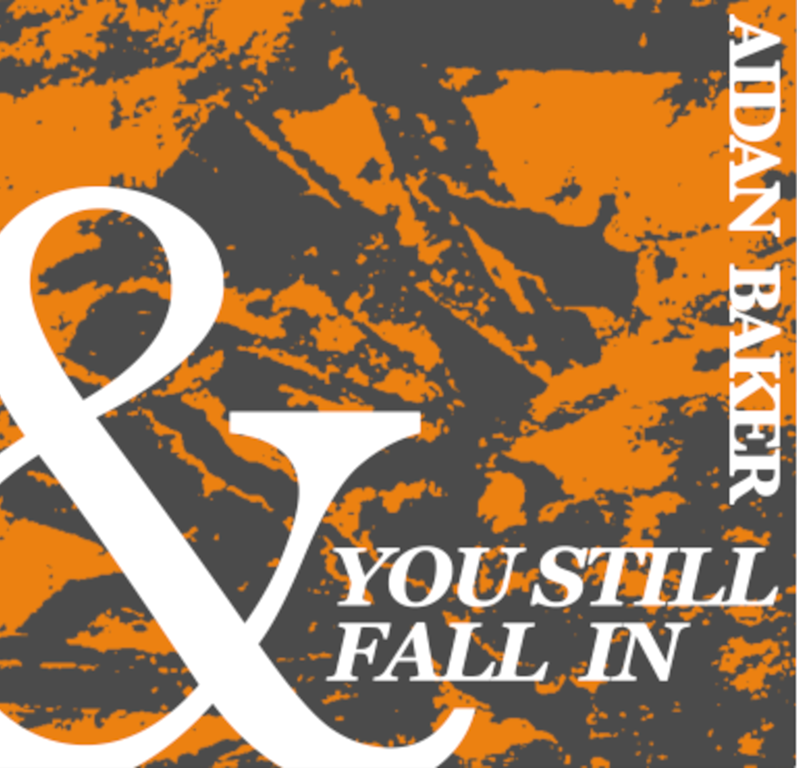
His latest work, & You Still Fall In, we learn, was recorded at Baker’s home studio in Berlin, and ‘hints at the mood and songcraft of the likes of Midwife, Hood, Stina Nordenstam and Movietone. The album is a compelling listen, stripped down to mostly electric guitar and vocals and moving at a distinctly glacial pace. The intimacy of the hushed tones and muted textures lean into a dark, hypnotic and gentle stillness that lingers in the air…’

That fact that this is a truly solo work, with Baker taking care of guitar, bass, drum machine, and vocals is perhaps key to its low-key, introspective atmosphere. Intimate is the word: on the title track which raises the curtain on this soporific sequence of compositions, the acoustic guitar strum hovers to a drone, wavering in volume, seeming to drift, seeming to warp, to fade, you can hear fingertips swiping on strings between frets, and Baker’s vocal is but a mumble; you hear sound, but the words don’t fall free to clarity.

‘Drowning Not Waving’ blends rumbling bass distortions with glitching drum machine and an air of uneasiness: the experience is every inch the struggle the title suggests. And that title… the phrase may have become a popular adaptation of the line from Stevie Smith’s 1957 poem and a metaphor for depression, but to momentarily reflect on the actuality of this all-too -common experience is to recognise the extent to which we, as a society, still – STILL – fail to identify a person in crisis. ‘Cheer up, it might never happen’, we hear often. But it does happen. Even well-meaning friends will diminish the spasms of crisis with ‘well, my life’s shit or probably worse, actually’ type responses. And each such response is like a hand on the head, pushing down. And yes, I speak from experience, and not so long ago I was out for a walk in an attempt to find some tranquillity, some headspace, some time with my thoughts. A dog, off lead, ran up to me and began barking and hassling. Its owners called it back and then groused at me for my failure to smile and thank them. “Ooh, someone’s lost their smile,” the guy said loudly, purposefully so that I could hear. No fucking shit. But you know nothing about my life. My wife died recently and I am not in the mood for being hassled by dogs, and I owe you twats nothing, least of all a smile. I continued on my way without a word, let alone a smile, and there was no point in waving. I was simply drowning. The moral? People may have stuff going on you know nothing about, so don’t be a twat. And anger is only a few degrees along from depression. Music has a boundless capacity to inspire the most unexpected responses.

Things stray into even more minimal, lo-fi territory with ‘You Say You Can See Inside Me’, which captures the spirit of Silver Jews and the soul of some of Michael Gira’s solo recordings. It’s muffled, droning, barely there, even. And yet, somehow, its sparsity accentuates its emotional intensity. There’s almost a confessional feel to this, but it’s a confession so mumbled, either through shame, embarrassment, or plain unwillingness.

On the surface, & You Still Fall In is a gentle work, defined by mellow, picked acoustic guitar and vocals so chilled as to be barely awake – but everything lies beneath the surface. And the surface isn’t as tranquil as all that: ‘When The Waves They Parted’ may be defined by a rippling surge but there’s discomfort beneath the ebb, and the reverb-soaked crunch of ‘Still Cold from the Rain’ is bleak and lugubrious.

Although presented as two separate pieces, ‘Thin Film Interface’ is a continuous thirteen-minute expanse of murky ambience with lead guitar work which soars and echoes over a shifting sonic mist. It hovers in the background, yet simultaneously alters the texture and colour of the air, relaxing but with an unresolved tension beneath.

& You Still Fall In is a difficult album to place – but why should that be necessity? A lot happens, an at the same time, it doesn’t. & You Still Fall In is sparse, drifting between acoustic and altogether simpler acoustic instrumentation. But instead of dissecting the details or reasoning, I’m going to point to the album, and simply say ‘listen to this’. Because it’s simply incredible.

AA

cover

17th March 2025

Christopher Nosnibor

Deborah Fialkiewicz has been busy again, recording and releasing her latest offering in a compressed timeframe. Deborah Fialkiewicz is a low-key and predominantly ambient set, comprising twelve sparse, minimal works which rumble and eddy around the lower reaches of the conscious mind.

There are beats, but they’re way off in the background, as is the rest of everything. The restraint shown on ‘summer mantra’ is impressive: it’s the musical equivalent of holding your breath for five minutes. ‘the lief’ is rather more structured, centred around a descending motif which tinkles and chimes mellifluously, guiding the listener down a delicate path which leads to a murky morass of unsettling sonic experimental in the vein of Throbbing Gristle. The crackling static and muffled, impenetrable verbal mutterings of the ominous title track is exemplary, and it makes for uncomfortable listening. A hovering, quavering, UFO-drone hangs over words which are indecipherable, as if spoken from the other side of a thin wall – but their tone is menacing, and everything about this tense experience feels uncomfortable.

The circular, rippling waves of ‘star lady’ offer some respite, but it still arrives with strong hints of Throbbing Gristle circa Twenty Jazz Funk Greats and Chris and Cosey’s Trace, but also alludes to both Kraftwerk and Tangerine Dream. Thinks take a turn for the darker on the swarming drone of ‘Corpus’, which feels angry, abrasive, serrated edges buzzing attackingly, a thick rippling dominating like a helicopter directly overhead. In the present time, I can’t help but feel twitch and vaguely paranoid hearing this, even as it descends into a lurching, swampy nothing, because ‘bloodchild’ goes full churning assault, an echo-heavy wall of noise that cranks the oscillators this way and that, churning the guts and shredding the brain in a squall of resistor-driven frequency frenzy.

‘norther star’ is particularly mellow, as well as particularly tied to vintage beats and rippling repetitions, a work that’ simultaneously claustrophobic and intense. Synth notes hover and drift like mist before the next relentless, bubbling, groove. ‘widershin; is static, a locked-in ripping of a groove. And then there is the thirteen-minute ‘timeslip’, which marks an unexpected shift towards that domain of screaming electronic noise. The fact I found myself zooning out to the thirteen-minute monster mix of ambience and noise that is ‘timeslip’ is testament to the track’s immense, immersive expansions which massage and distract the mind.

Genetic Radio i.d delves deep into the electronica of the late 70s and early 80s, embracing the points of intersection between ambient and industrial, early Krautrock and BBC Radiophonic Workshop, while at times venturing into the domain of noisemongers like Prurient. It’s a harsh, heavy, extraneous incursion into the quietude of daily living, and it’s a sonically gripping and ultimately strong work which stretches in several direction simultaneously.

AA

AA

a1096582352_10

Kranky – 21st February 2025

Christopher Nosnibor

One thing you have to say about Tim Hecker is that his output has been varied, and his career interesting. This isn’t a case of damning with faint praise: it’s very much about highlighting what makes him such a remarkable artist – the fact he doesn’t simply mine the same seem in perpetuity. The difference between the organ-based compositions of Ravedeath, 1972 (2011) and the dark ambience of No Highs (2023) is vast, and is emblematic of an artist who simply cannot be confined within narrow constraints. Electronic music is an immensely broad church, and Hecker’s output ventures the field far and wide.

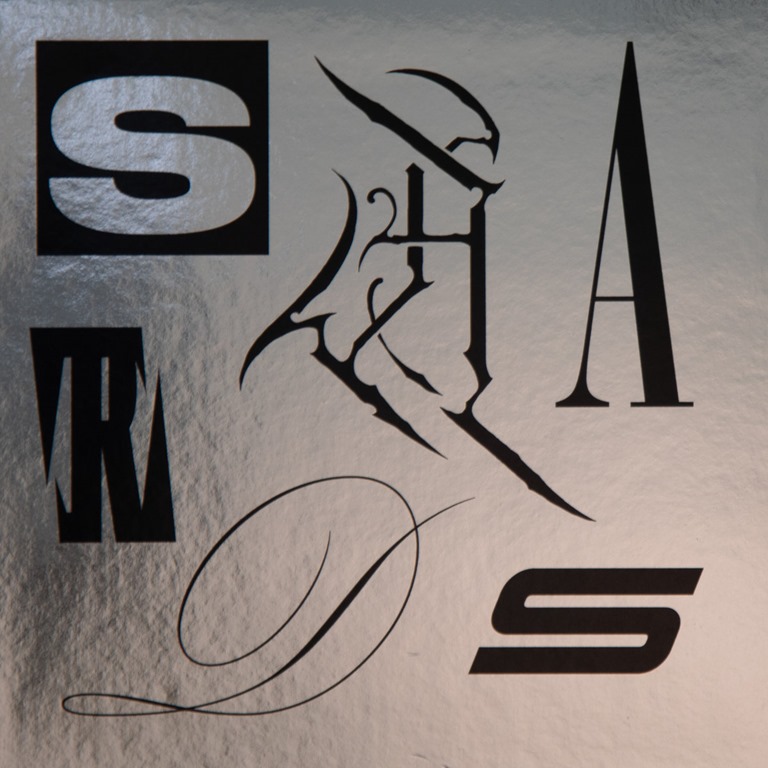
This is perhaps exemplified no more clearly than on Shards, ‘a collection of pieces originally written for various film and TV soundtracks Tim Hecker has scored over the last half decade. These compositions were originally written for scoring projects including Infinity Pool, The North Water, Luzifer, and La Tour.’

The album’s seven compositions highlight Hecker’s capacity to mould mood.

‘Heaven Will Come’ evolves and expands over the course of its four minutes and forty-eight seconds, growing from delicate but expansive elongated organ-like notes to a swirl of anxiety, with dank, rumbling bass lumbering around, as if without direction, amidst warped, bending undulations, an uneasy discord. ‘Morning (piano version)’ is very pianoey… but also brings booming bass resonance, and slight, flickering, glimmers of sound, almost insectoid, and mournful strings which bend and twist and ultimately fade… to be replaced by a deathly bussing drone and distortion which fills your head in the most uncomfortable way.

The hectically scratchy plink and plonk and looping delirium of ‘Monotone 3’ hints at the trilling of woodwind-led jazz, but there are menacing drones and weird shapes being sculpted here.

Hecker specialises in the disorientating, the unheimlich: the majority of the pieces here are superficially calm, tranquil – even the more brooding ones. But something about each isn’t quite right – there are dark undercurrents, or there is a twist, from out of nowhere. And herein lies Hecker’s unique skill as a composer.: he can twist ambience into discomfort, and at the most unexpected times and in the most unexpected ways. Consequently, Shards brings many twists and turns: at times soothing, at others tense, and at others still claustrophobic and even almost overwhelming, and it completely take you over as you feel this range of different sensations.

Shards – appropriately titled in that it draws together splinters of Hecker’s diverse  and divergent output is an exercise in depth, range, and magnificence. Sit back, bask, and take in the textures.

AA

a3720420051_10

Mortality Tables – 24th January 2025

Christopher Nosnibor

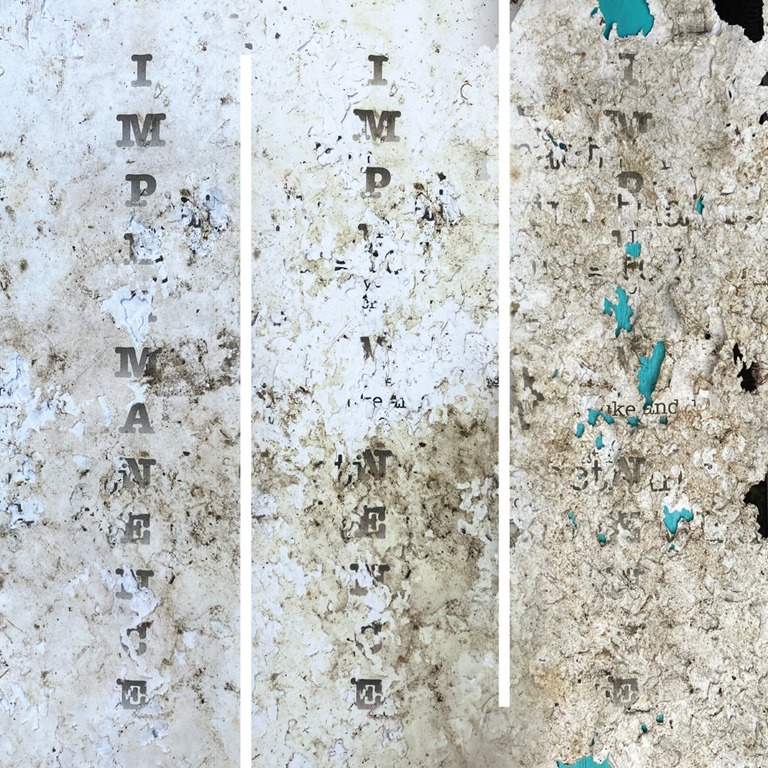
One might say that this release has been a long time in coming – but from old works, left languishing, emerge new ideas having steeped over time. Initially recorded for an event in 2001, and having languished for almost a quarter of a century, An Impermanence now spearheads the latest project to emerge from the ever-inventive Mortality Tables. The Impermanence Project is set to be ‘a large-scale, multi-disciplinary collaborative initiative that will run for the remainder of 2025 [whereby] each member of the Mortality Tables Collaborator Community will be invited to contribute a response to the word “impermanence”.’

The bar is set high for the project with this opening gambit, which is a spectacularly dramatic work, even by the label’s standards. I shall return to this presently, but shall, momentarily, step back and quote at greater length than usual in order to set out the concept and evolution:

An Impermanence was conceived as a total conceptual piece of audio art based around several field recordings made with a dictaphone. In the event, for An Impermanence, only one recording was used, a 25-minute recording of an evening maintenance visit to an open-plan bank’s rising security screen system. This recording consists of a variety of interesting sounds, ranging from confirmation noises of ATMs, the expulsion of air pressure from the screen equipment, to occasional conversations and typing at a keyboard. The random, inherent unpredictability of field recordings created the feelings of impermanence that gave the track its title.
The field recording was mastered ‘as is’ to CD twice to enable continuous playing across two CD players. To add to the queasy feeling of everything ultimately being temporary, the CDs were processed completely live through a sequence of effects units, creating an unpredictable sonic onslaught veering from quiet passages of calm introspection to blazing flurries of electronic feedback and onward to the sculpting or white noise into digitally-synthesised modulations, continuing long after the actual CDs had finished playing.

The whole 54-minute track was recorded entirely live in one take without overdubs or editing, and is presented in its complete, unprepared form.’

It’s hard to conceive that this whole, fifty-four-minute work was recorded in a single take. Having been recorded on a Dictaphone, there’s distortion, there’s interface, there’s crackle. It takes some listening. What sounds, initially, like crackling noise and a load of distortion and flange, is, on closer listening, a siren – probably. It’s certainly something, anyway.

Blasts of noise like avalanches, like bombs, assail the speakers: there are bursts of ear-piercing feedback, gut-shuddering grumbles like earthworks and slow tectonic collisions. There are protracted spells of shudders and sparks, crackles and fizzes, sounds like fireworks and the hum of traffic. It’s nigh on impossible to actually place most of the sounds, and for the most part, this immense track sounds like little more than the rush of wind and things breaking, the crackling sound of tension reverberating inside your skull. As much as there’s no placing the sounds, there’s no escape from the torment, either.

And yet… and yet. I used to walk around with earphones wedged firmly in my lugs as I traversed from my house to the bus, then sat on the bus for half an hour, before then walking a few hundred yards to the office, and then in the lift and finally arriving, an hour later, at my desk. With the arrival of lockdown, the onset of a new anxiety meant I felt no longer able to listen to music as I went places – but instead, I became attuned to my surroundings, at all times. And there is always sound: birdsong, the breeze in the trees, traffic, planes or helicopters overhead, water trickling down drains, the babble of conversation the whirr of bikes passing, the thud and pant of joggers who pass so close as to buffet you with their air movement, and dogs, dogs, dogs, so many fucking yapping, gasping, snapping, shitting dogs, running off lead and at will. There is no escaping sound, and while the sounds on An Impermanence feel amplified, intense, unpleasant, overloading, they do very much seem to recreate the outdoor experience of the hypersensitive.

Keep your ears open. Stay vigilant. The world is everywhere. If the rest of this series is even half as intense, it will be… an experience.

AA

a2246862507_10

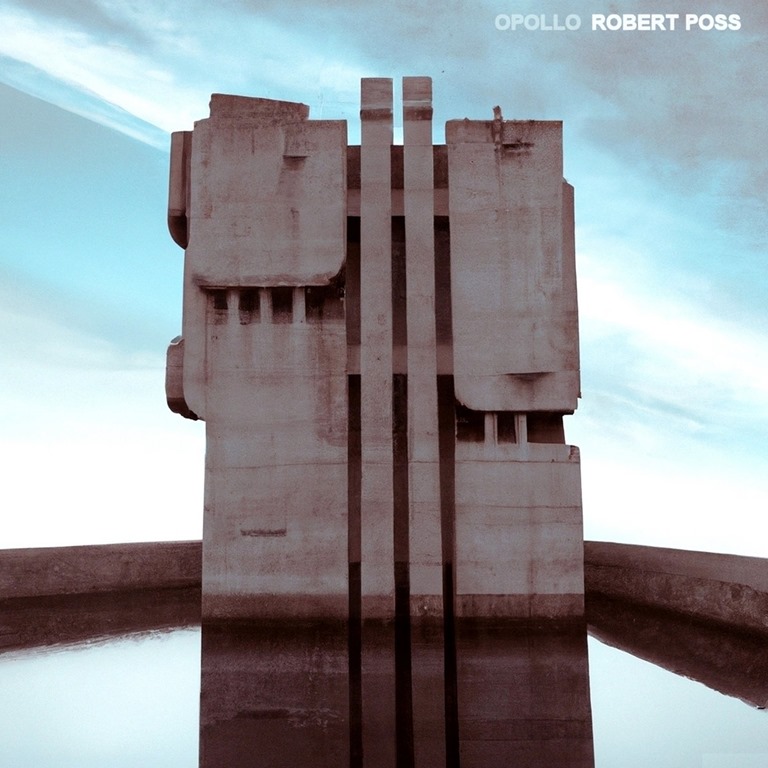
Robert Poss vs. Opollo is a new collaboration between Jarek Leskiewicz and Robert Poss (Band of Susans).

OTAGO is an expansive, textured, semi-ambient guitar work with some bold sounds and brooding atmospheres.

It’s available to stream or download via Bandcamp on a ‘pay what you feel’ basis. Check it here, along with the visual accompaniment to ‘Destroyed Wild Bird’:

AA

a0939137804_10

Room40 – 31st January 2024

Christopher Nosnibor

It begins with a rumbling roar, like a persistent strong wind rushing over moorland, before ripples of piano delicately drift over it to altogether calmer effect – although the roar continues beneath. The juxtaposition brings a balance of sorts.

Just a few days ago, I wrote on Circuits From Soft Frequencies by Jamie Lee, which was recorded among the sound mirrors at RAF Denge, in Kent, and touched on the fascinating nature of these structures, and opined that ‘often, the most alien and seemingly otherworldly creations are, in fact, man-made’.

Lawrence English’s latest work seems to contribute to this dialogue, albeit approaching from a different perspective.

‘I like to think that sound haunts architecture,’ he writes, and goes on to remark, ‘It’s one of the truly magical interactions afforded by sound’s immateriality. It’s also something that has captivated us from the earliest times. It’s not difficult to imagine the exhilaration of our early ancestors calling to one another in the dark cathedral like caves which held wonder, and security, for them.’

English also writes of the relationship between space and place, and how ‘Spaces hold the opportunity for place, which we create moment to moment, shaped by our ways of sense-making… Whilst the architectural and material features of space might remain somewhat constant, the people, objects, atmospheres, and encounters that fill them are forever collapsing into memory.’

The album comprises eight numbered segments, ETHKIB I – VIII, all formed using fundamentally the same sound palette, and which flow into one another seamlessly to create a single, continuous piece, which is best experienced without interruption.

The piano and the undercurrents, which evolve from that initial roar to altogether softer drones which drift, mist-like, develop an interplay whereby the dominant sound switches, sometimes with one or the other fading out completely – but this happens almost imperceptibly… It isn’t that you don’t listen to the music, but the preoccupation of the listening experience is absorbing the atmosphere, and it possesses almost a physicality. By ‘ETHKIB V’ the sounds has built such a density that the sensation is like being buffeted. Amidst the deep drones, there are, in the distant, whirring hums and elongated scrapes which evoke images of disused mills and abandoned factories. Perhaps there’s an element of the power of suggestion, but it’s difficult to contemplate purely abstract visualisations, or nature without some human aspect somewhere in the frame.

The soundscapes English creates are evocative, and in parts, at least, haunting – although ultimately, what haunts us is our own experience, our thoughts, our memories. And in this way, from space, we create our own sense of place, and tie things to them in an attempt to make sense of the world as we experience it.

By ‘ETHKIB VIII’, it’s the piano alone which rings out, in a reversal of the opening, and some of the mid-sections, ending on a single, low note, repeated, held, reverberating, leaving, ultimately silence, and a pause for reflection.

AA

RM4245 front

Institute For Alien Research – 15th January 2025

Christopher Nosnibor

Bath-based microlabel Institute For Alien Research tends to focus on compilation releases, with open submissions, on various themes. One long-running series is Collage Music, each of which features fifteen works, the only stipulation being that their duration is 4:33. Not a second more, and not a second less. They’re not looking for interpretations of John Cage’s seminal work, and as such, the duration is in many ways arbitrary beyond the idea that artists respond to limitations and set parameters in different ways, and as this – the twenty-eighth in the series (as the title indicates) – illustrates the point unequivocally.

With ‘Circumstances’, Support Group ease us in gently with some slightly woozy, echo-soaked, ambience, before Lezet stammer and glitch through a multi-layered slice of abstraction with ‘Colonnades of Fear,’, which may also be ambient, but it far from relaxing, although it’s Robert & Lamy who are the first to venture into much darker territory, with the kind of doomy, drony warped tape and noise experiments that are reminiscent of Throbbing Gristle in places.

The arrival of ‘bruits de la vie’ by samelectronics feels like something of a watershed moment, being the first piece to present big, bold sounds – feedback and immense powerchords, which, instead of feeling heavy or oppressive, open an expanded horizon, to surprisingly uplifting effect. The rough, lo-fi punkiness of ‘Johnny got no respect’ by This is The Utter vs Chelsea comes as a surprise bang in the middle, being the album’s first straight-up guitar-based cut, and it’s a savage semi-cover to boot.

Along the way, there’s a superabundance of weird shit, with collages and field recordings and ethereal haunting soundtrack-like compositions, dark electronica, spaced-out BBC Radiophonic Workshop type soundscapes, and banging dance, courtesy of Sbilts, with ‘Acid Dog’, who mine a vintage techno sound propelled by old-school drum machine sounds. That snare! Samples! It’s a sonic time-machine!

Just as grassroots venues are essential on so many levels, so are labels who put out releases like this. Most of the contents of such compilations is ultra-niche, and will never expand beyond being so – and that’s ok. There is a huge audience with niche tastes who simply aren’t catered for by bigger labels, bigger venues. Most of the acts here are unlikely to ever play to more than twenty-five people, assuming anyone will put them on, and they’re never going to be snapped up by a label which has aspirations of making money. Self-releasing is find, but it’s hard to reach the tiny, fragmented target audience. But a label like Institute For Alien Research, having established a reputation for providing a platform for the full spectrum of experimental electronica and beyond, creates its own niche. It may seem hard to believe when there are maybe a few hundred or so people who are into it, but this really is what the world needs. Capitalism is killing cultural diversity, and it’s killing art.

The fact that Collage Music (28) is a mixed bag is a good thing. It would be all too tempting for the label to be picky, sniffy, selective, and offer up a compilation which is more homogeneous, unified, that presents, ultimately, a curated collection determined by personal taste. And that would have been fine, and entirely their prerogative. But Collage Music (28) is all the better for its wild eclecticism. You might not like all of it – and it would be probably be a bit strange if you did – but in listening to it, there’s a chance you’ll find your eyes are opened to something you didn’t know you would like, and it’s absolutely guaranteed you’ll hear artists you would never have otherwise encountered. So dive in!

AA

a3223356046_10

Mortality Tables – 10th January 2025

Christopher Nosnibor

Ambient music is, in many ways, music for reflection. Or perhaps, music which provides the backdrop to reflection. Time was that I had very little interest in ambient music, but I have come to appreciate it has having quite significant functions, whether by the design of the artists or not. Reviewing requires a level of focus and attention that regular music listening does not, and when it comes to ambient works, a greater level of attention is necessary: I feel there is a requirement to tilt the ears and pluck out the details, the textures, to venture into the depths to extrapolate the moods and meanings. Sometimes, I fail, and find my mind wanders down different paths as space opens up through sonic suggestion, and random associations are triggered completely unexpectedly. Regardless, ambient music is generally best received in darkness, or by candlelight. Please… close your eyes and absorb without distraction.

As Oliver Richards – aka Please Close Your Eyes – writes, “Music for Floating is a document of transition. It collects pieces that were made over a three year period, nearly three years ago. They were all made before my last Mortality Tables release, ‘Nibiru’ / ‘Heaven On The Fourth Floor’…It’s a consciously-composed modern classical album. I have no classical training at all, but when I was making it, I set out with the intention of composing for the first time, consciously and intentionally. The music I made before under the name Goodparley was all created improvisationally and instinctively. With this I would step back and ask myself, ‘What am I actually going for here?’”

I ask myself this question often, and not just about creative endeavours, but life generally. How many of us really have any idea, about anything? Music for Floating, then, provides a magnificent soundtrack for contemplation and reflection, on the world, on life, and all things. But it’s not simply an ambient work: it’s a collection of pieces which span a broad sonic range, and while gentle and mellow throughout, there’s much more to it than drifting clouds and soothing sonic washes.

There’s something of an underwater, soft-edged soporificness about ‘The Moment Before We Sleep’, and it’s one of those pieces which lends itself to immersion and letting oneself cut adrift. In contrast, ‘The Hollow’ brings a busier, more bustling feel, not to mention something of a progressive vibe, as synth piano ripples and rolls with waves of energy. Augmented by synth strings and other elongated, organ-like sounds, the seven-minute ‘Piano for Floating’ is a standout, compositionally, structurally, and sonically. It’s subtle, layered, and casts the listener adrift on a rippling expanse of tranquil sound. Music like this has a profound effect that’s both physical and mental: you can feel your spine elongating, your muscles gradually becoming less knotted. I find myself yawning, not out of boredom, but through a rare relaxation.

At under three minutes, ‘Deeper Blue’ provides an interlude at what stands as the notional start of side two, before the six-minute ‘Heaven, Faced: or, The Fairies’ Parliament’, and the epic finale, the nine-minute ‘The Time Before the Last’. The former traces shimmering contrails through an azure sky; it’s the sound of slowly rippling aroura, of silent snowfall in a windless winter sky, of your mind spinning in amazement at the wonder of natural phenomena… while the latter brings slow abstract drifts which evoke the vastness of space, eternal in its expanse. It’s bewildering, but so, so calm… Time evaporates, and nothing matters. There is nothing.

AA

cover

Self-Released – 13th December 2024

Christopher Nosnibor

Sometimes, the notes artists pen to accompany their latest works are somewhat dry, rather technical. Others provide effusive essays, while others still no details whatsoever. Flin Van Hemmen’s words which accompany Luxury of Mind are poetic, somewhat vague and elliptical, but lyrically rich and personal, if vague.

In order to thaw matters of the heart, one must go to where it’s cold.

It was the summer of 2022 and I was finally summoned there.

My personal winter had come, a place at once foreign and familiar.

In a flash I was made aware of all my life’s dimensions – the ones less welcome, or simply too big to face.

My sense of musicianship was temporarily halted, at that point unsure of its return.

Early 2024 I knew my personal winter was waning, and so I started tinkering away again, musically.

The pitter patter of the rain, the orchestra rehearsing their parts simultaneously, the sounds inside the corner store where I buy my daily coffee.

And how do they sound, together?

What indeterminacies reveal itself, or do I pick up on?

That’s my journey and a journey I wish to share with you in Luxury of Mind.

I have elected to quote in full because they are clearly pertinent to the substance of this material. Van Hemmen is clearly and peculiarly specific that he feels the need to share this specific journey, which clearly has involved stasis and self-doubt. Writer’s block? He seems to allude to rather more than that here.

Flin van

‘A Picture of Your Face (In the Light of the Fire)’ is bold, choral to begin. It’s not grand in the bombastic sense, but feels deeply spiritual, ceremonial, and for wont of a better word, ‘churchy’. While the sense of grandeur is uplifting, and spiritually powerful, the drone of organ and voices coming reverberating in a large, echoey space reminds that where there is a ‘churchy’ aspect, religion – particularly of the Christian persuasion – for all the exultation, is laced with guilt, apology, pleading – pleading forgiveness for sins, pleading for entry into heaven. And as such, it reminds of the paradox whereby Christians prefer to confess and atone their sins rather than simply try harder not to err in the first place. There are scratches and crackles which rupture the graceful smoothness of the piece, and the title track slips into a darker, danker space, with a sound like torrential rain on a tin roof, with murky ambience lurking about.

‘Eloquence and Grief’ brings new levels of disorientation, sort of a film-soundtrack piece with discordant background babble and crowd noise as an orchestra forges a soundscape which evokes mountains and canyons. Its meaning is difficult to extrapolate: it feels like multiple narratives occurring simultaneously, and the same is true of the eerie dark sound collage of ‘Volition & Velocity I’, and its equally gloomy, dolorous counterpart, ‘Volition & Velocity II’.

The whole feel of Luxury of Mind is haunting, unsettling, like walking through the soundtrack to a vague and abstract film, traversing time and space, intersecting scenes of bustling medieval towns, and post-apocalyptic shots of burning villages, intercut with occasional psychedelic visuals, while electronic circuits in heavy rain and church bells chime for the funerals of unnamed bodies. It’s not quite horror, but it’s heavy with gloom and trauma, and, by this measure, Luxury of Mind sounds like the soundtrack to a period filled with anguish and psychological pain. It concludes with the sparse and dank clanks of ‘Last Year in Cantecleer’ – and it must have been a washout.

It feels as if we’re sinking in floodwater, drowning in a tidal wave of toxic bullshit, while all around everything goes wrong. But at least one thing has gone right for Flin Van Hemmen: Luxury of Mind is an album with so much texture, so much depth of texture, so much mood, that it’s impossible to deny its creative success.

AA

a0351313896_10