Posts Tagged ‘Ambient’

Editions Mego – EMEGO298 – 16th April 2021

Christopher Nosnibor

As the title perhaps suggests, Cylene Suisse Redux is a document of the tour of Switzerland undertaken by François J. Bonnet and Stephen O’Malley in December 2019, following the release of their first album, Cylene. That said, it’s no straight live recording, as the two longform tracks – naturally corresponding with a side of vinyl or cassette each – were edited and manipulated respectively by Jim O’Rourke and Ryoji Ikeda, ‘giving them carte blanche, and each in turn chose a distinct personal approach’.

The two musicians chose to entrust sound material recorded on the tour to the expert ears of two friends and great musicians Jim O’Rourke and Ryoji Ikeda, giving them carte blanche, and each in turn chose a distinct personal approach.

For Ryoji Ikeda, it was a question of finding a moment, circumscribing a fragment of time through his listening, with minimal intervention. For Jim O’Rourke, on the other hand, the live recordings became material to be deconstructed and reassembled, to tell, according to his musical sensibility, a path of metamorphosis for Bonnet and O’Malley’s music.

According to the press release, ‘Cylene Suisse Redux is a prismatic substrate of a series of concerts surrounded by friendship, lakes, mountains, and by nightfall’. But how does that translate as a listening experience?

O’Rourke conjures an ominous sci-fi soundscape, abrim with other-worldly odyssey, as spooky-sounding mid—range drones hover and twist in a haze of reverb. This is the sinister soundtrack to a sinister movie set in a barren wasteland in an alien climate, as clouds of red dust drift through the thin, inhospitable atmosphere. Something is awry: danger is omnipresent, and anything could happen at any moment. Sonorous tones echo out into the emptiness, accentuating the bleakness of the sonic expanse in which we find ourselves. There is nowhere to hide, and there is nothing solid or familiar, only an ever-shifting drift of layer upon layer of sound without and signposts or markers, nothing to orientate oneself with. You feel isolated, alone, exposed, vulnerable, as you advance, with trepidation, onwards through this nerve-jangling eighteen minutes.

Ryoji Ikeda’s approach is quite different, and so is the end result, which starts out like a distant freight trail screeching to a halt with the scrape of metal upon metal, and it continues far off in the background as insistent drones, broad and bulbous, hover and turn, twist and whine, evolving over time. This is more what you might consider ‘typical’ ambient drone, favouring neither lightness nor darkness, and with neither a leaning toward bass not treble, and therefore not challenging and sensory aspect too hard. It’s still ominous in places, but not overtly unsettling or uncomfortable. Because there’s some sense of linear trajectory, it growls louder and darker as it progresses, swelling in volume and intensity, while the soft-edged drones develop sharper edges and become increasingly shrill, howling dissonance and pain before gradually tapering down, albeit with some afterburn.

You’re left wandering, aimless, vacant, in no-man’s land, wondering precisely how you should feel and how you should react to what you’ve just heard – and that’s as it should be. François J. Bonnet and Stephen O’Malley create music without boundaries or definition, and that indistiction is further accentuated by O’Rourke and Ikeda. It’s for the listener to do the work, to explore and to find the points of resonance. There is much space to explore. Go forth.

Herhalen – H#023 – 21st May 2021

Christopher Nosnibor

The press release for this second album by The Incidental Crack – a collaboration between Justin Watson, Rob Spencer and Simon Proffitt – which follows last year’s Before The Magic describes the trio ‘exchanging field recordings, samples and random noise between Manchester, Wigan and North Wales, culminating in studio sessions focused on detailed processing and sound manipulation. They have yet to meet. Maybe one day when this is all over, in a pub in North Wales, free from this madness’.

As such, it’s a classic lockdown project, a virtual collaboration that proves that when it comes to the making of music, distance doesn’t have to be an object. In fact, it’s probably easier to collaborate without the logistics of brining people together in the same place at the same time. Writing on the project, Justin (one half of The Gated Canal Community and formerly of Front & Follow, a label which will be familiar to regular readers of AA), notes that Municipal Music ‘includes tracks recorded during the same period, using our now foolproof approach of sharing stuff, fiddling with it, sharing some more etc.’, adding, ‘It kept me sane at least during the last year!’

That is something that’s certainly relatable: keeping occupied has, for me, been the only way to keep myself together. I’m not saying it’s healthy, it’s just how it is. And increasingly, I’ve found abstract music easier to manage. Structured music, anything overtly ‘song’ orientated and rhythm driven is, all too often, just so much noise and instead of providing a welcome point of focus, feels just like being smacked from all sides at once. So while there may still be a lot going on in this, it’s not psychologically disruptive, and is suitably absorbing and immersive.

There are three extended-length tracks in all, which exploit the full dynamic range, with a strong focus on texture. The first, ‘The Second Cup of Tea of the Day’ is strong – certainly more English Breakfast or Nambarrie than Earl Grey or anything herbal – and probably inspired by the sound of a boiling kettle that’s been manipulated and fucked around with. However, it sounds at first more like a freight train, an extended continuous roar occupying the first three minutes before it gradually abates in volume and intensity, and gentler, softly-woven ambient drones fade in. there are still rumblings and incidental clatterings, forging a soundscape that never fully reconciles the tensions between the elements of soft and harsh, the light and dark. Bubbling Krautrock with bulbous beats collides with metallic shards of grating noise.

‘Just Passing Through’ is appropriately positioned in the middle, and is altogether gentler, softer, warmer, and pursues a more conventional ambient line. But there are peaks and troughs and ebbs and flows as the sound swells and at times shifts toward more unsettling territory, with some woozy oscillations that tug uncomfortably at the pit of the stomach before receding and allowing calmer vibes to return once more.

The third and final cut, the fourteen-minute ‘Ice Cream at the Pavilion’ starts with what sounds like the crashing of waves against a rocky beach in a storm, which strangely reminds me of a number of occasions we’ve had ice cream at the coast on family outings, because it’s always ice-cream weather for children. Voices chatter and babble and whoop excitedly, while a dolorous church organ begins to while away majestically in the background. Eventually, it’s superseded by a barrelling drone and a throbbing, slow-pulsing sound that swells and surges.

There’s a certain wistfulness and nostalgia to be found in the spaces in and around Municipal Music, although perhaps some of that’s my own reception aesthetic, a response as much to the circumstances of its creation and the allusions of the title, both of which remind me I’ve not left my own municipality in months, haven’t met any of my collaborators or friends in so very long, and yearn for both proximity to (some) people and also the countryside and country pubs. All of these thoughts wash around in my mind as the sounds surround me, and it occurs to me, finally, that Municipal Music is good music to think to.

AA

023 The Incidental Crack - cover

AA

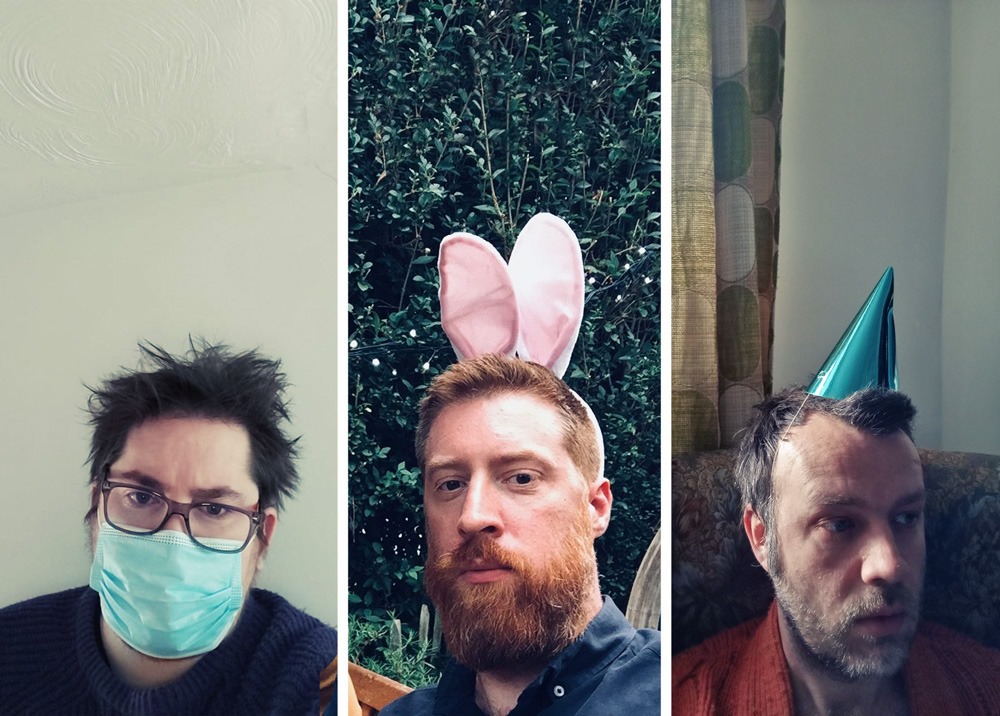
The Incidental Crack - artist photo

Audiobulb Records – 5th May 2021

Christopher Nosnibor

The wonderful thing about stories is that there are no rules – no rules about what they should contain, how they should be told, or whose perspective they should be told from. Even the standard expectations of ‘beginning-middle-end’ are an artifice, and for any convention, there are infinite ways to deviate from it. Linearity is a construct which assists in rendering events more easily navigable, but sometimes, disrupting that linearity is an integral part of the unravelling of events. Stories – be they true or fictional – are often a way of making sense of the world through the construct of narrative. Sometimes, we forge our own narratives from fragments of confusion in order to orientate ourselves, and as such, stories are instinctive and integral to our understanding the world and our place in it.

The fourth album from Quiet Noise, the vehicle of West Wales based producer Adam Wilkinson, is, like so many albums from the last year, the product of lockdown. ‘In a studio that overlooks a valley where the air breathes a lone craftsman sets to work mapping his experience through experiment,’ his biography tells us. Does this mean that Wilkinson was perhaps better equipped than many to deal with the last fourteen months, given his solitary nature? Not necessarily, but while many lockdown musical projects, which have been steeped in an air of claustrophobia, anxiety, and tension, Story Machine is a breath of fresh air that conveys aa sense of – if joy is too strong, then appreciation – of life. Perhaps it’s the fact that after four years being busy producing music for singers and film makers, Wilkinson finally has time out to return to the world of Quiet Noise to explore his own avenues of creativity. Adam explains the limitations that determined the album’s formation, recounting, “stuck at home, sitting with my wife and children while they worked from home, I set myself the challenge of creating pieces using only equipment that could fit in my space on the living room table. Motivated by my game and pleasantly surprised by what I could achieve.”

For the most part, Story Machine is an overtly electronic set that comfortably incorporates a diverse range of styles from across the spectrum – and a large portion is fresh and accessible, danceable even. The range is such that the individual pieces feel as though they each tell their own stories – but then again, taken as a while, perhaps they’re chapters of a longer story that is the album as a whole.

With bold, surging orchestral strikes and tension-building strings, ‘Grand Entrance’ is appropriately titled. ‘Climbing Trees’ is altogether more light-spirited, with a buoyant electro beat and birds twittering – although it suddenly explodes in a surge of light that’s a veritable epiphany. ‘Murmurations’ brings a very different vibe, with a straight-up dance groove. The beats are bold and uptempo, and while the top synths are quite soft and subtle, bringing an expansive but chilled later to the sound, the bass is bouncy and urgent.

In among it all, there are some moments where vast expanses of sound burst seemingly from nowhere, radiating an almost prog-rock grandiosity. These bursts of extravagance are a shade audacious, but somehow, they work. Above all, Story Machine is an uplifting experience, and in the face of so much bleakness, it’s one that’s most welcome.

AA

Quiet Noise Story Machine Cover 12 v2

False Industries False – 23rd April 2021

Christopher Nosnibor

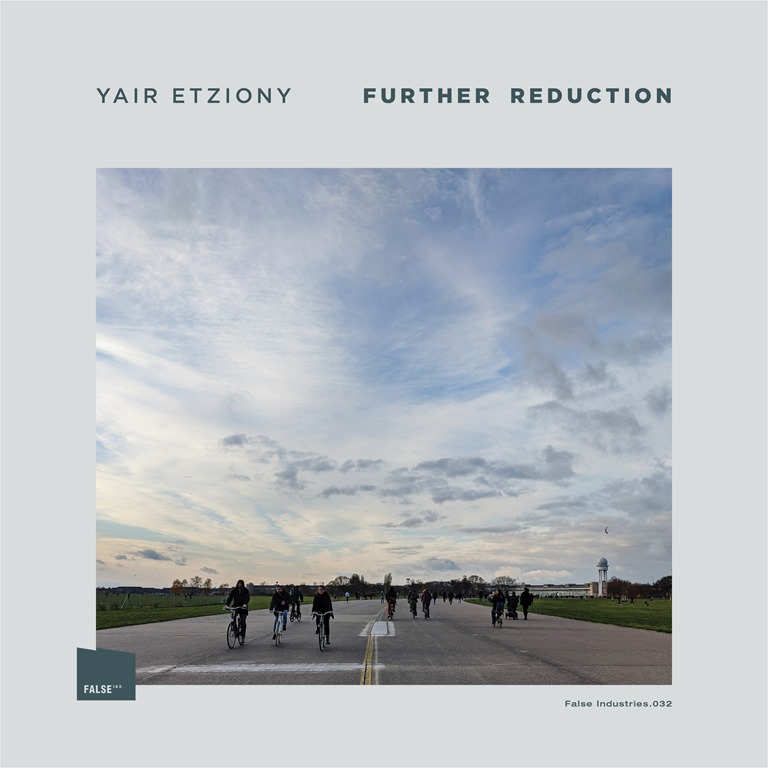
None of us was ready for this. Separation, detachment, deaths, a relentless media frenzy… New normal? We haven’t had a moment to process, not really: it’s been one thing after another, and any time for reflection has simply slammed home another level of horror as the realisation of the harshest realities not only of the present, but the possible future hit us. There are people and places we may never see again, but existing in the moment has afforded little time to really assimilate this prospect. ‘All art made in this period has been impacted by the shifts 2020 brought on the world, so why deny it?’ asks Etziony, and it’s a fair question: even art not specifically or directly influenced by the events of the last year will have been affected in some way, and the psychological impact of a year of global lockdown, apart from friends and relatives will likely take significantly longer to truly unravel.

How adjusted do you feel to talk to people or otherwise act normally in proximity, in your workplace, in public, general? How many of us have become desocialised, socially awkward, uncomfortable around others? How many with social anxiety have

And so it was that, as the blurb details, ‘Yair Etziony wrote Further Reduction after returning from Israel to his home of Berlin in September last year. In his own words, something in him “snapped” as he realized that many of the places he knew and loved had simply stopped existing.’

It begins with expansive, resonant ambience, and continues with more of the same: Further Reduction is an album that’s constructed around rhythmic pulsations and slow ebbs and flows. Take, for example, ‘Caves of Steel’, which is a definite ambient work, but one which points towards quite definite structures and sounds of a solidly percussive nature.

The first track, ‘Reploicaset’, transitions from sparse ad echoic to a full, building, slow-moving swell of sound. It maybe evocative of scenes of life beneath the oceans, as jellyfish pulse through deep waters There are a passages or extended tranquillity, but also of unrest.

Short vocal samples echo through the waves om both ‘Polar Vortex’ and ‘Recreate and Update’, and these moments disrupt the long, slow droning eeriness of the album as a whole – although this is very much a positive, adding texture and new layers of the uncanny as slow-shifting tones turn and reverberate. By ‘Service Recovery’, everything has been reduced to a scratching, hovering drone that hovers and hums, and the final stages of the album are ominous, unsettling, and taper down too a slow conclusion, whereby we’re left with nothing but silence to reflect upon, just like those dark night when the conversation stops and we find ourselves alone in the world, wondering precisely how we fit, who – if anyone – cares, and what will be next.

AA

False032_front

Opa Loka Records – OL2004

Christopher Nosnibor

Just over two years on from The Forcing Season: Further Acts of Severance, and Michael Page delivers another instalment of Sky Burial music.

According to the accompanying text, ‘Stations of the Sun was composed in the spring of 2020 after returning from travels through Europe, the Middle East, and North Africa’, and ‘the five tracks form a ritual soundtrack to a journey which became an inadvertent pilgrimage to view the rising and setting sun from ancient sites of historical significance’.

As is often the case with ambient works, while intended to be evocative, its evocations remain secret, hidden from the listener and locked inside the creator’s mind and separated by process. The sense of journey, the sense of location, isn’t particularly apparent here, and as is so common, to the genre where there’s a concept and an inspiration deriving from some specific experience or place, that sense of place, space, and inspiration is largely lost in vague mists. That said, there are some rich textures and nice tones here, and while the idea of ‘journey’ may not be readily conveyed, there is a definite trajectory and evolution across the album’s five tracks.

The expansive opener drifts and washes broad strokes, with little detail, but over its sixteen-minute duration becomes increasingly calm and soothing. As you let it wash over you, you become more attuned not to the location in Michael Page’s mind, but your own immediate surroundings. As ever, I’m in a small, tunnel-like rectilinear room, but at the same time, I am drifting beyond it in my mind due to the transportative effects of music on the mind.

‘Stations of the Sun 2’ is sparse, fleeting notes that glide in and out through tweets and trills of sounds that imitate birdsong without being actual birdsong, as n erratically-pulsing beat throbs and glitches at its heart, like a muted Kraftwerk, or an ultra-muted take on Throbbing Gristle’s ‘Discipline’. As the album progresses, distant samples and incidental interventions creep in, changing the tone, and the rhythms become more pronounced and the atmosphere grows darker, although by ‘Stations of the Sun 5’ – a sixteen-minute megalith to bookend the album with a counterpart to the opener, the beats have evaporated, replaced by random, clanks and scrapes that echo dolorously through eternal caverns of gloom. Whirs, bleeps and whooshes like shooting stars occasionally flicker and flash through the dense, dark space.

And so it ends more or less as it begins, and we find ourselves, having been led onwards and through a succession of sonic spaces, that the terminus resembles – at least in memory – the origin. So where have we been? For each of us, the answer will be different. From the comfort of our own spaces, Stations of the Sun leads the listener on a journey of the mind.

AA

OL2004_front

Christopher Nosnibor

Originally released in 1999, Music from the Empty Quarter was Photographed by Lightning’s fifth album. The band described it as ‘their Troutmask Replica, their Tago Mago’, forewarning the listener that it’s ‘a monstrous slice of avant jazz, musique concrete Lovecraftian horror and should under no circumstances be listened to while under the influence of ‘substances’, and it’s immediately clear why. Like Trout Mask, it seems to be an album intended to be as difficult and challenging as possible, the sound of four musicians playing four different tunes in different keys and time signatures at the same time.

A strolling bassline stops and starts, runs and halts against a thunking beat. Everything’s up to the max, resulting in a slightly fuzzed-out sound, murky with the edges frayed by distortion. And over all of it, horns honk and parp, weaving weird patterns. This is the first of the four parts of ‘Al Azif’, scattered at strategic points across the album, with the same nagging bass motif recurring on each, as if in some attempt to give some sense of structure or cogency to the deranged, sprawling mass of weirdy noise. While three of the four parts are comparatively short, ‘Al Azif 4’ is a colossal twenty-one minutes in duration, but there’s a hell of a lot to wade through before – namely the whole of disc one.

‘Reptiles Invent The Amniotic Egg’ is a slow-trudging grind, somewhere between Justin Broadrick and Kevin Martin’s GOD, and SWANS, and ‘Foehn’ occupies similarly dark, weighty territory. Meanwhile, ‘Pop Song’ stands out as the most accessible track here, a snappy number with an actual semblance of a tune that’s reminiscent of early Public Image – but after a minute and a bit, they’re done, and back to making the most chaotic racket going with the frenzied discord of ‘The Assembly of Membranes’, and taking things up a notch on ‘Timing of Cellularisation’ which sounds like The Fall playing next door to Merzbow, and they’ve both left the door open and you’re standing in the corridor between the two.

By the time you’ve been battered by the murky wasteland that is the noodling delirium of ‘Mosses Invade the land’, with its impenetrable vocals, and the unexpectedly folksy lo-fi indie of Sugar Fist – part Silver Jews, part Syd Barrett, you arrive dizzied and dazed at ‘Al Azif 3’ with a strange sense of déjà-vu, before disc two arrives with more of the same – literally. That sensation of being on an endlessly recurring loop is a headfuck almost on a par with Rudimentary Peni’s Pope Adrian 37th Psychristiatric, but perhaps more realistically an approximation of The Fall’s ‘Bremen Nacht’ repetitions on The Frenz Experiment and accompanying 7”.

The demented, snarling vocals, that gibber and gnash away into the drifting fade of horns is most unsettling as disc two gets dubby and deranged on the fourth instalment, and after the brief interlude that is ‘Hypoxia’, the fifteen-minute title track is a yawning, droning swirl of somnambulance, a ritualistic swell and groan with laser rockets arcing over its bubbling, swampy expanse.

This is fucking heavy stuff: not heavy in the metal sense, but in the sense that’s it’s relentlessly oppressive and lasts an eternity. It’s absolutely bloody great, but it’s also probably the soundtrack to life in purgatory. You have been warned.

AA

a1100566683_10

11th March 2021

Christopher Nosnibor

Sometimes I find myself in a state of confusion. Sometimes / often. Admittedly, work fatigue, lockdown fatigue, parenting, and beer on an evening are all likely contributors on many an occasion, but sometimes, I’m almost certain that life and situations are simply addling and that’s all there is to it. E42.A8’s press release is a source of a degree of bewilderment for me, as they outline their latest release thus:

‘E42.A8 lies between a place, a process, a group or several, or maybe as we were introduced in Frankfurt once: a Musikkapelle. We like to think that what matters are the following guiding notions: freedom, play with opening(s) & interaction, resulting in music marked by textures, variations between pulse & stretch, moments of varying intensities, détournements (Verwandlung?), oscillations in saturation and silence.’

IIIII is in fact a compilation, a double CD, which draws on a morass of releases spread across downloads, CDr and one tape, and features 21 musicians, in varying ensembles, from 2 to 9 people, recorded during the first five years of the collective’s existence. Said collective, which operates around a ‘disused farm/barn in the countryside in Picardie ( a region spread over the north of France +southern Belgium’ is centred around improvisational works, and as the fifteen pieces, which span a whopping 141 minutes – which isn’t far short of two and a half hours – and which makes listening to this in full a serious time commitment. The chances are that few listeners are likely to repeat it more than once or twice.

And while most of the compositions are under the eight or nine-minute mark, there are are handful of absolutely epic works that sit in the twelve to twenty-one minute mark that really illustrate the expansive plains E42.A8 ere capable of exploring when given the time and the space, and of course, the right atmospherics.

As one might expect from such a loose framework of musicians improvising over such a time-span, this is a pretty mixed bag, centred around immense drones, grinding organs and elongated oscillations. At its best, it’s haunting, evocative, unsettling, while at its worst its clunky, uncoordinated, experimental but without focus. And that isn’t a problem: the avant-garde and the postmodern so often delights in revealing its workings, demystifying the creative process, pulling apart the myth of the ‘creative genius’. IIIII reveals E42.A8 to be multi-faceted and willing to take risks in the interest of progression, of artistic evolution.

Insectoid skitters and creeping drones, scrapes, and all kinds of bleeps and twitters and stream-like trickles combine to forge the peaks and troughs, gulfs and chasms which make up this immense work. Heavy clanks like the sound if a blacksmith mishitting his equipment as shards shower everywhere in such an enclosed space. Chinks and stammers and fractured tonal cracks break the surface, and disruptions and discord and discombobulations abound.

A track-by-track analysis would be even more pointless than Brexit or an episode of Pointless, because this isn’t a work that has standout tracks: compilation it may be, but ultimately it’s an immense document which collates a vast library of experimental ambient electronic works which will shred your brain, make your eyes pop leave you feeling bewildered overwhelmed, which is, in context, a measure of artistic success.

AA

a3729120449_10

Hallow Ground – HG2101 – 12th March 2021

Christopher Nosnibor

Norman Westberg, of Swans legend, has a long association with the cranking out of heavy noise. For over three decades, his style was a defining feature of one of the most singular bands, and a rare entity, namely a guitarist who was more than happy to bludgeon away at the same two or three chords for anything up to a quarter of an hour. I would even venture so far as to say that Westberg is a truly unique guitarist, and his appreciation and understanding of space is unparalleled – a player who isn’t only comfortable, but whose signature is a seemingly infinite pause between chords.

In more recent years, Westberg’s output has shifted towards a less abrasive angle, with a succession of solo releases from 2016 onwards exploring overtly ambient territory, through MRI¸ The All Most Quiet, (both 2016) and After Vacation (2019).

First Man in the Moon sees Westberg connect with double bass player Jacek Mazurkiewicz, who supported Swans on tour in Europe in 2014 under the moniker of his solo project 3FoNIA,.The result of their collaboration, recorded during some downtime ahead of Michael Gira’s two Warsaw shows toward the end of 2019, is five improvised tracks of richly resonant evocation. The pitch promises a work ‘beyond the boundaries of atmospheric drone, abstract jazz and experimental music [which] blurs the lines between the acoustic and the electronic.’

It’s all a blur: supple washes of sound painted in broad strokes provide the cloud-like ambient backdrop to clatters and creaks, and the occasional bleep and whirr. It’s very much about the contrast: Mazurkiewicz’s playing is versatile, with his double bass work ranging from deep, brooding sounds that are very much of the instrument, to sonorous booms, to the sound of a tree groaning and about to topple.

How deep do you delve into a work so overly ambient and abstract? At what point does dissection become futile? First Man in the Moon is an album that warrants space, and reflection, to breathe and to simply run its course – an album to bask in, rather than to pick apart. It creates a supple, evolving atmosphere of soft drone and a soporific soundscape in which to cut loose.

A hesitant bass emerges from the misty contrails of ‘That was Then’, and it’s ‘Falsely Accused’ is a slow, tidal throb that ebbs and flows… and not a lot else. First Man in the Moon is an album that drifts on, remaining in the background: it does not demand attention of focus. Attention and focus bring different rewards, but there is a lot to be said for simply sitting back, dimming the lights and sipping a whisky while the sounds of this subtle, nuanced work immerse you.

As collaborations go, Westberg and Mazurkiewicz make for a magnificent pairing, creating an album that shows a touching musical intuition: everything about First Man in the Moon simply flows, effortlessly, naturally, and creates a space in space – that is to say, a mental space in which to empty oneself. It’s rare, and it’s special.

AA

HG2101_front

15th March 2021

Christopher Nosnibor

It’s been a full decade since I first encountered the surreal & fantastical world of Sone Institute, the vehicle for electronic artist Roman Bezdyk, and I’ve followed his work up to 2018’s Where Moth and Rust Consume, which was championed by 6Music’s Gideon Coe.

Bezdyk’s output has always been interesting, and always evolving, and this standalone single release, which spans a full ten minutes, is an evocative work which draws together, as the title suggests, the sea and the echoes of memory.

There is something unique about the sea and its pull, and I suspect many of us have some memory connected to the sea, be it a family holiday or a journey by boat or ferry. And because the sea is capable of such very different states or moods, from the tranquil lapping of a low ebb to the raging torment of a storm or even a tsunami, so our relationships with the sea are likely to be wide and varied, and a love of the ocean must necessarily be tempered by a certain caution.

Chiming bells ring out against a sloughing wash of waves on a beach, and ‘Memory and the Sea’ brings the more tranquil aspect of the tides to the fore instead of elevating the tempests that can destroy lives and landscapes, through a combination of field recordings and abstract wavering drones. Amidst woozy, warping electronic tones the listener is pulled back to some kind of reimagining of the sea in some almost generic form: every moment spent either building sandcastles or otherwise simple staring out across the rolling waves merge together to forge a new consciousness which may or may not be real. The colour fades and takes on a Polaroid filter, or the soft hue of a dream. Wish you were here?

AA

a4243834059_10

Cruel Nature Records – 5th March 2021

Christopher Nosnibor

Aiden Baker’s releases have become a regular feature here at Aural Aggravation. His prodigious output, not only as a solo artist, but through innumerable collaborations, often released through Gizeh Records, have given us no shortage of material to contemplate and ruminate over. It’s often hard to keep up with his output,

Stimmt was first released digitally back in 2015 on Broken Spine Productions, and has been was remixed and remastered for its first physical format outing via Cruel Nature in a limited edition of 60 cassettes (as well as digitally again).

Baker is to guitar what John Cage and Reinhold Friedl were / are to piano, with the ‘prepared’ guitar being a prominent feature of his musical arsenal, along with an array of other ‘alternative’ methods of playing, across a genre span that incorporates elements of rock, electronic, classical, and jazz, within his broadly ambient / experimental works

Stimmt sits at the more overtly ‘rock’ end of Baker’s stylistic spectrum, launching with the heavy riffology of ‘Dance of the Entartet’ that’s got a prog vibe but comes on with a heavily repetitious throb that owes more to Swans than Pink Floyd or Yes. The percussion crashes away hard but it’s almost buried in the overloading guitar assault that’s cranked up to the max and is straining to feed back constantly throughout, before it wanders off into ‘Atemlos’, where it’s the strolling bass that dominates as the guitars retreat to the background and sampled dialogue echoes through the slightly jazz-flavoured ripples. It’s here that things begin to feel less linear, more meandering, and the chiming post-rock sections feel less like an integral part of a journey and more like detours – pleasant, appropriate detours, but detours nevertheless – and it culminates in a climactic violin-soaked crescendo.

Veering between hazy shoegazey ambience that borders on abstraction, and mellifluous post-rock drifts, Stimmt is varied, and, oftentimes, rich in atmosphere. ‘Mir’ is very much a soporific slow-turner that casts a nod to Slowdive, but with everything slowed and sedated, wafting to an inconclusive finish.

The lumbering ‘Staerken’ stands out as another heavy-duty riffcentric behemoth: it’s low, it’s heavy, and finds Baker exploring the range of distortion effects on his pedal board, stepping from doom sludge to bolstering shred and back, and there’s a deep, crunchy bass that grinds away hard, boring at the bowels and hangs, resonating at the end.

After the full-on overloading ballast of ‘Quer’ that really does go all out on the abrasion, with squalling guitar paired with a nagging bass loop that’s reminiscent of The God Machine (the track as a while, calls to mind ‘Ego’ from their debut Songs From the Second Story), closer ‘Resolut’ is eight minutes of semi-ambient prog.

It’s a lot to digest, and it’s certainly not an easy pigeonhole, but it’s an intriguing album that stands out as being quite different both musically, and in the context of Baker’s output. Unusual but good, and offering much to explore.

AA

cover