Posts Tagged ‘album reviews’

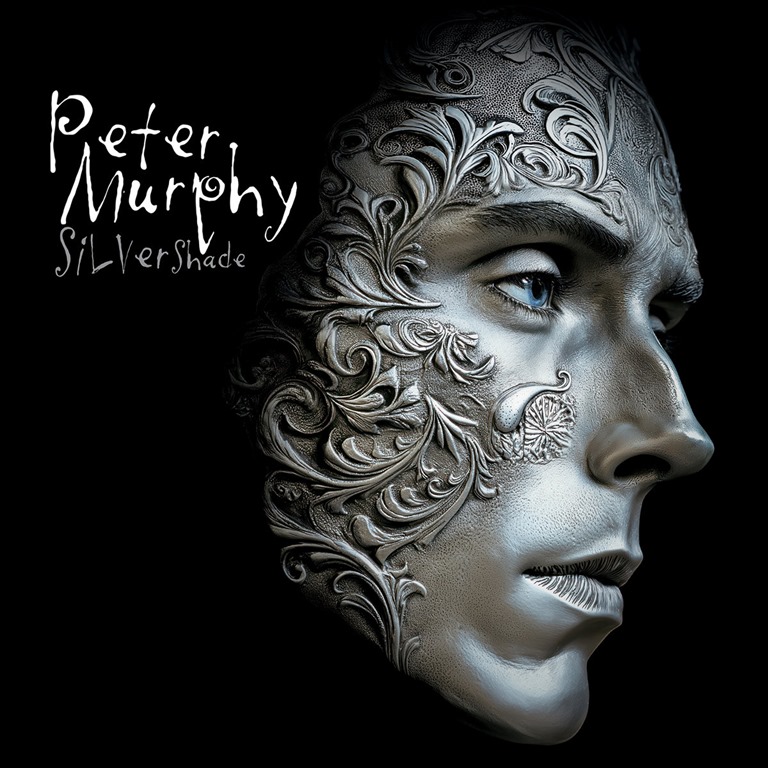
Peter Murphy – Silver Shade – Metropolis Records – 9th May 2025

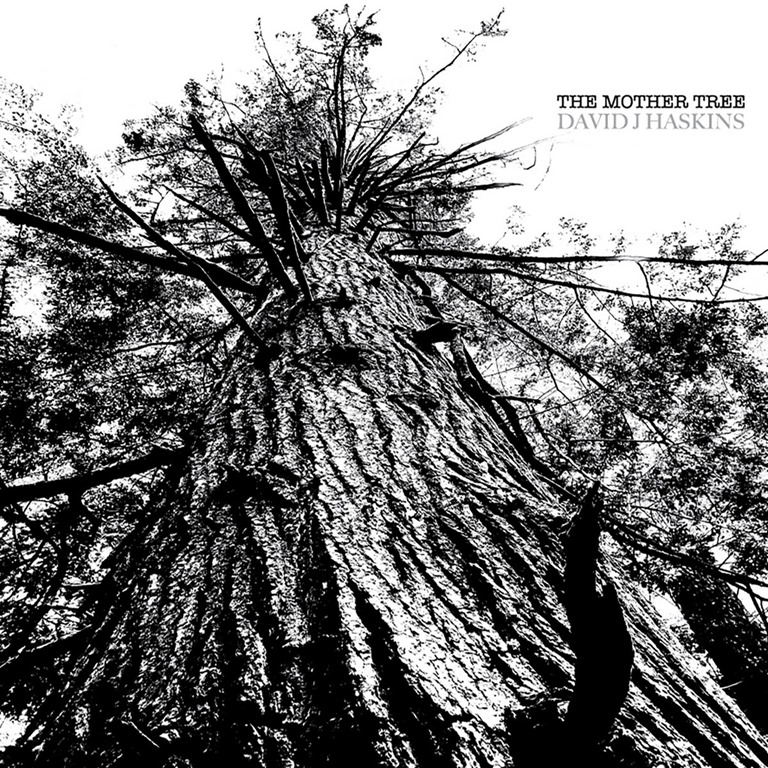
David J Haskins – The Mother Tree – Erototox Decodings – 6 June 2025

Christopher Nosniobor

It seems quite incredible that following a debut single which alone created a whole new genre, Bauhaus would release four definitive studio albums in just three years. The chemistry and creative crackle which existed between the four members was something special, and, judging by the 2008 reunion album Go Away White something that was very much of the moment.

While all four members remained active after the split in 1983, subjectively speaking, none of them have really replicated the same quality, or consistency, despite Love and Rockets – Daniel Ash, Kevin Haskins, and brother David J enjoying a degree of success with their more overtly pop-orientated rock sound.

The release of new albums by both Peter Murphy and David J within a month of each other affords an opportunity to observe just how different their respective creative trajectories have been, and also perhaps offers some insight into why Bauhaus reformations haven’t been entirely successful, with a 2022 tour of the US being cancelled, Murphy entering rehab, and the reunion ending.

Both of these albums are very much art-orientated, albeit approaching said art from almost diametric angles.

Murphy’s latest offering isn’t strictly a solo effort. Initially released as a standalone single, ‘Let the Flowers Grow’, which now closes the album as a ‘bonus track’, is a duet with Boy George, and much of the material on the album was co-written with Youth, who also produced it. Silver Shade contains twelve tracks and has a running time of fifty-nine minutes. As such, it’s a longish album, and the crisp 80s-sounding production, while suited to the material, dates it somewhat.

‘Swoon’ is classic Murphy in full-on Bowie mode, with a dash of Lou Reed and some grandiose electropop leanings. But if the bassline is lifted from The Sisters of Mercy’s ‘This Corrosion’, something about the swinging pop groove is actually closer to Springsteen’s ‘Dancing in the Dark’. You can clearly hear Bauhaus in all of this, but it’s predominantly in the vocals – perhaps not entirely surprisingly. And at five and a half minutes, it feels a bit laboured.

‘Hot Roy’ is Outside era Bowie crossed with Donna Summer’s ‘I Feel Love’ and The Associates. It’s poppy, it’s high drama, and it’s an early high point in an album that’s solid enough, but rarely spectacular. ‘The Artroom Wonder’ was an obvious single choice, but does sound like so many other things chucked into a blender, and elsewhere, the title track brings some dark glam vibes, and while it’s big on theatre, it’s not quite so big on substance, and feels rather predictable.

Predictable is not a word which can be applied to David J Haskins’ The Mother Tree, an album which is released in tandem with a book of poems, Rhapsody, Threnody & Prayer, both a tribute to his mother. As such, it’s a spoken word album with musical accompaniment, and, for context, it’s worth quoting that ‘David J’s decision to release these projects under his birth name, “Haskins,” (the name his brother Kevin used in both their bands together: Bauhaus and Love and Rockets) underscores their deep familial and emotional significance to him. He calls The Mother Tree, “my most personal work yet.”’ And that personal aspect rings out loud and clear, including as it does ‘profound reflections on life, love, loss, and touching tributes to late cultural icons and artists including Ian Curtis, Kurt Cobain, Jeff Buckley, Jack Kerouac and Mark Linkous.’ We feel and experience loss on different levels, and Haskins in no way suggests the loss of his mother is the same experience as the passing of a friend or an artist one admires: this is an exploration of the muti-faceted experience of loss and the way they all leave a different kind of void in one’s life.

The first piece – the title track – is a twenty-one minute piano-led meditation with subtle strings as the musical backdrop to a descriptive, linear narrative tale. There is a simplicity about it, not to mention an immediacy and directness. ‘this is a personal sacred story’, he says in the early stages of this patchwork of scenes which depict moments of his mother’s life. While the instrumentation is perhaps synonymous with high art, the words and their delivery are unpretentious, a flow of recollections and reminiscences, some harrowing, heart-rending, and all so real. Because life is often harrowing and heart-rending. ‘I miss your laugh’, he says openly, before effusing about perfect Sunday roasts. ‘Loved and lost’ is the succinct and poignant summary of the composition, and one which runs through the album as a whole. The other four tracks are substantially shorter, most around six minutes in duration, with almost folksy instrumentation and more contemplative spoken-word narratives, rich in little details which render them all the more vivid. There’s something almost unfiltered about it, and it feels so resonatingly human.

It sits at the opposite end of the spectrum from Murphy’s album: it’s art without artifice, a richly-woven tapestry where emotion is subtly laced through every moment.

These two albums may provide some indication of how the individual members brought specific traits to Bauhaus in the early years, and provide some measure of how they came to be increasingly divergent over time. Murphy’s album is clearly the more accessible, and will likely receive more coverage and acclaim, and reach a far wider audience, and be lauded and cherished by many. But for me, although The Mother Tree is a very different beast and challenging on a number of levels, it has a deeper resonance, and connects on a deeper level.
a3232846235_10a3601842447_10

Human Worth – 18th April 2025

Christopher Nosnibor

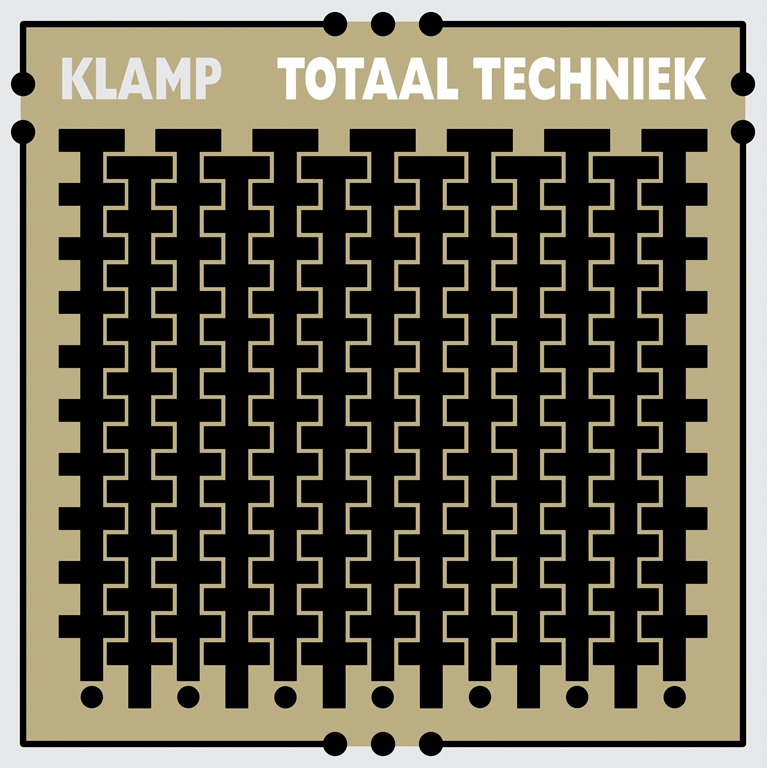
Given the event it supposedly commemorates, Good Friday has always seemed like a rather strange choice of name to give to the day – although I suppose for Christians it’s good because without it the religion probably wouldn’t exist. But this year, Good Friday actually lives up to its name, with the ever-dependable Human Worth dropping its second new release in a fortnight, this time in the form of TOTAAL TECHNIEK by KLAMP.

KLAMP first emerged in 2020, with the upfront Hate You, and since then, they’ve evolved considerably. Less a band and more of a fluid and ever-expanding collective, the original trio consisting of Jason Stoll (Sex Swing / Mugstar / JAAW), Lee Vincent (Pulled Apart by Horses) and Greg Wynne (Manatees) has now swelled to a lineup of seven performers, with Adam Devonshire (IDLES), Matthew Parker (Tall Ships), Rachael Morrison and Wayne Adams (Petbrick / Big Lad) having joined their ranks, along with a host of others who have contributed to this second album while passing through.

When approached in the right way – that is to say, with an open mind – collaboration can yield not only works which are greater than the sum of the parts, but unexpected results, as fresh input and different perspectives can throw wide open the doors to new ideas and possibilities. The converse of this is when a collaboration finds those involved arriving with egos fully inflated and preconceived ideas, and they simply stifle one another into playing to form. It’s abundantly clear that KLAAMP foster a spirit of experimentalism, a willingness to try things out, and see what transpires. The list of genres and influences, direct or implicit, noted in the liner notes is immense, and a reminder of why genres are not really the friend of artists who go with the flow of whatever happens creatively. But rather that dwell on that excessively, I’m simply going to replicate the ‘FFO’ list which accompanies the release, because it not only illustrates the stylistic range TOTAAL TECHNIEK offers, but also sets the scene in terms of expectation: ‘Swans / Sonic Youth / Black Sabbath / Godspeed You Black Emperor / Mark Lanegan / Einstürzende Neubauten / The Fall / Sunn O))) / Wire / Aphex Twin / Portishead / Godflesh / Earth / My Bloody Valentine / Gnod / Anna Von Hausswolf / The Bug and more… ‘ In other words, while there’s a lot of heavy and noisy stuff happening, there’s a whole lot more besides.

This means that the appropriately-titled ‘The First Song’ commences the set not with skull-crushing heavyweight riffery, but a subtle sense of ambience. Drones hover ominously, while chittering extranea evoke almost jungle-like sounds while distant beats flicker and echo like a collapsed synapse before they strickle into a drifting, psychedelic indie dream. There may be hints of later Earth about it, but ultimately it’s mellow and shoegazy, and while the pedals kick in just shy of the five minute mark, it’s steering hard in the vein of desert rock with an easy-going vibe, even with the raging vocals which are practically submerged in the mix. As it carries you along on its warm currents, there’s no frustration that this isn’t the heavy shit they’d promised. It’s simply good music, and has atmosphere and texture.

‘Zpine’ brings motorik drumming, a hint of Pavement crossed with Stereolab, with some noisy guitars slashing and splashing cross the solid, sequenced groove, while the vocals are harsh and ragged. The mid-section goes full Hawkwind, and the weirder and more wide-ranging it gets, the better it gets, too.

The album’s shortest song, ‘Wet Leather’ is a bass-led Krautrock-influenced psych-hued droner that bounces along nicely, and while it does kick off heavy a minute or so in, it mostly kinda comes on like The Fall circa Code: Selfish but with guitars from early Ride swirling all over.

‘Leprozenkapel’, the fourth track – which marks the end of side one – brings the rage and the noise and the throbbing noise, and it’s dark and heavy, and in some respects calls to mind late 80s Ministry as it pounds and snarls. Those drums, totally overloading with distortion and a metallic crunch… this is mean and brutal, while the eight-and-a-half-minute ‘The Crying Towel’ is different again, and altogether kinder. This is good: we need more kindness right now. And at some point a couple of minutes in, the ball-busting, super-weighty riff comes in, and there it is. But there are layers, texture, elements of shoegaze and more atop the lumbering rockout riffery. There is a lot happening here, and KLAAMP balance e it all perfectly.

Things shift towards menacing, doomy black metal on ‘Evil Pipe’, but the album ends – with another epic track in the form of the seven-and-a-half-minute title track, that comes on like a meshing of Joy Division or early New Order – particularly with the drumming – and Doves, before going full Melvins. And it somehow works. Of course, Human Worth would never release a crap album, but TOTAL TECHNITECH is truly outstanding. It’s not just the concept,  but in the delivery, and it’s all killer.

AA

HW044_KLAMP_TOTAAL TECHNIEK_CoverArtwork

May 2024 / July 2024

Christopher Nosnibor

Gintas K is possibly one of the most-featured artists here at Aural Aggravation, and I’ve written about his work elsewhere, prior to establishing this site. I’ve often commented – sometimes flippantly, sometimes in sheer awe – at his rate of output, but it seems appropriate to make the observation once again, since a little while ago I found myself simply swamped and a shade overwhelmed by the volume of submissions I was receiving. Electroacoustic Space Drumming landed in my inbox and I failed to so much as open it, let alone download it. Then, Outsider’s appeared, reminding me I was behind on things, only to discover that a split tape release with Jacob Audrey Taves had come out in between the two.

The first of the releases, Electroacoustic Space Drumming, comes courtesy of London label Anticipating Nowhere Records, as a download and limited cassette (in an edition of 20, more than half of which have gone already).

The titles are incomprehensible to me, but I very much doubt this will make any difference to my appreciation of this jangling, bleeping glitchfest. The six tracks do very much sound like a circuit meltdown, the digital xylophonic cadences interrupted by sudden jolts or sound and stuttering microbeats like an Action Man marching band trapped inside a jam jar half-full of water. Creaks, groans, and splashes abound and contrive to create a complex and layered work.

It’s difficult – if not impossible – to unpick everything that’s going on, and consequently, you simply sit back and let it wash over you. But that doesn’t mean it’s comfortable, or easy to do so.

And then there is Outsider’s, with its questionably-placed apostrophe in the title. Outsider’s what, precisely? And with twenty-three tracks, released digitally and as a colossal five disc CD work, it’s an absolute beast.

The five CDs make sense in a way which is less apparent on the digital release, as there are essentially five segments or suites, with the tracks belonging to each names with a suitable prefix: jazz, crunchy, noise, drones, and piano stuff. Each contains between three and six pieces, effectively an EP’s worth apiece.

In truth, the track titling isn’t especially helpful: the six tracks of the first set, ‘jazz’, and entitled ‘jazz good’, ‘jazz also good, jazz prolongation’, ‘jazz’, ‘jazz’, and ‘jazz.’ Spoiler alert: there’s nothing especially jazzy about the ‘jazz’ cuts, but there’s electronic percussion that cuts through foamy bubbling washes and a disarray of oddness that sounds like machine gun fire, and glitches aside, it almost feels co-ordinated. And no-one needs a jazz prolongation, although this decidedly unjazz cut, we can forgive.

The four ‘crunchy’ cuts are riots of bleeps and squips, a riot of sound that’s no more vigorous than on the first, ‘crunchy.geras greit.’ The two pieces simply entitled ‘crunchy’ combine haunting, hovering tones, and collapsing circuits and lurching synaptic stutters, like exposed wires sparking as they swing, and things become increasingly scratchy, scrapy, a frenzied buzz of fractured, fizzing, fucked electronics.

The three ‘noise’ pieces build in their noisiness, but at heart aren’t all that dissimilar from the ‘crunchy’ pieces, although perhaps quieter and less overwhelming, and overwhelming it is. Then again, the ‘drone’ pieces aren’t especially droney, and more represent explosions of frothing discord, and the final suite, ‘piano stuff’ is a cacophonous conglomeration of bubbling noise down a drain.

These recordings remind me of my early days of reviewing, back in 2018 or so as my introduction to truly avant-garde, experimental electronic works, and Gintas K – perhaps one of the first acts I discovered as an exponent of dripping, bleeping, weppling, weirdness. All this time later. he’s still proving to be a rare master of electronica. Come 2024, and Gintas K is still right there at the forefront.

a1621189998_10a2101315344_10

Christopher Nosnibor

‘I’m sorry, I’ve been busy’. We’ve probably all heard it: and most of us have probably spoken the phrase. I’m guilty, too, and hate myself for it. Everyone is fucking busy. Too busy to text, to open a message even, too busy to reply to emails, catch up with friends, too busy to fucking live. What is everyone so busy doing, and why is it that in a time when technology was supposed to make our lives easier, and in supposedly affluent western cultures, people are both fiscally porr and time-poor?

Naturally, I blame the current strain of capitalism: keep everyone too busy to live, to breathe, and too skint, and they’re not going to be protesting, they’re going to be too busy wondering where the next meal is coming from to fuck shit up. After everything, they’ve only got the juice to be ‘busy’ bingeing Netflix or the new season of The Mandalorian.

Admittedly, I have been genuinely busy parenting, publishing stuff, and writing a review a day while battling through an evermore overwhelming volume of submissions, but is that really a reason, or just an excuse? Right now, I’m not sorry either way. I keep myself to myself and I write when I can when I’m not doing laundry or cleaning or paying bills or feeding the cat

Gintas K is always busy, and he’s been having albums released at a ratee beyond that at which I can even download them, let alone listen and digest. And so it is that March and April have seen the release of three – yes, three – albums by the prodigious Lithuanian.

I must have been absolutely nuts to have set myself the task of reviewing all three together. The idea was to soak it all in with an evening of electronica, and report on what I expected to be an immersive experience. But knowing Gintas K’s work over the years, this was, in hindsight, an unlikely outcome. The headline here is that there is no overarching theme, there’ s no evolutionary trajectory, and nothing to really take hold of. But that in itself is K’s selling point: his work is exploratory, varied, sometimes playful, and often difficult.

Resonances, the first of these, ‘was recorded live, using computer, midi keyboard & controller on Autumn 2021’ and has been released by Sloow Tapes in an edition of 70 copies. It spins slow-swirling vortices around hovering hums and low-humming drones over the course of its ten, comparatively short (only a couple extend beyond four minutes), ponderous tracks. It’s perhaps one of his more varied works, both sonically and atmospherically – and Resonances really does explore atmospheres and cavernous swampy echoes.

Resonances

a1449704449_10

Fluxus +/- is a split collaborative release, which finds him working with Kommissar Hjuler Und Frau on a longform track, while a piece by Wolfgang Kindermann & PAAK occupies the other, and what we get here is just shy of eighteen minutes of really weird shit, bubbling swampy noise and loose collage layering of all sorts of snippets and a mish-mash of all kinds of everything that’s not easy to digest.

And then April saw the arrival of Sound & Spaces #2, which is perhaps more Gintas K’s standard fare of bubbling, foamy froth and stuttering, stammering glitch-heavy sonic mayhem. It stutters and scuffs, bleeps and wibbles, and at times sounds like the speakers are shredding, the cones torn and flapping in the blasts of random noise bursts, while at others… well, at times it’s a foaming froth and as others, it’s really not very much at all. The pieces run into one another to create a continuous stream of crackling distortion and bibbling trickles of tweeting and twittering, and while the effect is the most incomprehensible and difficult to digest, it’s by far the most quintessentially K. If it’s what I’d expected, then what this trio of releases demonstrates is that Gintas K continues to defy expectations and to produce work that’s different and diverse.

Sound & Spaces #2

a1377760751_10

ROOM40 – June 2022

Christopher Nosnibor

I feel like I’ m forever playing catchup. The simple fact is, there are more new releases – and remarkably good ones at that – than there are hours in the day to listen to them all. I can’t bee the only one who sees friends on FaceBook posting about how they’re loving the new album by X, Y. and Z, and who gets asked if they’ve head / what they think to this, that, or the other and wonder ‘how the hell do you actually listen to all this?’ These people must listen to music 24/7 and possess three pairs of ears by which to listen to all of this music simultaneously, or something.

Admittedly, it doesn’t help that my dayjob doesn’t really afford much opportunity for listening while I work, so I really only have a spell while cooking dinner, and evening, which, after everything else, tend to start around 10pm.

And so, presented with anything up to thirty new releases a day in my inbox, I simply can’t listen to everything, and I deeply envy those who can, and seemingly do.

One particular source of guilt, for wont of a better word, is my inability to keep up with ROOM40 releases. They may only be number three or four a months, but they’re invariably interesting, exploratory, intriguing. And tend to warrant for more detailed analysis than I can reasonably offer. Hence a summarising catch-up for the label’s June releases, on the day July’s have just landed with me.

Alberto Boccardi’s Petra (released on tape) is a comparatively short album of intense electronic drones: consisting of just five tracks spanning around thirty-two minutes, is sparse, ominous, sonorous, predominantly mid-range but with some stealthy bass and sonorous, trilling organs. Recorded over several years and partly inspired and assembled while Boccardi was resident in Cairo, it’s both chilling and soporific, it’s an intriguing minimal work.

RM4165_front

Blue Waves, Green Waves by Alexandra Spence isn’t receiving a physical release, and is an altogether different proposition. As the tile suggests, the ocean provides the primary inspiration, and sure enough, it begins with the sound of crashing waves, but this soon recedes to the background, while analogue organ sounds ebb and flow as the backdrop to low-key spoken word pieces. Noters drip and drop and hover in suspension like droplets of water hanging from leaves before their inevitable yielding to gravity, sliding off and into a puddle. ‘Air Pockets’ sloshes and sploshes, reverberating against empty plastic pipes. The flatness of sound and the shifting of tones as they bubble and sploosh is the aural equivalent of close reading, interrogating a source to microcosmic levels.

DRM4143_art

‘All intensive purposes’ is one of those (many) misspeaks that drive me fucking crackers. And this release by there inexplicably—monikered ‘Pinkcourtesyphone’ is an album likely to frustrate and bend the brain, albeit for different reasons. With the exception of the final mid-album interlude, ‘Out of an Abundance’, these are darkly mellifluous drones that stretch well beyond the five-minute mark, and ebb and flow slowly amidst rumbles and reverberating snippets of conversation and radio. The mood is tense, unsettling; not creepy, so much as just uncomfortable, spine-tingling, ominous, and at times, other-wordly.

BW RM#4188_pinkcourtesyphone_sleeve_final

Some will likely find something in one or another of these, while others will doubtless find all three of these releases to be of interest and collectively, they do very much provide a broad, wide-ranging view of matters experimental and ambient, presenting different perspectives of found sound and field recording. It’s credit to ROOM40 for giving space to these artists, and showcasing such a range of music from within what may, on the surface, appear a narrow field, and demonstrating otherwise.

Southern Lord – 23rd April 2022

Christopher Nosnibor

Covering multiple works in a single review feels like a major short-changing exercise, and I feel I should apologise to the artists involved in advance. It kind of depersonalises and maybe even cheapens the coverage, and I remember how I felt when the book version of my PhD thesis finally received a review, only to find that it was in an article alongside three other books. It may have been a paragraph of praise, but nevertheless, it was a solitary paragraph in a long article. Nine years of work, 90,000 words and 300 printed pages given a one-paragraph thumbs up… meh. But still, better than a thumbs-down or no paragraph.

A decade on, it’s still not settled with me, and I always try to do better. But sometimes, bundling makes sense and feels justified and this is one of those times.

Having spent many a virtual column inch in recent years bemoaning how Record Store day has made a deep descent from being an event that served to raise awareness of independent record shops to another cash-in for major labels cranking out shitty reissues on limited colour vinyl to wring yet more funds from completists while at the same time driving some of the most shameful scalping activity anywhere on line, it’s a relief to find something positive about RSD 2022.

That something comes of course from an independent label in the form of Southern Lord, who, as a sidenote, had commendably stuck to producing outstanding vinyl releases regardless of trends, fashions, popularity, or Record Store Day, and, admirably have continued to release whatever the hell they please, with a catalogue that’s an equal balance of cult hardcore punk re-releases and cutting-edge works of crushing weight that perpetually push the parameters of metal, with recent releases from Neon Christ and Big | Brave highlighting the polarities of the label’s interests.

This pair of RSD releases exemplify this span to perfection, and while admittedly one is a reissue, the other very much is not – and as such, they represent the label’s standard release scheduling. As the press releases outline, ‘The Catatonics were one of NYC and Syracuse’s pioneering hardcore punk bands…While the band’s seminal Hunted Down EP has remained one of the most highly sought-after releases of the genre, the heightening collector’s price made this 7” inaccessible to most people. Southern Lord has now elected to re-release this EP as a 12”, with bonus tracks.” And, meanwhile, Forest Nocturne is ‘the first full length solo venture of Greg Anderson, under the moniker of The Lord. Inspired by the great horror film composers of the 70s and 80s, Anderson turns his back on the riff worship of Goatsnake or SUNN O))) and instead creates a truly unsettling atmosphere heavy with tension, offset by 90s Scandinavian death metal’.

The Catatonics release certainly gives value for money: the original 1984 7” released on Anorexic Nympho Records featured five tracks: this reissue features a whopping eighteen. Following the bonus intro cut if ‘Descending in E’, the original EP accounts for tracks two to six, while the rest is an almost exhaustive gathering of compilation tracks, early demos and live recordings, all remastered from original tapes. Only two of the eighteen songs run beyond three minutes, with most clocking in under two, and this is rough and ready, ball-busting full-throttle, relentless fury, nonstop-pounding hardcore at its rawest and most furious, and the live cuts are particularly raw and brutal, making this a unique and comprehensive document of another underground band’s short but high-impact career.

LORD000_12inch Standard LP Jacket

The Lord’s debut is a very different proposition: it’s clearly contemporary for a start, although it’s steeped in vintage metal stylings, and driven by an understated and simple but gut-churning bass that digs tunnels beneath your ordinary lives. Forest Nocturne is an album that twists and turns, and more significantly, gnaws like rodents, and like woodworm, at the smooth, flat planes of sonic normal. I say ‘normal’, as if that’s a thing – but The Lord conjure vast aural expanses, broad vistas that invite the listener to bask in the rich density, before tearing it to pieces.

A slow, swelling church organ droned doomily on ‘Church of Hermann’, a piece which is truly awe-inspiring. This is an instrumental album that definitely marks a departure for Anderson and feels more like early Earth than Sunn O))). Then again, it’s doesn’t really sound or feel like either.

Thick swells of strings that build into brooding, megalithic waves, define the power of this instrumental work. ‘Forest Wake’ starts with the wail of a siren, and brings bulldozing bass and power chords wrapped in gut-punching clouds of distortion. Those clouds dissipate for a time, and the atmosphere looms large and heavy as things unfurl, but take a moment to breathe and there’s nothing to see here other than smoke and that absence… It grinds, and it absolutely fucking kills, going full Sunn O))) drone doom on ‘Old Growth’. Forest Nocturne is hard and harrowing, immense, epic, beautiful, and yet at the same time devastating. The last track, ‘Triumph of the Oak’ is a new shade of heavy, an angering mess of thrashing chords that crashes down so, so hard.

810538

Finally, thanks to Southern Lord, there are releases that are actually worth getting up and queuing for at the weekend.

Black Sun Productions – Toilet Chant / Dies Juvenalis

Christopher Nosnibor

Self-styled ‘artivists’ Black Sun Productions had already established a reputation for themselves in Switzerland and Italy, but found a much wider audience after they were discovered by Coil in the early noughties. Touring their performance piece ‘Plastic Spider Thing’ on tour with Coil, they also engaged in collaboration with the seminal industrialists and were signed to their label, Ekstaton.

These two releases – reissues of albums dating back to the mid-2000s and previously released on CD-R on their own Anarcocks label, are interesting for a number of reasons, with the fact that they are Black Sun Productions albums being an obvious starting point. That they’re receiving their first vinyl and digital releases means this rather clandestine work may begin to filter through to a wider audience and be accessible to fans who’ve simply been unable to track down the originals. The choice of these two albums is a shade curious, in that they represent the first and last of the Anarcocks releases, with four other releases separating them.

Given the range of media they’ve worked in and pushed the parameters of, it shouldn’t come as too much of a shock to learn that they’re fairly challenging. That said, these are not brutal or ugly albums. Musically, they’re certainly interesting, and will hold inevitable appeal for fans of dark ambient, avant-garde and music from the more experimental end of the industrial spectrum. I’d argue that true industrial is experimental by its very nature, in the tradition of Throbbing Gristle, and, continuing that trajectory through Peter Christopherson, Coil. And fans of coil will be keen to note that ‘E2 = Tree3’ on the Toilet Chant album features the vocals of ‘Jhonn Balance’ which will make the first of these two albums of particular interest.

Toilet Chant (2004) may sound as though it should have humorous connotations, but the title track which opens the album, but its haunting whale song echoes are far from ribald. Distant, rumbling percussion lumbers in the murky background. ‘Anarcocks Rising’ works on the interplay between unstructured rhythmic pulsations, heaving groans and rolling, bass-orientated, notes. Synths flicker and scrawl, their sparking electronics bringing a starkly manufactured aspect to the more natural sounding sonic body over which they expand. It’s alien and other-wordly, as is the aforementioned ‘E2 = Tree 3’, as thunderous roaring solar winds blast over exotic, eastern-influenced instrumentation and shards of pulsing analogue fizz. The album builds tension across the six tracks, via the Curesque ‘Yesterday’s Dream’ and the spaced-out wibblesome tones of ‘Glüewürmilitanz, culminating in the thirteen-minute ‘Spermatic Cord’. An extended exercise in creating dark, weighty atmospherics, it’s an uncomfortable, queasy listen. Grating bass drones croak and funnel. It’s a dark, insular experience.


Black Sun Productions - Toilet Chant

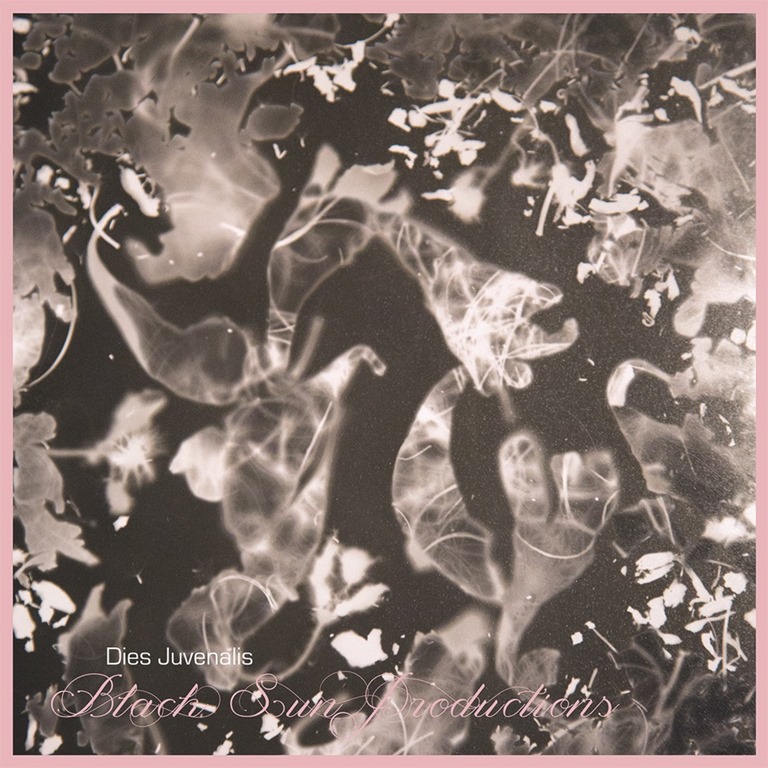
2007’s Dies Juvenalis contains just three tacks, and immediately a different tone is apparent. A swelling organ sound screeds and undulates against pulsating beats on ‘Percettive Riflessioni’. The experimental leanings of Toilet Chant are still in evidence, but the focus here is on dynamics, with dramatic changes in volume and the tonal contrasts adding depth and texture. The presence of definite, regular rhythms also marks a significant change, with elements of Krautrock and psychedelia informing the sound. This was 2007, remember: no-one was digging Krautrock or doing synth-based psychedelia in 2007. Busy xylophones weave the fabric of the title track, while a deliberate, slow, dubby bass beat leads ‘Veneration XXX’ into glitchy, stuttering drum ‘n’ bass territory, while disembodied voices bend and melt over the stammering fills.

Black Sun Prooductions - Dies Juvenalis


I would lean towards Toilet Chant as being my preferred album for listening purposes, Dies Juvenalis offers a greater push on innovation and musical progression. In tandem, they provide an intriguing documentation of the workings of a unique act.