Posts Tagged ‘Album Review’

Unsounds – 54U

Christopher Nosnibor

This is one of many releases I’ve been sitting on – figuratively speaking – for a long time without getting round to playing. I tend to listen to CDs while at work in my day-job, and digital promos at home (because I can’t stream or download on work systems), and while I can stuff a bunch of regular CDs into a jiffy and carry them to and from the office, the packaging of this release made it simply impractical. That, and the fact I had to battle long and hard with myself to resist the urge to burn the thing.

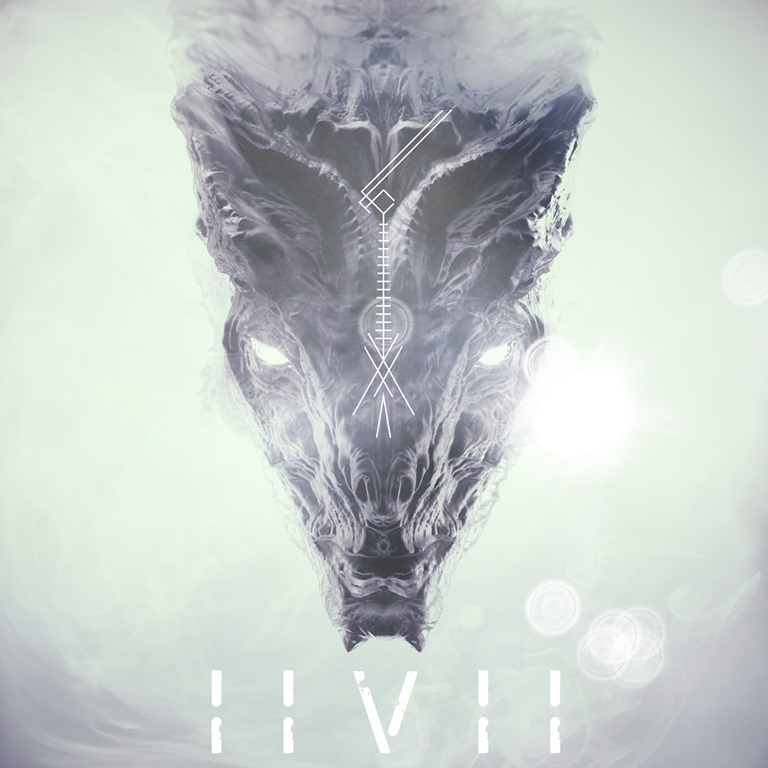
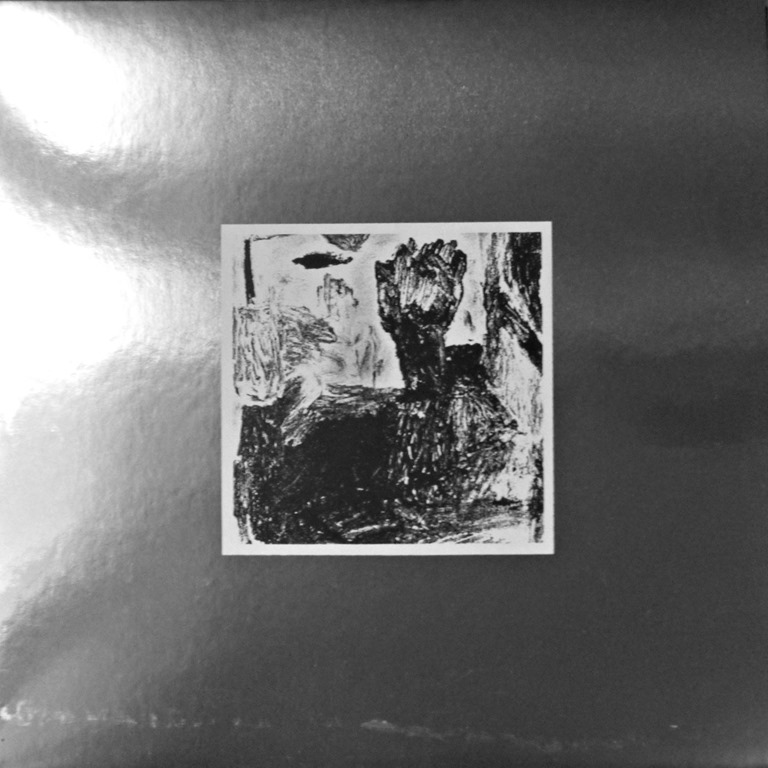
It’s not that I have any kind of objection to any of the artists in this three-way collaboration, or take issue with its premise, namely a series of portraits of radical heretical figures from across history, spanning Caravaggio and the Marquis de Sade, to William Burroughs and Johnny Rotten. In fact, it’s a concept I can get on board with, and for months I’ve looked at the magnificent packaging, a box-type affair which folds out to reveal a CD, a DVD and a book containing all of the words to the tracks – some in French, some in English, some in a combination of the two – forming a rich linguistic tapestry. Published in an edition of just 1,000 copies, including 26 lettered copies, it’s a work of art, not a disposable piece of trash. But the box is a giant flip-front matchbook. The front cover is made of fine sandpaper, and glued inside the flap, on its own, stark and inviting is a match, a full fore inches long. What would be more in keeping with the spirit of the project than burning it without hearing so much as a note, and reviewing the sound of the fire taking hold and the rustle of art burning, the colour of the dancing flames and the texture of the ash? It would hardly be Watch the KLF Burn a Million Quid, but nevertheless… I’m a pussy. I was also too curious to explore the contents of the package. And having heard the album and watched the film, there was no way I could even pretend to burn it. I’m weak. I’m no heretic.

Chaton, Moor and Moore are no heretics, either: they’re artists who appreciate heretics. It’s not always obvious to whom each piece relates, and perhaps a priori knowledge of the individual heretical figures is beneficial, as is an ability to translate French. ‘The Things that belong to William’ does not mention Burroughs by name. However, the bilingual text, in referencing ‘a Paregoric Kid’, ‘Pontopon Rose’, ‘Joselito’, ‘Bradley the Buyer’ and a host of characters and scenes from Naked Lunch and beyond, the connection is clear – to those versed in the author’s work. ‘Poetry Must Me Made By All’ is, then, presumably, a dedication to Comte de Lautreamont, pro-plagiaristic precursor of the Surrealists, Situationists and Neoists, as well as the cut-up technique of Burroughs and Gysin.

Textually – these are texts and not lyrics, delivered in a spoken word / narrative form – it’s an erudite work, researched, intertextual, referential. Sonically, it’s no more immediate. Oblique, obtuse, challenging: these are the first descriptors which volunteer their services in untangling Heretics.

‘Casino Rabelaisien’ is a tense effort, with angular guitar clanging perpendicular to a gritty, awkward bass grind. Chatton remains nonchalant and monotone amidst the chaotic no-wave cacophony. ‘Dull Jack’ begins with Thurston’s voice alone, before churning guitars slither in. There are no regular rhythmic signatures here, no ‘tunes’, no hooks or melodies: instead, this is a set which uses instruments in a more abstract way, conjuring uneasy atmosphere and often simply attacking the senses.

With the guitars of Moor and Moore duelling, playing across one another as much as with one another, the effect is jarring, uncomfortable. Both players employ atonality and discord within their performances, and when discordant passages collide, it’s a brain-bending experience.

Heretics is a work which delivers on its promise and conveys the spirit of the outré, unconventional artists who inspired it. It is, in addition, a true work of art. Don’t burn it.

Heretics

Von Archives – VON 023

Christopher Nosnibor

The idea behind the Cordiox from which Ariel Guzik’s album takes its name is a machine which was conceived by the inventor of the radio, Gugliemo Marconi, in a dream just weeks before his death in 1937. He had theorised that sound never dies, but instead emanates and radiates eternally. As such, he believed that every sound ever made still existed in the ether, and that it was theoretically possible to tune into the recordings of every moment in history. The machine Marconi visualised would confirm this theory. Guzik’s Cordiox was conceived as an instrument which crosses portals of time and bridge infinite space, and this album very much encapsulates the enormity of that concept and ambition.

‘Cordiox is a machine, an instrument that communicates through time, vibrates and resonates to its surroundings, creating a response to it, communicating with it. Rather than making an unlistenable riot of noise, Guzik’s recordings here are as much concerned with the enormity of time and space, and the way everything blurs, slows and distorts, reduced to a low hum as its ends move further and further apart.

Creating a slow-motion soundscape of almost incomprehensible enormity, chimes burst like terrestrial gongs, rippling vibrations into the cosmos. The first track is an otherworldly cloud of drifting, turning sound in which time stands still.

Long, low, languorous notes are hang in space for aeons; time stalls as the notes turn imperceptibly for eternity after eternity. The second track continues in the same vein, but works from a broader sonic palette, with elongated drones rising and drifting over the interminable sonic mass. Long, low undulations ripple slowly beneath long, tapering trumpets of fluid tonality. An eerie sonic ooze which hangs in suspension between time and space, it’s the sound of all sound, singing out across infinity.


Ariel Guzik - Cordiox

Hidden Seer – HDSR001 – 25th November 2016

Christopher Nosnibor

Aside from being a member of Leeds-based good-time festival-favourite indie band and all-round musical entertainers Hope and Social for some six years, Simon Goff’s list of collaborators is impressive, featuring among their number Aidan Baker and Pere Simonelli of Enablers. He’s an artist who can seemingly turn his hand, adeptly, to myriad musical forms. And on HUE – an album which couldn’t be further from the jaunty fun of H&S – he explores forms in the vaguest, most mutable, shifting, fleeting sense. Glitchy beats flicker through rippling strings. Tempos and counter-tempos criss-cross subtly, creating the impression of different currents running together but at different depths. It all happens beneath the surface.

Each of the album’s six colour-coded tracks is sculpted meticulously from layers of sound, the arrangements marrying electronic and conventional acoustic instruments to compelling effect. Percussion of a palpating heartbeat, glitchy crackles and mournful strings drift over low-end scrapes and rumbles. Eventually, the dark atmosphere gives way to light, blossoming brightness beams like the sun’s rays breaking through cloud. Yet there are shadowy currents which still flow beneath. After a rather grand opening, there’s a retreat into more minimal, drone-orientated sonic territories. Soft contrails are calligraphed in subtle, supple string arrangements. The space between the beats and notes is integral to the compositions: the echo, the decay. The overlap. A single note, plucked with varying weight.

Elsewhere, as on ‘Blue’, Goff creates a rarefied atmosphere through the exploration of the most minimal arrangements. Elongated, tapering drones which shift almost imperceptibly, with broad sweeps of sound like steely grey clouds turning, moving.

Picked notes and irregular rhythms combine to create somewhat disorientating sonic spaces; the shimmering oscillations of tr6 are trance-inducing hypnotic, but the erratically-cut and irregularly lopped sample snippets rupture the gentle surface with dislocation. The tracks drift into one another, creating a natural-feeling flow that, while not narrative, does possess a certain subtle linearity.


simon-goff-hue

Bearsuit Records – 9th December 2016

Christopher Nosnibor

It begins with an immense drumbeat and a warped guitar that calls to mind early Swans as it warps and distorts… but then, behind a piston-pumping mechanoid beat, it all goes a bit Stereolab. Within a minute, I’m feeling confused, disoriented, as chimes hang gracefully in the air above a demonic, guttural snarl and discordant synth chimes and eerily chirpy whistles. What the actual fuck is this? And how does the music relate to the title, or vice versa? Nothing about the album is remotely evocative of plump older women with their eyes down, smashing away with their dabbers in the bustling pursuit of the next line, and nor does it conjure any images of the 70s heyday of the bingo hall, the smoke-hazed babbling equivalent of the WMC. Annie & the Station Orchestra’s Bingo Halls is an entity unto itself.

Pitched by the label as ‘a little experimental and challenging in places’, it’s also sold as being ‘very melodic, playful and pretty accessible in its predominantly instrumental context.’ These things are all relative, of course and this is a Bearsuit Records release: these guys are all about the far-out, the whacky, the weird – something I salute them for. There is, most certainly, a degree of melody and accessibility about this release but don’t think it’s some kind of Justin Beiber / Lady Gaga / Little Mix bollocks.

‘King of the Idiots’ is a brilliantly-engineered electro-pop instrumental with a dark edge, minor chords played on analogue synths wend their way over a thumping programmed beat that says ‘1984’. It builds and swerves and builds some more until it’s ascended to the position of towering space-age electro-rock. The lilting melody of ‘The Return of Banjo Williamson’, which amalgamates elements of oriental chimes with a thrumming bass and juddering electronic beats, quite unexpectedly evokes the spirit of latter-day Cure before going all weirdy Muzak electro.

Doodling, noodling guitars and synths, drenched in echo, place the album somewhere between electronica, Tangerine Dream style ambient Krautrock and post-rock. Is there a term yet for electronic post-rock? If not, there bloody ought to be, and someone needs to let me know what it is, like, yesterday. It’s not as if worriedaboutsatan haven’t been straddling these very genre divides for around a decade. Still, Annie & the Station Orchestra offer something that’s distinctive and unique, and while elements of the various tracks lean towards a range of identifiable genre trappings, the overall effect is one of abstraction, of immediate distraction, and of stubborn non-conformity. This makes for an album that’s idiosyncratically innovative, and stands proudly in a field of its own.


Annie & the Station Orchestra – Bingo Halls

GIZEH – 16th December 2016

Christopher Nosnibor

Tabu, the film, was released in 2012 to a roundly positive critical reception (Rotten Tomatoes shows an accumulated score of 87%). The scale and scope of Christine Ott’s live soundtrack, which she’s toured as a cine-concert in mainland Europe are immense. Led by delicate piano pieces, Tabu is very much an album that’s dedicated to subtlety, to remaining in the background. This is very much the mark of a successful soundtrack: a well-considered and well-crafted soundtrack does not seek to take the foreground, but to provide an almost subliminal backdrop to the movement on screen.

I write as someone who grew up in the 80s – when soundtracks were a mix of classically big John Williams scores, and fairly lame generic electro / rock soundtracks headlined by a major theme tune performed by one of the headline acts of the day, often in the form of a power ballad. Think Starship’s ‘Nothing’s Gonna Stop Us’ and Huey Lewis and the News’ ‘The Power of Love’. Equally, the Bond films of the period, with A-Ha and Duran Duran delivering the title track. I came of age in the 90s, the decade of the way-cool soundtrack. Imagine Trainspotting, The Crow or Natural Born Killers

With wibbly bass tones and tremulously mournful violins – and / or is there a theramin squealing an eastern-influnced arabesque in the mix? – Ott creates a haunting atmosphere on ‘Hitu, la Grande Montagne’, a piece which is evocative and moving even when removed from its cinematic context.

‘Sorrow – Lover’s Dance’ is the first of two long pieces, and while hushed and sparse for much of its eleven-minute duration it manages to incorporate myriad cultural elements, with Kyoto motifs and finger cymbals chiming in the distance, slowly forging an eerie, minimalist kind of krautrock, an insistent rhythm fading to the horizon.

Musically , it’s an exquisite work, and while it’s visually evocative, appreciation is in no way contingent on having seen the film.


Christine Ott - Tabu

Dio Drone – 9th December 2016

Christopher Nosnibor

OvO’s evolution over the last couple of albums has been substantial: the brutal, demonic mania of Cor Cordium was utterly terrifying in terms of just how dark and full-on it was. Not that Abisso was exactly a stroll in the park – in fact, it was truly petrifying – but some of the unbridled power of its predecessor was exchanged for a greater range, and a closer attention to nuance with the incorporation of texture and depth-bringing electronics.

Creatura marks another shift, and yet again, they’ve come up with something that sounds like it is not of this world. Pushing hard through the loud / quiet dynamic – with major emphasis on the loud, of course – the sound is has a dense, industrial quality. Combining live and programmed drums, with the bass and percussion tracks being first recorded live and then looped, sampled, overdubbed, overlayed and generally embellished, mangled and fucked with, it incorporates elements of black and industrial metal, but it’s so much more. And so much more spine-shakingly scary. This is beyond the realms of horror. It’s extreme, for sure. It’s an album that will smash your psyche.

The stop / start drums and snarling bass calls to mind early Pitch Shifter. Above all, it’s the percussion that dominates. The mechanised double-pedal bass drum sound pounds like fury while Stefano shrieks and howls through shards of feedback on opener ‘Satanam’. ‘Eternal Freak’ explodes with drums on drums, the snare sound approximating planets exploding, and guitars like jet engines roar with cranium-cracking intensity. The deep, snarling vocal on the title track is from beyond the bowels of hell and cannot possibly have emerged from the throat of anything with even a strand of human DNA. What kind of creatura is this? It’s a mutant beast from the deepest netherworld, and that’s for sure.

While the bulk of the material is driving and muscular, the sample-strewn experimental breakdown of ‘Matiarcale’ strips things back to a kind of mutant hip-hop. The fear chords which swim around the pulverizing drum track introduce another layer of disturbance.

The appropriately-titled ‘Zombie Stomp’ reveals a hitherto unseen facet of the band, manifesting as a glam rock boogie – OvO style, of course. It’s still loud, hard and heavy, but there’s even an approximation of a vocal melody, albeit one as performed by Alvin Stardust’s reanimated corpse after it’s been possessed by the spirit of Zuul.

‘Buco Nero’ continues in this vein, a post-punk track at heart, with a tune and everything, but churned to a gut-wrenching doom-filled sludge. Counerpart ‘Buco Bianco’ is a techno-disco behemoth, along the lines of Chris and Cosey collaborating with Bathory. It would be a danceable pop tune if it wasn’t so utterly fucked up. The same can’t be said of ‘Bell’s Hells’, which is a minute and a half of thunderous savagery. Closer ‘March of the Freaks’ has hints of Nine Inch Nails about it but the stuttering beats and gnarled vocals make even Broken sound like Soft Cell.

It’s the fact that Creatura so often hints at accessibility which never emerges in actuality which renders it such a fearsome and disturbing work. Whereas Cor Cordium and Abisso were truly other-wordly, Creatura inches close enough to recogniseable forms to offer a warped reimagining of the world we know and as such, is deeply uncanny, in the Freudian sense. Weird, dark and intense, it’s an album only OvO could spew out: it’s also eye-poppingly awesome.


OvO cover

Consouling Sounds – 25th November 2016

Christopher Nosnibor

The title of Barst’s first full-length album is a reference to William Burroughs’ novel of the same title. Of course it is. Burroughs’ influence on music is immense, and where the is no direct absorption of his ideas or methodologies, musicians since the 1960s have been citing him as an influence. He remains, arguably, one of the ultimate countercultural icons of the twentieth century.

While Barst acknowledges ‘the fragmented, the transcendental and the viscerally unsettling imagery of his work’ as an inspiration point for this richly detailed sonic journey of an album, there’s also a nod to the cut-up technique devised and formalised by Burroughs and Brion Gysin in 1959. There’s logic to this. The cut-ups, both on paper and when subsequently applied to audiotape suggested immediate practical applications in the production of music, and if there was a link between the concept of the cut-ups and the work of Throbbing Gristle, it was acts like Cabaret Voltaire and Foetus who really rendered the connection a direct one.

The cut-up intrinsically connotes a hybridity, a drawing together of eclectic sources, a combining and collaging of fragments to forge a multi-layered intertext, while simultaneously providing a creative liberation, in which the creator is subservient to the material.

While Burroughs claimed to have abandoned the cut-up by the time of his final trilogy, which consisted of Cities of the Red Night, The Western Lands and The Place of Dead Roads, there was a certain disingenuousness about this: the cut-ups continued to inform his writing, albeit in a more subtle form, and with the editorial input of James Grauerholz who reshaped the works with an eye to a more commercial text. The result was a more accessible mode of writing, but one which evoked something of a fugue-like state, in contrast to the annihilative cerebral barrage of his works of the 1960s. This is perhaps the point at which Barst most readily intersects with Burroughs, in offering a work which, as the press blurb explains, sees ‘layer upon layer…fitted to build up a work of art… Cutting up sounds, and layering them from very subtle to incredibly huge.’

The album effectively has five tracks, but they’re mastered as two, corresponding with the sides of the vinyl: as such, track one consists not so much of three tracks or chapters (‘The Threshold / The Rite / The Passage’) but three movements segued together to form a longform piece. Likewise side / track two features ‘The Western Lands / The Fields’

Screeding noise fills the spaces in the rich shoegaze swirl of the first movement. The drums are muddy, partly submerged, distant amidst the maelstrom. The whole thing drifts… ‘The Rite’ is built around an insistent beat and pulsating, looped synth motif. It’s perhaps the most overtly structured, and the most overtly electronic track on the album, laying down an expansive desert groove that transports the listener to another space altogether. An immense sonic swell bursts into a multi-layered, infinitely-faceted cathedral of sound, which gives way to engine-like drones. What is this? Where are we? In the afterburn, tectonic thuds shake. A deep, murky bass warps and grinds against a decayed industrial rhythm to create a sinister, post-apocalyptic soundscape.

The moody, dark ambience of the title track melds an almost ritualistic, ceremonial spiritualism to a thumping electronic beat. Low in the mix, the vocals howl out in a barely intelligible expulsion of soul-burning anguish. Part black metal, part Prurient, devastatingly barren, it’s perhaps one of the most innovatively genre-breaking tracks I’ve heard all year. The vastness of ‘The Fields’ is an experience beyond words. The percussion hammers out hard, but low, grinding explosively but largely buried in the immense swathe of layered sound which is totally immersive. But then, the storm is over. The grace and elegance of the piano-led play-out is contrasting in the extreme. But this is beautiful music, and provides welcome respite.

The Western Lands is an accomplished work, and an incredible achievement, both conceptually and sonically. A different kind of epic.


Barst - The Western Lands

Fabrique Records – FAB060CD – 14th October 2016

Christopher Nosnibor

Whatever is present, there is always an absence of something, even if the absence is of nothing. What absence ends on Jana Irmert’s debut album, which comprises six pieces created with a combination of field recordings, experimental electronic sounds, and voice, is unclear. But then, clarity is not Irmert’s objective: End of Absence is subtle, nuanced and atmospheric, a project designed to stir the imagination.

The title track opens the album with a thick bussing hum of feedback, which mutates into an eternal, mid-tone drone. The sparse beats and monotone spoken word of ‘Bagful’ sits somewhere between Young Marble Giants and Throbbing Gristle, the thunking percussion whips through the stark minimal grind. Elsewhere, on, ‘Obstacles’ a barrelling wind of white noise, burred with scraping metal-edged electronic distortion, blows into silence. Long, rumbling tones hang and swirl like mist around hisses and hums.

Irmert’s interests are the vague, irrational, less tangible aspects of existence, and these manifest in the compositions which make up End of Absence. Immense washes of sound, like tidal waves of static, crash against virtual shores on an imaginary world. drawing from a broad sonic palette, Irmert inspires an almost paradoxical sense of engaged detachment, in which the listener cannot help but bring something of themselves to complete the listening experience. In such an exercise in inclusivity, both artist and listener are fully present, and so we arrive at the end of absence.

Jana Irmert - End of Absence

Edition Beides – beides 2 – 9th December 2016

Christopher Nosnibor

Why am I enthralled by a deep, churning low-end rumble that sounds like a slowed-down washing machine with pops that sound like a ping-pong ball being smacked around? What is it that’s so compelling about a distant sound that may or may not be a sustaining guitar that suddenly breaks into ear-shattering strains of feedback? It’s uncomfortable, it attacks the senses. Perhaps it’s a deep-seated defect which lurks like a parasite in my psyche, and gnaws away invisibly, driving me toward audio works which induce discomfort, craving a psychologically twisted, deviant form of amour. Perhaps I’m just wired differently. The answers to these questions do not lie in Paul Wirkus’ ‘psycho-acoustic essay’, described as ‘a consciously digital ambient album between laptop electronica and field recordings’, which is forged with ‘mental strolls… are combined with real strolls through the green fields of the summery, loud city on the search for security, calm, and a chance to exhale’.

The four tracks on Discours Amoureux offer little sense of comfort, of respite, of security or calm. In fact, it’s a fairly dark and oppressive work from beginning to end, although a sense of exploration, of discovery, does still linger in traces in the corners of the uncomfortable, claustrophobic sonic spaces created by Wirkus. There’s something reluctant, grudging about Wirkus’ stance in relation to his art, and just as there’s little sense of concern for the listener’s reaction to it, there’s equally little sense of context or framing.

Welcome to 1982. I can only assume, in the absence of information, that the track’s title – and the titles of the other tracks – are dates. This first track on Discours Amoureux is in the same kind of difficult noise field as early Whitehouse (although not nearly as trebly and harsh as their work of this time), Prurient, and Merzbow, and as such, evokes the spirit of the emerging underground scene of power electronics as it was in 1982 or thereabouts. Or maybe not. Nevertheless, it’s abrasive and disturbing. The origins of the sounds are unclear, and the sleeve divulges precisely nothing beyond the artist’s name, the album title, record label and track listing. But there’s an organic feel to the slowly-evolving layers on the individual compositions. From the amorphous, shimmering wall of sound emerge moments of outstanding beauty, towering, glistening…. Yet still rough-edged, rusting, with a sufficiently abrasive surface as to scour the senses.

‘1499’ is more overtly electronic. At its foundation, the piece explores resonating notes ringing against one another, the undulating pitch creating a strangely harmonious melody. Incidental clatters and clangs – spanners against scaffolding, the chank of glass – interrupt the flow, and the notes increase in pace and the mellowness gradually is lost to rising tension and ultimately, echoes into the void of a sea of static.

The more overtly ambient ‘2016’ takes the form of a sound collage, with found sounds and field recordings assembled over random percussion and multitonal hums and drones. A gloomy, dense atmosphere descends, encapsulating in sound the long shadows which have cast themselves over the world during a year marked by catastrophic political, economic and humanitarian events. Back to a golden age, and much happier times: 1888. The year in which the great blizzard hit the US, Jack the Ripper began his notorious spree, and the first (known) recording of classical music was made, is represented by a long, sonorous, humming drone, its surface distorted with crackling, clicking. It seems reasonably apposite, intentionally or otherwise. Distant voices, slow, warped, intimate a dark spirituality and an even darker future.

What kind of perverse amour is this? How do Wirkus’ sonic explorations move you? Discours Amoureux is an uncomfortable, unsettling experience which speaks of a dark love, a brutal and torturous love, a love which causes pain, physical and psychological. Yield to it.


Paul Wirkus – Discours Amoureux

Hubro – HUBROCD2582 – 25th November 2016

Christopher Nosnibor

Gathering pieces composed over the span of some thirteen years, Sound of Horse provides an insight into the compositional methodology of Laurence Crane, with each of the pieces performed by the shifting lineups of the Norwegian Asamimasa ensemble.

It begins with ‘John White in Berlin’ (2003), a long, low, ominous rumbling drone-based composition for electric guitar, cello, percussion and piano. The piano is sparse and way off in the distance. The strains of guitar feedback scrape at the senses in contrast to the low, almost subsonic rippling bass hum: it builds tension, but eventually this plateaus. There’s a daring fragility to the composition, but there’s little by way of movement or progression and little to really get a grip on. ‘Riis’ (1996), for clarinet, cello and electric organ manifests first as a cloud of ambience, from which elongated organ notes pipe a slow, majestic sound, a sort of semi-ambient church muzak. It’s an imposing work, as much by virtue of the instrumentation as the composition, although Crane does cast an immersive atmosphere.

The three ‘Events’ pieces for voice, three clarinets and a vibraphone move further into the realms of the spiritual, the wordless vocals are hushed, reverent, brushed with a celestial hue radiating upwards as they entwine with the sparse, soft-edged instrumentation. It’s the sound of a dark corner, illuminated by flickering candlelight. These pieces may be short, but they’re quietly powerful, moving.

The title track consists of seven parts spanning a full twenty minutes. It sounds nothing like any horse. With clarinet, bass clarinet, acoustic and electric guitar, as well as percussion and cello, the pieces offer a greater range of texture and tone than the other pieces, and at times offer more conventional melodic passages. Chords are strummed in slow repetition while the wind instruments make minor chord progressions underscoring an atmosphere of brooding melancholy and, in places, trepidatious uncertainty. Choppy electric guitars and thumping drums on the fourth section mark the biggest divergence from the overall form of not just the suite, but the album as a whole, and hint almost toward an assimilation of the elements of rock music, albeit in its most deconstructed and experimental form.

Precisely how to summarise what this album ‘does’ is immensely challenging, and equally, it’s not particularly clear what its purpose is to convey. It isn’t that the compositions lack finesse, but they do, all too often, lack focus. While Sound of Horse is a collection, there seems to be little connection, stylistically, between the pieces, giving it something of a scrapbook feel. But what to make of it? I dunno. Maybe it needs time. Maybe it need different ears. Maybe I need a different headspace. But at the time of writing, I’ve got little more than a shrug.

Laurnce Crane - Sound of Horse