Posts Tagged ‘Album Review’

Ipecac Recordings – 24th February 2017

Christopher Nosnibor

Some project ae just so wild and so awesome that they can’t fail. Crystal Fairy is one. The fact that it’s out on Ipecac should be a big clue. Essentially another Melvins offshoot, this project features King Buzzo and Dale Crover (Melvins and myriad mental offshoots), with Teri Gender Bender (Le Butcherettes), Omar Rodriguez-Lopez (Mars Volta, At the Drive In). If you haven’t already encountered Le Butcherettes, our life is sadly lacking and you need to do something about it, immediately.

Le Butcherettes are one of the most ferociously angular, choppy, abrasive and truly awesome contemporary exemplars of the no-wave ethos, and Terri Gender Bender is a fearsome and fantastic front woman: the perfect foil to the sludge with a grin craziness of The Melvins. Omar Rodrguez-Lopez (Mars Volta, At the Drive In) is hardly a weak link here.

As the press release recounts, ‘The whole idea for Crystal Fairy began when The Melvins and Le Butcherettes toured together and The Melvins started doing the song “Rebel Girl” with Teri at the end of their set.’

The album erupts with a whack! Think! Chug-a-chug thundrball punk-tinged rock racket of Chiseler’. It crackles. It fizzes. But what’s perhaps unexpected is just how accessible it is, courtesy of its strong, melody-led chorus. It also has that early 80s vibe and the poke of a small-town pub gig or a demo tape recorded by an ultra-proficient provincial band who deserve a wide audience. That’s not a criticism of Crystal Fairy, but of the industry, at least as it was.

Rock cliché is never far away on this album: ‘Necklace of Divorce’ wheels in AC/CDisms and Led Zeppelinisms galore, but there’s a savviness to the delivery that hints at a certain knowingness, a play on the clichés being stirred in and churned around in the mix. The result is alchemy, and an album brimming with choppy tunes that explode with full-throttle drive, and build the dynamics with passages of tension-building stealth. Grunge classic? Yeah, and so much more

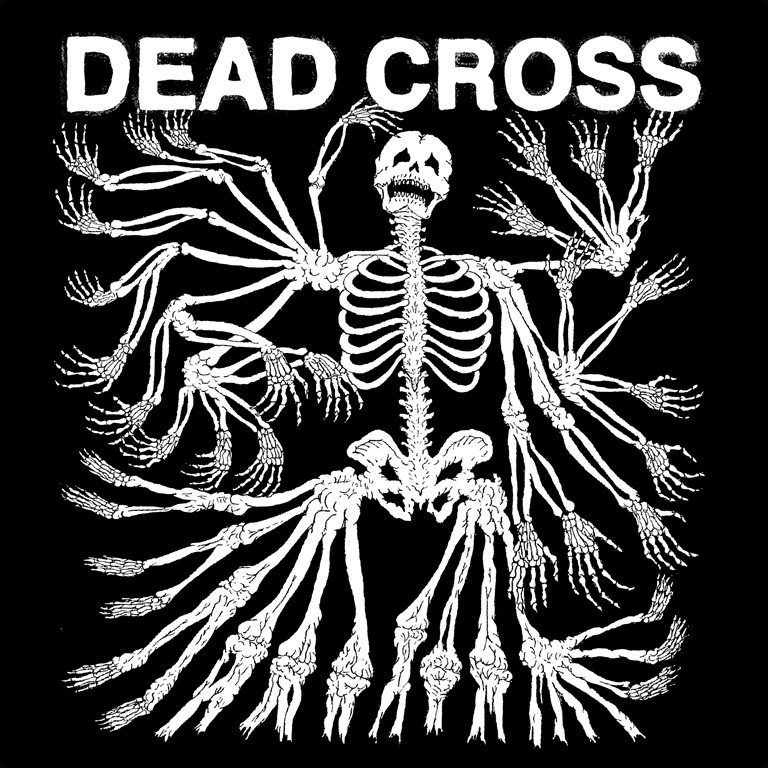
‘Moth Tongue’ simply sounds like Terri Gender Bender fronting The Melvins playing one of their poppier tracks. As such, it’s ace, and ‘Bent Teeth’ is simply scorching. As is the album as a whole: raucous rambunctious, it combined churning, gritty riffs with wild-eyed histrionic vocals. As much as I’m a sucker for a meaty guitar, I’m even more one to be pulled in by a vocal delivery that borders on the psychotic, and Terri’s go that absolutely nailed. But then, as the title track attests, the foursome can also nail a full-throttle post-punk pop tune: think Blondie, think PJ Harvey, delivered with energy and guts and raw sex. Belting as the backing is, Terri makes it: she sounds dangerous, intense, precarious. While the basslines tear through your guts, she tears through your very soul.

Crystal Fairy is the supergroup every supergroup should aspire to: the embodiment of rock ‘n’ roll awesome, they’ve got the full works going on here.


CF-cover_3000x3000(2)

Cat Werk Imprint – CW11 – 8th February 2017

Christopher Nosnibor

The inspiration for Olivia Louvel’s latest album (fantastically presented, like its predecessor, in a DVD size digipak) casts an arc way back into history. Louvel, it transpires, was fascinated by the lives of Mary Queen of Scots and Elizabeth I – two queens who existed simultaneously on the same island, during the 16th Century – a period dominated by men. Two queens who, powerful and celebrated in their own lifetimes as well as posthumously, would never meet. And so, on Data Regina, Olivia Louvel sets herself the challenge of addressing their simultaneous yet entirely separate, disparate narratives of these two bitter rivals, and presenting distinct voices as she charts their adversarial relationship.

The twenty years during which the two queens reigned simultaneously were fraught, tempestuous ones, punctuated by battles on the Anglo-Scottish borders, disputes and reconciliations, and ultimately saw Mary Tudor sentenced to death and executed.

Effectively two works intertwined – ‘The Antechamber; and ‘Battles’, with the latter comprising a sequence of relatively short instrumental pieces positioned between the longer ‘songs’ – Data Regina is no polite period drama in musical form. It most certainly doesn’t correspond with the popular Elizabeth-slanted syllabus readings of the period, or correspond with the backdrop generally presented on degree-level modules taught on ‘Elizabethan’ and ‘Renaissance’ Literature (the Renaissance was late to reach Britain in relation to the rest of Europe). Herein lies an immense problem, of course: how can we learn from history when so much of the past is unknown, shrouded in layer of mystery and obfuscation as the result of political (self)interest? Would the present be as fucked as it is if we all had a better knowledge and understanding of history? Maybe, maybe not. The age of Elizabeth I, of Shakespeare, of – my preferred man of letters, Christopher Marlowe – is a long way in the past.

Data Regina an album of dark, haunting electronica, which stands in a league of its own: it has no obvious reference points in music, history or elsewhere. It’s a bold project, for sure, and Louvel admirably achieved her ambitions with a work which conveys its intent without becoming overly mired in explication and cumbersome narrative segments which disrupt the flow.

Louvel sets the tone – both musically and in terms of narrative – with the dark swell of ‘Battlefield’. Vaporous in its atmospherics, the track combines echoey beats which clatter and rattle around between resonant, woozy basslines and sparse, drifting notes. ‘My Crown’ weaves a haunting spell, slow pulsating electronics and mournful strings first float and then rise to a tense climax. At times, juddering electronics and stuttering, glitchy rhythms spasm and render scenes of claustrophobic intensity, Louvel’s detached, icy vocals eerily menacing. The pieces – they don’t follow clear or conventional song structures – are intense sonic explorations of character and voice.

‘Langside, 1568’, is a dark, dolorous interlude, the fractured vocalisations preface the marching drums which dominate the barren landscapes of ‘Deploy’ and ‘Battle’. It’s uncomfortable, queasy listening, the elegance and grace of the sparse compositions and Louvel’s voice countered by a discomforting undercurrent that runs throughout. It’s by no means an easy, accessible work: in fact, Data Regina is dark and turbulent and often uncomfortable, but it is deeply compelling.


Olivia Louvel - Data Regina

Reject and Fade – 28th February 2016

Christopher Nosnibor

Tim Hann used to front a Leeds-based alternative rock band called I Concur some years ago. I forget exactly how I discovered them now, but they were really, really good, one of those bands you would see play liv and think ‘Fuck. How are they not immense?’ One of the most precise and exhilarating live acts around, they were in another league, and it felt wrong to see them play as a support at the 450-capacity Brudenell Social Club. With the NME and Huw Stephens backing them they should have been huge. Sadly, the show I caught at the Packhorse in Leeds in 2010, where they tried out some of the material that would appear on the 2012 album Burial Proof would be one of their last, and Burial Proof would effectively be their sign-off. Life had already got in the way prior to the album’s release: ‘the usual thirty-something excuses of jobs, kids & houses’, as they put it on Facebook. And so it goes: ambition and dreams crushed by reality. The guilt and the money-pit of leaving your wife to deal with the children, while you go out on tour, pursuing the life of a young, single man.

I get it. Bands slog their guts out for fuck all. So do music reviewers, it so happens. ‘It’s not work, you don’t get paid for it,’ Mrs N retorts as I wade through the thirty or so emails which have crashed into my inbox while I’ve been at the day-job. Don’t free CDs, downloads and gigs count as pay? I’m not going to argue: I take the point. At least I get free stuff in abundance. Bands just hand out free stuff to buggers like me in the hope they’ll get a review. I review maybe 20% of the material I receive these days. It’s not because I’m a shit – no, it’s not the reason – it’s because I simply can’t do any more. The point is that being in a band is hard. It’s no life for a grown adult with mouths to feed.

A brief backtrack: in my endless quest for self-promotion, I used to run round slapping stickers and postcards everywhere every time I attended a gig. I didn’t sell many books off the back of it, but I did get an introduction to Tim’s younger brother Michael, a writer and soon-to-be head honcho at experimental Reject and Fade, a label devoted to dark ambient and generally weird, dark electronic-based nastiness. It’s a small and sometimes wonderful world. Were it not for all of this backstory – and I make no apology for the anecdotal meanderings with their Sartrean, Robbe-Grillet tinted reflections – this review would not exist. You should be grateful for the existence of this review because this offering by break_fold – Tim Hann’s latest project, released on brother Michael Hann’s Reject and Fade imprint is an inspired underground work, which, by its nature is unlikely to receive much mainstream critical coverage, deserves your attention.

break_fold represents a significant departure: there isn’t a jangly guitar to be heard here, not a single emotive swell, and no vocals: in other words, nothing remotely resembling the conventions of rock. This is music produced slowly, during moments away from life. And it’s music made by one man, at home, likely in the small hours, without the need to rely on the input of others. Hann clearly has music in his blood, and possesses an incredible focus when he’s making it. As a dark ambient work, amorphous, intangible yet curiously challenging, it’s an outstanding release and one which displays a meticulous attention to detail. The tones, the texture, the crispness of the beats and the overtly synthetic elements, in contrast with the swirling background elements is quite something.

About the title: 07_07_15 – 13_04_16 is pitched as ‘a record of memories and time stamped bursts of creative activity, captured and crystallised in glacial beats, foggy textures and electrified rhythms.’ The track titles are, in fact, the dates on which the individual track were started. As a whole, it’s a document of a specific time-span. There is something simultaneously resonant and alienating about this location in time, in that time is both universal and personal. Events take place at given times which are known globally. Other events are strictly personal. But our location in time is often marked not by the event but by our reaction to it. Take, for example, the announcement that the UK had voted to leave the EU. Many, if not most, UK citizens will forever have the fateful events of the 23rd June 2016, and also the 24th (very much the morning after) etched into their memories. But their responses will vary wildly, and the memories will inevitably be shaped by that immediate reaction on hearing the result.

07_07_15 – 13_04_16 is a journey into the break_fold mind-space, but without context in terms of the events of the dates in question. This accentuates the sense of dislocation already present in the music itself – music which conveys emotional tension, conflict, unease through the medium of rumbling, uncomfortable layers of sound which drift and hang like mist or toxic gas. Murky, impenetrable, tense and dubby, it’s a challenging journey into the unknown defined by low, strolling basslines streaking, slow-turning ambient tension and clamorous beats swathed in echo.


break_fold

SOFA – SOFA 555 – 13th January 2017

Christopher Nosnibor

It’s no secret that I have a real penchant for what the man on the street – and most of my friends, and certainly the uncultured crets in my dayjob would brand ‘weird shit.’ Indeed, it’s fair to say that Aural Aggro’s primary raison d’être is to give coverage to the obscure, weird shit that exists way, way off the radar. It’s not necessarily that I’m being wilfully perverse: oftentimes, I will simply find that the supposedly weird shit resonates with me on some subconscious level, in the way that only music can. But then there are some releases that I appreciate because they’re plain bizarre. Muddersten’s Karpatlokke is an album that appeals on both levels, in that sonically, it’s intriguing, unusual, dark and intense, and conceptually, and in its construction, it’s utterly perverse.

‘Muddersten is a type of mudrock whose original constituents were clays’, the press release explains. Perhaps it was creative misprision on my part, but I immediately began to envisage the trappings of an obscure subgenre, a bastard offshoot of sludge metal, or a hybrid born out of crust punk. This would ordinarily make more sense, contextually, than the literal meaning which in fact applies here.

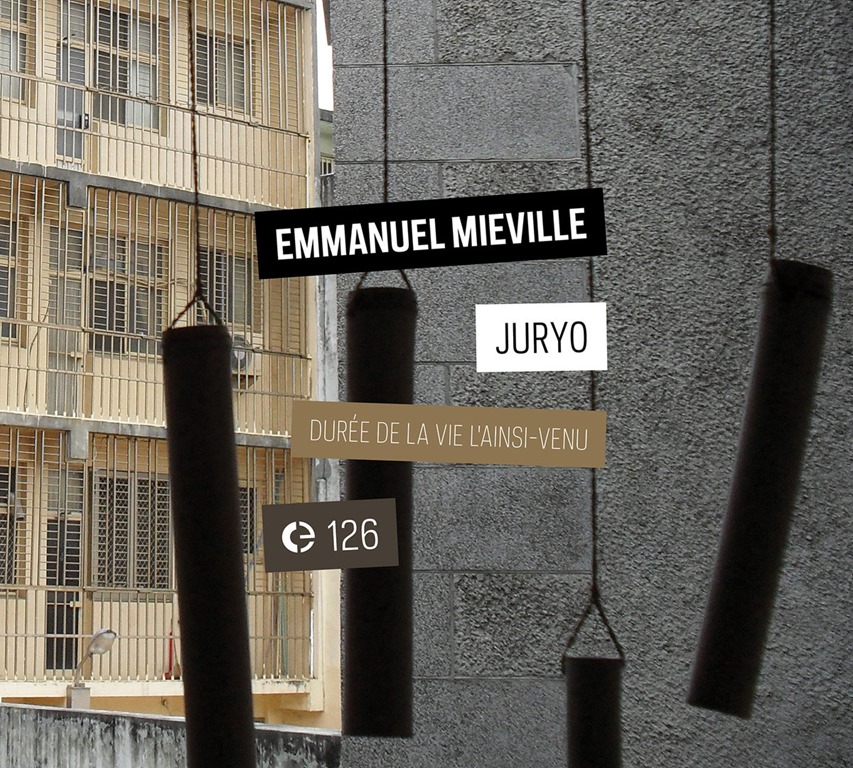
The second release to land with me in a week to feature Martin Taxt and his microtonal tuba, the instrumentation listed in the creation of this creeping compost-based composition is nothing if not unusual: Håvard Volden plays (relatively) conventional instruments, the guitar and the tape loop. Taxt, along with his microtonal tuba, contributes electronics. And then there’s Henrik Olsson, master of objects, friction, and piezo. I had to look up piezo. Precisely how one renders music from abstractions is unclear, but this strange union, which finds the trio conjure an album which is ‘all about the hydraulic’ and is preoccupied with the movement of moisture through clay and soil and its absorption by plants, is a successful one. And, for the second time in a week, I’m compelled to contemplate the line in Marvell’s ‘To His Coy Mistress’ which refers to ‘vegetable love’. Karpatlokke could well be a definite soundtrack to the Aristotelean reading of the concept.

The sounds the trio produce are appropriately earthy, although by no means overtly or conventionally musical in their nature. As such, the music does not feel as if its mechanical origins are instruments as man-made as guitars, tape-loops and electronics. Although predominantly organic-sounding, there are some pretty gnarly tones to be found here: droidal, digital squeaks and bleeps ping rapidly around sharp-edged bursts of sound. Drips and groans counterpoint dark, growling rumbles. ‘Kjempeløk’ grinds out a heavy, trudging vibration, thickly abrasive. Slow-motion scrapes turn through glitchy, crackling rhythms on ‘Stjerneskjerm’, as strings bend, bow and slowly slip the sprockets of time. It’s an unsettling work, evoking slow, creeping movement and evolutionary growth, amplified: the sonic equivalent of a nature documentary shot in high-definition, with ultra-close-ups, the frames sped up and slowed down to render in the sharpest relief the brain-bendingly awesome occurrences which take place daily in the natural world, unnoticed and invisible to the naked eye.

Each track’s title refers to a plant: ‘Stjerneskjerm’ translates as ‘Astrantia major’, commonly known as ‘master wort’, and the impressive-sounding ‘Blodstorkenebb’ is in fact a composition inspired by the rather humble Geranium sanguineum, aka bloody crane’s-bill or bloody geranium. Yes, this dark, dank, swirling noise which gnaws as the intestines and churns at the cranium is inspired by a bloody geranium. Which why it’s a great, if extremely unusual, album. Well worth digging out.


Muddersten – Karpatklokke

Whereas many microtonal explorations manifest as tiny, pinging blips, Microtub’s Bite of the Orange is constructed using immense, elongated notes. Perhaps somewhat obscurely and tangentially, I find myself considering Andrew Marvell’s poem ‘To His Coy Mistress’, specifically the following couplet:

My vegetable love should grow
Vaster than empires, and more slow.

No, not on account of the popular tumescent implications most readings of the lines offer: I’ve even explored the mirthsome connotations of Marvell’s emerging bulbous courgette during undergraduate seminars in an attempt to draw some kind of engagement from a room of late teens who really couldn’t give a crap about Elizabethan poetry, but that’s not why Bite of the Orange evokes Marvell in my mind. Instead, I’m drawn by the poem’s allusions to the Aristotelean connotations of a love borne out of the vegetative soul, as commented on at length by Lawrence Burton in his magnificent Anatomy of Melancholy, one of my favourite 17th Century texts (largely, it’s true, on account of Burton’s magnificent language). Burton makes a connection between the ‘vegetative soul’ and ‘natural love’; a love which is a slow-growing, evolutionary condition.

Granted, an orange is not a vegetable, but, like this slow-growing love, Bite of the Orange moves at an almost imperceptible pace, organic. Microtub’s slow, microtonal explorations require patience, and it’s only through time that a true appreciation of its qualities and its sonic depths can be truly appreciated.

The three tracks seep into one another, both in terms of the structures of their titles, and sonically. ‘Violet Man’ ventures into the dark, its low rumblings feeling their way through subterranean territories and poking the deepest recesses of the mind, and the three long-firm tracks combine to offer a full, panoramic perspective on the nuanced tonalities three microtonal tubas can create.

Bite of the Orange is not an album of action. It is an album which unfurls, creeping, revealing its aspects in greater detail the more closely one listens.

Microtub

January 2017

Christopher Nosnibor

There’s nothing wrong with pop. Critics the world over will tell you that pop is trash, that it has less artistic currency than any other musical style. We don’t mean it, at least as abrasively and directly as all that. And those who do man it are terrible snobs who lack the broadmindedness to be a just critic. Any music critic worth paying attention to loves pop – good pop. This means I’m not talking about the mass-produced r’n’b slop that proliferates in the top 40. What, they dispensed with that? Well, R1 did, and that perhaps shows just how devalued mainstream pop has become. But moving on… pop isn’t always a dirty word. Quality pop is a rare find.

Balancing expansive, bombastic, surging songs with more introspective, low-key yet deft and accessible songs, Ukrane’s Vagabond Specter produce pop of a rare quality: their synth-led songs are dreamy, layered. Pablo Specter, the band’s singer dispenses lyrics – his voice heavily processed and accented – about swans and dancing, and he’s got a decent range which spans from the light and soaring to a crooning baritone.

They’re not lightweight or lacking in substance or imagination, either. There’s a magical electronic snowstorm in the middle of ‘Scars as Notes’, and ‘Dancing in the Light’ has guitar chug, buoyant synths and a bouncy vocal, and calls to mind XTC’s ‘Making Plans for Nigel’. XTC are a perfect example of a pop band and ‘Making Plans for Nigel’ is as good a pop song as you’ll ever hear. This is not critical opinion: it’s fact. So, by associative connections, Vagabond Specter are a great pop band, and ‘Mirrors’ is a great album. And it is: as much as it’s steeped in nostalgia and historicity, it’s a cracking pop album which harks back to certain vintage. There’s nothing wrong with that: great songs defy genre, age and epoch.


Vagabond Specter

Ideologic Organ – SOMA025 – 10th February 2017

Christopher Nosnibor

The accompanying press release is instructive and informative as to the premise of the latest offering from The Necks. Entering their thirtieth year of their existence, the trio continue to innovate and to create music which expands the parameters of jazz music:

The latest document from this long-running ensemble, Unfold, presents itself as a double LP, with four side-length tracks. A deliberate absence of numbered sides hands a substantial swatch of participation over to the listener, allowing her to navigate his own path through the soundscape at hand. The shorter length of the vinyl format, far from being a constraint upon the members of the ensemble, instead offers them a more compact horizon to contemplate, wherein the distance travelled is recalibrated to more immediate and dynamic textural concerns.

The title is appropriate, in that it gives a fitting indication of the nature of the compositions. Although the vinyl format is pitched as being a ‘shorter’ format, the fact that each track occupies a full side of this double album means that each piece still has a running time of between fifteen and twenty-one minutes. And unfold is what they do: gradual evolutions, slow unfurlings and near-imperceptible outspreadings which creep from sparse to near-overwhelming.

‘Blue Mountain’ begins with a delicate piano, but over time builds in depth, tension and pace to a sustained crescendo that never quite breaks. It simmers long and leisurely, cymbal crashes rising in intensity, resembling an intro to a track on a recent Swans album. I mean this as a compliment: it’s a lengthy piece, but there’s movement, there are dynamics, there’s a tangible sense of trajectory.

Noodling Hammond keys wander over a slow, pulsating undulation on ‘Overhear’, and it’s hypnotic and mellow. Perhaps the most overtly ‘jazz’ composition, it also encapsulates perfectly the wide-ranging elements The Necks incorporate within their music. Bongos bubble up jittery rhythms while the trilling organ notes meander and weave, intersecting time signature s forging an increasing sense of spatial disorientation over time.

The tribal rhythms which dominate ‘Ride’ slowly but surely increase in pace, raising the tension as the elongated, barely perceptible notes hang in slow suspense. Ultimately, the pace reaches a frenetic peak, before collapsing into arrhythmia , a conglomeration of discord and distempo, and the fourth track, ‘Timepiece’ is nothing short of a bewildering chaos of percussion, discord and orchestrated dissonance. Against the clattering rattle of drums and more, bass notes resonate and xylophone notes ring out in different directions, and over time, it becomes increasingly unsettling disorientating, difficult.

Unfold is by no means an easy album. It’s by no means a ‘jazz’ album in conventional terms. But in terms of an album which bounces off the wall in myriad unexpected directions freeforming and freewheeling as the musicians explore interpersonal musical boundaries, it’s the epitome of jazz. It’s also really rather good. Well, it is a Necks album, after all.

The Necks - Unfold

Southern Lord – 20th January 2017

Christopher Nosnibor

It’s part and parcel of the music critic’s remit to know anything and everything about all music, and to have an opinion on it all, too. More importantly, the music critic’s job description entails knowing more about music than you, irrespective of anything. Go on, talk to me about music. I’ll gush about some of the things you life if they’re cool, and I’ll shit over everything else, demolishing your favourite bands on which because I’m the fucking expert. Why? What drives this propensity for inordinately cunty behaviour? Think about it. In the age of the internet, everyone’s a fucking expert. So how else do we justify our position if not by proving we’re more expert, more opinionated and more eloquent in our critiques?

So, it’s confession time: much as I dig a fair bit of proper, old-school US hardcore, I do not profess to be an expert. Having not heard of Uniform Choice, I asked a friend of mine who’s a proper fan of US hardcore for his opinion on Uniform Choice. He hadn’t heard of them either, which means he’s not as much of a fan or expert as I took him for, or Uniform Choice are really bloody obscure. Either is equally likely, and Southern Lord’s commitment to excavating lesser-known bands of the heyday of hardcore is laudable.

But I did have misgivings about Uniform Choice: the press release promises ‘furious hardcore energy and a signature vocal delivery combine with empowering lyrical output to formulate one of the most renowned and longstanding albums of the ‘80s hardcore scene.’ ‘Fourteen straightedge anthems’ I can handle, but something doesn’t sit to comfortably: namely, the fact Uniform Choice are pitched as ‘California’s godfathers of positive hardcore’.

‘It’s going to be shit,’ I told my friend.

‘You need to be more positive,’ he replied.

‘Ok, I’m positive it’s going to be shit,’ I told him.

I’m funny like that. It’s the way I tell ‘em.

But really, isn’t positive hardcore a dismal oxymoron which sits in the same field as Christian metal?

Sonically, Screaming For Change, their first full-length album, originally released in 1986, is incendiary, a blistering, fiery powerhouse of punk rock noise, an album which encapsulates the ferocity, the intensity, and the raw, brutal determination of the early hardcore movement to make a difference. The songs are – as you’d expect – hard, fast and short. The drums are hell-for-leather and the guitars a furious chug. The production is surprisingly crisp, with clear separation between the instruments. Screaming for Change finds Uniform Choice exploit many popular punk tropes, with terrace-chant ‘choruses’ – the title shouted out a few times, as on ‘Use Your Head’ and shouted vocals bellowing out the expletive-filled lyrics so fast half the words are impossible to catch.

It’s all about the force of expression, and more about the sentiment than the melody: ‘it’s all the same / and I’m tired of taking the fucking blame!’

The ‘positive’ aspect doesn’t come across as preaching, and despite titles like ‘Straight and Alert’ and ‘My Own Mind,’ ‘Don’t Quit’, Uniform Choice are pissed off and looking to smash the system. But instead of blind nihilistic rage, theirs is a message that celebrates the idea that there are alternatives, that you don’t have to follow the crowd, that shit as everything is, you don’t have to perpetuate the same shit yourself. And I’m down with that.


tp0009c_SP_Gate_Cover

No Sleep Records – 16th September 2016

Christopher Nosnibor

I have to admit, I’d been wondering what was happening with Battle lines. Following the single releases ‘Colonies’ and ‘Hunting’ (split with Post War Glamour Girls), and a storming set at the Brudenell to launch it, there was talk of an album when I chatted with the band afterwards, and then… Well, they seemed to drop off the radar. Carly had mentioned work and all of the things that get in the way of doing things, although it was some time ago, and I’d had a few pints during the evening and what with work and an endless stream of new releases demanding my attention… well, I sort of forgot about things. I’m sorry for the fact that this makes me the same as pretty much everyone else: I blame the ‘net age, the insane pace of our post-postmodern culture, where memories are overlaid and replaced in an instant, buried in the endless blizzard of shiny new things, images, sounds, more bad news and another media frenzy over the latest celebrity scandal. And so, a guilty late review of an album by a band I’m a big fan of.

While I’m looking around at intangibles to blame, I’m also aware that I’m feeding my own anxieties and understanding more the pressure on any artist, in any medium, to devote as much time to promotion as to the production of actual art. It’s all about the momentum! Paradoxically, to weather the storm that is the blizzard of social media, one is required to contribute to it further, and constantly. If you’re out of the public eye, you’re forgotten in a flash. It’s an absurd situation, of course: artists need to retreat in order to produce. In an over-loud world, silence is good, and importantly, silence from a band means they’re likely holed up working on material.

Battle Lines, individually and collectively, have been getting on with their lives, and thankfully, have been doing the things that are important, instead of fretting over their public profile. The press release apologises for their apparent absence, but is matter-of-fact about things:

It’s not a secret that we’ve been very quiet over the last year… There’s no big story, we love each other, we’re as good friends as we’ve ever been. Life has moved on for all of us, and we now reside in New York, London, Brighton and Leeds, geography prevents us from touring, but it can’t prevent us from releasing new music.

And so, while I was busy being distracted, Battle Lines slipped out their debut album, a record I’d waited more years than I care to count for: having first discovered them in their previous guise as Alvin Purple, I’d been captivated by the quality and richness of their dark, post-punk influenced material and the incredibly assured live performances they gave so consistently.

The switch to Battle Lines marked a refocusing: the energy which effused from their earlier songs was directed more inward, and the material displayed an almost ascetic discipline in its execution on those first single releases and in the live shows, more clinical, more icily intense than their previous incarnation.

This is all captured perfectly on Primal. The sparse title track and album opener hints equally at The XX and Closer era Joy Division. But then, glacial electropop undercurrents and thunderous tribal drumming also define the sound. And the sound… the fact they’ve taken their time over this means that the sound is honed to perfection. There isn’t a note out of place. That isn’t to say it’s overproduced within an inch of its sterile life or stripped of its soul: they’ve pulled everything to tight as to render it almost claustrophobically dense, a work which offers an insight into a near-obsessive control over the output. In context, it makes sense:

There’s an honesty about the notes which accompany the release which is at once uncomfortable and refreshing:

Lyrically this was an incredibly dark place to go to, I had come out of a relationship that became mentally abusive; looking back I wondered who I had become in excusing that kind of behaviour. This is what drove me in the album, those darkest moments became a journey of self discovery and a realisation of who I really am and what I deserved.

When life is out of control, what can you do but obsess about the things you can control – your art? But from darkness comes light, and creativity can be so cathartic. As dark as Primal is, it contains some truly beautiful and magnificently uplifting musical moments. Carly’s vocals at times soar so high as to disappear from the register of the average human ear, but ‘Sea of Fear’ is a swelling anthem of a track, and the sunburst shoegaze of ‘Smother’ ripples with the joy of drinking in clear air and rediscovering the potentialities of life.

‘Outsider’ is built around an insistent motoric beat and exploits the quiet / loud dynamic, bursting into explosive shoegaze wall-of-FX guitars which call to mind Ride in their early years, but as is always the case with Battle Lines, Carly’s ultra-high-frequency vocals means they don’t really sound like any of their forebears, or their contemporaries.

Of their single releases, only ‘Hunting’ has made it to the album. This is a bold and admirable choice, and one which makes a statement: a statement which says that \Primal is an album proper, a document, and not a ‘Hunting’ is, of course, a belting wall of noise driven by a twitchy disco beat and shuddering synth with metallic screeds of guitar peeling off a Donna Summer groove, over which Carly comes on like Siouxsie Sioux, breathy and intense.

The album concludes with ‘Riot’, a richly-layered and uplifting song which blossoms in a screed of guitar noise over an insistent rhythm section, the drums and bass tight and locked into a sedate groove.

Primal displays remarkable poise, and as much as its architecture is concerned with the turbulence which inspired its lyrics and overall tone, its coherence and control are remarkable. But rather than feeling soulless in its clinical execution, there’s a clear sense that Primal is about holding it together and showing just what can be achieved through sheer will and determination and the exertion of mind over matter. Despite the obstacles, personal and geographical, Battle Lines have (meticulously) produced a powerful album that was more than worth the wait.


Battle Lines - Primal