Posts Tagged ‘Acoustic’

Gizeh Records – 28th March 2025

Christopher Nosnibor

I sometimes wonder if Aidan Baker has secretly mastered cloning, since he has seemingly pursued multiple careers simultaneously. He’s been active for some time, it’s true, but even the compressed version of his bio makes for quite the read:

As a member of Nadja, Hypnodrone Ensemble, Noplace Trio, Tavare and a host of other projects and solo endeavours, Baker’s prolific output remains vital as he continues to explore a vast terrain of sounds and genres across a 30 year musical career.

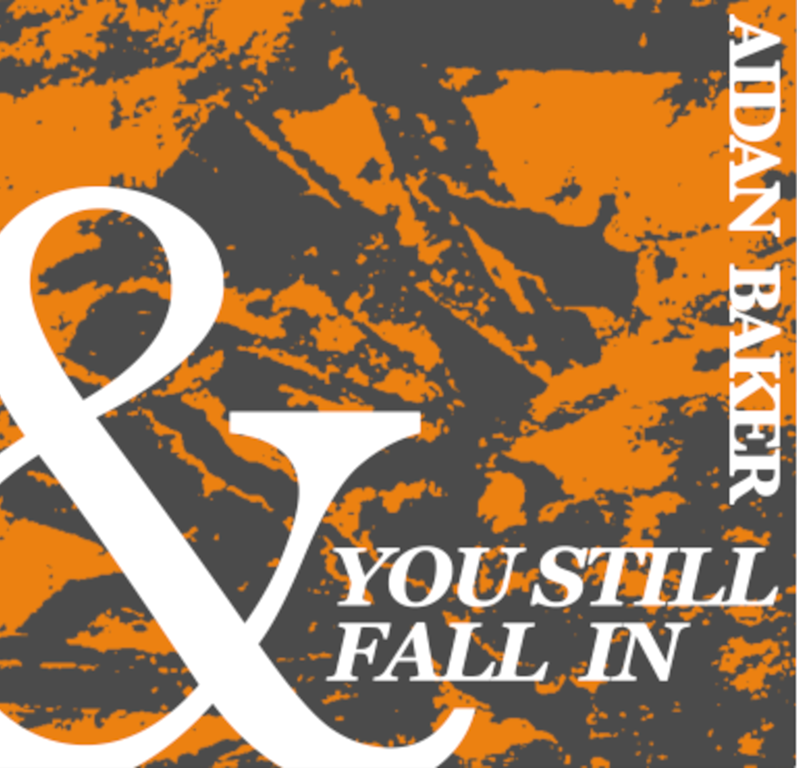
His latest work, & You Still Fall In, we learn, was recorded at Baker’s home studio in Berlin, and ‘hints at the mood and songcraft of the likes of Midwife, Hood, Stina Nordenstam and Movietone. The album is a compelling listen, stripped down to mostly electric guitar and vocals and moving at a distinctly glacial pace. The intimacy of the hushed tones and muted textures lean into a dark, hypnotic and gentle stillness that lingers in the air…’

That fact that this is a truly solo work, with Baker taking care of guitar, bass, drum machine, and vocals is perhaps key to its low-key, introspective atmosphere. Intimate is the word: on the title track which raises the curtain on this soporific sequence of compositions, the acoustic guitar strum hovers to a drone, wavering in volume, seeming to drift, seeming to warp, to fade, you can hear fingertips swiping on strings between frets, and Baker’s vocal is but a mumble; you hear sound, but the words don’t fall free to clarity.

‘Drowning Not Waving’ blends rumbling bass distortions with glitching drum machine and an air of uneasiness: the experience is every inch the struggle the title suggests. And that title… the phrase may have become a popular adaptation of the line from Stevie Smith’s 1957 poem and a metaphor for depression, but to momentarily reflect on the actuality of this all-too -common experience is to recognise the extent to which we, as a society, still – STILL – fail to identify a person in crisis. ‘Cheer up, it might never happen’, we hear often. But it does happen. Even well-meaning friends will diminish the spasms of crisis with ‘well, my life’s shit or probably worse, actually’ type responses. And each such response is like a hand on the head, pushing down. And yes, I speak from experience, and not so long ago I was out for a walk in an attempt to find some tranquillity, some headspace, some time with my thoughts. A dog, off lead, ran up to me and began barking and hassling. Its owners called it back and then groused at me for my failure to smile and thank them. “Ooh, someone’s lost their smile,” the guy said loudly, purposefully so that I could hear. No fucking shit. But you know nothing about my life. My wife died recently and I am not in the mood for being hassled by dogs, and I owe you twats nothing, least of all a smile. I continued on my way without a word, let alone a smile, and there was no point in waving. I was simply drowning. The moral? People may have stuff going on you know nothing about, so don’t be a twat. And anger is only a few degrees along from depression. Music has a boundless capacity to inspire the most unexpected responses.

Things stray into even more minimal, lo-fi territory with ‘You Say You Can See Inside Me’, which captures the spirit of Silver Jews and the soul of some of Michael Gira’s solo recordings. It’s muffled, droning, barely there, even. And yet, somehow, its sparsity accentuates its emotional intensity. There’s almost a confessional feel to this, but it’s a confession so mumbled, either through shame, embarrassment, or plain unwillingness.

On the surface, & You Still Fall In is a gentle work, defined by mellow, picked acoustic guitar and vocals so chilled as to be barely awake – but everything lies beneath the surface. And the surface isn’t as tranquil as all that: ‘When The Waves They Parted’ may be defined by a rippling surge but there’s discomfort beneath the ebb, and the reverb-soaked crunch of ‘Still Cold from the Rain’ is bleak and lugubrious.

Although presented as two separate pieces, ‘Thin Film Interface’ is a continuous thirteen-minute expanse of murky ambience with lead guitar work which soars and echoes over a shifting sonic mist. It hovers in the background, yet simultaneously alters the texture and colour of the air, relaxing but with an unresolved tension beneath.

& You Still Fall In is a difficult album to place – but why should that be necessity? A lot happens, an at the same time, it doesn’t. & You Still Fall In is sparse, drifting between acoustic and altogether simpler acoustic instrumentation. But instead of dissecting the details or reasoning, I’m going to point to the album, and simply say ‘listen to this’. Because it’s simply incredible.

AA

cover

Christopher Nosnibor

Whistles, hoots, and pipes welcome the sellout crowd as they filter in – very slowly, due to the intense security involving airport style metal detectors on the forecourt, and of course, bag checks, the disposal of any fluids, and enforced cloakrooming of said bags (once any bottles of water etc. have been confiscated). Having only frequented small shows for the last few years, I’d forgotten – or erased – this aspect of attending larger venues, and it strikes me as sad that this is the world we live in now, and I drink my £8 pint very slowly indeed. But tonight is a night where it’s possible to distance oneself from all of the shit and recapture some of what’s been lost, however fleetingly.

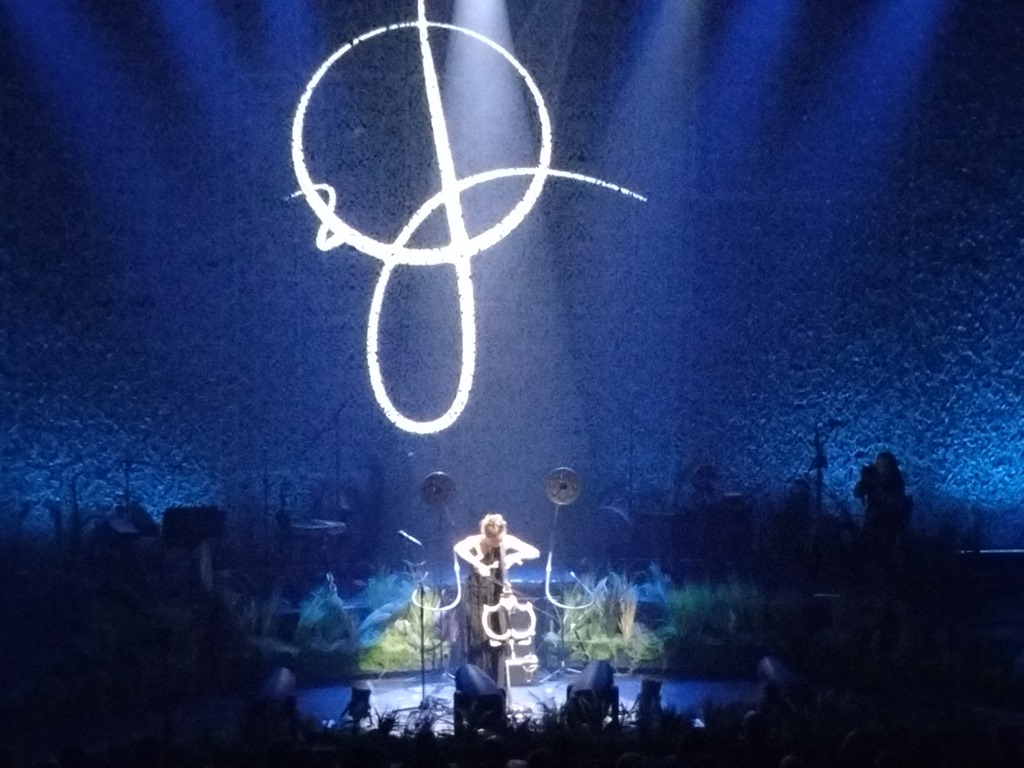
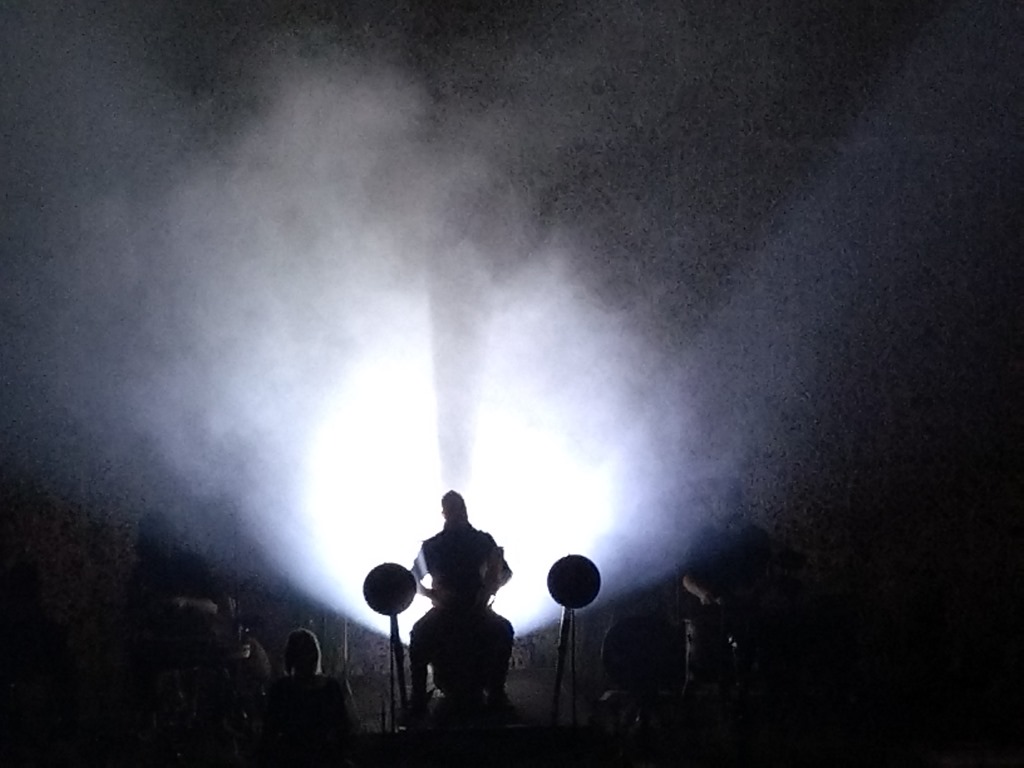
Jo Quail, who never fails to deliver less than stunning performances, commands the large stage – and audience – with a captivating half-hour set, which opens with ‘Rex’ and swiftly builds an immense, dramatic, layered sound with loops continually expanding that sound. There’s no-one else who is really in the same field: with the innovative application of a range of pedals – not least of all a loop – she makes her solo cello sound like a full orchestra, with thunderous rumbles, percussion and big rock power chords all crashing in.

IMG_20250322_200724

Jo Quail

It’s a new song called ‘Embrace’ which is the second of her three pieces, and she closes with ‘Adder Stone’ from 2014 LP Caldera, which would subsequently provide the mane for her independent label. The rapturous reception is well-deserved. Her richly emotive sound is certainly a good fit with Wardruna, and it’s likely she’s won herself a fair few new fans tonight.

While the place had been pretty busy when she took to the stage, the lights come up at the end of her set and suddenly, it’s packed. Thuds and rumbles build the anticipation for the main event.

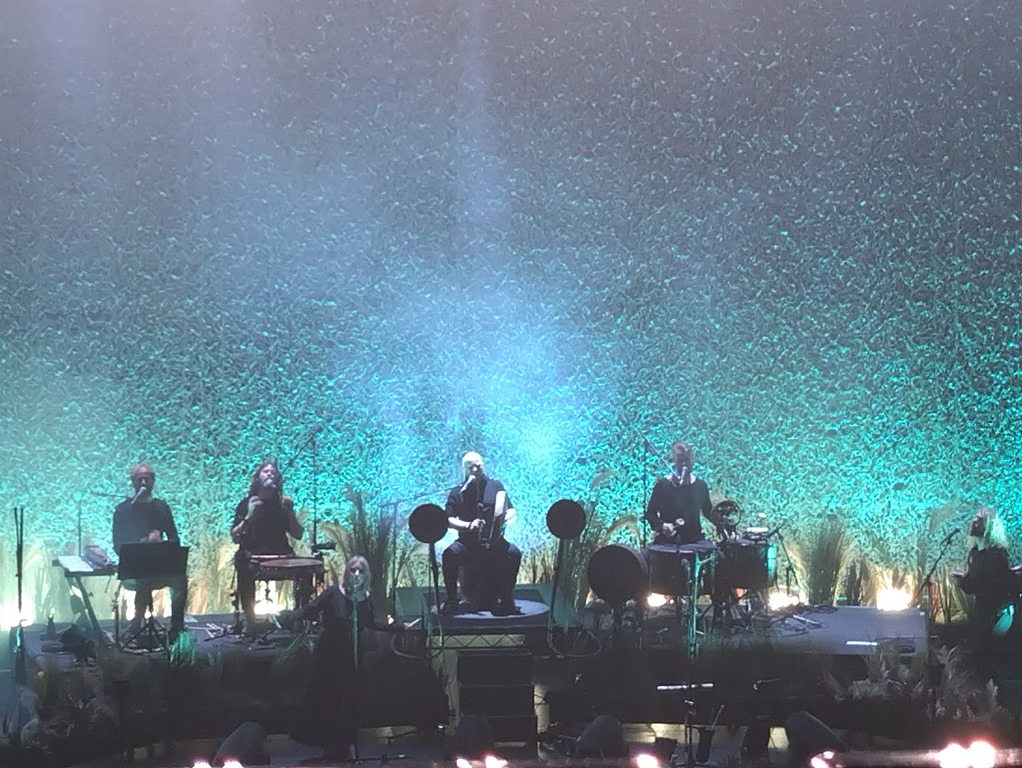
Opening the set with ‘Kvitravn’, Wardruna immediately create a fully immersive atmosphere with strong choral vocals and huge booming bass, and it’s an instant goosebumps moment. Recorded, they’re powerful, compelling: live, the experience goes way beyond. The vibrations of the bass and the thunderous percussion awaken senses seemingly dormant.

Performing as a seven-piece, hearing their voices coming together, filling the auditorium and rising to the skies is stirring, powerful and infinitely greater than the sum of the parts. It’s the perfect demonstration of what can be achieved through unity and collectivism, and the multiple percussive instruments being beaten, hard, with focus and passion produces something that’s almost overwhelming, and goes so far beyond mere music… It’s intense, and intensely spiritual, too.

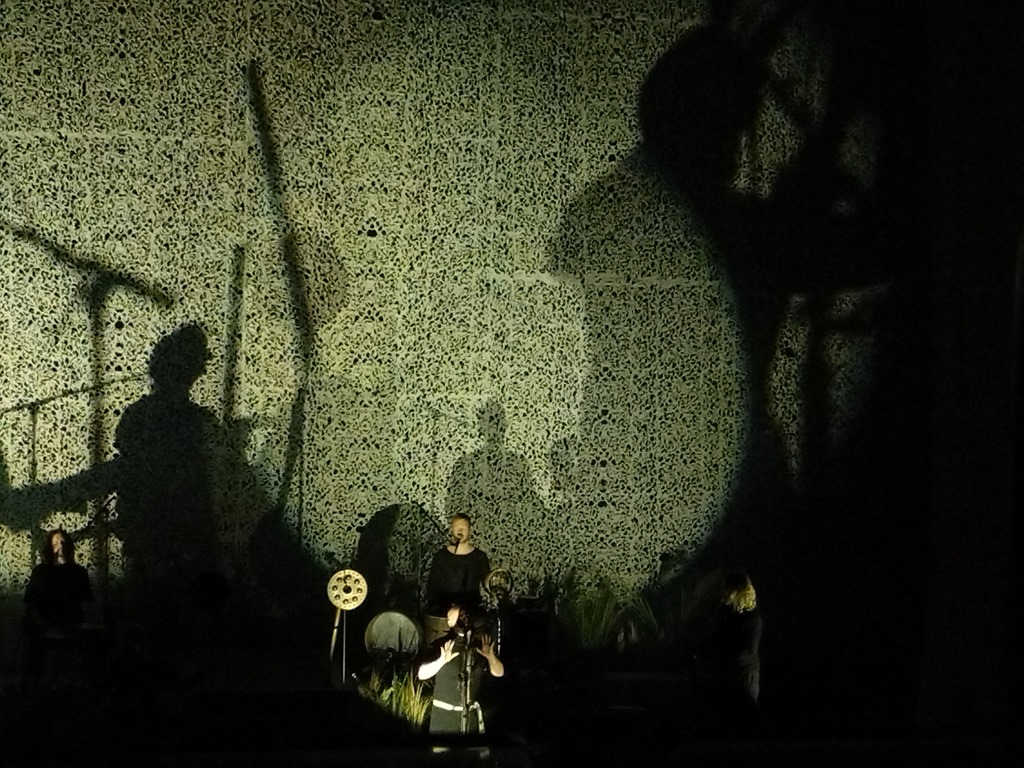
IMG_20250322_205728IMG_20250322_213016

Wardruna

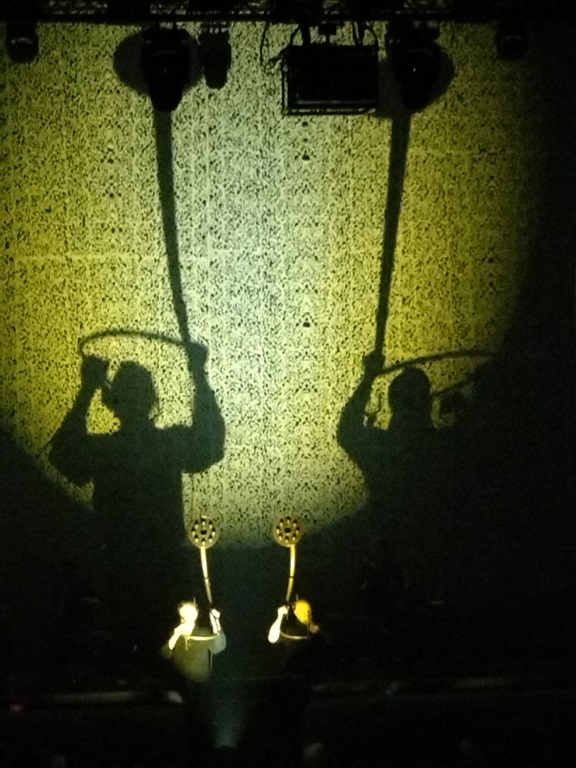
The sound is phenomenal, and it’s augmented by some incredible lighting: no standard spots or flashy lasers here: this is a magnificently considered and perfectly-choreographed display which works with the backdrop and the foliage on stage to optimally compliment and accentuate the performance. While I’m often somewhat unenthused by the larger-venue experience, preferring the intimacy of the sub-five-hundred capacity venue, this is a show that could only work on a big stage. Somehow, it’s the only way to do justice to music that truly belongs in a forest clearing, or on a clifftop, or on a glacier amidst the most immense and rugged vistas on the planet.

On ‘Lyfjaberg’, they achieve the perfect hypnotic experience, while dry ice floods the stage and lies about their ankles like a thick, low-lying forest mist, before Einar performs a solo rendition of Voluspá.

The second half of the set elevates the transcendental quality still further, as the percussion dominates the throbbing drones which radiate in Sensurround. This is music that exalts in the wind , waves, birds, trees – and the bear – and celebrates power of nature. It’s an experience that brings home just how far we have come from our origins, and a reminder that not all progress is good. Humans are the only species who adapt their habitat to their needs, rather than adapting to their habitat, and it’s a destructive trait. Even parasites strive to achieve a symbiotic relationship with their host, and a parasite which kills its host is a failed parasite because it finds itself seeking a new host. Without the earth, we have no habitat: we will not be colonising Mars any time soon, whatever Elon Musk says, or however much Philip K Dick you may read. But experiencing Wardruna live is the most uplifting, life-affirming experience.

IMG_20250322_213855

Wardruna

They bring up the lights and bask in the rapturous applause for some considerable time, before Einar speaks on nature and tradition and the importance of song, before they close with funeral song ‘Helvegen’, illuminated in red with burning torches along the front of the stage. It’s a strong, and moving piece delivered with so much soul that it’s impossible not to be affected.

IMG_20250322_214101

Wardruna

After another lengthy ovation, Einar dismisses the rest of the band and performs ‘Hibjørnen’ – a lullaby from a bear’s perspective – solo. After such a thoroughly rousing hour and a half, it makes for a beautifully soothing curtain close.

This was not merely a concert, and the performance, theatrical as it was, was not theatre, but a sincere channelling of purest emotion, a quest to connect the players with the audience and their innermost souls and their origins. It’s a unifying, and even a cleansing experience, a reminder of how we can all step back, breathe, and refocus. This was something special.

Cruel Nature Records – 21st February 2025

Christopher Nosnibor

Sometimes, I find myself reading – and returning to – the write-up for an album and thinking ‘Yes: I’m going to like this… but perhaps not tonight. I don’t know if I’m ready or in the mood’. This immense release, which finds two previously-released album reissued as a single package consisting of seventeen pieces, by Namibian-born Emmaleen Tangleweed is one such example. Listening to new music daily doesn’t mean that writing about it is always easy, and sometimes, I find myself feeling daunted by the prospect, and asking myself ‘how could I do this justice?’

Here’s the preface, which accompanies the release on Bandcamp:

Emmaleen Tangleweed’s music is more accurately described as a channeling than a song. Summoning stories of lost souls too tortured to let go, she cries and yearns as they no longer can, and yet, a silver thread of faith binds them. Themes of death, relationship and lingering hope imbue the listener with an eerie feeling of communion, of conversing with souls who have crossed the great divide.

Painting a visionary picture for the listener the stories contain hidden characters and everyday dramas played out in a time capsule of song giving the words weight in the earthly as much as in the ethereal they are delicately plucked from.

There’s also the fact that I feel obliged to listen to a release the whole way through, uninterrupted, so as to experience it as intended, not as people dipping in and out and skipping through playlists do, meaning that two albums back-to-back is quite a commitment. Anyway.

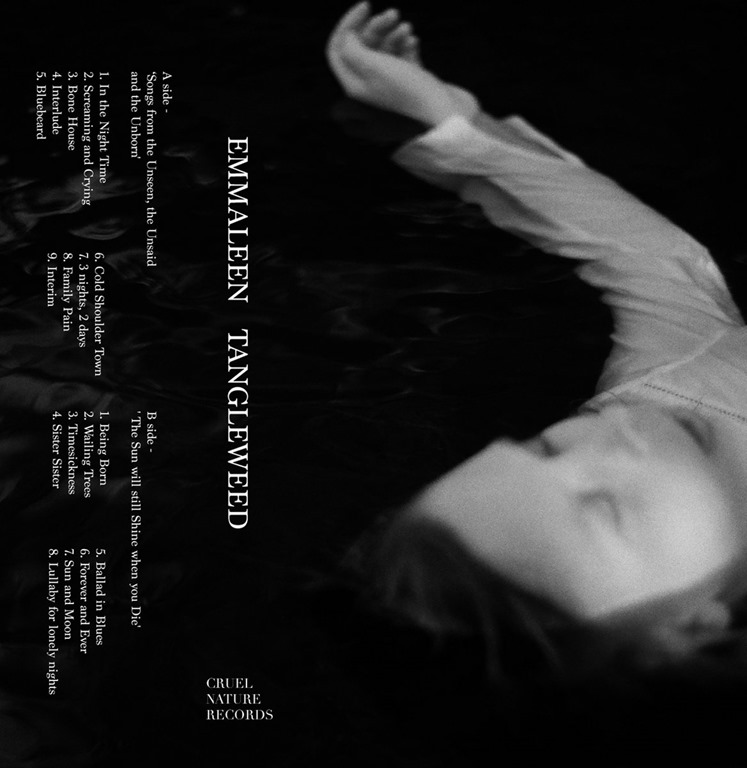
Songs From the Unseen, The Unsaid And The Unborn (Tracks 1 – 8, 10) was originally self-released in November 2022, while The Sun Will Still Shine When You Die (Tracks 11 – 17) was again self-released in October the following year.

Listening to these simple yet hypnotic folk songs of Songs From the Unseen, The Unsaid And The Unborn, I find myself wondering if Tangleweed is really her name, in the same way I muse whenever I see someone wearing a coat from Jack Wolfskin. It would certainly be convenient if it was, because it’s a perfect match for the sparse but swampy blues of songs like ‘Screaming and Crying’ and ‘Bluebeard’. I also find myself thinking of early PJ Harvey – not because she was in any way blues, but because there’s something in the feel, the fact that it’s folk but not folk, blues but not blues, but not indie either. ‘3 Nights And 2 Days’, one of the shorter songs, is light in delivery, heavy in lyric, but the skipping, picked notes and easy groove are a joy.

Tangleweed’s voice is rich in timbre: not low but it has depths which imbue it with a gravity which in turn adds substance to the songs. And these are not short songs: Tangleweed spins out narratives over slow and steady acoustic strums running for five minutes at a time. But the time floats by.

The songs on The Sun Will Still Shine When You Die feel more considered, and are perhaps a few shades darker. Certainly, the seven-minute ‘Being Born’ is low, slow, epic in scope, and there are two songs – ‘Forever and Ever’ and ‘Lullaby for Lonely Nights’ – which stretch past eight minutes. The former balances a Leonard Cohen vibe with a more Beat-influenced spoken word approach. ‘Nice’ might not be quite the word, but it’s nicely done.

The arrangements – such as they are – are simple, the playing raw, immediate: it’s very like listening to the songs being played in a dimly-lit pub, with a room capacity of thirty, sitting on low stools around sticky circular tables with low chatter bubbling around as people go to the bar and pass observations. I have fond memories of many a night in pubs listening to some outstanding blues artists in my formative years, and I would say that my appreciation of live music really stems from these experiences. But it’s not solely for this reason that this release appeals: there’s something which resonates on a deeper level when it comes to heartfelt blues. It may be due to its timelessness. Wherever you go, whenever you go there, the blues is the blues, and it speaks to the soul. Tangleweed plays with honesty and without pretence, and the result is magic.

AA

a1995837137_10

THURNIN present the video clip ‘Arcturus’ as the first single taken from Dutch dream folk pioneer Jurre Timmer’s forthcoming new album Harmr (Old Norse for ‘grief’ or ‘sorrow’), which is slated for release on March 14, 2025.

THURNIN comment: “For the first advance single of this album, I have chosen ‘Arcturus’ the most obvious track,” composer and instrumentralist Jurre Timmer writes. “The track offers a mix of traditional Thurnin songwriting and a glimpse of the atmosphere that defines Harmr. This song celebrates the value of life, for there would be no grief without love.”

4689472b-02b1-7661-189b-77c15614f208

THURNIN’s third album Harmr was born out of the deep feeling of grief that only love can bring. The title refers to an old Icelandic word that is probably more literally translated as ‘grief’ while its contemporary meaning rather implies ‘sorrow’. The loss of one or even more loved beings is hard to bear for any person.

It is therefore hardly surprising that the lower key and a reduced tempo are permeating Harmr throughout most of the songs; and much more so than on its predecessor Útiseta (2023), on which THURNIN mastermind Jurre Timmer interpreted this numinous act as a way to commune with nature, and to gain spiritual wisdom in a time of introspection and transcendence.

This Friday, BERRIES return with a second glimpse into their self-titled new album, in the shape of new single ‘Balance’.

A tempered and touching acoustic lullaby by the trio, it marks something of a handbrake turn from the sound and fury of previous single, ‘Watching Wax’.

“Let’s balance out time like we said we would” coos vocalist Holly Carter, atop a single laden with silky guitar lines, hushed harmonies, and a pin-drop atmosphere.
Urging us to find that time to sit back and enjoy the moment, BERRIES say of the track: “’Balance’ talks of those promises we make ourselves. Filling our time with things we want to do, not just need to do. It’s quite easy to get caught up in busy schedules, rushing around with busy brains but this song reminds us to stop and take it all in.”

Unlike anything else the band have released previously, it arrives as a tantalising new insight into their highly anticipated second album: BERRIES, which is due for release on 18th October via the Xtra Mile Recordings label.

As its eponymous title makes clear, ‘BERRIES’, is the sound of a band determined to make a statement with their second full-length outing. While the band have never shied away from brutally honest admissions or difficult subject matters like struggles with mental health, BERRIES finds them weaponising them into a set of fearlessly assertive tracks that seize strength from darkness. As BERRIES explain:

“This album is about battling intrusive thoughts and finding contentment in your day, however big or small those moments are. It’s a journey to finding your own space and being comfortable in it. We haven’t held back with this album – it’s raw, honest, and a true reflection of BERRIES.”

Check ‘Balance’ here:

AA

BERRIES – HEADLINE TOUR 2024
OCTOBER

23 – Brighton, The Prince Albert

24 – Nottingham, Bodega

25 – Leeds, Hyde Park Book Club

26 – Manchester, Gullivers

29 – Bristol, Thekla

30 – London, Lexington

31 – Norwich, Waterfront

NOVEMBER

1 – Southampton, Heartbreakers

15bcf76d-07c0-0146-7160-de4e1ff00124

1st March 2024

Christopher Nosnibor

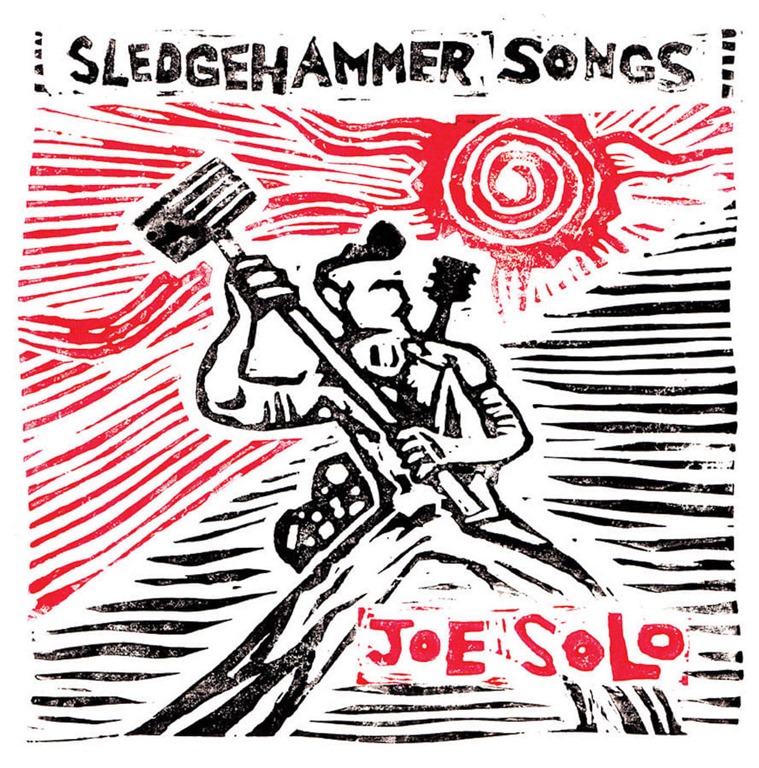
Joe Solo is a man with a message. Through tireless touring, relentless releases, and devoting endless toil to the cause, he has established himself as a strong and singular voice for not only the working classes, but for social equality, fairness, and a proud advocate of socialism. He sings songs of solidarity, without resorting to lumpen sloganeering, penning protest songs which are bursting with humanity – political without being overtly mired in politics. He’s also staunchly DIY, plugging away at making music from his shed, from where he also hosted a radio show for a number of years.

The biggest obstacle facing any DIY artist is actually reaching an audience: the algorithms of social media don’t exactly favour the little guy, and so for his latest album, Sledgehammer Songs, he’s gone all-out on engaging his friends / fans on Facebook to help spread the word – and it’s paid off, with pre-sales sufficient to necessitate the production of more CDs and a big run on the vinyl, not to mention the wealth of merch. And why this album, and why now?

Well, first, it’s so easy to get stuck in the cycle of record, release, tour, often to returns which are plateaued or even more dispiriting, and second, Sledgehammer Songs is a significant work. And because Sledgehammer Songs is very much an album which is about collectivism and community, and features a number of likeminded singers – notably Rebekah Findlay, who features on several songs, as well as York’s Boss Caine, Jess Silk, Carol Hodges, and some community choirs, too.

As Joe’s notes on BandCamp explain, ‘This is an album about music and its importance, not only to the political struggle, but to our own sense of who we are. It is both personal and protest.’ Joe’s no middle-class muso lecturing on working-class issues: he squeezes in music-making around a dayjob repairing washing machines, and he knows what it is to grind out a living to support his family, and often recounts conversations with the people he encounters in his work. Real people, real lives. Real struggle. And so, when he speaks, he speaks for both himself and for the people, and does so truly from the heart.

This very much comes through in the songs themselves. It’s a set of acoustic-led songs with simple structures, some augmented with harmonica, there are hints of The Clash, hints of Bob Dylan, slivers of Billy Bragg, and Solo sings with an unashamedly northern accent, and his voice is melodic, gentle, but he’s capable of bringing some throat for emphasis when it’s called for. ‘The Last Miner’, which adds a folksy violin and the voices of The Hatfield Brigade for a lilting sing-song tune which balances melancholy and positivity.

‘A Better Way’, released ahead of the album, encapsulates the sound and spirit of Sledgehammer Songs. It’s a depiction of the everyday realities of life in Brexit Britain, from nurses in the food banks to the diminishing spending power of wages under rocketing inflation, social division and inequality, and each line a call and response met with the refrain ‘there has to be a better way’, and while it’s a bleak picture, the sentiment is positive, unifying.

The title track with Boss Caine and Rebekah Findlay brings folksy Americana, and a celebration of the power of music, while on ‘City of Sanctuary’, the message is simple, but effective: ‘If you’re a refugee, you’re alright by me’. Listening to Sledgehammer Songs reminds us just how bad a state we’re in, where we have members of parliament saying that asylum seekers should ‘fuck off back to France’ and demonising the poor and disabled in the most shamefully dehumanising ways – led by a multi-millionaire prime minister who’s so far removed from the realities of everyday living that he doesn’t know how to fuel a car and pay at the pump. But despite it all, instead of wallowing in the endless shit – the likes of which is floating along our rivers and washing up on beaches around our sorry island – everything about this album is so direct, vibrant, real, and uplifting that it restores faith, and brings hope in the human spirit. All is not lost yet.

AA

a3482388156_10

Erototox Decodings

Christopher Nosnibor

Internationally, Kristof Hahn is best known as a member of Swans since their return in 2010, contributing electric guitar to My Father Will Guide Me up a Rope to the Sky and everything since (he was briefly a Swan in the late 80s and early 90s, becoming a touring member for The Burning World and appearing on White Light from the Mouth of Infinity and subsequently joining Gira’s Angels of Light. A lot has happened since then: My Father Will Guide Me was only forty-four minutes in total, whereas now they’ve evolved to have single tracks of that duration, and Hahn’s contribution on recent albums and tours has been lap steel. Witnessing his action on the last tour, while standing so close to him I could actually see the mud spattered around the ankles of his jeans, the significance of his contribution to the immense walls of noise the band create is clearly apparent. I’ve also been vaguely amuse by just how neat and dapper his presentation is, producing a comb to slick his hair back following particularly strenuous crescendos – although I also witnessed him taking said comb to the strings of his instrument in Leeds to yield some particularly unholy noise from an instrument more commonly associated with laid-back twangin’ country tunes.

What’s perhaps less widely known is that Kristof has enjoyed a lengthy career in music before joining Swans, as both a solo artist and a member of rockabilly garage acts The Legendary Golden Vampires, founded in 1981, and The Nirvana Devils (circa 1984). It’s with the former he’s back flexing his creative muscles despite an intense touring schedule with Swans.

Here, the Berlin-based core duo of filmmaker Olaf Kraemer (vox) and Kristof Hahn (guitars, organ, harmonica), reunited for the first time in many years, are joined by Thomas Wydler (drums), Achim Färber (also drums), and Chandra Shukla (sitar), to cook up a collection of ten songs.

The style is understated, country-leaning, occasionally folksy, with an underlying melancholy hue, with ‘Wohin Du Gehst’ crossing the language barrier to convey a low-level ache of sadness in its tone. Kraemer’s vocals are husky, almost croony, with hints of Mark Lanegan, and suit the low-key compositions well, conveying emotion and world-wearinness and a certain sense of sagacity, which is nowhere more apparent than on ‘White Horse Blues’.

If the reverby guitars of their Husker Dü’s ‘She Floated Away’ channels Chris Isaak, the song’s incongruously jaunty twist is in the vein of fellow German duo St Michael Front, while ‘The Rain’ is sparse and hypnotic and wouldn’t sound out of place on True Detective. The melancholy Leonard Cohen-esque ‘Sad Song’ speaks for itself, quite literally, self-referentially returning to the hook ‘this is such a sad song / and I sing it just for you’.

Discussing the songwriting ‘craft’ on an album feels pretentious and a bit wanky, but making songs this sparse – but also this layered – is a true example of crafting. Having mentioned Leonard Cohen previously, one thing that’s often overlooked is just how many incidental details there are on many of Cohen’s songs: The Songs of Leonard Cohen in particular is , on the face of it, acoustic guitar and voice, but there’s much more happening in the background, coming in and out of the mix, and this is something that comes through in attentive listening to Polaris. It’s subtle, keeping the overall sound quite minimal, but the attention to detail is what really makes it special.

AA

a3829215066_10

skoghall rekordings – 19th June 2023

Christopher Nosnibor

This was originally released some time ago, and now it’s getting a digital release and a CD reprint once the last of the old stock is gone, and it’s the first release on Dave Procter’s new label, skoghall rekordings, which he’s set up to home non-noise material which doesn’t sit comfortably with the remit of his Dret Skivor label. If I didn’t know better, I’d think this guy had mastered cloning, given the release and touring schedule of his myriad musical projects, the range of which is vast – although it’s fair to say that anything involving words will be a politically-charged vehicle for reminding us how shit governments, right-wingers and tabloid media are, and how capitalism shafts the workers without whom there would be no wealth for the elite. And so it is with Sounds from Underground.

‘Justice for the 95’ say the notes accompanying this release, some of the proceeds of which are being donated to the Orgreave Truth and Justice Campaign.

Memories are short, even among those who live through momentous events in recent history, and the miner’s strike of 1984-85 was one of those. It wasn’t simply a strike like we’re seeing with… most sectors right now, in what feels almost like a replay off the early 80s… the handling of the strikes was tantamount to civil war, the (Tory) government against the workers and the unions. The 95 then, refers to the 95 arrested at the so-called ‘Battle of Orgreave’ in South Yorkshire in June 1984, but all charges were dropped. As the BBC reports, ‘Police confronted pickets outside a coking plant in Orgreave, South Yorkshire, in what the miners said was a military-style operation to attack them… Former miner Kevin Horne said: “We were only striking for the right to work.”’

This is by no means the first musical work which focuses on the miner’s strikes: Test Department’s 1985 LP Shoulder to Shoulder, with South Wales Striking Miners’ Choir was released as a fundraiser, while ‘Statement’ from 1986’s The Unacceptable Face of Freedom is centred around a recorded statement detailing the brutality of the policing of the picket lines: ‘25 pickets… 150 policemen… I was dragged off to this van… another one had me in a headlock… I thought I was going to black out…’ It’s a harrowing account, and one which seems as relevant now as ever given the current government’s expansion of police powers, promoting greater use of stop and search, and the police’s ‘management’ of events like Sarah Everard’s vigil. It’s all too reminiscent of A Clockwork Orange.

As the accompanying notes outline, ‘This LP documents coal mining in all its forms – the pride of the job, the struggles of the job and the occasional deaths because of the job. A lot of my family were coal miners and most of them died from lung disease before their time.’

Yes, the miners got fucked every which way, and while the twelve acoustic-based songs on Sounds from Underground may not be as visceral or hard-hitting as some of Test Department’s works, they’re truly heartfelt. And that registers, emotionally.

While ‘Fiddler’s Ferry’ is a simple and wistful song that would perhaps class a s a sad protest song, the super-sparse ‘Macgregor th’ butcher’ is heartaching in its mood and the simple narrative. Similarly, ‘At the Face’ is simple and tells of the everyday realities of mining life – and the physical toll on those men who grafted and grafted, until death. It would be easy to romanticise the northern accent and barely-held melodies, but the fact is, it works because it’s real, and ultimately sounds like The Wedding Present covering Billy Bragg, if you need a comparison.

‘Me, A Picket Line’ and ‘Horse’s Arse’ are straight-up spoken word pieces, and perhaps the album’s most affecting tracks, because they’re so direct, the latter in particular, echoing as it does the narrative of Test Department’s ‘Statement’. But ‘Horse’s Arse’ references 2016, and you realise, nothing changes, and while sometimes things are reported and there is outcry and uproar, so often, events are ignored out of existence, and the narrative becomes skewed, rigged. But mention that and you’re a conspiracy nut, of course – more often than not dismissed by the conspiracy nuts. ‘Tory Twat’ is self-explanatory, and getting straight to the point.

And this is perhaps where we can see how Guerrilla Miner and Test Department share common ground, beyond subject matter: as much as they’re both political – because this is political, and it’s impossible to avoid or deny that this has a heavily political aspect – they’re both ultimately concerned with the human aspects of the miners’ strikes, and this in turn reminds us that the current strikes, too, are about people and their livelihoods. You will see reported, time and again, the government vilifying the striking workers for the disruptive impact of their industrial action. But any a striking worker will tell you that striking is a last resort, the only way to be heard when all avenues have failed, and if strikes are disruptive to consumers, they’re even more so to those striking. And it’s rarely simply over pay, but also conditions: and at the heart of it all lies capitalist exploitation, and such exploitation shortens and destroys lives, placing profit before people. And this is what really hurts.

Sounds from Underground is direct, real, human, affecting and ultimately sad. Listen, learn, and do everything within our power to stop history from repeating again, and again.

AA

kents lane 2 - LP art for bandcamp

5th May 2023

Christopher Nosnibor

Back in the day – that is the 80s and 90s and the time before YouTube and pretty much all things Internet – bands of a certain status would find their live shows being released first as crappy tapes on market stalls with even crappier photocopied sleeves for £3.50 a pop, and later, on CDs which flooded record fares at £12 a go (and for the bands with a real cult following, the late 880s and early 90s there were heaps of vinyl pressings, too). Most of them sounded terrible, but fans lapped them up because they’d buy anything, especially from a show or tour they’d attended. And it wasn’t always the biggest artists who were the most heavily bootlegged: it tended to be the bands with the most hardcore cult followings, which explains why The Sisters of Mercy were more bootlegged than Prince.

The Internet and YouTube and technology in general has changed things rather, in that anyone with a smartphone can upload footage of a show within seconds of the event, even sharing, say, an unreleased song in real-time. But if the quality of 80s audience recorded live bootlegs was ropey, shaky footage of an artist shot on a mobile phone from the third row while the individual dances, slightly drunk, while being jostled about is infinitely worse.

This is where the self-documenting methodology of acts like Throbbing Gristle are the answer. ‘Beat the bootleggers’ was a slogan I heard in the 90s. I always thought it was fair in principle, but the kind of people who bought the shitty tapes at the market already owned everything on every format, so the idea that they were stealing from the artist seemed questionable. Anyway, some acts made it work for them, with Throbbing Gristle’s 24 Hours box set, which contained tapes of their last twenty-four live shows, making most of the boxes different from one another, being an obvious example.

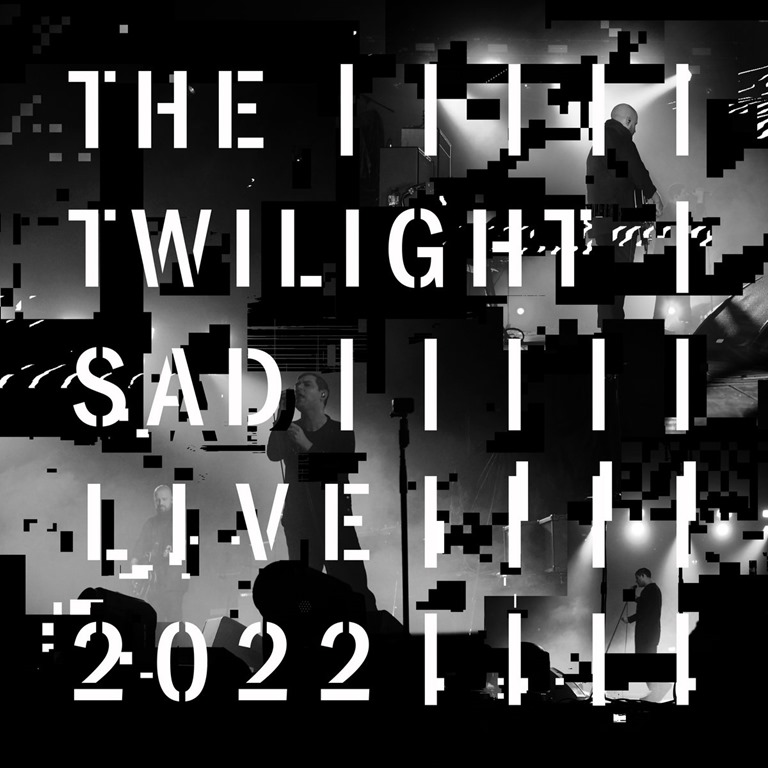
Live 2022 EP 4 shares two tracks with its recent predecessor, EP 3, namely ‘And She Would Darken the Memory’ and ‘That Summer, At Home I Had Become the Invisible Boy’, both from their debut album and both set staples to this day. There’d be riots if they weren’t. And the point of these EP releases is really for the fans – the hardcore devotees who want to hear the details of the differences of the performances from every show, and I get it: consecutive nights on a tour can sound and feel so different, dependent on so many variables, not least of all venue, location, audience, band. If you’re not convinced, go and watch and compare a band playing Glasgow and Nottingham on consecutive nights.

This EP, recorded in Belfast, is certainly different from its predecessor, recorded in London, not least of all because this is an acoustic set performed by James and Andy alone, and it contains six songs against the four off the last one. Personally, a large part of the appeal of The Twilight Sad is the ear-splitting volume and intensity, but as these versions highlight, they’re a consummate live act.

‘VTR’ is a song that loses none its potency with a stripped-back arrangement, while ‘Last January’ lends itself particularly well to the acoustic treatment with its aching melancholy emanating from every note with poised perfection. Much is often made of the passion behind James Graham’s vocals, but rather less tends to be made of the fact he has a magnificent voice, and it’s never been more apparent than here.

In context, ‘And She Would Darken the Memory’ doesn’t suffer from the absence of the blasting crescendo finale, and the quality of both the songwriting and the musicianship shine through.

AA

a1131340594_10

Ici d’ailleurs – 31st March 2023

Christopher Nosnibor

Matt Elliott, since breaking out from the Third Eye Blind moniker, has maintained a fairly steady flow of output, with an album every three years or so, with this being his ninth.

Farewell To All We Know (2020) and The Calm Before (2016) were just the most recent, with the former bring a dark, lugubrious affair: the title carried connotations of facing finality, something that doesn’t really sit comfortably in Western culture outside of the realms of art – and it seems that death has become an even greater taboo in recent years, with anything which references death, and particularly suicide – requiring a trigger warning.

Given that suicide is the single most common cause of death in males under the age of forty-five in the UK and a high on the tables in the US and many other countries, and that death is the sole inevitability in life, I feel it’s something to be faced up to, not shied away from. It may be a contentious view, but we don’t get to choose whether to leave the room in real life, so why in art? Perhaps bringing these subjects out into the open – in the same way as mental health has finally become accepted as being something we can discuss – would render them less triggering. Herein lies something of a contradiction, in that we now discuss mental health, but not the effects or consequences. And have we really broken the barrier on mental heath? I often hear or see people saying they’re not having a good day or week because ‘mental health’. It’s progress, in that historically people would have rather said they had the shits than were struggling – but there’s further to go, especially if we’re to be sure that ‘mental health’ doesn’t become the new ‘upset stomach’ that gets a pass from disclosing what’s really wrong. Not because prying is to be encouraged, but there’s talking and there’s talking, and if we’re really going to talk about mental health, then shutting a conversation down by using the phrase isn’t going to make that happen.

The press release suggests that Farewell To All We Know was ‘a harbinger of the collapsological crisis that was COVID 19. What can be built when everything is down, when everything has crumbled, ideals and beliefs, a sense of commonality and community?’ Of the new album, it poses further questions: ‘What is left when you are without words? What is left? Death, perhaps, but also life… What is left? A form of awe that dulls? An enthusiasm that dries up? A curiosity that no longer makes sense?’

As the title suggests, with The End Of Days, Elliott once again has his focus placed firmly on finality. And just fifteen minutes surveying the news suggests that we really are living at the end of days: plague, natural disasters… it’s not a question of if, but when, and how? Will climate change bring about the end of days for humanity, or will we wipe ourselves out with nuclear apocalypse before we reach that point?

‘All life’s wasted time’, he intimates on the title track which opens this delicate six-song suite – a sparse acoustic folk tune that has a lilting quality that’s easy on the ear. It sounds like he could be singing this sitting in a rocking chair by the fire, but brings a tear to the eye as he articulates the parental worries many of us – myself most acutely – feel.

And even all the smiles on children’s faces bring you pain

When you think of what they’ll face

And if they’ll even come of age

A world resigned to flame

Because we’ve burned it all away

You – I – feel so helpless. Turning down the heating, turning off the lights – you tell yourself you’re saving the environment, but you’re only making your life more difficult while industrial complexes around the globe churn out more pollution in a minute than any household will in a lifetime.

‘We need to wind time back to the eighteenth century before the industrial revolution and show them now’, my daughter told me over dinner this evening. She’s eleven, and she’s right, and I feel the anguish flow through me as the horns swell in a rising tide of warped brass atop the flamenco guitar in the closing minutes of this ten-minute epic.

It’s not the last, either. ‘Healing A Wound Will Often Begin with a Bruise’ is over eight minutes in length, and ‘Flowers for Bea’ is an immense twelve and a half. ‘Song of Consolation’ sits between folk and neoclassical and is achingly beautiful, but offers little consolation. Because what consolation is there?

Incorporating jazz and baroque, The End Of Days feels less darkly oppressive than its predecessor, sliding perhaps into bleak resignation to provide the soundtrack to the drinks in the basement bar on the last night on earth. Yes, tonight we’re going to party like it’s goodbye forever. This is the album to which to clink glasses and hug and cry and share final gratitude for those who have been there for us, made our lives worth living as we swallow hard and brace ourselves for the inevitable.

AA

IDA158_front