Archive for the ‘Albums’ Category

Room40 RM401 – 1st May 2020

Christopher Nosnibor

One aspect of postmodernism that can be both intriguing and frustrating is its tendency to contradiction. Moreover, the way in which postmodern criticism centres in on the contradictions of postmodern art, culture, and society, and extrapolates how postmodern art revels in the contradictions inherent in postmodern culture without in any way seeking to resolve them. Postmodernity seems to suggest that questions are enough, without need for answers. But are they?

Living in England, I’ve witnessed post-postmodernity taken to the most meta of levels in recent days having witnessed Prime Minister Boris Johnson attempting to detail the new guidelines for managing the COVID-19 pandemic on our small island, and am, along with the rest of the nation reeling at the advice that if I can’t work from home I should go to work, but I shouldn’t go to work if possible, and if I do have to go to work, to avoid public transport, and if I am working from home, it’s ok to go out as much as I like for exercise but only if essential, and I can meet people from other households, but only one person and it must be outdoors, and while maintain a 2-metre distance, which is the same as the distance as from people in public anyway.

Where am I going with this? Apart from more questions, more rhetoric?

Less is more. But sometimes, it’s also less. Lawrence English’s latest offering consists of two longform tracks, of around twenty minutes a piece, corresponding with a side of vinyl or cassette, although at present, Lassitude is only being released as a download. And not a lot happens.

‘Saccade (For Elaine Radigue)’begins with a trilling, rapid-oscillating drone that hangs in he mid-range. It doesn’t do anything, and doesn’t go anywhere, but gradually blurs. No, the sound remains static: the perception of it blurs. At least for a time, after which the notes slow and melt together.

There’s less texture and less shift to ‘Lassitude’, which sustains an even hum for the majority of its twenty-minute duration. It has no direction, and no substantial content, but that isn’t the purpose. There are tonal shifts, gradual gradients down, but they’re slowly incremental, almost subliminal. And ultimately, to what end?

Perhaps there is no end: perhaps this is the end. Perhaps the end has been coming, slowly, all this time, and our lives to now have been a waiting for the end. Perhaps not. What do we know?

AA
St. Petersburg

Southern Lord – 29th May 2020

Christopher Nosnibor

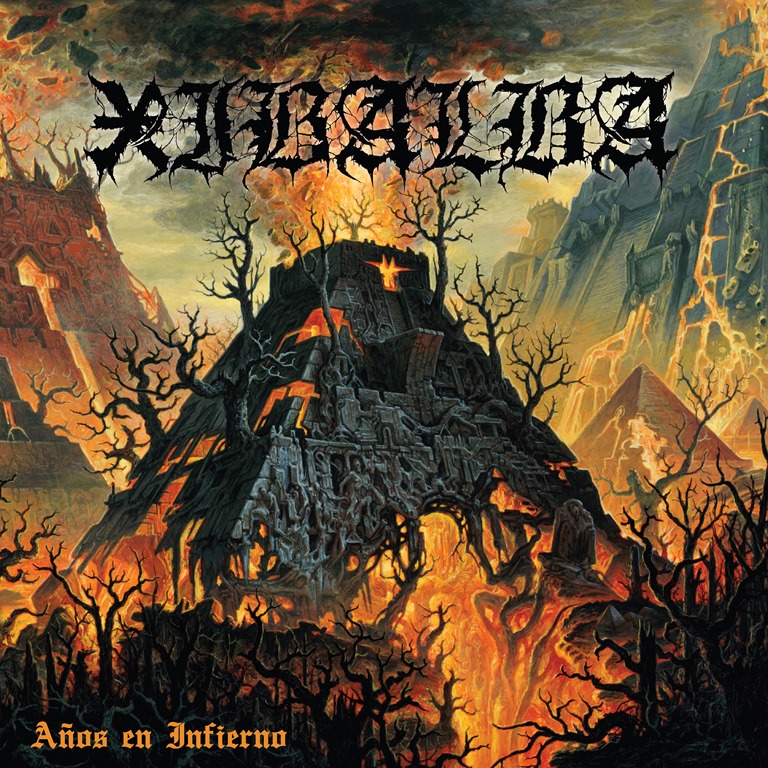
The title, Años En Infierno, translates as ‘Years in Hell’, and 2020 has felt like years condensed into what in reality amounts to just a few weeks. Time flies when you’re having fun, but drags for an eternity when you’re trapped in one place and life is slowly passing you by. On reflection, though, much of the time post-millennium has been pretty hellish and in myriad ways, and we have indeed endured years in hell – but right now, this moment in time feels abjectly apocalyptic, and the arrival of this album as a soundtrack seems timely.

Five years on from the savage assault that was Tierra Y Libertad, the Californian creators of the heaviest of metal haven’t gone light or soft on us, with a set of songs that switch the pace from breakneck double-pedal drum propelled thrash fury to slow, sinewy doom within the space of a single four-minute piece. Everything about Años En Infierno is dense, condensed, giving it a degree of intensity that truly hurts. It’s physical, pounding at the ribcage and raining blows to the head; but it’s also psychological. The guttural vocals and simply the style of playing exudes anguish, torment. The lyrics – bark, snarled, growled. Amd indecipherable by ear – offer a relentless succession of images of degradation, death, despair, although nothing different from watching or reading the news for a few minutes. This is the world now, and Xibalba soundtrack it perfectly, in that Años En Infierno is relentless, unforgiving, and so hard and heavy that to experience it from beginning to end is to take a thorough pummelling.

‘Saka’ brings a whole other shade of heavy, with thunderous tribal drumming hammering out a pulverizing percussive tattoo. The guitars churn, and they’re a pure filth that gnaws at the intestines: it’s a deeply physical experience, like being punched, repeatedly. When they’re going hard and fast, it’s blinding; when they slow it down, it’s to the pace of slow decay: the air hangs in thick suspension as time stalls to a crawl.

‘Al Abismo I’ marks a change of pace and also mood, with a slow picked, chorused guitar weaving a reflective atmosphere and drifting ponderously into expansive realm between latter day Earth and Fields of the Nephilim. It casts a different kind of darkness, and when the guitars do erupt, albeit briefly, it’s a landslide of sludge, an annihilating tornado of ferocious noise. The track bleeds into its furious counterpart, ‘Al Abismo II’, a guttural, grinding explosion from the bowels of hell. The mid-section breaks it down to a delicate, brooding post-metal chime, but then it goes full-on power-chord crushing dirge as it powers it way to its dark conclusion. It drives a punishing album to a monolithically heavy finale, while also hinting at a certain light on the horizon. We can only hope it will emerge in time.

AA

LORD279_12inch Gatefold LP Jacket 1 Pocket

Christopher Nosnibor

Six whole years in the making In Her Eyes Lies the Golden Dawn is the third release from Austin TX’s Black Earth. Before we get to the album, take a moment to reflect on that. Six years. Can you even remember how the world was six years ago? It as another world. We were all different people. I’m going to assume the members of Black Earth have been busy wit life. Life has a habit of devouring time. Yu get sidetracked by dayjob and family, and suddenly, six years have passed. No sarcasm: this is how it happens. I expect some people will have been on tenterhooks for this.

‘She is the Void’ brings an ‘Unplugged in New York’ kind of vibe by ay of an opener, only without vocals, it’s lot less angsty, and it practically bleeds into the title track, which starts out Mark Lanegan before bursting into a chorus that’s more a grunged-up Zeppelin and wraps with a big rock climax around the mid-point. Being over eight-and-a-half minutes, it’s a bit of a beast. I may not be entirely sold on the ‘eyes / thighs’ rhyme but hey, when it comes to good old fashioned rock ‘n’ roll, there’s currency still to be found in booze and birds type relationship stuff.

‘I never meant to hurt you / but you gave me no choice’ goes the opening of ‘Pushing Back My Hand’, and I find myself wondering just how comfortable I am with it, before I remind myself that it’s a mistake to align artist with art, and there’s nothing here that in any way condones any kind of misogyny. In fact, what we have is a pretty straight-ahead blues-grunge album, and a solid one at that.

They pack the riffs, and that’s a fact. ‘Left Behind’ is particularly ball-busting, coming on with enough weight as to sound like Melvins covering some vintage cock rock. ‘She’s a Do or Die’ brings more dirty heft, the guitars thick and overdriven, and there comes a point where skirting sabbath touchstones becomes impossible, although the swaggering space-rock midsection is more Hawkwind and finds the band going all out on going all out, and it kicks ass. And as for the colossal closer, ‘She is the Universe’… woah. It brings the riffs, the repetition, and locks into a dense psychedelic groove, which breaks around the seven-minute mark to return to Mark Lanegan territory, before piling into a massive guitar finish.

It’s so easy to dismiss blues / rock albums – even those that incorporate grunge and psych – as being a bit standard, and being much of a muchness. But that’s a genre thing: let’s face it, within any genre there will always be tropes that form a level of format. This is where it comes down to quality of material and execution, and on In Her Eyes Lies the Golden Dawn, Black Earth have both.

AA

Blacl Earth

3rd May 2020

Christopher Nosnibor

Ashley Sagar is a man with his finger in manifold musical pies, spanning the semi-ambient droning improv of Orlando Ferguson to the thumping Krautrock grooves of The Wharf Street Galaxy Band. It’s Sagar’s willingness to experiment, and to try anything once that’s a significant factor in his interest as a musician. What’s important for anyone engaging in experimentalism is the acceptance that degrees of success and failure may vary along the way, and it’s with no embarrassment that I recall sharing a stage with him and Namke Communications’ John Tuffen for a hastily-assembled improv set built around a sort of sequence and structure that was actually ok, but not what any of us had really anticipated.

Anyway, under lockdown and unable to play his distinctive wandering basslines live with any of the eighteen or so bands he performs with, Sagar has delivered his second solo album of the year, in the form of the soft ambient work that is Beyond Life, which comprises a single track with a twenty-six minute running time.

It begins with slowly rhythmic vibraphone tones that reverberate softly into a warm atmosphere. Immediately I begin to question this: is it a vibraphone? I’m not strong when it comes to mallet percussion instruments, or synthesised emulations thereof. Equally, I can’t trust that my perception of a ‘warm atmosphere’ isn’t coloured strongly by the unseasonably warm and sunny weather paired with the unusual quietness outside on such a balmy evening, where I’d ordinarily likely be at a gig and the street and back gardens would be chocka with people between pubs and stoking early bank holiday barbecues.

As my thoughts drift, so does the music, and although it doesn’t grab my full focus, is does very much permeate my reflections as I go inside myself, recalling a life before all of this, a life when life was actually life, when, however much going out and being among people may have been a cause of anxiety, it was an option, and live shows provided the opportunity to be among likeminded individuals coming together to escape into sonic domains.

And so here we are, all isolated together, supposedly, in a state beyond life. Sagar provides a subtly-structured soundscape to ease these contemplations along, quietly shifting from one tone and texture to another, from light and airy to low and sombre, piano notes ringing out into the emptiness.

The streets are empty. The pubs, hotels, gyms, shops are empty. The sky is empty. The world is empty. We are all empty. And Beyond Life is beautiful.

AA

a1792484157_10

8th May 2020

Christopher Nosnibor

One thing’s for certain: lockdown is galvanising musicians to be innovative in ways that are truly unprecedented. Yes, I said it. The advent of the Internet may have revolutionised / fucked the music industry, and while in a bygone age, home taping didn’t kill music and neither did Napster at the turn of the millennium, iTunes and Spotify, in their attempt to create a new model that monetised downloading managed to inflict new levels of financial harm on the artists they were supposed to benefit.

Having recently found unexpected favour and airplay on BBC radio with a song about wanking lifted from last year’s Oh I Don’t Know, Just Horse Stuff, I Guess, York-based premium purveyors of relentless hoofcore had to do something while unable to don horse masks and dresses in public. And this is what they’ve done.

The Hoers’ press blurb explains it all best, and mostly in block caps:

21 Viral Hits is a collaboration between Petrol Hoers and vocalists across the country who answered his call. The initial pitch was pretty straightforward:

"DO YOU WRITE SONGS OR DO SHOUTY VOCALS? ARE YOU ANGRY ABOUT PEOPLE HOARDING BOG ROLL? DO YOU WANT TO CONTRIBUTE TO AN ALBUM OF RIFFS AND BLASTBEATS AND SHOUTING TO TRY AND RAISE SOME MONEY FOR CHARITY?

WE NEED PEOPLE TO WRITE LYRICS AND RECORD VOCALS FOR SOME SHORT SHOUTY SONGS PLEASE HMU IF YOU CAN HELP :3"

but soon resulted in a group of vocalists/lyricists putting pen to paper and then voice to microphone (or in some cases smartphone…) to lay down vocal parts while Hoers worked as a one-horse grind machine to write and record as many tracks as possible. Song subjects were agreed, production advice given and shrieking beast of an album was pieced together that was a triumph of remote collaboration.

With original cover art by Cat Bowen as the finishing touch, this album looks as massive as it sounds.’

And it’s true: it is absolutely fucking massive. And not just because it’s got 21 tracks on it, most of which are themed around this moment in time, as titles like ‘2 Metres’, ‘Lockdown’, ‘Great pasta famine of 2020AD’, ‘Wash Your Hands’, and ‘Selfish Cunts’ evidence.

Because it’s a Petrol Hoers album it’s brimming with high-octane, hundred-mile-an-hour bangers. But while previous excursions have increasingly favoured technoindustrial stylings, with thumping drum ‘n’ bass grooves and gnarly synths dominating the arrangements, 21 Viral Hits sees Dan Buckley and his myriad virtual collaborators return to the Hoers roots and goes full on grind / thrash metal, and it’s a filthy, furious guitar assault, and the longest song is two minutes in duration, on the nose.

‘Locusts’ rages at the panic-buying, trolley-filling, shelf-clearing fuckheads. ‘Insanitizer’ reels off a shopping list of unavailable items: ‘Pasta’s been taken / Bread is scarce’ is the core of the verse.

It’s rather less humorous and irony-filled than anything the Hoers have done before, but it’s an album of the times, and as a relentless, thunderous, metal racketacious capturing of this brief but terrifying moment in modern history, 21 Viral Hits fulfils its objective in delivering a gnarly, shouty, sonic battering that leaves you feeling bewildered, but no less bewildered than five minutes watching the news.

AA

cover

22nd April 2020

Christopher Nosnibor

Argonaut offshoot and Aural Aggro favourites Videostore have certainly been keeping busy during lockdown: just days after unleashing the lightning strike blast of the 54-second ode to redevelopment, ‘Building Breaking’, with the inclusion of three more previous singles, they’ve delivered a full ten-song album. Better still, the speed of its creation imbues every second with an urgency and immediacy that grabs the listener and keeps a solid grip right to the end.

It’s pitched as the soundtrack to an imaginary 1980s Brat Pack movie set in a Videostore. The songs provide a background for the small-town, the journey and the relationship. Please insert your own characters, plot twists and angst!’

‘Building Breaking’ kicks it off in a flurry of fizzy guitars, and keeping it front-loaded, the dreamy showgazer that is ‘Every Town’, and for all the buzzsaw bangers, there are some beautifully melancholic moments to be found here. They evoke not only a (recent and modern) bygone era, but also conjure a sense of the downbeat and the run-down.

If nostalgia has painted the 80s as an era of shininess, newness, and the dawn of the new consumerism, Vincent’s Picks reminds us that there has always been deprivation, worn-down backstreets and downtrodden folks living mundane lives. The people who rarely feature in big-budget movies. Vincent’s Picks is not about car chases and explosions, espionage and cold-war action. There’s grit and grain, and accessible lo-fi alt-pop in the form of ‘Math Club’. Elsewhere, ‘Aloner’ goes all-out on the big anthem, and they absolutely nail it: what it needs is a montage to accompany it, and lots of shots of rain-soaked brooding.

The opening lines of ‘Not Alone’ have a timeless universality about them, although resonate deep at this moment in time, as Nathan sings in a low, cracked voice that contrasts with Lorna’s clean candyfloss tone, ‘Would you like a cigarette / would you like a cup of tea? / I’m sorry you’re alone… Would you like another drink? / Would you like to watch TV?’. Around the world, there are so many who would pretty much kill to have a drink or cup of tea with another human being. It breaks into a monster guitar break and mess of overloading distortion that’s like Dinosaur Jr gone industrial.

The Pixies-esque ‘My Back’ is an absolute scorcher, and the cover of Depeche Mode’s ‘Never Let Me Down Again’ is unexpected, and really rather good: Lorna takes the lead vocals and it’s a kinds Cure meets Strawberry Switchblade that does justice to a classic. You can almost imagine a reworking of the video inbuilt into the imaginary movie, before ‘Sleep Complete’ brings things to an uplifting resolution.

Vincent’s Picks isn’t an overtly or explicitly concept or soundtrack album, but it does set itself up to present a kind of narrative flow, and it works well. More importantly, there isn’t a duff song on it, which makes it one of my picks, too.

AA

a2791402635_16

AA

Christopher Nosnibor

Coaxial is one of a number of musical vehicles for musician and academic Benjamin J. Heal. For the uninitiated, it’s perhaps worth running some of his biographical information:

His prolific COWMAN project (2005-present) continues to plumb the depths of puerile noise-punk and a lo-fi trash aesthetic, following the footsteps of a more composed Hanatarash and early Boredoms. 2014’s acclaimed Tosokurui-no, under the pseudo-Japanese guise of Hitobashira-ni, illuminated the artistic potential found in exploring the limits of control and chaos in a band environment utilizing guitar, drums, synthesizer, sampler and gong. 2016’s The Brightness on Dead Water (as morimori) showcased contrasts between digital and analog, electric and acoustic, songs and sounds; nudging the chaotic themes of its predecessor into fields of more organic abstraction.

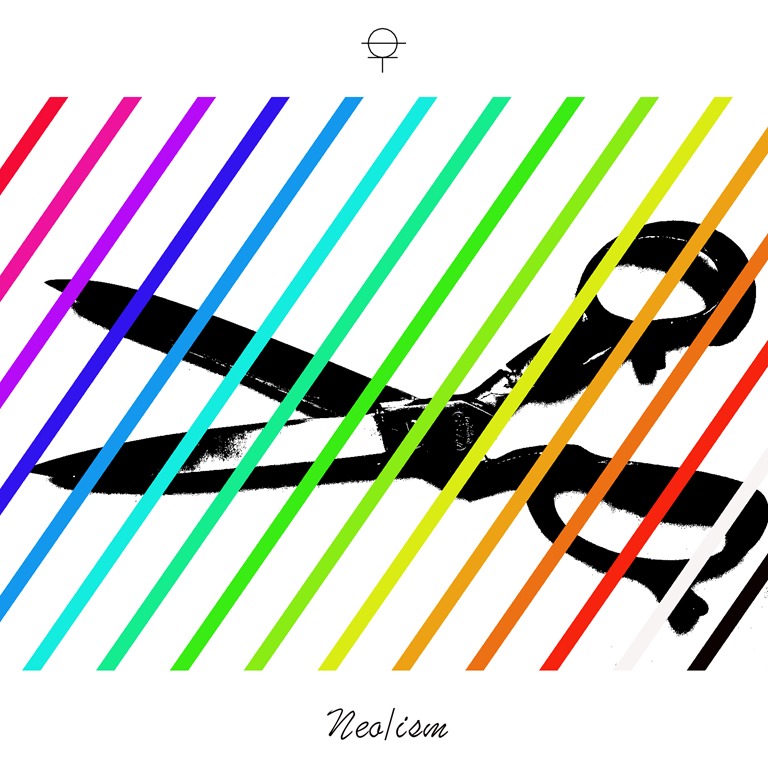
Coaxial – shortly to be reissued on casette by Cruel Nature represents the outlet for his explorations in instrumental electronica, and on Neo/ism there’s humour and wordplay not just in the song titles, but in the compositions themselves. This is apt, given that the Neoist art movement was largely satirical in its purpose, revelling in the depthlessness of postmodernism, and sometimes defined as ‘a prefix and a suffix with nothing in between’. Accordingly, the atmosphere on Neo/ism is denser than its light and airy predecessor, Ear Kites I (2018), but rather less heavy and sinister than 2017’s Reductio ad Absurdum.

It’s a vintage organ synth sound and even more vintage drum machine track that kicks starts the album with the seven-minute ‘Homobile’ (geddit? Linguistics jokes are always a nonstop laughriot). It lands between chillwave and krautrock, but some subtly de-synced chord changes have a vaguely disorientating effect at the start, before tapering off towards semi-ambience around halfway through and the beats dissolve to vapour.

‘Jocks v. Cocks’ is all about the juxtaposition: the track goes harder on the percussion, while the bubbling synths warp and twist, before ‘The Gay Gun’ plunges deeper into bloopy robotix territory, a melting pot of textures and tones swimming in a kind of sonic Brownian motion. ‘The Lonesome Onanist’ goes darker, and Heal’s application of long, grating drone notes that defines many of the tracks on Neo/ism is very much at the fore here.

There are strong technoindustrial elements in the mix, but then there’s a lot going on throughout, often simultaneously. Moreover, the composition seem to become increasingly strange and dislocated as the album progresses: ‘Homocrcy’ marks the mid-point with some spaced-out, space-age dubtronica, ‘Pink Noise’ crackles and pops in a time-shifting microtonal explosion, and ‘Gay Baby’ sounds like it should have featured on the soundtrack to an episode of Nathan Barley.

This all perhaps leads to the question of how serious any of this is, which in turn leads to the question of whether or not it actually matters whether or not the intent is parodic: one can’t hear intent in a recording, and can only engage with the contents of the recording itself. Given the way in which the sound of Neo/ism is characterised by contrast and variance, the experience elicits no one response, but many. And it’s quite a groove.

cover

27th April 2020

Christopher Nosnibor

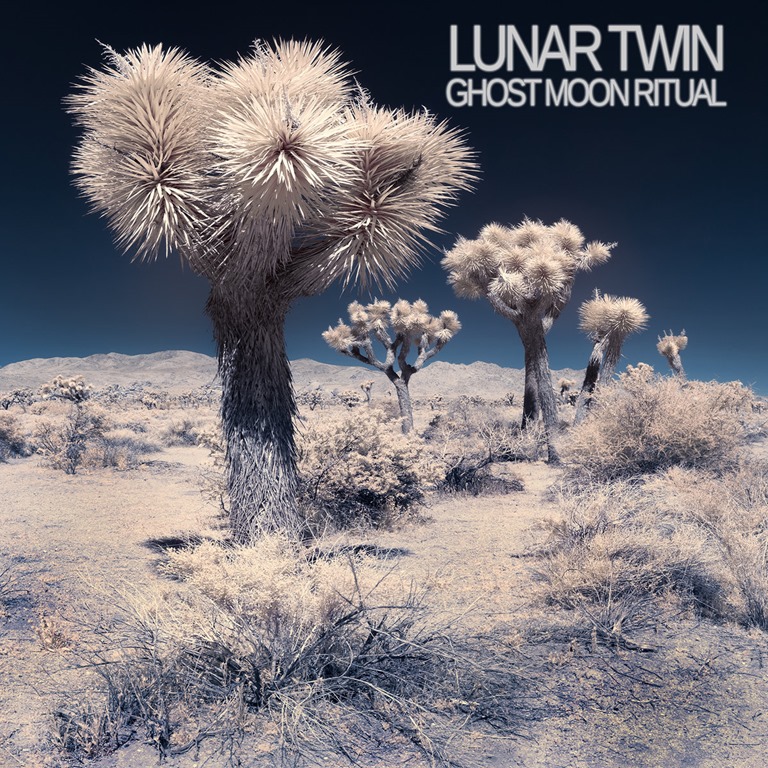
Ghost Moon Ritual follows its predecessor, Night Tides, after three years in the making. It’s easy to forget that most musicians have actual day-jobs, and things like families and normal lives to operate, too. It’s not easy to pack in creative activity alongside normal life.

Since lockdown, everyone seems to have delivered a new release, and, bizarrely, and most unexpectedly, a world without live shows is suddenly a world brimming with new music not so much ins spite of, but because of circumstance.

All of our circumstances are different, of course. Balancing dayjob, parenting, and an all-consuming state of anxiety, I’ve found less time and energy than ever available to review more material than I’ve ever received in over a decade of doing this.

Ghost Moon Ritual is pitched as ‘a song-cycle influenced by redemption, hope, failure and endurance’, and while the creative contexts isn’t immediately apparent, the attention to detail, not least of all atmosphere, is.

As the band write, ‘During the three years of writing and recording the album, several people close to the band passed away bringing a heavy mood to the proceedings. During this time, two beautiful children were born as well, bringing with them a reminder of the joy that still exists and is always enduring. Realizing that all there is now and that the outside world at large seemed to be teetering more and more on the edge of a cliff Work moved slowly, tuning this out and retreating into the studio with heavy hearts, the duo worked to channel the grief and hope and joy into what has become Ghost Moon Ritual.’

While Night Tides contained six songs, Ghost Moon Ritual contains thirteen, and as such is an altogether more substantial document. It’s also a document which renders with crystal clarity the way in which Lunar Twin’s work is built on contrasts: specifically, Bryce Boudreau’s baritone vocals that call to mind Leonard Cohen, and as such belong to a rock / folk world, while Christopher Murphy conjures sonic drifts that meld dreamwave and sparse folk with a laid-back, rippling dance vibe.

The album’s first song, ‘Drunken Sky’ is a slow, swaying semi-comatose crawl of drum machine and synth bass, and calls to mind some of the doomy, reverby-but-claustrophobic material on The Jesus And Mary Chain’s Barbed Wire Kisses. The drums burst into D’n’B near the end, which is unexpected, but then there’s a lot that’s unexpected about this set.

All of the Mark Lanegan comparisons are entirely justified: ‘Leaves’, and, indeed, several other cuts, could easily pass as outtakes from recent Lanegan albums, with Bryce Boudreau’s world-weary gravel-heavy croon laying breathy over sparse backing, picked guitar and spectral synths drifting over minimal percussion. ‘Neon Room’ is subtle, combining chilled dance grooves with a deep-carved rock growl: the result is quite unexpectedly affecting.

As a collection it’s sparse, dolorous, dark. It’s also gentle in its bleakness, but bleak it is, as well as understated and graceful, and as such, it reaches all the parts.

AA

a3899811576_10

Noisequanoise – 29th January 2020

Christopher Nosnibor

What is this? A reimagined soundtrack to the popular TV series? Having not watched it (I know, it’s a crime against contemporary popular culture) I’ve no idea if the track titles are references.

What I do know is that we’re in ultra-niche ultra-noise territory here: Breaking Bad was recorded on a CD-R data discs and released on an initial run of CDs limited to 8. Yes, 8. There’s a wilful obscurantism that’s part and parcel of the scene that this clearly taps into, and it was ever thus going back to the dawn of Come Organisaton. There’s a whole essay, or even a book, in the culture surrounding the scene, and that isn’t for now, but despite what all this may seem to imply about elitism and snobbery in the noise scene, my personal experience has to date presented many accommodating, pleasant, self-effacing and self-aware, not to mention shy and reasonable people. It;s often the case that extreme art is not a reflection of the individual, but simply an outlet.

The opening bars of the album’s first piece, ‘Hidden Threat’, are serene, almost ambient, and pleasant. Then in a turn it explodes and what sounds at first like a metal bucket full of stones and a broken contact mic being kicked down the stairs in a tower block swiftly becomes a relentless swirl of churning metallic distortion, a churning blast of noise that’s excruciating. There are some vocals in there, too: pained shouting, submerged by a blistering wall of distortion. It’s so intense as to make five and a half minutes feel like fifteen.

Shifting into lower frequencies and breaking the wall with the occasional stutter, ‘Stream of Thoughts’ conjures the anguish I feel around 10am on most mornings in the office – and while the actual office experience is rapidly receding into the distance as a memory, the recollection of the trauma of operating in such surroundings will likely never fade.

And so it is that ‘My Future Plans’ is a shrieking mess of treble that jolts and jars, and with so much turbulent top-end, ‘More Pain!’ is appropriately titled as a trudging, sawing sound grinds back and forth against a squall of shrieking ballistic white noise. And it just keeps on going. There is absolutely no fucking respite. The spaces between the tracks are negligible, and while the tracks are all different, when presented with so much relentless blasting noise, the effect is ultimately flattening. That doesn’t mean it’s numbing or desensitising: six or seven tracks in, it’s still as eye-wateringly assaultive as in the opening minutes – but you’re just too battered and beaten to really differentiate one shade of overloading distortion from another, in much the same way as standing in a DIY store comparing paints. Only this is like comparing paint while having an electric drill penetrating each ear.

That said, the final track ‘The Way No Nowhere’ does seem to increase the intensity, with more rapid circulations of the internal rhythms that manifest within the whorl of noise.

It’s draining, and hard work: but then, it’s not intended as easy listening and one of the primary purposes of harsh noise and power electronics is a sonic catharsis, and one which often involves an element of self-flagellation. And in terms of delivering against objective, Breaking Bad brings it.

AA

cover

Noisequanoise – 1st January 2020

Christopher Nosnibor

Avery Vickers, aka Death Circuit, isn’t exactly big on info, biographical or otherwise. But, specialising in Harsh Noise, Harsh Noise Wall, and Power Electronics, what more do you really need? Personality and politics are less than nothing in the face of instrumental annihilation.

An Easy Passage To The Mind is noted as having been ‘recorded on 90 minutes of cassette tape’. The medium naturally brings a roughing, analogue feel to the two tracks, which are both exactly 15:03 in duration (90 minutes would surely be unbearable even for the biggest fan of this).

What’s impressive is just how much sound is packed into those thin, magnetic-coated strips. It’s not just harsh, noisy, and a wall – that’s pretty much a given. But the density is more than a towering slab of basalt. And of course, there are no smooth edges here: this is pure abrasion.

On ‘1’, there’s an emphasis on the lower mid-ranges, meaning the experience isn’t cranium-splittingly abrasive. The sound is very much like a cross between a helicopter at close range, and a washing machine on a spin cycle, the air torn and shredded, and rent damaged by the obliterative volume. After the initial shock of the sheer sonic force, it becomes immersive. Not pleasant, but not unpleasant.

The same cannot be said of ‘2’, which may or may not be the same track cranked up to a level of overloading distortion and does actually hurt and fuck with your head even more than your speakers. It simply sounds broken. And after a quarter of an hour of it, I certainly am. It’s torture by frequency, and it’ torture by volume, and it’s torture by dissonant vibration. I feel jaw clenching involuntarily as every muscle in my body get gradually more tense. It’s horrible. And exactly as intended. Harsh.

AA

cover