Archive for the ‘Albums’ Category

14th July 2023

Christopher Nosnibor

I could harp on about how I was introduced to Cinema Cinema way back some time around 2012 when I was writing for fringe magazine Paraphilia, and the fantastic interview I got to do with Ev Gold on the release of their second album. But my recollections for dates are hazy, and no-one really cares.

Cinema Cinema simply don’t do predictable. The only thing you know to expect for sure is that whatever they do, it’ll be different. There are few bands so committed to the pursuit of doing whatever the fuck they please. While many will find a sound a adhere to it, or otherwise make a marked shift in direction having worn a template out, Cinema Cinema push themselves with each record to be different, and to see just how far their can expand. They describe themselves as art-punk, and have been described as ‘experi-metal’, while venturing deep into the terrain of avant-jazz on their two collaborative releases with Matt Darriau of The Klezmatics (CCXMD (2019) and CCXMDII (2021)). There is something uplifting to see a band who refuse to be defined or limit themselves: Cinema Cinema are whatever they want to be.

For this latest outing, their seventh album, the New York cousin duo is again trio, this time featuring the mighty polymath percussionist Thor Harris. Having witnessed Harris performing with Swans, he is an immense presence onstage – and that also translates to her performances in general. The man can turn his hand to practically any instrument that can be used for percussive purposes, and he doesn’t just bring percussion, but an impressive collection of synths to the party, marking another substantial shift in Cinema Cinema’s sound on Mjölnir. It couldn’t be much mor dramatic: they’ve not only ditched the free jazz but gone for short, punchy pieces: with the exceptions of ‘Zero Sum’ and ‘Voiceless Idaho’, the majority of the album’s eight tracks are around five minutes long or shorter. Structurally, then this is different: the last couple of albums featured ten, even eighteen-minute monsters with sub-two-minute interludes. As such, Mjölnir feels more even, more balanced.

It also feels like something of a return to their noise roots, as demonstrated by recent single, the roaringly aggressive ‘War On You’, a driving explosive sonic attack that sounds – quite unexpectedly – quite like The Screaming Blue Messiahs with its thunderous drums and choppy blues-based riff – while at the same time pushing in yet further new directions. And those directions are myriad: Mjölnir is the musical equivalent of an octopus, its tentacles reaching in all directions at once.

But before that, ‘This Dream’ is a warped nightmare of woozy, bending synths, dark drones and twisting discord. There’s a nagging bass groove that sits somewhere between Air’s ‘Sexy Boy’ and Suicide. That probably should not be a statement that even exists, but it’s a measure of Cinema Cinema’s range, and the fact they make it work is a whole other matter. The guys have a rare knack – and that’s an understatement.

‘Zero Sun’’, the first of the album’s sprawlers, — this one clocking in at seven minutes and forty-five – is a beast, with trilling organs and lasers on stun – and couldn’t be much more of a contrast to the chopping, drum and bass0driven blasts that define the album; s sound.

Mjölnir is tense, and Mjölnir is and noisy. There are moments that worder on progressive, but overall, it’s noisy, aggressive droney, and exploratory. It’s not an easy listen: for as much as it’s got name contributors, it’s challenging, antagonistic. No two tracks are alike, and instead the tracks are blurring… ‘Blurring’ is bewildering, and the bleak vocals of ‘Voiceless Idao’ which border on the demented as they scrape across a track that wrestles with itself into crumbling and collapse.

The shrieking cacophony of that last track is particularly hard-hitting, and reminds us of what Cinema Cinema’s recent work have been lacking: riffs. That’s no criticism: they recent works just haven’t been very riffy. But now, the riffs are dank and dense and it’s no hyp to say that Mjölnir finds Cinema Cinema at their absolute peak. This… yeah, this is good alright.

AA

digital_cover_mjolnir

9th June 2023

Christopher Noosnibor

The fascination with true crime has exploded in the last decade, and it’s hard to know what to make of it. Some true crime documentaries, like Making a Murderer and even The Staircase (the 2018 one, that is) have been hard-hitting and ultimately compelling. But then the dramatisations of not only The Staircase, but also David Tennant playing Dennis Nilsen, feel like perhaps a step too far into the macabre serial killer revelry that saw bands like Whitehouse vilified in the 80s. At some point, serial killers and all the dark gruesome shit that historically was the domain of weirdos and outcasts shot into the mainstream.

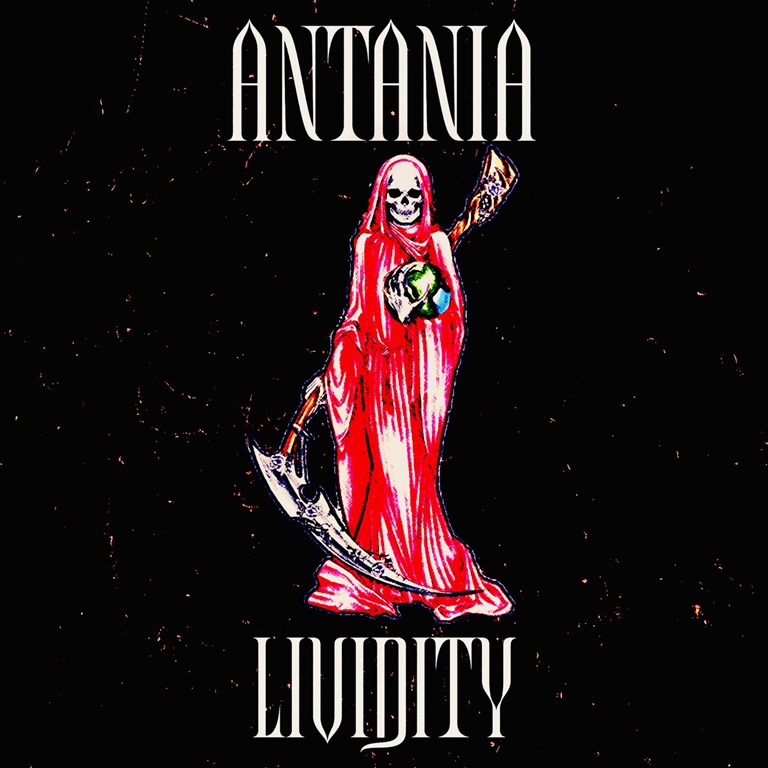
It’s a curious contradiction. While America is immersed in an existential crisis over the right to bear arms, quite literally hundreds of children and teens – and teachers – have been shot dead already this year – and bearing in mind it’s only early June it’s beyond terrifying. The anguish of killings is almost unspeakable… and yet it’s now great TV. What does that say about our society? As the accompanying notes explain, ‘The songs on Lividity were written right from true crime stories, Each song represents a true story of murder and violence as the Antania duo find their inspiration from real events.’

But then, this doesn’t have to be about sensationalism: the title of Antania’s album is pure Law and Order, and we could reasonably trace a lineage back to Ed McBain’s novels of the 60s, which saw pulp pave the way for the birth of the procedural crime novel.

And with this release, they promise a set that ‘mixes a “doom bass” sound with acid metal, for a ‘a slow, rhythmic bass-heavy release’. And that is precisely what they deliver, with ten tracks of rapid-fire drums and gnarly darkness bashing through mangled samples and snarling, swampy synths.

The samples on the first song, ‘3 Days’ are culled from recordings of Angela Simpson, who openly admitted to the torture, murder, and dismemberment of her wheelchair-bound victim: “I beat him to death… I killed him and cut him up,” Simpson told 3TV in a jailhouse interview shortly after her arrest in 2009. Hot on its dingy heels lands ‘Antania’, and it’s got that back metal sound to it, grainy, gritty, as if recorded on a 90s Walkman from the room next door.

This kind of production makes sense at times, but at others – at least for me – it doesn’t so much. Yes, to obfuscate the details creates an intrigue, and imbues the recordings with a quite literal obscurity. But if Bathory created a gnarly template that ploughed the deepest subterranean depths to drag the burning coals of Satan’s soul from the bowels of hell, most of those who followed in their grim wake have simply mined the seems of unlistenability.

The heavily processed vocals on here, which are so OTT cliché ‘scary’ that they actually emerge on the other side to be genuinely scary, are paired with swampy synths and creepy extranea. There are even some riffs happening here, as on the churning grind of ‘Angels and Demons’. It’s utterly fucked up and tormented, the sound of a soul in torture. There’s o clear indication, however, of what each of the individual tracks were inspired by. It’s a shame, because although Lividity is about the blacker than black atmosphere., given the context, it would be interesting to know whose vocal samples occupy the various songs, and which cases the songs are inspired by. I daresay there are clues for the hardcore true crime fanatics, but the rest of us would like to feel included, too.

That said, there aren’t many points of entry into what is a difficult and utterly brutal album. Every track feel like the soundtrack to the goriest, bloodiest, most brutal murder ever. Every track feels loser, slower darker, heavier, gnarlier.

‘August’ plunges yet deeper, darker depths, and Lividity just keeps on getting nastier and nastier. From whichever perspective you view it, it’s not a pleasant album: as the songs succeed one another you feel the life slowly ebbing from you, as one by one they pound away without mercy. You will it to stop, but no: Antania keep on bludgeoning away until you’re beaten, your head lolling with exhaustion.

As I felt myself being battered, tortured, by this most brutal racket, I felt myself sag, and also recalled the earlier days of the internet – specifically, the discovery of sites like gruesome.com where you could find a full reel of film of pics taken by a couple who had dismembered the body of the woman’s husband and posed the body parts to show him picking his nose and the like.

There’s little need for crime fiction when true crime is this sick, and Antania provide the perfect soundtrack to this gruesome shit.

A

AA

a3172920995_10

Consouling Sounds – 26th May 2023

Christopher Nosnibor

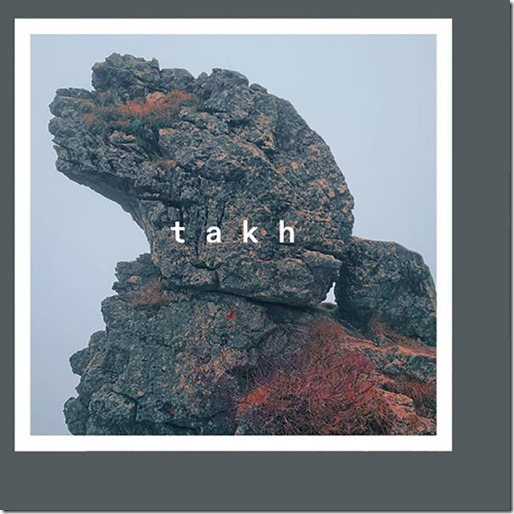
Size matters. Or at least, scale does, if you’re measuring epic. You can’t do epic by halves, and that’s a fact. And when an album weighs in with just five tracks but has a running time of almost forty minutes, you know you’re in proper epic territory (and that it certainly isn’t an EP masquerading as an album). And this is one hell of an album, and it goes beyond epic.

As the bio explains, TAKH emerged from ‘The fruitful collaboration between The Black Heart Rebellion and Echo Beatty’s Annelies Van Dinter on the People album was the beginning of a new musical story. After the end of TBHR Alexander, Annelies, Emeriek and Pieter went deeper in their quest to write music reflecting the true emotions of the musicians. After about one year of free improvisation, TAKH created something truly unique. The idea was very simple: to release the result of the collaboration without pre-orders and announcements…’

There is absolutely nothing out there on-line which provides a precursory listen to this album, and that in itself is beyond rare in an age when bands – and labels – hype releases to the nth degree. More common is that you’ll have heard every track weeks before the release, and this makes TAKH’s stealth approach all the more welcome. It takes us back to the days of before the Internet, when you’d read about a band in Melody Maker or hear about them from a mate or on the sixth form stereo – the means by which I introduced my friends to / tortured my friends with Swans and Godflesh during breaktime.

Swans are one of the bands listed as influencing TAKH, and it shows in the compositions, and to some extent, the musical arrangements, not least of all the way the final track echoes latter-day Swans in their hypnotic, immersive swells of sound.

‘Salomonne’ enters in a swathe of ancient Eastern mysticism, long, trilling vocal drones and esoteric spiritualism which sets the atmosphere before the arrival of the drums, bass, and rasping vocals. In combination, the tension builds as does the sense of vastness, and you feel an endless desert and sky spreading before you, extending infinitely to the vanishing point at which the two meet and fade in a haze. It slowly trudges, shimmering, simmering, and burning, to its weighty climax. It’s metal, but not in a particularly recognisable form.

The percussion dominates the droney ‘Unabashed and knowing’: if The Cure’s Pornography comes to mind, it’s a fair comparison, but this actually feels more like The Glitter Band paired with Joujouka and the triptastic done of a digeridoo. Around five minutes in, seemingly from nowhere, rising like a desert storm, the dual vocals rise up climactically to deliver something resembling an impassioned chorus, even bearing a semblance of a hook, before being drowned in a rising wave of sound: part shoegaze, part eddying panic and a sense of unfamiliarity, and all propelled by a relentless percussion., before ultimately fading to a heavy elongated drone.

The album’s shortest song is also perhaps its most conventional: a crawling bass and plodding beat pin ‘Drôme’ together, and the vocal passages are intersected with a chiming nagging guitar motif before the tension breaks – or more cracks a little – around four and a half minutes in. Perhaps it’s just me and I’m a little cracked, but the break into the light makes you want to cast your eyes to the skins and open our arms, not necessarily expecting a response but to simply absorb.

‘Azure Blue’ has a warped sea-shanty feel to it, amidst the crushing post-rock crescendos which surge and splash. Spread out over almost seven-and-a-half minutes, it’s a beast, albeit one that’s subdued and contemplative.

The album concludes in reflective style, with the ten-minute ‘Hair of a Horsetail’. Captivating vocals, at once ethereal and earthy, quaver over a slowly wavering drone. It’s a duet of sort, and one which delves into deep and ancient spirituality. The bass rolls in around the midpoint, from which the song builds, making for a climactic closure to an album that’s powerful, while often understated. It has so many levels, so many layers, so many depths; at once uplifting and exhausting.

TAKH - S T Cover

Music Information Centre Lithuania – 7th June 2023

Christopher Nosnibor

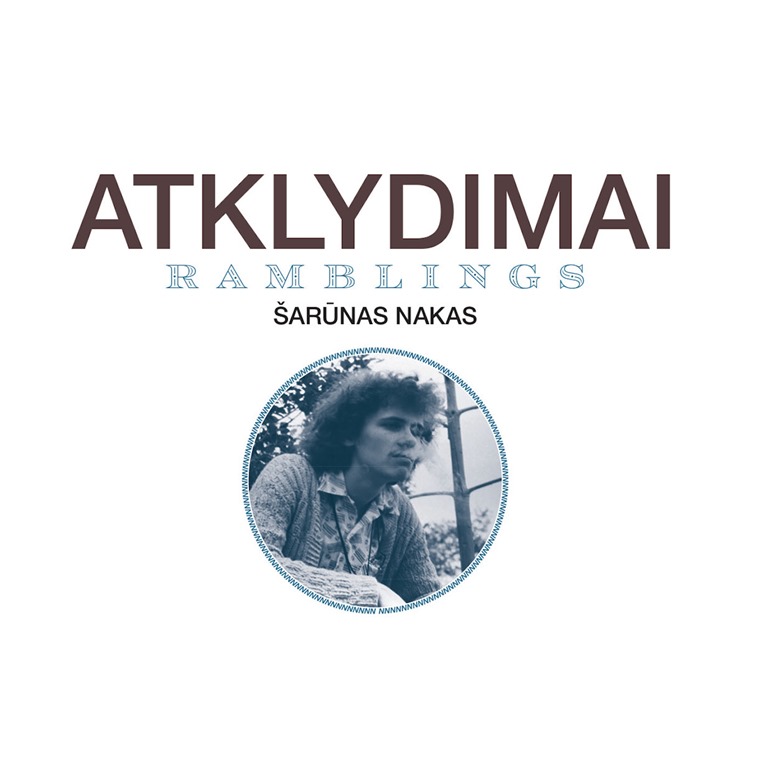
This is one of those releases where the context counts for almost as much as the content: ‘The cycle of nine vocal, instrumental, and electroacoustic pieces, Ramblings, a large part of which was written as music for the scandal-plagued drama play Literature Lessons by Jonas Vaitkus, was recorded in 1985 in the legendary Vilnius Record Studio, which at that time was very open to experiments. The recordings were made using a multi-channel tape recorder, a borrowed KORG synthesizer, saxophones, a prepared piano, a cello turned into a noisy bass, percussion, and bells. The composer used all the texts and the title for the cycle from the poetry collection Ramblings by Almis Grybauskas. According to the composer, this poetry is minor, cold, and laconic, like his favourite cool jazz style, while the title Ramblings itself raises a lot of questions, is a bit provocative and irritating.’

‘Provocative’ and ‘irritating’ are appropriate enough adjectives, it has to be said. Indeed, ‘ramblings’ suggest something unfocussed, incoherent, unstructured, and this is a wild ride which flies off on tangents every which way. Yet while the shapes of these compositions may be loose, there’s a definite sense of purpose, not to mention an atmosphere about them.

The further story is significant to this release, and it provides not only a fascinating insight into the way politics can often be the enemy of the arts, but also freedom of expression more broadly. It’s also a tale of underground rebellion, defiance, and strength of will.

‘After the premiere of the performance, the composer could have had a very bad ending – after “terrible” reviews and complaints appeared in the press, the Soviet censorship ordered the performance to be banned and the creators punished. Even the head of the composition department at the time suggested that this “cacophony” should be given the lowest grade, condemning Šarūnas Nakas to be expelled from the conservatoire, which would have meant being conscripted into the Soviet army during the Afghan war. Fortunately, professors Julius Juzeliūnas and Bronius Kutavičius saved their student.”

I mean, it is a “cacophony”. Ramblings is a jumbled mass of layered vocals, atonality, and exploratory jazz, the kind of jazz that prioritises performance over listenability, the kind of jazz that’s about the experience, the kind of jazz that’s interested in the relationship between notes and isn’t afraid of dissonance, discord, variable time signatures. At times tranquil, at others ominous and abstract, there are parts of Ramblings which are wild, chaotic, completely unconstrained. This is, of course, just how it should be.

The story continues as to how thew work escaped destruction at the hands of its persecutors: ‘It was the time of cassette tape recorders, and music was quickly reproduced, so Ramblings began its own journey, playing as background music on radio and television but never being published as a complete cycle. Later, only one piece called ‘Merz-machine’ was singled out from the cycle as an example of Lithuanian experimentalism and released in 1997. It then underwent a kind of renaissance: versions were created for different ensembles, including the Czech avant-garde rock orchestra Agon and the London piano sextet pianocircus. The sextet has performed the work more than 100 times in dozens of countries.’

It’s fascinating how an obscure musical work can infiltrate so many different channels, and effectively exist in a life entirely removed from itself. Consider the fact that parts appeared, internationally, unknown and uncredited. This isn’t only the most remarkable example of subversion for a supposedly ‘banned’ work, but also demonstrates how music can take on a life if its own. ‘Merz-machine’ is, without doubt, an outstanding piece, challenging and discordant as it is, but it’s only partly representative of the album as a whole: it’s certainly by no means background music.

The fact of the matter is that there is no one pierce on Ramblings which is really ‘representative’. Ramblings is truly eclectic, and odd, and that’s its design, its objective. From a critical perspective, it’s almost immaterial whether I like it or not – and I certainly like some pieces more than others – but it’s not aiming to please, and certainly not aiming to please all of the people for the duration. Despite being almost forty years old, Ramblings sounds contemporary – and still sounds challenging. That’s timeless.

AA

MICLLP004_front

Criminal Records – 9th June 2023

Christopher Nosnibor

It may just be something I muse over, but there’s a question of what level is a band’s ceiling – at what point the potential they seem to offer meets with the reality of the fanbase they actually manage to build. Weekend Recover are one of those bands who have long seemed to have hovered on the cusp of breaking through without ever quite going over the line. These things are 10% songs and quality, and 90% luck. So many great bands never reach the audience they deserve. Graft will get you do far, but it’s more about being in the right place at the right time than anything else. Weekend Recovery graft life fuck, and seem determined to make their luck.

The thing with Weekend Recovery is that, while they do have a relatively small but seriously hardcore faithful fanbase, they’ve been prone to change their sound and lineup as often as Lori changes her hair. The stylistic changes are likely consequence of the band’s inner turbulence as much as anything else, but artistically, this is a positive thing: they never stay still, never settle into a comfortable rut, and are always challenging themselves. But the downside to this is that a lot of music listeners are averse to change and like bands to give them something familiar, more of the same. Yes, they like to pigeonhole. Since female-fronted is not a genre, what are they, exactly, apart from a guitar band?

It seemed like they’d already been around forever by the time of the release of their debut album in 2018, having evolved from Katy Perry meets Paramour poppy alt-rock into an altogether grittier, rawer, trashy punk act in the process. Their signing to Criminal Records marked the next step in their reaching a wider audience, garnering more airplay and a busy live schedule found them not only playing to fuller venues, but also scoring support slots with the likes of Starcrawler. The fact they’ve already sold nine of the ten test press vinyl copies at a hundred quid a pop a week before release speaks for itself, at least in terms of their fans’ dedication. But what about building a broader base?

Stepping up venue size to headline The Corporation in their (current) hometown of Sheffield just before Christmas, followed by a sold out show at The Leadmill probably answers the question, at least in part, and having landed themselves on global playlists on Apple, Deezer and YouTube has no doubt been a factor.

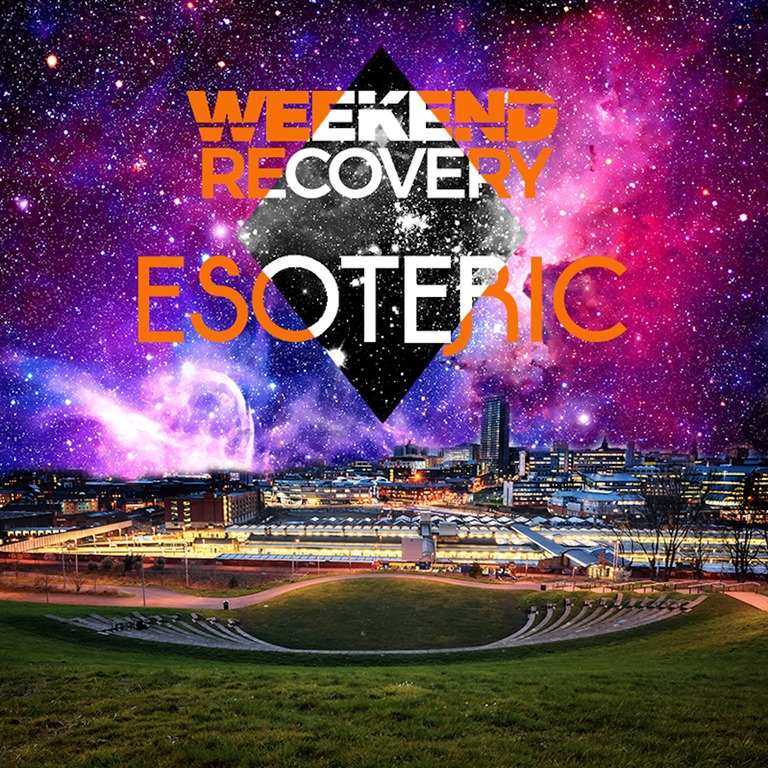
Esoteric answers the question in full. It is not more of the same, not least of all with Lori’s greater use of spoken / sprechgesang passages, but does feel like less of a leap from its predecessor, at least in musical terms. That’s probably attributable largely to the fact that this has been their longest-standing lineup in memory, and the fact Dan and Callum make for an outstandingly solid rhythm section. Having a secure home on Criminal Records no doubt also helps. That doesn’t mean that Esoteric is a ‘safe’ record, a blanket and slippers affair, but it’s the sound of a band who have finally found some stability and have been able to concentrate on the job of writing and recording songs instead of juggling a load of distracting peripheral shit like ‘crap, we need to find a bassist’.

There are things I’m unsure of here: the album’s title being a leading one. Meaning ‘obscure’, and commonly referring to specialist, even secret, knowledge only understood by a few, what are they saying here? It’s a title I’d likely associate with some mystical drone or doom band rather than an uptempo rock trio. Is there something subliminal hidden in the lyrics or in the album’s very grooves? I don’t get any great sense of any of this from songs like ‘In the Crowd’, with lines like ‘We’re going in the crowd / it’s getting very loud’. It’s one of those songs that while it may – does – work live with some crowd buzz and energy to drive it along, recorded and out of context, it just sounds rather lame, not to mention pretty daft. It’s an affliction that troubles any bands when they reach a certain status, namely the point at which band life detaches them from real life, and so band life becomes the subject of the songs, with the effect being that in an instant, they stop speaking to and for us, and instead for themselves only. And when a band who articulated what you felt stop doing that, you’re left bereft. And then there all of the woo-hoo choruses and line-fillers. It’s something I see and hear increasingly, so perhaps that’s an aspect of contemporary songwriting I’m not down with, and an indication that Weekend Recovery are bang on the zeitgeist. Perhaps that’s why they’re getting more radio play.

Esoteric balances the grungy, guitar-driven style with the slick, radio-friendly alt-rock of their early years, and kicks off with lead single cut ‘Chemtrails’. Again, there are questions. Growing up, I knew them as vapour trails, before learning the term ‘contrails’. And then they became a source of anxiety as a popular theme on ‘the Internets’ before Lana Del Rey solidified things with her seventh album, Chemtrails over the Country Club. But this is a song about confusion and overload: ‘the waves are slowly sending me insane’ Lori hollers over a choppy instrumental backing that straddles punk and new wave. What to believe in? Who to believe? The world in which we find ourselves is enough to drive anyone insane, and insanity is the only sane response to an insane world.

The production is definitely their smoothest yet, and it’s very clear: the guitar is dense, but it’s backed off and is very much mid-rangey and there’s a lot less bitey distortion, and this is evidenced in the rerecorded version of ‘No Guts All the Glory’. This is, without doubt, the song that will likely be their anthem: it’s catchy, it’s ballsy, it’s tight, you can sing along and mosh to it, and it’s got broad relatability. But then there’s no shortage of meaty tunes along the way: ‘Dangerous’ brings urgent post-punk of an early 80s vintage with hints of Siouxsie and the Banshees to the party, while ‘I Don’t Like You Anyway’ pairs a low-slung bass and pummelling drum with some sinewy guitars and a stomping chorus, and there’s an offhand sneer to the verse that’s next-level nonchalance. Then there’s ‘The Knife’ which is one of those anthems of hurt that people can relate to and invest in, and if ‘Her’ is, on the face of it, a folksy ballad, it’s a fair bit more than that if you tune into the lyrics.

And perhaps this, this is the secret wisdom: the secret to unlocking the potential that’s been there all along. The songs on Esoteric feel more evolved, more fully formed, and the switches between melodic hooks and bursts of anger and energy give them an exciting dynamic. For all of the poppiness, there’s some real darkness, and some weight, too. The songwriting across the set is more consistent, too, and when bolstered by the production, it all seems to have really come together here.

AA

WR Esoteric Cover

fals.ch – 9th June 2023

Christopher Nosnibor

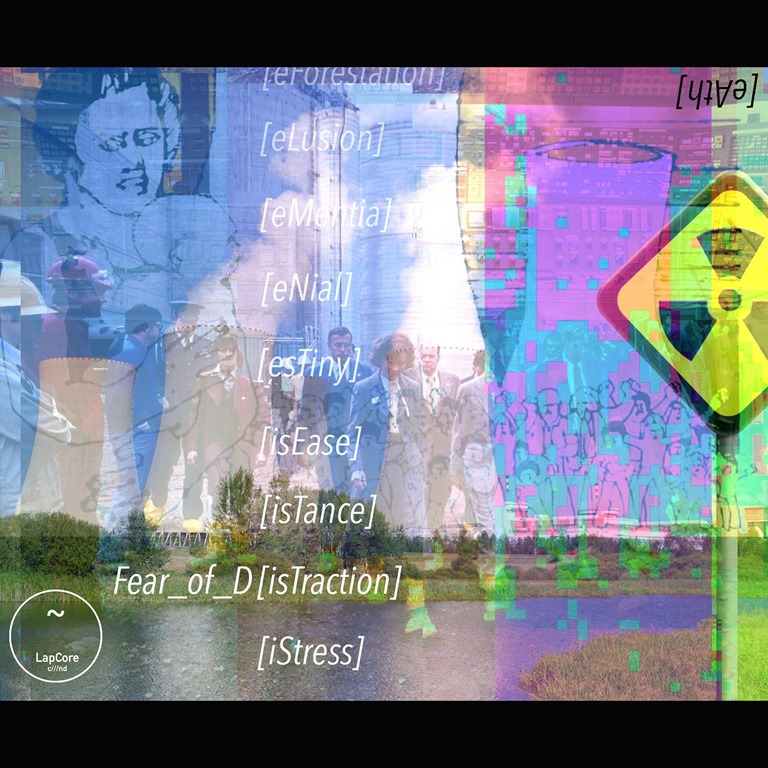
On clocking this in my inbox, I fleetingly felt a flicker of amusement as I recalled a long-lost article I had written over a decade ago about fictitious musical genres, which included LARPcore, where bands inspired by Viking Metal re-enacted historical battles in full costume. (I also mentioned Symphonic Doom before the term appeared as a thing). Then I realised that, as I’m prone to doing when I’m not concentrating, I’d misread, but then on reading the notes which accompany the new album by Kent Clelland, aka LapCore (which makes a lot more sense in context of what he does musically), my amusement was replaced by a certain crackle of excitement.

For this reason, it’s worth quoting: ‘With Fear_of_D[istraction] LapCore continues his exploration of digital audio synthesis and distortion techniques, researching the complex tonal digital structures he affectionately refers to as cTonality. In contrast to the more upbeat and aTonal album LapCore 132 (his 2017 full-length self-published release), Kent Clelland has freed himself to explore the darker, and more cerebral faces of computer music composition. With multi-channel oscillators he brings sonic entrainment into the musical range of frequencies as opposed to the typical sub-audible entrainment frequencies, composing melodic and harmonic parts with the artefacts to create cTonalities.’

But here’s where it gets interesting, and will likely prove divisive:‘Weaving polymetric binaural oscillators with a lopsided bass drum engine, he lulls your senses into a state of receptivity upon which he then sews synthesised tapestries inspired by his hyper-perceptual, cancer-treatment-infuenced dogma adventures in the pre-pandemic delirium. LapCore produces these tracks as an attempt to preserve his brain damaged audio hallucinations, sharing them in a venue larger than the space between his ears.

‘The performance of LapCore’s Fear_of_Di[straction] (2017-2022) is a 48 minute sonic quilt of recordings of AI Musical Agents during training sessions intricately hand-sewn into the fabricated projection of the audio dimension.’

Yes, Fear_of_D[istraction] incorporates elements of AI. ‘Nooo!’ people will likely shriek and no doubt some will be unhappy even with my writing about this album on this basis for propagating the death of the artist. But the death of the artist – if we take ‘the author’ in a broader context – has long been a preoccupation of literary theory and postmodernism, as far back as Roland Barthes’ 1967 essay of the same title. Yet now, as we find ourselves pondering what some are variously referring to as post-postmodernism or metamodernism, there is mass panic over the chimera we have created with speculation that not only artists but most occupations will be obsolete in a matter of years and we will soon be driven to extinction by our errant creation. I’m reminded of numerous sci-fi novels, not least of all Michael Chrichton’s Prey. Published twenty years ago, it feels more relevant now than ever, as is the way with much true science fiction, which takes current science and projects hypothetically forward, but also demonstrates that this fear is nothing new. And yes, of course, we – as a species – have pursued this end. Our demise through AI seems unlikely, but if it does happen, we probably deserve it.

While AI photos and even falsely-attributed Guardian articles are giving great cause for consternation – understandably – overall, it’s still the potential of AI which is scarier than the current capabilities, and this is nowhere more evident in music, where it’s fair to say that most purely AI generated compositions are toss. But also, in more experimental fields, composers have been using algorithms and customised programmes to generate sound since the advent of computers and synths – and I have covered countless of these in the last fifteen years.

LapCore incorporates AI as simply another tool in his kit, and has used this hybrid of man and machine to forge a work that melds Krautrock and minimal techno, microtonal experiments and harsh electronics to eye-opening effect.

The first of the album’s seven compositions, ‘Stuck Like a Magnet in Switzerland’ is built around grating oscillators and some extreme stereo panning, which is well-executed, and immediately grips both sides of your cranium and squeezes. The flow of blooping synthesised rhythms is rent with a buzzing distortion the like of which some of us will remember as the way a mobile phone signal would interfere with the TV – and at three times the volume of the busy bubbling track, it comes as an uncomfortable moment of shock. All kinds of feedback and interference disrupt the musical melange thereafter, dial-up tones and all kinds of electrical chaos collide and crackle unpleasantly. But being unpleasant doesn’t make it bad: this is one of those works that is relentlessly challenging in its pursuit of ‘difficult’ tones, textures, and frequencies, often simultaneously.

‘Microdose’ feels more like an overdose, as an angry hornet the size of a lion takes residence in the space at the front of your skull, right in the sinuses, and vibrates your brain without mercy against a backdrop of disjointed techno. This is some brutal synth torture, and elsewhere, there are drones and whistles reminiscent of early Whitehouse and Throbbing Gristle, atop dome very DAF-like electronica. ‘Americium’ is busy, a constant drip and froth of watery notes bouncing against one another – and it sounds experimental. And this is the key to appreciating Fear_of_D[istraction]: it’s not a work that tries to pretend to be a human creator hiding behind AI for a laugh, and nor is it the sound of AI running wild. Instead, it’s an album which sees its creator consider the challenge ‘how can we use this?’

If it sounds somehow ‘impersonal’, the same is true of much electronica; by the same token, Fear_of_D[istraction] very much sounds like a guy pressing buttons and twiddling knobs and looking to see just how much disruptive, disturbing synthy noise he can throw over a sequenced beat. The artist isn’t dead yet.

Room40 – 2nd June 2023

Christopher Nosnibor

I’ve been engrossed by Lawrence English’s works for some years now, and my appreciation of him and his methods were only enhanced when I conducted an interview with him about ten years ago for a now-defunct site (so many are now: the idea that once online it’s there forever has been proven false, and we’re all sitting, bewildered by as rapidly-vanishing archive of the recent past), where we touched on cut-ups and William Burroughs and I was struck by the depth of his knowledge and references.

But I have grave concerns around future history, or the future of history. While the move to digital was hailed as a move toward permanence, incorruptibility, the opposite has proved true. No-one writes anything down anymore, no-one produces additional. tape copies. If your hard-drive gets fucked, so does your entire library. The Cloud? Do you even know where it is? Does it even exist?

While we reflect on this, let us also consider this album and its slow gestation. David Toop is another artist I’ve spent some time listening to, and writing about, including his Breathing Spirit Forms three-way collaboration with Akio Suzuki and Lawrence English, but this is the first time just the pair of them have worked together, and Lawrence explains its evolution as follows: ‘Over the years, David and I have shared an interest in both the material and immaterial implications of sound (amongst other things). Moreover we’ve connected many times on matters which lies at the fringes of how we might choose to think about audition, our interests seeking in the affective realm that haunts, rather than describes, experience. The Shell That Speaks The Sea very much resonates from this shared fascination… I’m not exactly sure when we first mooted this duet, but I sense its initial trace is now more than a decade ago. I tend to live by the motto of ‘right place, right time’ and I believe David likely also subscribes to this methodology. A couple of years ago, David and I reignited the duet conversation and began exchanging materials. As a jumping off point, I explored a series of field recordings that, for me at least, captured something of this affective haunting that I mentioned previously’.

And haunting it is: ghosts of memories and fragments of half-recollections lurk and loom amidst the thick, dark shadows forged by the unsettling sounds. The title suggests an album of soft ambient washes, a gentle tidal swash, a soothing, tranquil work. It is not.

‘Abyssal Tracker’ is remarkably atmospheric in a sparse, gloomy, sense, and provides a fitting introduction to the duo’s idiosyncratic work, compiling sighs and vocal rasps over elongated strains of feedback and a suffocating atmosphere. Shrill shrieks echo out over eerie notes and a scratching insectoid clamour in the trebly range. Thuds ripple beneath the surface: there is so much texture and detail here, you find yourself looking about nervously, seeking the various sources and to see what’s over your shoulder, or hovering above your head.

Clanks and clatters and clanks and thuds are the dominant features of this album, and is lasers fire into the abyss of emptiness on the dense and disturbing ‘Reading Bones’, which scratches and scrapes, while there are earth-churning low-range disturbances – and words, but they’re indecipherable, spoken in low, whispering grunts, and it’s impossible to decipher even the language, sounding as it does like an ancient incantation.

It’s not all quite so skin-pricklingly tense, but much of it is: ‘Mouth Cave’ is dark, dank, low and rumbling, but has textures and what sounds like the trickle of running water spattering in the background amidst the cavernous gloom, and if ‘Whistling in the Dark’ sounds like a simplistic description, it’s accurate – but also suspenseful, scary and bordering on horror tropes; the whistling is deranged and floats through a heavy, crackling doomy drone. There are more ominous mutterings amidst the creeping darkness of ‘The Chair’s Story’, which feels like casting a look back through the ages through a thick fog at scenes of torture and pain and great sorrow and forward, to a laser-bleeping future.

As I seem to be prone to lately, I found myself nodding through fatigue but also, simultaneously, tense and alert during The Shell That Speaks The Sea, an album which possesses vast sonic expanses and a bleak, oppressive atmosphere. Each track offers something different, and this only accentuates the ‘otherness’ of the music this album contains; it’s like walking through a series of disturbing dreams, whereby each scene presents a new unfamiliar setting, and there are hints of BBC Radiophonic Workshop and vintage sci-fi about this incredibly imaginative work.

It may have taken a long time to piece together, but the results make the labour more than worthwhile.

AA

RM4205_front

Human Worth – 19th June 2023

Christopher Nosnibor

I’d love to avoid tedious repetition but it’s hard to review yet another Human Worth release without mentioning just how fucking great this label is, because the name means what it says – it’s a label of rare integrity, which always donates a percentage of proceeds to charitable causes, more often than not one local to the artist, and for this release by ‘shape shifting south London noise rock outfit Thee Alcoholics’, 10% of proceeds from this record will be donated to the south London based charity The Lewisham Primary Care Recovery Service.

They’re also outstanding with their radar for quality noise, and Thee Alcoholics sit comfortably on the label’s roster, delivering ‘songs that rail against injustice, intolerance and institutionalised Great British apathy – neatly wrapped around screeching, trash guitar riffs and blast beat driven bass synths. Mixing the gnarly, outsider big muff energy of early Tad and Mudhoney with the industrial crush repetition of Godflesh. Ugly vocals are buried somewhere between the Brainbombs and Girls Against Boys.’

Could it get any better? Well, actually, yes! The EP’s artwork, by Tony Mountford, tips a hat to Therapy?’s live 7inch ‘Opal Mantra’, while the recording itself is pitched as ‘a document of the journey so far – 30 minutes of agro [sic] drunk rock n roll. In the red sizzle of a load of broken equipment. The band barely holding it together in their chaotic element.’ Oh, and it’s mastered by Jon Hamilton of Part Chimp.

Human Worth may be a young label, but the sense of musical history and heritage that informs their choices is remarkable, and all of the references trace a solid lineage to the early 90s – and it’s hard to overstate just how exciting those short few years were. Because as much as it was about Nirvana and Pearl Jam and Soundgarden and Rage Against the Machine breaking the mainstream, it was about a current of alternative guitar-based music which occupied John Peel’s playlists and infinite column inches in Melody Maker (if not so much the NME). And the live ‘Opal Mantra’ EP is absolutely fucking blinder and makes for an admirable reference point, packing as it does raw and ripping renditions of ‘Innocent X’ and ‘Potato Junkie’ alongside one of the best non-album tracks ever. That a band could chuck a song like that out in such a fashion was a revelation at the time and it’s interesting to see all of these references come together here.

For me, Tad was always way more the quintessence of grunge than, say, Pearl Jam, the gritty, sweaty metal heft of songs about farming and manual labour really getting to grips with the reason the Seattle scene emerged representing the blue-collar – or perhaps more accurately the plaid-collar demographic who needed to vent after several hours of slog and grind. And Thee Alcoholics really capture that mood, often at a frantic pace that suggests a strong influence from mid- to late-eighties hardcore melded with nineties noise and grunge.

Live recordings can be difficult: too crisp and clean and so polished and overdubbed it doesn’t sound live, or otherwise just dingy and shit; this one is great because it’s not dingy and shit, but isn’t exactly ‘produced’ either: it’s dense and you can hear the audience – sometimes shouting to one another during the songs, because they’re tossers – and it all makes for a document that’s perhaps flawed to some ears, but is, as a document, absolutely perfect because you really do feel like you’re there.

Live At The Piper features live renditions of songs from their debut album released on cassette, and seven-inch releases, and it’s warts-and-all in the vein of The Fall’s Totale’s Turns – and it needs to be: it’s a proper live document rather than some polished-up, super-dubbed-up, hyper-clean fictionalised reimagination of events, as they power through eight songs in twenty-four minutes.

‘A Ghetto Thing’ is two minutes of throbbing, thrashing fury, rushing its way to the safety of a pub car park in blitzkrieg of noise, while ‘Turn on the Radio’ is built around a driving riff which switches up a key for the chorus; the vocals are half buried and the drums dominate everything and it’s all over in less than two minutes, which is time enough to do the job of grabbing you by the throat and kneeing you in the nuts several times. It’s a hell of a racket, but amidst the frenetic crashing of cymbals and general murk is a song that’s strong enough to lodge in your brain, and it’s rare for bands this noisy, this messy, to incorporate ‘catchy’ elements, favouring instead sheer force and sonic impact – which they do elsewhere, not least of all with the high-impact forty-one second detonation that is ‘Sweetheart’. Then again. ‘She’s the Man’ is built around a nagging locked-in industrial groove, but it’s also scuzzy as hell, and it’s not hard to see where the Godflesh and Girls Against Boys references come in, and it’s arguably the strongest song on the set, a low-sling grinding wheeze emerging from shards of feedback.

Six-and-a-half-minute set closer ‘Politicians’ is low, slow, and grimy – which is extremely fitting, really, and the booming, sludgy bass is just magnificent.

As with the B E L K release, Human Worth have adhered with the old hardcore ethic of releasing a band in its rawest, most unadulterated form, and it works because it preserves the energy and integrity of the moment. It ain’t pretty, but it’s real.

AA

351139534_653919199914757_6286899155116254549_n

Mille Plateaux – 19th May 2023

Christopher Nosnibor

Fase Montuno is the twenty-seventh release by Cristian Vogel. Yes, the twenty-seventh. Depending on which version you get, this one has seven or eight tracks, all reliant on old synth and drum machine sounds, giving it very much a late 70s / early 80s vibe,

As the accompanying notes detail, ‘This highly personal release is a visionary take on the futuristic potential of Latin American electronica, and promises to be a thrilling journey through Vogel’s musical imagination, every track infused with his signature creativity and energy.

Vogel has lingered on the fringes of dance music for the entirety off his career, and Fase Montuno goes very much all out on accentuating the dance elements of the pieces. That doesn’t mean that Fase Montuno is a chart-dance album, not at all. But with its Larin American influences, it’s very much music you can dance to, if you’re that way inclined – and if you’re not, well, it has groove, and that’s something anyone can get into.

The title track is a busy, bleepy six-minute chiptune that builds layers and energy as it progresses. Things get glitchier and gloopier on ‘Temples in the Sky’ with some busy polyrhythms which flicker over pulsing beats and swathes of swashing synths. It’s sparse, but at the same time there is much happening, sometimes incidentally, sometimes simultaneously.

Always, the beats are dominant, even when pitched subtly. ‘Labyrinth and Warrior’ mines a specific seam of techno I find quite oppressive despite its spaciousness, whereby the repetitions are tightly looped and I find myself feeling as if I’m trapped in a nagging glitch of just a second or two and physically can’t move. Ironic, perhaps, that certain dance music should, instead of moving me, render me utterly paralysed and almost suffocating with claustrophobic panic. But there it is. For those reasons, I find this and uncomfortable experience, and difficult to enjoy.

And so it is that the nagging grooves of Fase Montuno lead nowhere other than inside, burrowing into themselves and clanking away hermetically: there is nothing beyond this is and of itself, and while many find release and escape in this form of music, for me, it’s like being zipped up in a bag where I’m unable to move my limbs and then thrown into a darkened room – worse than sensory deprivation, it’s like the drip-drip-drip of water torture.

I can’t blame Cristian Vogel for my extreme and quite irrational reaction to his music: it’s meticulously crafted, and the frequencies, the mix, are magnificent, and evidence – as if more evidence were needed – Vogel’s enduring appeal in his field.

AA

MP60_front

Riot Season Records – 23rd June 2023

Christopher Nosnibor

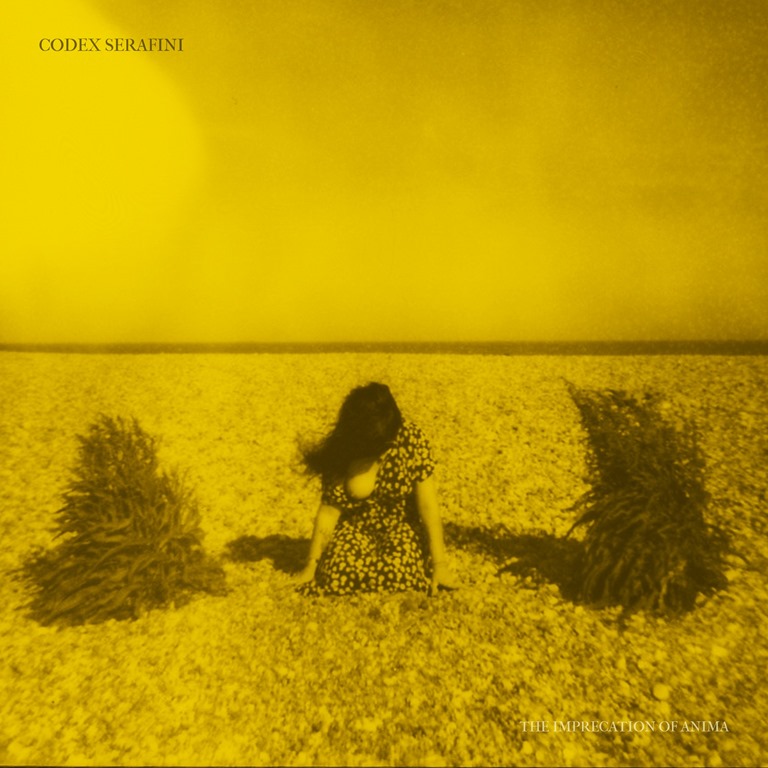
Having had something of a chuckle at Henge for their pseudo-space mythology and psychedelic psilliness, I find myself squaring up to purveyors of genre-straddling experimental doom, Codex Serafani. Their biography explains: ‘Their journey started a long time ago, some say on Saturn, some say in the subconscious of the human psyche, coming out in different manners through the ages, channeled by mystics, witch doctors, shamans, free thinkers, free spirits. But we do know that what has become Codex Serafini travelled here from their home world on Enceladus in 2019 and crash landed into the music scene of Sussex.’ Of course they did.

But what are the chances that a I’m writing this review, an article from The Guardian pops up in my news feed reporting on how astronomers have spotted a six-thousand mile plume of water vapour blasting from Enceladus – a small moon belonging to Saturn believed to be one of the most promising places in the solar system to find life beyond Earth? As coincidences go, this was an usual one, and one which befits this band.

With a name which references Luigi Serafini’s Codex Seraphinianus, an illustrated encyclopaedia of an imaginary world, written in an imaginary language, it’s clear these guys have a keen interest in the realms of fantasy and mythology, to state it lightly.

I suppose that the concept piece whereby the concept includes the artist as much as, if not more than, the album goes back to Bowie – but back in 1972, this was new and novel, and moreover, Bowie was unique and an artist whom you could almost believe was from another planet. But even then, however much the concept became all-encompassing, it was also clear that the concept was a persona. But to base an entire career on a persona – not a media or public persona, but a far-fetched one which requires the suspension of disbelief – can be somewhat limiting. Where do you go when you’ve explored the concept to its logical limits?

In creating such a vast and multi-faceted alternative universe, Codex Serafini have ensured an abundance of time and space in which to explore and expand their concept, and rather than it being self-limiting, the challenge will be to test the capacity of their imagination, not only conceptually, but also musically.

While the adage that you should never judge a book by its cover hold some merit, one can tell much about an album by the ratio of its duration to the number of tracks, and The Imprecation Of Anima has a running time in excess of forty-five minutes and contains just four tracks. We know we’re in ‘epic’ territory before hearing a note, and the first of the four compositions, ‘Manzarek’s Secret’ unfurls slowly with a long droning organ (which one suspects is no coincidental nod to The Doors) and chiming percussion. It’s not long before a thick, gritty bass and reverb-heavy vocal incantations are joined by some wild brass to burst into the first of numerous big, jazz-flavoured crescendos. At nine-and-a-half minutes long, it’s epic, but only an introduction ahead of the fifteen-minute swirling mystical monster that is ‘Mujer Espritu’, which brims with Eastern promise and sprawls in all directions at once.

Single release ‘I Am Sorrow, I Am Lust’ is perhaps the least representative song of the album as a whole: it’s snappy, exuberant, uptempo, jazzy, rocky, busy, climactic, and fairly structured – and clocking in at three minutes, it feels like a single when standing alone, but more like an aberrant interlude in context of the album ahead of the seventeen-and-a-quarter minute ‘Animus in Decay’. Now this is a wig-out! It’s heavily psychedelic and transitions through a succession of passages on the path to – what? Enlightenment? It’s certainly a journey, whichever angle you approach it from. It builds and grows in volume and tempo, then falls again and there are some expansive ponderous sections and shifts like sand dunes in a vast sonic expanse.

And so it may be that the concept is a little daft, but they deliver The Imprecation Of Anima – a work that’s as ambitious as it is immense – with absolute conviction, and the vast sound pulls you into Codex Serafini’s (other) world. Inventive and accomplished, it’s a truly mighty record.

AA

thumbnail_THE IMPRECATION OF ANIMA FRONT copy