Archive for the ‘Albums’ Category

zeitkratzer productions / Karlrecords – 22nd September 2023

Christopher Nosnibor

SCARLATTI represents something of a departure for zeitkratzer, the neoclassical collective headed by Reinhold Friedl, master of the prepared piano and a renowned avant-garde composer in his own right. While their performance and recordings usually focus on modern composers and avant-gardists spanning Stockhausen and John Cage via Whitehouse and Lou Reed, with a reinterpretation of Metal Machine Music, here they turn their attention to the altogether more historical figure of Domenico Scarlatti (1685-1757). He is best known – although this is relative – for composing some five hundred and fifty-five keyboard sonatas, and his being a progenitor of classical music. But a large portion of his work went unpublished in huis lifetime, and much has only been available sporadically since.

As the notes which accompany the album explain, ‘Little is known about Domenico Scarlatti… His music is, so to speak, left to its own devices: free, cheeky, playful, sonorous, surprising… Harmonically strolling again and again into unforeseen regions, the ear leads, not the theory; and also the fingers get their right: playful and haptic it goes. Scarlatti explained, “since nature has given me ten fingers and my instrument provides employment for all, I see no reason why I should not use all ten of them.”

But Scarlatti does not contain music by Scarlatti. Instead, the six tracks presented here are all composed by Friedl in response to Scarlatti’s work.

As such, this is much a celebration of Scarlatti’s ideas and approach to composition and so the explanation of the process and thinking behind it bears quoting: ‘Freedom, friction and listening pleasure instead of convention: “He knew quite well that he had disregarded all the rules of composition in his piano pieces, but asked whether his deviation from the rules offended the ear? He believes there is almost no other rule than that of not offending the only sense whose object is music – the ear.”

‘Reinhold Friedl applied this principle and composed the music for a choreography by dance company Rubato. Dance music drawn from Scarlatti, who was so inspired by dance music. The material of the piano sonata F-minor K.466 is twisted anew in all its richness, shifted back and forth, declined, frozen, noisified, sound structures extracted, floating. Those who know the sonata, will more than smell it’s [sic] shadows.’

The six pieces are indeed varied, in terms of mood and form. ‘lias’ is booming, droning, woozy, slow discordant jazz, low, slow, and with lengthy pauses. It’s not something anyone can dance to, and rather than light and playful, it feels dark and sombre. This is less true of the altogether sparser, but stealthily atmospheric ‘muget’.

‘pissenlit’ blasts in with churning industrial noise, a snarling blast that lurches and thunders, crashes and pounds withy relentless brutality. It’s clearly as far removed from the music of the seventeenth century as is conceivable, but beside the lilting piano and quivering, droning strings and subsequent stop-start levity of ‘reine des prés’ the sequencing of the pieces serves to highlight Scarlatti’s versatility, if not necessarily his predilection for playfulness. The playfulness manifests differently and unexpectedly here: ‘pissenlit’ is in fact the French word for ‘dandelion’, a plant often associated with a certain element of fun, of lightness, so the fact that this piece is three and a half minutes of gut-punching abrasive noise worthy of Prurient or Consumer Electronics is illustrative of the disparity between expectation and actuality.

Discord and discomfort abounds as drones and strings tangle amongst one another, heaving and wheezing and occasionally offering glorious, sun-hued vistas through the breaks in the widely varied forms, which feel elastic, and as if Friedl and co are stretching the fabric of the material to see just how much it will give. And it turns out, there is a fair bit of room. ‘reine des prés’ explores space, the gaps and pauses between the notes, and feels like a sort of musical cat-and-mouse which would equally work as soundtrack piece, but it has a cartoonish quality which means it’s more Tom and Jerry than anything else. But it is by no means flippant, throwaway. Entertainment is serious business, after all.

‘violette des marais’ brings pomp and drama… while the final track, ‘astis’, is skittish, playful but also frustrating in its hesitant, halting structure.

Scarlatti is interesting, entertaining, and bold, going out on a limb to present such an unconventional interpretation of a historical artist’s career. But this is largely the purpose of zeitkratzer: together, they re-present music, excavating the archives but presenting them through a prism of contemporary and avant-gardism, with jazz leanings but without being jazz in the way most would interpret it. In short, zeitkratzer continue to push and redefine musical boundaries, and long may they do so.

AA

a1585066167_10

Negative Gain Productions – 8th September 2023

Christopher Nosnibor

It likely seems strange to anyone born in the last thirty years that electronic music as we know it simply wasn’t a thing at one point. If the Seventies saw a slow emergence of new technology in music, it wasn’t until the early 80s that that technology became accessible – that is to say, affordable and more widely available in commercial terms. This was truly revolutionary, and to hear bands like The Human League, Soft Cell, Depeche Mode, all coming through in the charts felt like, well, the dawning of a new era. Which is precisely what it was, and this would evolve in darker directions – as well as dancier, poppier ones – as the decade progressed, and through the 90s, by which time the sense of revolution had become fully assimilated. No-one bealed about the lack of instruments involved in the making of the Utah Saints’ album.

You can see why your traditionalists hated it, of course, and the Musicians Union, too, and this friction did continue into the 90s: as they saw it, drum machines threatened to make drummers obsolete, and if you had a synthesiser which could do bass and lead, both bassists and guitarists would be out of work! It was of course pure knee-jerk, and one wonders to what extent the same is true of the outcry over AI, but on that score only time will tell. As it stands, history had proven that home taping didn’t kill music – no, that would come later with the advent of streaming, and not illegal streaming via Napster and subsequent P2P platforms like Gnutella and Soulseek.

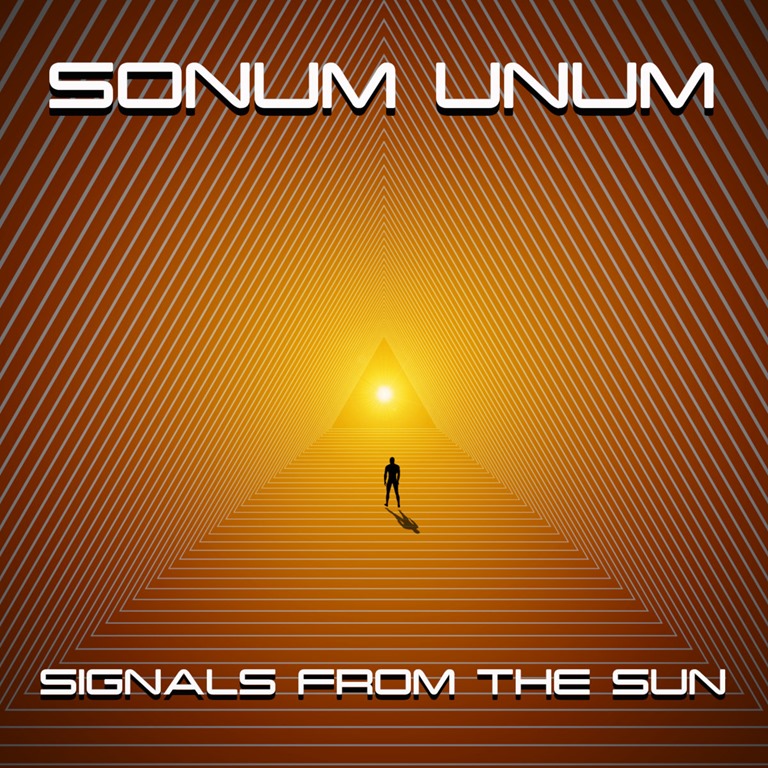
This s the backdrop for the debut album for electronic rock duo, Sonum Unum. Signals From The Sun is, according to their bio, ‘heavily inspired by 80s and 90s eras electronic and synth-pop music. Dark and ominous tones, ambient textures and thumping beats abound while lush, layered vocals soar to epic and cinematic tiers.’

It’s tempting to slide into the easy commentary which maintains the narrative of this being an album with a retro vibe, primarily because it’s true: it’s an amalgamation of two decades of electropop slickly delivered to draw in elements from specific acts, but the entire oeuvre of the timespan, from bolder darker grooves of gothier European dark electro, but also incorporating elements of the emerging case sound, with the quickfire drum builds that pace the way for expansive choruses.

There are times where it feels as if their approach to appropriation – essentially pulping and compressing the very essence of the forms into smooth perfection – results in songs that are simply too generic to have a real sense of character or identity. But then, plough through myriad releases from that time span from acts who either bubbled under or who only had a hit or two, and you’ll find the same is true of the rest of the album tracks. Moreover, to return to the question of sounding ‘retro’ – it feels like an increasingly obsolete concept. More or less everything draws on something precursive, and most of what is starting to be a recycling of a recycling. It’s no longer a case of a seventies or eighties or nineties revival: all of these things now exist in perpetuity. Retro is the new contemporary, and I can’t decide of the seeping sadness I experience listening to it is because of the emotive quality of the songs – which are tightly crafted more than gripping, to the point that they slip past without for a second taking hold – or if it’s because of the way they evoke so much that entirely removed from the songs themselves.

Signals From The Sun is Mr Mister to Depeche Mode via Eurythmics and A-Ha and Nine Inch Nails and Bastille. Slick, anthemic, it seeps nostalgia and has immense commercial appeal if it finds its way to the right channels and outlets.

AA

a3576946630_10

ant-zen – 16th September 2023

Christopher Nosnbor

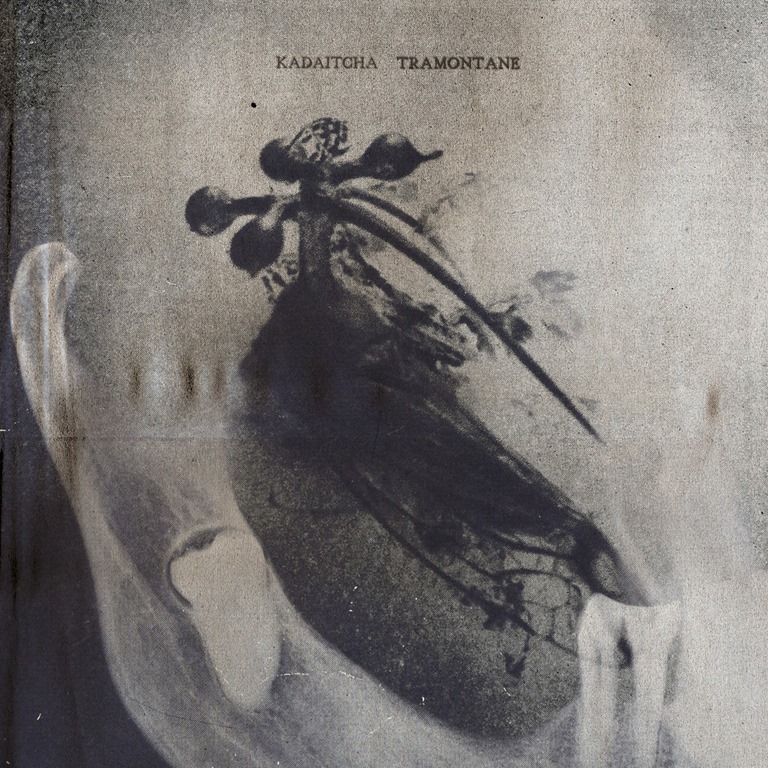
Four years on from Tar, Ukrainian industrial duo Kadaitcha, consisting of Andrii Kozhukhar and Yurii Samson, have overcome many, many challenges to deliver album number five, in the form of Tramontane.

The tracks which appeared on their limited lathe-cut single last year do not appear here, and this is admirable: singles so often tend to be used as launchpads for albums, and it was particularly common in the 80s and 90s that albums would sell on the basis of a couple of singles, but would have next to no other decent tracks. In the days before streaming, this was something that was easy to get away with, since the only way of hearing the album was by buying it, which you would do based on the singles. But then, the risk could be reduced by taking punts using your half price or free options through Britanna Music, or similar. The advent of streaming hasn’t really improved things, though, because now, at least in mainstream circles, the album is essentially obsolete.

But outside the mainstream, the album is thriving, and artists are pushing the format now that the constraints and limitations of physical formats aren’t necessarily dictatorial in determining duration, and there are infinite options for exploration. The single wasn’t so much of a stop-gap release as a standalone document of a period in time. But the key point here is that Tramontane is very much an album, and a work to be approached as such. The notes which accompany the release are almost hallucinatory – not quite Burroughs cut-ups, but fragmented, non-linear, and they serve to articulate the essence of the music contained here. Stylistically, it’s tight and cogent, and there’s a flow to it, too, which begins with the appropriately-titled ‘Intro’, which is precisely that – a short instrumental intro piece which paves the way for the ten heavyweight cuts which follow. But within that coherence, what Tramontane offers is a work which really goes all-out to disrupt and unsettle.

‘Niello’ draws primarily on the sound and style of earlier industrial music, the electronic pioneers of the late 70s and early 80s, the likes of DAF and Cabaret Voltaire, but with its distorted, menacing vocals, there’s an element of the later evolutions of industrial which emerged in the mid 80s. It seems to be that there are very different understandings of industrial, and while Al Jourgensen may be a huge fan of William Burroughs and the music that formed the body of the first wave of Industrial music, namely Throbbing Gristle and also the wild tape loop works of Foetus and the heavy percussion of Test Dept, it’s industrial metal and harsh post-NIN electronica which have come to become synonymous with industrial latterly.

On Tramontane, Kadaitcha have brought the two forms, old and new, together, and the result is discordant, noisy, difficult. And these are its selling points. It feels like a guided tour through the most challenging aspects of Industrial music through its evolution and history.

‘Knife’ is a sparse, oppressive low-end throb pinned down by a dull, thudding, muffled-sounding beat, over which twitching electrical streams flash and flow while monotone vocals are unsettlingly detached. The percussion really dominates on the tempestuous ‘Liars’ and any and all references to Einstürzende Neubauten are entirely appropriate. It’s a thunderous, dense racket where the low end really stands to the fore, but it’s tame in comparison to the dark ‘Offering’: even when it drives out as a heavy and insistent bass riff, it feels unfinished, undercomposed. Yet therein lies its success: it feels organic, and nothing is overdone.

The mangled noise and droning distorted vocal on ‘Fossil’ is pure Throbbing Gristle, a barrelling barrage of blitzkrieg laser synth bleeps and a whole mess of midrange and lower end distortion and dirt, churning, discordant, the monotone vocals almost buried in the tempest of overloading unpleasantness, and ‘Seeds’ is similarly unpleasant and uncomfortable, everything going all out on overdrive.

It all comes together on ‘Insight’: beginning as a gentle, spacious, mellow post-rock guitar-led piece, it soon erupts into a mess of overload akin to Metal Machine Music, only with drums and sinister vocals. It’s got the lot, and as the album enters its final stages, it seems to consolidate the elements of the previous tracks to punch even harder, with the percussion harder, the grinding morass denser and darker.

Perhaps a reflection of the circumstances in which it was created, perhaps a reflection of the times in the world at large, Tramontane is heavy and at times harrowing. The lyrics may not be decipherable for the most part, but the mood requires no translation or interpretation, and Tramontane will crush your soul.

AA

a3600121745_10

Sonoscopia sonos – 15th September 2023

Christopher Nosnibor

Trobollowitsch is certainly a name that sticks in the mind, and so it was that back in 2016, I penned a piece on Roha by the Austrian Sound artist. At the time, I struggled to really connect with his conceptual compositions.

This latest offering finds him working with Thomas Rohrer, a Swiss musician, who ‘plays the rabeca, (a Brazilian fiddle), and soprano saxophone’, and whose work ‘is largely based on free improvisation, but also engages in a dialogue with traditional Brazilian music.’

The collaboration between the pair actually began in 2017, but they didn’t begin work on any recording until January 2021, when, according to the bio, ‘they embarked on a duo project combining Trobollowitsch’s rotating mechanical turntables equipped with branches, wood and dried leaves with Rohrer’s soprano saxophone, small objects and rabeca… During their collaborative recording process, renowned singer Sainkho Namtchylak from the Tuva region contributed her captivating, versatile voice, which she has used to great effect in a variety of musical genres, including jazz and electronic music.’

Given their diverse background and different modes off operation, this collaboration was always going to be not only eclectic, but a collision of diversity, and the question would always be to what extent do they compliment one another, or otherwise pull in such different directions as to render the work more of a competition than a collaboration? Given that both Trobollowitsch and Rohrer are credited with ‘recomposition’ of several tracks, there’s a sense that this effort is defined, if not by friction as such, then by differences, and a working method which entails dissecting and reconstructing, a restlessness and dissatisfaction.

Crackling static and an electrical hum are the key elements of the title track. It’s somehow both spacious and claustrophobic, and as the sounds rumble and echo around, you feel like your shut right in a small room – more like a walk-in cupboard – as the serrated buzzes and grinding drilling sounds fizz and fret all around, gradually warping and twisting, sometimes ballooning and others shrivelling. Suddenly, I jump. Is that my phone vibrating? No, it’s not, it’s a vibration puncturing the third wall, something that sounds like it’s in the room rather than coming from the speakers, which are by now emanating shrill blasts of feedback.

The sound collaging on this album is something else, leaping into the three-dimensional at the most unexpected moments, and the sounds and textures constantly shifting to forge a work which is more than music, more than sound: this is something you feel, not emotionally or cerebrally, but physically: it makes your fingers tingle and move in a quest to grapple with the details. Sometimes those details are dark and demonic, as on the unsettling ‘Ovaa’. The vocals are rasping, gasping subterranean, subhuman grunts and gasps, strangled cackles that cark and bleat and croak and claw up from the sewers. It’s pure horror.

There are undulating, stuttering low-end bumps, there are hornets the size of buzzards as your car breaks down and your skull slowly crumbles as your brain struggles to process everything… anything. This is a soundtrack to something that simply shouldn’t exist; it’s aa soundtrack to your worst nightmares, as yet unimagined.

The production, the panning, the listening experience of interacting with this in the way it’s intended is terrifying and surprising in equal measure, as tweets and twitters occupy the same space as thunderous thumps and insectoid skitters and metallic scrapes and… there’s a lot going on, and it all makes for in accumulate and intense and really rather difficult sort set – not really of compositions, but largely incoherent audio processes. The accumulations and stacking of the sounds is by no means truly random or haphazard, but their assemblage creates as experience which feels altogether more happenstance. It’s a scrappy, scratchy, stop-start mangling of noise, and at times, it’s scary and strange, at other’s it’s ominous and eerie. It’s unsettling, and difficult to absorb. It’s incredible.

sonos#26A_front

1st September 2023 – Panurus Productions

Christgopher Nosnibor

A couple of years ago, Fading Tapes released Cartographer, an hour-long album divided into four near-equal segments which thoroughly confounded expectations, for it was no ordinary collage of found sounds assembled to charter fields of exploration.

On Rites Of Passage, they promise a work of greater urgency than its predecessor, where ‘sparse percussion forms the pulse of the ceremony, as whistles and less identifiable sounds weave through and over droning amplified strings and effects… The remnants of some post-apocalyptic culture so far removed from the catastrophe that the relics of their past exist only as cyclopean ruins and talismans.’

This is some evocative verbiage, and it’s fitting for such an evocative aural experience. Whether or not it’s music, well, opinions are likely to be divided.

On the subject of division, Rites Of Passage is far less equally divided than its predecessor, featuring two compositions, in the form of the ten-minute ‘Bantu’ and the twenty-seven minute title track. An album of two halves it is not. Harder and harsher than its predecessor it really is.

‘Bantu’ is a warping drift of psychedelic semi-ambient desert-rock with some twisted, twangy guitars stretching overheatedly across a lethargic beat which clatters and clumps lazily. But there’s a trilling recorder or something in the distance and the guitars build to a swirling drone and as the sound swells the drone – the buzz of a loose, downtuned string against a fret – grows. That woodwind… it sure as hell ain’t Jethro Tull.

And then… ‘Rites of Passage’. Epic doesn’t cut it. If Earth 2 was ground zero for heavyweight drone, the last thirty years have seen a large number of acts follow suite. It’s fitting that Earth 2 was released thirty years ago, really, as it provided some useful context. While Sunn 0))) have taken the template of Earth 2 and pushed it to the absolute limit in terms of crushing doom-laden drone, others have expanded on this premise. Sleep’s Dopesmoker may be a landmark release in this timeline but the fact s that there have been so many influential offshoots that it’s not easy to keep track.

But ‘Rites of Passage’ is hypnotic, mesmerising. You find yourself zoning out. Of course you do. You’re supposed to. ‘Rites of Passage’ is a remarkable track which plugs away at a relentless motoric beat for its entire duration. There’s a wall of noise building. Sensurround, now, and an enveloping shell of abstract noise around it, a squall of sound.

Glorious and tense and painful in equal measure Rites Of Passage is one hell of an album: All the guts, all the grit, and all of the weight.

AA

AA

a3793804968_10

Panurus Productions – 6th October 2023

Christopher Nosnibor

Sometimes, you really crave something that’ll not just blow away the cobwebs, but blast a hole in your cranium big enough to pass not only the cobwebs but the entire house. That’s what I found myself craving tonight. Because… well, life. Things which should be simple and straightforward end up being stressful and taking half a day. And such days just spiral and the pressure builds and then someone tells you ‘you need to chill’ – to which ‘you need to fuck off’ seems a reasonable response. Sure, some breathing exercises and a spot of Yoga are all well and good, and I’m not actually averse to doing ‘nice’ things that may help to lower my blood pressure and help avert the risk of an aneurysm or a stroke before I’m fifty, but… but sometimes, before that, you need to release the rage, and some sonic obliteration fulfils the urge to purge. And sometimes, a short, sharp shock is the best therapy.

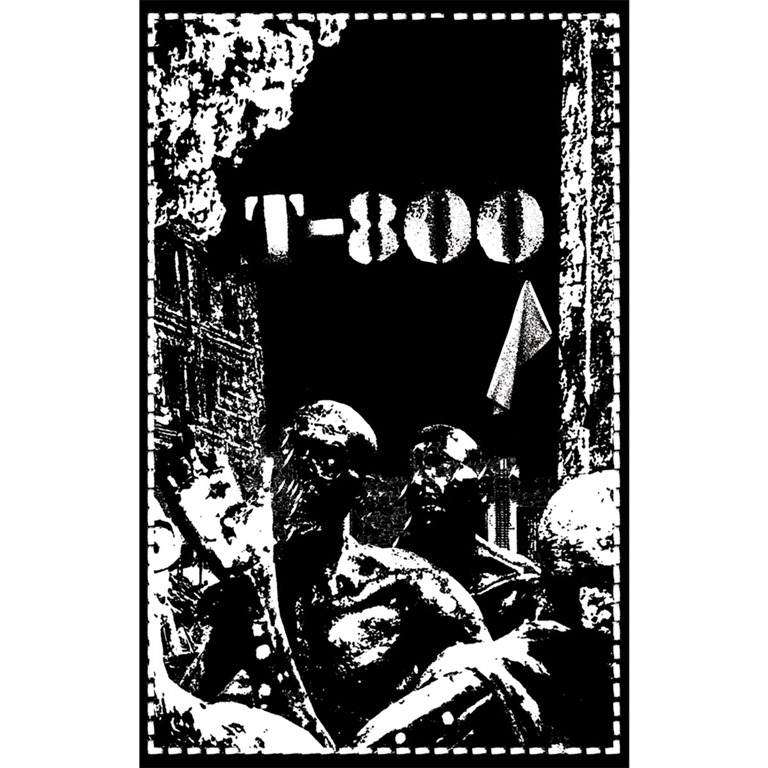
I was sold the second I saw the description of this release, offering up ‘An incendiary explosion from the moment you press play, salvos of chainsaw guitars and fully automatic percussion issue forth at the command of a monstrous and varied vocal delivery. Relentless and efficient, the force of T-800’s delivery is only augmented by their precision, and there is no let up in the twelve minutes this release takes to achieve its destructive aims.’

Twelve minutes? It’s an EP, right? Nope: ten tracks, the longest of which is a minute and thirty-five seconds long. I suppose it might still be an EP, since it would actually fit on a 45rpm 7” single, and I cast my eyes to my beloved 3CD box set, Grind Madness at the BBC, which collects the Peels sessions of the likes of Extreme Noise Terror, Carcass, and Napalm Death and contains about six hundred tracks, including ‘You Suffer Pt 2’, a 15-second recording of the legendary 1-second ‘You Suffer’ which is actually four seconds of noise and eleven seconds of reverb fading.

T-800’s eponymous release is nasty, gnarly, brutal, guttural gargling and crazed shrieking vocals are barely audible beneath barrelling bass, clattering, crashing drums and the most overloading, distorted guitars imaginable. This is proper old-school grindy thrash racket, and make no mistake, it’s fucking savage. The mix is dingy, dirty, and whwwn they do slow it down a bit so everything isn’t a blizzarding blur of overloading distortion played at three hundred miles an hour (look no further than the cruel pounding blast of ‘By Design’ for that), the results are bleak and tense, with the thirty-two second ‘I’ being a slow crushing loop that’s reminiscent of some of Swans’ early offcuts, as featured on the Body to Body, Job to Job, compilation.

‘Perfume Corpse’ is as pretty as it gets in its ruthless dissection of life and all things, from the raw raging of ‘Hacked Mainframe’ to the vitriolic gut-spilling of ‘Orbital Bombardment’, and in closing, ‘II’ feels like the liquefaction of a corpse seeping into the ground. And as it ends, the realisation strikes that twelve minutes is enough. T-800 is furious and filthy, and its execution is spot on. But it tears at your guts and kicks without mercy.

AA

a3875433826_10

Hærverk Industrier – 25th August 2023

Christopher Nosnibor

Having a memorable name counts of a lot – as does having one that stands out at the top of Google searches. How many times have you had conversations where one of you has been struggling to think of the name of… that band… that band… You know, the one with… they did an album…. They supported… clicking fingers, scratching heads, gesticulating. Nah. And the acts that are simply untraceable, particularly those with banal single-word monikers. It’s like they didn’t think about the practicalities when picking a name – or they simply have no interest in being found, which is commercial suicide before they’ve even started.

This is not an accusation which can be levelled at this Oslo-based noise rock duo, who follow up their 2012 self-titled 12” EP on Handmade Records and self-released 2017 cassette This Century with their new album An Ki, which is being released by Hærverk Industrier and promises ‘Four tracks of extreme dynamics, density and intensity, resulting in an almost claustrophobic chaos of sheer rock ‘n’ roll ecstasy (sic)’. Burning Motherfuckers is neither forgettable nor hard to find.

The same is true of their music, in terms of its being memorable at lease. An Ki is an album which contains just four tracks, but ‘Lost It’ is a beast which clocks in at ten and a half minutes, and the title track is over twenty minutes long, making this a monster that runs for over forty minutes of feedback-strewn riffery. It’s a noisy mess of a record, and truly glorious in the most cacophonous and challenging way. ‘Difficult’ music, when it’s harsh and loud and discordant, isn’t simply something you can step on from. It’s hard to describe, but it’s disruptive, physically, and mentally. Such turbulence disrupts the mindflow and makes waves around the organs.

‘Eilert’ builds and builds and builds and it takes the very idea of building to a ludicrous level, up, and up, and up… what do you do with this? The form is very much 90s underground alternative, and this manic racket calls to mind the likes of Terminal Cheesecake – but then again, the driving guitars and thrashing drums of ‘Lost It’ are quite reminiscent of That Fucking Tank – arguably one of the greatest noise duos ever, and an act who really pushed the parameters not only of noise rock, but of the two-piece format to the max. And Burning Motherfuckers… woah, do these bastards make a racket. ‘Lost It’ hurts; the tempestuous assault of everything all at once is not comfortable. But it’s more than that: the vocals are deranged, demented, and this is brain-splitting, cracked, something else, an unapologetic mess of noise.

‘Unless It’s Trees’ is a real departure and stands apart from the rest of the album: a soft, almost folky indie piece, it’s largely bass-driven and it’s uncomfortable but gentle at the same time.

And then there’s the title track. Fuck, and fuck, and fuck. It’s a monster in every sense, taking the mutant form of an eternal guitar drone and mangling noise which builds while discordant vocals melt and burn among a riotous racket.

It’s not neat or tidy, it’s not even ordered or organised. But it’s not conventionally noisy or messy: this is something else. It’s a new level of mangled noise and it’s difficult, awkward, It hurts, and it feels like taking a kicking and being hit around the head with a plank. These motherfuckers sure know how to make music with impact.

AA

a1641074360_10

Artoffact Records – 22nd September 2023

Christopher Nosnibor

VOID always seems like the most appropriate title for a counterpart to a release called NULL: it was, indeed, the title for a brace of EPs released by Foetus in the early 00s as companions to the album Gash.

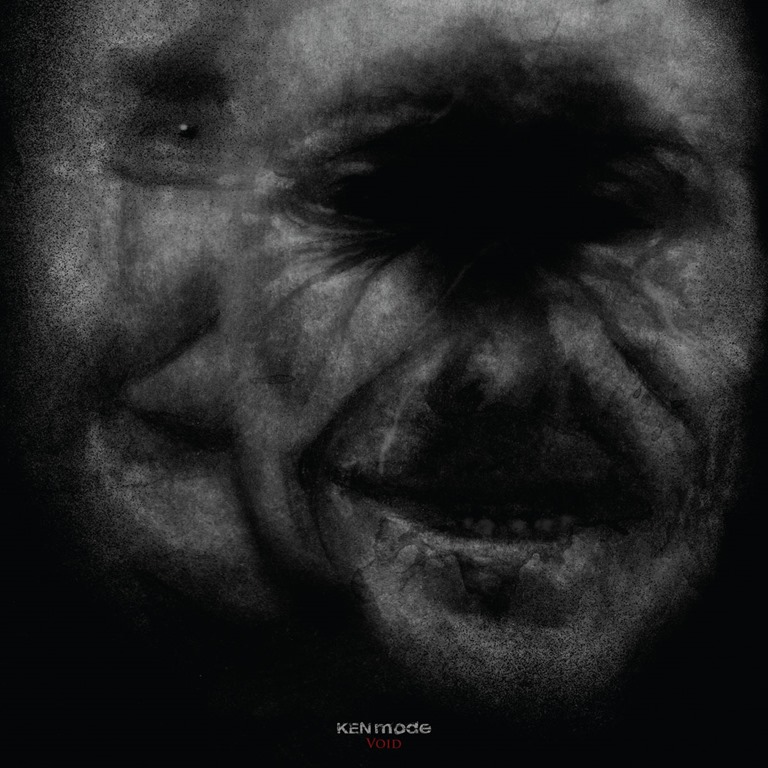
But with this, the title is more than simply an extension of a theme in terms of title. As the accompanying notes explain, ‘VOID, the companion piece to last year’s NULL LP, has a decidedly more melancholy and disappointed aesthetic than its predecessor. Featuring 8 new tracks recorded and produced throughout the fall and winter of 2021 by Andrew Schneider, mastered by Carl Saff, with artwork and layouts by the band’s longtime collaborator Randy Ortiz.’

Despite now marking twenty-four years of squalling noise, tenth full-length Loved (2018) found the band hitting new peaks of intensity and gaining newfound traction, and not just because of the vaguely disturbing cover. Combining weight and ferocity, their back catalogue straddles the abyss between The Jesus Lizard and Swans. It’s fair to say, then, that KEN mode are hardly celebrated as a party band, and writing in Decibel Magazine, Shane Mehling summarises the diptych of NULL and VOID as “It’s like the first record is you fighting, and this one is you losing”.

It’s a pretty accurate summary. That is to say, VOID is pretty fucking bleak, harrowing even. ‘The Shrike’ makes for a tense and tempestuous opening, where everything blasts out all at once before sinewy guitars twist and entwine like a contraction of the intestines with the pain of food poisoning before successive deluges of noise assail the senses. The tension draws the sinews so taut as to burn, and a mere four minutes in you feel the anguish rising through the gut and your throat tightening.

Single cut ‘These Wires’ is almost accessible, a sedate intro building the tension before the levee breaks on the lung-bursting anguish. It’s eight minutes of blank fury, raging nihilism that doesn’t necessarily make you feel better. The stab at catharsis feels blunted. Confined, entrapped. It’s tense, and you feel your heartrate well. VOID is so, so, dense, the music low and churning the

Comparisons are few and largely futile in the face of this, but it’s Kowloon Walled City’s bleak, desolate forms. The disappointment emanates from every chord, every pained syllable. Life… yes, it tears you up and it crushes you.

‘We’re Small Enough’ runs in ever-tightening circles around a repetitive bass groove motif, and become wound more tightly with every loop, and then ‘I Cannot’ crashes in and it’s like you can feel the band throwing themselves headline against lead-lined walls in desperate and futile attempts to escape. Escape what? Life… ‘A Reluctance of Being’ encapsulates that sense of struggle, the weight of simply existing some days. And yet just when you think you can’t do it, and don’t think you can even get up on a morning, you do, because you simply do, and then you get through another day, and then the next. It’s like wading through treacle, but what else are you going to do? I say ‘you’ in the hope that in redirecting the personal the universal it will take on a wider resonance. But for every ‘you’, I mean me. But you know that. And this track is the most gut-wrenching brutal.

Previous single ‘He Was a Good Man, He Was a Taxpayer’ is another slow, brutal slice of pain. Another shining example of what no-one would likely consider a single, it’s a crawling slogger spanning five monolithic minutes of bludgeoning noise, angry, grey, dark, dense, relentless. VOID is the soundtrack to staring into the void, while contemplating the practicalities and the future. Is there even a future? What if I step off here? What am I looking at, what am I facing? Is there really nothing? Probably not, and we need to accept that perhaps the end is the end.

VOID stands on the edge and looks down. Perhaps this is it. Perhaps there is more. VOID doesn’t offer hope, but it does provide a backdrop to your existential crisis while leaving you gasping for air.

AA

a2219072561_10

Majestic Mountain Records – 29th September 2023

James Wells

One day, I’ll see a press release or bio for a stoner rock back that doesn’t reference Queens of the Stone Age. But I don’t expect that will be any time soon. They are, of course, the only band of the genre to have graced the mainstream singles and album charts around the globe, so it’s a handy touchstone for reviewers whose experience is limited to the mainstream and likely a useful reference for radio folks who operate a more limited sphere of reference for the benefit of listeners who tend not to really explore beyond, well, their back garden.… but how many who are seriously into the style hold QOTSA as their benchmark? I’m not knocking them in the slightest, because I very much dig their shit – but the best-known and most commercially successful exponents of any genre are rarely the choice of those with a deeper knowledge and appreciation. It’s the same as picking the Pistols as the definitive punk band or Oasis as the quintessential indie act.

‘Gunman’ crunches in with a gritty riff, and it’s gritty riffs that dominate the album – as they should, of course. There’s something about the production… the bass is ultra-low, almost subliminal, and there’s a lot of space and separation; the quieter moments find the guitars switch to clean, and ripple and echo, not seductively, but compellingly, absorbingly forging texture and atmosphere.

They go slow early, with the second song, ‘Dead Space’ going deep from its chiming, hypnotic intro via its lumbering riffage and evoking hot nights and open skies while bringing both heavy psychedelia and mellow melody to proceedings.

The songs alternate between the slow and reflective and monster rifffery, but even then, it’s the riffs which stick in the mind: ‘Ruins’ and the Soundgarden-esque ‘Pigs’ drive hard and fast, while ‘Wake’ is driven by rolling drums and chunky bass, the harmonies and brooding grind inviting comparisons to Alice in Chains in places.

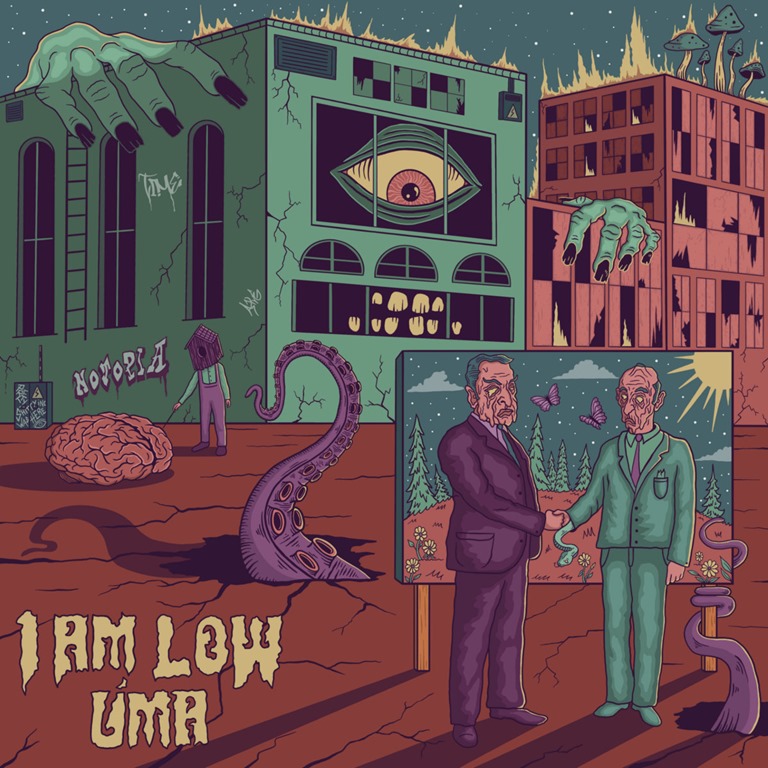
The nine tracks on Úma strike a neat balance between melodic and meaty, hitting a sweet spot that feels just right, with ballsy riffs and tunage meeting in the middle to make for a solid album.

AA

a4192541020_10

Cruel Nature Records – 28th July 2023

Christopher Nosnibor

The Sargasso Sea is a unique place on earth: situated within the Atlantic ocean, it is the only sea without a land boundary – a sea within an ocean, in other words – its borders defined by sea currents. Its name is derived from to the vast ‘sea’ of free-floating seaweed called Sargassum which occupies the space, and it’s an ecosystem like no other, the aquatic equivalent of the Amazon. And yet its existence appears to be considerably less well-known, despite the success of Jean Rhys’ 1966 novel, Wide Sargasso Sea, which has been adapted for film, stage, TV, and radio and has been lauded as a pivotal work of postcolonial feminism. And it’s this book which I think of when I hear the word ‘sargasso’ – although clearly, it has absolutely no bearing on this album. What even is a sargasso sky?

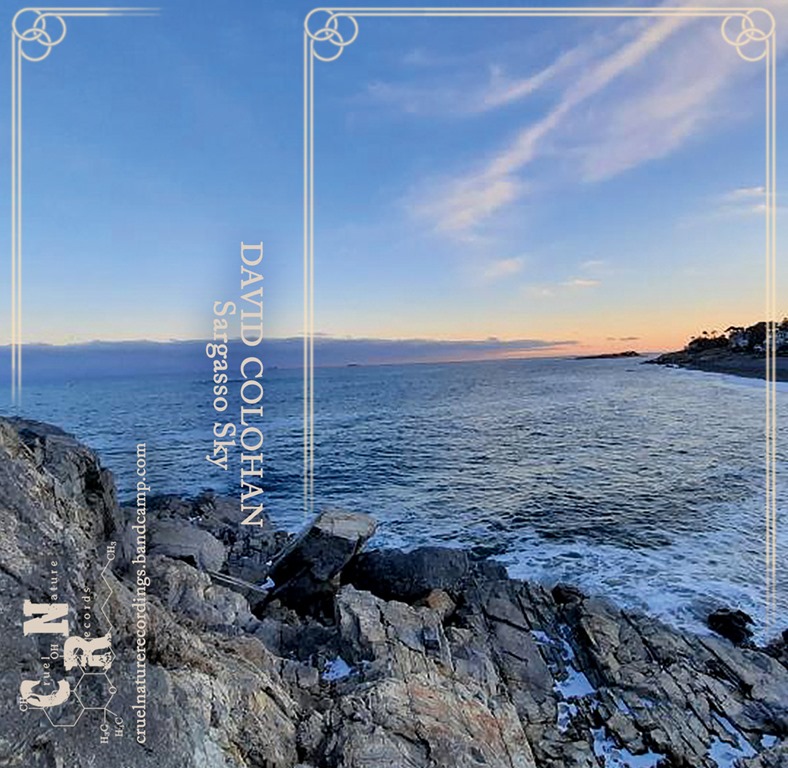
The liner notes paint the scene, where ‘A sargasso sky shimmers above a twilit American shoreline, slipping in & out of time. Via a way slowed down take on jazz fusion, limpid pools catch its reflection, ebbing & flowing with the soon to come stars… The cover images taken at Marblehead, Massachusetts depict something of the aura of an area that H.P. Lovecraft considered life-changing. Step into the sea & sky….’

There are many layers, then, to this release, which extend far beyond the surface of the music itself. But when it comes to the music, Colohan presents ten pieces, all comparatively concise (only four extend beyond the five-minute mark, and none reach beyond eight), and the form is ambient yet structured, with rippling washes of synth gliding over the mellow mists of sound which float invisibly through the air. Despite its title casting its eye above the horizon to the sky, parts of this album is given to a preoccupation with the water, still, as exemplified by titles such as ‘Sacred Teeming Waters’ and ‘Longshore Drift’.

Whereas much ambient music is formless, abstract, the instrumentation vague, on Sargasso Sky, David Colohan offers musical works with structure, and with the implementation of identifiable instruments.

‘Longshore Drift’ is led by sparse piano, backed by a sliding, bulbous synth bass that’s extremely eighties in sound, and elsewhere on the album, long resonant voices dominate, from flute to organ. These are clearly synth voices, sounds conjured digitally in response to creative needs but also evolving technology facilitating new music. There are some bold drones which surge and swash on ‘Anoint’, and ‘Summers Old as Stars’ brings late 70s and early 80s synth stylings to the fore, with hints of Tubular Bells and Vangelis, and the myriad music of this era which remained anonymous. But for all that, Sargasso Sky is subtle and it’s still not overtly electro for the most part, and it’s not of the prog persuasion either. But what is it? Certainly, there are parts which do very much pursue progressive forms, and Sargasso Sky is very much an exploratory work: spacious, undefined by limits of composition or instrumentation.

AA

a2197923751_10