Reiner Van Houdt presents an interesting proposition: a classically-trained pianist who’s worked with John Cage and Luc Ferrari, he also plays in Current 93 and has worked in collaboration with Nick Cave, John Zorn and Antony Hegarty. The fact this release is on the Hallow Ground label should perhaps give an indication that this is no soft neoclassical effort – although I’m in no way criticising neoclassical music here: I’m simply saying that this dos not sit within the field, and is harder, harsher, heavier, at least in places. There are no neat melodic structures to be found on Paths of the Errant Gaze, and no instrumentation which sits within the classical bracket: this is very much an electronic album.
On the face of it, there isn’t much to this. Paths of the Errant Gaze is an album which is extremely quiet, sparse, minimal, and the detail – and the quantity of source material involved in its creation – are not immediately apparent. Just as Burroughs and Gysin theorised on the power of ‘The Third Mind’ through the act of collaboration, so Van Houdt believes the act of recording creates a ‘third ear’. And so it is that Van Houdt built Paths of the Errant Gaze from myriad recordings gathered from a near-infinite array of locations.
‘The Fabric of Loss’ creeps ominously, scraping strings like creaking doors echo in the still air as dust motes descend silently, ‘Orphic Asylum’ introduces the first semblance of rhythms, murky, clanking, developing to extended bursts of bass-end noise and a thumping, trudging beat which plots treacherously through an unnervingly dark sonic labyrinth. Even when near-silence encroaches, there remains a dark, oppressive atmosphere in the air. Sparse piano notes and a Scott Walker-esque vocal emerge briefly from the dense sonic fog on TR 5, but neither does much to orientate or ground the listener.
There is no indication of the sounds captured by Van Houdt being your common or garden field recordings – in fact, the ‘everyday objects, situations and moments’ which Van Houdt records obsessively are all but lost amidst the process of forming a sonic melange. Nor does Van Houdt utilise these soundpieces in a conventional way: one does not get a sense of Paths of the Errant Gaze existing as a collage work. Paths of the Errant Gaze is not a work which is encumbered by a sense of pretence, and nor does its theoretical or conceptual framework impinge unduly on the end product.
The ten-minute ‘Transfinite Spectre’ is an all-out sonic assault worthy of Merzbow, as laser-guided blasts crackle and fizz, top-end treble drilling directly into the brain through the ear to create maximum discomfort.
Bronze is the sixth album by Crippled Black Phoenix, the current musical vehicle for Justin Greaves, who has a remarkable CV which features Iron Monkey, Electric Wizard, The Varukers, and Earth 2 referencing drone supergroup Teeth of Lions Rule the Divine. They’ve spent a good few years mining a fresh seam of dark progressive music, and Bronze is an album which qualifies unreservedly for the label of ‘epic’.
As the pre-release blurb helpfully points out, ‘Bronze consists primarily of copper, but it is the inclusion of other metals and non-metals that gives this alloy its specific characteristics. Ever since mankind discovered the secret of its making thousands of years ago, the golden and shining bronze has changed the course of history, spawned destruction and war, yet also been crafted into desired objects of extreme beauty.’
And so it is that the first track, the expansive organ-style synth-soaked instrumental ‘Dead Imperial Bastard’ opens the album with a darkly funereal instrumental. ‘Deviant Burials’ locks into some solid riffing which contrasts with some surprisingly easy-going vocals, and the contrast between melody and driving guitars calls to mind Queens of the Stone Age in their poppier moments, before veering off into more overtly progressive territories with some expansive post-metal dynamics.
‘Rotten Memories’ is the album’s shortest track, and offers something approximating a dark pop song, albeit in the vein of the piano-led power ballad beloved during the 80s. it is, of course, but an interlude before the immense ‘Champions of Disturbance (pt 1 & 2)’, which segue together to form a nine-minute epic. It’s prog, for sure, but in the post-Oceansize sense, a sinewy, riff-led behemoth. ‘Goodbye Then’ brings wistful melancholia, which contrasts with the psych-tinged hard rock of ‘Turn to Stone’, and it’s clear that on this outing, Greaves has brought a whole host of stylistic elements to the party to produce an album that’s got range and depth and which brings emotional evocativeness as well as cinematicism and bombast.
The emotional depth is no fabrication: Greaves recently ‘went public’ about his personal fight against severe depression, and as the press release notes, ‘for him, not letting the “black dog” devour you is a big message mixed within his songs.
That doesn’t mean that Bronze is an easy or entirely uplifting album. In fact, it’s an album of remarkable range, and an album which is often awkward and emotionally bleak. While downtempo epics like ‘Losing a Winning Battle’ bring an expansive, progtastic darkness, what really shines through with ‘Bronze’ is its immense range, as well as its scope and ambition, which is matched by its ambition and production, this is a big album and perfectly executed.
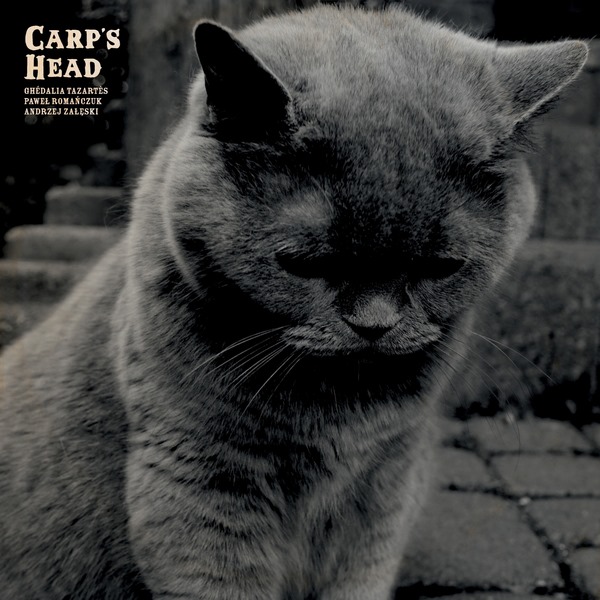
However broad one’s mind and tastes, there will inevitably be some artists who will baffle, bewilder and leave one somewhat dazed. Carp’s Head, a collaboration between Ghédalia Tazartès, Pawel Romanczuk, and Andrzej Zaleski is one of those releases. So much so, that my first reaction was one of borderline horror, a recoiling, an internal cry of ‘what the hell is this?’
‘Danse Inverse’ begins with a bleep. Minimal electro? Nope. A grizzled yet semi-operatic yellering starts up, almost simultaneous with a strolling bass, wonkily-played and a woozy accordion. Tazartès whoops and grunts, growls and emotes wildly like a drunken French opera singer impersonating Tom Waits, while the cacophonous musical backing veers and weaves all over. The weirdness only continues and as the album progresses, taking the listener on a bizarre journey around the globe and as observed through the eyes of three madmen. ‘You’ll Be Wise’ comes on like Scott Walker on acid, while the quietly crooning ‘Zither Song’ is sparse and eerily haunting in a mystical, dream-like way. ‘Orient Calling’ marks a continental shift in terms of the musical inspirations and influences, a droning sitar accompanies Tazartès’ yodelling ululations and low, chesty quaverings.
The album’s centrepiece is the nine-minute epic ‘Wolves and Birds’, a bleak and disorientating expanse of dark ambience. The wordless vocalisations convey a sense of lack, of absence, as they float, wailing and disembodied through the sonic wastelands. There’s plenty of weirdness on the other side of the bridge, too, with tweeting, trilling pipe notes and scratchy layers of sound by turns tickling and teasing the listener’s senses.
Jazz percussion breaks out unexpectedly at various points, bringing an odd and somewhat incongruous swing to proceedings. With its ‘Trout Mask’ connotations and overt otherness, Carp’s Head is many things: it is, in fact, remarkably focused and feels extremely cohesive in its order, less experimental and more built on musical intuition between the players. I’m not sure I recommend it, or if so, to whom, but there’s no question that it’s interesting or different.
I’ve long been a fan of worriedaboutsatan: on their emergence in 2006, their, a hybrid of ambient and low-key dance music, fused with a rare focus on dynamics, positioned them as purveyors of some kind of electronic post-rock. No-one else was doing anything quite like it. With couple of EPs and an album under their belts, the duo – Gavin Miler and Thomas Ragsdale – morphed into the more overtly techno Ghosting Season. Returning but briefly with a single in 2010, it wasn’t until last year’s second album proper that they really made their return. Now it seems that while marking their tenth anniversary, they’re making up for lost time. And still no one else is doing anything quite like what they’re doing.
Opener ‘A Way Out’ immediately trips against expectations, beginning with tweeting birdsong n chiming piano notes which build anticipation of a slow-building piece that blossoms as layers emerge fluidly. Instead, it ends swiftly an abruptly, with the beat-driven trancey electronica of ‘The Violent Sequence’ taking things in a radically different direction. It’s anything but violent, at least on the surface, but as is often the case with worriedabotsatan’s layered, nuanced arrangements, there’s something menacing hiding beneath the surface.
‘This Restless Wing’ introduces vocals to the mix, courtesy of the gliding falsetto of Vincent Cavanagh of Anathema. If the idea of the wilfully low-key duo going all-out for the big-name collaboration as a lure to the album seems incongruous, it’d worth bearing in mind they’ve previously been featured on various TV shows, and, more recently, the immensely acclaimed Adam Curtis documentary, HyperNormalisation. In other words, nothing is beyond the realms of worriedaboutsatan. And nor should it be: these guys are masters of stealth, and Blank Tape is an album which wears many cloaks.
‘Forward into Night’ approaches almost invisibly, building a dense, murky atmosphere. The ticking cymbals create a tension, while the sparse beats are subdued, and ‘Lament’, a collaboration with Bristol electro duo Face+Heel, is haunting, ethereal. The album’s second track to feature vocals, it’s sparse and understated, and Sinead McMillan brings something unique to the song’s dynamics. The filmic qualities of the piano-led title track are undeniable and it’s a compelling piece which contrasts with the bubbling synths of the closer, ‘From a Dead Man… Part 2’ which plays out the album and drives it home with a return to pulsing beats, undulating sub-bass and rippling synth motifs.
Blank Tape is still distinctly worriedaboutsatan, but also marks quite something of a departure from its predecessor, Even Temper. It’s a lot less beaty, for a start, and a lot less bassy. The samples are virtually non-existent. Moreover, while it’s still richly textured, the textures here are smoother, the frequencies less geared toward eliciting an unprovoked physical reaction. It’s perhaps the sparsest and most minimal work they’ve created to date, but it’s highly detailed and if anything, its subtlety represents a new advancement and refinement of their approach to music-making.
Blank Tape is by no means an immediate album. It’s an album to absorb, ponder and reflect on, and which yields more with repeat listens. It’s certainly not an album made for TV, but these are strange times. This is the instrumental soundtrack to those times, and the next few years will surely see TV being made for this music. Blank Tape will likely see the band achieve the world domination they deserve by subliminal means.
I was pretty late to the party with Hey Colossus, being introduced by way of their seventh album, 2011’s mighty RRR. In my review at the time, I commented on the album’s diversity, noting that ‘“Teased from the Nest” drifts like a zephyr in the Colorado Desert, and “The Drang” crunches, bucks and grunts, laden with sludgy guitars with an extra layer of treble squall. It’s a fair sumary of the band’s divergent styles, and both of those cuts feature on this fourteen-track retrospective (that’s one more track than the original cassette release in 2013, of which some copies exist).
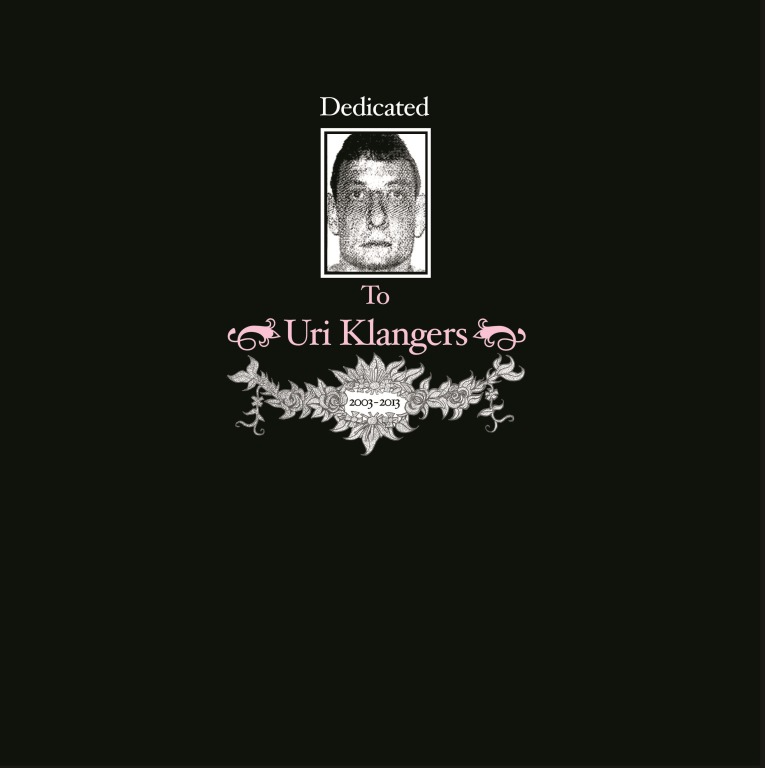
The press release sets the scene, and to quote seems instructive here: “In 2015 Hey Colossus released two albums on Rocket Recordings, In Black and Gold in February and Radio Static High in October. Dedicated to Uri Klangers is a look back. It’s best summed up by the 3000 words that can be found on the inner sleeve of the record, the tale begins: “The 2xLP comp that’s in your hands now was initially released on cassette by S.O.U.L for our 10th anniversary show, September 2013, about 50 tapes were made and sold on the night. We thought a BEST OF would be hilarious. We were average at that show and I’m being generous. I’d give us 5.5/10. A shame. Hacker Farm and Helm also played. It was at The Sebright Arms in London, somewhere out East…..”
This encapsulates the band’s self-effacing an anti-commercialist position perfectly. They’re outsiders, largely by choice, and that’s precisely why they’re so great. That, and the fact they’ve got some belting tunes, if you like it loud and abrasive, that is.
For those unfamiliar with the band, Hey Colossus make a serious racket, and they get right down to it on this ‘first ten years’ compilation, which draws from their myriad releases which have appeared on a host of different labels (although Riot Season and Rocket have been particularly kind). The throbbing, squalling racket of ‘War Crows’ from 2008’s Happy Birthday starts it all off. It’s an uncompromising, trebly din. ‘How to Tell the Time with Jesus’ showcases the diametric opposite side of the band: a ten-minute avant-Krautrock epic built around a looping bassline and motoric drum, it’s a droning psychedelic behemoth. It’s the first of four tracks which extend past the ten-minute mark, in contrast to explosive blasts like ‘I Am the Chiswich Strangler’, which clock in at under two, but more than compensate in blistering intensity and pace.
Following on from ‘How to Tell the Time’, ‘The Drang’ also brings the contrast. I’d forgotten just how fucking raw it was, how unproduced, what a monstrous mess of feedback and sludge. There’s a song in here? Some semblance of a rhythm? Chords?
The churning sprawl of ‘Eurogrumble PTII’ from Dominant Male (2010) draws together their squalling noise tendencies with their experimental and Krautrock leanings to produce a headsplitting kaleidoscope of feedback, and ‘Drug Widow’ is just one of the nastiest, noisiest, grungiest grinds you’re likely to hear: like Tad only heavier, sweatier, grimier and gnarlier, it’s a raging beast of a track.
‘Hot Grave’ is another chug-heavy heft of grunge rock with some bizarre twists, and is one of the tracks which perhaps gives the best indication of the birth of Hey Colossus offshoot band Henry Blacker, not least of all on account of the mangled vocals.
‘Witchfinder General Hospital’ sits alongside ‘Pope Long Haul III’ for That Fucking Tank-like wordplay titles, and this fifteen-minute behemoth is the album’s motoric centrepiece, and if acts like Hookworms spring to mind by way of a comparson, then fair enough, although a collision of Hawkwind and Dr Mix is perhaps closer to the mark when referencing this thumping monster on which squealing analogue synths shriek over something approximating The Sisters of Mercy covering ‘Sister Ray’ circa 1983.
‘Wait Your Turn’ is a doomy, sludgy, and pretty scary-sounding black metal mess: when Hey Colossus get dark, they go seriously fucking dark. This is, of course, one of the reason they’ve remained a very much underground / cult proposition: they refuse to confirm to any one style, and they’re often given to making the most unpalatably dark noise, without any concession to prettying up the sound for the benefit of a potentially wider audience.
In attempting to research the chronology nd the origins of the individual tracks, I found myself foundering, and again the press release explains why: “Included are one or two tunes from all the HC albums released 2003-2013, it also includes the Witchfinder General Hospital track (only 100 pressed on 12”). All vinyl versions of the albums from this era are long gone. The discography is a bit of a mess now, the band doesn’t fully know and the Discogs site is not much help – godspeed anyone trying to buy all the back cat.
And as much as Dedicated to Uri Klangers may be a prompt to explore the back catalogue in more detail – and righty so – it’s also a perfect summation of their output to this point. Challenging yet rewarding and as noisy as fuck, it’s niche alright, but it’s also a document of everything a cult band should be.
Happy Happy Birthday To Me Records – 18th November 2016
Christopher Nosnibor
I’ve been a fan of The Wedding Present for a long time. That said, I did rather lose track of their output at some point. It happens. For some reason, I felt that they’d somehow become mired in a template-based middle-ground. Nevertheless, one of the things I always admired about the band was their ability to constantly reinvent themselves while still sounding like The Wedding Present. Going, Going… released in Europe in September and now receiving a US release, is a perfect exemplar of the way in which they achieve this: it’s an immense 20-track double album, full of overtly Wedding Present songs and songs that explore a host of different forms.
The dense guitar trudge which drives the post-rock instrumental of ‘Kittery’, the opening track on Going, Going… does not sound like The Wedding Present to my ears. But it is compelling. ‘Greenland’ features a female radio voice reading out co-ordinates over a thundering drum beat and very little else. It sounds more like Shellac than The Wedding Present. And yet, as a slow-building rumble of noise builds in the background before the track fades out slowly without anything actually happening, it shouldn’t come as a surprise: The Wedding Present called in Steve Albini to rework breakthrough single ‘Brassneck’ from their 1989 album Bizarro¸ and he ‘recorded’ one of their biggest albums, Seamonsters in 1991. The Wedding Present also covered Pavement long before Pavement were cool – before anyone had even heard of them, in fact.
In some respects, given David Gedge’s longstanding interest in the obscure and his impressively long career spent cultivating a distinctive sound has paved the way for tis radical departure. Because, while words like ‘workmanlike’ and ‘jangling’ have long been associated with the band, they’ve always been more than their critical reception, and have long gone out of their way to do something outlandish or perverse – like a single a month for a year. Put another way, The Wedding Present have always espoused the indie aesthetic on the absolute sense, in that they’ve always indulged their contrary side because, well, simply, they can.
With a haunting, wordless, female vocal and soaring post-rock guitar sound, ‘Marblehead’ is a far cry from the twangy, three-chord thrashabouts that are the band’s trademark, and the string-soaked, piano-led chamber orchestra piece that is ‘Sprague’ finds Gedge lead his crew – not to mention their fans – further from familiar territory.
It’s not until the fifth track, ‘Two Bridges’ that we get a song that showcases Gedge’s familiar gruff northern tones amidst a choppy guitar attack. It’s a thick, rough and ready and in many ways primitive indie tune that could only come from one band, even when it lumbers off on an extended riffy workout after a couple of minutes. What we can take from this is that while The Wedding Present can sound like pretty much anything, no-one else can make songs that sound like The Wedding Present. There are plenty of thumping guitar tunes – more carved from the hefty riff-driven template of Seamonsters and beyond than their jangly indie early years – and they’re decent tunes. ‘Bear’ is one of several classic examples of the Pixies-like grungers which exploit the quiet/loud dynamic. Lumbering riffs about, driving the lurching alt-pop of ‘Fifty-six’ and the all-out stomp of ‘Emporia’, which is pretty heavy and fires up a roaring guitar racket while retaining a keen sense of melody.
‘Secretary’ brings some jangle, but also a fuckload of noise all bound up with a post-punk sensibility and a jarring angularity that’s unexpectedly exhilarating, while ‘Bells’ is a standout by virtue of simply being a great song with a cracking melodic hook.
Who would have thought that some 30 years into their career, The Wedding Present of all bands, would produce something as ambitious and as impressive as this? If anything, rather than being an exercise in indulgence for the band and a drag for the listener, Going, Going… is as strong as anything The Wedding Present have ever released, and the longer format finds Gedge really going all-out to try new sounds and shapes. It’s also an album which reveals a band really concentrating on tight and varied songwriting, and when paired with a focus on tone and dynamics it makes for an unexpectedly great record.
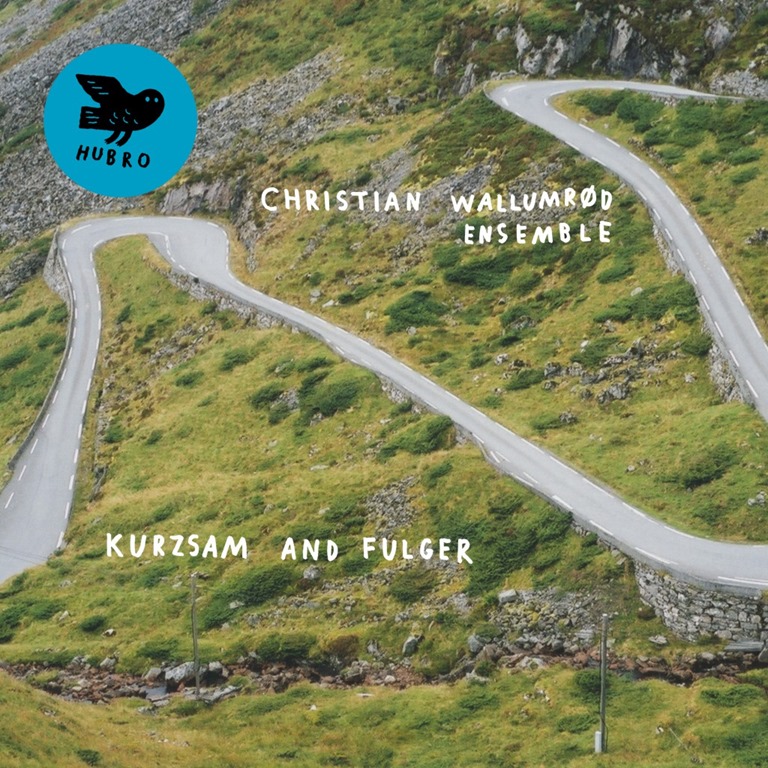
Krautrock country? Opiate-sedated tribal jazz? The seven tracks which comprise Kurzsam and Fulger don’t readily slot into any stylistic field. That’s Christian Wallumrød all over. This previous releases include a solo work and a collaboration with Trondheim Jazz Orchestra. This is an artist who thrives on variety, and one could probably argue with reasonable certainty, a certain sense of artistic perversity. But then, Wallumrød is interested equally in early polyphony and church music and the work of John Cage.
The pieces on Kurzsam and Fulger are sparse, minimal in their arrangements, yet fulsome in sound span. Shuffling drums, strolling, oscillating bass and lead piano that wanders all over, on and off key, along its own path. ‘Langsam’ ventures into mellow jazz territory, while insistent tom beats. The polytonal organ drone of ‘Phoniks’ offers more of an allusion to church music, but distilled to a skeletal frame, revealing the ensemble’s avant-garde orientation If the supremely brief ‘Klafferas’ is little more than a percussive interlude, the protracted meanderings of ‘Arpsam’ are an exploration of space, not least of all the space between notes, and as such, a piece which also interrogates the relationship between sound and not sound and the way the notes slowly decay while their echoes resonate in the mind. As the notes played vary slightly between each repetition of the motif which provides the key part of the track, the sense of disco-ordination increases as the track progresses.
The final track, ‘Kurzsam and Onward’ brings some levity, and its plinking keys call to mind a proliferation of 70s and 80s US sitcoms and I can’t help thinking of Taxi (despite the fact that it sounds nothing like it, and that growing up in the early 80s I never considered the show a comedy of any kind). The spaces between the playing are even longer, and push the parameters of composition and order, as well as the listener’s patience ad perception.
The less there is to hear musically, the more there is going on theoretically, and on Kurzsam and Fulger, Christian Wallumrød and his ensemble really do interrogate a broad range of theoretical positions in order to arrive at the finished work which is Kurzsam and Fulger.
It’s a new Metallica album. You don’t need to be a superfan to know that this is a big deal. Much was made in the press in their approach to promotion for its predecessor, Death Magnetic, with no advance CDs or streams and music journalists being herded in to listen to the album but with a list of caveats and prohibitions, and while that was a full eight years ago, the same approach has been taken, with streams only being made available a mere two days ahead of release to minor-league press like myself (granted, I was given the opportunity to sign up for the listening event, but being minor-league and not residing in London, it wasn’t going to happen). Still, in this day and age, doing something different is what counts, and of course, it’s easier for acts the size of Radiohead, U2, and Metallica (and would it be wrong to mention Bowie at this juncture?) to go for inverse hype, either keeping the album under wraps or even slipping it out with zero warning because it’s going to sell by the truckload anyway, and there will always be royalty-paying radio airings of tracks and all of the other things that provide the main earnings for big-name artists after the release, and if it gets people talking, then job done.
Typing this review feels awkward. I’ve long vowed to avoid the mainstream and the major league, preferring to give coverage to acts no-ones heard of. Everyone has an opinion about the new album by U2, Radiohead, Metallica. What can I add to the general noise? And am I likely to pick it apart in the kind of depth the real fans want? Forums and fan sites chuntered a bucketload about the mixing and mastering of Death Magnetic. Going back an album further still, the virtual riots over the production, specifically the drum sound, on St. Anger still echo on. Personally, I prefer the tangy blue French cheese Saint Agur over any Metallica album, but I digress. It seems that everyone’s out for Metallica, but no-one really talks about the songs these days. I’ll come to the songs shortly, because however vociferously critics and self-professed fans alike bitch about the albums and the spoutings of the band members (or one in particular), none of the noise makes any real difference. Their albums sell by the truckload regardless. Their gigs still sell tickets by the truckload.
Like many, I was properly introduced to the band through their redefining eponymous ‘black’ album in 1991, although of course it’s easy to understand why many of their longstanding fans were pissed off by the new sound. They had betrayed their thrash roots, and were now a commercial proposition. But really, do I give enough of a shit to be ‘qualified’ in the eyes of the masses to dissect a new Metallica album? Perhaps it’s my lack of shit-giving which precisely qualifies me.
The come barrelling out of the blocks all guns blazing with the full-throttle call to arms of ‘Hardwired’: ‘we’re so fucked / shit outta luck / hardwired to self-destruct,’ Hetfield spits in the refrain. If the musical composition itself sounds like ‘Wherever I May Roam’ crossed with Psalm 69 era Ministry (‘Hero’ in particular), it at least sounds like they mean business. It’s also the album’s most concise cut, clocking in a more nine seconds over three minutes.
Following on from the max-impact opener, ‘Atlas, Rise!’ is chugging juggernaut of a song, showcasing a straight down the line metal sound and a suitably preposterous and overblown guitar break. It’s taut and tetchy, and it too sounds like Ministry circa Psalm 69 but with some characteristic latter-day Metallica licks thrown in, and the same is true of ‘Spit Out the Bone’ over on disc two. There’s almost a sense that they’re casting their eyes back to 1990 and thinking that perhaps, that was the point at which things went awry, artistically, at least, although this dissipates as the album progresses.
The hefty drumming drives the throbbing riffage of ‘Now That We’re Dead’ before it descends into post-Black Album Metallica by numbers, and everything I’d dreaded Hardwired would be. Look, it’s not that I’m anti-melody or dislike harmonies, but they can be a hindrance to the heaviness of a metal song, and Metallica are particularly guilty of working to a blueprint. Sure, it’s their own blueprint, but I’m not feeling the danger here.
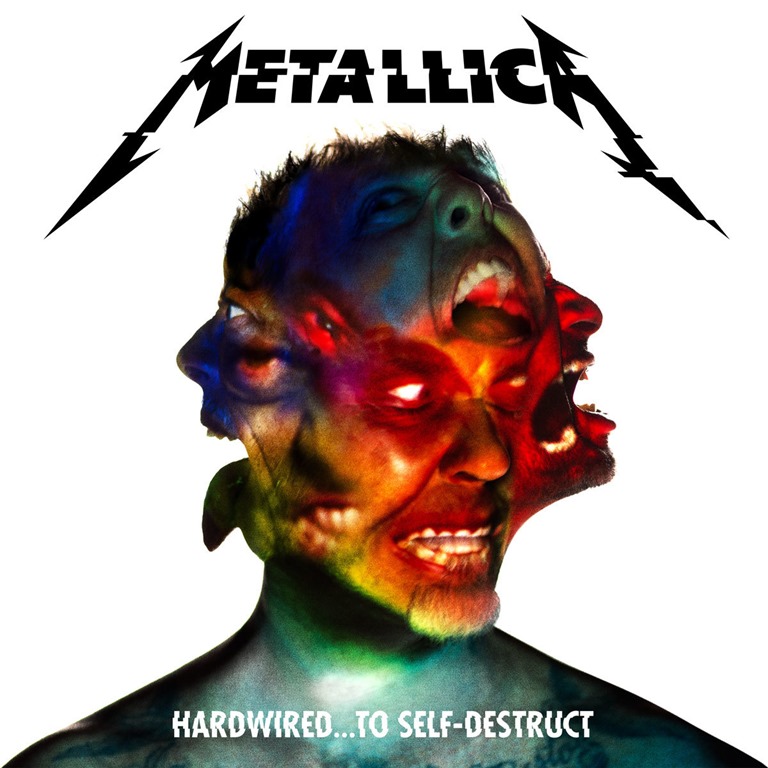
Hardwired… To Self-Destruct may be a monstrous double album which contains almost two hours of music (that’s twelve tracks, the majority sitting in the six or seven minute region) but to berate Metallica for being overblown or indulgent is entirely redundant. No, the real issue here is that it simply doesn’t feel like an album eight years in the making. Compare it to, say, Swans’ last album, or Killing Joke’s latest. Bear with me on this: Killing Joke have something of a formula, and tend to hammer out tracks built around a single riff for around six minutes, but there’s nothing tired or sluggish about Pylon, and Swans’ The Glowing Man is about four hours long but is the work of a band pushing themselves into unknown territories, and beyond. These feel like immense vital albums: Hardwired does not. Ok, sothey manage to churn out a waltz-time lunger in the form of the cheesily-titled ‘ManUNkind’ and it serves to bring variety to proceedings, and ‘Here Comes Revenge’ locks into a churning groove to pretty potent effect: you can get down to this. While there are some undeniably great moments – from the expansive play-out segment on ‘Halo on Fire’ and the heads-down riff of disc two opener ‘Confusion’ – there simply aren’t enough of them. But that isn’t to say that this isn’t a solid enough album.
It was but a few weeks ago that I passed something of a shrug in the direction of the latest Neurosis album, for which ’30 years in the making’ essentially translates as ’30 years refining a stylistic blueprint’, and Hardwired suffers from very much the same creative malaise. The band vary likely believe strongly in what they’re doing and have spent the last eight years perfecting the material and ensuring it sounds exactly the way they want it to, and y’know, that’s ok. It sounds good. The guitars and bass are solid and suitably dense. The drums sound fine, on my speakers, at least. I haven’t spent three weeks listening to it on a loop through headphones, admittedly, and this is very much a broad overview of the album.
Ultimately, it would be wrong to criticise an album for what it is not, and instead, the critical focus ought to be on what it is. Hardwired… To Self-Destruct is a Metallica album. The first in a long time. A lot of people will love it; a lot will be enraged by it, for myriad reasons. But it sounds like a Metallica album and does what you’d expect a Metallica album to do. And that’s no bad thing. You want a Metallica album? You got one.
How exactly does one locate the work of The Eagertongue? The vehicle of Glaswegian artist Graham Macmillan-Mason, who describes his mode of work style as ‘spoken punk’, there’s nothing remotely Kate Tempest about the gritty poetics of The Eagertongue. There are no limp appropriations of hip-hop stylings for a start, no elongated vowels to intimate a sense of beat, no couplets, no doggerel – no rhymes, in fact – and there’s no pretence of speaking to or for the masses with high-minded socio-political thematics, either. But he does have an undeniable sense of rhythm which carries the pieces along nicely, and arguably, his straight-talking vignettes are far more real slices of life than the more commercially viable Tempest. No BRIT School priming here: the only privilege informing the work is the privilege of life lived as a means of gathering material, which provides instead, a first-hand grasp of the grubby day-to-day. Coupled with Macmillan-Mason’s knack for narrative, it makes for pieces which are vital and ultimately credible. But he’s not John Cooper-Clarke, either. I love JCC’s pithy poems and rapidfire delivery, but Macmillan-Mason’s brand of social commentary is darker, starker, harsher, and he isn’t out for laughs.
I referred to the material as gritty: Graham raps and raves about bodily fluids with a superabundance of cumstains and saliva and a moderate proliferation of vomit streaking his narratives. The characters who populate these insalubrious spaces are three-dimensional, believable, and presented warts and all. “She would always protest it was difficult to speak with a penis inside of her mouth,” he recounts on ‘Jesse’.
MacMillan-Mason has a remarkably calm, almost affable delivery, which is in some ways at odds with some of the dingier, grainier lines. But it’s this calm, measured approach (and that isn’t to say there’s no passion in his voice: there is, as well as a tangible sense of soul) which renders the words most effective: they’re enunciated with crystal clarity and stand out above the murky droning soundscapes – a mangling mix of guitars and amorphous electronic hum – which provide an appropriately unsettling backdrop.
Sharp, direct and unflinching, The Voices in Your Coma Sleep finds The Eagertongue bringing weight to the idea that literature was the original rock ‘n’ roll, and that literature is the new rock ‘n’ roll, too.
You might expect that the tracks on an album containing just six songs would consist of long, dawn-out affairs. But not Thralldom’s latest offering: there are a couple that extend beyond the six-minute mark, but in the main, these are short pieces, under four minutes in duration. But in terms of dark intensity, they’re immense.
The introductory instrumental, ‘Cosmic Chains’ is a disturbing vocal cacophony from the bowels of hell which paves the way for the blackened trudge of ‘Chronovisions’, which truly sets the tone for the album as a whole. It’s seriously fucking dark, tangled gothic guitar lines weaving tapestries which depict unspeakable events of demonic torture and pain.
It may be that Thralldom have been silent for over a decade, but is seems that the intervening years since their last release have been spent crawling through subterranean passages by candlelight, stooped, starved and rabid, and battling with marauding demons every step of the way. And so as what’s billed as ‘Thralldom 3.0’ emerge, screaming and agonised into the light, it’s hard to tell if they’ve slain those demons or become partly consumed by them: Time Will Bend Into Horror forges a netherworld of tempestuous torment. The title is fitting in that it reflects the ancient evils which claw their way through the spaces between the crooked notes and mangled power chords which form the fabric of an album which soundtracks a walk through purgatory. In the hands of Thraldom, a four-minute composition feels like ten or more as they grind out the darkest, most oppressive noise.
The angry grey surges of noise which crash and thrash over a violent percussive assault on ‘The Corpse of the Radar Towers Over All’ collides against the churning discord of ‘Dark Grey Mist’, a track which brings elements of Swans’ Cop into a metal maelstrom that’s as black as the canal of Satan’s sphincter. It’s gnarly, alright – and then some – and brings horror in spades.


 Aural Aggravation