Metropolis Records – 10th January 2025
Christopher Nosnibor
According to their bio, ‘Morlocks are a Swedish act who combine elements of industrial rock, neo-classical, darkwave and metal with epic production values to create an exciting hybrid sound. Having issued the long-awaited and well received album Praise The Iconoclast in late 2023, they subsequently promoted it with two US tours in 2024, both in support of their friends and occasional collaborators KMFDM.’
Asked about the inspiration behind the song, the band state: “Watch the world from a distance. Get angry at first, but also inspired. Take the darkest parts of it and twist them into something weird, beautiful and batshit insane – something that you could either dance to, brood in the shadows to or scream at the top of your lungs at the moon. Preferably all of the above. Everything can be turned into art, and art must hurt. Situation normal: all fucked up.”
‘Everything can be turned into art, and art must hurt’ is a phrase which stands out here. It may seem somewhat dramatic, but to summarise Buddha’s teaching, ‘all life is suffering’, or ‘life is pain’, and the function or art – true art – is to speak in some way of deep truths of what it is to be human. Art must therefore, reflect life and capture something of the existential anguish of the human condition. If it doesn’t, it isn’t art, it’s mere entertainment. And if the idea that ‘Everything can be turned into art’ may superficially seem somewhat flippant, a diminishment of serious matters, if the work is, indeed art, and not entertainment, then the obverse is true: using the pain of life as source material is the only way to interrogate in appropriate depth those most challenging of issues. In other words, making art from trauma is not reductive or to cheapen the experience – but making entertainment from it very much is.
There’s a snobbery around what constitutes art, even now, despite the breakthroughs made through modernism and postmodernism. It’s as if Duchamps had never pissed on the preconceptions of art for the upper echelons of society who still maintain that art is theatre, is opera, is Shakespeare, that art can only exist in galleries and is broadly of the canon. This is patently bollocks, but what Morlocks do is incorporate these elements of supposed ‘high’ art and toss them into the mix – most adeptly, I would add – with grimy guitars and pounding techno beats. Art and culture and quite different things, and those who are of the opinion that only high culture is art are superior snobs who have no real understanding of art or art history.
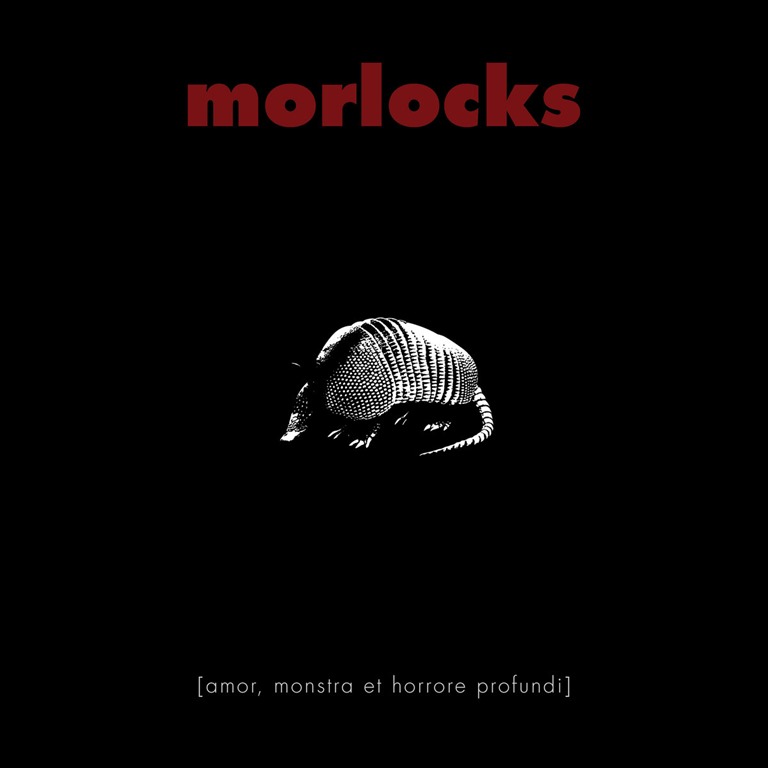
The five songs on Amor, Monstra Et Horrore Profundi are therefore very much art, although that doesn’t mean they don’t also entertain. ‘The S.N.A.F.U. Principle v3.0’ arrives in a boldly theatrical sweep of neoclassical strings and grand drama – and then the crunching guitars, thumping mechanised drums and raspy vocals kick in and all hell breaks loose. Combining the hard-edged technoindustrial of KMFDM – which is hardly surprising – with the preposterous orchestral bombast of PIG and Foetus bursting through and ascending to the very heavens, it’s complex and detailed and thrillingly dramatic, orchestral and choral and abrasive all at once.
With tribal drumming and bombastic, widescreen orchestration, ‘March of the Goblins’ has a cinematic quality to it, which sits somewhat at odds with the rather hammy narrative verses. It seems to say ‘yeah, ok, you want strings and huge production and choral backing to think it’s art? Here you go, and we’re going to sing about radioactive dinosaurs like it’s full-on Biblical’. It’s absurd and audacious, and makes for a truly epic seven and a half minutes of theatrical pomp that’s admirable on many levels. Ridiculous, but admirable.
‘The Lake’, split over two parts with a combined running time of over ten minutes explores more atmospheric territory, with graceful, delicate strings, acoustic guitar, and tambourine swirling through swirling mists before breaking through into a surging tower of power, melding crunching metal guitars with progressive extravagance, and medieval folk and martial flourishes.
Amor, Monstra Et Horrore Profundi is remarkably ambitious and unashamedly lavish in every way. Quite how serious are Morlocks? They’re certainly serious about their art. But while delivered straight, one feels there’s an appropriate level of knowingness, self-awareness in their approach to their undertaking. And that is where the art lies: theatre is acting. The stories told are drawn from life, and resonate with emotional truth: but the actors are not the action, and there is a separation between art and artifice. Amor, Monstra Et Horrore Profundi is something special.
AA
 Aural Aggravation