Archive for December, 2023

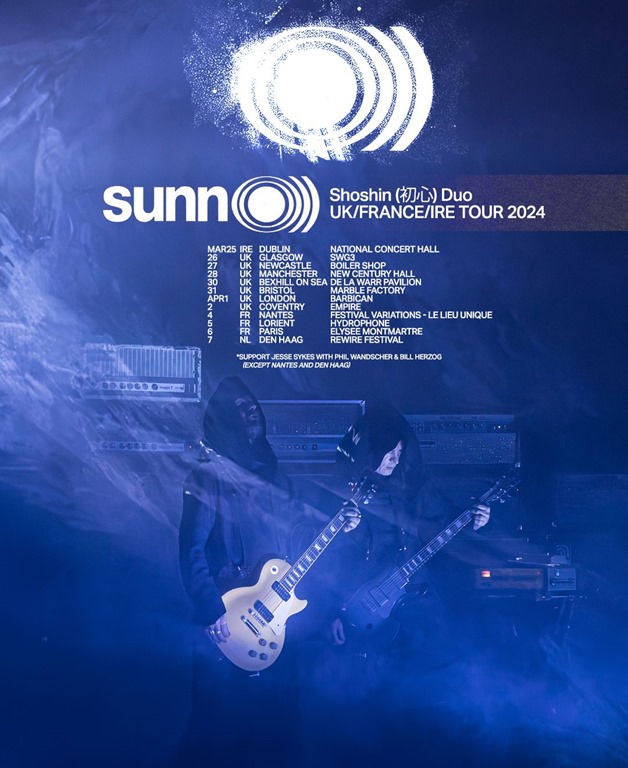
SUNN O))) will play a series of live dates in Spring 2024 as part of their Shoshin (初心) Duo tour.

See the Sunn O))) Shoshin (初心) Duo in its original, raw form. Anderson and O’Malley will perform as a pair, immersed in profound valve amplification, spectral harmonics, distortion, and volume. Pure and primeval riffs of temporality, massively heavy structures of sound pressure. 

Support will come from Jesse Sykes with Phil Wandscher & Bill Herzog (Except Nantes and Den Haag).

SUNN O))) Shoshin (初心) Duo tour dates:

25th March 2024 – Dublin, IE, National Concert Hall – tickets

26th March 2024 – Glasgow, UK, SWG3 – tickets

27th March 2024 – Newcastle, UK, Boiler Shop – tickets

28th March 2024 – Manchester, UK, New Century Hall – tickets

30th March 2024 – Bexhill On Sea, UK, De La Warr Pavillion – tickets

31st March 2024 – Bristol, UK, Marble Factory – tickets

1st April 2024 – London, UK, Barbican – tickets

2nd April 2024 – Coventry, UK, Empire – tickets

4th April 2024 – Nantes, FR, Festival Variations – Le Lieu Unique

5th April 2024 – Lorient, FR, Hydrophone – tickets

6th April 2024 – Paris, FR, Elysee Montmartre – tickets

7th April 2024 – Den Haag, NL, Rewire Festival – tickets

Tickets are also on sale now via SunnOfficial – except for London when the general on-sale date is Friday 22nd December at 10am GMT.

ljTMFE46

Fiadh Productions – 15th December 2023

Christopher Nosnibor

My love of a good split release is something I’ve effused about variously here and elsewhere, and in a way, the contents of this particular split is pretty much secondary to the sentiment. The last thirteen years in the UK have been absolutely fucking shit. That’s not an opinion, it’s a fact. We can’t blame the government for the pandemic, but everything was shit a long time before that, and besides, we can blame them for the shitshow handling of everything, and for the way these disaster capitalist cunts milked every last penny of profit from it for their mates and their vested interests, their undisclosed shareholdings and all the rest.

And I’d keep hearing people defending Johnson, saying ‘he’s doing his best’. Only, he wasn’t. The dishevelled cretin would roll out of bed, half-cocked and probably half-cut after one of the lockdown parties he claims he didn’t know about, babbling bollocks, his only interest being self-interest. And the worst of it is that he wasn’t even the worst. And yet still people defend them, still people vote for them.

I remember watching the news after the last election, and a woman in her 70s appeared being interviewed on a street in Peterborough. She went on about how she was ‘thrilled to bits’ to have the Conservatives back and to have a Conservative MP: she ‘turned out in the pouring rain’ to put her ‘little cross’, and tells why she voted conservative, and how pleased she is that they got in:

“Well it’s the education system really. Oh, and the homeless. So many homeless people here, I’ve never seen it like this.”

And why’s that then? After years and years of Conservative government, you actually buy the line that they’re the part of change? When you say ‘the homeless’, what do you expect this government to do about them? Hire 20,000 more street cleaners by actually retaining 10,000 existing street cleaners and hiring 10,000 more over the next 40 years to come and toss them into refuse trucks? Or round them up into camps and line them up for euthanisation? I’m guessing she meant clean up the streets rather than help them, because well, where’s the fiscal value in that? Anyway, good luck with recruiting minimum wagers to dispose of the bodies once you’ve closed the door to all the Poles and other EU nationals who are currently propping the country up by doing the jobs no-one else wants.

I feel the rage. Every single day. And I feel the urge to punch Tories, and their voters, every single day, too. The current crop of Tories are fucking fascists, and anyone who supports them is complicit.

This EP’s three tracks are a head-shredding blast. Tyrannus bring us ‘Bricks And Flesh, Ashes And Iron’, five minutes of blastbeat-driven snarling black metal that’s both fast and furious, not to mention utterly relentless. It gets the pulse racing alright,and as dark and gnarly as it is, it’s pure, it’s raw, it’s exhilarating, and the guitar solo is absolutely wild.

Magicide give us two tracks, each a minute and thirty-nine seconds long. The contrast is the perfect reminder of the joy of the split release: their offerings bring a different shade of brutality, of pulverising pace. It’s a new hybrid, too, combining frenetic drum ‘n’ bass beats and an industrial edge which calls to mind turn of the millennium Pitch Shifter when they moved away from guttural industrial to create a beat-heavy, post-Prodigy Nu-metal hybrid. Black metal with tripping, stuttering rapidfire drumming, this is simply eye-popping. Thick, trudging riffs growl against grinding percussion and explosive breakbeats. There’s a load of shouting and growling, but the only audible lyric comes when everything pauses for a split second, and the line ‘this is Tory punching music’ rings out crisp and clear, in a strong Scottish accent.

And it is. The EP is full-throttle, an adrenaline rush that really gets you pumped. The message is clear and hard to disagree with for anyone with a brain or a soul. Whether you’re on board with new new labour or not, fuck the Tories. And feel the rage through this EP.

AA

a2564810484_10

Gringo Records – 15th December 2023

Christopher Nosnibor

By way of a name, Reciprocate doesn’t give much away. With its connotations of collectivism and collaboration, it could be anything from limp indie to a jazz ensemble, although to my ears, it suggests ska-punk or some other corny right-on festival friendly guff. But no: they’re an avant-rock trio, and something of a supergroup when it comes to representatives of the UK DIY scene, consisting of Stef Kett (Shield Your Eyes), with drummer Henri Grimes (Shield Your Eyes, Big Lad), and Marion Andrau (The Wharves, Underground Railroad) on bass, and the name, it transpires, is a reflection of the synergy between the three, promising ‘intoxicating, super catchy good-time, big heart music – a human album delivering a human message of love and love lost.’

The blurbage goes on to outline how Soul To Burn proceeds at a cadence all of its own, halting and blasting, ducking and weaving, zooming away from its distant cousins: Taste era Rory Gallagher or Mr Zoot Horn Rollo of Beefheart’s Magic Band, leathering it at full throttle, fuelled by virtuosic back beats that remind of somewhere between the rolling rock of Mitch Mitchell and the fractured noisebeat of Lightning Bolt’s Brian Chippendale: immediate, innovative, virtuosic, exhilarating.

The album’s ten songs are concise and precise, with ninety percent keeping below the four minute mark, and it’s perhaps this focus which really makes Soul to Burn pop. ‘Sleevetugger’ is pretty minimal, and has soulful, bluesy vibe with even a dash of county twanged into the mix – but it’s played with a wonkiness worthy of Pavement, and that absolutely changes everything. They amp it up on the groovesome ‘Rhodia’, where a riff that comes on like a Led Zep lift is delivered with a rough and ready noise-rock approach.

For context, my first exposure to live music was electric blues acts playing in pubs in my home town of Lincoln, at the tail end of the 80s and very dawn of the 90s. While I was just starting to discover alternative music – via the top 40 and also Melody Maker – I was still that bit too young to go to ‘proper’ gigs, and besides, there weren’t (m)any in Lincoln back then. But what struck me was the musicianship of so many of the acts, many of which would play a mix of originals and covers, and I also came to appreciate how everything blues-based springs from an extremely limited root stock. ‘Derivative’ isn’t really a criticism that holds any water. But, to make blues rock work, it has to either the executed extremely well, or otherwise fuck with the formula in some way, and bring something different to the party. Either is really, really hard to do in such an immense field. The last decade or so has seen countless acts achieve success with some pretty mediocre blues rock played loud: I began to think I was bored of blues. But then an album like Soul To Burn turns up unexpectedly, doing it with a real punk attitude, and turns everything around.

Whereas many power trios – not to mention duos, who are the power trio of the post-millennium years – go all-out to fill every inch of space with sound, Reciprocate create space and separation. Everything isn’t blasting to the max, and instead, what we get is a rare level of detail. The bending strings, the fret buzz, the rattle of the snare, the ragged imperfections – they’re all there, and are integral to the fabric of the recordings.

They do melody and groove, and it’s enjoyable, but when they wander off track, as they do most spectacularly towards the end of ‘Pissed Hymn’ there’s something truly glorious about it. The title track is ahead-on collision between Shellac-like mathiness and raucous, rabble-rousing folk. Everything gets twisted and knotted up, the template gets tangled and torn, and it’s unpredictable and exciting.

And it’s got a cat on the cover. 10/10

AA

Reciprocate - Soul to Burn cover 3000px

Transcending Obscurity Records – 10th November 2023

Christopher Nosnibor

Somehow, despite James Watts having about a dozen musical projects on the go, with each touring in support of recent releases in addition to running a label, Newcastle quartet Plague Rider have come together once more to record a new album. It’s been out a few weeks already, but now, in addition to the myriad packages which include all the merch bundles you could possibly want and more besides, from mugs to denim jackets, it’s available on some pretty lurid-looking coloured vinyl. One might describe the retina-singeing flame-coloured hues of the disc as intense, which is fitting, given not only the album’s title, but its contents.

All of the various outfits featuring Watts are at the noisy end of the spectrum: the man has been blessed – or cursed – with vocal chords which have the capacity to evoke the darkest, dingiest, most hellish pits of hell, and the ability to transform the least likely of objects, like radiators and so on, into ‘musical’ instruments capable of conjuring the kind of noise that would bring forth demons.

Whereas Lump Hammer are devotees of relentless, repetitive riffs, and Friend are heavy buy dynamic, Plague Rider are… Plague Rider.

This isn’t just about Watts, though: guitarist Jake Bielby is of Dybbuk, and ex-Live, Lee Anderson (no, not that one) on bass is ex-Live Burial, and ex-Horrified), as is Matthew Henderson on drums. They make for one mighty unit, who, according to the accompanying notes, exist to weave together ‘vile, repulsive, and challenging death metal music whose original influences are now twisted and decomposed beyond recognition. Sure, you can find bits and pieces here and there, traces of hair, fingernails, broken teeth fragments, but overall their music is too far gone for any obvious comparisons. And that’s only remarkable because it adds an element of uniqueness and unpredictability in their music, a rare thrill to be derived from this style these days.’

There is so much going on all at once, it’s brain-blowing. It’s not technical metal, because it’s simply too raw, to ragged, and it’s not jazz, because, well, it’s just not – but they apply the principles of jazz to extreme metal, resulting in a mess of abrasion that’s… I don’t know what. I’m left foundering for marks and measures, for adjectives and comparisons and find myself grasping at emptiness. ‘Temporal Fixation’ explodes to start the album, and within the first three minutes it feels like having done six rounds in the ring. It’s as dizzying an eight minutes as you’ll experience. When I say it’s not technical, it’s still brimming with difficult picked segments and awkward signatures – but to unpick things, the technicality is more jazz-inspired than metal, the drums switching pace and fitting all over. The vocals are low in the mix, lurching from manic frenzy to guttural growling at the crack of a snare.

And at times, those snare shots land fast and furious, but not necessarily regularly. The rhythms on this album are wild and unpredictable – but then the same is true of everything, from the instrumentation to the structures. The mania and the frenzied fury perhaps call to mind Mr Bungle and Dillinger Escape Plan, but these are approximations, at least once removed, because this is everything all at once.

It’s as gnarly as fuck, and if ‘An Executive’ is all-out death metal, it’s also heavily laced with taints of math rock, noise rock, jazz metal and grindcore. It’s a raging tempest, an explosion of blastbeats and the wildest guitar mayhem that sounds like three songs all going off at once, and that’s before you even get to the vocals, which switch between raging raw-throated ravings and growls so low as to claw at the bowels. The sinewey guitars and percussive assault of ‘Modern Serf’ are very Godflesh, but in contrast, immediately after, ‘Toil’ is rough and ragged, and dragged from the raw template of early Bathory.

The lyrics may be impossible to decipher by ear, but thanks to a lyric sheet, it’s possible to excavate a world that’s broadly relatable to the experience of life as it is: ‘Psychically exhausted / Yet still plugged in and wired’ (‘Temporal Fixation’);

‘An Executive’ nails the way corporate speak has come to dominate everyday dialogue:

‘Chant the slogans

With conviction

Doesn’t matter

What we tell them

All that is solid melts into PR’

Fuck this this shit and capitalism’s societal takeover. As if it’s not enough to dominate the means and the money, the cunts in suits are taking over the language, too. But they’re not taking over Plague Rider. No-one is touching them as they lay convention to waste with this most brutal album. ‘The Refrain’ takes the screaming noise to the next level and brings optimum metal power for almost ten minutes before, the last track, the twelve-and-a-half minute ‘Without Organs’ is grim and utterly relentless.

With Intensities, Plague Rider deliver a set that lives up to the title. It’s utterly brutal, frantically furious, and devastatingly dingy. It’s almost impossible to keep up with the rapid transitions between segments, and it’s likely many will move on swiftly because it’s simply too much. But that’s largely the point: Intensities spills the guts of dark, dirty metal. Utterly deranged, this is the best kind of nasty.

AA
band photo

Klang – 15th December 2023

Christopher Nosnibor

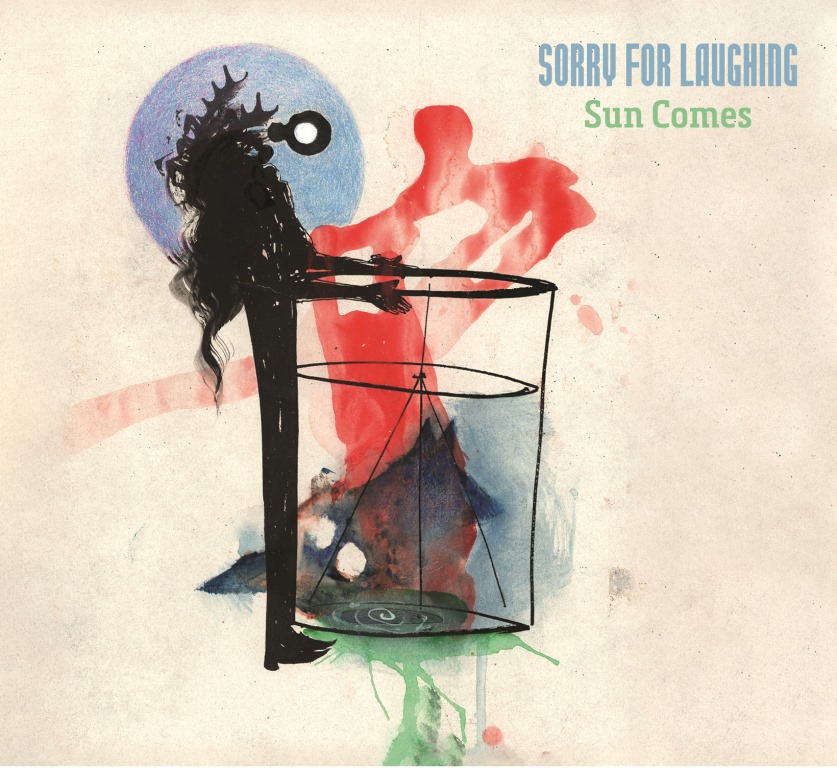
Gordon H. Whitlow has been involved in a number of group projects, perhaps most notably as a member of US avantgarde collective Biota. His first release under the Sorry for Laughing moniker was a solo cassette release back in 1986.

There have been a number of releases since then, and as we learn from the press release, recently, following a pause of some three decades, ‘Gordon reactivated the project and changed it from a solo effort into a new supergroup: it now consist of himself, Edward Ka-Spel of Legendary Pink Dots fame, and Martyn Bates of Eyeless In Gaza. Also contributing is Denver guitarist Janet Feder and the Dots’ Patrick Q-Wright.’

Sun Comes is one of those avant-garde collaborations which is certainly worthy of its contributors. Being an avant-garde collaboration, it exists beyond the realm of Spotify wrap stats, radio playlists and anything remotely ‘industry’ or otherwise concerned with commercialism or even audience. Listening to the first of the album’s four pieces, the thirty-one-minute ‘Sun Comes Suite’ is an uplifting experience, because not only is it a work that’s – in the main – melodic, musical, mellow, and soothing, as strings and electronics combine in harmonious balance, but every bar seeps a sense of pleasure from the enjoyment of simply creating. Whitlow’s vocals are understated, with what one might describe as a folksy lilt. Bold string strikes contrast with quavering mid-range drones which hover and hang. In places, otherworldly voices rise wordlessly, with ghostly moans and cries blending with ascending drama, and the sheer scale of the piece and the way it transition from one place to another is remarkable, moving from classical to shanty to film score and beyond. The transitions are often unexpected, but always seamless. This first piece feels like an album in its own right, and with so many segued segments, the listening experience is a journey which takes substantial mental energy.

‘Heart of the Matter – The Three Roses’ and ‘Adam Lay Ybounden’ are but brief interludes by comparison, running to around ten and seven minutes in duration respectively. The former marks quite a change in tone, with a cinematic string section providing a subtly dramatic backdrop to a spoken word narrative. The score veers between elevating and ominous, and it’s fitting as the accompaniment to a story that has the tone of a children’s tale but the darkness of an altogether more adult allegory, with some disturbing imagery, and the meaning of which remains somewhat obscure. The latter is folky but experimental, which makes for a rather alien experience. How does one process and compartmentalise this? We struggle with the unfamiliar, and Sun Comes is difficult because it uses many familiar elements in an unfamiliar way, often juxtaposed in a way which jars and has no immediate or obvious musical precedent.

The twelve-minute closer, ‘So, You Rest Easy’ begins ostensibly as a minimalist folk song with an almost acapella vocal, with some mangling noise twisting darkly in the background. The contrast between the warm, tuneful voice and the stark, minimal electronics are something for debate. It feels tranquil, sparse, and yet I’m left feeling uncomfortable.

There’s not much to laugh at here, but there is much to explore.

AA

gg456 Digipack

3rd November 2023

James Wells

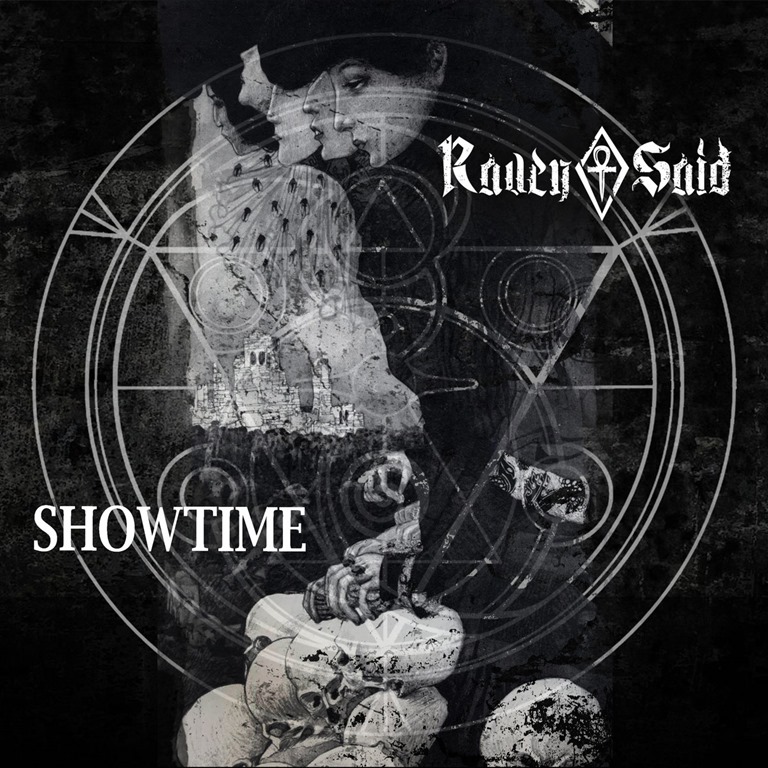
New single ‘Showtime’ from Russian ‘occult wave’ / goth duo, Raven Said, arrives just over a year on from the EP Chants to Dissolve, and it promises to be the first from their next full-length release.

They describe it as ‘a kind of exciting prologue telling about the themes of a personal awareness and braving of one’s own internal boundaries. It’s transcendence of individual subconsciousness, even in the face of the inner fear or the despair. When you’re getting the power to create and transform despite seeming hopeless; when the curtain is raised and time freezes for a moment, when the stage is lit with the spotlights and the noise of the crowd is heard ahead, you take a step towards… Showtime!’

This reminds us that there is considerably more to Russia than the news of the Western media, where they’re broadly portrayed as ‘bad guys.’ We rarely stop to consider the reality of daily life in other countries – or, indeed, how our own countries are perceived internationally, while we’re getting on with everyday life, and generally struggling to stay afloat. In all this, we rarely see the people, the society, and fail to separate these things from their governments, their diplomats, and their military.

‘Showtime’ is what one might call a ‘banger’. Thumping disco beats and bold layers of synth provide the musical backing for the vocals, delivered in a brooding cross between a croon, a whisper, and a growl, packed with classic goth theatricality, and their touchstones of Clan of Xymox and second-wave goth acts like Rosetta Stone onwards, are strongly in evidence, crunching them together to create a synth-driven song that’s strong on both melody and groove.

AA

a2385593377_10

Sacred Bones – 1st December 2023

Christopher Nosnibor

The unexpected and unannounced arrival of Khanate’s fifth album, some seventeen years after they declared that they were calling it a day, and fourteen years after the release of the posthumous Clean Hands Go Foul caused quite a stir in certain circles – predominantly those occupied by black-clad beard-strokers. Although this is very much a stereotype, I’m reminded of the time I went to see Sunn O))) at The Sage in Gateshead on the same night one of Cheryl Cole’s X-Factor protégé’s was performing in the foyer of the three-stage venue. Incongruous doesn’t come close, and suffice it to say, I wasn’t hard to tell who was there for the ultimate lords of drone-doom and who was there for the cheesy mass-market commercial cash-in shit. There were a lot of beards and leather coats.

The reason Khanate are such big news on the underground is that the band is comprised of James Plotkin, Stephen O’Malley, Alan Dubin and Tim Wyskida, and according to their bio, ‘Together, they make terrifying music.’ Between their formation in 2001 and separation in 2006, they managed to find time out from their main projects to record four monumental albums, and the release of To Be Cruel earlier this year came with the announcement of the reissue of all four, both digitally and physically. And so this brings us to the first of these, their eponymous debut.

The press release sets the expectation, for those unacquainted or unfamiliar, telling of how ‘The cramped corner of hell that Khanate takes the listener to, sonically and psychologically, has almost nothing in common with the doom bands that populate stoner-oriented music festivals across the globe. Khanate is doom as a foregone conclusion, as merciless atmospheric pressure, as a blunt object to crack you over the skull with, slowly, repeatedly, and forever.’

Having only released some demos and their debut ØØ Void, Sunn O))) had yet to really break by the time Khanate came out, and in some ways, they beat Sunn O))) to the mark on launching blasting longform drone to the masses, with an album that featured just five tracks spanning a fill hour. And their colossally expansive duration is matched every inch of the way by the sonic brutality.

The album arrives in a squall of feedback before intestine-crushing low-end chords crash in and grind hard, immediately unsettling the lower colon. Thew gnarliest, most demonic vocals shriek amidst the raging infernal wall of noise, dredged from the molten mantel of deep down below. ‘Pieces of Quiet’ is punishing in every way, but not least in that while its devastating, annihilative work is done after about five minutes, it pounds and grinds on well past the thirteen-minute mark.

In context, doom and drone had both crawled out of the depths a good few years before, and with Earth 2: Special Low Frequency Version in 1993, Earth had defined a new form of metal with what will likely stand for all eternity as the ultimate heavy drone work. And yet, these guys believed they could add something further to this – and they were right. Drums, for a start. And vocals.

‘Skin Coat’ is every bit as nasty as the serial killer enthusiast title implies, the guitars mangled to fuck, combining to optimal effect the snarling nastiness of the most blackened of black metal and the sludgiest, most gut-churning doom, with 23bpm drum crashes at the crawling pace of Cop-era Swans. It’s dark and its overtly unpleasant, snarling subterranean oozing tar-thick blackness which crawls like larva and destroys everything in its wake.

‘Torching Koroviev’ is simply a brief interlude which fleetingly opens a portal into hell, before the eighteen-minute ‘Under Rotting Sky’ brings what is arguably the definitive representation of Khanate, again, a squall of feedback prefacing a shredding wall of downtuned and overdriven guitar, billowing and thick with a sludge-like density. It is, of course, an absolute copy of the Sunn O))) model, but with demonic vocals echoing, anguished and wracked with eternal pain through the crushing mesh of noise. It’s fearsome, deranged, the crazed vocal screaming into the abyss. There is no rational or clear way of exploring this: it’s scary, and there is no other way to look. This is the final pulverisation, pacing the way for the album’s brutally dark last track. ‘No Joy’ is appropriately titled, and as heavy as it gets. I crawl, cracked, from the crushing drone experience and as long an hour as nature evaporates from my weary body Slowly the lack-hole darkness takes its grip and begins to crush the very life from my limbs.

This album is twenty-two years old. Yes: twenty-two years. And yet it hasn’t aged a day or even a second. While so much music – particularly rock and metal – has aged and sounds of its time, Khanate froze time when they came together, and the result was like nothing else – and still stands to this day.

AA

a0016720513_10

Norwegian noise rock innovators Barren Womb have just shared a brand new single off their fifth full-length album titled Chemical Tardigrade, which is set to be released on digital and vinyl formats through Fucking North Pole Records/Blues For The Red Sun on February 16th, 2024.

Entitled ‘Bachelor Of Puppets’, you can hear it here:

“’Bachelor of Puppets’ came together through a swift writing process, mostly by jamming round this crude beat with definite husky tendencies,” says Barren Womb’s drummer/ vocalist Timo Silvola. “It became something we felt sure to be the envy of cavemen everywhere. The title came before the lyrics and they were written very much like a jam as well: late night with beers and a demo version blasting loud through our PA system, comparing notes and reading through the lyrics for Master of Puppets.
”The result became a sordid tale of a Chemical Tardigrade, a half-fictional dope fiend struggling to escape the stale grip of the bourgeoisie. Both being huge fans of The Mandalorian, yelling ‘this is the way’ as a chorus made for a perfect trashy Trailer Park Boys-esque punchline.”

ea5fee15-9cd5-ca67-6716-3fcbc946360a

AA

Barren Womb released their fourth album Lizard Lounge, a bombastic slab of modern noise rock in the vein of Daughters, Metz and Viagra Boys, to critical acclaim through Loyal Blood Records in 2020. They have played close to 300 shows in the US and Europe so far, sharing stages with among others Entombed A.D., Voivod, Conan, Nomeansno and Årabrot, and have played festivals like SXSW, by:Larm, Tallinn Music Week, Øya and Pstereo.

AA

37ac0235-2354-7d38-98dc-69c18461e7fd

1st December 2023

Christopher Nosnibor

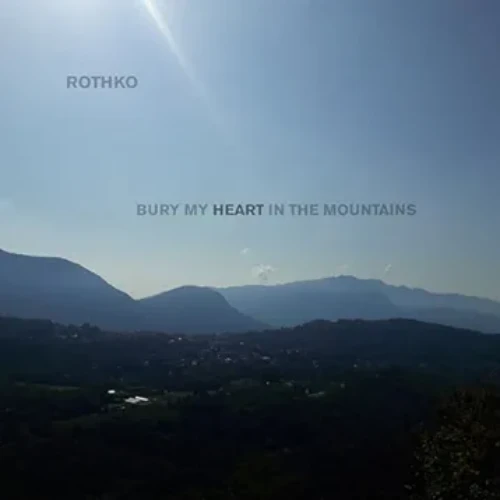
The latest offering from Mark Beazley’s Rothko follows 2022’s Let Space Speak EP, and standalone single ‘Summer In October, Winter In July’, which was an uncommonly loud and abrasive work by his usual standards, although, in context, it made sense, as he wrote, ‘Things have been blurred, uncertain, scary…here’s to certainty soon’, adding ‘I got my brain scan results today, they all came back showing nothing untoward. Good news on a personal level after such uncertainty, but close friends of mine have not had such positive news this year. This is for all of us.’

It would be a stretch to say I found solace in those words following the loss of my wife at the beginning of the year, but having found grief to be an extremely isolating experience, even with the support of friends, it helps in some small way to realise that you’re not the only one dealing with extreme personal difficulty. It’s easy to go through life feeling somewhat blasé, shrugging ‘hey, what’s the worst that can happen?’ But when confronted with the stark realisation of ‘the worst’, your mindset changes. And after the worst has happened, what then?

The five compositions on Bury My Heart In The Mountains take their titles from the names of peaks in the Swiss Alps, and capture the brooding beauty of these spectacular summits. Mountains possess a powerful magnetism: simultaneously alluring and foreboding, they can mean so much to so many. It would be misguided of me to even begin to attempt to comprehend or to make assumptions about Beazley’s own relationship with these impressive peaks – I can only know my own relationship with those I have climbed or otherwise stood in awe of, here in the UK, particularly the Lake District, a curious blend of exhilaration and tranquillity, joy and fear. Because the mountains may provide the perfect escape, the ultimate experience of life-affirming freedom, but you can never treat them with too much respect, and while they may in themselves be immutable, they’re prone to rapid change when it comes to conditions, and each mountain has its own character of sorts – and this is something which the six pieces on Bury My Heart In The Mountains conveys in the most nuanced of fashions.

The first track, ‘Monte San Giorgio’ extends beyond eleven minutes in duration and brings together all of the different expressions of terrain and the associated emotions, marking the start of an exploratory adventure that’s contemplative and largely calm, but not without peaks and troughs and moments of mounting drama.

Field sounds create a thick atmosphere at the start of ‘Monte San Salvatore’, with cooing and gurgling, and extraneous sounds, before delicate picked guitar notes drift off into the crisp, clear air, while it’s Beazley’s bass which dominates the grumbling yet expansive ‘Säntis’. A chill wind blows on the arrival of ‘Monte Tamaro’, before drifting into a brittle, cold conglomeration of chimes and drones. The final track, ‘Monte Bre’ is but a brief outro, all of the elements of the preceding compositions compressed into a minute and a half, bringing calm and tension simultaneously. It’s unexpected, sending ripples of disquiet through the stilling waters left in the wake of the slow ebbing of ‘Monte Tamaro’ moments before. One suspects that this brief judder is intentionally placed, and leaves the atmosphere that bit less smooth and soothed than before, a reminder that it doesn’t do to become complacent or too comfortable or settled, because life is full of surprises, and you never know what’s around the corner.

Cruel Nature Recordings – 24th November 2023

Christopher Nosnibor

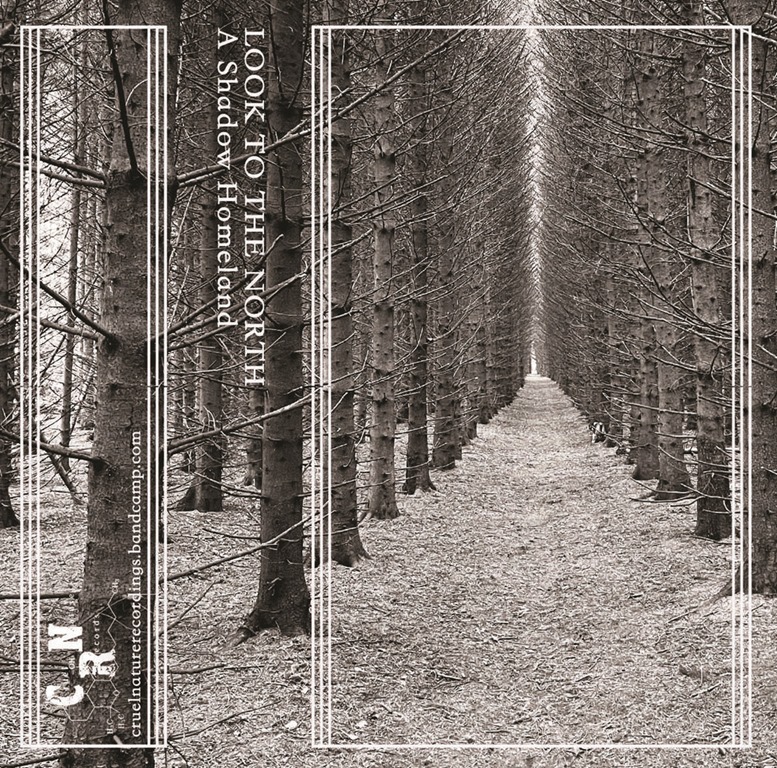
The brief accompanying biography tells us that ‘Look To The North is the ‘dronefolk’ duo comprising David Colohan (United Bible Studies, Raising Holy Sparks) and Zachary Corsa (Nonconnah, Lost Trail)’, and that ‘Recorded in 2021, A Shadow Homeland is 4 tracks of atmospheric other-worldly introspection; melancholic ambience interspersed with sparse piano, spoken word and field-recordings, creating an immersive transcendental twilit experience.

We’re immediately in with what initially sounds like some form of narrative, and joining as we do seemingly in the middle of it, it’s difficult to orientate oneself in terms of context. Soon, soft droning tones drift in like mist and rings out heraldic over the hills and draping the woodlands with string-like sounds amidst images of clouds and nature, interlaced with spiritual abstractions rich in poeticism, but their meanings obscure. The title of this first composition, ‘Disintegrating Consoles And Cartridges’, has a ‘found sound’ connotation, a suggestion of decaying histories and lost origins, and in time, distant voices mutter almost imperceptibly while piano notes roll in and out. Increasingly I find sparse piano notes which are allowed to resonate conjure the saddest and most bereft of emotional sensations, and by the end of eight minutes, I find myself feeling empty, heavy of heart, and pining for something lost – something I can’t quite recall beyond a vague sensation, like the occasional pang of pining for childhood or people and places left long behind, the melancholia of hazy reminiscences which creep at the fringes of a fugue-like memory.

‘The Water That Shattered Their Image’ feels darker at the start, Not necessarily ominous, but there are grainy textures scratching lower in the layers of sound, elongated whisps and broad sonic washes, and they bring a certain discordance and discomfiture. Human voices mingle into wolf-like howls, baying, crazed, before growing hushed, as if in anticipation of the album’s dominating finale, the seventeen-and-a-half-minute ‘An Amulet For The Flux Of Blood’. Here, the piano is very much the central instrument, but surrounded by layers of organ and organic-sounding drones. These sounds coalesce to create a haunting yet smoothly tranquil atmosphere.

To suggest that it seems to share more in common with post-rock than any form of folk is perhaps to pick pedantically at irrelevant details, but I mention this because these genre distinctions have a tendency to set certain expectations. But as elegiac pastoral works, infused with subtle elements of collaging and experimentation, the pieces which make up A Shadow Homeland certainly don’t disappoint, and indeed, confound any expectations one may have. Mood-wise, I’m left feeling uncertain; neither uplifted now downcast, but somewhere in a strange place and a sensation of something missing. It’s neither pleasant nor unpleasant, but remarkable that such understated instrumental works can resonate in such a deep and complex way.

AA

a0117392340_10