When night falls onto the sub-arctic landscapes of the Land of the Thousand Lakes, in the twilight of forest and swamps, the veils between our reality and the otherworld grow thin. It is at those times that stories such as ‘the fairy tale that never was’ leak into the lyrics and music of TENHI.
On their sixth album, Valkama, which translates as ‘harbour’ or ‘shelter’ among other meanings, the Finns originally began telling of a journey that was meant as a fairy tale in a burning, war-torn village and the crossing over dark waters to an island of the dead. The island is called Verisurma (‘the place for those who have suffered blood-death’) in Finnish folklore, where those dwell that died in war or were killed with a blade, and who shed blood on its shore forever.
Yet, during the ten years that TENHI were working on the album, our reality started to bleed into the otherworld with its own terrors and wars. Year after year, the musicians felt their story becoming more and more real until the point was reached that the band decided to change course.
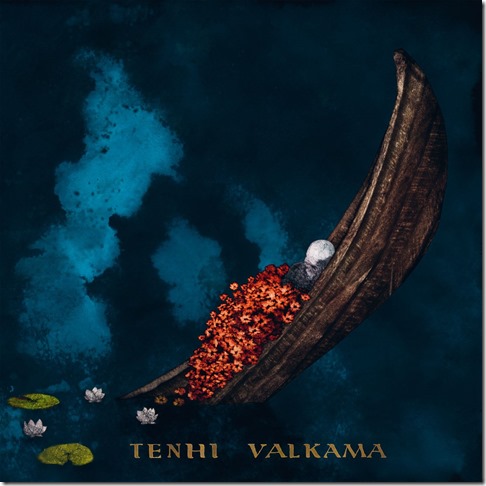
Although echoes of the original work are still audible in the final music and visible in the artwork, the album now feels more harmonious and comforting, even brighter. The journey from this world to the other is more abstract and peaceful while still crossing dark waters, but after a decade TENHI have found the harbour called "Valkama". This transition of the story but also the long journey that the band undertook to reach their sheltering harbour are both reflected in the artwork of Valkama : An old wooden boat serves as a metaphor for various meanings such as a vessel, a coffin, a womb, a shelter, change, and the journey itself.
Valkama is now streaming in full at the link below; and TENHI have added a lyric video including an English translation for each song (click image for link):
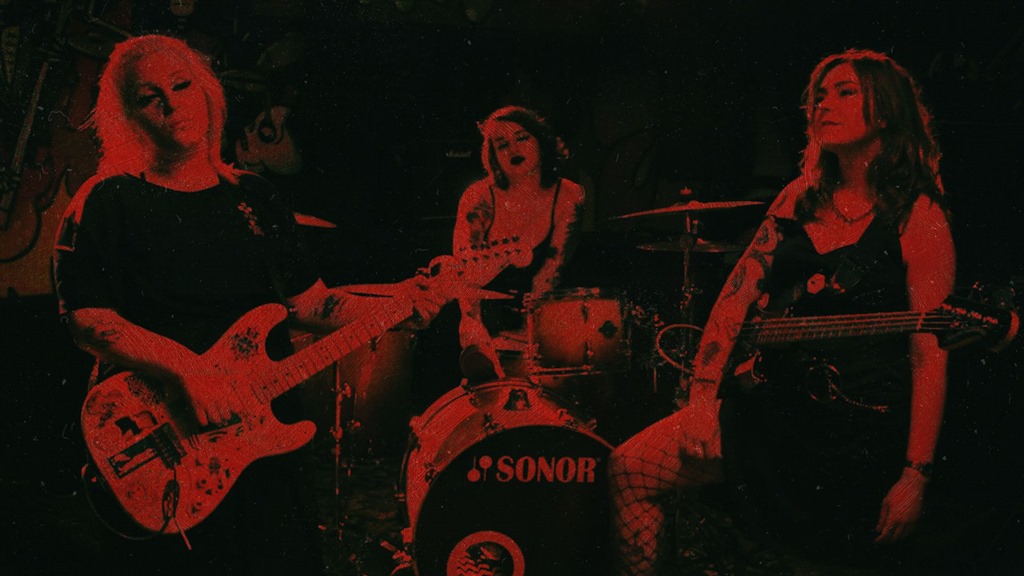
It may just be something I muse over, but there’s a question of what level is a band’s ceiling – at what point the potential they seem to offer meets with the reality of the fanbase they actually manage to build. Weekend Recover are one of those bands who have long seemed to have hovered on the cusp of breaking through without ever quite going over the line. These things are 10% songs and quality, and 90% luck. So many great bands never reach the audience they deserve. Graft will get you do far, but it’s more about being in the right place at the right time than anything else. Weekend Recovery graft life fuck, and seem determined to make their luck.
The thing with Weekend Recovery is that, while they do have a relatively small but seriously hardcore faithful fanbase, they’ve been prone to change their sound and lineup as often as Lori changes her hair. The stylistic changes are likely consequence of the band’s inner turbulence as much as anything else, but artistically, this is a positive thing: they never stay still, never settle into a comfortable rut, and are always challenging themselves. But the downside to this is that a lot of music listeners are averse to change and like bands to give them something familiar, more of the same. Yes, they like to pigeonhole. Since female-fronted is not a genre, what are they, exactly, apart from a guitar band?
It seemed like they’d already been around forever by the time of the release of their debut album in 2018, having evolved from Katy Perry meets Paramour poppy alt-rock into an altogether grittier, rawer, trashy punk act in the process. Their signing to Criminal Records marked the next step in their reaching a wider audience, garnering more airplay and a busy live schedule found them not only playing to fuller venues, but also scoring support slots with the likes of Starcrawler. The fact they’ve already sold nine of the ten test press vinyl copies at a hundred quid a pop a week before release speaks for itself, at least in terms of their fans’ dedication. But what about building a broader base?
Stepping up venue size to headline The Corporation in their (current) hometown of Sheffield just before Christmas, followed by a sold out show at The Leadmill probably answers the question, at least in part, and having landed themselves on global playlists on Apple, Deezer and YouTube has no doubt been a factor.
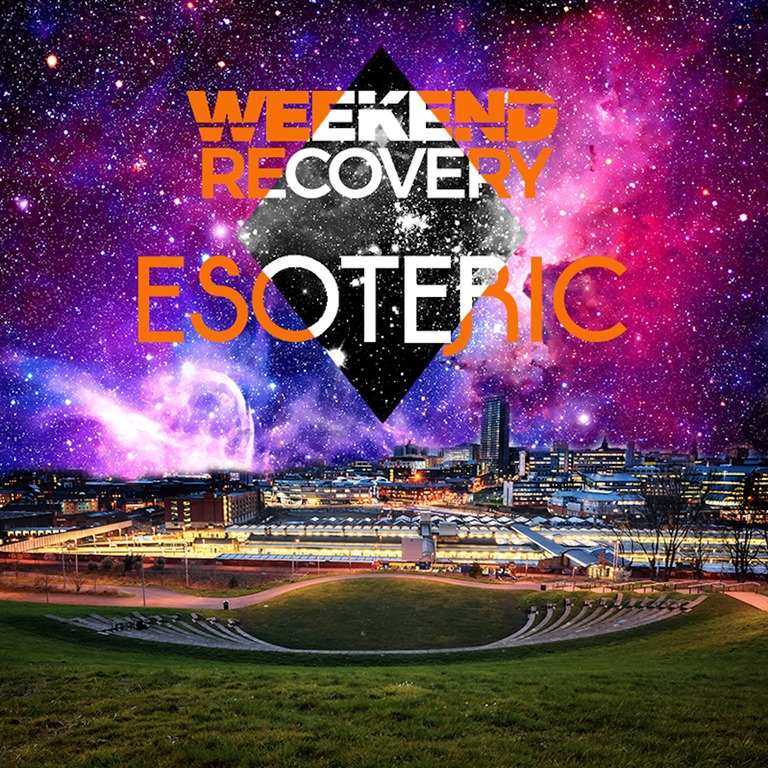
Esoteric answers the question in full. It is not more of the same, not least of all with Lori’s greater use of spoken / sprechgesang passages, but does feel like less of a leap from its predecessor, at least in musical terms. That’s probably attributable largely to the fact that this has been their longest-standing lineup in memory, and the fact Dan and Callum make for an outstandingly solid rhythm section. Having a secure home on Criminal Records no doubt also helps. That doesn’t mean that Esoteric is a ‘safe’ record, a blanket and slippers affair, but it’s the sound of a band who have finally found some stability and have been able to concentrate on the job of writing and recording songs instead of juggling a load of distracting peripheral shit like ‘crap, we need to find a bassist’.
There are things I’m unsure of here: the album’s title being a leading one. Meaning ‘obscure’, and commonly referring to specialist, even secret, knowledge only understood by a few, what are they saying here? It’s a title I’d likely associate with some mystical drone or doom band rather than an uptempo rock trio. Is there something subliminal hidden in the lyrics or in the album’s very grooves? I don’t get any great sense of any of this from songs like ‘In the Crowd’, with lines like ‘We’re going in the crowd / it’s getting very loud’. It’s one of those songs that while it may – does – work live with some crowd buzz and energy to drive it along, recorded and out of context, it just sounds rather lame, not to mention pretty daft. It’s an affliction that troubles any bands when they reach a certain status, namely the point at which band life detaches them from real life, and so band life becomes the subject of the songs, with the effect being that in an instant, they stop speaking to and for us, and instead for themselves only. And when a band who articulated what you felt stop doing that, you’re left bereft. And then there all of the woo-hoo choruses and line-fillers. It’s something I see and hear increasingly, so perhaps that’s an aspect of contemporary songwriting I’m not down with, and an indication that Weekend Recovery are bang on the zeitgeist. Perhaps that’s why they’re getting more radio play.
Esoteric balances the grungy, guitar-driven style with the slick, radio-friendly alt-rock of their early years, and kicks off with lead single cut ‘Chemtrails’. Again, there are questions. Growing up, I knew them as vapour trails, before learning the term ‘contrails’. And then they became a source of anxiety as a popular theme on ‘the Internets’ before Lana Del Rey solidified things with her seventh album, Chemtrails over the Country Club. But this is a song about confusion and overload: ‘the waves are slowly sending me insane’ Lori hollers over a choppy instrumental backing that straddles punk and new wave. What to believe in? Who to believe? The world in which we find ourselves is enough to drive anyone insane, and insanity is the only sane response to an insane world.
The production is definitely their smoothest yet, and it’s very clear: the guitar is dense, but it’s backed off and is very much mid-rangey and there’s a lot less bitey distortion, and this is evidenced in the rerecorded version of ‘No Guts All the Glory’. This is, without doubt, the song that will likely be their anthem: it’s catchy, it’s ballsy, it’s tight, you can sing along and mosh to it, and it’s got broad relatability. But then there’s no shortage of meaty tunes along the way: ‘Dangerous’ brings urgent post-punk of an early 80s vintage with hints of Siouxsie and the Banshees to the party, while ‘I Don’t Like You Anyway’ pairs a low-slung bass and pummelling drum with some sinewy guitars and a stomping chorus, and there’s an offhand sneer to the verse that’s next-level nonchalance. Then there’s ‘The Knife’ which is one of those anthems of hurt that people can relate to and invest in, and if ‘Her’ is, on the face of it, a folksy ballad, it’s a fair bit more than that if you tune into the lyrics.
And perhaps this, this is the secret wisdom: the secret to unlocking the potential that’s been there all along. The songs on Esoteric feel more evolved, more fully formed, and the switches between melodic hooks and bursts of anger and energy give them an exciting dynamic. For all of the poppiness, there’s some real darkness, and some weight, too. The songwriting across the set is more consistent, too, and when bolstered by the production, it all seems to have really come together here.
New York experimental noise duo Cinema Cinema unleash their latest sonic exploration in the shape of Mjölnir in July, and this time they’ve got none other than polymath percussionist Thor Harris joining them. The album was recorded at historic BC Studio in Brooklyn, NY, with legendary noise producer Martin Bisi (Sonic Youth, John Zorn, Boredoms).
Inviting multi-instrumentalist Harris into the fold inspires new direction for the ensemble. Exploring his creative repertoire, Thor makes use of BC’s synth collection along with an assortment of drums and arcane percussion pieces to leave his fingerprints on the proceedings. The trio submerge themselves in the strange beauty of chaotic sound, captured inside BC’s cavernous recording space.
Tracked just before the pandemic, Bisi spent time cultivating the sessions in the months that followed, helping shape one of the band’s most expressive records to date. This marking the third time that CINEMA CINEMA and Martin have worked together (2014’s A Night at The Fights and 2017’s Man Bites Dog), the familiarity breeds wild results.
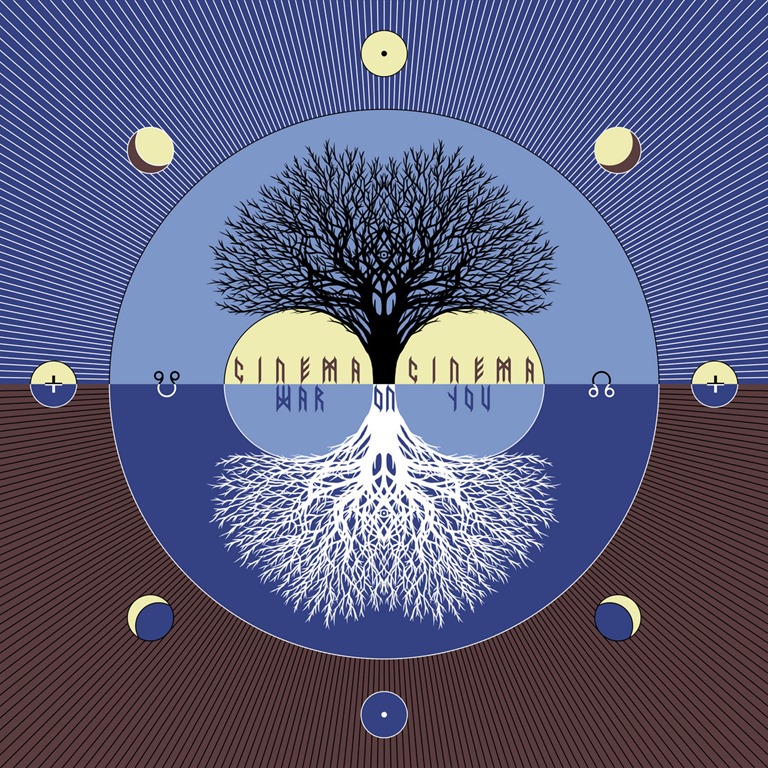
The first flavour of those results can be heard on ‘War on You’. Hear it here:
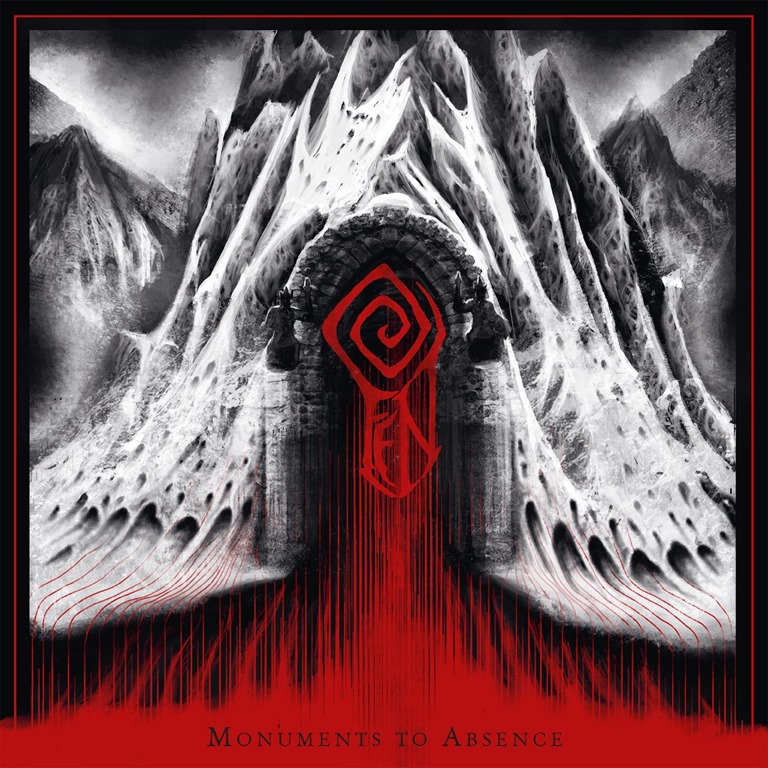
FEN release the dark monumental track ‘Wracked’ as the final single taken from the East Anglians’ forthcoming album Monuments to Absence, which is chalked up for release on July 7, 2023.
FEN comment on ‘Wracked’: “There are days when one is struck by a sense of such overwhelming black despair that it strikes almost as a physical force”, mastermind Frank “The Watcher” Allain writes. “We are literally wracked with sorrow, so overcome with the deepest sadness that it hits like a blow – staggering one backwards, grinding us to a halt. At such moments, one can only wait for the wave to subside, to retreat into the dark, yawning chasm of one’s own mind; and hope that the storm will pass as swiftly as possible. ‘Wracked’ speaks of those days.”
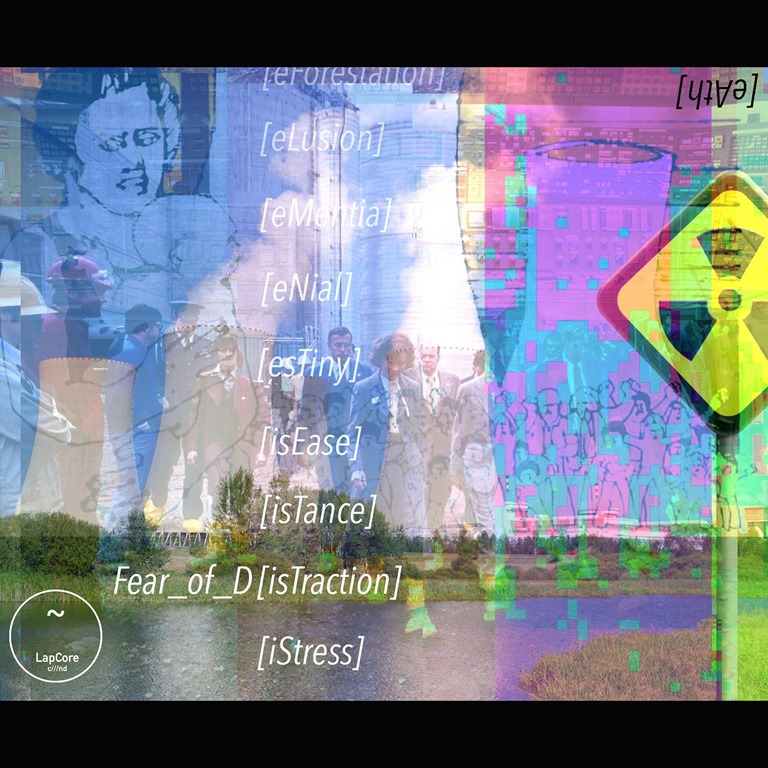
On clocking this in my inbox, I fleetingly felt a flicker of amusement as I recalled a long-lost article I had written over a decade ago about fictitious musical genres, which included LARPcore, where bands inspired by Viking Metal re-enacted historical battles in full costume. (I also mentioned Symphonic Doom before the term appeared as a thing). Then I realised that, as I’m prone to doing when I’m not concentrating, I’d misread, but then on reading the notes which accompany the new album by Kent Clelland, aka LapCore (which makes a lot more sense in context of what he does musically), my amusement was replaced by a certain crackle of excitement.
For this reason, it’s worth quoting: ‘With Fear_of_D[istraction] LapCore continues his exploration of digital audio synthesis and distortion techniques, researching the complex tonal digital structures he affectionately refers to as cTonality. In contrast to the more upbeat and aTonal album LapCore 132 (his 2017 full-length self-published release), Kent Clelland has freed himself to explore the darker, and more cerebral faces of computer music composition. With multi-channel oscillators he brings sonic entrainment into the musical range of frequencies as opposed to the typical sub-audible entrainment frequencies, composing melodic and harmonic parts with the artefacts to create cTonalities.’
But here’s where it gets interesting, and will likely prove divisive:‘Weaving polymetric binaural oscillators with a lopsided bass drum engine, he lulls your senses into a state of receptivity upon which he then sews synthesised tapestries inspired by his hyper-perceptual, cancer-treatment-infuenced dogma adventures in the pre-pandemic delirium. LapCore produces these tracks as an attempt to preserve his brain damaged audio hallucinations, sharing them in a venue larger than the space between his ears.
‘The performance of LapCore’s Fear_of_Di[straction] (2017-2022) is a 48 minute sonic quilt of recordings of AI Musical Agents during training sessions intricately hand-sewn into the fabricated projection of the audio dimension.’
Yes, Fear_of_D[istraction] incorporates elements of AI. ‘Nooo!’ people will likely shriek and no doubt some will be unhappy even with my writing about this album on this basis for propagating the death of the artist. But the death of the artist – if we take ‘the author’ in a broader context – has long been a preoccupation of literary theory and postmodernism, as far back as Roland Barthes’ 1967 essay of the same title. Yet now, as we find ourselves pondering what some are variously referring to as post-postmodernism or metamodernism, there is mass panic over the chimera we have created with speculation that not only artists but most occupations will be obsolete in a matter of years and we will soon be driven to extinction by our errant creation. I’m reminded of numerous sci-fi novels, not least of all Michael Chrichton’s Prey. Published twenty years ago, it feels more relevant now than ever, as is the way with much true science fiction, which takes current science and projects hypothetically forward, but also demonstrates that this fear is nothing new. And yes, of course, we – as a species – have pursued this end. Our demise through AI seems unlikely, but if it does happen, we probably deserve it.
While AI photos and even falsely-attributed Guardian articles are giving great cause for consternation – understandably – overall, it’s still the potential of AI which is scarier than the current capabilities, and this is nowhere more evident in music, where it’s fair to say that most purely AI generated compositions are toss. But also, in more experimental fields, composers have been using algorithms and customised programmes to generate sound since the advent of computers and synths – and I have covered countless of these in the last fifteen years.
LapCore incorporates AI as simply another tool in his kit, and has used this hybrid of man and machine to forge a work that melds Krautrock and minimal techno, microtonal experiments and harsh electronics to eye-opening effect.
The first of the album’s seven compositions, ‘Stuck Like a Magnet in Switzerland’ is built around grating oscillators and some extreme stereo panning, which is well-executed, and immediately grips both sides of your cranium and squeezes. The flow of blooping synthesised rhythms is rent with a buzzing distortion the like of which some of us will remember as the way a mobile phone signal would interfere with the TV – and at three times the volume of the busy bubbling track, it comes as an uncomfortable moment of shock. All kinds of feedback and interference disrupt the musical melange thereafter, dial-up tones and all kinds of electrical chaos collide and crackle unpleasantly. But being unpleasant doesn’t make it bad: this is one of those works that is relentlessly challenging in its pursuit of ‘difficult’ tones, textures, and frequencies, often simultaneously.
‘Microdose’ feels more like an overdose, as an angry hornet the size of a lion takes residence in the space at the front of your skull, right in the sinuses, and vibrates your brain without mercy against a backdrop of disjointed techno. This is some brutal synth torture, and elsewhere, there are drones and whistles reminiscent of early Whitehouse and Throbbing Gristle, atop dome very DAF-like electronica. ‘Americium’ is busy, a constant drip and froth of watery notes bouncing against one another – and it sounds experimental. And this is the key to appreciating Fear_of_D[istraction]: it’s not a work that tries to pretend to be a human creator hiding behind AI for a laugh, and nor is it the sound of AI running wild. Instead, it’s an album which sees its creator consider the challenge ‘how can we use this?’
If it sounds somehow ‘impersonal’, the same is true of much electronica; by the same token, Fear_of_D[istraction] very much sounds like a guy pressing buttons and twiddling knobs and looking to see just how much disruptive, disturbing synthy noise he can throw over a sequenced beat. The artist isn’t dead yet.
FRAYLE deliver a beautiful take on SOUNDGARDEN’s ‘Head Down’, fueled by the mystery of Gwyn Strang’s haunting vocals and down-tuned frying guitars. The fast-rising doom act from Cleveland, OH has furthermore illustrated this dark song with a stunning video, which you can see here:
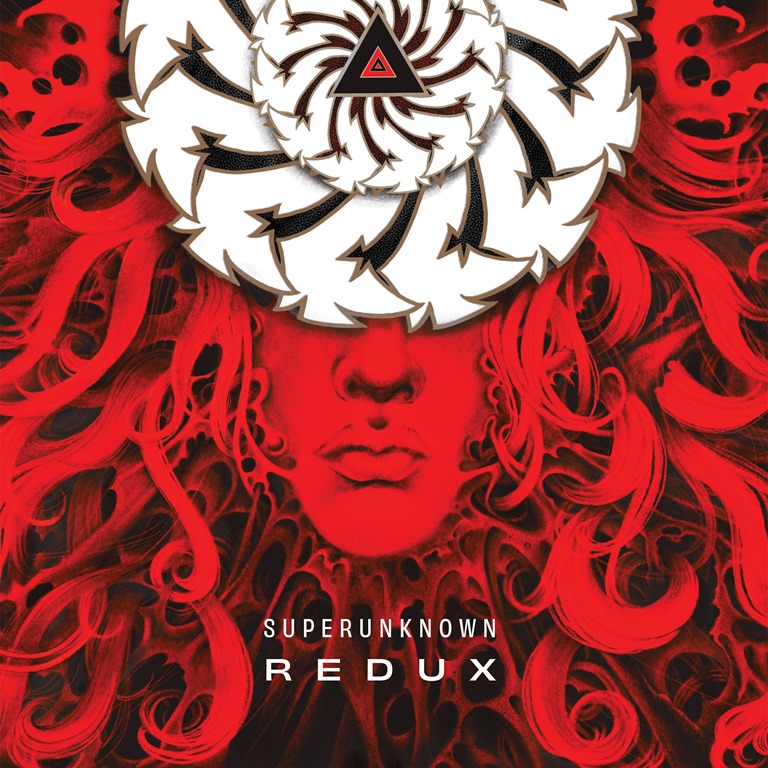
The massive double album Superunknown Redux has been scheduled for release on July 14.
Parallel to Superunknown Redux, Magnetic Eye Records will release the by now customary companion album entitled Best of Soundgarden Redux that contains further 15 cover versions of deep cuts and all-time classics from across SOUNDGARDEN’s extensive catalogue recorded by more exciting artists.
FRAYLE comment: "Soundgarden was an integral part of our development as musicians from an early age with brillant songs such as ‘Fell on Black Days’,”’Black Hole Sun’, the list just goes on and on", singer Gwyn Strang writes and multi-instrumentalist Sean Bilovecki continues: "For ‘Head Down’, we deconstructed the song and switched its timing to 4/4. The song as recorded by Soundgarden has overlapping drum parts and complicated timings for example. We stripped it down and gave the track elements of tribal drumming, while we added layers of vocal harmonies and voices coming at the listener from all angles."
These are certainly three names to conjure with as prominent features of the experimental scene. Anne-James Chaton and Andy Moor have collaborated on numerous albums, and I personally discovered them via the Transfer series in 2011, around the same time as Chaton’s Evenements 09, which I found fascinating in its contemporary application of loops and with its parallels to the cut-up technique and Burroughs’ and Gysin’s tape experiments of the late 50s and early 90s.
As the biography which accompanies the release of this lates outing explains, ‘the duo Andy Moor and Anne-James Chaton continue their conversation with a new set of digital singles, diving this time into the rich language of the traditional metiers. The Handmade series is an homage to crahftsmanship through an exploration of the lexicons specific to bakery and pastry making, jewellery, joinery and wrought iron making, that will unfold over the course of 4 thematic volumes. With guest Yannis Kyriakides on electronics they create works where abstract notions mix with tangible ones by linking the arts of the hand with sound and poetry.’
The Moor / Kyriakides collaboration A Life is a Billion Heartbeats proved to be a gripping work for quite different reasons, and one thing that’s always a feature of any work featuring Moor is his versatility, as well as the fact that he doesn’t use the guitar in a remotely conventional fashion.
The two tracks on this single really do showcase the strengths of all three artists, and shows just how collaboration and collectivism can amplify individual powers.
But never mistake ‘art’, however obscure or experimental, for something which is always entirely serious: This, the first of the ‘Handmade’ series – projected to comprise four digital singles, to subsequently be released as a CD album and download, akin to the Transfer series, sees them taking on ‘the vocabulary of pastry making… Side A «Garniture» offers a curious anthology of poetry written by mixing the actions of the pastry chef, units of measurement and figures of speech. On Side B, «Sur Mesure» deploys all the richness of the culinary language when it comes to expressing the scarse [sic] or the plentiful’.
Truth be told, for a non-French speaker, the linguistic twists and any humour associated with the juxtaposition of subject matter and context with delivery are lost beyond the cover art, leaving simply the sonic experience – but this alone is more than enough. Chaton’s monotone spoken word is nonchalant and gives nothing away, while Moor peels off shards of dissonance from his guitar amidst drones and hums and clanks and a distant but insistent clattering percussion. Feedback and irregular discordant chanks and un-chords all crash and slide across one another in an irregular latticework of noise.
‘Sur Mesure’ is less challenging, less overtly difficult and dissonant, and sees the three employ the same elements but to an altogether more subdued and atmospheric effect, making for a good contrast against ‘Garniture’.
There’s no doubt that most would simply file this under ‘weird shit’, but it’s a strong experimental work which delves deep into dynamics, tones, and unusual juxtapositions, and really prods at the neural pathways in the most unexpected ways.
I’ve been engrossed by Lawrence English’s works for some years now, and my appreciation of him and his methods were only enhanced when I conducted an interview with him about ten years ago for a now-defunct site (so many are now: the idea that once online it’s there forever has been proven false, and we’re all sitting, bewildered by as rapidly-vanishing archive of the recent past), where we touched on cut-ups and William Burroughs and I was struck by the depth of his knowledge and references.
But I have grave concerns around future history, or the future of history. While the move to digital was hailed as a move toward permanence, incorruptibility, the opposite has proved true. No-one writes anything down anymore, no-one produces additional. tape copies. If your hard-drive gets fucked, so does your entire library. The Cloud? Do you even know where it is? Does it even exist?
While we reflect on this, let us also consider this album and its slow gestation. David Toop is another artist I’ve spent some time listening to, and writing about, including his Breathing Spirit Forms three-way collaboration with Akio Suzuki and Lawrence English, but this is the first time just the pair of them have worked together, and Lawrence explains its evolution as follows: ‘Over the years, David and I have shared an interest in both the material and immaterial implications of sound (amongst other things). Moreover we’ve connected many times on matters which lies at the fringes of how we might choose to think about audition, our interests seeking in the affective realm that haunts, rather than describes, experience. The Shell That Speaks The Sea very much resonates from this shared fascination… I’m not exactly sure when we first mooted this duet, but I sense its initial trace is now more than a decade ago. I tend to live by the motto of ‘right place, right time’ and I believe David likely also subscribes to this methodology. A couple of years ago, David and I reignited the duet conversation and began exchanging materials. As a jumping off point, I explored a series of field recordings that, for me at least, captured something of this affective haunting that I mentioned previously’.
And haunting it is: ghosts of memories and fragments of half-recollections lurk and loom amidst the thick, dark shadows forged by the unsettling sounds. The title suggests an album of soft ambient washes, a gentle tidal swash, a soothing, tranquil work. It is not.
‘Abyssal Tracker’ is remarkably atmospheric in a sparse, gloomy, sense, and provides a fitting introduction to the duo’s idiosyncratic work, compiling sighs and vocal rasps over elongated strains of feedback and a suffocating atmosphere. Shrill shrieks echo out over eerie notes and a scratching insectoid clamour in the trebly range. Thuds ripple beneath the surface: there is so much texture and detail here, you find yourself looking about nervously, seeking the various sources and to see what’s over your shoulder, or hovering above your head.
Clanks and clatters and clanks and thuds are the dominant features of this album, and is lasers fire into the abyss of emptiness on the dense and disturbing ‘Reading Bones’, which scratches and scrapes, while there are earth-churning low-range disturbances – and words, but they’re indecipherable, spoken in low, whispering grunts, and it’s impossible to decipher even the language, sounding as it does like an ancient incantation.
It’s not all quite so skin-pricklingly tense, but much of it is: ‘Mouth Cave’ is dark, dank, low and rumbling, but has textures and what sounds like the trickle of running water spattering in the background amidst the cavernous gloom, and if ‘Whistling in the Dark’ sounds like a simplistic description, it’s accurate – but also suspenseful, scary and bordering on horror tropes; the whistling is deranged and floats through a heavy, crackling doomy drone. There are more ominous mutterings amidst the creeping darkness of ‘The Chair’s Story’, which feels like casting a look back through the ages through a thick fog at scenes of torture and pain and great sorrow and forward, to a laser-bleeping future.
As I seem to be prone to lately, I found myself nodding through fatigue but also, simultaneously, tense and alert during The Shell That Speaks The Sea, an album which possesses vast sonic expanses and a bleak, oppressive atmosphere. Each track offers something different, and this only accentuates the ‘otherness’ of the music this album contains; it’s like walking through a series of disturbing dreams, whereby each scene presents a new unfamiliar setting, and there are hints of BBC Radiophonic Workshop and vintage sci-fi about this incredibly imaginative work.
It may have taken a long time to piece together, but the results make the labour more than worthwhile.
Death Pill, the hardcore punk trio from Ukraine, released their debut album on 24th February, a year to the day that Russia invaded their country.
Tracking started during Covid and was completed in late 2021, only three tracks were mixed before the war hit. However the band and their production team were able to somehow continue and finished everything including the artwork in 5 months whilst the Russian invasion rolled on. A testament to their drive and single mindedness.
The band are currently mid-way through their ‘Over My Dead Body’ European tour, which defiantly began in Kyiv, Ukraine on 20th May. Now the band have shared a new video for ‘Would You Marry Me’ with the bassist Natalya commenting, “This is a song about a rejected wedding proposal. Mariana wrote it after she proposed to her boyfriend and he turned her down. I shot this video when I moved to Barcelona and my best friend came to visit me. She became the main character, and I did the whole production. It took me about 72 hours to finalize the idea, shoot and edit it. I put my pain and suffering into this video, it’s a reflection and experience of personal rejections, dedicated to all the broken hearts.”
Sometimes, things don’t work out. It’s sad, but it’s life. But it’s how you deal with these setbacks that counts. Just over a year ago, I was getting enthusiastic about Warning Signal, a band who looked set to be ones to watch with their full-throttle gritty-industrial pop that was a head-on collision between Nine Inch Nails and Garbage. But, it was not to be.
But Eva Sheldrake is back and kicking it hard fronting new power trio Eville, and while there’s a clearly a shift from her previous project, the key ingredients remain in place, namely hard-edged metallic guitars and a crackling dark energy. ‘Messy’ melds goth and industrial and stitches them together with a pop sensibility, making for a high-impact tune – and again, clocking in at just over two and a half minutes, it’s succinct, and all the better for it, with there being no room for any tracer of flab or indulgent wankery.
‘Messy’, in songwriting terms, is anything but: they’re straight in, a back and forth slap round the chops, and out again before you know what’s hit you. It’s heavy but melodic and catchy, and if there are hints of nu-metal in the mix, there’s a lot more besides.
Jamie Sellers’ production nails it, balancing fizzy distortion with crisp, digital cropping and sharp edges, making it radio-friendly without dulling the serrated edges. Here’s hoping the second bite of the cherry is the one that delivers the pie – or some other failed extended metaphor relating to attaining well-deserved success, because they absolutely deserve it on the strength of this release.




 Aural Aggravation