Archive for May, 2021

4th April 2021

Christopher Nosnibor

With Illusion, The Long Night threaten ‘a sonic journey capturing the deep melancholy sound of things that are likely to be wrongly perceived or interpreted by the senses, adding that ‘Consisting of massive drones, chants, and field recordings, Illusion paints the picture of darkness trying to find a light in one’s consciousness.’

I’ve been struggling with certain things in recent months. Many things, if I’m honest. Reading books has been one, and listening to song-based music has been another. Concentration has been a real issue. Flitting back and forth in a daze through news items I haven’t the focus to read in their entirety, I see the theme of ‘long Covid’ as a recurring topic. But equally, I find that people I am in regular and frequent contact with – work colleagues, mainly – are feeling utterly drained and devoid of motivation. None of them has suffered from Covid-19, and I can’t help suspect there’s more of a long-term lockdown malaise that’s taking its toll on people. I’ve felt restless, listless, lacking in concentration, unable to face tasks that are beyond my comfort zone, and have immersed myself in domestic chores and cooking, outside my turgid dayjob.

And so it is that I’ve found solace in more ambient sounds. Their abstraction offers a certain escapism, and the right ambient sounds have an immersive quality that offers a distraction from everything else. Illusion is both abstract and immersive. For the most part it rumbles and drones without any real sense of direction, and that’s perhaps its strongest asset as it creates a sonic space in which to wander, lost, adrift, but away from the world.

On ‘Untold Mind’ and the murky morass of ‘Forgotten Time’, monastic voices rise ethereally from the grey smog, but for the most part, Illusion is a thick fog of amorphous, substanceless abstraction that drifts and eddies around without direction or any real sense of form. The nine-minute ‘The Myth of Now’ is a cavernous drone of immense depth and resonance that hangs heavy shadows with intermittent glimpses of light, but the overall experience is unsettling, as dark tones rumble and rise from the dark depths.

Illusion may be little or nothing more than its title suggests, but it is all we need for now as we cling to desperately to whatever we cen. And this is worth clinging on to.

AA

274259

Dret Skivor – 7th May 2021

Christopher Nosnibor

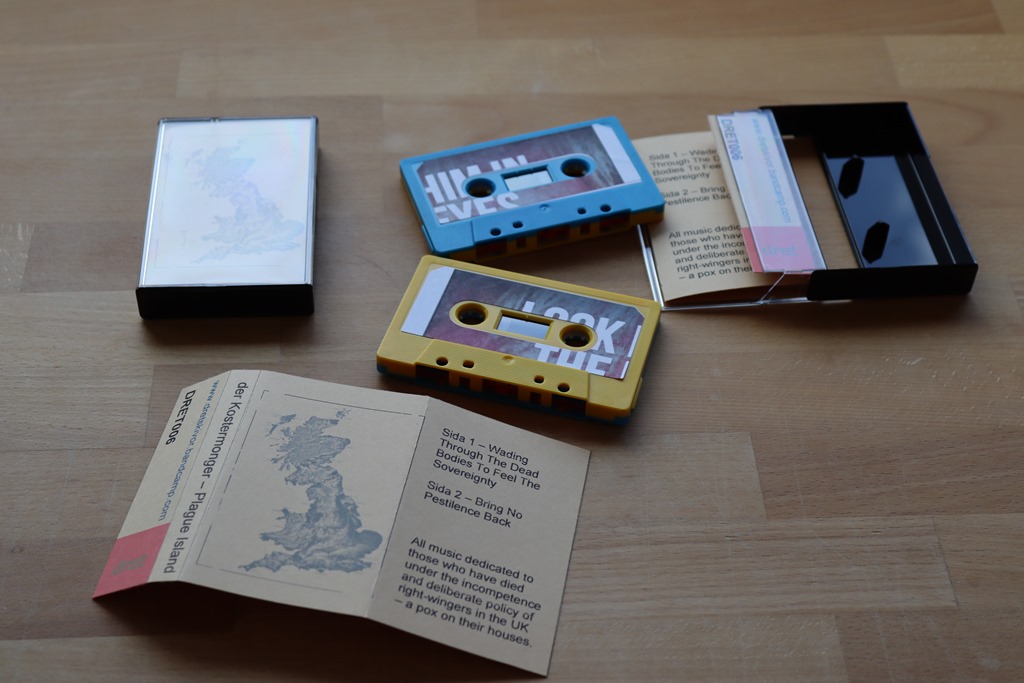
The island of Poveglia in the Venetian lagoon, where plague victims were sent to quarantine – and die – is commonly known as ‘plague island’. But the ‘unprecedented’ pandemic that has circulated the globe in the last eighteen months or so has created a new ‘plague island’, where almost every element of dystopian fiction has become a reality.

There’s no question that this is a political album. The cover alone says it all: this is not some fictional place, but an album that’s explicitly inspired by a specific island that is – sadly, for many of us – very real. The UK, the tiny island with one of the highest death tolls in Europe from the COVID-19 pandemic is indeed a plague island – an island ridden with not only literal plague, but metaphorical plague, its seedy government the worst exponents of capitalist excess, and widely reputed as being more corrupt than the mafia, its racist, jingoistic bullshit-by-the-dozen prime minister with more children than he can account for, tossing money at his mistress while in a position of power, slinging multi-million pound contracts to associates to cash in on the pandemic, and misappropriating funds for a lavish refurb on his flat while unable to find the funds for more than a 1% pay rise for medics… A prime minister who would ‘fuck business’ but would still rather let ‘the bodies pile high’ than shut down and further damage his precious economy’. That’s a plague on a plague, a pestilence on an international scale, and also an absolute fucking disgrace.

It’s an island that also seems to have forgotten how small and isolated it is, both by geography and, now, politically: it’s forgotten it doesn’t have the empire it once did, and so, cut loose from the EU, isn’t an economic powerhouse on a global scale… just a tiny pathetic spec on the map, deludedly flexing its muscles and posturing while plunging further into debt by the hour. It’s a scabby scummy pit of self-importance and irrelevance, where the ruling elite trample the rest every second of the day purely out of self-interest. It’s a hellhole of division and decline that would rather cut off its face to spite its nose, all in the name of reclaiming its borders and blue fucking passports – and all of this is neatly encapsulated in the album’s opening blitzkrieg of noise overload, ‘Wading Through the Dead Bodies to Feel the Sovereignty’.

Because words alone cannot articulate the violent disgust at the country’s policies on immigration, welfare, child poverty, this barrage of cranium-crushing overload is the perfect expression of the rage and the fury – fizzing static and electronic sparks fly through a stammering buzz and headlong collisions of explosive distortion. It’s ten-and-three-quarter minutes of sonic annihilation that’s almost unbearable in its intensity and sheer abrasion. It’s weight and intensity feel like being trapped underneath a tank stuck on a mudbank. You’re clinging on as it tries to run you over the edge, where you can only hope to find a sleazy, lying scumbag lying dead in a ditch before you.

The churning earthworks continue unabated on second track, ‘Bring No Pestilence back’, which dissolves into a babbling, streaming gurgle that accelerates in pace and tapes to a treble as a thin, scrawling drone extends out over its final minutes, before fading to silence. It’s unpleasant and uncomfortable, and clearly intentionally so. For all that, it’s not as unpleasant or uncomfortable as living in post-Brexit Britain in a semi-lockdown state and knowing that the future offers no hope on the horizon.

IMG_9306

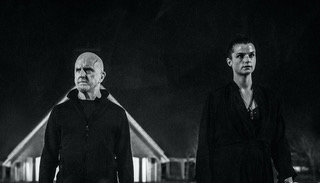
Nordic pop diva Karin Park of Årabrot adds her ethereal, mournful voice and keys to the primordial sound of legendary electronic pioneer Lustmord for this sublime and poignant collaboration. Alter is a ritual of our times and ‘Hiraeth’ is the new single.

Watch the video here:

AA

On the pair’s frst collaborative work, the nine tracks that make up ALTER are every bit as heart-wrenching as they are terrifying, mining new sonic territory, it is a fascinating study of light and shade that delves deep into vast uncharted darkness. Their ability to create atmosphere on the album opener "Hiraeth" is second to none, perfectly assembling a harrowing backdrop for Park’s lilting sound of longing. From there, Park’s vocals add all of the emotional depth and power found in names like Kate Bush, Maynard J Keenan and Elizabeth Frasier, perfectly playing against Lustmord’s waves of dark drama and creating a wholly unique record that recalls Dead Can Dance, Massive Attack and Portishead at their greatest.

Considering Park’s credentials, it might be surprising that a collaboration with Lustmord would fit so seamlessly. Utilizing a sound comprised of elements of industrial, synth pop and more, the celebrated Swedish solo artist and member of Norwegian rock band Årabrot utilizes experimentation in her work, blazing trails and bringing to mind the work of her peers The Knife, Scott Walker, Robyn, Depeche Mode and Burial with her darkly-rich compositions. Multiple winner of Norway’s Spellemann award, Park co-wrote the Norwegian entry for the 2013 Eurovision, fnishing fourth overall. But it is the sensibility of the sacred music of her youth that Park adds to ALTER, contributing a powerful vocal that guides the listener through the cavernous, mystical depth of their collaborative work.

”Lustmord is the Gustave Doré of music", Karin Park offers pensively. "Painting magical pictures with a sound that is so vast, it gives space for your own imagination.” Brian Williams grew up in North Wales, beginning his musical career as Lustmord in 1980 and becoming a pivotal fgure and pioneer in the early industrial music scene in the UK.

A former member of SPK during arguably their most crucial era, Williams went on to work with Throbbing Gristle members Chris & Cosey and appeared on early albums by Current 93 and Nurse With Wound amongst others. After relocating to Los Angeles in 1993, Williams worked on dozens of motion picture soundtracks including The Crow, Underworld and Paul Schrader’s First Reformed, as well as on several video game, television scores and solo albums. Williams has also contributed to and collaborated with artists as varied as the Melvins, Clock DVA, Jarboe, John Balance of Coil, Clock DVA, Paul Haslinger (Tangerine Dream), Wes Borland (Limp Bizkit), Puscifer and more, including Grammy Award-winners Tool from their much acclaimed efforts 10,000 Days and Fear Inoculum.

Alter is set for release on 25th June (Pelagic Records).

Lustmord  Karin Park

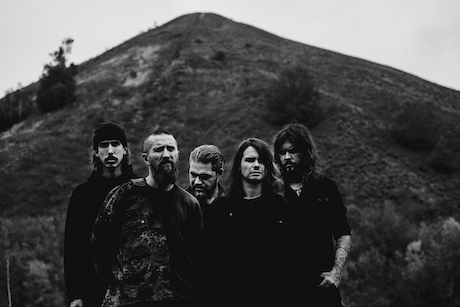
AMENRA announce their Relapse Records full-length debut De Doorn coming June 25th. Watch the official video for ‘De Evenmens’, directed by Dehn Sora, here:

AA

Amenra vocalist Colin H. van Eeckhout comments:

“We are only here for a split second in history. This song is about finding the answer within the question, man’s search for his place here on earth. A journey of sorrow with mere moments of beauty and happiness and this all in relation to his or her fellowman. To accept what is. Our brother Dehn Sora sculpted the digital world where Everman dwells, protected by its thorns, wounded by the others. Sacrificing blood of gold.”

Amenra

PHOTO CREDIT: STEFAAN TEMMERMAN

Miasmah Recordings – 16th April 2021

Christopher Nosnibor

It was the heavyweight score of his debut album, Hold, that provided my introduction to the work of James Welburn, and very much piqued my interest – because in some way, sonically at least, it seems I like to be published. Almost six years to the year on, Welburn delivers another immensely heavy set with Sleeper in the Void.

According to the accompanying blurb, the album ‘feels like a story in two parts, rising lethargically, but with gargantuan power. The second begins with the momentous In and out of Blue, where Juliana Venter’s disembodied, spectral dirge takes center stage among the furious drums and bassy riffs, reaching a full crescendo with seconds to go. Parallel marks a release – Hilde Marie Holsen’s nostalgic soundscapes, pristine as glass, meeting the distant thunder of Welburn’s strings on the horizon. And finally, Fast Moon ends the record in a most surprising way – a tribal industrialized banger, complete with vile distorted beats and every other spice in demand on a blackened dancefloor.’

It’s intense from the outset, and ‘Raze’ is anything but lethargic. It begins with a modestly middling dark ambient drone, but before long, pattering drums are hammering like machine-gun fire and whipping up a frenzy while all around the drones increase in volume and intensity until there’s a veritable cyclone of sound raging all about. The experience is dizzying, suffocating.

The percussion is again punishing on ‘Falling from Time’, but while the sound is still dense and murky, the thundering rhythm, is far more mechanised, more industrial, thudding in a furious frenzy amidst an impenetrable smog of sound. The tempo is fast, and it’s relentless: you could perhaps even dance to it, although that’s not so much my thing: instead, I found my pulse accelerating and a glow of perspiration as the tension grows. Finally, the synths break into a softer swirl, although there are ominous tones eddying around as the drums finally peter out and it’s finally possible to catch your breath and compose yourself. It’s but a brief respite before crushing percussion crashes in on the doomy dirge of the title track: stuttering, stop-start detonations cut through the shoegaze on ketamine crawl of the blurred blizzard of extraneous noise.

Julia Ventner’s vocal on ‘In and Out of Blue’ and ‘Fast Moon’ (the latter of which is a grating, bulbous bass-driven beast of a cut that loops and lunged in a trill of treble and a crackle of fizzing distortion) are haunting, ghostly, and pitched against the lurching cacophony of drums and juddering blasts of noise that hit like a taser to the abdomen, it’s not only a contrast and a change of atmosphere her presence brings, but a new level of trembling intensity.

Sleeper in the Void unquestionably makes an evolution for Welburn: while incorporating many of the same elements fundamentally, their application is quite different on Sleeper in the Void in comparison to its predecessor. The basslines are less overtly structured, and Sleeper in the Void sees Welburn move further from any loose conventions of ‘rock’ toward something more abstract. It may be less direct, less bludgeoning, less reminiscent of early Swans, but it’s certainly no less intense or powerful, and it’s still dense and percussion-driven. If anything, the greater sense of nuance and Welburn’s expanded palette only amplify its menacing resonance, making Sleeper in the Void an album that may be challenging, but achieves optimum impact.

AA

MIA050_front

Cleopatra Records – 23rd April 2021

James Wells

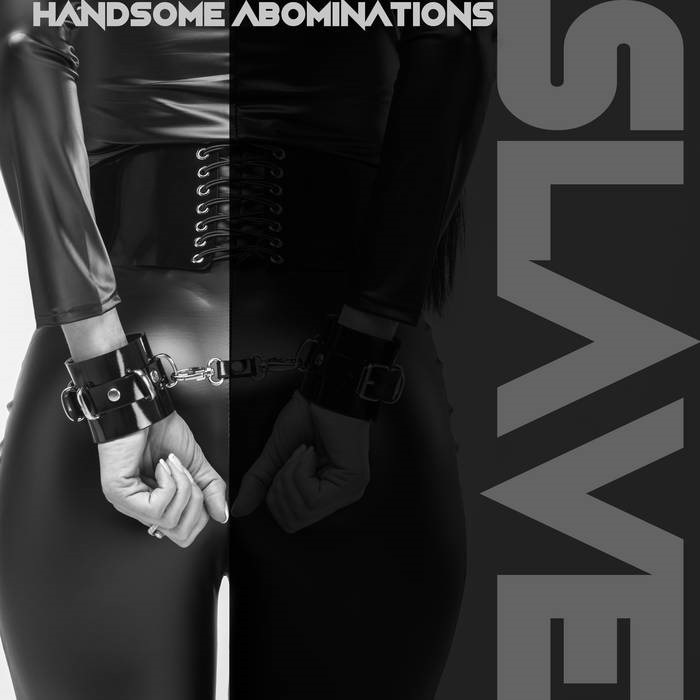
Ahead of their debut album, set for release on longstanding industrial / goth-leaning label Cleopatra Records – who will forever be a favourite with me for their releasing Rozz Williams-fronted Christian Death albums in the early 90s, although their catalogue is impressive in its depth and breadth – Handsome Abominations deliver their debut single, ‘Slave’.

The band are pitched as purveyors of ‘sleaze industrial’ – but then, isn’t that so much industrial? Leading exponents of technoindustrial, like Revolting Cocks, KMFDM, and PIG are aaaaaall the sleaze, and NIN – probably the biggest name in the field – are hardly clean and family friendly (‘Closer’, anyone?). This kind of grind has long associations with dingy nightclubs, latex, and S&M, and Handsome Abominations are all about that scene here.

As Baron VonSchnell says, “When I heard the strong, primeval beat that Tufty Hacka had programmed, I instantly knew that we had to write a writhing, sleazy anthem that would suite a fetish club.” And that’s precisely that we have here: ‘Slave’ is grimy, sweaty, slippy, heaving with all the wrong desires, and it’s clearly pitched at a specific audience.

There’s a whole lot happening, and a whole lot to unpack and discuss. ‘Slave’ is, without doubt a quintessential industrial disco cut that combines that low-down groove and blends it with some less than subtle lyrics that are all the sleaze. Of course it does. Nor would the blurb be justified in promising a song where ‘a sleazy, groovy musical orgy breaks out’ if it didn’t.

But at what point does the world of S&M fantasy stray into something that’s uncomfortable? I’m no advocate of trigger warnings, especially having run into trouble over an absence of them when referencing suicidal thoughts at a spoken word night a couple of years ago, but sometimes it’s possible to wander over lines in the name of ‘provocativeness’. So when Mistress Misha moans ‘Tie me down and rape me’, it sends a prickle. What is the message there? I suppose the question may ultimately come down to an understanding of the scene, in that rape fantasy is an entirely separate thing from the reality of rape, and the rape culture under discussion in the media right now, although it’s likely difficult to understand the distinctions and nuances of the scene for a straight. It isn’t the job of Handsome Abominations to explain this, and nor should art have to justify itself: it’s just difficult to draw distinctions in the current climate. But one thing is without contention, and that’s that ‘Slave’ is a cracking tune.

AA

a2204832655_16

Editions Mego – EMEGO298 – 16th April 2021

Christopher Nosnibor

As the title perhaps suggests, Cylene Suisse Redux is a document of the tour of Switzerland undertaken by François J. Bonnet and Stephen O’Malley in December 2019, following the release of their first album, Cylene. That said, it’s no straight live recording, as the two longform tracks – naturally corresponding with a side of vinyl or cassette each – were edited and manipulated respectively by Jim O’Rourke and Ryoji Ikeda, ‘giving them carte blanche, and each in turn chose a distinct personal approach’.

The two musicians chose to entrust sound material recorded on the tour to the expert ears of two friends and great musicians Jim O’Rourke and Ryoji Ikeda, giving them carte blanche, and each in turn chose a distinct personal approach.

For Ryoji Ikeda, it was a question of finding a moment, circumscribing a fragment of time through his listening, with minimal intervention. For Jim O’Rourke, on the other hand, the live recordings became material to be deconstructed and reassembled, to tell, according to his musical sensibility, a path of metamorphosis for Bonnet and O’Malley’s music.

According to the press release, ‘Cylene Suisse Redux is a prismatic substrate of a series of concerts surrounded by friendship, lakes, mountains, and by nightfall’. But how does that translate as a listening experience?

O’Rourke conjures an ominous sci-fi soundscape, abrim with other-worldly odyssey, as spooky-sounding mid—range drones hover and twist in a haze of reverb. This is the sinister soundtrack to a sinister movie set in a barren wasteland in an alien climate, as clouds of red dust drift through the thin, inhospitable atmosphere. Something is awry: danger is omnipresent, and anything could happen at any moment. Sonorous tones echo out into the emptiness, accentuating the bleakness of the sonic expanse in which we find ourselves. There is nowhere to hide, and there is nothing solid or familiar, only an ever-shifting drift of layer upon layer of sound without and signposts or markers, nothing to orientate oneself with. You feel isolated, alone, exposed, vulnerable, as you advance, with trepidation, onwards through this nerve-jangling eighteen minutes.

Ryoji Ikeda’s approach is quite different, and so is the end result, which starts out like a distant freight trail screeching to a halt with the scrape of metal upon metal, and it continues far off in the background as insistent drones, broad and bulbous, hover and turn, twist and whine, evolving over time. This is more what you might consider ‘typical’ ambient drone, favouring neither lightness nor darkness, and with neither a leaning toward bass not treble, and therefore not challenging and sensory aspect too hard. It’s still ominous in places, but not overtly unsettling or uncomfortable. Because there’s some sense of linear trajectory, it growls louder and darker as it progresses, swelling in volume and intensity, while the soft-edged drones develop sharper edges and become increasingly shrill, howling dissonance and pain before gradually tapering down, albeit with some afterburn.

You’re left wandering, aimless, vacant, in no-man’s land, wondering precisely how you should feel and how you should react to what you’ve just heard – and that’s as it should be. François J. Bonnet and Stephen O’Malley create music without boundaries or definition, and that indistiction is further accentuated by O’Rourke and Ikeda. It’s for the listener to do the work, to explore and to find the points of resonance. There is much space to explore. Go forth.

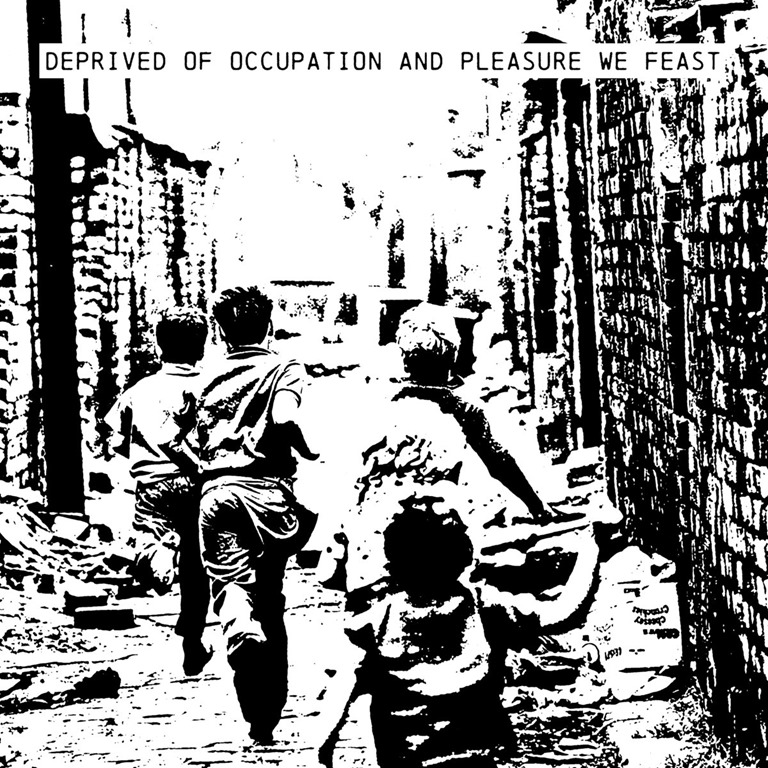
Following a handful of corking releases including US release of the stunning debut by Health Plan, fledging Iowa label Nim_Brut look set to really make their mark with the release of the snappily-titled compilation DEPRIVED OF OCCUPATION AND PLEASURE WE FEAST.

It boasts a cracking array of contributors, and the first available track is ‘No Cure For The Lonely’, a cover of the Swans song from their 1992 album Love of Life by HUBBLE, the rather more gentle side-project of Ben Greenberg, guitarist with New York’s harshest, Uniform.

I personally have a serious soft spot for White Light /Love of Life era Swans, despite many diehards being less keen on the more accessible folksier sound that defined it: the songs felt rather more like songs instead of crushing slabs of brutality, and instead we witnessed the band discover a more expansive, epic sound.

The last track on Love of Life, ‘No Cure for the Lonely’ is a simple, sparse acoustic song that’s only a couple of minutes in duration and finds Michael Gira downbeat and introverted, and HUBBLE recreate the mood perfectly – albeit with a much fuller arrangement and a more psychedelic folk sound.

Ben says ‘It’s a Swans cover, with four finger tapping through an approximation of Terry Riley’s ‘Time Lag Accumulator’ method via a Boss DD-5, which is actually the guitar sound for every Hubble track.’ The floating vocals are bathed in reverb and are definitely secondary to the intense guitar work that dominates. It’s unexpected, and inventive, and sets the bar high for the rest of the album.

AA

a2705195024_10

Herhalen – H#023 – 21st May 2021

Christopher Nosnibor

The press release for this second album by The Incidental Crack – a collaboration between Justin Watson, Rob Spencer and Simon Proffitt – which follows last year’s Before The Magic describes the trio ‘exchanging field recordings, samples and random noise between Manchester, Wigan and North Wales, culminating in studio sessions focused on detailed processing and sound manipulation. They have yet to meet. Maybe one day when this is all over, in a pub in North Wales, free from this madness’.

As such, it’s a classic lockdown project, a virtual collaboration that proves that when it comes to the making of music, distance doesn’t have to be an object. In fact, it’s probably easier to collaborate without the logistics of brining people together in the same place at the same time. Writing on the project, Justin (one half of The Gated Canal Community and formerly of Front & Follow, a label which will be familiar to regular readers of AA), notes that Municipal Music ‘includes tracks recorded during the same period, using our now foolproof approach of sharing stuff, fiddling with it, sharing some more etc.’, adding, ‘It kept me sane at least during the last year!’

That is something that’s certainly relatable: keeping occupied has, for me, been the only way to keep myself together. I’m not saying it’s healthy, it’s just how it is. And increasingly, I’ve found abstract music easier to manage. Structured music, anything overtly ‘song’ orientated and rhythm driven is, all too often, just so much noise and instead of providing a welcome point of focus, feels just like being smacked from all sides at once. So while there may still be a lot going on in this, it’s not psychologically disruptive, and is suitably absorbing and immersive.

There are three extended-length tracks in all, which exploit the full dynamic range, with a strong focus on texture. The first, ‘The Second Cup of Tea of the Day’ is strong – certainly more English Breakfast or Nambarrie than Earl Grey or anything herbal – and probably inspired by the sound of a boiling kettle that’s been manipulated and fucked around with. However, it sounds at first more like a freight train, an extended continuous roar occupying the first three minutes before it gradually abates in volume and intensity, and gentler, softly-woven ambient drones fade in. there are still rumblings and incidental clatterings, forging a soundscape that never fully reconciles the tensions between the elements of soft and harsh, the light and dark. Bubbling Krautrock with bulbous beats collides with metallic shards of grating noise.

‘Just Passing Through’ is appropriately positioned in the middle, and is altogether gentler, softer, warmer, and pursues a more conventional ambient line. But there are peaks and troughs and ebbs and flows as the sound swells and at times shifts toward more unsettling territory, with some woozy oscillations that tug uncomfortably at the pit of the stomach before receding and allowing calmer vibes to return once more.

The third and final cut, the fourteen-minute ‘Ice Cream at the Pavilion’ starts with what sounds like the crashing of waves against a rocky beach in a storm, which strangely reminds me of a number of occasions we’ve had ice cream at the coast on family outings, because it’s always ice-cream weather for children. Voices chatter and babble and whoop excitedly, while a dolorous church organ begins to while away majestically in the background. Eventually, it’s superseded by a barrelling drone and a throbbing, slow-pulsing sound that swells and surges.

There’s a certain wistfulness and nostalgia to be found in the spaces in and around Municipal Music, although perhaps some of that’s my own reception aesthetic, a response as much to the circumstances of its creation and the allusions of the title, both of which remind me I’ve not left my own municipality in months, haven’t met any of my collaborators or friends in so very long, and yearn for both proximity to (some) people and also the countryside and country pubs. All of these thoughts wash around in my mind as the sounds surround me, and it occurs to me, finally, that Municipal Music is good music to think to.

AA

023 The Incidental Crack - cover

AA

The Incidental Crack - artist photo