Posts Tagged ‘unsettling’

19th May 2025

Christopher Nosnibor

Deborah Fialkiewicz’s neoclassical album Ad Vitam Decorus, has been in Bandcamp’s neoclassical ambient bestsellers chart for fully five years now, although she’s hardly been resting on her laurels and basking in the success since it’s release, having released a slew of works in a range of genre styles, with this, the latest, being a collaboration with (AN) Eel, who describes himself as ‘An Experimental Vocalist & Full Bodies Inhabitant of this Colorful universe’. His output is also remarkable, and his catalogue consists mostly of collaborative efforts, this being his second with Fialkiewicz (the first being Inkworks in April 2022)

Although the words are (AN) Eel’s work, those which are published on the release’s Bandcamp page could easily be about Fialkiewicz’s friendly foxy visitors, who she feeds and often photographs and writes of online:

Two Foxes, Out of Boxes,

In Your Garden

Seven Tales

Shape Shifter, Sun & Moon

Shadow Dancers, Rod & Womb

Silk and Cobwebs,

Perhaps this is simply an indication of how closely attuned this collaboration is.

Compelled by Nature contains two longform pieces, each hitting that magical twenty-three minute mark – meaning it would be ideally suited for a vinyl release, but in its digital form, has the feel of a ‘classic’ experimental electronic album, the likes of which you’d find on Editions Mego or Ici, d’ailleurs. The two compositions break down the title: ‘Compelled’ and ‘By Nature’, bringing an element of linguistic play into the frame.

‘Compelled’ offers up some fractured drones which crack and lurch in volume and frequency. As the piece progresses, looping, repetitive motifs emerge, atop of which gurgling, chattering, insect-like scratches emerge, chittering and bibbling, rising and falling, and when these incidentals fall to silence, the repetitive underlying sonic skeletal frame of the composition sits sparse and alone, becoming thoroughly hypnotic. The experience isn’t dissimilar from watching waves lap the shore on a calm day with a gentle tide. In time, 16-bit bleeps reminiscent of 80s arcade games ripple through an ever slower, evermore dolorous droning of a slow-strummed bass guitar. The vocalisations are eerie, ethereal, haunting – spiritual, but somehow detached from the world as we know it, a keening, crooning, mewling. It may or may not be wordless, but is in some ways similar to Michael Gira’s wordless articulations during the immense, immersive sonic expanses which have defined Swans output and performances in recent years – it’s not about song, or structure, but transcending sound and language. And in this context, the title, ‘Compelled’ takes on a clear and specific meaning: this is not music made for entertainment, or with an audience in mind, but music made because it needs to be made, the product of creativity as an outlet, a necessity as a means of getting through life in this insane world.

‘By Nature’ begins with distorted, distant babbling voices over a low, ominous drone, reminiscent to an extent of the start -and end – of ‘Pornography’ by The Cure. It’s dark and oppressive, not to mention somewhat disorientating. There are fragments of sampled narrative, but there are glitches, fractures, which disrupt it, and against this infernal, churning drone, chiming bells and similarly innocuous sounds take on a disturbing sense of portent, a certain horror-like suspense. Anyone familiar with the tropes of horror as a genre will be aware of how the most successful horror works because it transforms mundane situations to a source of fear by adding an undercurrent of the unknown, and / or a foreshadowing of nightmarish events ahead. This brings that quite specific sense of something bad about to happen. The digital bloops, computer game chimes and laser bleeps of ‘Compelled’ return, but this time against an altogether more sinister backdrop, a drone like a black hole opening up to swallow the entire solar system.

So many of the sounds are familiar, even if only vaguely so, but their collaging and recontextualization strips them of meaning by contextual connotation, and so what we find ourselves facing is something quite alien, and as such, uncomfortable, unsettling, even scary. What is this? What does it all mean? Only Deborah Fialkiewicz and (AN) EeL know – or perhaps even they don’t, really – perhaps – and it seems likely – Compelled by Nature is a work of instinct, something which happened because it simply came to be, and is as it is by happenstance. I can believe this is most likely, and that Compelled by Nature is more about process than product. It’s a compelling work. It is not, however, an album to be listened to in the dark.

AA

cover

Self-Released – 13th December 2024

Christopher Nosnibor

Sometimes, the notes artists pen to accompany their latest works are somewhat dry, rather technical. Others provide effusive essays, while others still no details whatsoever. Flin Van Hemmen’s words which accompany Luxury of Mind are poetic, somewhat vague and elliptical, but lyrically rich and personal, if vague.

In order to thaw matters of the heart, one must go to where it’s cold.

It was the summer of 2022 and I was finally summoned there.

My personal winter had come, a place at once foreign and familiar.

In a flash I was made aware of all my life’s dimensions – the ones less welcome, or simply too big to face.

My sense of musicianship was temporarily halted, at that point unsure of its return.

Early 2024 I knew my personal winter was waning, and so I started tinkering away again, musically.

The pitter patter of the rain, the orchestra rehearsing their parts simultaneously, the sounds inside the corner store where I buy my daily coffee.

And how do they sound, together?

What indeterminacies reveal itself, or do I pick up on?

That’s my journey and a journey I wish to share with you in Luxury of Mind.

I have elected to quote in full because they are clearly pertinent to the substance of this material. Van Hemmen is clearly and peculiarly specific that he feels the need to share this specific journey, which clearly has involved stasis and self-doubt. Writer’s block? He seems to allude to rather more than that here.

Flin van

‘A Picture of Your Face (In the Light of the Fire)’ is bold, choral to begin. It’s not grand in the bombastic sense, but feels deeply spiritual, ceremonial, and for wont of a better word, ‘churchy’. While the sense of grandeur is uplifting, and spiritually powerful, the drone of organ and voices coming reverberating in a large, echoey space reminds that where there is a ‘churchy’ aspect, religion – particularly of the Christian persuasion – for all the exultation, is laced with guilt, apology, pleading – pleading forgiveness for sins, pleading for entry into heaven. And as such, it reminds of the paradox whereby Christians prefer to confess and atone their sins rather than simply try harder not to err in the first place. There are scratches and crackles which rupture the graceful smoothness of the piece, and the title track slips into a darker, danker space, with a sound like torrential rain on a tin roof, with murky ambience lurking about.

‘Eloquence and Grief’ brings new levels of disorientation, sort of a film-soundtrack piece with discordant background babble and crowd noise as an orchestra forges a soundscape which evokes mountains and canyons. Its meaning is difficult to extrapolate: it feels like multiple narratives occurring simultaneously, and the same is true of the eerie dark sound collage of ‘Volition & Velocity I’, and its equally gloomy, dolorous counterpart, ‘Volition & Velocity II’.

The whole feel of Luxury of Mind is haunting, unsettling, like walking through the soundtrack to a vague and abstract film, traversing time and space, intersecting scenes of bustling medieval towns, and post-apocalyptic shots of burning villages, intercut with occasional psychedelic visuals, while electronic circuits in heavy rain and church bells chime for the funerals of unnamed bodies. It’s not quite horror, but it’s heavy with gloom and trauma, and, by this measure, Luxury of Mind sounds like the soundtrack to a period filled with anguish and psychological pain. It concludes with the sparse and dank clanks of ‘Last Year in Cantecleer’ – and it must have been a washout.

It feels as if we’re sinking in floodwater, drowning in a tidal wave of toxic bullshit, while all around everything goes wrong. But at least one thing has gone right for Flin Van Hemmen: Luxury of Mind is an album with so much texture, so much depth of texture, so much mood, that it’s impossible to deny its creative success.

AA

a0351313896_10

Room40 – 20th September 2024

Christopher Nosnibor

Autumn is something of a difficult season to assimilate. As much as it can be filled with beautiful shades as the leaves turn and the sunlight takes on a softer hue, there can often be a hint of melancholy in the cooler air and darker evenings. Some may yearn for the heat of summer, but more than that is the reminder that we’re on a transition toward winter, and the passing of another year. The passing of time is something which creeps up on all of us with an inexorable inevitability, and while you’re busy living life – or, likely, battling just to keep on going through it – time slips by, and your twenties slide into your thirties slide into your forties… people, places, jobs all come and go. Go where? And what have you got to show for it?

As one of the most dismal summers in a long time – not to mention the coldest in six years – draws a close to the wettest eighteen months or so since records began here in the UK, where it’s felt like eighteen months of October, the arrival of the 15th Anniversary Edition of A Colour For Autumn is nothing if not timely. Anniversaries inevitably give pause for thought, inspiring reflecting on the time of the actual event, and the intervening period. And with in his reflections on A Colour For Autumn, and its context, Lawrence English makes some powerful observations:

‘Climate change, as a lived experience and not merely as a ‘possibility’, suddenly came into focus with reports flooding in about the climatic dynamics since the turn of the century and events like the Black Saturday fires here in Australia. It felt like, and continues to feel like, seasonality as some predictable measure of our world is relegated to the ‘before’ times. This record is not about these climatic shifts however, more a recognition of how we have used patterns and predictability to guide us over the centuries and perhaps a realisation that the way forward is not the path we have known historically.

‘Listening back to the record with fresh ears, a process made completely delightful by Stephan Mathieu who has carefully remastered it, I am struck by how minimal some of the structures were. There are moments that strike me as uncharacteristically patient and even generous, allowing one element to hold without interference. I’m grateful to still feel a deep connection to this edition and to the people and places that helped shape it.’

‘Droplet’ seems to start midway through: there is no intro, no fade-in, no slow-build. We find ourselves landing in the midst of a long swell of ethereal sound, a chorus of spectral voices drifting in vapour and carried on clouds. Sometimes, ambience carries something of greater depth than is readily apparent. More than a medium to meditation, a conduit to contemplation, seemingly formless, abstract sound resonates on a subconscious level with and unexpected force. Over the course of almost seven minutes, the track drifts and twists and a squall of dissonance and a whistle of feedback builds in the background.

Just as the pieces merge into one another, so the titles of some of the tracks link together to form phrases, albeit with only vague meanings: ‘The Prelude To’ leads into ‘The Surface of Everything’. Elsewhere, English departs the surface and transports the listener high above the atmosphere in ‘Galaxies of Dust’. You almost feel as if you’re floating, detached from everything, even time, hanging in suspension.

Much of the sound on A Colour For Autumn takes the form of hums and drones, and while gentle and delicate, there’s an ever-present discomfort, something just beyond perception, on the edge of the senses, which unsettles, nags and gnaws. It’s this uncertainty, this element of disquiet, which makes A Colour For Autumn such an enthralling and evocative listening experience.

AA

a2415743988_10

Karlecords – 12th April 2024

Christopher Nosnibor

This three-way collaboration promises ‘intense, menacing layers of thick drones and alien sounds,’ and comes laced with sadness in the wake of the recent passing of Phill Niblock.

Karlrecords’ statement around this release and how it came to be is simple, direct, and worth quoting here:

In summer 2022, within just a few weeks and by pure coincidence, 2 proposals regarding Phill Niblock albums arrived: one suggesting an overdue vinyl reissue of a CD release (more on that when the time has come for it), the other email was from Anna Clementi saying she and Thomas Stern were working on new pieces that Phill Niblock has written for her … when Zound Delta 2 was complete, Phill sent photographs for the two artworks, we met twice to discuss details, but unfortunately he died unexpectedly early January this year so the album now is, sad as it is, a posthumous release … an intense goodbye from one of 20th century most iconic composers.

While Niblock departure was sudden and unexpected, it’s remarkable that not only had he enjoyed a career spanning five decades and ranging across minimalist and experimental music, film and photography, but that at the age of ninety, he remained prolific until his final days, as Looking for Daniel, released in February, and representing his final compositions, evidences.

Like Looking for Daniel, Zound Delta 2 contains two longform composition, and, again, it’s a monumental drone-orientated work. ‘Zound Delta 2’ is eerie, other-worldly, haunting and atmospheric. Ethereal voices hum and moan, breathy wordless monastic incantations come together and emanate disembodied exhalations as if calling from the other side. No doubt the actual source sounds and the process was quite banal and workaday, but the effect… the effect sends shovers all over and goosebumps pickle in response to this chilling swell of sound. Beneath the moans and cries are slow-turning rumbles and delicate, wisp-like ambience. Everything sounds slowed down and stretched, sound suspended in time and space as they hang in the air. The layers wrap around one another, and while minimal in form, a density of atmosphere builds which makes it hard to catch your breath.

Sometimes, a dream can affect the shape and mood of the entire day which follows, and this has been one of those days for me. More often than not, it’s simply a hangover of anxiety or a sense of doom which looms, but since my wife died early last year, I’ve dreamed of her only rarely, so when I do, the impact is great, and if feels as if she’s speaking to me, even when there’s no obvious message. Invariably, she’s well again in my dreams, or at least looks healthy again, and sometimes, she imparts words or wisdom. But mostly, it feels a if her presenting in my dreams is a reminder, a kind of haunting. The reason I take this diversion isn’t purely a matter of indulgence, but because it’s relevant to the tone of ‘Zound Delta 2’, which creates the sensation of Niblock pre-empting his departure with a recording which sounds as if it’s being projected from beyond. The abstract voices aren’t tortured hellish howls, but the sound of purgatorial lostness, wandering in between worlds, wanting to communicate, to be heard, but without the capacity for articulation.

Perhaps this isn’t the album I should be listening to tonight – but then again, perhaps it is. Culturally, we avoid talk of death, we shield our eyes from it. As the sole inevitability of life, we need to turn and confront it. ‘Zound Delta 2’ is without doubt one of the most powerful, intense, moving and difficult pieces I can recall hearing. It is so, so sad, so far beyond human, so far beyond this realm. It feels like the purest grief, the deepest of sadness, the ultimate release, the sound of being dragged, unsuspectingly, into the spirit realm. Everything collapses and eddies into a disorientating swirl of sound in the tracks final minutes, growing evermore uncomfortable.

‘Zound Delta 2 (Version)’ is fractionally shorter, but no less comfortable. Again, it begins quite gently, almost delicately and emanating an air of tranquillity – but it’s soon disrupted by creeping undertones of distortion. There’s squelching, trudging, sloshing and rumbling discomfort amidst uneasy drones and heavy flutters, and if it’s momentarily lighter than the ‘original’ version, this alternative or second version swiftly evolves to become pure tension. As it progresses, ‘Version’ become more uncomfortable, more distorted, more strangled, tortured, and asphyxiated. I feel my muscles tighten and my head spin. It’s dark, it’s tense, it’s difficult.

Clearly, it would be erroneous to presume that Niblock was aware of his limited time. But something about Zound Delta 2 feels like a planned exchange from a place beyond our experience and understanding. It’s as if he had stepper over some time before, and brought something back and shared it with his collaborators for this work.

Any response to a musical work is personal, subjective. Perhaps my in-the-moment reaction is coloured by timing, by the moment of the now – bad timing. But – BUT… something about Zound Delta 2 is intrinsically hard to manage, touching a subconscious level that really triggers something. As slops and churns wash and eddy around the eternal drones which form the dominant fabric of the album, Zound Delta 2 tugs at our feet and ankles and disturbs the ground beneath our feet. Dark and dank, Zound Delta 2 is not an album to listen to in the dark.

AA

KR115_front

James Wells

We’re a little late to the party with this one, but we’re glad to be here now. Well, I say ‘glad’… This is like arriving late to the party and everyone is already half cut and you wonder if you should have actually come at all. Something feels dark, it feels as if something’s brewing, something menacing. If you ever feel on edge and like you’re often casting a glance over your shoulder for reasons unknown, this is not going to help.

Unfamiliar as I am with Tigercide – which probably something I need to address, and as swiftly as possible, this immediately feels familiar, and also uncanny – that is to say, familiar but not quite. Tigercide trade in dark electro, with subtle trip-hop infusions interwoven through their atmospheric tunes.

Having released their ‘Remedy’ EP in 2019, the remix EP is set for release this autumn. Following a couple of standalone singles, they’ve started sliding out tasters for the new EP, and John Bechdel’s take on ‘Remedy’ is magnificent.

It’s not overtly witchy or creepy, but has a real skin-crawling ominousness that sets you on edge, and if Shexist’s vocals on the original were haunting atop the low-end throb and reverb-soaked snare clatter, Bechdel has spun everything onto a dark, misty industrial-tinged anxiety dream. It sets you on edge, it’s tense, and it’s special.

AA

Tigercide_RemedyRemix_CoverDigital

Room40 – 2nd June 2023

Christopher Nosnibor

I’ve been engrossed by Lawrence English’s works for some years now, and my appreciation of him and his methods were only enhanced when I conducted an interview with him about ten years ago for a now-defunct site (so many are now: the idea that once online it’s there forever has been proven false, and we’re all sitting, bewildered by as rapidly-vanishing archive of the recent past), where we touched on cut-ups and William Burroughs and I was struck by the depth of his knowledge and references.

But I have grave concerns around future history, or the future of history. While the move to digital was hailed as a move toward permanence, incorruptibility, the opposite has proved true. No-one writes anything down anymore, no-one produces additional. tape copies. If your hard-drive gets fucked, so does your entire library. The Cloud? Do you even know where it is? Does it even exist?

While we reflect on this, let us also consider this album and its slow gestation. David Toop is another artist I’ve spent some time listening to, and writing about, including his Breathing Spirit Forms three-way collaboration with Akio Suzuki and Lawrence English, but this is the first time just the pair of them have worked together, and Lawrence explains its evolution as follows: ‘Over the years, David and I have shared an interest in both the material and immaterial implications of sound (amongst other things). Moreover we’ve connected many times on matters which lies at the fringes of how we might choose to think about audition, our interests seeking in the affective realm that haunts, rather than describes, experience. The Shell That Speaks The Sea very much resonates from this shared fascination… I’m not exactly sure when we first mooted this duet, but I sense its initial trace is now more than a decade ago. I tend to live by the motto of ‘right place, right time’ and I believe David likely also subscribes to this methodology. A couple of years ago, David and I reignited the duet conversation and began exchanging materials. As a jumping off point, I explored a series of field recordings that, for me at least, captured something of this affective haunting that I mentioned previously’.

And haunting it is: ghosts of memories and fragments of half-recollections lurk and loom amidst the thick, dark shadows forged by the unsettling sounds. The title suggests an album of soft ambient washes, a gentle tidal swash, a soothing, tranquil work. It is not.

‘Abyssal Tracker’ is remarkably atmospheric in a sparse, gloomy, sense, and provides a fitting introduction to the duo’s idiosyncratic work, compiling sighs and vocal rasps over elongated strains of feedback and a suffocating atmosphere. Shrill shrieks echo out over eerie notes and a scratching insectoid clamour in the trebly range. Thuds ripple beneath the surface: there is so much texture and detail here, you find yourself looking about nervously, seeking the various sources and to see what’s over your shoulder, or hovering above your head.

Clanks and clatters and clanks and thuds are the dominant features of this album, and is lasers fire into the abyss of emptiness on the dense and disturbing ‘Reading Bones’, which scratches and scrapes, while there are earth-churning low-range disturbances – and words, but they’re indecipherable, spoken in low, whispering grunts, and it’s impossible to decipher even the language, sounding as it does like an ancient incantation.

It’s not all quite so skin-pricklingly tense, but much of it is: ‘Mouth Cave’ is dark, dank, low and rumbling, but has textures and what sounds like the trickle of running water spattering in the background amidst the cavernous gloom, and if ‘Whistling in the Dark’ sounds like a simplistic description, it’s accurate – but also suspenseful, scary and bordering on horror tropes; the whistling is deranged and floats through a heavy, crackling doomy drone. There are more ominous mutterings amidst the creeping darkness of ‘The Chair’s Story’, which feels like casting a look back through the ages through a thick fog at scenes of torture and pain and great sorrow and forward, to a laser-bleeping future.

As I seem to be prone to lately, I found myself nodding through fatigue but also, simultaneously, tense and alert during The Shell That Speaks The Sea, an album which possesses vast sonic expanses and a bleak, oppressive atmosphere. Each track offers something different, and this only accentuates the ‘otherness’ of the music this album contains; it’s like walking through a series of disturbing dreams, whereby each scene presents a new unfamiliar setting, and there are hints of BBC Radiophonic Workshop and vintage sci-fi about this incredibly imaginative work.

It may have taken a long time to piece together, but the results make the labour more than worthwhile.

AA

RM4205_front

Möller Records – 23rd March 2023

Christopher Nosnibor

It’s clear that while the pandemic is officially over, collectively, we’re still very much coming to terms with it, and its aftermath. Lockdown, in particular, has had a deep psychological impact, on so many. Everyone’s experience was, and is, different, of course. I have friends who almost deny to themselves that it happened, that it was a dream or something, and for some of us, in some respects, it’s as though it never ended. This is how people deal with shock and trauma.

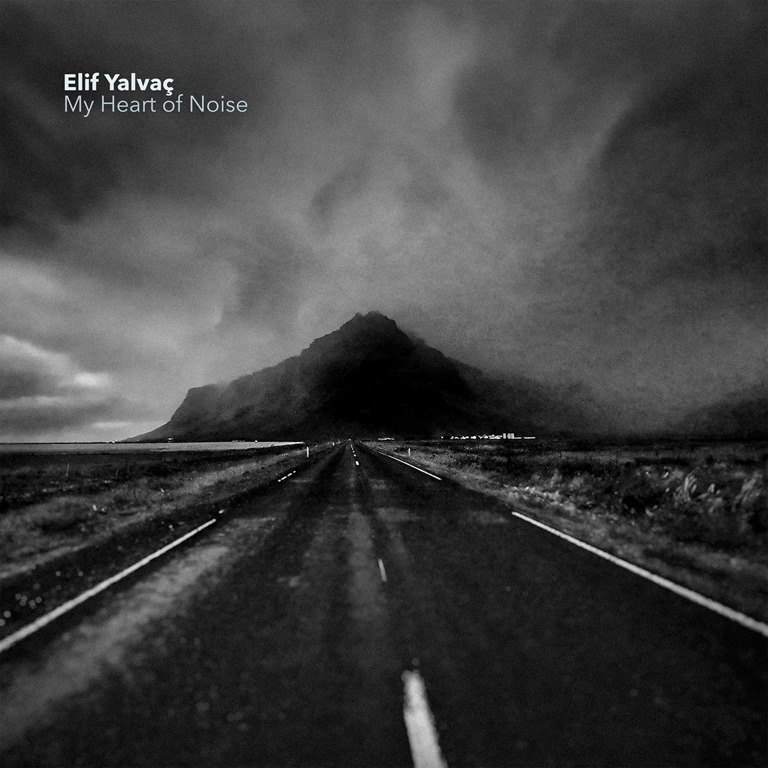
My Heart of Noise is not a pandemic album, a lockdown album, a post-trauma album, but as Elif explains, the album “began with a collection of studio and concert recordings from my travels north before the pandemic. It became like a puzzle: I could hear something special, but also that the pieces didn’t fit together well or feel complete. The breakthrough came in realising that this project was meant to be more about creation than preservation, and that it didn’t need to be a literal document any more. It could still be faithful, but instead to the spirit that inspired this music and my travels in the first place, instead of a particular recording. I created new musical starting points, and invited artists I met on my travels plus others, asking them to choose one to begin to work with together. Some artists incorporated our previous recordings, others set off in a new direction, while I shaped the pieces and found a way to connect them together.”

Recent history, then, is marked not as BC and AD, but BP and AP – before pandemic and after pandemic, and My Heart Of Noise reflects Yalvaç’s attempts to ‘make sense of a noisy world’. And the world is indeed, noisy, and difficult to articulate. There is simply too much noise too much happening all at once. It’s a perpetual sensory overload.

For this, her debut album, Elif Yalvaç involved a number of the people she encountered along the way of her journey, and the title also references this, the way she became the hub in a collective process.

The collaborative aspect means that each track does have a slightly different feel, despite all being centred around eerie ambient soundscapes.

‘Orchestra of Light’, the album’s first track, is a layered composition of dronies and hums and whispers which drift and swirl around some of the mind’s darker recesses. The textures and tones rub against one another and the edges aren’t all smooth, with buzzes and barbed, drilling sounds grating against the grain, meaning there’s a certain friction, a tension, creating a sense of discomfort.

‘Gate Check’, which follows, is softer, but the notes bend and twist and the supple, mellow tones are spun with a sense of the awkward and the uncanny, but nothing so warped as ‘Mielmaisema’, with its collage of human vocalisations and clunking clumps of thuds and thumps Amid whirls and crackles and hums, from which grinding groans of decaying Krautrock creak. It may be less than five minutes in duration but it packs a lot of shiversome strangeness into its short space, in which even chirruping birdsong feels somehow unsettling.

My Heart of Noise is not an overtly collage-based album, but it does assemble many sources and sounds, and often overlaps and overlays them to disquieting effect, and I’m at times reminded of vintage sci-fi and the BBC Radiophonic Workshop.

‘Cloud Score’ sits somewhere between post-rock and classic drifting ambience, while seven-minute closer ‘Taiga II’ very much feels like the lifting of the clouds and the breaking into light, but at the same time feels like a storm building on the horizon, and ‘Dronasaurus’ indicates that it’s not 100% serious 100% of the time.

My Heart of Noise is a restless work, one which ventures and explores, and never for a moment settles into comfort or conformity. It is not an easy album: whenever things feel like they’re settling into something nice, a cloud of disruption and difficulty will drift over and raise a shiver. You can never really settle or feel at ease with My Heart of Noise – but as a representation off life in the world as is, this is a fair summary. Keep your eyes and ears open: there is always something around the corner.

AA

a3629223309_10

Bizarreshampoo – 11th August 2021

Christopher Nosnibor

The last time we heard from Ukranian purveyor of brutal noise, Vitauct, it was the scouring noise abrasion of Breaking Bad back in the spring of 2020; before that, it was the split album with Crepuscular Entity in December 2019. It turns out there’s a whole lot of activity that’s happened in between, including a fair few split releases, and this latest offering is yet another, this time with Georgia-based ცოდნის მფლობელები, an artist who, in his own words ‘uses field recordings to create tracks that try to communicate different states of mind’, and explains that within his work, ‘there is a certain tension and expectation next to a piano taken from some informal performance.

The release is available on double cassette and CD, although the way it’s laid out would also lend itself well to four sides of vinyl, with each artists contributing two fifteen-minute / side-long compositions, alternating, with Vitauct occupying sides A and C, and ცოდნის მფლობელები occupying sides B and D.

The first piece, ‘Search’ is perhaps more ‘Destroy’: a tearing wave of harsh noise that simply blasts the sense for quarter of an hour straight with barely no perceptible variation, it’s practically HNW, bar some subtle shifts and reverberations of pain echoing in the background. It howls and screams, but mostly it’s like the sound of ground zero of an atomic bomb, and it just goes on, and on, without mercy, shredding the air and blasting away at the organs from the inside.

‘თვალთვალი’, the first of the two tracks from ცოდნის მფლობელები, offers a quite different tone and atmosphere. The sound is murky, swampy, almost subaquatic in its drowned muffledness, and there’s a low, slow, rhythmic rise and fall like a tidal current that drags you along in surging increments, pulling, then releasing a little, before pulling again. It’s dense – suffocatingly so – and gurgles, dark and abstract while creating some kind of sensory deprivation that becomes more intense and unnerving the longer it persists. Everything slows. Nothing happens. It feels as if time has stalled, and you’re hanging in suspended animation, unable to speak, unable to move, incapacitated and simply floating, paralysed. You start to find interest in the most granular detail, in the same way you wonder if you need to go over parts of a wall you’ve just painted because you can’t be sure if you’ve missed a bit or it’s just drying faster than other areas. You wonder how long you will remain trapped here, if the nightmare will ever end, if, indeed, you will ever escape to the surface. It’s a long and torturously slow fifteen minutes, and when it does finally end, you’re left feeling limp, drained.

And then it’s back for round two: with ‘Uncertainty’, Vitauct brings a crackling fizz of overloading static and digital distortion that sounds like your speaker cones are torn. It’s a tonal / textural combination that’s almost guaranteed to disrupt the equilibrium because it simply sounds like everything is fucked – both your equipment and your hearing – and sets a churning in the pit of the stomach. This could perhaps be some kind of auditory trick of sorts that sets the listener off balance, like an infection or damage in the inner ear. It’s painful, but as an example of devastating mid-range harsh noise, it’s outstanding.

‘იდეოლოგიის მეტრონომი’ is the final piece, another fifteen minutes of murky, bubbling babbling. This time, it feels speeded up, and the bubbling babbling sounds like a large gathering of people, chattering excitedly underwater, while a stream of analogue synth streams and stammers in a sustained state of agitation. It’s an unheimlich, otherly experience that’s unsettling and uncomfortable – which is a fair summary of this release as a whole.

If its hour duration seems daunting, in some respects I suspect that’s part of the intention: this is not a release for noise casuals, but that hardcore who have real staying power and probably something of a masochistic streak. For such a niche genre, the amount of material it has yielded – and continues to yield – is astronomical, and it’s not always easy to differentiate the quality form the lethargic, but as we’ve come to expect from Vitauct and his pairings, this is strong stuff.

AA

a3215801437_10

Misanthropic Agenda – MAR057 – 7th July 2021

Christopher Nosnibor

The title of Dave Phillips’ new album is quite explicit: it’s an album dedicated to death. He explains this in the liner notes, ‘not death the spectre that installs horror and fear in many (in the western world), nor death the enemy of the (western) for-profit medical system, but death as part of a cycle, like birth. death the only certainty in life. dying, like living, as something that can be done well – or not. death also something that can be a release, a relief, a liberation, the end of suffering, a freedom.’

The album, which he directs the listener to play as one continuous session, was inspired by his father’s illness, deterioration and death, and being his carer for the 15 last months of his life, and was, poignantly, sent off to press in early June 2021, when his father died. This clearly makes To Death an incredibly personal work.

Perhaps predictably, To Death is a dark album. Predictably, not primarily because of the subject matter, but because my last encounter with Phillips’ work – 2014’s Homo Animalis – was pretty dark, too, although he’s done a hell of a lot since then. And for Phillips’ observation that death can be ‘a relief, a liberation, the end of suffering, a freedom’, death is rarely seen as a cause for elation or celebration in the human psyche, particularly in the west, where there is a deep-rooted fear of death, and a culture that promotes prolonging and preserving life at all costs, regardless of quality. Death is perceived as a loss, something devastating, and to be avoided at all costs, and I’m forever presented with news items and comments on social media about people who have died in their 70s or 80s – particularly during the pandemic – having been ‘taken before their time’. But when is their time? Everyone has a time, and everyone has to die of something, and the state of denial about the inevitability of death is psychologically detrimental.

But as the title of the album’s second track says it so succinctly, ‘fear of death = fear of life’. A life lived in fear of death is no life at all. Of course, an awareness of death is something else entirely. You have to take some risks to know you’re actually alive. How many people say on their death bed that they were glad they did nothing in case it killed them? There’s a clear theme to this album, both sonically and in the tiles: ‘everyone dies, not everyone lives’ is the perfect encapsulation of Phillips’ ethos. It also manifests as a dolorous booming drone like a ship’s horn juxtaposed with maniacal shouting, distorted and raw, and very much in the vein of Prurient. As such, Phillips articulates beyond words and reaches into the very core of the psyche.

Ominous drones that hum and buzz hover unsettlingly and uncomfortably, eddying around whispered words, barely audible during the ten-minute first track, ‘a cycle completed’. What is it about whispers in darkness that we find so unnerving? Gradually, ponderous bass notes and dubious creaking sounds enter the mix as the drones become more tense and eerie.

The third piece, ‘to death we all go, the sooner the better’ is filled with agonised shrieks and howls and pain and anguish – and the title conveys a sentiment I can truly buy into. Humanity is a scourge, and the worst of all plagues on the planet.

Listening to the album in a single sitting is certainly a powerful experience, and there is some dense, challenging noise, and things grow darker and doomier as the album progresses: a stark piano note chinks out and is quickly submerged in a wheezing drone and more muttered narrative on ‘real catastrophe’ which plunges deep into underground rumblings. ‘We are the virus…’ he whispers amidst a soup of spectral voices. ‘The real catastrophe is that humanity continues.’ Phillips’ apparent misanthropy is hardly unjustified: in the scheme of all eternity, it’s taken us but the blink of an eye to render countless species extinct and decimate countless ecosystems. In nature, other species don’t destroy their own habitat. Even viruses and parasites evolve to achieve maximum replication without destroying their hosts. It’s simply not in their interests. The common cold is the most successful virus of all time because it’s highly contagious but rarely kills its host, other than by complications. The more hosts available, the times it can reinfect, the less work it has to do to propagate itself.

Siren-wailing undulations lead us to ‘the other side’, a groaning, wheezing croak of a composition built on repetition before finally, the title track crawls to the finish – and having made it, I can die happy.

Some speculate that death is not the end, but the likelihood is that it is, and regardless of spiritual belief, physically, it is. And why should that be such a bad thing? All things must end, and it’s a matter of when, rather than if. Live life: accept death.

AA

dp to death digi w newest corrections

Room40 – 11th September 2020

Christopher Nosnibor

I struggle to keep up with the influx of material I’m sent for review, and have done for at least the last 8 years, which may or may not be coincidental with a) becoming a parent b) rapidly developing a massive network or PR and band contacts. It turns out that there comes a point when you don’t need to ask to be added to mailing lists, and people just find you. Anyway. Sometimes I just struggle, but that’s a whole other matter.

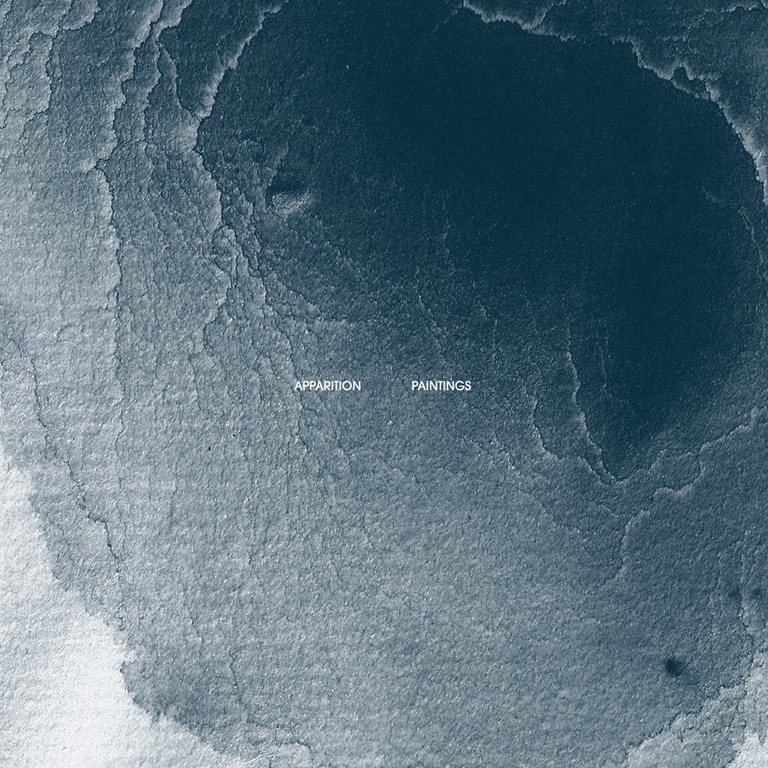
Apparition Paintings is a collection of oddly disjointed compositions that alternately soothe and trip the listener, moving between mellow melodies and rippling calmness – ‘All I Desire’ is a slow melt of chillwave, electronic post-rock and Disintegration-era Cure – and eerie weirdness – ‘When I first came here (I thought I’d never get used to the trains; now when it’s quiet I get nervous)’ is part chamber-pop, part deranged spookiness. None of this sits comfortably, in any context, and the deeper one delves into the eerie collage work that is Apparition Paintings, the more unsettling it becomes.

Toop’s notes which accompany the release are as disjointed and confounding as the music they accompany: ‘Don’t ask me about genre or consistency. Who cares? Half the world is drowning; the other half is in flames. Each story is an animal, a plant, something you drink, a surface you touch, a faint line, some memory emanating from a cardboard box. “’Things’ in themselves are only events that for a while are monotonous,” wrote Carlo Rovelli in The Order of Time. Maybe sounds are melting ‘things’, tired of the monotonous real.’

Yet on a certain level it makes sense. In a post-Covid world. The monotonous real is the lived experience of the everyday for many – not that it wasn’t before, but now, without the commute, without being in proximity to the volatile colleague, the explosive tension or the whatever, the monotonous real is confined to the household and to within the head. It may not be immediately apparent, but Apparition Paintings is a sort of inside soundtrack of the now, with extraneous and unexpected noises pinging back and firth across the main sonic backdrops to each piece.

‘She fell asleep somewhere outside the world’ finds a disembodied female voice singing a quavering melody, hesitantly. It’s a popular trope, but the deranged, childlike singing against a spooky backdrop is an effective trigger for cognitive dissonance. Apparition Paintings is an album that very much speaks to the sounds of the interior.

AA

a2399192845_10