Posts Tagged ‘Test Dept’

Artoffact Records – 5th December 2025

Christopher Nosnibor

In the last few years, CD box sets have become quite a thing. And I for one am a real fan. It’s not just about ‘fuck Spotify’ or the realisation that stuff has a tendency to disappear from streaming services at no notice – something true of Netflix and other TV streaming services, too. But, it is a fact that if you don’t have something physically, in some form or another, even if it’s only a digital file, you don’t have it, and you certainly don’t own it. But not all CD box sets are equal, and not all serve the same purpose. Much as I’ve come to appreciate the ’five albums’ sets and the like as instant collection fillers when it comes to acts I’ve previously managed to skip for whatever reason, they’re beyond stingy on bonus material. When it comes to releases for fans, releases like the monster boxes with all B-sides and bonuses galore, such as those by Fields of the Nephilim and The March Violets have been far more exciting.

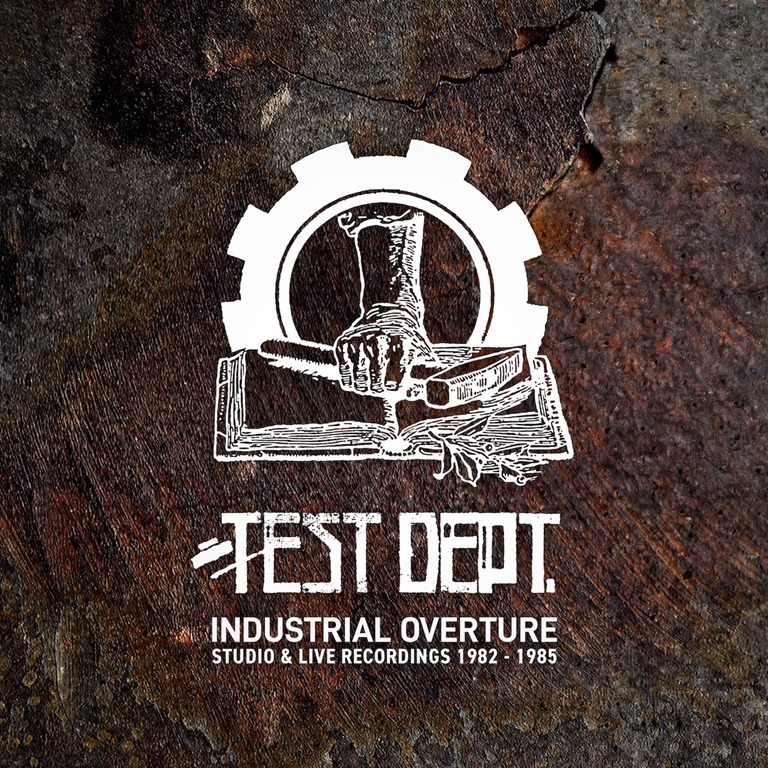
Industrial Overture: Studio & Live Recordings 1982-1985 is definitely exciting. It’s no simple repackage of the albums, and the chances are most people – even the staunchest fans of Test Dept – don’t own the majority of the material on this one, consisting as it does primarily of scarce material, outtakes, and Peel Sessions.

Industrial Overture: Studio & Live Recordings 1982-1985 consists of 42 tracks across 4 CDs and also available digitally. It’s a document of their earliest, most abrasive period – not that they exactly mellowed in the years after, as perhaps their most commercially successful album, The Unacceptable Face of Freedom (1986) attests, and includes a first ever reissue of the group’s 1983 cassette-only debut album Strength Of Metal In Motion, the classic Ecstasy Under Duress and Atonal & Hamburg albums (both unavailable for over three decades), plus a disc of hitherto unreleased studio recordings that incorporate two sessions recorded for the John Peel show on BBC Radio 1.

As the notes inform, ‘In total, 26 tracks are new to CD and digital formats, of which 12 have never been previously available at all. All contents have been compiled by Test Dept and are newly remastered by Paul Lavigne (Kontrast Mastering)’.

Disc one gives us Strength Of Metal In Motion – a collection of raw live recordings. The first five were recorded at Albany Empire, Deptford, in August ’82, and it’s fucking brutal. Even remastered, it has something of a bootleg sound quality about it, that muddiness that’s particular to 80s recordings. In many respects, this adds to the appeal here. It opens with the dissonant blasts of harping faux-brass blasts of ‘Last Rites’ – heraldic, but askew – before giving way to the pummelling percussion and shouting of ‘Shockwork / Workshock’, which is brief but brutal. ‘Prokofiev’s Dream’ is a full-on assault of clanking percussions with occasional horns, before ‘Drum and Body’ drops a shard of industrial punk noise, with rabid vocals-riding a wave of the most relentlessly aggressive beats. The dark ambience of ‘Death of God’ is nothing short of purgatorial, and showcases a different side of the band. Four more of the thirteen tracks were recorded at Temperance Hall, Newbury, four months earlier, and with samples, synths, and drum machines flashing in all directions, their debt to Cabaret Voltaire is clear there – as is the sense of their future direction. That said, ‘Kindergarten’ is pure Throbbing Gristle, laced with heavy hints of Suicide and the bibbling synths of Whitehouse. But the wayward experimental jazz elements are also strong. Overall, this is the sound of punk in a head-on collision with Throbbing Gristle and drumming that sounds like they’re battering the shit out of sheet metal. Unless you were actually there, one can only imagine what it must have been like to witness any of these early shows.

Ecstacy Under Duress was initially released in 1984 and is another (largely) live compilation consisting of recordings which again were captured in ’82 an ‘83, although this time featuring future debut single ‘Compulsion’. The compositions feel more evolved, and perhaps as a consequence, more honed in their attack. ‘Hunger’ builds to a punishing climax and sets the tone. The aforementioned ‘Compulsion’ is relentless. Samples and crashing percussion dominate the stark industrial landscape, and the intensity of these performances translates well despite the separation of time and medium. I suppose it’s here we can really identify the point at which Test Dept carved a path which departed from their industrial predecessors and peers in their pursuit of the most punishing percussion. Only Einstürzende Neubauten really compare, but even they’re not quite as up-front with the hammering beats, despite their love of sledgehammers and metallic objects. The twelve-minute ‘Efficiency’ takes the percussive assault to a whole other level, leaving the listener feeling pounded, pummelled, bewildered.

The third disc offers some respite by virtue of being studio-based and therefore not having that muffled 80s live sound to the recording – although it’s marginal. ‘Blood and Sweat’ – one of three demos from 1982 – is primitive and raw and very, very drum-orientated: the vocals are relegated to the back of the mix, anguished shouting buried in a barrage of noise. It’s cruel and it’s harsh and it’s heavy, and the demo version of ‘Shockwork’, recorded during the same session is similarly hard on the ear, with its combination of machine-gun drumming and squalling avant-jazz tones.

The two Peel Sessions, recorded in ’82 and ’85 shows a honing of the sound: between the two sessions, they would release their debut album proper, Beating the Retreat, which included contributions from F M Einheit and Genesis P. Orridge, as well as Shoulder to Shoulder, with the striking miners choir, and which would finally see the release of an official studio version of ‘Shockwork’ – another version of which featured in the 1983 Peel Session, which comes on as heavy and mercilessly brutal as Swans on Filth – which was released the same year and channels the pain of life enduring the crushing slog of capitalism.

AA

Of the four discs, this perhaps has the greatest impact, and not just sonically. Atonal, anguished-sounding vocals reverberate vast sonic swamps dominated by the ever-present barrage of industrial-strength percussion. It’s relentless in intensity, and the effect is cumulative. Between the pulverizing six-and-three quarter minute ‘Efficiency’ (which feels in some way to be their answer to Throbbing Gristle’s ‘Discipline’), and the six-and-a-half-minute ‘Red Herrings’ version of ‘Gdansk’, with the disorientating mutter of ‘State of Affairs’ in between, this is a sustained assault that hammers blows from every direction.

AA

Disc four, which contains the Atonal & Hamburg album – released in 1992, but documenting two live performances from 1985 marks a significant shift from the earlier live shows. Containing material drawn predominantly from Beating the Retreat and The Unacceptable Face of Freedom, the punishing volume translates well, and the force is more controlled. There is structure, too, building from dirge-like crawls – again comparable with Swans around this time – quickening the pace and the all-encompassing ferocity of the percussion.

Those familiar will likely already know, but in addition to providing a truly magnificent document of Test Dept at their most uncompromising early best, Industrial Overture shows how they were right at the heart of an emerging zeitgeist spawned in the wake of Throbbing Gristle, as represented by the likes of Neubauten, Cabaret Voltaire, Swans… this was not a scene or a movement, but a disparate array of artists channelling frustration at the dark underside of a time when the charts were dominated by the likes of Duran Duran and Culture Club. In pop culture, the early 80s is presented and remembered as being glitzy, aspirational, fun. But that was not the lived reality of many. Test Dept may have been underground not least of all because their racket was largely unpalatable to the majority. But as Industrial Overture evidences, they were providing the soundtrack of the grim realities of working life, drudgery and trudgery. Essential listening.

AA

AA
3fa9f627305a21e10fbc1f2455628c4f1a429e6e

The pioneering UK industrial music act Test Dept have issued a 1983 John Peel Session version of one of their earliest tracks, ‘State Of Affairs’, as a digital single. It is taken from Industrial Overture. Studio & Live Recordings 1982-1985, the first in a series of planned box sets that will chronicle the group’s career.

“We went into the BBC studios in Maida Vale [West London] to record our first John Peel session in 1983 and devised much of the material right there as we liked to explore spontaneity and experimentation in the studio environment,” the band explain. “’State Of Affairs’ started from a collection of sound source material we had gathered and brought in to work with and we then developed that into a live piece and recorded it. Its theme of burning books seems once again relevant to the times we are living through.”

Out on 5th December via the Artoffact label, Industrial Overture. Studio & Live Recordings 1982-1985 consists of 42 tracks across 4 CDs and will also be available digitally. 26 tracks are new to CD and digital formats, of which 12 have never been previously available at all. All contents have been compiled by Test Dept and are newly remastered by Paul Lavigne (Kontrast Mastering).

The box set includes a first ever reissue of the group’s 1983 cassette-only debut album Strength Of Metal In Motion, the classic Ecstasy Under Duress and Atonal & Hamburg albums (both of which have been unavailable for over three decades), plus a disc of hitherto unreleased studio recordings that incorporate two full sessions recorded for the John Peel show on BBC Radio 1.

5b46f91b6962f6c06ee6156337d42d0c0665b878

Human Worth – 11th April 2025

Christopher Nosnibor

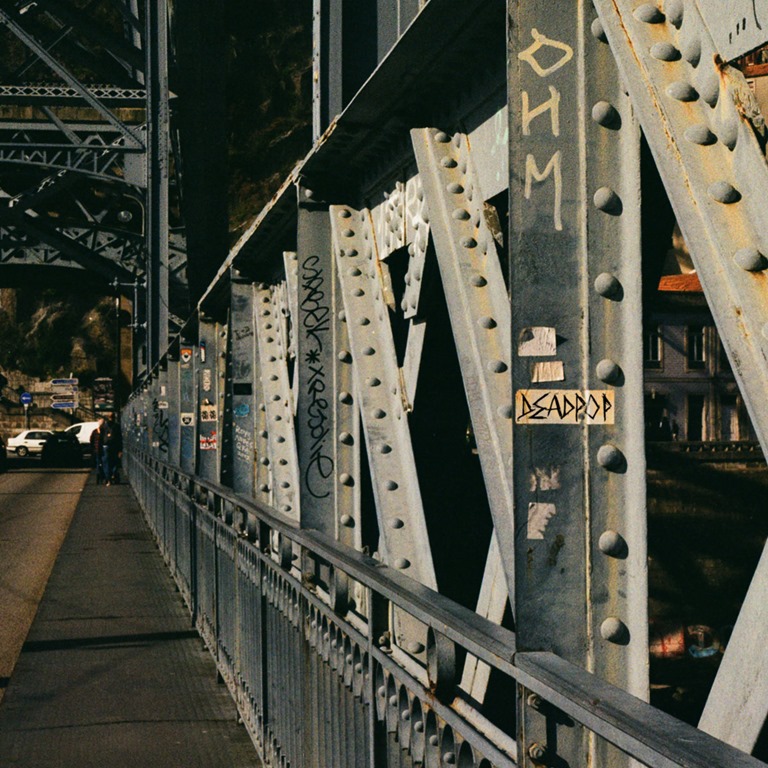
Name three great but seemingly disparate acts for a collaboration, and the chances are that no-one, but no-one would pick Ghold, Bruxa Maria, and Test Dept. But here we are with the arrival of Ohm by Deadpop, which promises ‘Hard hitting & riff heavy sludge rock’ out of London.

It’s a pretty far-out work, it has to be said. Riding in on a siren-like wave of noise, ‘Saboteur’ announces the album’s arrival loudly and intensely, and it makes you sit up, alright, and your eyes pop when the guitars slam in after some forty seconds – which is a long time when it comes to listening to twitching, glitching feedback. The bass and drums meld together in a thick sludge of overdrive.

I’m not sure what the two parts of ‘Tomahawk’ are about – although it’s probably more likely to be a punk thing or the missile than expensive steak, and they bleed together for forge six minutes of thunderous racket which takes me back to circa 2009 when bands like Pulled Apart by Horses, Blacklisters, Chickenhawk (later rebranded as Hawk Eyes), and These Monsters were exploding on the Leeds scene. Sure, there’s been noisy shit in circulation forever, and grunge may have opened the doors to a wider, more mainstream, audience, but the indie charts and John Peel’s radio show was chock-solid with wayward guitar-driven racket. Human Worth have championed big noise from day one, but have perhaps leaned toward a different shade – or perhaps there hasn’t been anything quite of this nature released recently. And am I really feeling nostalgia for circa 2009? Well, actually, perhaps I am. It was sixteen years ago, after all. Kids doing their GCSE exams weren’t even born then.

I digress – as usual – but it’s relevant when positioning this release, an album that brings the kind of big sonic mayhem that feels less common now, and in context, feels quite different from anything else that’s been released recently. ‘Tomahawk II’ adds the percussive frenzy of Test Dept to the party, calling to mind early releases like the ‘Compulsion’ 12” and Beating the Retreat.

‘Third Metal Wheel’ is a lurching cacophony of lumbering guitars, layers of echoed vocals, and thunderous drumming, the outcome being something akin to Melvins current releases, and while the monster riffology of ‘Dirt Cheap Rage’ provides but an interlude at under two minutes, it’s well placed ahead of the experimental oddity of ‘Disgrace’, which straddles sludge rock, heavy psychedelia, and punk.

The six-and-a-half-minute ‘Yesterday’ summarises the album, really: a thick, full-heft riff slogalong that pounds away, relentlessly, it calls to mind Melvins, but also encapsulates the spirit of all that is stoner, sludge, and doom in a capsule.

The album’s final track, ‘Skygrave’ delivers a driving finish, a blistering blast of full-on, speaker-shredding distortion, with some brief warping samples and disturbances thrown in for good measure, and it’s a truly brain-melting occurrence. If on the surface, Ohm is just another sludgy / stoner noise, the actuality is so much more: this is an album that brings a certain experimental bent, on top of all the riffs. And yes, it does bring all the riffs. And that’s a fact. Ohm is a heavyweight riff-slugger – and that’s a fact, too. This album is a beast.

AA

a3570033219_10

skoghall rekordings – 19th June 2023

Christopher Nosnibor

This was originally released some time ago, and now it’s getting a digital release and a CD reprint once the last of the old stock is gone, and it’s the first release on Dave Procter’s new label, skoghall rekordings, which he’s set up to home non-noise material which doesn’t sit comfortably with the remit of his Dret Skivor label. If I didn’t know better, I’d think this guy had mastered cloning, given the release and touring schedule of his myriad musical projects, the range of which is vast – although it’s fair to say that anything involving words will be a politically-charged vehicle for reminding us how shit governments, right-wingers and tabloid media are, and how capitalism shafts the workers without whom there would be no wealth for the elite. And so it is with Sounds from Underground.

‘Justice for the 95’ say the notes accompanying this release, some of the proceeds of which are being donated to the Orgreave Truth and Justice Campaign.

Memories are short, even among those who live through momentous events in recent history, and the miner’s strike of 1984-85 was one of those. It wasn’t simply a strike like we’re seeing with… most sectors right now, in what feels almost like a replay off the early 80s… the handling of the strikes was tantamount to civil war, the (Tory) government against the workers and the unions. The 95 then, refers to the 95 arrested at the so-called ‘Battle of Orgreave’ in South Yorkshire in June 1984, but all charges were dropped. As the BBC reports, ‘Police confronted pickets outside a coking plant in Orgreave, South Yorkshire, in what the miners said was a military-style operation to attack them… Former miner Kevin Horne said: “We were only striking for the right to work.”’

This is by no means the first musical work which focuses on the miner’s strikes: Test Department’s 1985 LP Shoulder to Shoulder, with South Wales Striking Miners’ Choir was released as a fundraiser, while ‘Statement’ from 1986’s The Unacceptable Face of Freedom is centred around a recorded statement detailing the brutality of the policing of the picket lines: ‘25 pickets… 150 policemen… I was dragged off to this van… another one had me in a headlock… I thought I was going to black out…’ It’s a harrowing account, and one which seems as relevant now as ever given the current government’s expansion of police powers, promoting greater use of stop and search, and the police’s ‘management’ of events like Sarah Everard’s vigil. It’s all too reminiscent of A Clockwork Orange.

As the accompanying notes outline, ‘This LP documents coal mining in all its forms – the pride of the job, the struggles of the job and the occasional deaths because of the job. A lot of my family were coal miners and most of them died from lung disease before their time.’

Yes, the miners got fucked every which way, and while the twelve acoustic-based songs on Sounds from Underground may not be as visceral or hard-hitting as some of Test Department’s works, they’re truly heartfelt. And that registers, emotionally.

While ‘Fiddler’s Ferry’ is a simple and wistful song that would perhaps class a s a sad protest song, the super-sparse ‘Macgregor th’ butcher’ is heartaching in its mood and the simple narrative. Similarly, ‘At the Face’ is simple and tells of the everyday realities of mining life – and the physical toll on those men who grafted and grafted, until death. It would be easy to romanticise the northern accent and barely-held melodies, but the fact is, it works because it’s real, and ultimately sounds like The Wedding Present covering Billy Bragg, if you need a comparison.

‘Me, A Picket Line’ and ‘Horse’s Arse’ are straight-up spoken word pieces, and perhaps the album’s most affecting tracks, because they’re so direct, the latter in particular, echoing as it does the narrative of Test Department’s ‘Statement’. But ‘Horse’s Arse’ references 2016, and you realise, nothing changes, and while sometimes things are reported and there is outcry and uproar, so often, events are ignored out of existence, and the narrative becomes skewed, rigged. But mention that and you’re a conspiracy nut, of course – more often than not dismissed by the conspiracy nuts. ‘Tory Twat’ is self-explanatory, and getting straight to the point.

And this is perhaps where we can see how Guerrilla Miner and Test Department share common ground, beyond subject matter: as much as they’re both political – because this is political, and it’s impossible to avoid or deny that this has a heavily political aspect – they’re both ultimately concerned with the human aspects of the miners’ strikes, and this in turn reminds us that the current strikes, too, are about people and their livelihoods. You will see reported, time and again, the government vilifying the striking workers for the disruptive impact of their industrial action. But any a striking worker will tell you that striking is a last resort, the only way to be heard when all avenues have failed, and if strikes are disruptive to consumers, they’re even more so to those striking. And it’s rarely simply over pay, but also conditions: and at the heart of it all lies capitalist exploitation, and such exploitation shortens and destroys lives, placing profit before people. And this is what really hurts.

Sounds from Underground is direct, real, human, affecting and ultimately sad. Listen, learn, and do everything within our power to stop history from repeating again, and again.

AA

kents lane 2 - LP art for bandcamp