Rocket Recordings – 17th October 2025
Christopher Nosnibor
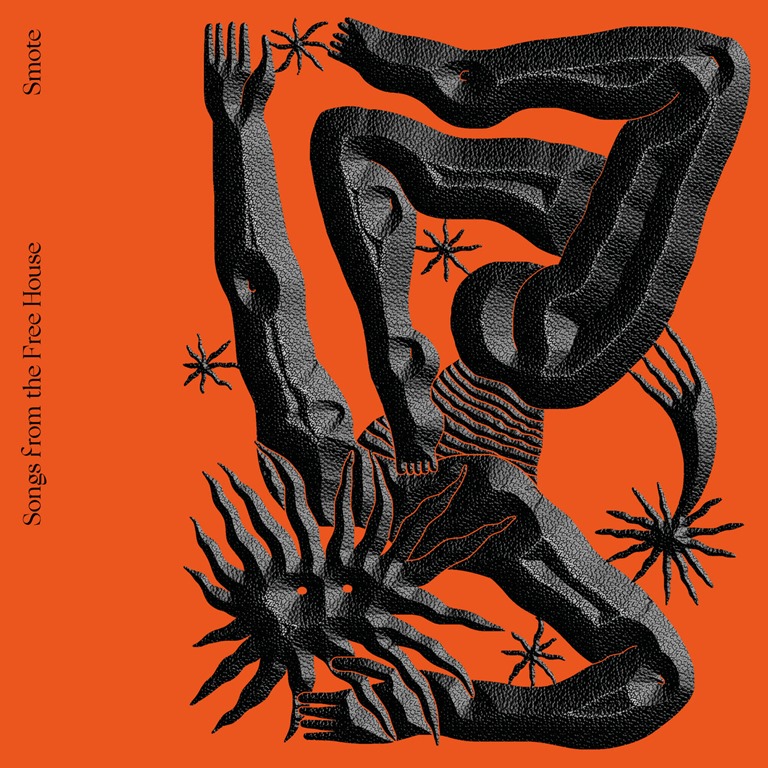
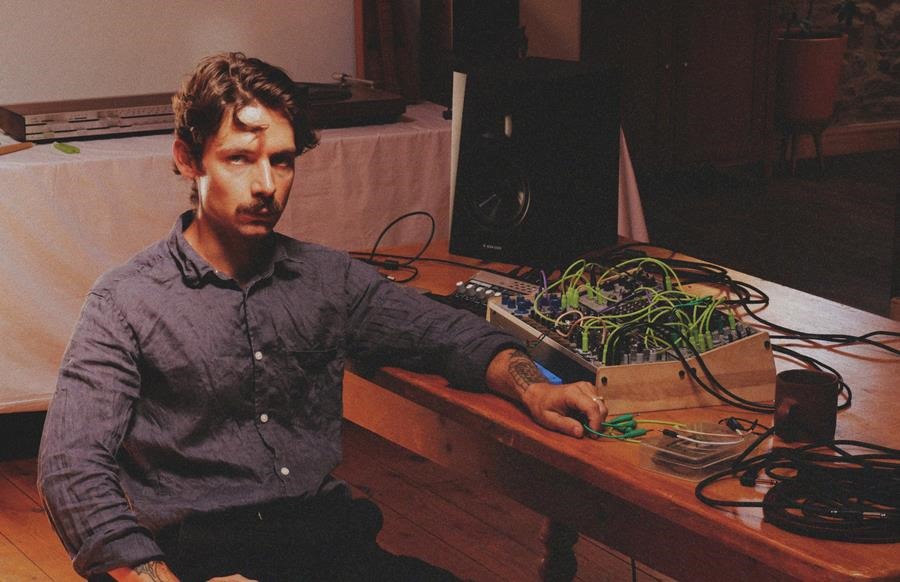
The thing that particularly stands out in the bio for the latest Smote album is this: ‘Daniel Foggin has spent the majority of his adult life working as a landscape gardener, frequently pursuing his trade in conditions of either baking heat or freezing cold and, as he puts it “more often covered in mud than not”. Yet the primal, meditative aspects of this work, the act of communing with nature, its histories and its depths have fuelled his art on a profound level. As Daniel himself relates; “I think the music is a direct reflection of this feeling that I haven’t quite managed to define yet, it is dirty and hard but there is an overwhelming comfort to it.”’
It’s something artists rarely mention: they have day jobs. Perhaps there’s an element of shame in it for some. Maybe it detracts from the mystique. Or it could be that it’s considered a detraction from the pitching of the latest creation. But it’s a truth rarely spoken: most musicians, and artists in any medium, have day jobs and have to make time for their creative work. Tours have to be negotiated with work, taken out of annual leave, often juggled with family responsibilities. Sleevenotes by Joe Thompson of Hey Colossus and Henry Blacker is the most open narrative on the realities of this I’ve read to date, and at times the exhaustion crawls from the pages. As such, it’s refreshing that Foggin not only acknowledges his day job, but recognises it as a significant influence on his creative work. And why not? The most engaging art is drawn from life, after all. Much as it would be a more ideal situation that artists could make their living from art, at the same time, there is perhaps greater value in art created by those who live in ‘the real world’ rather than floating, detached, elevated above it in some kind of bubble.
The words ‘Free House’ make me automatically think of pubs, which perhaps says more about me than the artist, of whom we learn that ‘In the world of Smote, going further out means going inward. Less a metaphysical journey into inner space, more a physical journey into the ground itself, converging with its roots and vibrations. What’s more, a journey right to the heart of its principal architect’s daily experience’.
A cottar is a farmer, and with the album’s first piece, we’re plunged into a deep, surround-sound immersive dronescape, There are many layers to it: reverberating voice, trilling flute, sonorous synths, distant percussion… and it builds, and builds, growing into a hypnotic swell before finally breaking into a slow, weighty post-metal riff that twists and turns with spectacular force, hammering with the force of Pale Sketcher by the six minute mark. It has the weight of sodden earthworks, and conveys the hard exertion of ploughing and tilling, as it descends into a speaker-shredding wall of distortion.
‘The Linton Wyrm’ brings heavy Nordic connotations as it plods on, and on, over the course of a rousing nine and three quarter minutes. It’s not so far removed from the epic force of Sunn O))), but equally Wardruna, a band who evoke earthiness and the essence of pagan spiritualism – not about worshipping mythical gods, but celebrating a connection with nature on a level which is almost primal, and isn’t readily articulable through words: it’s something which transcends language.
Single cut ‘Snodgerss’, which clocks in at under four minutes is both representative of the album as a whole – and not. With its trilling flute and thunderous slow riffery, it incorporates some of the leading elements, but in a way which is considerably more accessible, not least of all with its folk leanings, and presents them in a condensed format. That said, it’s an intense piece, which offers no let-up.
The ten-and-a-half-minute ‘Chamber’ is slower, heavier, dronier, and encapsulates the true essence of the album as a whole, building on a low, resonant throb before the introduction of mournful woodwind. As graceful and soulful as it is, it connects with a primitivism which reaches to the core, a place beyond linguistic articulation. This is the sound of forests, of hills, of streams and moorlands.
The final track, ‘Wynne’ hammers the album home in a squalling blast of overloading guitar and powerful oration propelled by thunderous percussion. It’s mighty, and beyond, seven and a half minutes of blinding intensity which concludes an album that’s varied but unswerving in its density and force. You can truly feel the earth move.
AA
 Aural Aggravation