Posts Tagged ‘Siouxsie’

Spleen+ (Alfa Matrix) – 1st December 2023

Christopher Nosnibor

Christmas has come early this year, with an absolute deluge of releases landing on1st December, many from acts I like or am otherwise keen to hear. Hanging Freud are in the former bracket, and Worship marks their seventh album release, following 2021’s Persona Normal.

The duo have established themselves as purveyors of premium-quality dark, stark, gothy electro, and with Worship, they solidify their position with aplomb. Persona Normal was recorded at a leisurely pace between 2018 and-2020, and, like so many other releases in the last couple of years, Worship was written and recorded during the pandemic and under lockdown conditions, and the accompanying notes lay out both the contents and context in further detail:

‘The 10 songs featured on this album literally come from a place of contradiction hanging somewhere between courageous vulnerability and fearful resilience, and deal with themes such as collective distress and loss, finding beauty in tragedy or yet questioning about what makes us human in the symbolic contrasts of life and death…. It’s no surprise to hear that this “less is more” introspective ode to melancholia was written in particular claustrophobic circumstances during the pandemic lockdown. “Because of what was going on, we were essentially stuck in temporary accommodation in Scotland, away from our studio and forced into a period unexperienced before. The songs that came out therefore come from a different place. Everything was done within a laptop and is proudly 100% digital. It was recorded and mixed while literally sitting on the side of a bed in a mouse infested apartment…” explains Paula Borges.’

If it sounds like a grim and oppressive set of circumstances for creating art of any kind, then the singles which prefaced the album have set the tone and expectation, while affirming the claustrophobic intensity of the music which emerged from these challenging conditions.

The result is a hybrid of Siouxsie and 17 Seconds era Cure with a hefty dose of New Order’s Movement and dash of Editors circa On This Light and On This Evening. Reference points may be lazy journalism, but they serve a purpose. While this album stands alone like an icy obelisk, singular and a monument to the darkest introversions, some musical context is probably useful for discursive purposes.

The stark ‘Falling Tooth’ is as bleak and haunting as it gets: Paula’s vocals are breathy but theatrical, pitched over a strolling squelchy synth bass and a vintage-synth sound that wanders around over just a few notes, while ‘I pray we keep the world’ is low, slow, sparse, and lugubrious, as well as emotionally taut, and dominated by a truly thunderous drum sound. ‘This Day’ is particularly drum-heavy, withy only gloomy, droning synths sweeping through a heavy mist of atmosphere.

There are some who bemoan the use of drum machines, and who complain that they lack the vibe of a live drummer. Hell, there are contributors to forums and groups devoted to The Sisters of Mercy who question why they don’t get a real drummer, some forty-two years on from their inception. These people are missing the point. Drum machines can do things that human drummers can’t, and one of those is how drum machines can be louder, heavier, more monotonous than a live drummer. And in context for certain music, this can be a real asset, accentuating the sensation of dehumanised detachment of synth music that sits at the colder end of the spectrum. And Worship is one of those albums which will leave you with chapped lips.

It’s against brittle snare cracks and sweeping synths that Paula claws her way through complex emotions, and where the lyrics aren’t immediately decipherable, the haunting vocal delivery is heavy with implicit meaning. It resonates beyond words alone. Everything is paired back to the barest minimum, exposing the darkest recesses of the psyche.

Standing alone as a single, ‘A hand to gold the gun’ was bleak and heavy. Sitting in the middle of the album, this sensation is amplified, accentuated, and the gracefulness of the vocals as they drape around the broad washes of sound which surge and well is that of a dying swan.

‘Her Joy’ is perhaps the least joyful thing you’re likely to hear in a while, and if ‘Beyond’ feels somewhat uplifting, it’s only because it’s a flickering candle flame in an endlessly dark tunnel, as devoid of air as light. The mood is heavy, and presses on the chest, slowly pressing the air out and crushing the spirit, and as the album progresses, the effect is cumulative. By the time we arrive at the piano-led ‘Don’t save yourself for him’, I feel my shoulders sagging and my back hunched forward from the endless weight of this.

Worship is a masterful exercise in poise and restraint, a work which conveys the purest essence of isolation, of desolation.

AA
HFreud

6th October 2022

Christopher Nosnibor

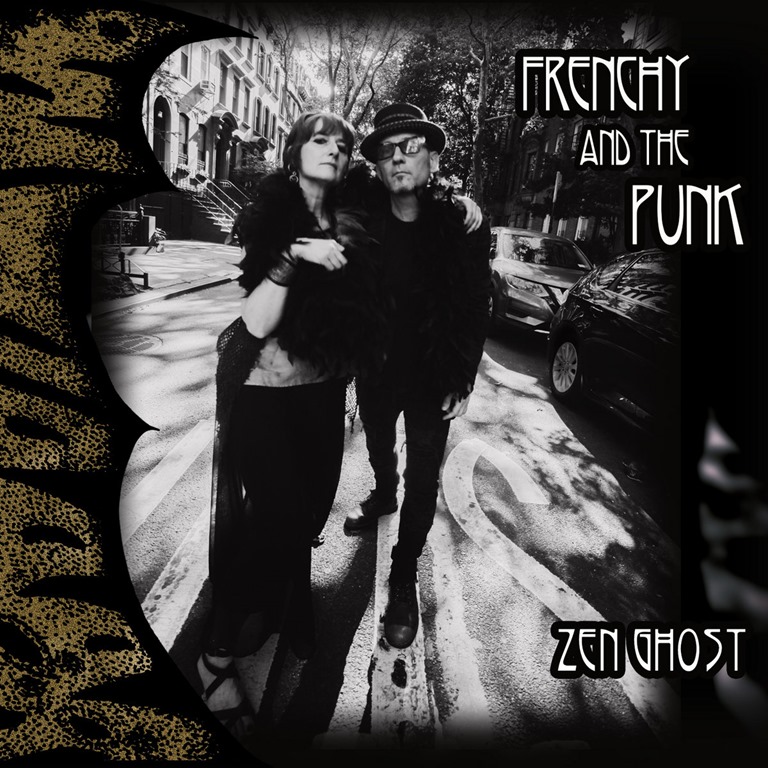
Most Dinosaur Jr fans are aware of the prehistory – the band’s primordial swamps, or whatever, which saw the band emerge from she ashes of hardcore punk act Deep Wound, although significantly less seems to have been made of the band’s reunions in 2004 and 2013. But no matter – perhaps more should be being made of the work of Deep Wound’s less celebrated co-founder Scott Helland, who is one half of Frenchy and the Punk, along with Samantha Stephenson.

There’s no getting around it: it’s an awful name. Kinda corny, with connotations off Grease, it’s one of those monikers that’s so cliché It’s probably fictitious. But no, they’re real, very real, and according to their bio, ‘the duo thrive in their trademark blend of post-punk and dark folk music’. And they’ve been going for a while: their upcoming album, Zen Ghost will be their seventh long-player.

And that they do. ‘Come In and Play’ is pitched as an upbeat Siouxsie-esque delight, is the second enchanting single from their forthcoming Zen Ghost album, following the lead track ‘Mon Souvenir’. Their seventh long-player record, this will be released via the EA Recordings label on October 28th.

‘Come in and Play’ is layered, elegant, haunting fashion that combines elements of trad goth with folk, landing somewhere between Siouxsie, Skeletal family, and All About Eve. With picked acoustic guitar providing texture and detail, it’s driven by a solid bass groove. The overall feel is quite the contradiction – it’s an alternative rock song with a paired-back arrangement and quite spartan, brittle production that solidly recreates the essence of 1984.

On the surface, it’s a simple, song, but scratch to the next layer, and there’s plenty going on and then some, sonically, musically, and emotively. Stephenson’s vocal is outstanding, and the real attention-stealer here as she swoops and soars and switches from angelic drifting to a full-lunged expellation, while swiping various shades and stylistic elements in between.

‘Come in and Play’ is both haunting and confident. It’s one of those songs where you absorb the atmosphere more than you absorb any instant hook, and that’s ok – more than ok.

AA

a1189348961_10

Christopher Nosnibor

Having just spent a depressing afternoon hearing the new Interpol album for the first time, I decided I needed cheering up. Scanning my immense backlog of releases for review – and, with new submissions landing faster than I can open emails, let alone download and listen to albums, I realise that Hanging Freud’s album has been lurking unplayed for far too long for an album I’d been excited to hear since ‘Antidote/Immune’, released as a taster of album number six, Persona Normal back in June last year, landed in my inbox.

The release / review cycle is in itself a pressure we would all do without, since albums by their nature have a slow diffusion. In an accelerated world, PR campaigns are over a month or so after release, and I suspect that under the current model of pre-release hype followed by a rapid burndown, most releases shift 90% of their units within the first months of release, before things taper off and pretty swiftly drop off a cliff. But I digress, as I’m prone to doing.

Persona Normal is not the kind of album you’d expect to provide joy, but, in context, it’s a welcome reminder that there are still bands who are at a more advanced stage in their career delivering albums that channel difficult emotions and explore them in real depth.

‘Cureseque’ is a term that’s passed into parlance to make a shorthand reference to anything that draws inspiration from The Cure, but it’s trouble some and rather inadequate given the band’s range. More often than not, it seems to translate as ‘lots of layered synths like Disintegration’. Not so Persona Normal, an album that condenses the style and atmosphere of the unparalleled trilogy of Seventeen Seconds, Faith, and Pornography into a single set. The atmosphere is bleak, and the production sparse, but there’s some monumental percussion that’s more akin to Pornography.

It opens with the droning, wheezing synth of ‘Too Human’. It’s pitched against a trudging, monotonous drum beat with a dominant snare, and this provides the backdrop to a gloomy yet elegant vocal that aches with resignation, before ‘We Don’t Want to Sleep’ pounds in on a rhythm reminiscent of ‘A Strange Day’, and this is around the level of the bleak, brooding atmosphere. It’s thick and heavy with angst.

But then, amidst the doomy, droning synths and metronomic, motorik drum machines, Paula comes on with the sass of Siouxsie, with her enunciation and her glacial cool post-punk intonations. And as such, while Persona Normal really is pretty fucking bleak, dense, and dark, it’s uplifting to hear an album that so perfectly captures the spirit of the bands from which it draws unashamed influence. Elsewhere, I’m reminded of Chelsea Wolfe and Pain Teens; ‘Is This Why?’ may be sparse in its arrangement, but the sound is full, expansive, epic, and there’s something graceful and plaintive in its inward searching. An in an album of wall-to-wall quality, ‘Immune’ stands out as a snarling post-punk beast with the sharpest of hooks – and it’s all in the delivery.

More often than not, the sounds and overall sound and delivery convey so much more than words alone – and the production only enhances the experience. It’s dense, dark, drum-heavy, and even in the middle of a heatwave, it’s an album that will chill you to the core.

AA

a3740242382_10

PNKSLM – 2nd April 2021

Christopher Nosnibor

Following the single release of ‘Not Fit For This’, GHLOW unleash Slash and Burn, the album which spawned it – and brimming with dark energy, it does not disappoint. While clearly operating within a genre field, and a comparatively limited instrumental format, it has range. It also packs so much tension and an emotional force that it’s an instant grab. As what you’d likely describe as an old goth (although nowhere near as old as some), I have a predisposition towards this kind of stuff, but by the same token, I’m immensely picky, in that anything overtly cliché I simply can’t muster any enthusiasm for – but GHLOW have got it all: the songs, the style, and the production. In combination, this is a work that resonates on a level that isn’t necessarily easy to articulate: it’s not simply nostalgia – and drawing on the dense electro shoegaze of Curve as much as early 80s post-punk and its lineal descendants. Anyway., it’s hard to feel nostalgic for a time before your own, and even if some of the aforementioned bands soundtracked my teens it’s not a pining pang for that which I feel on hearing this. No, GHLOW tap into something else altogether with their explosive blend of jagged guitars and simple sequencing plat places power to the fore over musical dexterity.

It’s ‘Not Fit for This’ that slams in by way of an opener, a gloriously spiky hybrid of Siouxsie, X-Mal, Garbage, and Savages, a thunderous bass and stuttering beat hammering away beneath a toppy blasty of guitars that provide the tense, fiery backdrop to Emille de Blanche’s commanding vocal performance. It grabs you by the throat and drags you into the seething morass of darkness that follows. There’s texture and depth, for sure, but this is one of those albums that’s best experienced end-to-end in order to appreciate the highs and lows integral to its sequencing. It’s also big on mood and big on dynamics, and the duo ratchet up the atmosphere to create a work of rare intensity.

The slower ‘Sleep’ is a song that drives right through the gut: the primitive drum machine sound stutters and jolts, the kick sound beating like a palpating heart, the snare a whipcrack that slices through the murk – and alongside is a grating bass sound that churns and growls malevolently. Over it all, Emille gives a powerful, full-lunged vocal performance. The title track is a mid-tempo motoric chugger that hammers away somehow unfurls as it progresses, and the repetition, paired with the soaring vocals and some howling lead guitar, becomes more than the sum of its parts, while ‘Hold It’ is a heavy, repetitive droner that’s claustrophobic in its dark intensity.

There’s something magnificently unpolished about GHLOW’s sound and for all its electronics, it’s The March Violets that their dirty, immediate sound calls to mind most, although ‘Hollow’ goes all out on the attack, and with the brittle guitar riding wildly over a furious beat, they sound more like Big Black fronted by Jehnny Beth or Anne-Marie Hurst. Slash and Burn has attack, it has edge, as well as repetition and hooks, and really hits the spot.

AA

ghlow-slash-and-burn-artwork-1500

Kscope – 29th April 2016

Christopher Nosnibor

Se Delan, a duo consisting of multi-instrumentalist Justin Greaves and Swedish singer Belinda Kordic, have gone for a more natural and human sound on their second album, Drifter, after the stark soundscapes of 2014;’s The Fall. They may consider it to be more raw, but given that their style of music of a dark, new-wave-inspired nature, it’s necessarily controlled, stark and detached.

According to the press release, their collaboration is built on their shared influences of ‘music, film and life.’ I’m in no position to comment on the lives they’ve led or how those life experiences have shaped ‘Drifter’, an album preoccupied with madness, and in particular how the line between sanity and insanity can at times appear frighteningly thin.

The concept may be something of a cliché, but it’s eminently relatable. Mental health is a big topic right now, and it’s a shame that policy and society is so far behind what so many of us already knew: life is challenging, confusing, and in a world gone mad, it’s hard to even know where you are on the sanity scale from one day to the next. The duo articulate this beautifully on Drifter.

The album presents a very personal exploration of the theme, but in the personal lies the universal, and the album benefits from being based around some excellent tunes. Kordic’s vocals are breathy and warm despite the reverb that enshrouds them. Shifting between a tremulous Kate Bush to Toni Halliday via Gitane Demone, she covers haunting, tormented, sultry and more.

Fractal, gothy guitars swathed in chorus and metallic-edged flange chime as they crawl, spindly and tense around throbbing bass tones on the album’s opener ‘Going Home’, and a thick, flanged bass rumble drives ‘Ruined by Them’. Dreamy, seductive and very much cast in shadow, the title track is a song of desolate introspection on which Kordic questions her own very identity. The stark atmosphere is accentuated by a claustrophobic production reminiscent of The Cure’s Faith album.

‘Blue Bird’ finds Kordinc coming on like a cross between Siouxsie and Kate Bush over a hypnotic guitar line that cascades over a rolling bass, while ‘All I Am’ again hits a dense Curesque atmosphere. The seductive ‘Blueprint’ spirals out on fractal guitars, contrasting with the driving ‘In Obscura’ (do I hear hints of ‘Dominion’ in there? Hints of Disintegration?), while the spiky ‘Gently Bow Out’ is far from gentle, bearing serrated edges worthy of Savages.

Album closer ‘No Fear of Ghosts’ is a classic slow-builder which begins low, slow and haunting and ultimately explodes into a crescendo of dark tension, with a tripwire guitar line dominating the swirling tide of sound.

Am I going to throw in comparisons to acts like Ghost Dance, Rose of Avalanche and Sunshot too? Yes. While Drifter is dark and often bleak, it has a hooky accessibility that places Se Delan toward the poppier side of the goth spectrum. Owing far more to 80s post-punk than 90s shoegaze, Drifter showcases a band whose sound is not nearly as claustrophobic as the Sisters of Mercy in their early days, nor as spiky as Siouxsie or Skeletal Family, but who nevertheless capture the sound of 1984. It’s also magnificently executed, and most definitely recommend it.

KSCOPE351 da1x12xe digi .indd

Se Delan Online at KScope