Posts Tagged ‘Review’

Rock is Hell / UNrecords – RIP 66 / unrec11 – February 2016

Christopher Nosnibor


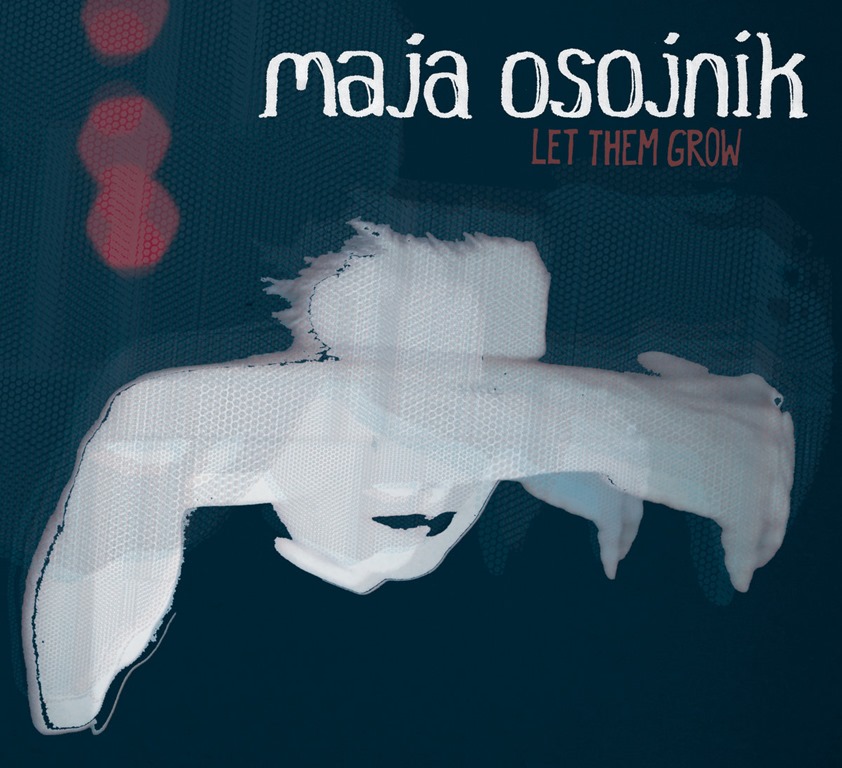
Maja Osojnik is an angry woman. A woman on the edge. A woman with inner strength. After 14 band albums, her first solo outing is a highly charged work, heavy with stark emotions and raw catharsis.

‘Tell me, what do you want me to be?’ she asks in an opium monotone on ‘Tell Me’. Slowly, her offers become more desperate and pained, her multiple voices speaking simultaneously before she slams it all down on the table, unable to maintain her decorum any further: ‘Ill become… all the images you want / so you can walk on me / sleep in me / so you can throw all your shit on me / Tell me, what the fuck do you want me to be?’ It’s chilling in its directness, its apparent lack of artistic distance.

‘Let Them Grow’ is one of those albums that hits like a punch to the solar plexus. It’s impossible not to laud the artist for her openness, her ability to convey so many painful emotions – but at the same time, it’s deeply uncomfortable. Listen, people who use terms like ‘TMI’ are, in the main, uncomfortable because they don’t like to face brutal truths, particularly those belonging to other people. On ‘Let Them Grow’, Osojnick pays no regard to these emotionally closed or stunted types and simply lays it all out there, telling it like it is, spilling her guts because she has no other choice. This isn’t simply music, this is pure art and the very definition of catharsis. Let Them Grow is a work of exorcism, of expulsion.

If you hadn’t already figured, this is a challenging work. ‘Condition’ is a full-tilt rant against a backdrop which amalgamates industrial noise and tribal beats. ‘Stick it up your ass… Come out, you rotten cocksucker, here’s your fucking POP SONG’ she hollers bitterly. And she fucking means it: this isn’t mere petulance, but a middle finger to an establishment and a wider world that’s failed and ultimately fucked up- and which doesn’t value the arts and doesn’t recognise the value of art. It’s a shame, because this is art.

It’s not just the music: I received the CD in its gatefold card sleeve enveloped within a four-leaf pamphlet type wrapper, accompanied by a sticker and five postcards of the artist beautifully shot by Rania Moslam in a range of striking poses. The whole package was in turn wrapped in a parchment paper bag. It’s about the artefact, the attention to detail, the building of suspense and expectation while gaining access to the disc itself, which, in turn, does not disappoint. This is not merely an album. It’s a grand gesture.

From the most subtle, delicate pieces, led by softly-fingered piano, she slowly drags out every sinew of anguish, draws on every drop of pain and presents real emotion. Emotion that can’t be faked.

Brooding instrumental passages offer moments of respite, but then there are sections of growling industrial noise, dark and sinister, grinding and crushing, which are nothing short of devastating. Taut, tense and from the heart, Let Them Grow sees Maja Osojnick present an album that is unparalleled in its sincerity and astounding in its emotional and musical power.

Maja Osojnik

Maja Osojnik Online

clang records – clang032

Christopher Nosnibor

Stan Brakhage was an experimental filmmaker who sometimes closely shot glass objects. A huge influence on Frasconi, who sometimes makes music with glass instruments. The album title is a play on words, in reference not only to his artistic forebear but also the cracked quartz crystal bowl which was used to make this 20-minute musical work.

Having previously given the instrument a rather too vigorous workout during a rehearsal, Frasconi decided to explore its absolute limits. As Frasconi himself observes, ‘Glass is fragile. Glass is easily broken. Most glass instruments ignore these fact and instead focus on the material’s delicate beauty’.

Standing Breakage captures the artist’s efforts to complete the job he unintentionally began when the instrument – pictured on the front cover – became fractured. Ironically, despite labouring at the fracture in order to bring about the bowl’s ultimate destruction, he failed to achieve the desired moment of breakage. As such, for all its fragility, the glass held firm against a sustained assault.

An awareness of the circumstances of the album’s creation is, in this instance, integral to its appreciation, first and foremost, because if you didn’t know it was made using only the sounds created with a glass bowl, you would never guess that it was made using only the sounds created with a glass bowl. Because it doesn’t sound like it was made using only the sounds created with a glass bowl. In fact, it doesn’t sound like anything organic, or even of this world.

Standing Breakage finds Frasconi create an intriguing blend of chimes, rings, swirls and twangs, scrapes and chatters. Heavy, bulbous bass tones resonate, twisting and spinning upwards. Percussive thumps and sounds like scraping violin strings all emerge from the single instrument under the musician’s interrogation. Clanging, gong-like sounds crash. Eerie sounds that defy any obvious description, and sound alien and other-worldly in their origin drift. Booming synth-like notes balloon outwards, expanding in the air.

Tension mounts and builds. You sit, teeth on edge, fists clenched. You’ve no idea what will come next. You will twist and squirm. You’ll conjure myriad images in response to the strange sounds. But never once will you think ‘this sounds like someone pissing about with a glass bowl with a crack in it.’

Miguel Frasconi

Miguel Frasconi’s Website

Pelagic Records – 29th January 2016

Christopher Nosnibor

Is the vinyl revival all a part of the mass cultural shift toward nostalgia? Were the ‘good old days’ really better, or is it simply that the present is so unbearable that the majority would seemingly wish to regress to the past? Of course, every generation has its old golden age, and it’s inevitable that the first years spent getting into anything new will sparkle the brightest with the passage of time. And so, for many, the late teens and early twenties are synonymous with ‘finding’ music and a sense of individual identity – but also a commonality. The more disaffected the youth, the more powerful the experience is likely to be.

Times have changed. Social relations are a different kind of minefield, and the music scene and industry more broadly are unrecognisable now from 20 years ago. Having recently turned 40, and as someone who spent a good decade from around the time I turned 14 hanging out and working in independent record shops and record airs, travelling to gigs and reading the weekly music inkies, I miss all of that.

This split EP is very much in the spirit of now bygone times, of record stores, of bands touring together with a shared record, and discovering new bands at gigs and bagging a chunk of vinyl (at an affordable price) at the merch stand on the way out to play at home when your ears had stopped ringing.

Whether or not the Internet has made the dissemination of music easier or better for bands isn’t the question here: it’s more about the fact that it’s stripped out all of the mystery. You can find music by any band on-line without having to venture to a toilet venue and take a punt on four bands for three quid, and similarly, you can ‘own’ the music on your iPod at a single click. Instant gratification has its downsides, and the wonder of discovery and the rush of connecting with a new band simply isn’t there in the digital age.

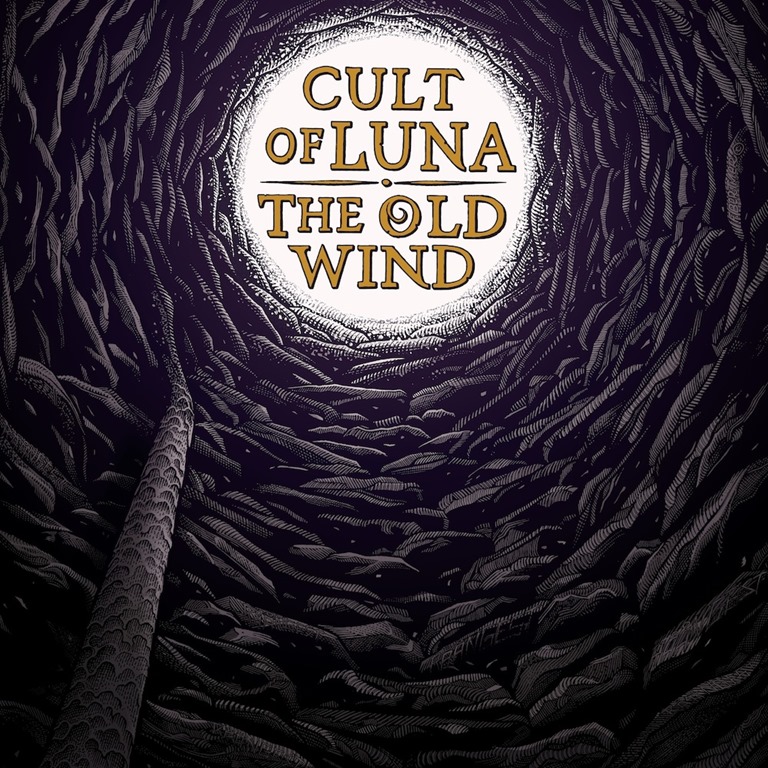
Cult of Luna and The Old Wind – two bands of significant standing, but too obtuse and heavy to ever trouble even the peripheries of the mainstream – evoke the spirit of the old-school on this vinyl release, which very much rewards the patient listener.

Cult of Luna offer ‘Last Will and Testament’, which is a veritable behemoth of a track which, after a delicate intro, slams in with full force. It’s a brutal beast, clocking in at an epic seven minutes – but it’s not all about the length, check the weight.

The first of the two tracks by The Old Wind, ‘Wooden Scythe’ brings a medieval fury through a barrage of guitars that hit like a battering ram, and the second, ‘Daughters of Cleanse’ delivers more of the same fire and brimstone. It’s gnarly, raw, dense and bloody. And very, very good.

Cult of Luna Old Wind Split

clang records – clang031 – 6th November 2015

Christopher Nosnibor

This isn’t how the instrument was designed to work. Just as John Cage made the piano sing in ways it really oughtn’t by the addition of various foreign objects, so Hans Tammen has made the Disklavier his choice of instrument for desecration.

The Disklavier, for those who don’t know (and I’ve had to research this) is an electronic piano produced by Yamaha, which first came on the market in 1987. The way it works is key to Tammen’s project, and I’m going to quote from that fount of all information, Wikipedia, here, and accept any harangues over ‘lazy journalism’ because surely some research is better than none: ‘The typical Disklavier is a real acoustic piano outfitted with electronic sensors for recording and electromechanical solenoids for playback. Sensors record the movements of the keys, hammers, and pedals during a performance, and the system saves the performance data as a Standard MIDI File (SMF). On playback, the solenoids move the keys and pedals and thus reproduce the original performance.’

Tammen’s project is concerned with the ‘hidden sonic qualities’ of the machine. Tammen explains his methodology thus: ‘technically the Disklavier is fed too much information, and at the lowest possible volume. At this point the hammers do not have enough power to bang the strings anymore, and ideally they only vibrate to produce low a rumbling sound. Occasionally the MIDI brain stops for a few seconds – “chokes” – on a chord due to the data overload, hence the title Choking Disklavier’.

Calling to mind Reinhold Friedl’s 2011 ‘Inside Piano’, a colossal exploration of the prepared piano, Music for Choking Disklavier finds Hans Tammen make his instrument sing in unexpected ways, and with intriguing and often very interesting results. And it’s not all unlistenable, experimental noise, either. There are clear and definite tunes present here, albeit played in the most skewed of fashions.

A clumping rhythmic trudge provides the basis of ‘Ascending and Descending Chairs’; over what sounds like slow marching feet, delicate single piano notes rise crystalline into the rarefied air, The levels of dissonance and discord grow as the notes begin to emerge stunted, jarring. ‘Looking Down Sacramento Street’ resembles the whupping hum of a helicopter’s rotas; and so many of the sounds which occupy the album are rhythmic, mechanical, and owe little resemblance to a piano, electreic or otherwise.

The compositions make full use of the Disklavier’s diverse capabilities, especially when messed with. Swing goes south and ragtime goes out of time with fuzz and crackle, the sound of drunken piano being played with wild abandon in heavy rain, and thumping the low notes with a dogged persistence: these are the sounds that tinkle and topple precariously from the speakers at the hand of Hans Tammen. It’s an innovative work, which finds Tammen exploring ways of making new sounds by previously unexplored means and confirms, pleasingly, that originality isn’t entirely dead yet.


Tammen

http://tammen.org/