Posts Tagged ‘Live Review’

Christopher Nosnibor

Heaven may not be a venue one would immediately associate with heavy, heavy noise, but tonight it’s packed with a broad demographic that only a show as genre-smashing as the line-up would be likely to draw.

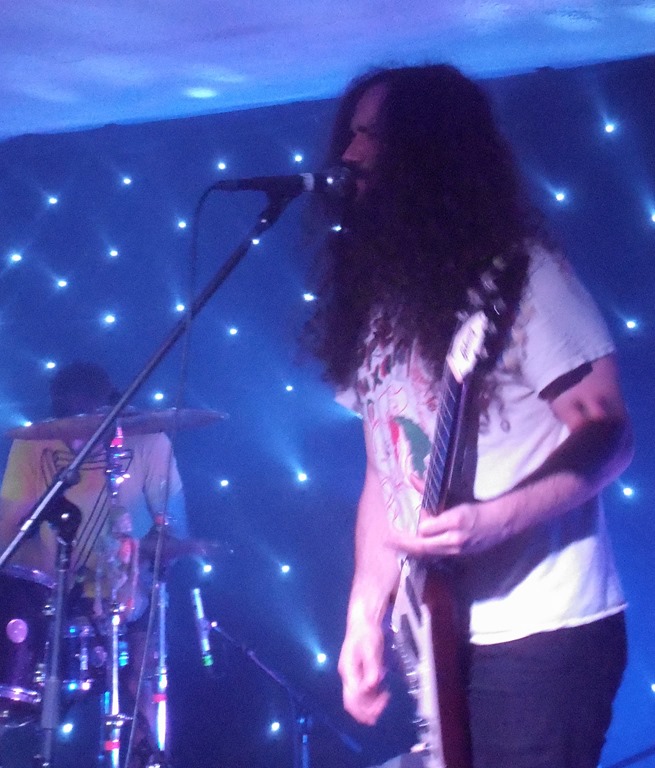
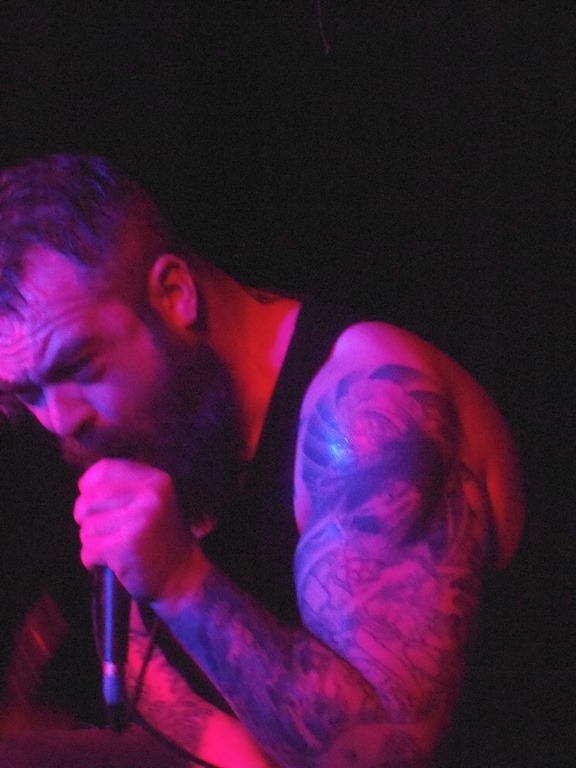
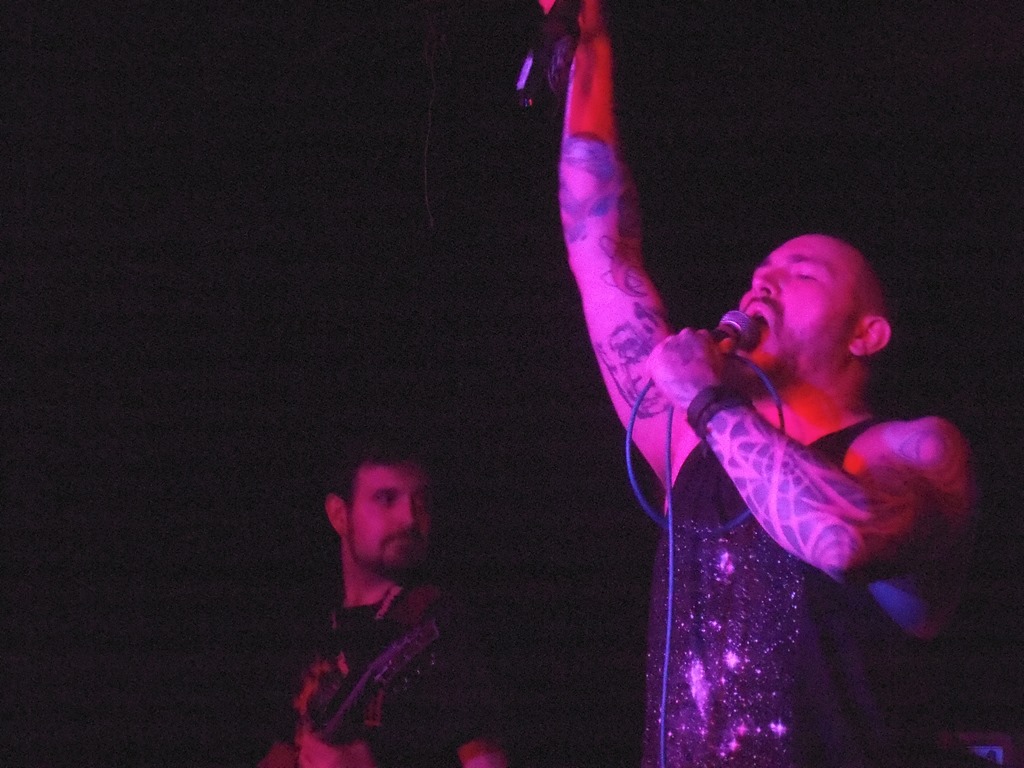
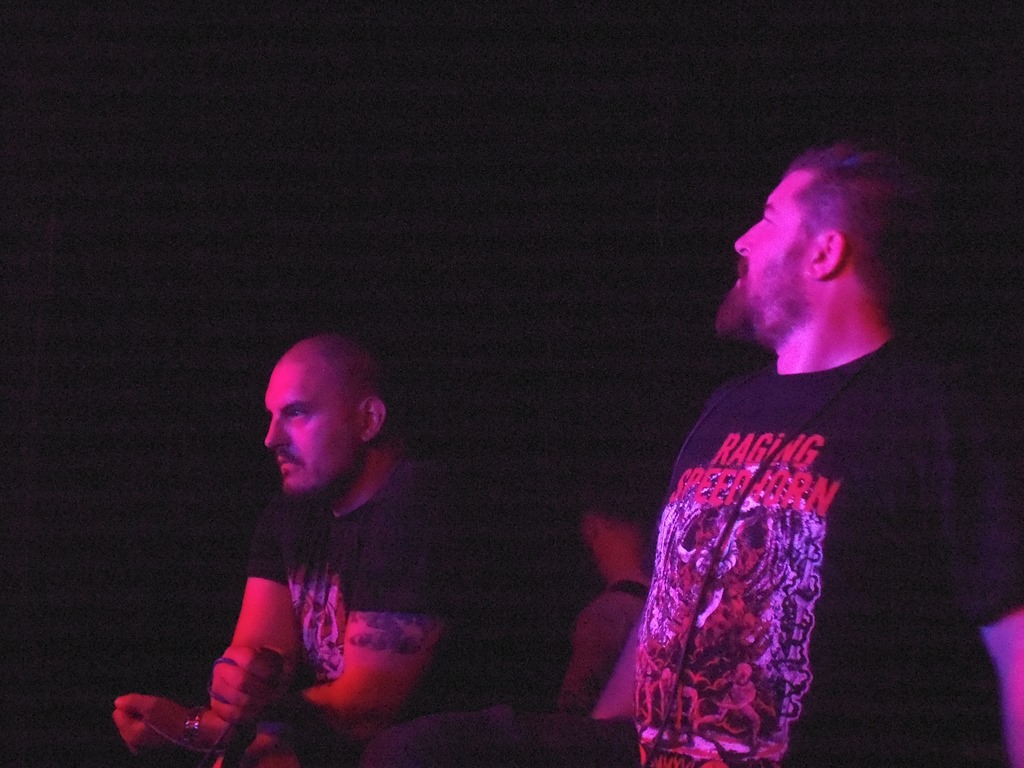
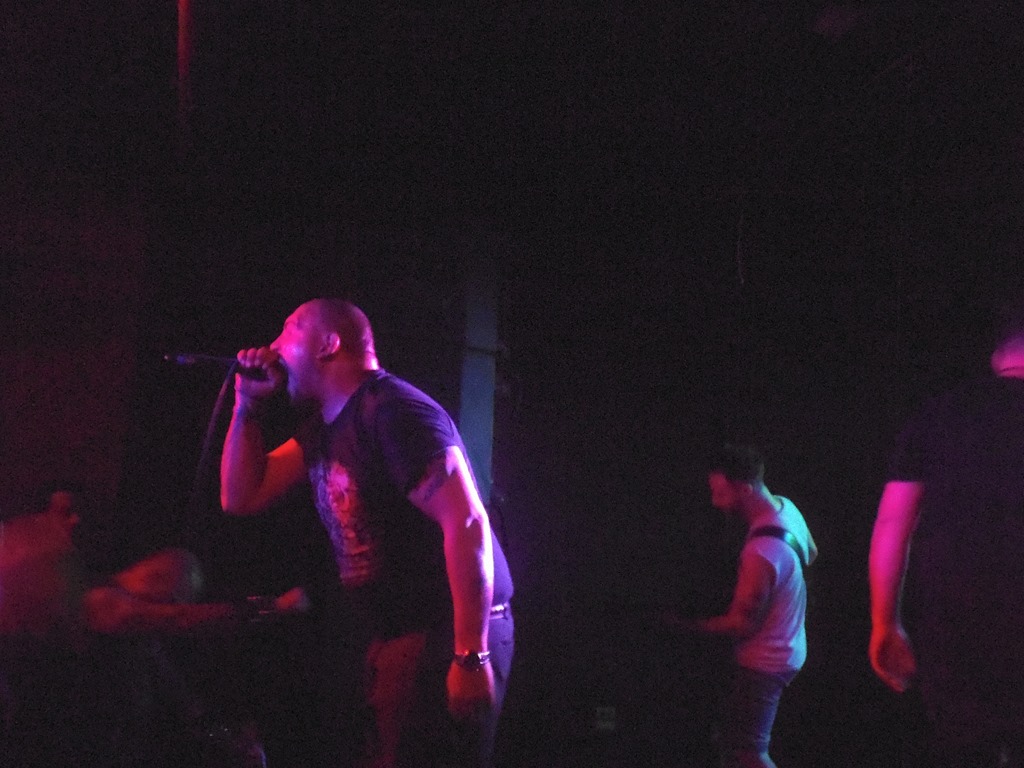
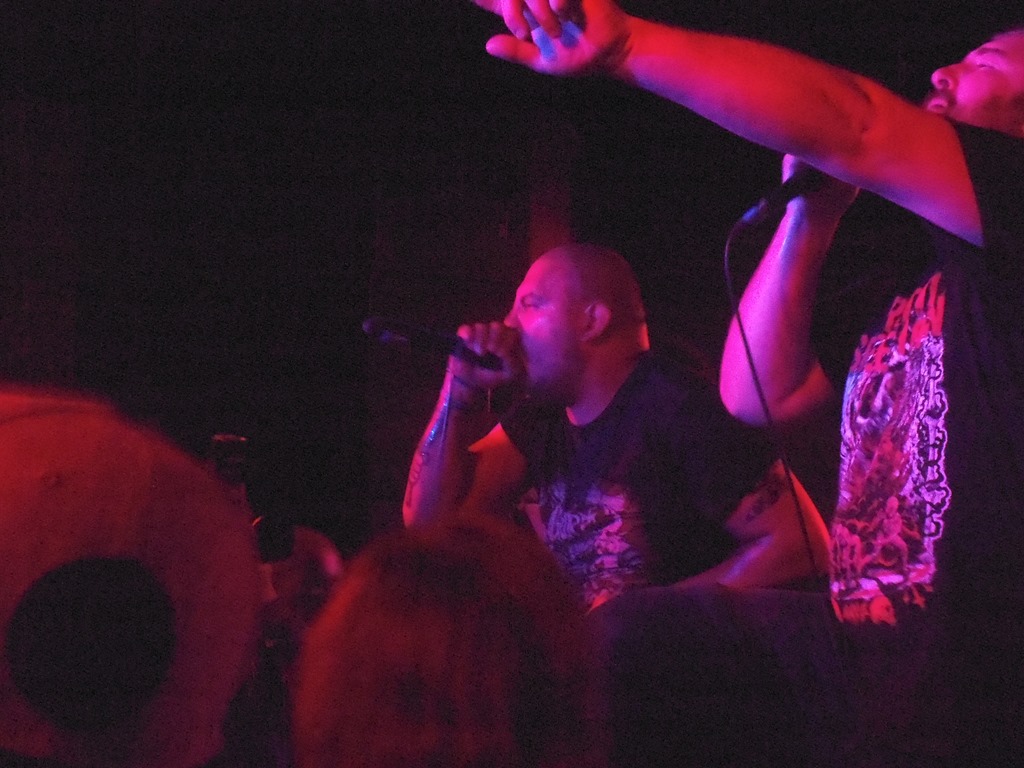
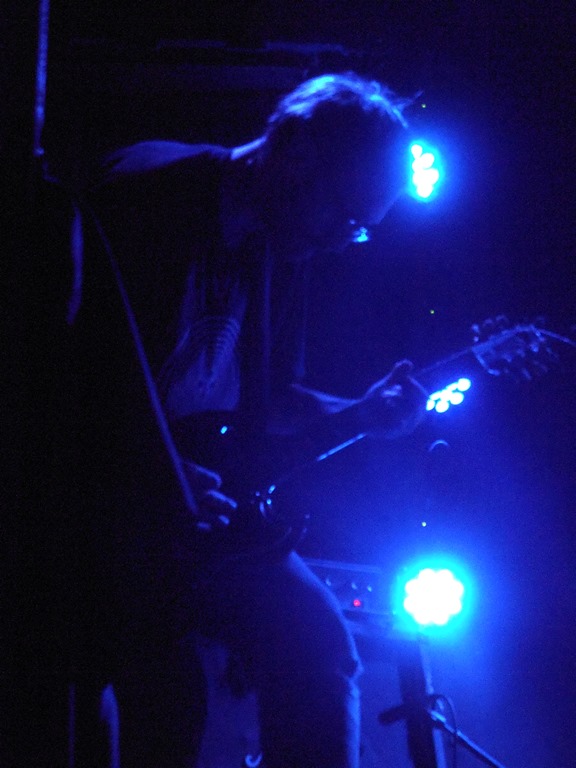
Bong are only just setting up their kit five minutes before they’re due on stage, but despite the absence of a proper soundcheck, they sound every bit as mighty as they ought. The Newcastle trio take their time, grinding out power chords with endless sustain without mercy during a half-hour set that contains just a single track. Epic is indeed the word. For all the leaning toward the doomy, droney low end, the guitar packs a crackling treble hit, which balances the sound against the shuddering, throbbing bass and the megalithic drumming, each thunderous beat registering individually on the Richter scale, crashing heavy through the 20bpm dirge with stutters and pauses to maximise the impact of each stroke. Their thirty-minute set consists of just one song. And this is precisely the way it should be: the band use the allotted time to fully demonstrate the expansive nature of their sound and compositions. This is heavy, grinding two-chord dredging pushed to the max and is designed to simultaneously batter and hypnotise the audience, and they deliver it beautifully.
Bong

Bong

If the reality of the studio realisation of Concrete Desert, the collaborative project which saw The Bug’s dubby dancehall stylings drawn out into infinite regressions of reverb as they collided with the dark drone of Earth’s earlier works felt somewhat restrained, and at times bordered on the ambient, in a live setting, the dynamics prove to be altogether different. Perhaps The Bug’s input felt somewhat muted on the release, as Carson’s murky, chiming ambient drones dominated he sound. Sure, the stealthy, bulbous bass and clacking beats, paired with quavering guitar notes which occupy the album’s grooves are atmospheric, but it often feels somewhat cautious, even subdued. Live, however, it’s an entirely different proposition and it feels far more like an equal partnership.

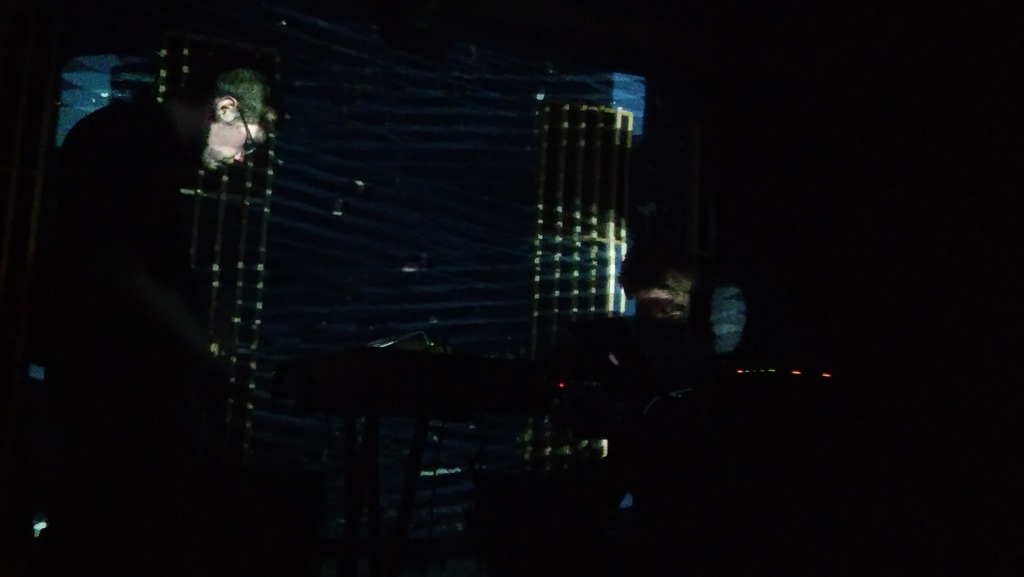
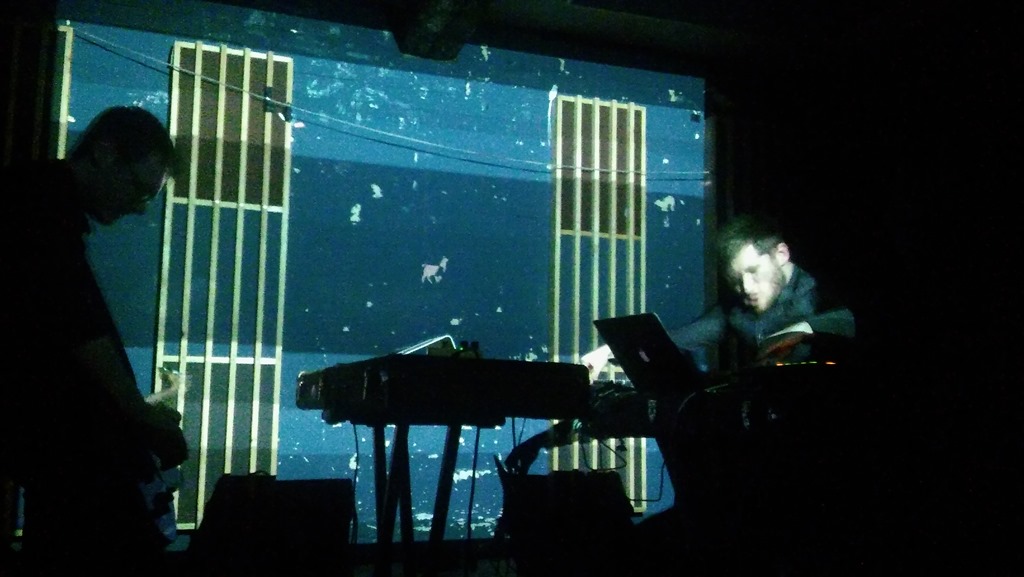
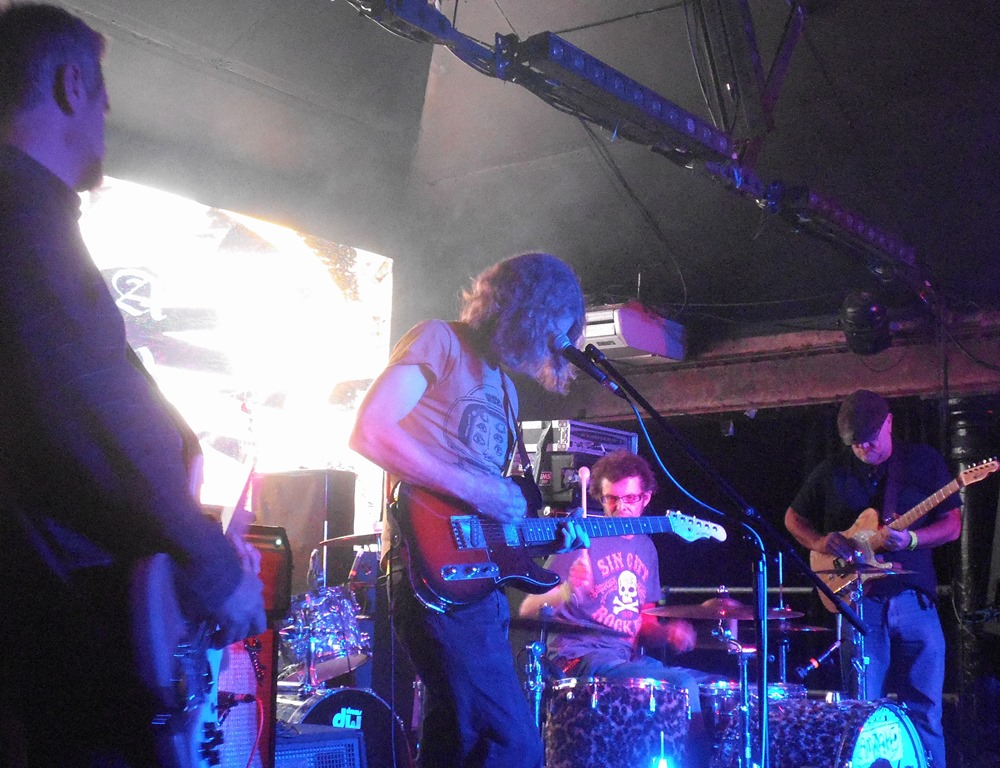
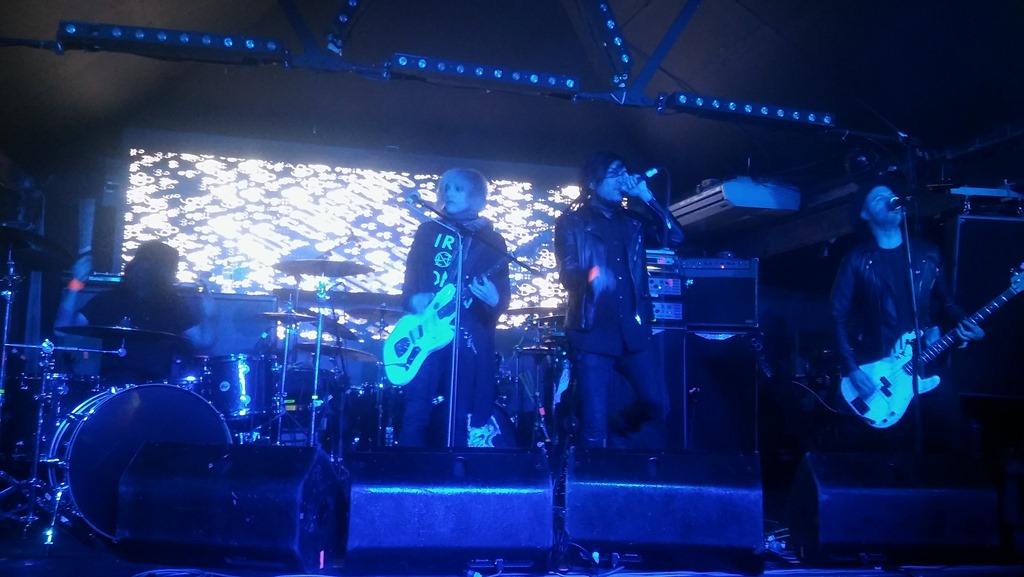
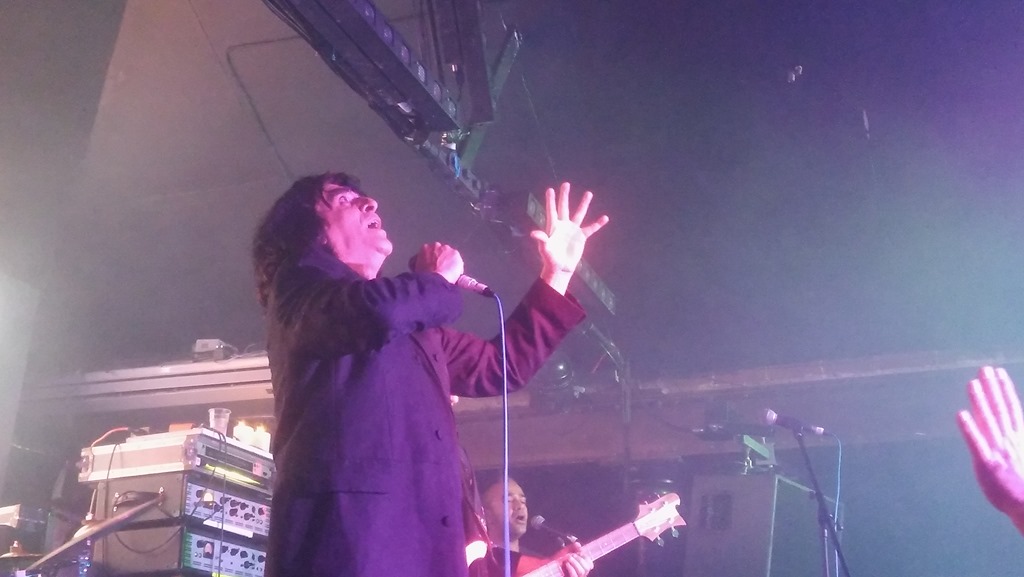
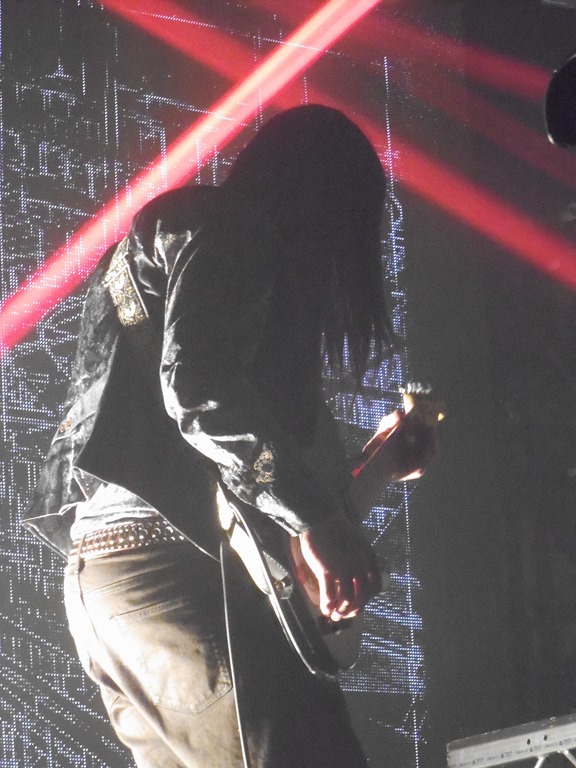
On the surface, the pair exist – and perform – in entirely separate, personal spaces, despite sharing a stage. The Bug – aka Kevin Martin – and Dylan Carlson, representing Earth, stand apart, separated by a wall of equipment: Martin is surrounded by banks of electronic gadgetry and stands focused on his Apple laptop for the majority of the set, while Carlson stands, side-on to the audience, one eye on Martin as he cranks out deep, seething drones and sculpted feedback squalls of noise.
DSCF8335

The Bug vs Dylan Carlson

Volume matters, and can so often prove to be integral to the live music experience: and this is loud. Proper, seriously, loud. Martin begins by sending bibbling waves of electronica out in juxtaposition to Carlson’s screeds of guitar: before long, it’s a veritable sonic tsunami as thunderous bass and violent blasts of percussion crash against a wall of relentlessly dense multitonal noise bleeding in every direction from Carlson’s fretboard. The bass frequencies – and gut-churning volume – are something else. Confetti glued by static electricity or other means to the venue’s high ceiling after being blasted out during the venue’s famous club nights shower down on band and audience alike as the thunderous vibrations rattle every molecule of the building’s interior fabric as well as my nostrils, my trousers and every inch of my flesh.

Many of the compositions are unrecognisable in relation to their studio counterparts, so radically reworked and so much more up front are the dynamics. This is no stealthy, sedate recreation of the album but something way more attacking and pure in its physicality. This is one of those sets which builds in intensity – and seemingly in volume – as it progresses, and toward the end, the pair drop a colossal slow-burner with slow, deliberate drops of bowel-shuddering bass frequencies: a single note resonates through the floor and the solar plexus for what feels like minutes, and the effect is utterly immersive and all-encompassing. The security guy in front of me, blocking the stairs (Heaven has a very strange arrangement of stairs up to the stag and only limited security at front of house, which is welcome), is clutching his ears despite waring plugs, and while it’s an uplifting euphoric experience which plasters a huge grin on my on face, it’s not hard to fathom why this much bass, and this much guitar, at this kind of volume, would cause discomfort. Because actually, it hurts. And that’s the best thing about it, because this is how it’s meant to be.
Christopher Nosnibor

Forget the ‘failed musician’ angle: any serious music writer (journalist might be stretching it, certainly where my own work is concerned) is likely to be a music fanatic first and foremost. PIG is a band who’ve inspired a degree of fanaticism on my part for a long time: since I first discovered them as the support for Nine Inch Nails on the Downward Spiral tour back in 1994. The nature of their scattered catalogue makes tracking down even a reasonable chunk of their discography extremely difficult, and they hold the perhaps dubious honour (through no fault of the their own) of being the band who I’ve paid the most for an album by, with the (then) Japanese-only Genuine American Monster skinning me for some £50 over eBay back in 2000.

It really has been 23 years since they last toured the UK, and it’s fair to say that York on a Monday night struck me as an odd choice. Suffice it to say the 400-capacity venue wasn’t exactly rammed, but the double-header tour did manage to attract a devoted bunch of oddballs.

Glasgow trio Seraph Sin made a decent fist of opening. With smeared makeup and lank locks, there’s a black metal element to the presentation of their grindy, metal-edged industrial rock riffage. Delivering some full-tilt noise, they play the ‘menacing’ card nicely. While there are some clear and quite accessible choruses to be found in songs which are perhaps a shade, dare I say, obvious, they boast a gritty, earthy guitar sound which really cuts through, especially when heard from a position close to the front, where the full force of the back-line has maximum effect. And their drummer sounds like a machine, which is admirable.

Seraph Sin

Seraph Sin

Also admirable are Mortiis. It transpires that shunning the band on account of the eponymous front man’s prosthetics – something I considered to be rather cheesy – has been my loss all these years. Still, the advent of Era 0 and the latest album, The Great Deceiver, has marked a shift of both style and sound, marked by an absence of prosthetics and an abrasive technoindustrial sound reminiscent of Ministry.

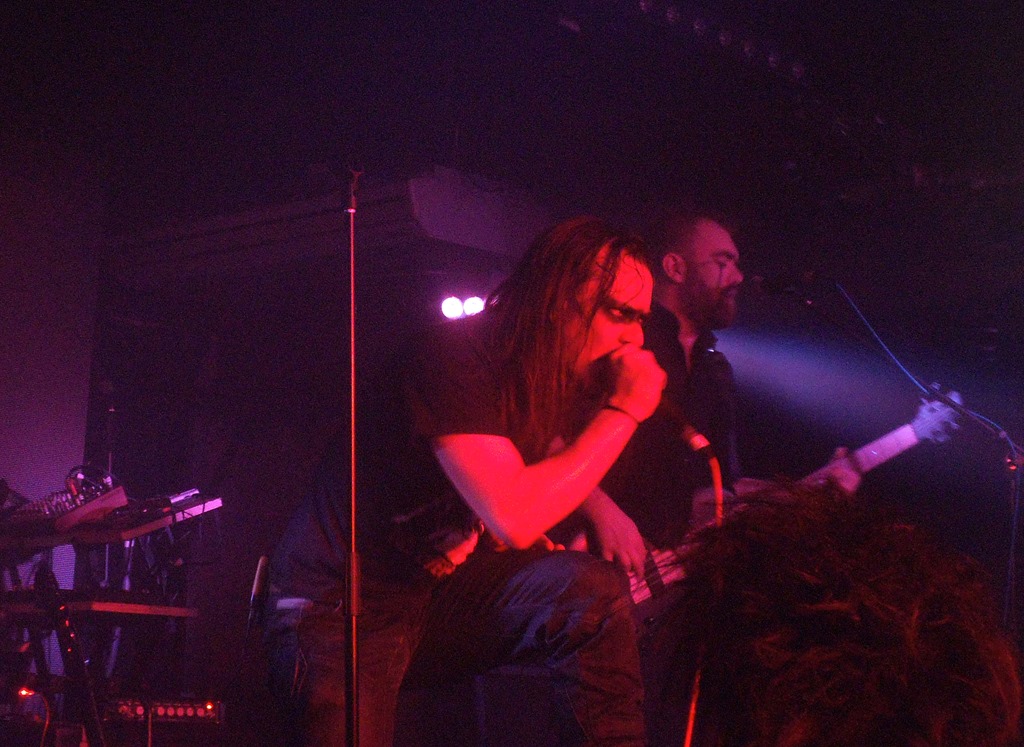
They’re still big on the theatrics, though, from the big, moody intro of drums and grinding guitar before the entrance of the man himself, to the smeared corpse paint. Håvard Ellefsen strolls on, barefoot and resembling a decayed suicide, and proceeds to stomp around the stage radiating petulant energy. Despite the absence of a live bass, the threesome forge a throbbing sonic intensity with a dense and murky sound counterpointed by a bright, ear-shredding top-end. The set is drawn predominantly from the latest album, which both makes sense both promotionally and in terms of rendering a cohesive performance, and it’s a performance which is powerful and intense. Yes, there are clear elements of rock posturing in evidence, but it’s played knowingly, and manifests as an aggressive channelling of a deep fury, making for an uplifting catharsis.

Mortiis

Mortiis

For a man spitting fury and venomous rage, Ellefsen smiles a lot. Granted, with the makeup, his grin takes the form of a maniacal, murderous leer, but it’s clear that this a man who’s having a pretty good time channelling his demons into his art and releasing it all on stage. It’s not hard to determine the reasons: as his skeletal guitarist, who has highly vascular arms, peels of sheets of blistering noise it’s all coming together perfectly out front, and Mortiis are a band on top form.

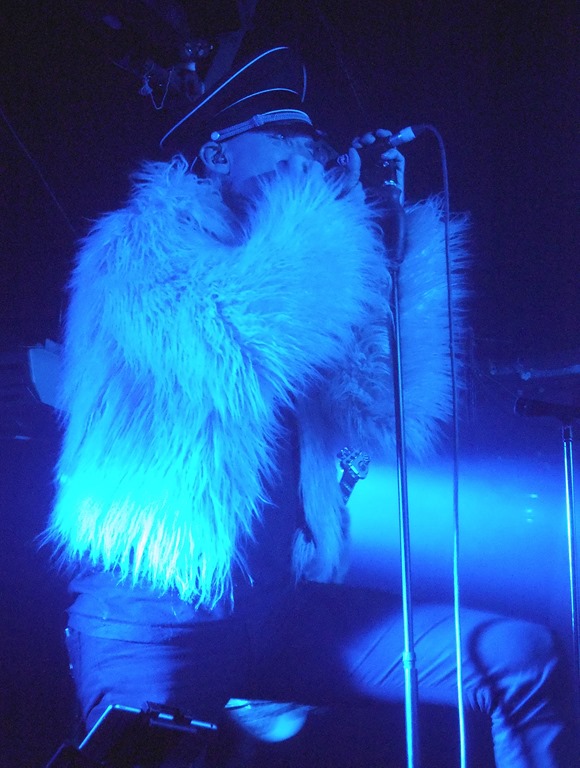
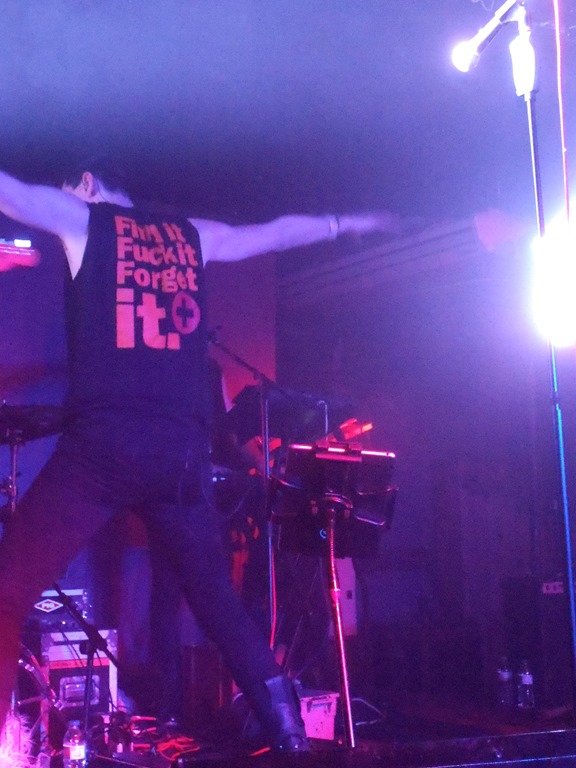
PIG crank up the rock posturing to the power of ten: Raymond Watts is a man who not only gets irony, but breathes it and chews on it slowly, savouring the flavour, as he throws his shapes around the stage amidst a musical tumult and a whole kitchen sink melange of electronica and grinding guitars on full thrust. He enters the stage in a preposterous fur number and gives it the full works on the posing front for the set’s slow-burning opener ‘Diamond Sinners’.

PIG 1

PIG

I’m immediately transported back to 1994: supporting Nine Inch Nails at Wolverhampton’s Civic Hall, where they audaciously opened with ‘Red, Raw and Sore’ over any of their throat-grabbing, up-front crowd-pleasers. But then, the appeal of PIG has always been their perversity and their stubborn refusal to do anything obvious. Having supported Nine Inch Nails, they could have been propelled, if not to a stratospheric level, then perhaps the upper strata of the troposphere. But, as I subsequently discovered, their material was almost impossible to locate, especially in a pre-internet age, and it’s a situation which hasn’t really changed over the last two and a bit decades.

As with Mortiis’ set, there’s a heavy leaning toward the latest release: the accessible industrial pop chop of ‘Found in Filth’ is dropped in early, but then there’s a reasonable plundering of the back catalogue, too: ‘Everything’ lands as the third song on the set list, and the atmospheric spoken word work ‘Ojo Por Ojo’ prefaces a pounding rendition of ‘Wrecked’ (which more than compensates the fact it doesn’t lead in to ‘Blades’ as it features on The Swining by virtue of its throbbing intensity). Really, it’s absolutely fucking blistering. The same is true of ‘Serial Killer Thriller’ from 1995’s Sinsation.

PIG 2

PIG

The fact that the current line-up features both En Esch and Gunter Schultz not only makes this incarnation of PIG something of a supergroup, but also illustrates the expansive nature of the musical family centred around KMFDM to which Watts belongs. And while there’s also a shared territory in musical terms, PIG have always sounded unique, and continue to do so. Watts’ showmanship is something else, and while there isn’t a weak element in the band’s performance, he’s indisputably the focal point, radiating a charisma that elevates the band to a different level. He’s a tall, limby guy, and he uses this to fill the stage and to dominate the space around him.

It’s a triumphant, and above all, thoroughly enjoyable show. Here’s just hoping it’s not another 23 years before they return.

Christopher Nosnibor

Ever since the moment I hit ‘play’ on the CD of the Chambers single, ‘Disappear’ that landed with me for review last year, I’ve been itching to see them. And when a band with as much buzz as Chambers are down at third on a four-band bill, you know it’s a solid lineup. Dom Smith and the guys at Soundsphere know their stuff, and the fact that the entry fee is less than the price of a pint in most gig venues, makes the whole thing doubly impressive.

PUSH are up first: the duo are young and full of raw energy, cranking out choppy, knotty grunge riffery, they display hints of early Pulled Apart By Horses. The songs are direct, and they’re unpretentious in their delivery, laying down some solid, gritty grooves. It was also pleasing to see them get a proper-length set, giving them time to show what they’ve got in their arsenal.

DSCF7542

PUSH

Chambers don’t disappoint, and if anything, exceed expectations. They’re also seriously fucking loud. Aeris Houlihan is a remarkable presence, stomping about the stage, wielding her guitar menacingly and dispatching salvoes of thick, overdriven noise that more than compensates for the absence of a bass. Yes, there are heavy hints of Brian Molko about the vocals, which are heavily processed with a sharp, metallic edge – but theirs is a sound which is dense, murky and menacing. None of this would work half as well without the thunderous drumming of Eleanor Churchill, and the pair demonstrate exactly why a duo can make for such a strong musical format.

Chambers

Chambers

I would have been perfectly happy if that had been it for the night, but that would have meant not seeing Glass Mountain. Now, my notes are somewhat sketchy about this Bradford foursome, who a) should in no way be confused with York-based  cock-ends of monumental proportion Glass Caves  b) draw their inspiration not from an obvious musical reference point, but from David Hockney, who they cite as ‘one of Bradford’s finest ambassadors’ with their name being taken from one of the artist’s etchings, and credit to them for actually being – as they put it – ‘bold and confident enough to have respectfully requested his personal blessing for their use of the name’. They do the name and the artist justice, too, with their melodic, FX-heavy grungy / shoegaze stylings. With a hefty, driving bass behind their epic riffery, they stroll confidently between spacious dreampop territory and neoprog. Their songs are hugely detailed and textured, with layer upon layer of sound wafting down in a smoky haze, and set-closer ‘Glacial’ is worthy of the ‘anthemic’ tag.

DSCF7596

Glass Mountain

Manchester’s False Advertising are straight in with a ‘hey!’ and some driving riffs. They’re a proper, full-tilt, grunge-inspired instrument-swapping power trio, and while Jen Hingley may look girly, she’s got some serious guts both as a guitarist / singer and drummer. Much of he set calls to mind Live Through This era Hole, with heavy hints of the Pixies in the mix, too. In short, False Advertising produce pop-infused grunge par excellence. When Jen swaps to take the drum stool, she proves to be outstanding again: she’s a hard-hitter. There isn’t a dud song in the whole forty-five-minute set: from the scuzzed-out slackerdom of ‘I Don’t Know’ to the sinewy grind of ‘Scars’ which blossoms into a killer chorus, everything just works. And Jen’s got nice teeth and a determined mouth, according to my notes.

False Advertising 1

False Advertising

There’s always a downside to watching bands play in pub venues that serve excellent beer at affordable prices. Still, if wonky – and in places illegible – note-taking is the worst of them, then it’s hardly a disaster.

Christopher Nosnibor

Life is stressful, and life is strange. Our understanding of the world is built on a web of infinite lies, distortions, misrepresentations, and, essentially, a version of history which is skewed. This was an angle pushed by Willian Burroughs as far back as the early 1960s, and which subsequently came to be a key aspect of postmodern theory: amidst the blizzard of information, historians sift through the ‘facts’ and ascribe them narrative significance and superiority over one another, while at the same time forging a linear version of events which necessarily frames them in a position of cause and effect.

Tony Curtis’ Hypernormalisation documentary presents an alternative perspective of those events, and rationalises the semi-fictionalised version of events which has become accepted as the narrative of historical fact, in the name of simplification, and primarily for political end. The music of Manchester-based duo worriedaboutsatan features on the soundtrack to this epic documentary and, indeed, many other projects for film and television. Hypernormalisation is one of those works which makes you feel tense and uncomfortable. On the other hand, the music of worriedaboutsatan, while built on what on the surface may appear to be jarring incongruences, offers a conduit to escape the horrors of the modern world in some small but precious way.

Tonight’s event is the fifth and final date of a mini-package tour which serves as something of a platform for the type of music favoured by the label, This is it Forever, run by Gavin Miller and Thomas Ragsdale, aka worriedaboutsatan (and also for a time, Ghosting Season), with Sunset Graves – the brainchild of Andy Fosberry, who also happens to run microlabel 3rd and Debut providing a complimentary yet subtly contrasting coalition.

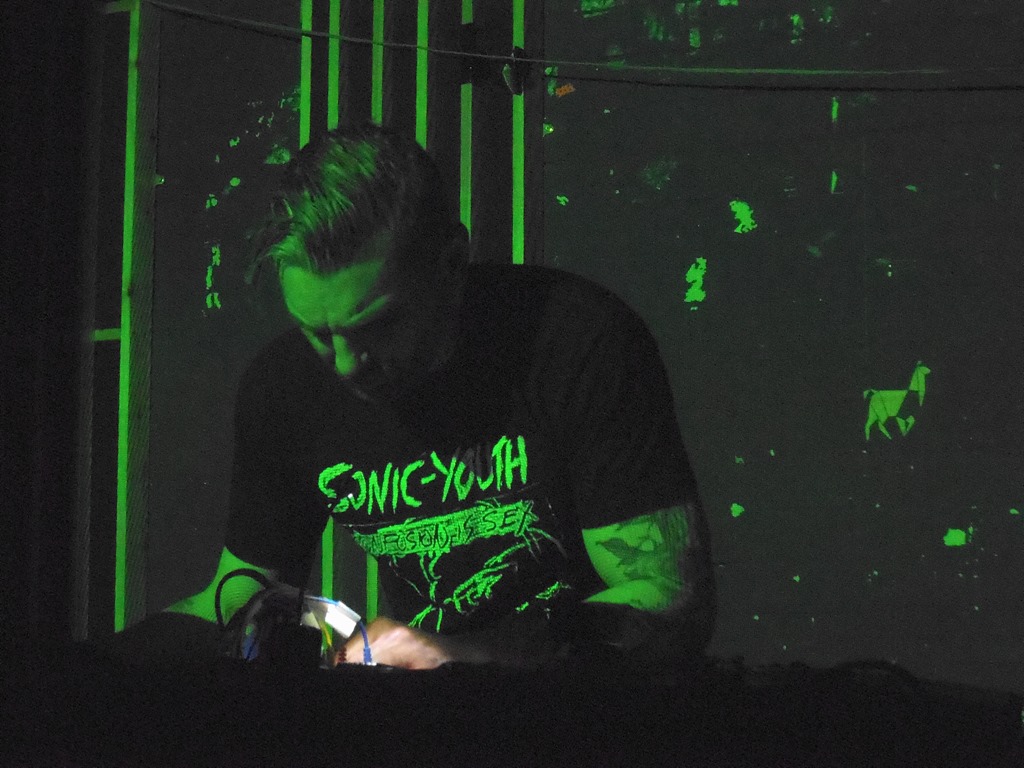
Sunset Graves’ material could reasonably be lodged into the brackets to techno and electro. And while it would be just to praise the swirling ambience which eddies around the set, and the meticulous architecture of progressive beats which defines the sound, any objective appraisal of the performance will inevitably fall short. And herein lies the magic of Sunset Graves: the carefully-considered and yet equally intuitive structures and the attention to texture and detail disappears in the enrapturing experience of simply experiencing it in the moment. Playing in near-darkness, the man with the short back and sides and the Sonic Youth ‘Confusion is Sex’ T-shirt makes musical alchemy.

DSCF7423

Sunset Graves

The same is true in many respects of worriedaboutsatan, an act who have evolved immensely over the course of the last decade. Without doubt, while they continue to exist on the fringes, the word of music is all the richer for their presence. Way back, they could be described as post rock with glitchy beats. In fact, I probably did describe them as precisely that. In fact, my first review of them in 2009 contained the following: ‘The scratchy click and pop beats give way to thunderous pounding rhythms, and Tom, arched over the Mac, looks like an alien hardwired into the mains as he twitches spasmodically. Meanwhile, lurking in the gloom, Gavin adds depth and texture with drones by means of guitar played with a violin bow.’

And so, in many respects, little has changed. Gavin still conjures layers of vaporously-textured guitar sound, occasionally with the use of a bow to the strings and Thomas still launches salvoes of thumping beats and deep, resonant basslines. Yet, by the same token, so much has changed. The pounding beats are there from the start, making for a more direct and immediate impact, and the sonic and textural contrasts are more prominent than ever.

20170217_215210

worriedaboutsatan

Having performed independently of one another during their hiatus, Gavin and Thomas’ contrasting styles have become more pronounced, and now, as Gavin cascades cinematic post-rock textures from his fretboard, Thomas cranks out evermore dense, thumping rhythms and woozy basslines which resonate around the solar plexus. They play facing one another, and if you put a line down the middle of the stage, or split the screen, you would likely be convinced you were watching two separate shows: Miller rocks silently back and forth, his guitar so drenched in effects as to not sound remotely like a guitar, while Ragsdale is a man possessed, savagely attacking his electronic gear and channelling every last drop of power from its circuitry through his veins and into the PA. But it’s the contrasts which ultimately render worriedaboutsatan such an exciting and unique proposition, both sonically and in a performance setting.

20170217_220325

worriedaboutsatan

It’s in the coming together of these seemingly dichotomous forces that worriedaboutsatan create their unique and utterly immersive space. There are vast expanses of sound which wash over the listener, and as the tracks often segue together, the set feels like a deftly-navigated sonic journey. It’s clear that I’m by no means the only one in the room who’s completely engaged: the minimal visuals – on this outing, relatively simple changes of light, and not a lot of it, as they still favour playing in near-darkness – mean that it’s the music which stands well to the fore, and this s music capable of inducing an almost trance-like state. There’s a guy in front of me who’s flailing his arms and pounding the air in time with the big beat drops, and there’s no question that he’s utterly lost in the moment; the majority of the rest of us simply stand stationery, transfixed.

20170217_220843

worriedaboutsatan

More than a decade into their career, and worriedaboutsatan are stronger than ever. If there was any doubt following the release of Blank Tape last year, they’re an act who are going far beyond fulfilling their early promise and are now well into the realms of forging a niche that’s entirely their own.

Christopher Nosnibor

I’m struggling here. I know that people standing texting, Facebooking, taking selfies and shooting videos while dancing is immensely irritating for a band. It’s immensely irritating for other people in the audience, too. But I’m struggling to think of a scenario when it would ever be acceptable to harangue a woman in the front row with the line ‘get off your fucking phone, bitch!’. Or, indeed, to interrupt a lengthy and rousing right-on speech about inclusivity, about how it’s ‘bullshit’ to hate someone for being black or gay, etc., with ‘get your fucking hands in the air, bitches!’ (followed by a head-shaking ‘Shit, women!’). I’ll let that sit for a moment because I’m here for the supports, Raging Speedhorn and local monsters of noise, RSJ.

Arriving at 7:35 for a show with an advertised door time of 7:30, I’m a little surprised to find the place heaving and RSJ half-way through their thunderous set. But I’m able to worm my way to the front as they piledrive their way to the set’s climax, ‘Play it Again, Sam’. Look up ‘intensity’ in the dictionary, and you’ll probably find a picture of RSJ playing live.

DSCF7126

RSJ

Things have been a bit unsettled in camp Speedhorn recently, with Frank Reagan being forced to sit the tour out on doctors’ orders. And so RSJ’s Dan Cook is filling in, and despite playing back to back sets, his energy – and intensity – is unwavering. Cook looks comfortable and the dynamic between the two vocalists is on-point as they go all-out on the confrontation (and occasional off-the-cuff banter) which is integral to their shows. Building the tension by drenching the venue in howling, humming feedback, they erupt onto the stage, John Loughlin opening a bottle of beer with his teeth and spitting the cap to the floor before the band assume their places to commence the set with the customary menacing stare-out.

DSCF7154

Raging Speedhorn

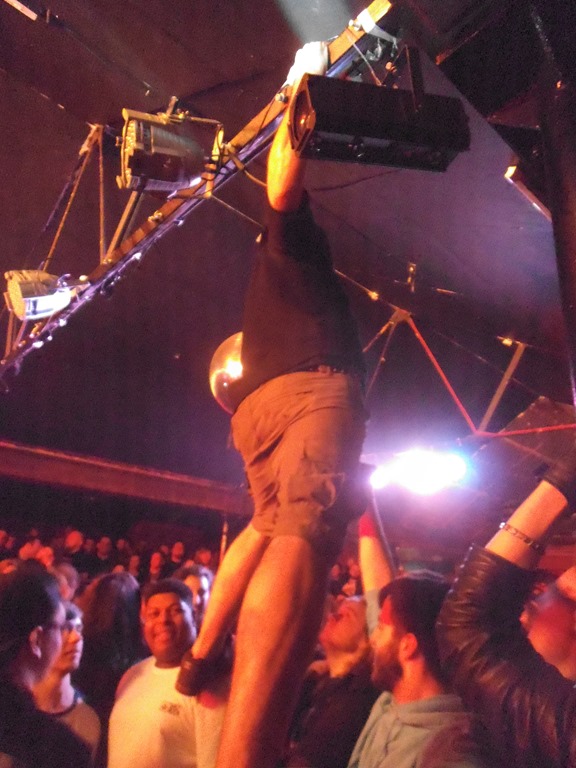
These guys are good: they never fail to build their sets to a point of total frenzy. Slam-dancing breaks out during the second song, ‘Bring Out Your Dead’, but the band goad, harangue, hassle and coerce the audience, with both encouragement and abuse, and it works: the crowd get closer in, and they get moving. ‘Motörhead’ is utterly ball-busting, and Cooke’s menacing presence and lighting-rig climbing antics make for one hell of a show. By the end of their too-short set it’s mayhem.

DSCF7182

Raging Speedhorn

While they’re setting the stage for Skindred, the rammed crowd are getting down to Red Hot Chilli Peppers blaring from the PA. I’ve always detested them, and the funk groove of ‘Suck My Kiss’ epitomises everything I loathe about them. I’m no purist, but some crossovers simply aren’t meant to be, which is primarily the reason I’ve spent the entirety of Skindred’s career avoiding them. The Queen singalong orchestrated by some bozo near the front is beyond embarrassing: isn’t this supposed to be a metal gig? Queen aren’t even rock.

But Skindred’s Benji Webbe harps on endlessly about ‘rock ‘n’ roll’ during their set, which is every bit as vibrant as their reputation would suggest. However – and please, (s)top me if you think that you’ve heard this one before – if Brexit and the advent of Trump (and the success of Oasis, for that matter) tell us anything, it’s that popularity is no measure of artistic merit. The crowd lap it up. No, more than that: they go absolutely fucking ballistic.

I get the deal of being ‘in the moment’ at a live performance. It’s why I live for live music. Even when reviewing, I will, often, forget to take any notes and will return with only a handful of photos because I’ve been enjoying the music, the performance, the atmosphere, soaking it all up and immersing myself in the show from the same perspective as everyone else. I may be a music writer, or critic, but I’m a fan first and foremost. Skindred, I witnessed as a detached spectator. I simply could not get into the moment.

DSCF7291

Skindred

The union jack pegged to the mic stand set me on edge for a start. In the current climate, it’s a divisive symbol. For a band fronted by a big black guy to flout, it’s clearly intended as a signifier or unity and collectivism, of being black and British, but even so. There’s a certain incongruity there, just as there’s an incongruity in a Welsh metal band fronted by a guy sporting a pair of sequinned hammer pants. The trouble is, it’s neither challenging nor funny. It’s therefore not funny when Webbe plays the race card, taunting the audience – being a packed-out crowd who’ve paid £20 to see his band – with ‘black guy on stage… what’s he saying? I don’t understand what he’s saying’. I would say it was insulting and patronising the audience’s intelligence, but they’re all in the moment and aren’t taking a critical stance on this. It’s banter, innit?

Musically, from a detached, distant, and critical perspective, it’s a fucking mess. Based around a metal / reggae crossover more heinous than the funk / metal hell of RHCP, Skindred also drag in elements of hardcore punk, dancehall, jungle, ska, hip hop, drum and bass, dubstep, and they do so clumsily, their sub-RATM stylings, and with endless calls of ‘C’mon! C’mon!’ all ripped into some horrible stew which simmers the bones of House of Pain, Shaggy, and Funkadelic into a stinking, foamy broth.

Amidst the sea of ubiquitous metaller beards, the ratio of XY to XX chromosome is uncommonly high. But this makes the beaming grins and the willingness of the female segment of the audience to buy into and participate in the band’s crudely-executed agenda, laced with sexism and misogyny, all the more perplexing. Sure, the Newport Helicopter – a ritual which entails the majority of the audience, regardless of sex, removing their t-shirts and rotating them above their heads, regardless of the danger to those around them – is pitched as symbolic of unity and empowerment. But when you’ve got Webbe up there yelling ‘get them titties bouncing!’ and so forth, it sounds more like a guy playing the rock star and getting his rocks off by exploiting the crowd than a true moment of collective liberation. And, in context of everything else, it’s deeply unplasant.

RSJ and Raging Speedhorn were ace, though.

Christopher Nosnibor

Any longstanding fan of The Fall accepts that inconsistency is not only par for the course, but part of the band’s enduring charm. The appeal of Mark E Smith, and, by default, The Fall, has always been a perverse one: revered by fans, loathed by pretty much everyone else, The Fall are the epitome of singularity. Recent years have seen them hit an uncharacteristic groove: the core of the current lineup has been in place for the best part of a decade now, and while it’s yielded some fine moments, there’s not been anything to touch the quality of Fall Heads Roll in 2005. I’d been reluctant to take a £25 punt on them delivering a decent show but when a friend who was unable to attend offered me his ticket, I joyfully accepted. Because it’s The Fall after all.

Tonight’s lineup makes perfect sense: local support and Aural Aggro faves Soma Crew are all about the motoric beats and plugging away at repetitive riffs, and having been gaining momentum of late, this is a big night for them. They certainly rise to the occasion: given the opportunity to play a full-length set to a substantial and receptive crowd, they meld together as a unit and crank out a set of psychedelic krautrock grandeur. One of the band’s more recent recruits, bassist Andy Wiles, brings movement and dynamism to the stage act, and they rock out hard amidst a tumult of FX-laden guitars and thumping mechanoid drums. No fills, nothing fancy, just a relentless groove.

Soma Crew

Soma Crew

The Fall – when they finally appear on stage some time around quarter past ten – hit a fairly solid, if uninspired – groove, too. Smith looks unsteady as he navigates the path onto the stage and tries out a couple of different mics. Against the LED backdrop, which I watched countless men well into their 40s and 50 be photographed before the show, they crank out a set which promisingly features a snarling rendition of ‘Wolf Kidult Man’ early on, but from thereon focuses exclusively on recent – and seemingly unreleased – material. In itself, it’s standard Fall.

The Fall 1

The Fall

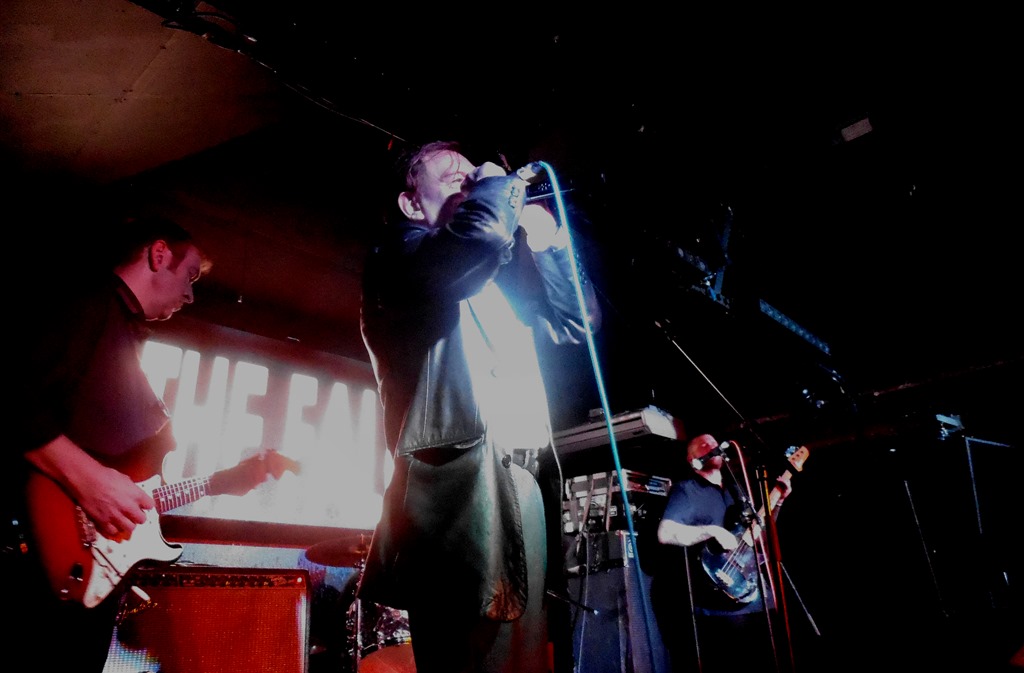
But while fans reach out and grab his leather blazer-style jacket in adulation and the substantial mosh-pit goes nuts, it strikes me that all is not well with MES. To criticise him for being unintelligible, for pissing about with mics, the guitar settings, well, it’s redundant. It’s what he does. The first time I saw The Fall in ’94 at the cavernous York Barbican, touring Cerebral Caustic with the classic twin-drummer lineup: neither drum kit had any mics before the set was out and it sounded awful to begin with. But it’s small wonder bassist Dave Spurr stands so close to his amp, as it guarding it from marauders: Smith repeatedly silences Pete Greenway’s guitar, and drum mics – and well as cymbals – are tossed over and about the stage at will, and of course Smith spends much of the show dicking about with mics. One mic, two mics, radio mic, wired mic, backing vocal mic, spare mic.

The Fall 2

The Fall

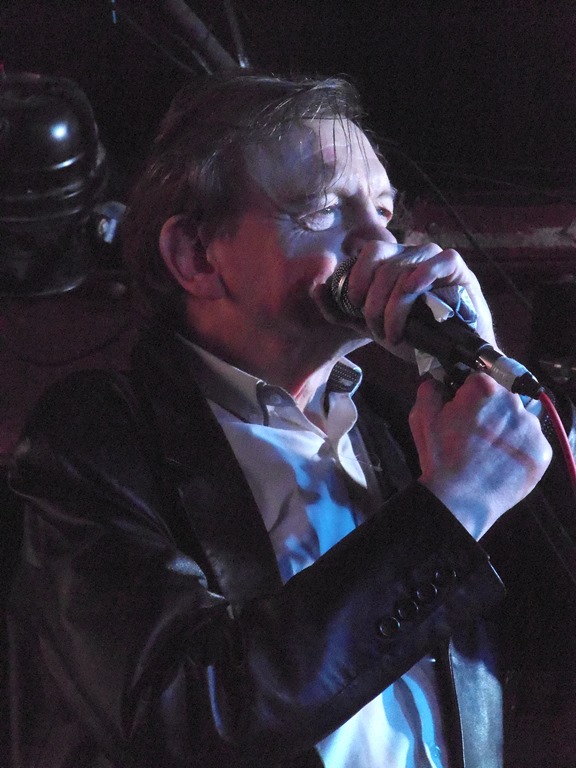
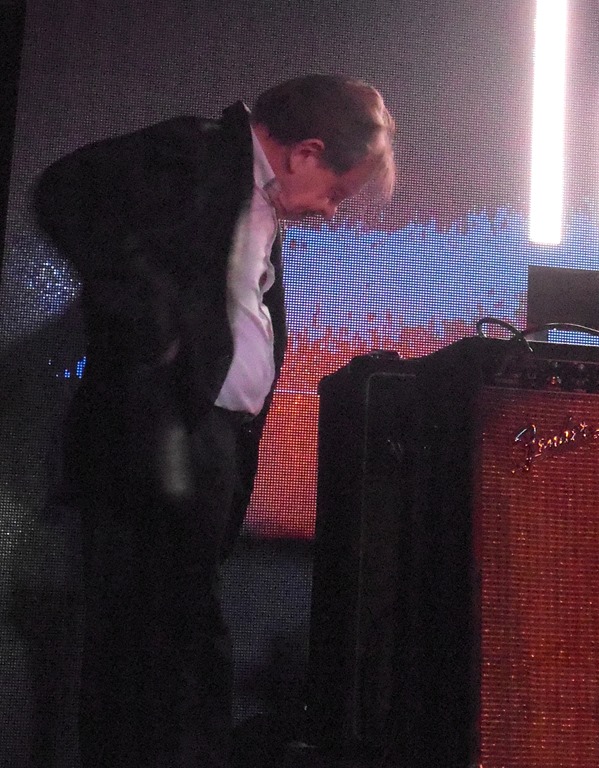
If it were any other band, the venue would have emptied after three songs. People would be concerned for the singer. But it’s MES. He’s a legend! But as he wavers and slurs, hollering unintelligibly, by turns gurning toothlessly, lolling his thick tongue and sucking his gums, it all feels far from legendary. Smith’s performing, throwing poses, tinkering absently with atonal keys, doing all the things he does, but he doesn’t seem entirely present, and oftentimes, he looks quite lost. Like an ageing grandparent with slowly advancing Alzheimer’s, there’s something sad about his performance.

The Fall 3

The Fall

Standing on a stage awash with beer, Smith removes his leather coat. He then passes his mic into the audience (who sound better than he does); he then collects the coat he’s just removed and leaves the stage unsteadily. He returns, wearing the coat again, and, looking lost, begins hollering through his hands until someone in the front row picks up the mic that was returned to the stage in his absence. He looks grateful, and begins to holler and drawl into the mic instead.

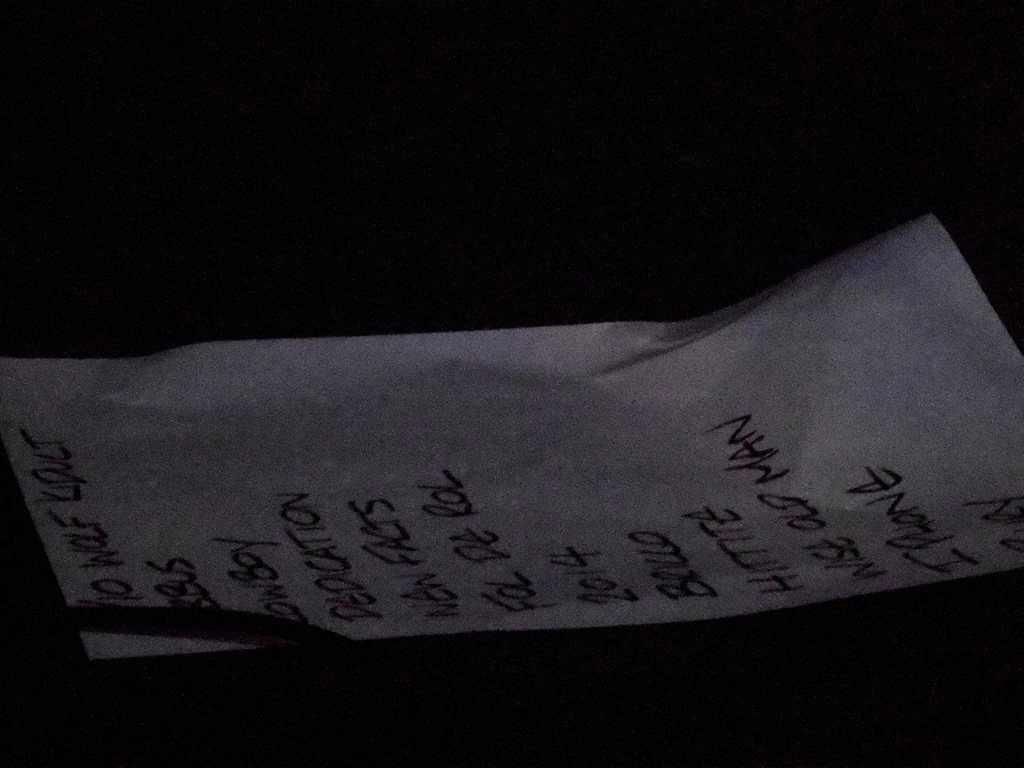
With the recent material being very much one tempo and one dimension, the music, while well-played, fails to really grip the attention, a problem exacerbated by Smith’s non-stop sonic sabotage. Without any real standout tracks (‘Reformation’? ‘Sir William Wray’? Forget it), everything blurs into one stodgy sequence of stocky but forgettable riffs.

Fall Set

The Fall’s Setlist

The first encore fails to offer any back-catalogue excitement, but they finally end the set with a second encore in the form of a solid but unremarkable (and rather hurried-sounding) stomp through ‘Mr Pharmacist’.

But it’s not the lack of back-catalogue material that’s the issue here. The Fall, who for all time have been lauded and adored as the most essential band by virtue of their unwillingness to conform or to bend in the face of trends, feel depressingly lacking in relevance (in contrast to peers Killing Joke, who played the same venue only a couple of weeks ago). The blame must sit squarely with Smith: lacking in focus and, seemingly, a real sense of where he’s at, the show felt awkward, confused, uncoordinated and generally underwhelming, and Soma Crew were definitely the better act on the night.

Christopher Nosnibor

For a long, long while now, Killing Joke have been a 1,500 or so capacity venue band. Hardy perennials of the post-punk scene, I first saw them in the early 90s at Rock City in Nottingham touring the mighty Pandemonium album. They’ve never really been away over the course of a career spanning four decades, but their 2003 proved to be a landmark in their renewed vitality. The onslaught hasn’t really stopped since then, and with the original lineup reinstated, the thing that’s most remarkable about Killing Joke is just how current and utterly essential they feel right now. Some of that’s down t the fact they’ve always been a hard-touring band and a going concern rathe than some nostalgia act but their recent string of albums have been as politically sharp and sonically abrasive as anything you’re likely to find. So it’s small wonder that an additional date at the front-end of the UK leg of their immense European tour at the 400-or-so capacity Fibbers, announced at only a week’s notice, should be sold out.

The evening’s support, Death Valley High, do a decent job of warming up what could have been a difficult crowd. The US foursome, drawing influence from old-school and latter day goth with a major leaning toward the sound of classic Wax Trax! grind out a set culled primarily from their album CVLT (released 4th November). The guitars could do with being a bit more up in the mix, but against a blinding backdrop they give it a hundred per cent. Front man Reyka Osburn gets down into the crowd, who are hanging back away from the stage, and actually manages to get some audience participation going, for which substantial kudos is due.

DVH

Death Valley High

Needless to say, shortly after they’re done (and on this occasion those who delayed their arrival missed out), the venue’s packed and it’s getting pretty tight down the front while the roadies prepare the stage with bottled water, a large rug, candles and incense. Yes, it’s a Killing Joke gig alright. And unlike many larger shows – including when I saw them at Leeds Beckett around a year ago, for one of the fist reviews featured on Aural Aggravation – there’s no barrier. People are resting their pint pots on the edge of the stage, and when the band take the stage, we’re standing within handshaking distance. This is a big deal.

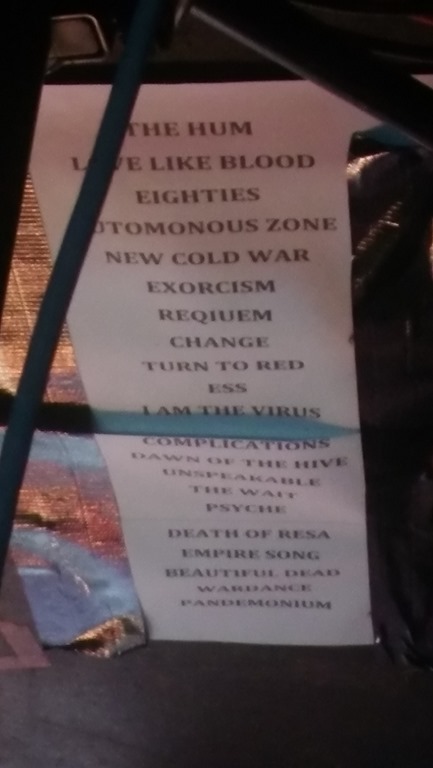
The open a career-spanning set with a gut-busting rendition of ‘The Hum’ from their 1982 album Revelations. The eighties indie-goth hits are dispatched early, with ‘Love Like Blood’ (dedicated to Raven) being the second song on the set-list, followed immediately by a buoyant ‘Eighties’.

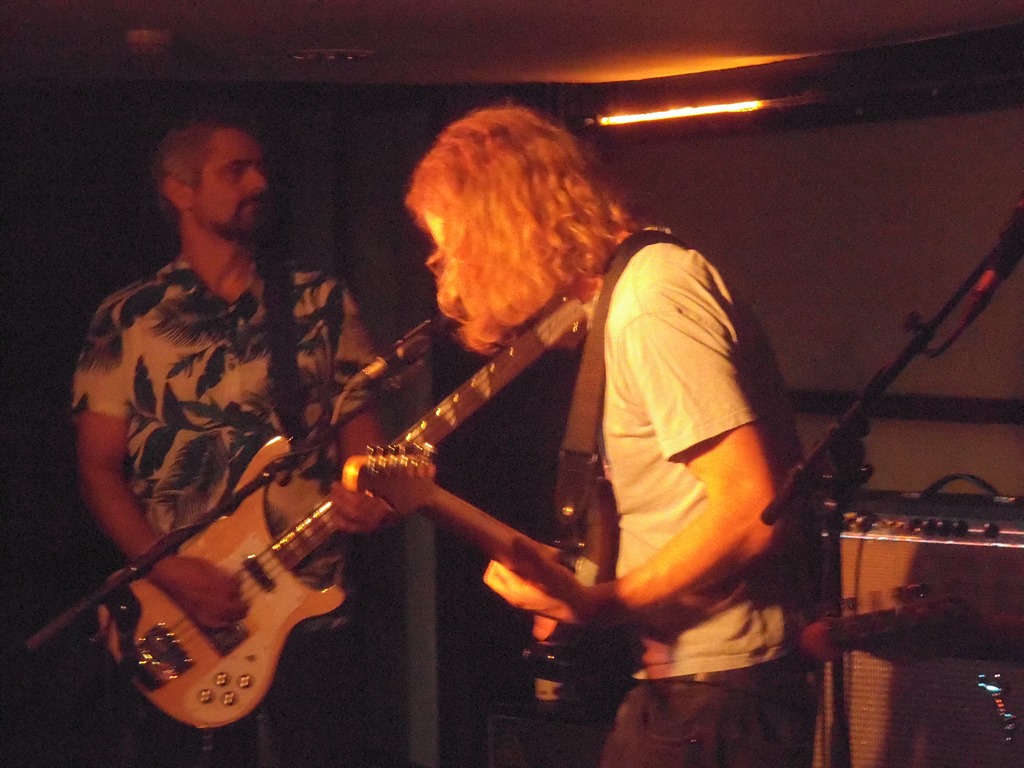
After that, it’s back-to-back recent cuts, with a thunderous ‘Autonomous Zone’ and ‘New Cold War’ – simultaneously textured and delivered with the force of a battering ram – representing Pylon. Things take a turn for the even heavier immediately after, with a relentless ‘Exorcism’ finding the band hitting optimum intensity. Standing close together on the small stage, Geordie nonchalantly grinds out the absolute mother of all chirning riffs while Youth, looking like a strange ex-yuppie golfer who’s discovered New Age mysticism with his sparse dreadlocks and, visor peak and flowing star-and-moon cape, reminds us that he’s an incredibly solid bassist.

Killing Joke

Killing Joke

It’s a long set, and impressively – especially given the age of the band-members – doesn’t let up on the tempo for the duration: there are no lighter-waving anthems or slow ballads to allow band or audience alike to catch their breath. There are a lot of older men with bald heads in the crowd, and they mosh relentlessly and with wild abandon as Jaz marches non-stop. He has a stare that can reach the back of any 1,500 capacity venue, so, the intensity he radiates is even more powerful in this small space. But for all the apocalyptic menace, it’s clear he’s having a ball, and there are smiles all round between the veteran players as they feed off the audience’s adulation. Coleman’s voice is showing no sign of diminishment, and the band are so tightly together, playing with the intuition only endless hours shared in rehearsal and on stage can bring.

KJ Setlist

Killing Joke – Setlist

The latest material is up there with their best, and ‘I Am the Virus’ is a particular standout, exploding with fury, while ‘Dawn of the Hive’ is punishingly dense, before the main set ends with the swift one-two of ‘The Wait’ and ‘Psyche’.

The sole track from their landmark 2003 album is the first of the encore, and ‘Death and Resurrection Show’ is nothing short of monstrous. While I would have personally liked to have heard more from Extremities (I never tire of ‘Money is Not Our God’), ‘The Beautiful Dead’ is epic and is perhaps the most sedate song of the set.

With ‘Empire Song’ cut for time (I get why venues have to wind up gigs early to accommodate club nights: it’s a matter of economics, but it will never cease to be a cause of frustration that major headliners have to abridge their shows, for which punters have paid over £20 a ticket only to be turfed out at 10:30 to make way for a clamour of 3-4-2 alcopop-scoffing cretins), they complete the encore with ‘Wardance’ and ‘Pandemonium.’ And it’s fucking belting.

In many ways, this perfectly summarises the appeal of Killing Joke. They’re relentless in their barrage of dense, angry, grey metallic noise. And they’re consistent, both on record and live. A Killing Joke is like being pummelled, mercilessly, yet it’s also immensely exhilarating, because they’re a band who mean every word, every note, and the sense of unity in the room – band and fans – is something special. Everything is fucked. We know it, they know it. They’re preaching it to the converted, but for this time, we truly are all in it together. And despite the eternal sense of impending doom, it’s a great feeling.

Christopher Nosnibor

Soma Crew were an obvious and natural choice of support for cult psych at The Lucid Dream on their first visit to York in their nine-year career. I first heard The Lucid Dream back in 2010, when they set their stall out with a brace of impressive EPs. Since then, they’ve released two long-players, with a third out next week – hence the tour.

Soma Crew, playing their second set of the day, are on top form. They’re loud, and they’re in synch. In other words, they’re exactly as they need to be for an optimum performance, and they piledrive their way through a set which opens with the spiky, angular ‘Remote Control’ and culminates in a squall of feedback.

DSCF5938

Soma Crew

Call me prejudiced, but I had low expectations for Eugene Gorgeous. It’s a shocking name, for a start, never mind the fact the band members and the gaggle of mates they’ve brought along, who have little to no grasp of gig etiquette or what moshing is about, are barely old enough to drink but fuck me, they’ve got songs and, mannequin-like bassist notwithstanding, energy. Stylistically varied, there’s an alternative / punk edge to the bulk of an impressive set. And, credit to them and their fans, they don’t do the all-too-common thing of sodding off afterwards, and instead stick around for the headliners. It’s a wise choice.

DSCF5952

Eugene Gorgeous

The Lucid Dream ae stunning, and seem determined to make their first trip to the city is memorable one. They may look mundane, but musically, they’re sublime, and they sizzle their way through a set of kaleidoscopic songs which are densely layered and deeply melodic. It’s hazy, blurred, hypnotic shoegaze par excellence. With an early start to the set, it looked like being an early finish, but The Lucid Dream have slowly but surely built a following based on slow-burning epics, and when they announce that they’ve got three songs left and they’re quite long, they’re not kidding: the segued three-track finale sees them lock into a sustained crescendo that explodes for the best part of half an hour. With the set crashing to a climactic close, it makes for an exhilarating and convincing performance. If only they’d had copies of the new album on sale…

DSCF5987

The Lucid Dream

Christopher Nosnibor

It’s the hottest, or second-hottest, night of the year so far, with temperatures teetering at the top of the twenties. I managed to knock off work early to get the train over from York to Leeds in order to conduct an interview before the show, and having managed to chill with a pint in the North Bar for half an hour before the gig, I’m now back underground in the small, dark, box venue that is The Key Club, trying hard to make my £4.20 330ml bottle of Punk IPA last more than five minutes while I sweat my tits off and wait for the first of tonight’s three bands, By Any Means.

Sporting beards, vests, tattoos, and knee-length shorts, the Belfast band crash in hard. Their front man may strongly resemble Brian Blessed, but I suspect he’d be more likely to crush Flash’s oesophagus with his bare hands than proudly declare him to be alive. They crank out a set of intense, dense, throbbing metal and these no shortage of chug ‘n’ grind(core) in their meaty riff-driven tracks.

DSCF5243

By Any Means

Next up, Stoneghost, sporting beards, vests, tattoos, and knee-length shorts take to the stage with a holler of “Leeeeeds! How the fuck is everyone?” Everyone is fucking melting, as it happens, and the relatively restrained response is by no means an indication of a lack of appreciation. In comparison to By Any Means, Stoneghost are sonically denser, the guitar lines more technical, the drums more frenetic, the sound more brutal, and the front man more bullish. He’s got a mean look, and I certainly wouldn’t mess with him. But for all the thunder and aggression, they’ve got some monster choruses, and they earn themselves a one-man slam-dancing moshpit for their efforts.

DSCF5273

Stoneghost

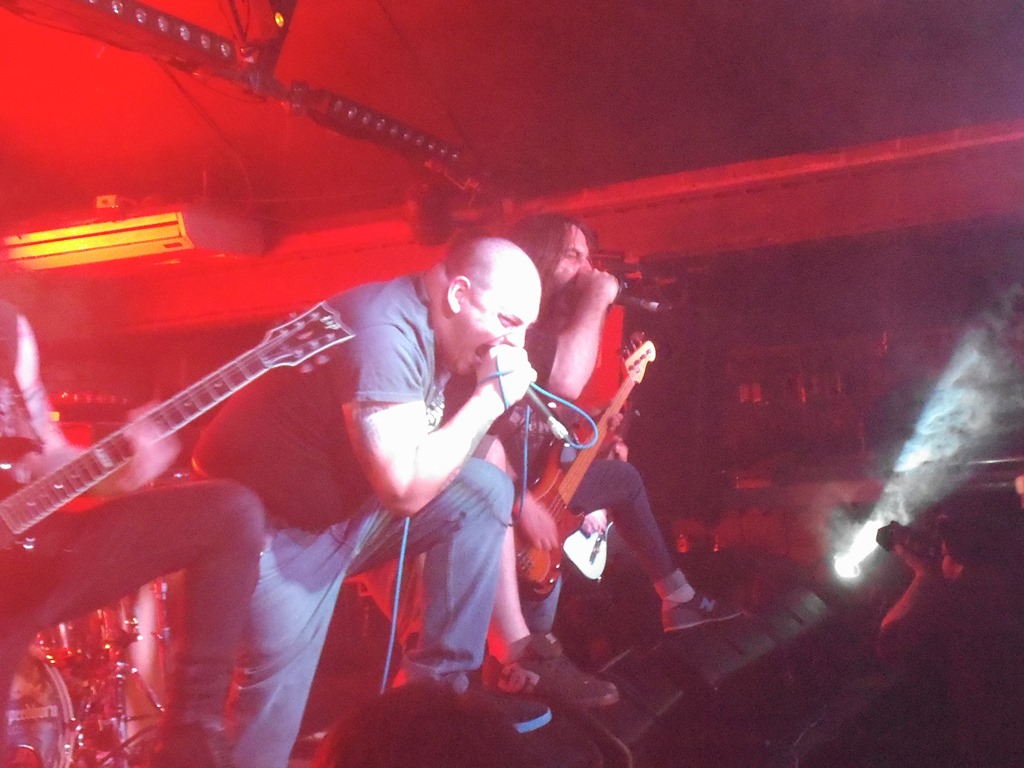
Raging Speedhorn may be purveyors of gnarly sludge metal, but they’re certainly not uncivilised: drummer Gordon Morrison pours beer from bottles into (perspex) glasses before they play. After an inter-band playlist that featured, amongst others, Fudge Tunnel, they walk on to ‘The Heat is On’ by Glen Frey, and yes, the compact basement venue is fucking boiling. With the stage drenched in feedback, vocalists John Loughlin and Frank Regan stand, silent, at the front of the stage, simply leaning out toward the crowd, looking menacing, they hold it for a full minute. This is showmanship, and it’s the band’s commitment to the performance element of the show is integral to the live experience. That said, they’re not posers, by any means: in fact, they’re just a bunch of middle-aged guys with beards and tattoos, wearing vests / T-shirts and long shorts, but they give one hundred percent to the music, and the aggression, the brute force with which the songs are played is so genuine it’s scary. Their contrasting styles work well: Loughlin screams maniacally and looks deranged as he charges he stage, while Regan is almost nonchalant and looks like he’s relishing goading the crowd with ‘come on’ hand gestures before he spits and snarls into the mic.

DSCF5289

Raging Speedhorn

They pile in with ‘The Hate Song’ from second album We Will Be Dead Tomorrow, although much of the set focuses on the new album Lost Ritual, which is fair play, and no bad thing given that it’s a riff-led stonker. ‘Bring Out Your Dead’ and ‘Motorhead’ are slammed down early. Delving back to their debut for ‘Redweed’ elicits a strong reaction, and before long there’s a tornado of bodies frothing in front of the stage.

DSCF5314

Raging Speedhorn

One guy who’s filming the set on his mobile has his phone confiscated and starts whinging like a kid about how he wants to show his friends the show. No doubt he’ll be gutted that his footage won’t include the ball-busting climax: they close the set with a pulverising rendition of ‘Thumper’, and still have it in them to return for an encore of ‘Ten of Swords’.

DSCF5345

Raging Spedhorn

The full set – twelve tracks – may have lasted just under an hour, but no-one’s feeling short-changed. In the blistering heat, they’ve delivered a relentless set that shows Raging Speedhorn are as vital now as ever.