Posts Tagged ‘Kadaitcha’

Ant-Zen – 7th April 2025

Christopher Nosnibor

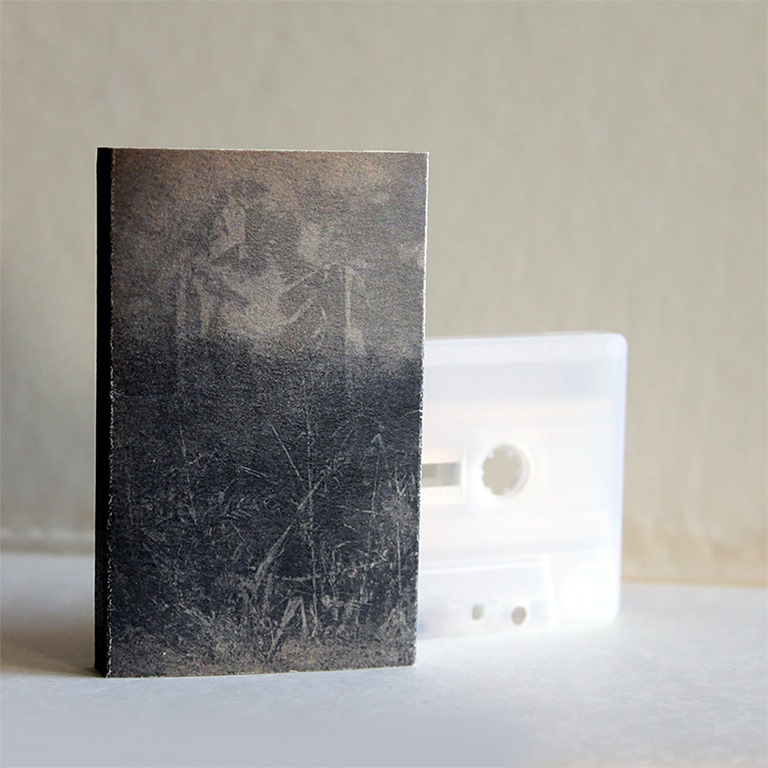
Kadaitcha’s Urban Somnambulistics was originally released on cassette in 2017, and was lauded for its dark atmospherics and rumbling narrative, spoken in Russian. A lot has happened since then, and the Ukrainian duo have, against all odds, remained active, releasing Tramontane in September 21023, and now a new version of Urban Somnambulistics, with the vocals in English. It’s not only the urban landscape of Ukraine which has changed since the album’s initial release, but the cultural landscape also, and the decision to re-record the lyrics in English was in some ways a reaction to the cultural and political context which has evolved, with Andrii explaining to me that, for him, Russian has become ‘a language of occupancy’.

There had been a shift following the annexation of Crimea in 2024, with some people switching from speaking Russian to Ukrainian, something which became more prevalent following Russia’s invasion in February 2022.

It’s hard to really grasp, from a position of comfort and safety, what it truly means to be an artist in a country which is not only at war, but has now been so for more than three years. The idea of making art under such circumstances seems completely wild, but at the same time, something we’ve learned from the long history of war – and indeed, history as a long thread, riven with tribulation – is that art has always been something we’ve made. It seems as if it’s almost a part of our survival mechanism, and that in difficult times, it’s a compulsion within the human psyche that there’s an absolute necessity to document, to create.

Urban Somnambulistics is dark and intense, and while it’s devoid of beats, it’s far too noisy and gnarly and bears the hallmarks of Throbbing Gristle at their darkest, most experimental best, abrasive, and anything but ‘very friendly’. The vocal on ‘hiding the angel’, while clean but reverby on the original version, is thick with distortion this time around, and significantly darker and more menacing in tone. ‘bushmeat’ is nine minutes of blown-out distortion and fizzing electronics, snapped cables and firing sparks, and it’s not only tense, but intense, not to mention unsettling. It’s a messy noise drift that would work as part of a soundtrack to Threads, a post-apocalyptic drone with the whistle of a bleak wind cutting across a desolate landscape. There is shredding noise, too, metallic devastation: you can almost picture ruined farm buildings hanging on their frames beside cropless fields.

Things really step up with ‘symbiote’, five minutes of oppressively dark industrial grind, before the rather more airy expanse of ‘paninsecta’, a piece that groans and drones, clanks and clatters, cut through with snarls and burrs, distorted vocal utterances just beneath the level of audibility adding an unsettling layer of discomfort. The eleven-minute title track provides the finale, and again, it’s very much in the vein of Throbbing Gristle’s more experimental works – menacing, uncomfortable, unpredictable, and noisy, collaged overlays enmeshing with crunching metal, melting circuitry, harsh drones rising up, a surging sonic tempest.

It’s remarkable that this is an album which was recorded before life in Ukraine changed beyond all recognition, because Urban Somnambulistics appears to convey all the tension and all the devastation of conflict in its presentation of sonic extremities, and its embracing of noise that hits like… like… It has significant impact, and that’s a fact.

AA
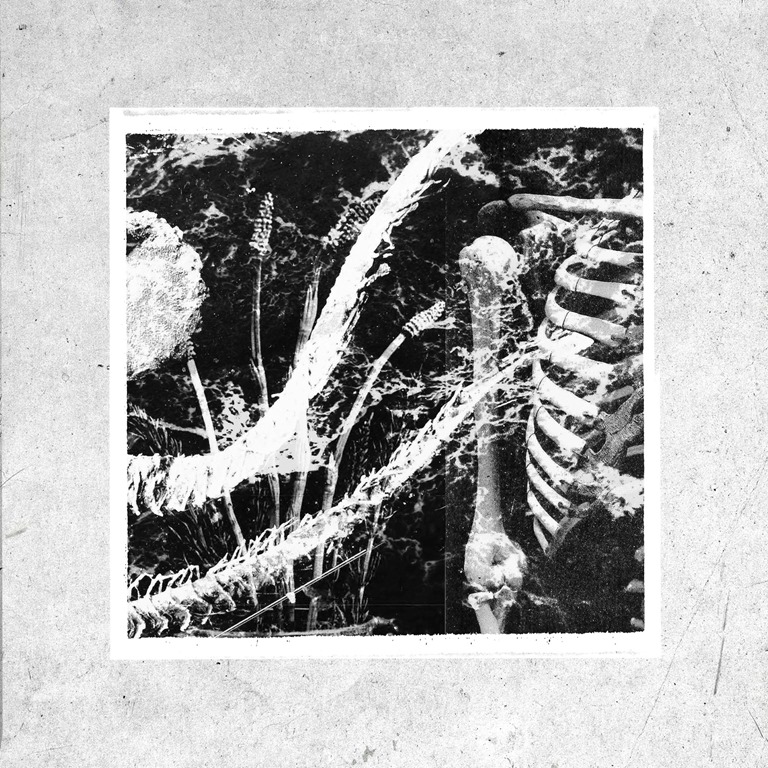
cover

ant-zen – 16th September 2023

Christopher Nosnbor

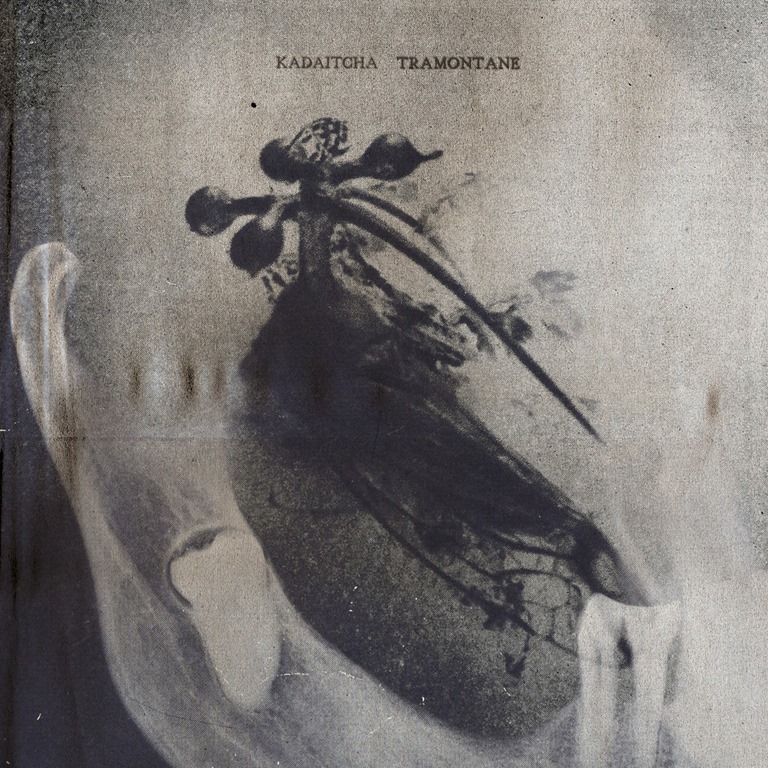
Four years on from Tar, Ukrainian industrial duo Kadaitcha, consisting of Andrii Kozhukhar and Yurii Samson, have overcome many, many challenges to deliver album number five, in the form of Tramontane.

The tracks which appeared on their limited lathe-cut single last year do not appear here, and this is admirable: singles so often tend to be used as launchpads for albums, and it was particularly common in the 80s and 90s that albums would sell on the basis of a couple of singles, but would have next to no other decent tracks. In the days before streaming, this was something that was easy to get away with, since the only way of hearing the album was by buying it, which you would do based on the singles. But then, the risk could be reduced by taking punts using your half price or free options through Britanna Music, or similar. The advent of streaming hasn’t really improved things, though, because now, at least in mainstream circles, the album is essentially obsolete.

But outside the mainstream, the album is thriving, and artists are pushing the format now that the constraints and limitations of physical formats aren’t necessarily dictatorial in determining duration, and there are infinite options for exploration. The single wasn’t so much of a stop-gap release as a standalone document of a period in time. But the key point here is that Tramontane is very much an album, and a work to be approached as such. The notes which accompany the release are almost hallucinatory – not quite Burroughs cut-ups, but fragmented, non-linear, and they serve to articulate the essence of the music contained here. Stylistically, it’s tight and cogent, and there’s a flow to it, too, which begins with the appropriately-titled ‘Intro’, which is precisely that – a short instrumental intro piece which paves the way for the ten heavyweight cuts which follow. But within that coherence, what Tramontane offers is a work which really goes all-out to disrupt and unsettle.

‘Niello’ draws primarily on the sound and style of earlier industrial music, the electronic pioneers of the late 70s and early 80s, the likes of DAF and Cabaret Voltaire, but with its distorted, menacing vocals, there’s an element of the later evolutions of industrial which emerged in the mid 80s. It seems to be that there are very different understandings of industrial, and while Al Jourgensen may be a huge fan of William Burroughs and the music that formed the body of the first wave of Industrial music, namely Throbbing Gristle and also the wild tape loop works of Foetus and the heavy percussion of Test Dept, it’s industrial metal and harsh post-NIN electronica which have come to become synonymous with industrial latterly.

On Tramontane, Kadaitcha have brought the two forms, old and new, together, and the result is discordant, noisy, difficult. And these are its selling points. It feels like a guided tour through the most challenging aspects of Industrial music through its evolution and history.

‘Knife’ is a sparse, oppressive low-end throb pinned down by a dull, thudding, muffled-sounding beat, over which twitching electrical streams flash and flow while monotone vocals are unsettlingly detached. The percussion really dominates on the tempestuous ‘Liars’ and any and all references to Einstürzende Neubauten are entirely appropriate. It’s a thunderous, dense racket where the low end really stands to the fore, but it’s tame in comparison to the dark ‘Offering’: even when it drives out as a heavy and insistent bass riff, it feels unfinished, undercomposed. Yet therein lies its success: it feels organic, and nothing is overdone.

The mangled noise and droning distorted vocal on ‘Fossil’ is pure Throbbing Gristle, a barrelling barrage of blitzkrieg laser synth bleeps and a whole mess of midrange and lower end distortion and dirt, churning, discordant, the monotone vocals almost buried in the tempest of overloading unpleasantness, and ‘Seeds’ is similarly unpleasant and uncomfortable, everything going all out on overdrive.

It all comes together on ‘Insight’: beginning as a gentle, spacious, mellow post-rock guitar-led piece, it soon erupts into a mess of overload akin to Metal Machine Music, only with drums and sinister vocals. It’s got the lot, and as the album enters its final stages, it seems to consolidate the elements of the previous tracks to punch even harder, with the percussion harder, the grinding morass denser and darker.

Perhaps a reflection of the circumstances in which it was created, perhaps a reflection of the times in the world at large, Tramontane is heavy and at times harrowing. The lyrics may not be decipherable for the most part, but the mood requires no translation or interpretation, and Tramontane will crush your soul.

AA

a3600121745_10

23rd September 2022

Christopher Nosnibor

Perhaps it’s that media has a numbing effect, or perhaps it’s simply that however strong the quality of the reportage, it can never truly convey the details in a way that are relatable. I’ve spent the best part of the last year seeing footage or the War in Ukraine and seeing and reasoning about the humanitarian crisis, and, like most people, it’s been quite overwhelming. And yet, ultimately, it’s just more TV, more news media online, on the radio.

I receive missives from around the globe, most containing new music for my ears, and this week, the arrival of Nefas EP by Sora, an offshoot of Kadaitcha piqued my interest with the offer of instrumental southern Ukrainian jazzcore.

Sure, I’m up for a challenge, and hell it’s definitely that. But if the music is a challenge – and if you look up ‘challenge’ in the dictionary, you’ll find it starts playing this EP – the backdrop to its release is even harder to process, with the context of its having been recorded and released shortly before its makers fled Ukraine and decamped to Estonia for their survival, leaving their musical equipment behind and a new Kadaitcha album in the can and in suspense.

Like many, I simply take my home and possessions for granted, writing in my review of the last Kadaitcha release – a lathe-cut 7” ‘with a true physical format, apart from fire or flooding, you have something pretty robust’. It feels pretty crass in the face of everything, in hindsight.

But… but… these guys have continued to make music right up to that moment of departure. It’s not heroic, but a real indicator of just how essential art is, even in the most desperate of time. And more than anything, it shows how strong the need for normality is in the most extreme of situations. The world is seemingly ending, what do you do? Keep going, do as much as you can of what you were doing before. Because it’s a way to cope. Channel that anxiety creatively, and who knows?

Well, we know now. Sora is something special.

The five tracks drag the listener on a wild journey, with the first piece, ‘kings’ but a prelude to the frenetic manic sonic explosion of ‘limit’, a frenzy of crashing drums, jagged guitars, freewheeling bass grooves and crazy brass that brings a whirlwind of discord and by the end, it’s all whipped into a head-spinning cyclone of chaos. It’s a maelstrom of madness, there’s just so much going on all at once, and so much noise and dissonance.

‘Schizoid’ brings some truly nefarious low-end to the party, and it’s hurled against some crashing drums, and in combination conjures a tempestuous storm of sound that rages and pummels, before ‘No’ lumbers heavily onto a hooting, tooting onslaught of mayhem.

There’s a serious risk of a headache with this one, but it’s a headache that need poking: Sora is brain-bending, dizzying, and at times intense and harsh. But that’s why we like it.

AA

a3705471243_10

ant-zen – 4th February 2022

Christopher Nosnibor

Increasingly, when the consumption of music and art in general has become increasingly focused on accessibility, ease of consumption, and essentially a trade in intangibles – many no longer own any music physically, and simply stream everything – there is, conversely, a keen hankering and a strong, if niche, market for artefacts. Having grown up with first vinyl, and then CDs myself, I get this. The idea of not actually ‘owning’ your collection is bewildering, and the fact is that a playlist is not a collection. What happens when a subscription site folds, or when an artist withdraws their work from your platform of choice? Even bands who host their own music on sites like bandcamp, can withdraw or delete it at any time.

I’m no fan of MP3, but at least with an MP3, you’ve got something (although it pays to back up, or you might not). But with a true physical format, apart from fire or flooding, you have something pretty robust. But that’s not even half of it. It’s about the experience. The object. I can still recall when and where or how I came to acquire a large percentage of my collection, which runs well into the thousands of records and CDs (but no longer tapes, so much, for various reasons).

With the vinyl renaissance well under way, the late-cut single is very much a growth area. These things aren’t cheap, but what pressing plant is going to do a dozen copies? Meanwhile, a lot of artists with small fanbases still want something physical, but it would likely take then several lifetimes to shift a couple of hundred or more units. And then there’s storing the things. No-one wants boxes of unsold inventory they’ve paid a fortune for filling the spare room. And so, those who want something to cherish and simply own are generally happy to pay that bit more for something intrinsically scarce.

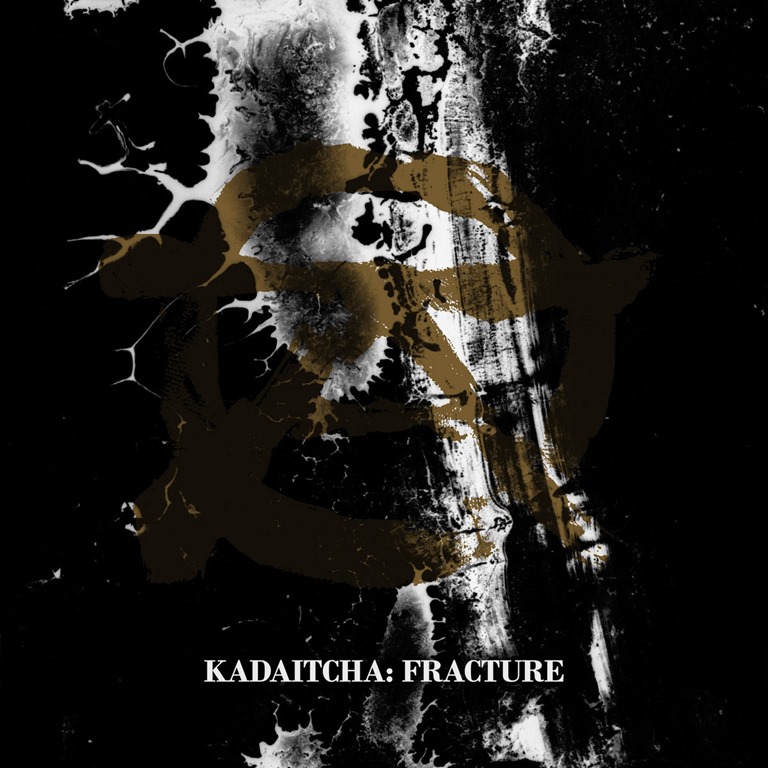
Kadaitcha’s latest, ‘fracture’ comes as a square lathe-cut 7”, which looks like one heck of an item, and of course, digital download, and contains two heavyweight slabs of dense, thunderous noise.

‘night’ is a crunchy, doom-laden drone driven by industrial-strength percussion. The guitars buzz and the vocals growl, almost submerged beneath the dense, murky noise; the beats blast like the heaviest machinery known to man. It’s like a black metal Swans. Flipside ‘rekill’ places the electronic to the fore, sounding like a JG Thirlwell remix of Nine Inch Nails with stuttering blasts and walls of digital distortion exploding from the speakers. It’s overloading, everything all at once, an instant headache distilled and amplified. This, of course, means I absolutely love it. Feel the pain.

AA

a2994709684_10

5th May 2020

Christopher Nosnibor

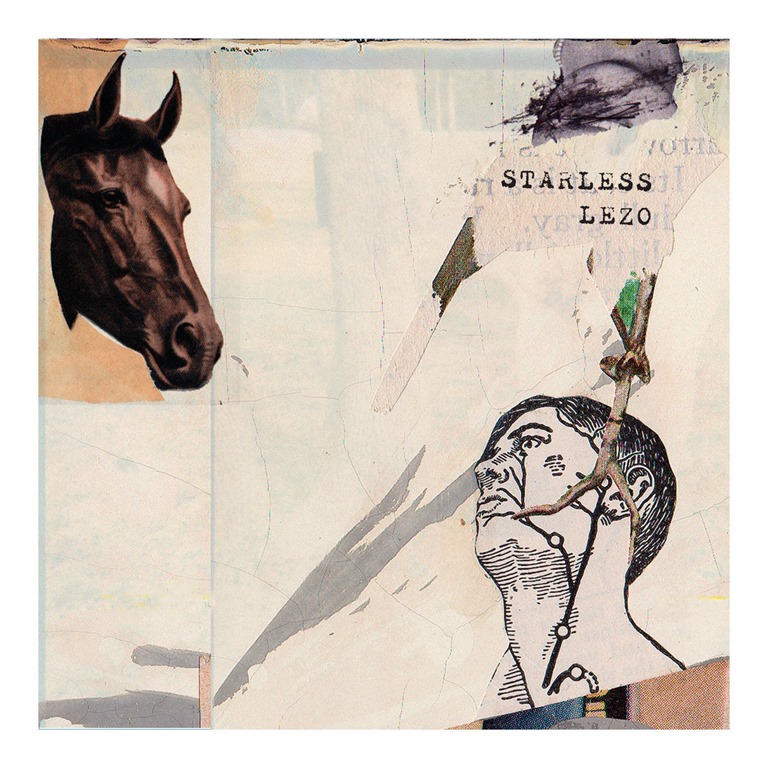
Starless is a new musical project from Yurii Samson of Ukranian industrial noisemakers Kadaitcha. It’s pitched as being ‘less industrial and noisy than Kadaitcha, but more acoustic and lyrical’, although this very much depends on the strain of industrial you’re angling towards.

Admittedly, my first thought is less ‘more acoustic and lyrical’ than Kadaitcha, but ‘fuck me, this is spaced-out experimental jazz!’ ‘Entro’ piles in haphazard and chaotic, as a riot of parping horns hoot and honk seemingly at random though a twittering electronic oscillation with bleeps and quirts, and wandering notes that are difficult to assimilate, stylistically or psychologically. There’s a lot going on at once.

But the title track goes much more industrial / dark ambient, a restless thrumming providing the backdrop to a distanced, echo-heavy vocal and squalls of extraneous noise, swells of feedback and layers of serrated electronica, whole distorted impenetrable vocals ring out with a bold authority. It’s the sound of Big Brother’s dictation, monotone, cold, flat, and impervious, while metallic noise spirals and swirls.

Next up, ‘Chudovys’ka’ begins all aclatter and aflutter, a clicking flicker or delicate beats, before a warped vocal begins to nag away in the background. And then, before long, it goes full Throbbing Gristle with churning electronic rhythms and hard-edged noise butting up against them. And this is a sustained sonic attack, the best part of ten minutes of difficult noise that simultaneously rumbles and screes, a low-end wash that rolls and throbs while clattering percussion ricochets off in all directions.

‘Kiviten’’ goes all-out with the heavy-duty percussion, calling to mind the thunderous battery of Test Dept. It also brings droning church organ and shrieking feedback that hurts the ears and bends the brain, as well as heralding introduction of epic choral voices on the scale of Carl Orff’s ‘Carmina Burana’, only distant and dissonant. It’s big on drama, and also disquiet.

Closer, ‘Saga’ is also impressive in its depth, and equally the depth of the discomfort it discharges as wheezing monotone vocals drone out over a shifting soundscape of hesitant beats, creeping jazz horns and scrapes and bubbling synths. It’s sparse, low, slow, and trepidatious, making for an unexpectedly Low-key conclusion that also happens to leave the listener hanging on the edge of a swamp hidden by fog, wondering what lies beyond.

AA

a3986107524_10

December 2019

Christopher Nosnibor

Ukranian industrial duo Kadaitcha, consisting of Andrii Kozhukhar and Yurii Samson, have stepped up a gear for their fourth album, Tar, which follows Southern Phlegm, which landed at the front end of the summer. It’s an expansion in every sense: sonically, it displays a broad palette, from barely-there ripples and clicks to all-out abrasion, with all shades in between, and with seven compositions, ranging from six-and-a-half to thirteen-and-a-half minutes in duration, there’s a lot of room in which to venture on an exploratory journey.

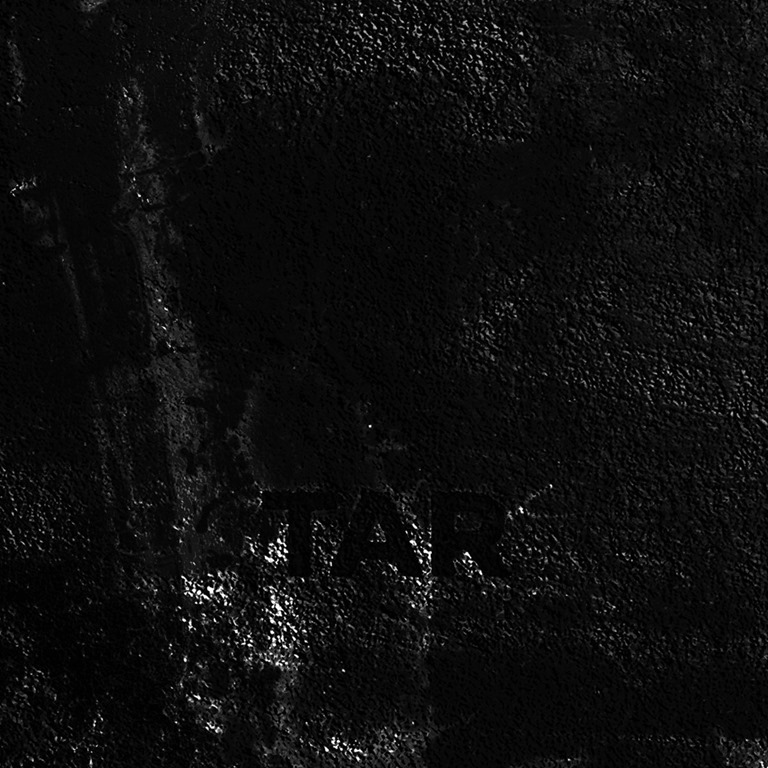
They describe Tar as their ‘most powerful and elaborate release so far’, and there’s a story of sort behind it, as Andrii explains: ‘[The] album cover is based on the images from the series APEIRON by Ukrainian photographer Maxim Dondiuk. It’s a series of scanned photo negatives found in the Chernobyl exclusion zone, which were remaining there lost and forgotten for over 30 years, being subject to radiation and forces of nature.’

The images, available on Dondiuk’s site are disturbing and otherly, and convey more about the horror of the Chernobyl catastrophe, an event on an environmental, ecological and human scale that still has yet to be fully assimilated and that has, globally, faded into the annals of time for many, than any narrative possibly could. Tar effectively provides a soundtrack to these images. The album has a discernible arc, which transitions and deteriorates into ever-deepening distortion and degradation.

Spacious, atmospheric electronic layers hover and cascade around sparse desert guitar twangs at the start of the first piece, ‘Idle Hands’, before mangled chords, overdriven and distorted, crash in. ‘2219 F’ also collides soft, semi-ambient soundscaping with crushing wall-of-noise guitar screes that come on like an avalanche and devastate everything in their wake. And yet things are only just beginning to take shape: this only foreshadows the aural challenges yet to come. ‘Ran’ brings pulverizing rhythms and a deluge of noise in an altogether more overtly ‘rock’ format, and it’s got tension and attack, and marks the first stage in the transition toward a harrowing mess of ugly noise.

There aren’t many vocals on Tar, but when they do enter the mix, they’re gnarled, dehumanied, and monotone: ‘Eclipse’ is Throbbing Gristle on a doom-infused downer: a persistent electronic throb provides the backdrop to a detached, dehumanised vocal wheeze, and ‘Serpent Hill’s slithers into a murky morass of discomfiture. By the end – the overloading analogue explosion of the 13-minute ‘Yatagarasu’, which calls to mind Halogen-era Whitehouse – it’s a barrage of noise, a clunking beat and something semi-musical plinking away beneath a squall of white noise.

It hurts, but in a good way, a way that conveys damage, devastation, and environmental devastation.

AA

AA

AA

K - Tar

16th June 2019

Of course I was always going to be sold on an album with a title like Southern Phlegm. I mean, what’s not to like? Kadaitcha’s third release straddles ambient, drone, industrial, and power electronics to deliver four tracks driven by throbbing pulsating grooves welded to repetitive, cyclical guitar lines, and rent with the gnarliest, nastiest treble-shredded distorted vocals.

The first, ‘Phagocide’ pumps away for over nine minutes. The guitar and synths form a messy sonic fusion, a thick mass of distortion while wibbling space-rock blasts of analogue send blurred neon arcs through the heavily-grained backdrop like shooting stars. ‘Sewerbound’ is appropriately titled as it plunges deeper into impenetrable murk. It’s dominated by clattering percussion, the edges distorted and decayed, while screeding noise howls a vortex of sonic agony. Frequencies collide to create an endless flux of aural incompatibility. Everything is distorted, dirty, there’s malice in every note. The lyrics are impossible to decipher from amidst the sonic blitzkrieg, but there’s nothing about the delivery that suggests there’s any comfort or kindness on offer here.

Slow, brooding ambience builds an unsettling atmosphere during the opening minutes of ‘Datura’, before the overloading guitar crashes in. It’s got the low-end distortion of Sunn O))), but grinds away at a repetitive motif with the bludgeoning brutality of Swans. It’s a full-on kick to the diaphragm.

Closing off, ‘Vulpine Sacrifice’ arrives almost by stealth, a snaking bassline strolls in slow and slow, a stop/start stammer gives it an almost hesitant feel. Circuits fizz, crackle and hiss all over the place, before the final two or three minutes find the conglomeration of elongated hums coalesce to create something approximating ‘music’, akin to a swelling organ drone. But you couldn’t exactly call this brief moment of musicality that draws out to the fade the light at the end of the tunnel: it’s low, slow, and ominous and seems, if anything, to point toward another darkened door which opens onto stairs leading to an eternal abyss.

AA

Kadaitcha – Southern Phlegm