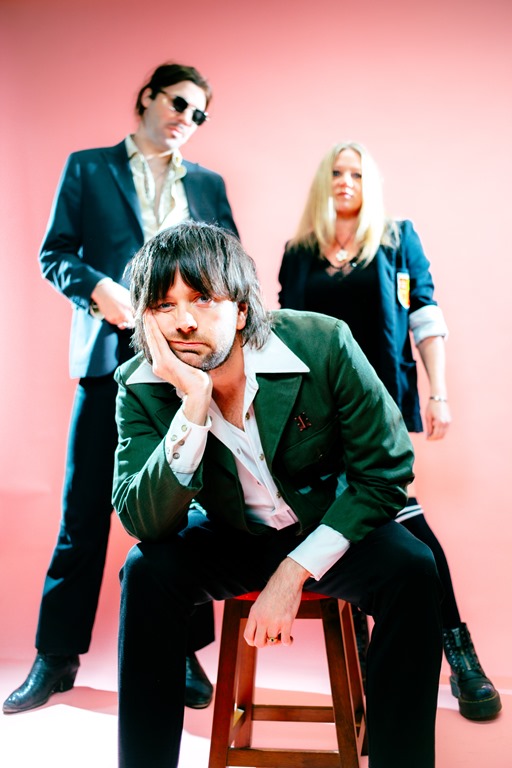
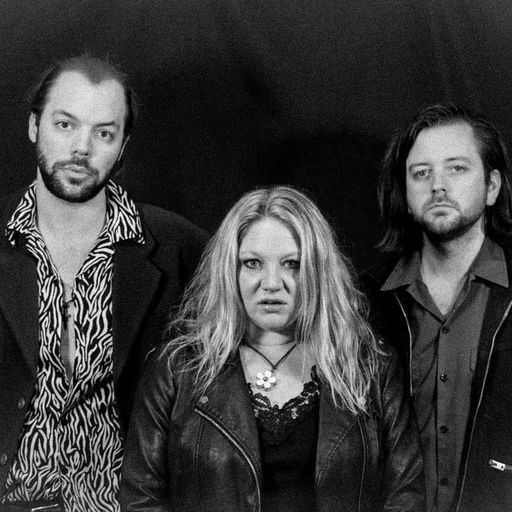
Continuing the thread of my review of the new Eville EP, which sees a young band push hard on the forward trajectory of a nu-metal revival, I find myself basking in the retro sound of ‘Anything,’, the latest offering from JW Paris, trashy indie / alternative trio from London. This isn’t some kind of nostalgia wank, whereby the 90s is largely misrepresented through the prism of Britpop (or grunge), but a cut that reminds us just how eclectic the 90s – particularly the first half of the decade – was. It was a melting pot of skewed guitar-led bands which were often lo-fi, ramshackle, bands who would grace the pages of Melody Maker but rarely play outside Camden, and the only way you’d ever hear any of their music would be by tuning in to John Peel, where they’d be wedged in between some weird dancy shit and the filthiest grindcore going, alongside something jangly on Sarah Records and something else entirely on Rugger Bugger records. And something by The Fall, of course.
‘Anything’, the lead track from their forthcoming EP, packs the essence of that period into just shy of three and a half energetic minutes. As much as it’s 90s indie / Britpop in its attitude, it’s the early Wonderstuff that comes through most strongly here. Before they became the beloved band of every cherry-red DM wearing sixth former, and way before the Gallagher brothers came onto the scene, Miles Hunt swaggered forth with colossal confidence, and songs that sizzled with snappy wordplay and hooks, and while I never really dug much after The Eight-Legged Groove Machine, they were exhilarating and fresh, and it’s this that JW Paris recreate here. The woo-ooh-wooooh backing vocals are a bit dandy Warhols, and there’s a lot going on, a lot of ideas and energy compressed into this neatly crafted nugget of a tune.
Earlier this year, JW Paris were the millionth act to cover Chris Isaak’s ‘Wicked Game’ – a song that bombed on initial release in 1989 and only started getting attention when it was featured on the soundtrack to David Lynch’s Wild at Heart, and becoming a hit in 1991. What was interesting about JW Paris’ version is that it was different. It didn’t pussyfoot around being nice and delicate – not that it was insensitive or trashed the original, it just had the guts to be different instead of a predictably, safe, straight copy. And I suppose this sums the band up, really. They do their own thing – and it so happens to be good.
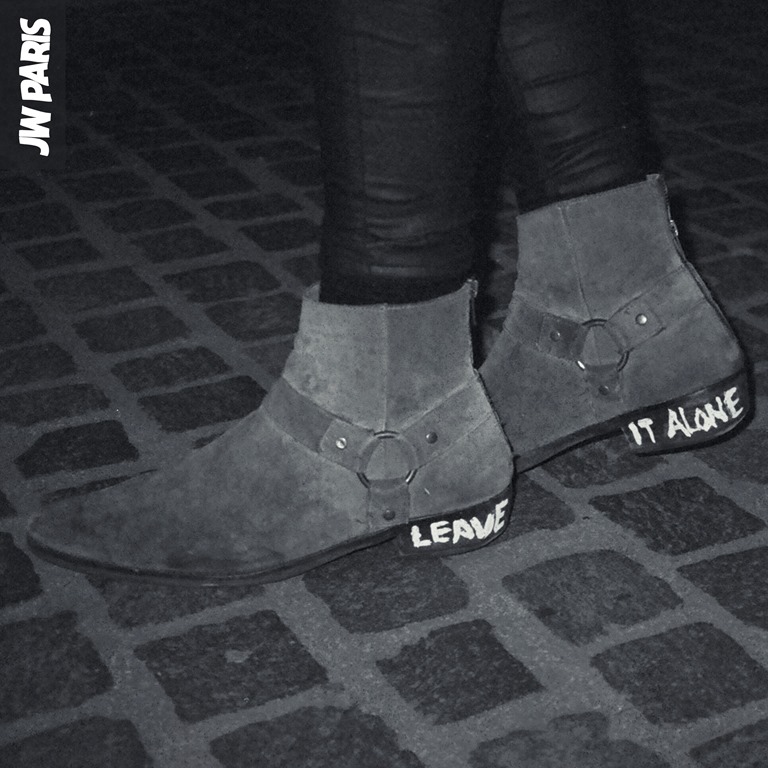
‘Leave It Alone’ is three-and-a-half minutes of choppy post punk with bite – not to mention a yawning guitarline that evokes the essence of Nirvana and The Pixies, straddling a magnificent strolling bassline and exploiting that classic quiet / loud dynamic – but keeping the overdrive in check in favour of a cleaner guitar sound – but with a chorus that’s eminently moshable.
Yes, of course it all pulls me back to the early 90s – no one song or band or anything specific, but that vague, aching haze of what it was like to be there in my late teens and early twenties. There’s some recycled gag about the 60s now being applied to the 90s along the lines of if you can remember the decade, you weren’t there, and there’s an element of truth on a personal level with it being the time I got into beer (and vodka) and live music, but there’s that other key element, namely the passage of time. It’s not even about memory fading: when you’re living life and simply in the midst of things, you don’t stop to take stock or pin a marker on your memory that any given moment in time was something to remember as special. It’s only in hindsight – even if that hindsight is developed in relative proximity to the event – that you often come to appreciate things for what they were. This is, of course, the nature of nostalgia, and why people in their thirties become fixated on the ‘golden age’ of music, movies, and TV, which almost invariably coincides with their late teens and early twenties before the weight of adulthood and the crushing tedium of work and shit took over. But I say this because the further a time recedes into history, the vaguer and more nebulous the recollections become.
It’s not that I can’t pinpoint where bands have leaned on Nirvana or The Pixies for inspiration, but the bigger – and vaguer – picture is that TV and radio and gigs were awash with acts which represented the zeitgeist: it’s impossible to remember all of the little bands who maybe released one single or nothing at all, who played in upstairs rooms in poky pubs, but the period overall is indelibly etched into my memory banks. And this is important, because JW Paris don’t sound like they’ve studied key albums of the time and appropriated accordingly, but have, instead, soaked up the spirit and distilled it into a sweet and powerful shot.
There are layers to this: ‘Take a look at me, am I the person that you wanna be?’ becomes ‘am I who you want to see?’ How much is projection, perception? And not just perception of others, but self-perception. Look in the mirror: are you who you want to see? And how much does that change over time? It’s not always easy to make peace with your former selves.
Speaking on the single, the band say “‘Leave It Alone’ is a deeply personal song that reflects our own inner journey of self-discovery and acceptance… With honest lyrics and a haunting melody, it invites our audience and listeners on an introspective exploration of identity and the longing for inner peace”.
And I guess that’s what the preceding five-hundred-word contemplation is: it’s my introspective exploration, as inspired by the song. A good song does so much more than fill a few minutes with sound: it enters you and takes you places. ‘Leave It Alone’ is a fucking good song.
The prospect of another cover of ‘Wicked Game’ did, I’ll admit, give cause for an eye roll. It’s a great song – a seriously song – that arguably can’t be improved upon, and yet countless have tried, or at least felt compelled to pay homage, to the point that it’s been done to death.
Even the PR point out that ‘Wicked Game’ has been released over 800 times in different versions – 800! Imagine! Although HIM’s version is perhaps one of the best known, it’s always irritated me because it simply felt so obvious. The same can’t really be said of JW Paris’ rendition – after all, as they also point out, ‘nobody ever attempted to turn it into a sleazy Brit pop/indie anthem!’ adding ‘There is more Iggy Pop than Roy Orbison in it!’.
And I can only agree. JW Paris, who last graced our pages about a year ago, have packed some punk attitude into this effort. It’s certainly a lot less dark, a lot less broody than the original, and driven by a chunky bass, and the verse builds nicely into a rip-roaring rendition of the chorus that’s strong on energy, but succeeds in preserving the essence of the original – albeit with the kind of twisted anguish you’d associate with Kurt Cobain. ‘Fiery’ isn’t an adjective one would commonly associate with the song, but that’s exactly what this version is, and it comes as a pleasant surprise. Kudos.
For the uninitiated, JW Paris is a band, rather than a person, and a band who’ve been described by 6Music’s Chris Hawkins as sounding like Joy Division.
It was around fifteen years ago when there was a huge buzz around emerging acts Interpol and Editors where all the hype was that they ‘sound like Joy Division’, and I rushed to check them out, and while I immediately loved both bands, my first reaction was ‘no, they don’t really.’ Yes, baritone vocals and post-punk guitars, throbbing bass… the elements were there, the influence was clear… but neither band sounded like Joy Division. But then, such is the length and darkness of the shadow cast by Joy Division, comparisons are invariably likely to build unrealistic expectations.
So I don’t expect ‘Electric Candle Light’, the fourth single from the ‘90’s grunge and Britpop inspired three-piece’ to sound like Joy Division – which is perhaps as well, because it doesn’t. But I’m not disappointed, and there’s certainly a Manchester vibe about them, despite their London base.
‘Electric Candle Light’ is a ramshackle lo-fi chunk of shaking rockabilly post-punk with a raucous lead guitar line that needles its way over a loose swaggering rhythm and has some catchy backing vocals zooming around in the mix.
‘Are you / see thru?’ Danny Collins questions, sounding more Mark E Smith than Ian Curtis, although the overall effect is a collision of The Fall and The Dandy Warhols. forging a zesty, spirited tune with bags of energy. Woohoo indeed.