Posts Tagged ‘Jazz’

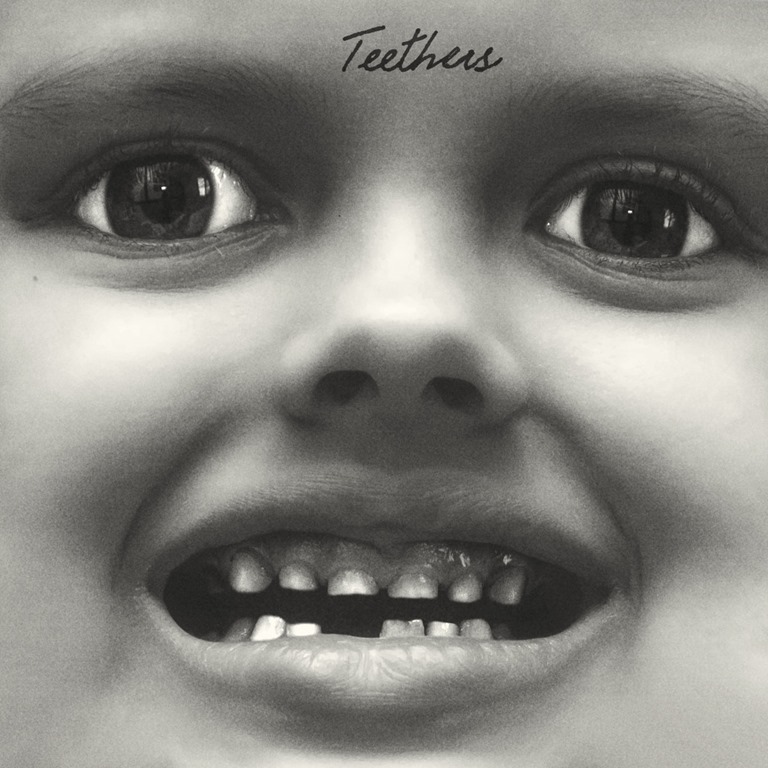
‘Love Poem’, the second video from Los Angeles-based instrumental outfit TEETHERS’ eponymous first EP; all the songs are from drummer Andrew Lessman’s book of compositions.​ Lessman is a drummer known in the L. A. underground for his chameleonic contributions to a roster of projects whose jazz, avant garde, and indie pop scenes don’t always intersect.

Watch the video here:

AA

Most of these pieces were written during Lessman’s days studying at the California Institute of the Arts under Wadada Leo Smith. This is also where Andrew met the irreverent psycho-talents who now 10 years later play on this first TEETHERS EP… sometimes it takes time to cultivate a group sound that does justice to the sound in one’s head. Joining Andrew in the studio on these recordings are: Graham Chapman on bass, guitarist Alexander Noise, Joe Sanata Maria and Ted Faforo on saxophones and Stefan Kac on tuba. Laced into this moody wordless music, like a delicious mushroom chocolate, is a humble nudge to look past the decaying fetters of our assumed boundaries and imagine new organizational forms.

Andrew grew up in a suburb of Chicago called Elgin with a single mom who worked as a dental hygienist. With no musicians in the immediate family, his musical awareness came from playing trombone in the middle school band and listening obsessively to Q101 (“Chicago’s Home for Alternative”).

At age eleven, after making fart noises on a rented trombone for a year, he received a $200 Hohner drum kit as a birthday reward, and promptly formed a Nirvana cover band with his buddy Jim. It was a good start, but at age thirteen everything changed. His mother had been fighting cancer for about six years and it spread out of control and took her life. It was decided that he and his sister would leave Illinois to go live with his jazz musician father in San Diego.

It was a painful loss, but dialectically embedded in this loss was opportunity for growth. On the first day of high school, he made fast friends with some punks on the quad who’d also just gotten some instruments, and they started a band called The Irrelevants. Through hardcore punk, they learned how to channel teen angst into volume and speed. They wore ugly homemade clothing, hated the government, smoked weed out of apples, and booked quite a bit of DIY shows.

At the same time, his dad was a professional gigging musician and his home was a constant hangout for many of the great players in the San Diego scene. His dad’s record collection confronted him with the confusing sounds of Miles’ “Kind of Blue”, Ornette’s “Shape of Jazz to Come”, Coltrane’s “Giant Steps”, and Art Blakey’s “Freedom Rider”. These sounds were incredible, and his dad was there to help demystify it. Within a year of obsessively drumming along to those records on the same $200 Hohner kit, he started sitting in at his dad’s gigs, booking gigs of his own, and picking up lessons from local legends like Charles McPherson.

One of his dad’s friends, drummer and educator Duncan Moore, thought he would benefit from attending UCSD’s summer jazz camp, so he pulled a few strings to squeeze him in last minute. Since all lessons with the drum faculty were full, he was randomly given a lesson with Wadada Leo Smith, the iconoclast composer and trumpeter who in the 60s helped start the AACM (Association for the Advancement of Creative Musicians). From this very first meeting, he permanently broke Andrew’s brain and got him thinking about composition. His advice on thinking beyond rhythm, melody and harmony to make creative use of musical form was like jumping from 3D to 4D. Andrew spent the next year shedding for college audition tapes and he ended up following Wadada to the California Institute of the Arts in Los Angeles.

26th February 2021

Christopher Nosnibor

LA instrumentalists Teethers, centred around drummer and composer Andrew Lessman, brings together an unusual fusion for their debut release. With contributions straddling jazz, avant garde, and indie pop, for Teethers, Lessman has brought together an eclectic lineup, consisting of Graham Chapman on bass, guitarist Alexander Noise, Joe Sanata Maria and Ted Faforo on saxophones and Stefan Kac on tuba. The results are, as you might expect, unusual.

There’s a smooth, jazzy, swingy pop vibe that permeates the EP#s three tracks, and as ‘Goose Chasing’ indicates, they can locks down a tidy groove and create music you can bop to, nod along to, even dance to… and then they’re more than capable of – and willing to – drive that train straight off a cliff into a wild frenzy of horn-driven discord and madness. This is bit a brief introduction that sets the scene for what Teethers are really all about: the twelve-minute ‘Monopoly on Violence / Mushroom dance’ is a multi-faceted, shifting exploration of rippling shades and expansive soundscapes.

It’s rambling, at times immensely proggy in a vintage sense, and at times it just can’t seem to make up its mind as it ambles and weaves hither and thither, a mellow jazz meandering that hits some frenzies peaks and altogether more sedate intersections. It’s one of those pieces that transitions enticing and irritating in a mere blink – and that’s not even a criticism. Condensing so many elements into its space, it’s difficult to keep up.

The third track, ‘Love Poem’ is seven-and-a-half minutes of dappled sunlight painted in music, with a clean, picked guitar chiming in a simple, hypnotic sequence that’s a post-rock / contemporary prog crossover laced with soft, delicate strings. It’s perhaps the most focused and conventionally coherent of the three compositions, on what is a fairly wide-ranging set – so wide-ranging that it’s not easy to immediately assimilate, and even more difficult to pin down – not just stylistically, but in the most basic terms of formulating an opinion. Is it any good? Do I like it? Does it matter? There’s certainly no doubting the technical proficiency on display here, and having the confidence and audacity to make music that straddles so many boundaries and genuinely challenges the listener is an achievement worthy of recognition.

AA

a3152339815_10

Cruel Nature Recordings – 29th January 2021

Christopher Nosnibor

The description sets the scene and the expectation perfectly: ‘True Archweigian Improve-Free-Grind-Noise-Experimental-Avant-Jazzcore. John Coltrane quadruple booked on the same stage as Extreme Noise Terror, Swans and The Incapacitants.

It sounds horrible and utterly brain-frying, and it is. ‘Deep Pan Magna Carta’ launches the album – a whopping sixteen-track sprawl that reveals something of a fixation with wolves and goats – with a barrage of crashing, chaotic percussion, gut-churning bass, wild horns and tortured vocals that spew larva from the very bowels of hell. And they’re clearly intent on dragging you there with them, into the pit of pain, because there is absolutely no fucking let-up. This is everything all at once – and while it’s relentlessly and uncompromisingly nasty, it certainly doesn’t confide itself to any one style – and as for genre, it’s a crazed hybrid mash-up, seemingly intended to inflict maximum pain – and if this is indeed the objective, they succeed.

Most of the tracks are around the minute mark – but actually feel much longer, as they drag and dredge their way through the deepest sludge. Believe it or not, that’s not a complaint or criticism, so much as an observation on how it feels to be brutally battered from all sides at once. There is, undoubtedly, an element of endurance required here.

As the band’s name and whacky, irreverent and possibly irrelevant (it’s impossible to tell without being able to decipher the lyrics) song titles suggest, we should probably only take this so seriously. But then, as the best comedians will tell you, comedy is serious business, and so it would seem is slugging out the harshest, brutal mess of noise.

Before long, they’re in full-tilt frenzied grindcore territory: ‘Wolf Goat’ is nine seconds of snarking and blastb(l)eats, followed immediately by the thirty-six second ‘Goat Wolf’, another blast of carnage that thunders at a thousand miles an hour. There’s some black metal nastiness in the mix when the snarling vocals deliver a snarling acappella intro to ‘hash, Weed, Pills, Saurkraut’. ‘Red sausage’ is about the only phrase I can pull out of the frenetic thrash that follows.

‘Natural Born Testicle’ takes a different turn: a howling blizzard of shrieking electronics and clean shouting, it’s a wild swing into power electronics, and is more reminiscent of Whitehouse than anything else.

It’s the manic horn action that really makes Blood & Stomach Pills the experience that it is. It’s chaotic, discordant, and above all, incongruous – but then again, it calls to mind the jazz-coloured noise of GOD, as well as recent work by Sly and the Family Drone – but this is probably the grindiest permutation of such crazed free jazz I’ve encountered yet.

a0861470396_10

Hummus Records – 23rd October 2020

Christopher Nosnibor

Well of course my interest was piqued: Convulsif’s fifth album, pitched as a work of ‘self-inventing gloomy rock in the abyss between such subgenres as noise, metal, jazz and grindcore’ likely to appeal to fans of GOD, Godflesh, Swans, Naked City, Napalm Death, Painkiller, Boredoms, and Neurosis. It doesn’t get any more of my noisy industrial-favouring bag than that – not least of all because the referencing of short-lived Godflesh / Techno Animal offshoot GOD seems wilfully perverse. Let’s face it, what is the real scope for techno-hued jazz/grind crossover?

The Swiss quartet eschew conventional rock instrumentation with a lineup featuring bass, drums, bass clarinet and drums, and I can already hear many wailing about the lack of guitars. Hearing the cacophonous freeform racket they conjure, however, would be enough to make even more wail, and certainly not just about their unconventional band makeup, and just to enhance the album’s commercial appeal, the bleak set’s titles are all cut up and mashed up lines of Charles Darwin’s Beagle Diary.

The first cut, the seven-minute ‘Buried Between One’ is dominated by the gut-churning, nausea-inducing rhythm section stylings of Swans circa Filth and Cop – the drums explode like volcanic detonations, slow and sporadic, and the lumbering low end stops and starts and lurches woozily, while everything else on top is just discord, and as the track progresses, it all whips into a hellish maelstrom, a brutally sustained crescendo that leaves you wondering ‘where’s left to go from here?’

The elongated drone, low, sonorous, ominous, that introduces ‘Five Days of Open Bones’ provides some respite, , before dolour bass and brooding violin drift in; the atmosphere is dense and grows from a mist to a fog as the drumming builds… the tension increases… they sustain it, but you now it’s surely a matter of time before something yields… the clarinet ebbs and flows like a layer of synth, but the fact this is organic and orchestral somehow ads something else… and then… and then… Anyone familiar with the last incarnation of SWANS will now what it’s like to endure such a seemingly endless build. It’s exhilarating and torturous in equal measure. Your heart’s palpating and your lungs feel ready to burst and you think you might vomit… and then it all breaks into a frenetically frenzied jazz noise of parping horns and hundred mile-an-hour drumming. No, that’s not right. Surely. But then, this isn’t SWANS, this isn’t your regular avant-industrial: this is the kind of experimental freakout that’s right at home at Café Oto, and ‘Five days’ feels literal in its timespan.

A couple of brief, lurching interludes make for more difficult listening, with ‘Surround the Arms of the Revolution’ sounding like ‘A Screw’ played by a drunk jazz ensemble, paving the way for the fourteen-minute finale that is ‘The Axe Will Break’, which is constructed around a tight, cyclical bass motif, which is again, decidedly jazzy in a Sly and the Family Drone sense. The endless repetition is mesmerising, hypotonic, and the tension builds almost imperceptibly… but build it does. It grinds it way through a merciless squall of noise through which filters mournful woodwind that flickers hints of post-rock reflection before being submerged in the swelling surge of chaos. The final five minutes – an eviscerating sustained crescendo of monolithic proportions – is little short of devastating. Jazz isn’t always nice.

AA

a3431541039_10

The Secret Warehouse of Sound Recordings – 23rd September 2020

Christopher Nosnibor

Maybe it’s just me, perhaps I’m tired and emotional or perhaps I’m just feeling particularly sensitive as the long-term effects of an absence of live music and being generally cut off from people bites harder as the nights draw in and the days grow shorter, but I’ve started to feel a real heavy-hearted ache lately for the things I miss. Maybe these are my October Blues, which means the arrival of this single is perfectly timed – not to lift the spirits, but to reflect that inward-facing melancholy that comes with the urge to hibernate or hunker down by a log fire.

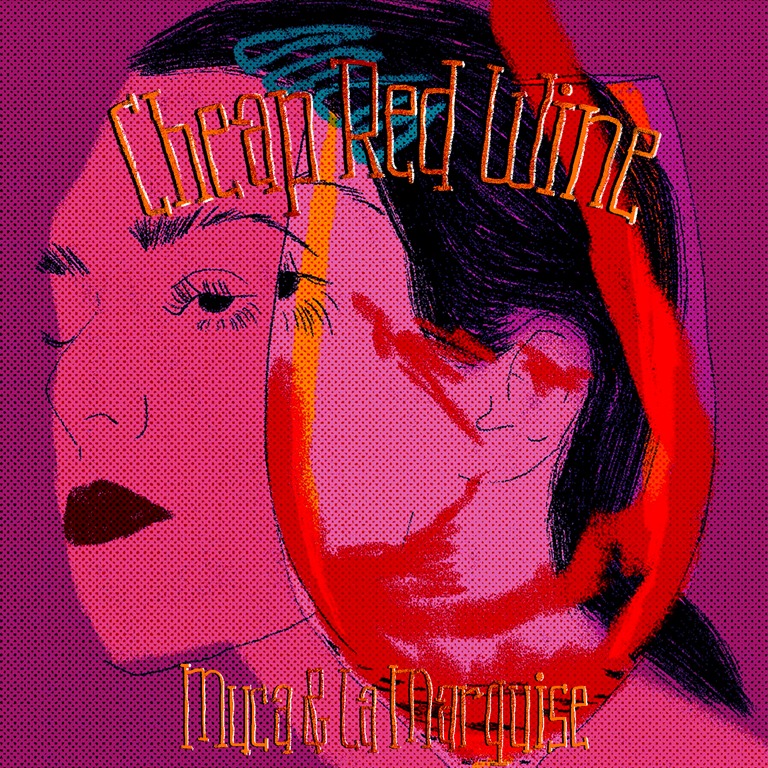
Admittedly, it’s been a long time since I spent lazy evenings in basement bars listening to live blues, and it’s perhaps precisely because of that that Muca & La Marquise’s latest single, fills me with pangs of nostalgia.

Stripped-back and simple, primarily an acoustic guitar and voice, it evokes simpler times – while at the same time being absolutely timeless – of late-night smoky basement bars, with its jazz-tinged blues and laid back laconic delivery. La Marquise has a magnificent voice – timeless, classic, smooth. The guitar-playing is similarly understated, but follows a nice, chilled slow blues chord sequence and there’s an exquisite break, too, that draws you in and drifts away on a magnificent wave of melancholy.

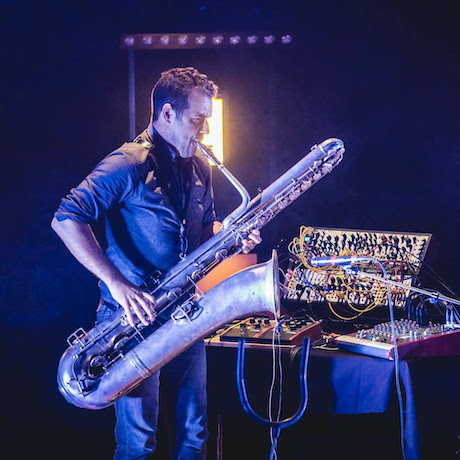
Jason Sharp has been a fixture of Montréal’s experimental/improv scene for many years, chiefly as a saxophonist exploring eletcro-acoustic and durational music, and in a wide variety of jazz, avant and contemporary music ensembles. “Gates of Heaven” is an 18-minute through-composed acoustic recording and Sharp’s first official new release since Stand Above The Streams (2018). The single accompanies an experimental film by Guillaume Vallée.

Jason reveals, "this recording captures a solo bass saxophone performance in the Gates of Heaven, a small synagogue in Madison, Wisconsin. After an exhaustive recording session elsewhere, I visited the synagogue en route to the airport to quickly record a solo piece. The engineer and I had only a couple of hours to capture something before catching our flight home to Montreal.  Microphones were set up at varying distances throughout the synagogue and I improvised a solo piece using the acoustics of the space. We had just enough time to record what became an 18 minute multi-tracked piece. Each layer was a first take and a response to the previous. It began to rain heavily towards the end of our session audibly rattling the synagogue, we tore down the mics, and hurried to the airport. Taking this fleeting moment for myself to play in this beautiful resonant space was both nourishing and revitalising. I returned to this recording when the pandemic hit in mid-March as a way to focus my attention on something positive and future-driven. Listening back to this acoustic document during this unprecedented time, I once again felt the support this space had provided – and was reminded of the fragility that improvised music can often reveal and the strength it can restore."

Guillaume Vallée adds, "along with the musical beauty of the piece, the context of recording was an inspiration to me. When Jason explained to me that he recorded the piece in a place of worship, I imagined something soft & dark, some sort of suggested figurative visual ambiance. After listening obsessively for days, I began to work on a three-part narrative structure that follows the music’s progression. Everything comes from Super8 images that I shot years ago and got processed and scanned during isolation. Flowers, walls from the Middle Ages, a church – in colour and black & white that have then been heavily processed through analog video tools. I wanted the images to be sculpted by the music, as a pure depiction of the emotional states of mind this piece puts me in."

Watch the video here.

AA

Sharp

Pic: Gwendal le Flem

John and Toni Baumgartner, founding members of New Jersey band Speed the Plough, were on a planned band hiatus last winter when they started working on some new music, in some new directions. Initially, they enlisted third STP founder Marc Francia to add some guitar parts on a few songs. Things were moving along nicely through January and February. Then they found themselves in the epicenter of the coronavirus and in lockdown starting in March 2020. That meant that any new recording would have to take place long distance. They decided to continue recording and releasing tracks on a monthly basis. I hope you might consider covering this release series via feature interview or track reviews. The latest release in the series is "Unknown Quantity."

Watch the video here:

The Secret Warehouse of Sound Recordings – 23rd September 2020

Christopher Nosnibor

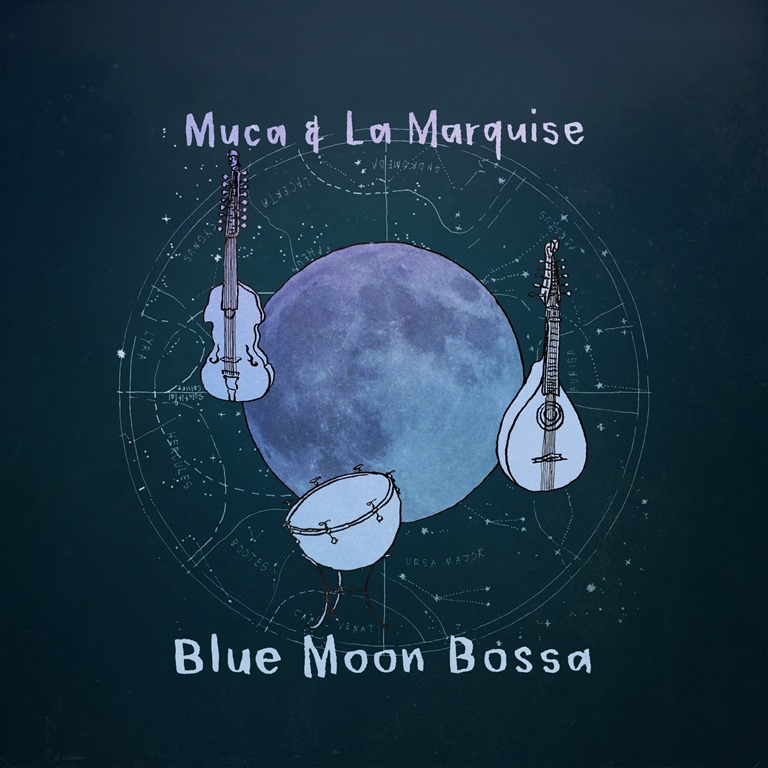
‘Blue Moon Bossa’ is the follow-up to Muca & La Marquise’s debut, ‘London’, and I have to confess this isn’t my regular bag and certainly not regular Aural Aggro fodder. In a fit of antagonism, I’d ordinarily dismiss the majority of jazzy / bossa stuff a bunch of muso wank and sonic wallpaper, but for every rule there is, and has to be an exception.

Moreover, jazz, like blues, has a certain place, and I began to develop my appreciation of both back in the days of smoke-filled basement bars putting on late-night shows where the emphasis was on slowing things down, relaxing and cutting loose a bit. These aren’t things I’m especially good at, but given the right ambience, the right soundtrack, and the right whisky, it turns out even I can chill a little.

‘Blue Moon Bossa’ is the epitome of chill – or even chiiiiiiill. It’s smooth as smooth gets, muffled, smoky, laid back to horizontal, hypnotic mid-tempo, and mellow as, with sultry vocals accompanied by acoustic instrumentation of guitar and hand-drums that’s understated and subtly melts together to create something a shade soporific, it’s one of those cuts that lowers the heart rate and transports the listener to a calm place, real or imagined. A little escapism goes a long way in a world of pressure and stress, and this is just nice.

Blue Moon Bossa_ ARTWORK FINAL

Cruel Nature Records – 3rd July 2020

Christopher Nosnibor

On the face of it, Newcastle has a conspicuously large and thriving scene devoted to all kinds of noisy / experimental metal shit, until you realise that about 75% of the bands feature James Watts and a number of his mates. Ultimately, that’s col, because Watts is a versatile vocalist – maybe not Mike Patton, but more than adept at affecting all kinds of low-throated metal, as well as anguished elongated notes and monastic incantations, and, as the last song evidences, human didgeridoo.

The band are described as ‘a unique weirdo blend of improvised doom with a drunken psychedelic vibe which is anywhere between THRONES to The Melvins to a very pissed off Butthole Surfers.’ The blurb also goes on to detail that ‘They normally play as a 3 piece, with bass, drums, a little sax and vocals which sound like they are coming out of someone’s mouth who has been trapped in a basement for 20 years and staying alive by licking the mould that grows on beer barrels.’

It’s a fair summary, although there’s more than a little sax here. But no violins. For all the sonic assault, they’re very much pacifists.

There’s nothing like easing the listener into an album gently, and the twenty-three minute opener, ‘Ioniser’ is absolutely nothing like easing the listener into an album gently. An overloading crackle and buzz churns and distorts like hell. It eventually settles into a Shellac-like groove, hectic Todd Trainer-esque drumming driving a grungy low-end grind that provides the backdrop for a display of vocal contortions that celebrate all things tortured and guttural.

Christ, that bass! It’s so low and grindy it could relieve constipation within a matter of bars, and against a jazz-influenced rhythm played with explosive force, ‘Shan patter’ is an absolute beast. The vocals are barely audible and as low, if not lower, than the bass, a chthonic gurgle

‘Shenanigans’ has the looping structure of a dance track crossed with the nagging circular motifs that defined Therapy’s sound on Nurse – only it’s a twisted jazz-funk odyssey, and it’s a complete contrast with the ultra-slow, ultra-minimalist drone-plod of ‘Wallow’ that crawls into a droning boom of repetition, a single chord ringing out for an eternity, the sustain twisting to feedback. Any Sunn O))) comparisons are entirely justified, although the percussion has a certain swing that lifts it from the domain of sludgy doomy drone and into that of something more jazz/low grunge in style.

And if the title of the final cut inspires references to Derek an Clive, the thirteen-minute ‘Horn’ is less to inspire a rush of blood to the penis than a crawling sensation over the skin as another lumbering bassline strolls, battered, bruised, dust and dirt-covered from amidst a fizz of noise before a heavy-hearted brass brays, wails, and honks all over.

While the freeform elements of the pieces give them a sense of looseness, or non-conformity, of spontaneity, of disarray, the way they come together so tightly and intuitively on the extended riffy segments is indicative of a real musical competence and a high level of intuition. It’s special and it’s rare. And it’s a defining feature of an album that’s properly heavy, and at the same time, way jazzy without sucking.

AA

a0908613782_10

limitedNOISE – 10th July 2020

Christopher Nosnibor

Eleven whole years on from Third One Rises, World Sanguine Report crawl bloodied and bruised from a dark, dingy back alley to stagger into the light and toss down onto the rain-soaked, blood-spattered concrete their new album, Skeleton Blush. It’s a haggard, battered beast, a collection of songs that wheeze and puff pain from every pore. Whether it’s whisky-soaked introspection of staggering, brawling bleariness, it’s grainy, gritty, and often bleak, dredging emotions from the pits of the city’s sewers.

The various members have been keeping busy in the meantime, with various projects, notably with vocalist / guitarist Andrew Plummer having detoured for a few years with the grizzled no-wave racket of Snack Family. The various projects are clearly different, but at the same time their creative roots are abundantly clear.

Across the spread of the album, the band swing psychotically, schizophrenically, between dirty jazz-tinged blues that draws together The Doors and Tom Waits in a deliriously drunken swagger of swinging rhythms (you could never call it an elevated or euphoric mood – more an upswing in a maniacally volatile moodset) and boozy, brawling horns, and seedy, low-down lugubriosity.

The title track is as close as thing get to flamboyant, with a flamboyant jazz cacophony delivered with a Beefheartian mania and taste for dissonance, and ‘Drip Driven’ is similarly crazed in his riot of jolting, discordant horns that spirt every whichway over a low-slung stop-start funk groove, while ‘Aou’ trudges through dark, soup waters of brass-tinged gloom, sounding like Gallon Drunk on Ketamine.

Skeleton Blush brings derangement to a big band setting: it’s absolutely wild, and also low-down and seedy – and absolutely fucking ace.

AA

a1615459512_10