Empty Quarter – 1st June 2021
Christopher Nosnibor
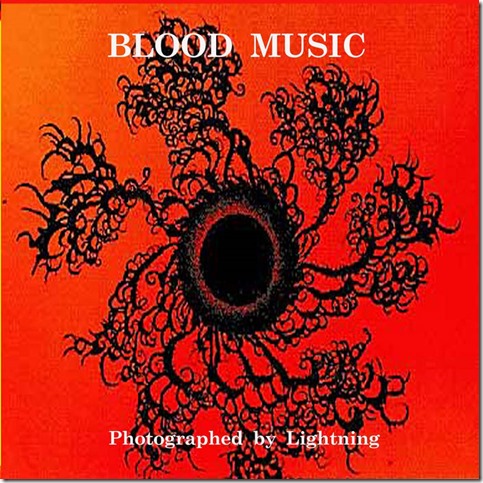
The latest instalment in the reissue series of albums by oddballs Photographed by Lightning is something of a departure from its predecessors – but then, each album marks a different departure, and if one thing this contemporary appraisal of their back catalogue highlights is that they never stated still or retrod ground, which each release existing in a completely different realm from those which came before.
Recorded in 2002 and released in 2004 and considered by the band to perhaps be their strangest offering (and it’s got some tough competition), it lists as its inspirations the works of Kenji Siratori, Friedrich Nietzsche, Suehiro Mauro, Georges Bataille, J G Ballard. I’m often particularly intrigued when a band’s citations are literary, or otherwise non-musical, perhaps because in some respects, while there is naturally much crossover between all creative disciplines, literary influences tend to be more cerebral, ideas or concept-based over sonic. When a bands say they’re influenced by Led Zeppelin, you can probably hear certain stylistic elements in the composition: but you’re not going to hear elements of Ballard in the guitar technique of any band – although with a substantial catalogue of releases to his credit, Kenji Siratori is a notable exception to the rule, particularly as the experimental Japanese polyartist’s forays into extreme electronica and harsh noise in the vein of Merzbow actually do very much resemble his literary works also as a brain—shredding sensory overload.
This is certainly a fair summary of the experience of this album: the title track, a mere intro at under two minutes, is a blend of scratchy, synthy noise with extraneous elements collaged here and there.
‘The Embryo Hunts in Secret’ and ‘Putrid Night’ are both a sort of psychedelic new wave collision, and with the wandering basslines that veer up, down, and everywhere amidst treble-soaked chaos, the effect is disorientating dissonant, as if everything is slowly melting or collapsing in on itself. Everything is murky, dingy, kinda distant-sounding and discordant. Take ‘Kundalini Butterly’ – a spiralling kaleidoscopic mess or scrawling feedback and a bass that sounds like an angry bee bouncing around inside an upturned glass, coming on like Dr Mix covering Cabaret Voltaire’s ‘Nag Nag Nag’.
Blood Music is noisy, but it’s not straight-ahead guitars noisy: instead, it’s a mangled menage of bits and bobs hurled together – not clumsily, but then, not delicately, either, with pulsing washes of rhythm throbbing and crashing all around. It gets weirder and darker as they plunge into ‘My Hole’, where the bass bubbles and throbs beneath a continuous stream of trilling distortion, synth whistles and wails, and there’s a lot of overloading, whupping distortion that derails the helicotoptoring synths and froth and foam that sloshes around at the lower end of the sonic spectrum. ‘Dark Sun’ goes kind of industrial with a hefty, thunking beat, with a relentless, distorted snare, low-slung, booming bass and heavily treated vocals, and there’s chaotic piano all over the place: the emphasis is very much on the dark here.
Dave Mitchell’s lyrics are, we’re led to believe, to have been inspired by whatever he was reading, but buried low in the mix, bathed in reverb and given a grating metallic edge, he sounds like a malfunctioning Dalek chanting incantations. To be clear, that’s by no means a criticism.
Final track, ‘Frame’ is more overtly ambient, but dark, with a certain industrial hue as it shifts to pound out a relentless beat against braying sax and a whirlpool of aural chaos: I’m not about to suggest that PBL were going through any kind of NIN phase, but there are hints of parallels with The Fragile in places here.
Everything about Blood Music is seemingly designed to challenge, to present the music in the least accessible way possible – and it’s far from accessible to begin with, for the most part. The dark density of the sound is heavy, and there’s something quite deranged about the album as a whole, in a way that’s hard to define… but deranged it is. Which seems a pretty fitting summary of the band’s catalogue as a whole: the only thing you can really predict is their unpredictability.
AA

 Aural Aggravation