Posts Tagged ‘Ideologic Organ’

Ideologic Organ – 5th September 2025

Christopher Nosnibor

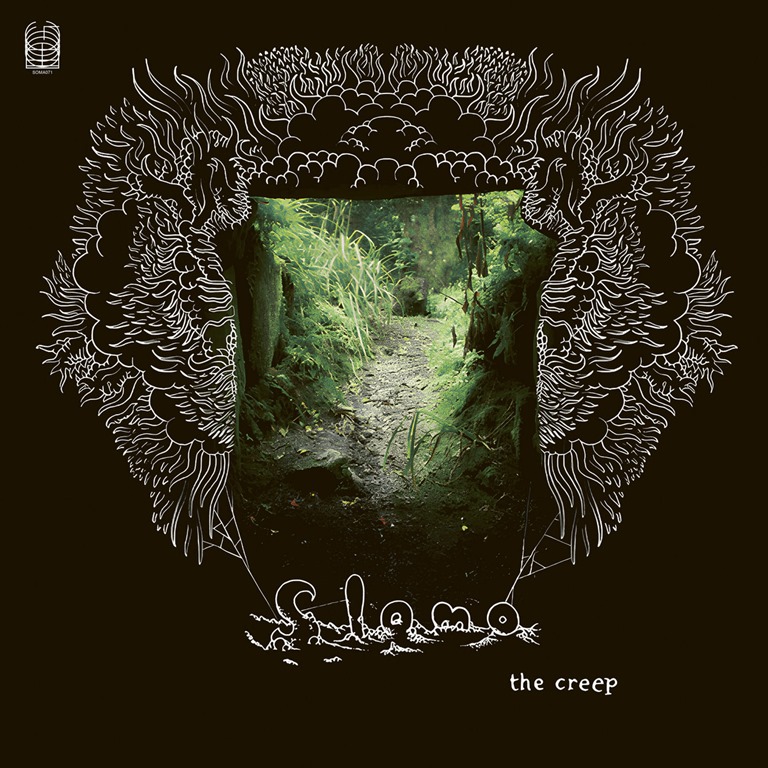
Umberto Eco is one of the many authors I feel I should have read, and hope that one day I will get around to reading. Social media has of late showered me with posts and reposts with a quite from Eco about owning more books than you will ever read – something I never much relate to. I only have so many hours in the day, and reading – since I insist on engaging with books rather than passively absorbing audio books while participating in other activities – is one of those pastimes which is time-intensive. I find music-listening to be comparable. As much as I enjoy listening to music while I’m cooking or participating in other activities, I like to give music full attention, especially new music. And it’s in this context that I often find I purchase music – like books, albeit to a lesser extent – at a faster rate than I can consume it. And this is why it’s taken me until the twentieth anniversary release of Slomo’s The Creep to catch up with this cult classic which brings together sludge / doom and vintage industrial influence.

The album’s context, too, is worth providing here, and so, I shall quote at length rather than paraphrase – not because I’m lazy in my writing, but because I fear making omissions, and feel that liner notes or press releases articulate in a way which better represent the artist.

Just one week after the passing of COIL’s Jhonn Balance in late 2004, the 61-minutes of "The Creep" manifested in a Sheffield suburb. Not yet a band and only captured due to happenstance, this first music of Slomo flowed forth without any consideration of it even being "a piece", let alone a release, though it didn’t take long for the participants (Chris "Holy" McGrail and Howard Marsden) to realise they’d captured something of distinct colour on account of how often they were listening to it.

Initially dubbed "The Ballad of Jhonn & Sleazy", the pair soon instead ascribed the music to Boleigh Fogou; a prehistoric underground chamber on the Land’s End peninsula that both had recently visited and been affected by. "The Creep" took its name from the peculiar side chamber assumed to be if ritual function, having no apparent practical use. This ponderous music chimed perfectly with the fogou; an apparently stolid place that teems with life once you become attuned to its frequency.

Fitting in perfectly alongside other massive single-track albums such as Sleep’s "Dopesmoker", COIL’s ‘Queens of the Circulating Library’, Cope’s "Odin", and Boris’ "Flood", "The Creep" secured a limited release on Cope’s Fuck Off & Di CD-R label in 2005 that quickly sold out via supportive outlets such as Southern Lord, Aquarius Records and Stephen O’Malley’s Ideologic Organ – then operating merely as a blog and micro-store.

And now, Ideologic Organ present a twentieth-anniversary vinyl edition. No doubt there will be plenty of people who are happy about this: after all, it’s never been released on vinyl, and I expect the tonal qualities of vinyl are ideal for a work where there is so much texture, so much richness of tone. The slow, resonant, reverberating bass during the quiet intro deserves deep grooves and decent speakers.

One downside of where the industry is now – and there are, as most of us are aware, many – is that the days of a promo copy of a slab of vinyl are essentially over (unless you’re writing for a major national or international publication), meaning I’m here with some decent enough speakers, but basing my opinion of the mastering and overall sonic experience based on an MP3 version. And as the low notes crawl, quivering, from those decent enough speakers, the rooms seems to darken and the atmosphere grows thicker, heavier.

Not a lot really happens during the first fifteen minutes, but the effect is profound, in that it resonates throughout the body. There is movement, but it occurs at a tectonic pace, and by stealth, rumbling around the far reaches of internal organs. For anyone who has read The Anatomy of Melancholy, Robert Burton’s seventeenth-century analysis of depression which explores the effects of the various humours on both mind and body. And The Creep slowly pulls on the gut and the intestinal tract in the most shuddering, lugubrious ways. At times it’s barely there, but shudders and shivers uncomfortably low on the psychic register. Others… there are low peaks among the troughs, but this is an album that registers more on a subliminal level and certainly low in the guts.

Where I raised the point of the vinyl release likely being popular with many fans, the counterpoint to this is the disruption to the continuity that the format creates. Listening to the MP3 version, there’s a fractional pause at just over thirty-two and a half minutes. It feels like a minor stutter, given that there is a long, low, undulating bass boom that fans out like a ship’s horn or subaquatic signals – but imagine having to get up and flip the record at this critical point before things begin to build. I’m perhaps being picky, but this feels like an unwarranted disruption.

The second half is even lower and slower than the first: twenty-nine minutes of bleak, rumbling abstraction. It’s the perfect amalgamation of drone, experimental, and dark ambient. And The Creep is dark. Whisps of feedback trail around and waft over hovering bass tines which simply roll and reverberate. Time stalls. Everything hangs in suspension: even your mind, and your digestion, hang, suspended, paused. Your breath… your mind. You stop thinking and simply float in this, this sound. Immersive is an understatement. It’s all-consuming, and you can easily lose yourself – completely – in this slow, slow, heavy drone.

20 years on, it’s clear that this is a work which is timeless. Niche, but timeless, in the same way that Earth 2 and Sleep’s Dopesmoker are more than just heavy droning noise. It’s no means an easy listen, but I’d still point to it as an essential one.

AA
a3748639222_10

“Golem Mecanique touch[es] upon the ashes and fibres of back metal and the DNA of gothic music, literature, sorcery, and most of all—poetry.”  – Stephen O’Malley

The last words that poet and visionary film director Pier Paolo Pasolini said in his final interview were “Siamo tutti in pericolo”; translated: we are all in danger. Pasolini was then brutally murdered on a beach in Italy, a case which is still cold today.

On this album, named after the man’s final public words, Golem Mecanique loses herself on that same Italian beach alongside his body and translates her observations and mourning into a devastating musical landscape. Siamo tutti in pericolo will be released via Stephen O’Malley’s Ideologic Organ label on 14th March.

Siamo tutti in pericolo is dangerous, conveying the darkness and uneasy nature of both the art Pasolini created when he was alive and the circumstances of his murder.  In her early teens, Golem taped the Pasolini film Accatone when it was shown on television and watched it the next day after school. In her words, “it was an earthquake!”,

Immediately leaving a great impression on her as it was unlike anything she had ever seen before. She describes the feeling she has when watching a Pasolini film as “silent violence” – a cold and radical response which calls into question her beliefs about the behaviour of people and lies and truth. She hopes to evoke this feeling with her music – a melding of beauty and dread.

Today, she shares the track ‘La Notte’ from the album…

AA

a1734767960_10

Ideologic Organ – 10th January 2025

Christopher Nosnibor

It’s already looking like 10th January is going to be an intense date in terms of the sheer volume of releases. Time was when January was something of a quiet spell for new music, as everyone recovered from the Christmas glut, and labels tended not to release much since people were skint. It also used to be the case that unexpected releases would sneak unexpectedly high in the charts, especially the UK singles top 40, with remarkably low sales figures, usually with cult acts with savvy labels whacking out a release that would have barely scraped the charts any other month – White Town’s ‘Your Woman’, released 13th January 1997 and hitting number one in the UK and going top ten globally – however briefly – is a classic example.

There’s no danger of Nate Wooley registering on any charts with Henry House, released on the Ideologic Organ label, curated by Stephen O’Malley of Sunn O))) legend, and home to a long line of truly magnificent avant-garde and otherwise most unusual musical works, of which this is very much one. That’s not because it’s not good, it’s just that the nature of charts has changes beyond recognition over the last thirty years. There is also the statistic which recently came to light that there was more music released on any single given day of 2024 than during the entirety of 1989. It’s a pretty staggering statistic, and one of many factors when considering just how difficult it is for artists to make a living from making music. Something I have touched on previously is the fact that simultaneous with this explosion of output, culture has become both more homogenised and more fragmented. In terms of the mainstream, this homogenisation has facilitated the advent of multimillionaire and even billionaire ultra-megastars like Taylor Swift – but at the other end of the spectrum, there are tens of thousands of artists releasing music on Bandcamp and Spotify with no backing or publicity whatsoever, to be heard by maybe five people.

But we need music that’s unpopular, that isn’t created with any commercial intent, and we very much need labels like Ideologic Organ to provide a platform and to point us toward the cream of those artists who may not otherwise reach the audience they so richly deserve.

And as an album containing a single composition split into five parts, described as ‘a recurring dream song’ with a running time of some eighty minutes, this is a work which is very much non-commercial in every way.

As the accompanying notes detail, this is a work which combines ‘closely tuned instruments and sinetones, tape-music editing techniques, field recordings, and voice,’ providing the context that ‘this eighty-minute, five-part song cycle is an evolutionary step away from the spontaneity of the free jazz/noise aesthetic usually found in the music of Nate Wooley. Henry House expands on the ecstatic, durational work found in Wooley’s Seven Storey Mountain, a six-part composition that has been premiered over the last ten years by an ensemble that now includes multiple drummers, guitarists, a twenty-one-person choir, and the composer on amplified trumpet. But its ritual is more serene, more natural, slower.

Henry House is the first long-form piece that doesn’t feature Wooley’s trumpet. It is also the first to be constructed around his poetic writing. Wooley weaves a strange funeral mass for a fictional everyman from isolated phrases culled from essays, poems, and non-fiction written by Wendell Berry, John Berryman, Joseph Mitchell, and Reiner Stach. After organizing the fragments into a dream narrative, Wooley rewrote the text dozens of times, manipulating the stitched-together story until only glimpses of its sources remained.’

It’s ten minutes into the twenty-minute opener, ‘Acacia Burnt Myrrh’ that the poetical oration begins, with the words spoken by Mat Maneri. He speaks in a calm, not entirely flat, but level tone, of geometry, of space, of time. The words conjure abstractions, images, moods, against backdrops of elongated hovering hums, oscillator-driven quivering drones. The words are audible, but comparatively low in the mix, and it’s not always easy to stay focused on the narrative, such as it is: instead, the mind focuses on absorbing the atmosphere. There’s a lot of that, and Henry House is an immense project with near-infinite dimensions. Megan Schubert’s faster-paced, more driven-sounding delivery is quite a contrast to Maneri’s, and from these counterpoints, the album grows in terms of dynamics and depth.

So much happens: listening to Henry House is like reading a book which contains stories within the story, and illustrations in a range of styles. No two tracks are really alike, and the arrangements change across the course of each piece. It draws you into a dark fairytale, a unique world which isn’t exactly scary, but unsettling because it feels unfamiliar, dissonant. The fact that two of the pieces bear the same title only add to the bewilderment. Horns and drones radiate between the narrative segments, and the final piece, ‘Aleatory Half Sentences’ is led by some flighty piano work, which trills and flickers against a heavy, nagging, low-level hum. It’s one that really takes some time to process, but it’s very much worth the effort.

AA

a3180996504_10

Ideologic Organ – SOMA034

Digital release date: July 3/10 / Physical release date: mid August 2020

Christopher Nosnibor

Ideologic Organ label owner Stephen O’Malley effuses over Ai Aso’s ‘immaculately crafted form of minimalist pop music skirts the edges of tensity with the manner and with the skill of a tight rope walker, calmly balancing repeatedly at every step, with a combination of surety and the risk of a slip, a fall, and an unknown uncoiling of events’.

Pop may not be a genre commonly associated with he label or the Sunn O))) founder, but Ideologic Organ do have a track record for venturing beyond the expected and showcasing some unusual talents, and Ai Aso is definitely one of those, as the nine tracks on The Faintest Hint demonstrate. Legendary Japanese rock band Boris accompany Aso on two of the pieces, but if you’re expecting powerchords, keep moving on.

Picked acoustic guitar alone accompanies Aso’s voice for most of the first song, ‘Itsumo’, and indeed, much of the album, and even with the multi-tracked vocal, it’s a simple, spartan, and intimate recording. The guitar and voice are in the room with you. And they touch you accordingly.

‘Scene’ is more post-rock, a slow, quivering bass chord echoes out against chiming guitar notes and Ai’s soaring ethereal voice calls to mind Cranes at their most delicately haunting, but also at times is simply a shy humming that’s endearing in its understatement and apparent reticence.

Sometimes, quietness and sparseness simply seem to equate to sadness, and the low, mumbling low-note repetitions of ‘Gone’, despite the words being unintelligible, emanate an aching sadness, while in contrast, ‘I’ll do it My Way’ carries something of a playfulness, not to mention a certain Young marble Giants lo-fi bedroom indie vibe. The straining electric guitar discordance that disrupts the singsong easiness of the song toward the end is a nice touch. She trills, swoops and croons on ‘Floating Rhythms’ in a way that sounds like she’s singing to herself – and this intimacy provides a large part of the appeal.

If there’s anything about The Faintest Hint that may suggest ‘amateurish’ to some, that’s certainly not the reaction from my ears: Aso’s minimal approach to songwriting and performance gives a rare immediacy, and it’ss unhampered by conspicuous production. It’s touching, intimate, and special.

AA

a0454863500_10

Ideologic Organ -  SOMA037 – 17th April 2020

Christopher Nosnibor

The blurbage which accompanies this release was prefaced by a line from Eyvind Kang, stating, ‘The digital release idea has been a kind of lifeline, a way of thinking of music and sound as survivance and meditation’.

We are indeed fortunate: if we think isolation in the age of the global village is difficult, imagine life during previous plague pandemics. One may argue that without the blizzard of (dis)information being disseminated, we’d be in a much better place, but however much we may miss our friends and relatives, things are undoubtedly easier for many – although certainly not everyone – in the Internet age.

Writing from his Berlin sublet, where he says he is ‘here for the duration it seems’ Stephen O’Malley says ‘We are all in these similar boats, together.’ And there is some comfort in all of this. For a time, I’d been concerned that continuing with music reviews in the face of everything was somehow an act which diminished, undermined the gravity of the situation. People are dying, people are alone, unable to leave the house. And here I am spouting opinions about music?

Of course, we need all arts, in particular music, now more than ever, to fill the gaps. And the artists need to keep making music, and not just for financial reasons: artists have a tendency to respond to situations by making art, and my writing about it is part of the dissemination process. And so, after a couple of wilderness weeks where the very act of sitting in front of a screen and keyboard felt like the very definition of futility, I came to see it more of a duty.

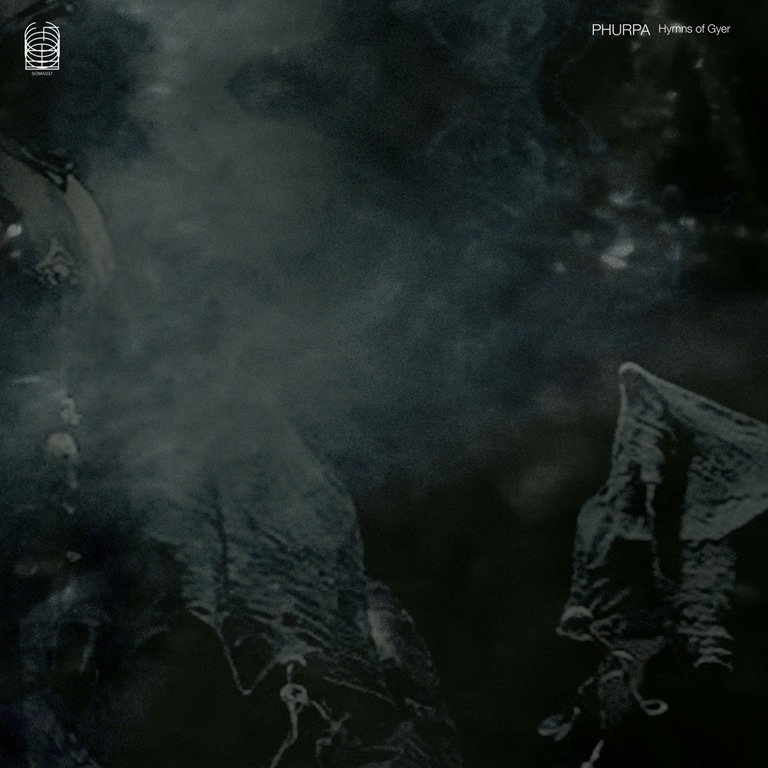
The latest material from PHURPA, Hymns of Gyer is one of four new titles on Ideologic Organ.

It’s a low, wheezing, groaning sound that drones and echoes the introduction to Hymns of Gyer. Sounding somewhere between a digeridoo and a zen om chant from deep within a cave, it’s both ominous and meditative.

Enigmatic Russian collective, PHURPA, centred around Alexey Tegin have steadily been building a catalogue of spiritually-focused and other-worldly sounding recordings centred around Bön, Tibet’s oldest spiritual tradition. Hymns of Gyer features four mesmeric vocal drones, and if Sunn O))) did throat singing, it would sound like this.

The slow undulations and the multiple voices, each droning pitch resonating against the others in an endless succession of swells and ebbs, sometimes booming and billowing.

There is no discernible structure or form, but the purpose of these performances is about a different kind of focus: an inner focus, one which achieves a transcendental oneness. ‘0.1 [3]’ and ‘01.3’ yawn and drone on for over a quarter of an hour apiece, with the latter in particular building a dense, low-end breathy intensity, elevating and ululating expansively with an effect that resonates around the lungs. This is incredibly physical music, body music in the most literal sense. It’s impossible to dissect either the sound of its effect. All you can know is that it IS. It rumbles around every inch of your being. It doesn’t speak to or of anything. It just echoes and envelops, and immerses.

Listening with no real expectation, I found my breathing slowed, my pulse slowed. Maybe this was what I needed. Maybe this what we all need. It’s impossible to be prescriptive right now, but the drowning sprawl of Hymns of Gyer very much does offer an oasis of meditative calm.

AA

a1461353755_10

Géante 4 is a graphically scored piece that I’ve illustrated/written of about 10-12 minutes in length that I was hoping you could tackle as a solo piece. It involves between 3-7 voicings per section over 5 sections, in total around 10-12 minutes. I had the Japanese guitarist Michio Kurahara do a version of this last autumn when we were doing some basic tracking for this session in Tokyo.

We also did a 90-minute version in Norway last summer with 2 double bass players, a haldorophone, piano and sine wave/tape. I’d love for you to approach this very much as you like, based on the rough parameters of the score. I imagine that the common aspects to Kurahara’s version would be the sustained tones and the transitions, as well as the modes you’re transitioning between.”

So begins O’Malley’s missive to Stuart Dempster, trombonist (or, as his brief bio states, ‘Sound Gatherer – trombonist, composer, didjeriduist, et al, and Professor Emeritus at University of Washington’) with avant-garde collective Eye Music, who are here represented as an octet.

O’Malley’s directions are simultaneously clear and vague, and the same is true of the blank ambience this release contains: namely, two versions of the same piece, meaning both the four- and five-layer mixes are 12:41 in duration.

The elongated notes of echoing drones, dense, sinewy, turn gradually fade in and hover… and hover… and swirl. The overall blend of sound bears no resemblance to the sum of the parts, and electric guitar, flute, cello, trombone, harmonium, field organ, synthesizer, and bowed stringboard with metal slide and blur and melt into a broad, organic-sounding wash that paints in broad watercolour strokes.

I’m not so anal as to sit and compare the two tracks intonation by intonation, and I haven’t attempted to play them simultaneously. The 5 layer mix does feel deeper, denser, slower, darker, but it cold equally be my variable and gradually declining mood, as happens some evenings. Many. No doubt a detailed comparison may prove illuminating, and prove of some value to someone somewhere, but no-one needs it here as part of a review, and besides, I’d hate to spoil your fun.

Fun isn’t top of the list with this release: beat-free, sans overt structure, and ambient with some more brooding tendencies, the atmosphere is cloudy, overcast and hints at a turbulence that never actually arrives, but is always bubbling over the horizon: the soundtrack not to a storm, but a preceding pressure drop.

AA

SOMA036_cvr-350x350

Ideologic Organ – SOMA025 – 10th February 2017

Christopher Nosnibor

The accompanying press release is instructive and informative as to the premise of the latest offering from The Necks. Entering their thirtieth year of their existence, the trio continue to innovate and to create music which expands the parameters of jazz music:

The latest document from this long-running ensemble, Unfold, presents itself as a double LP, with four side-length tracks. A deliberate absence of numbered sides hands a substantial swatch of participation over to the listener, allowing her to navigate his own path through the soundscape at hand. The shorter length of the vinyl format, far from being a constraint upon the members of the ensemble, instead offers them a more compact horizon to contemplate, wherein the distance travelled is recalibrated to more immediate and dynamic textural concerns.

The title is appropriate, in that it gives a fitting indication of the nature of the compositions. Although the vinyl format is pitched as being a ‘shorter’ format, the fact that each track occupies a full side of this double album means that each piece still has a running time of between fifteen and twenty-one minutes. And unfold is what they do: gradual evolutions, slow unfurlings and near-imperceptible outspreadings which creep from sparse to near-overwhelming.

‘Blue Mountain’ begins with a delicate piano, but over time builds in depth, tension and pace to a sustained crescendo that never quite breaks. It simmers long and leisurely, cymbal crashes rising in intensity, resembling an intro to a track on a recent Swans album. I mean this as a compliment: it’s a lengthy piece, but there’s movement, there are dynamics, there’s a tangible sense of trajectory.

Noodling Hammond keys wander over a slow, pulsating undulation on ‘Overhear’, and it’s hypnotic and mellow. Perhaps the most overtly ‘jazz’ composition, it also encapsulates perfectly the wide-ranging elements The Necks incorporate within their music. Bongos bubble up jittery rhythms while the trilling organ notes meander and weave, intersecting time signature s forging an increasing sense of spatial disorientation over time.

The tribal rhythms which dominate ‘Ride’ slowly but surely increase in pace, raising the tension as the elongated, barely perceptible notes hang in slow suspense. Ultimately, the pace reaches a frenetic peak, before collapsing into arrhythmia , a conglomeration of discord and distempo, and the fourth track, ‘Timepiece’ is nothing short of a bewildering chaos of percussion, discord and orchestrated dissonance. Against the clattering rattle of drums and more, bass notes resonate and xylophone notes ring out in different directions, and over time, it becomes increasingly unsettling disorientating, difficult.

Unfold is by no means an easy album. It’s by no means a ‘jazz’ album in conventional terms. But in terms of an album which bounces off the wall in myriad unexpected directions freeforming and freewheeling as the musicians explore interpersonal musical boundaries, it’s the epitome of jazz. It’s also really rather good. Well, it is a Necks album, after all.

The Necks - Unfold