Posts Tagged ‘goth’

Napalm Records – 27th May 2016

Christopher Nosnibor

The promo write-up is right in observing that it’s ‘hard to imagine something called Krautgaze could be nurtured anywhere other than in Berlin’, describing the city as ‘the perfect breeding ground for a band like Suns Of Thyme: the five-piece lets space rock, shoegaze and psych with a nostalgic twist masterfully collide with death rock and the likes of Velvet Underground on its sophomore album Cascades.’

But to my old ears, as much as Cascades is shoegazey and psychedelic, what’s most striking is that the album’s nostalgia harks back to the goth sound of the mid 80s. It’s not the bleak post-punk sounds of Siouxsie and the Banshees or The Sisters of Mercy which filter into the sound of Cascades, nor the art rock of Bauhaus – the bands that defined goth without actually being goth, because goth didn’t even exist at that point – but the more accessible alternative bands that merged in their wake.

Loping drums drive fractal guitars that bend and shimmer on opener ‘Do Or Die’, a track which combines the gothy indie rock of Rose of Avalanche with the psychedelic grooves of The Black Angels, all under a vaguely Madchster haze.

There’s a undeniable indie rock / pop sensibility in evidence here, and ‘Intuition Unbound’ points straight back to 1986, amalgamating the celtic guitar motifs favoured by bands ranging from Ghost Dance to Balaam and the Angel via later Salvation. In some ways, it evokes a strange nostalgia for a strain of music that’s strangely detached from its origins and somewhat diluted in context of its roots, but it’s clear Suns of Thyme have both sense of thyme and plaice, as well as an aptitude for a certain sense of (melo)drama: ‘Ich Traum Von Dir’, while still evoking the spirit of 80s goth proffers forth credible moping and a disconsolation that’s actually quite affecting. It’s also a decent tune, and above all, tunes are what matter. There’s no shortage of them on Cascades. ‘Schweben’ builds a mellow shoegaze vibe over a lazy, motoric rhythm, with hints of Chapterhouse, but equally shoegaze revivalists like The Early Years.

And so it is that Cascades is an album that crosses a range of styles and periods, and in some ways, it’s difficult to disentangle nostalgia and anti-nostalgic kneejerk (of course, much of this is very much about a personal reaction on the part of one man who just so happens to be the reviewer), It isn’t always east to extrapolate sincere homage from the minefield of dubious dredging of the past. But Suns of Thyme manage to draw together a sufficiently broad range of ‘retro’ elements and combine them with some songwriting that’s savvy enough to give Cascades a life of its own.


suns-of-thyme-cascades

Suns of Thyme Online

Neurot Records – 6th May 2016

Christopher Nosnibor

The story goes that Alaric (featuring within its ranks current and former members Of Dead And Gone, Pins Of Light, Noothgrush, Hedersleben and UK Subs) began their journey in 2008 with an eye toward creating a moody and compelling music of a sort not often performed in this time and space. A different concept of doom, beginning with influences from such progenitors as Killing Joke and Christian Death to the darkest, heaviest punk bands and the most epic psychedelia. A good-time, feel-good party band they are not.

I am going for a ‘sheets of electric rain’ guitar sound, says guitarist Russ Kent. This should perhaps give an indication of the fact that End of Mirrors finds Alaric exploring some bleak territory, in which guitar riffs are not the driving aspect of the sound, and whereby the guitars provide texture and density instead of shape or form. Using the guitar in this way is by no means new: from the late 70s and early 80s, bands like Sonic Youth, Swans and Bauhaus shifted the emphasis toward the rhythm section, with the guitar serving not a secondary, but alternative musical function. It’s from this background that Alaric’s sound can be found emerging, and End of Mirrors betrays heavy influence from the no-wave and early goth (before it was called goth and was simply a dark strain of post-punk) scenes, infused with a very metal edge. As such, while it’s very much steeped in a number of 80s styles, it’s an album which incorporates them in unusual and innovative ways.

Eight-minute opener ‘Demon’ sets the tone. A lengthy, atmospheric introduction of trudging percussion and simmering feedback gives way to a crushing riff, from which emerges a big, meandering bass-led groove, part Sabbath, part Neurosis. ‘Wreckage’ builds a bleak scene with squalling, spindly guitars layered over a thunderous drum and heavily flanged bassline reminiscent of Pornography-era Cure. But the throaty vocals are more Al Jurgensen circa The Land of Rape and Honey. Moody and intense, the dark despondency carries through into ‘Mirror’. ‘Don’t look in the mirror,’ Shane Baker growls in a deceptively catchy chorus before the song suddenly explodes into grinding thrash riff that piledrives it to another plane.

It’s unexpected twists like this which break the barren expanses of claustrophobic doubt. And do be clear, it’s very much the Rozz Williams incarnation of Christian Death that manifests in the interloping guitar lines of ‘Adore’, and if ‘The Shrinking World’ sounds like an early JG Ballard novel, the metallic scrape encapsulates a near-future dystopia worthy of the great author. The title track is a Melvins-like blast of grinding thrash, a thunderous tempest of a track that sears in at under three explosive minutes, and marks quite a contrast from the longer goth-orientated pieces which dominate the album.

As a whole, it’s a dark, almost apocalyptic sweep of sound. Sitting alongside the recent releases by Se Delan and Madame Mayflower, 2016 is starting to look like the year goth is reborn. Forget darkwave and all that cal: emerging from a protracted period of social and economic turmoil, uncertainty, unrest, fear and an all-pervading sense of existential trauma, we’re back in the late 70s and early 80s, and this is the real deal.


Alaric_EOM_cover copy 72 pixels


Alaric Online

Cult Records/Custom Made Music -22nd April 2016

Christopher Nosnibor

The album’s intro is immense. I mean, it builds and builds and threatens a blast of noise akin to Prurient, before the tide breaks and a sepulchral goth sound breaks out. Echoic guitars snake through a wash of reverb against a hipswaying bass groove as the mid-tempo opening track, ‘Confusion Hill paves the way for album steeped in vintage post-punk, but with more than enough inventiveness to stand up in its own right.

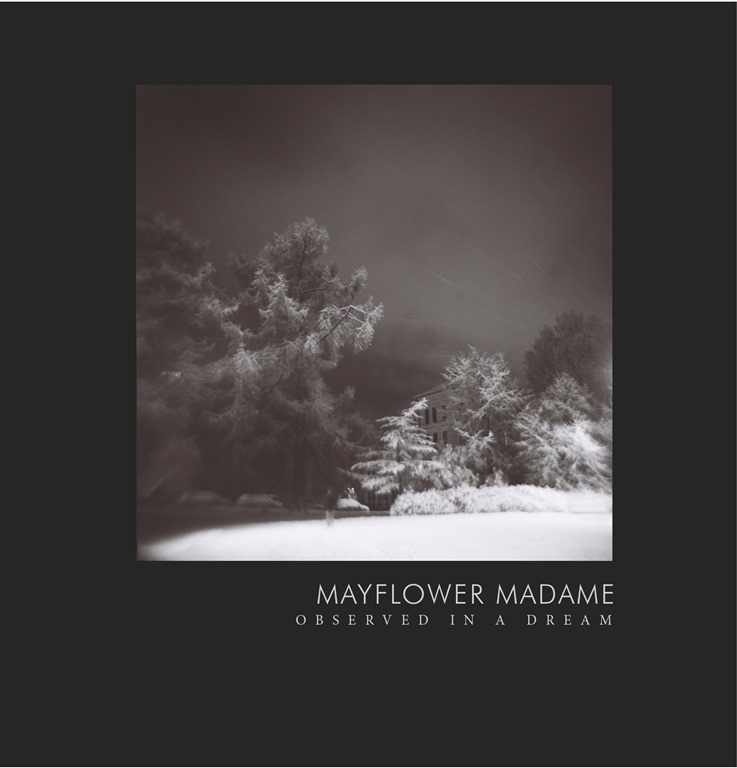
As much as it’s The Sisters of Mercy around the time of First and Last and Always it’s Suspiria. High on theatrical drama, bathed in reverb, ‘Observed in a Dream’ is an album which closely observes some old-school production values and uses them to good effect. The drums are up in the mix, the bass is low-slung and murky, and the guitars are brittle and fuzzy around the edges as they explore Dorian scales.

There are no shortage of highlights. The tetchy ‘Lovesick’ appropriates The Fall’s ‘My New House; and plays with a swampy psych vibe that’s both 80s Matchbox and The Volcanoes, throwing in a few dollops of Lloyd Cole and The Bunnymen into the mess.

‘Upside Down (the death loop’) plunges into deep psychedelic territory with its repetitive guitar motif and motorik drumming swathed in cavernous reverb, while the shadow of Red Lorry Yellow Lorry hangs long over the driving ‘Weightless’, and the title track sounds like a heavy collision between The Black Angles and The Jesus and Mary Chain, all throbbing bass, squalling feedback amidst an ocean of echo.

Whereas so many of the 90s wave off goth-inspired bands conspired to produce music that was arch and soulless, Mayflower Madame push a much more organic sound that’s geared toward psychedelic rock with a dark, smoky delivery that’s cool as fuck, evoking the spirit of The Doors as filtered through The Sisters, as if The Reptile House EP had been played with a live drummer. They keep it tight and keep it taut, but know how to cut loose and wig out when the mood takes.

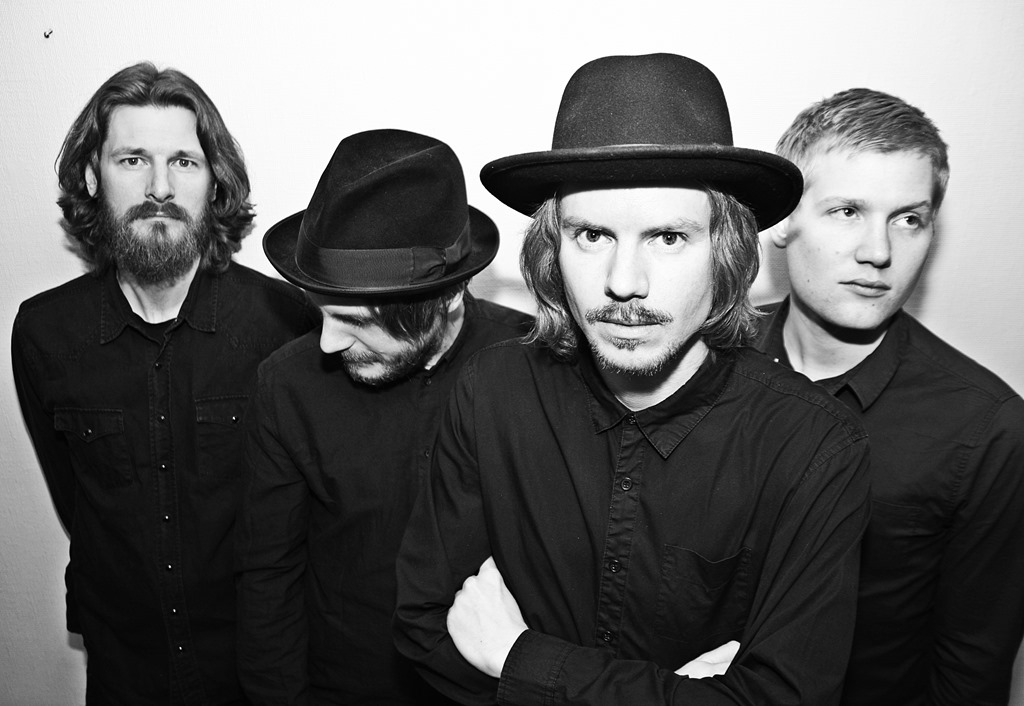
Goth ain’t dead, it was just waiting for a new messiah. Mayflower Madame have got the life, and Observed in a Dream is one of the most exhilaratingly atmospheric albums I’ve heard in a while. It’s nice to see some guys wearing hats, too.

Mayflower Madame - Observed in a Dream

Mayflower Madame on Bandcamp

Mayflower Madame

Kscope – 29th April 2016

Christopher Nosnibor

Se Delan, a duo consisting of multi-instrumentalist Justin Greaves and Swedish singer Belinda Kordic, have gone for a more natural and human sound on their second album, Drifter, after the stark soundscapes of 2014;’s The Fall. They may consider it to be more raw, but given that their style of music of a dark, new-wave-inspired nature, it’s necessarily controlled, stark and detached.

According to the press release, their collaboration is built on their shared influences of ‘music, film and life.’ I’m in no position to comment on the lives they’ve led or how those life experiences have shaped ‘Drifter’, an album preoccupied with madness, and in particular how the line between sanity and insanity can at times appear frighteningly thin.

The concept may be something of a cliché, but it’s eminently relatable. Mental health is a big topic right now, and it’s a shame that policy and society is so far behind what so many of us already knew: life is challenging, confusing, and in a world gone mad, it’s hard to even know where you are on the sanity scale from one day to the next. The duo articulate this beautifully on Drifter.

The album presents a very personal exploration of the theme, but in the personal lies the universal, and the album benefits from being based around some excellent tunes. Kordic’s vocals are breathy and warm despite the reverb that enshrouds them. Shifting between a tremulous Kate Bush to Toni Halliday via Gitane Demone, she covers haunting, tormented, sultry and more.

Fractal, gothy guitars swathed in chorus and metallic-edged flange chime as they crawl, spindly and tense around throbbing bass tones on the album’s opener ‘Going Home’, and a thick, flanged bass rumble drives ‘Ruined by Them’. Dreamy, seductive and very much cast in shadow, the title track is a song of desolate introspection on which Kordic questions her own very identity. The stark atmosphere is accentuated by a claustrophobic production reminiscent of The Cure’s Faith album.

‘Blue Bird’ finds Kordinc coming on like a cross between Siouxsie and Kate Bush over a hypnotic guitar line that cascades over a rolling bass, while ‘All I Am’ again hits a dense Curesque atmosphere. The seductive ‘Blueprint’ spirals out on fractal guitars, contrasting with the driving ‘In Obscura’ (do I hear hints of ‘Dominion’ in there? Hints of Disintegration?), while the spiky ‘Gently Bow Out’ is far from gentle, bearing serrated edges worthy of Savages.

Album closer ‘No Fear of Ghosts’ is a classic slow-builder which begins low, slow and haunting and ultimately explodes into a crescendo of dark tension, with a tripwire guitar line dominating the swirling tide of sound.

Am I going to throw in comparisons to acts like Ghost Dance, Rose of Avalanche and Sunshot too? Yes. While Drifter is dark and often bleak, it has a hooky accessibility that places Se Delan toward the poppier side of the goth spectrum. Owing far more to 80s post-punk than 90s shoegaze, Drifter showcases a band whose sound is not nearly as claustrophobic as the Sisters of Mercy in their early days, nor as spiky as Siouxsie or Skeletal Family, but who nevertheless capture the sound of 1984. It’s also magnificently executed, and most definitely recommend it.

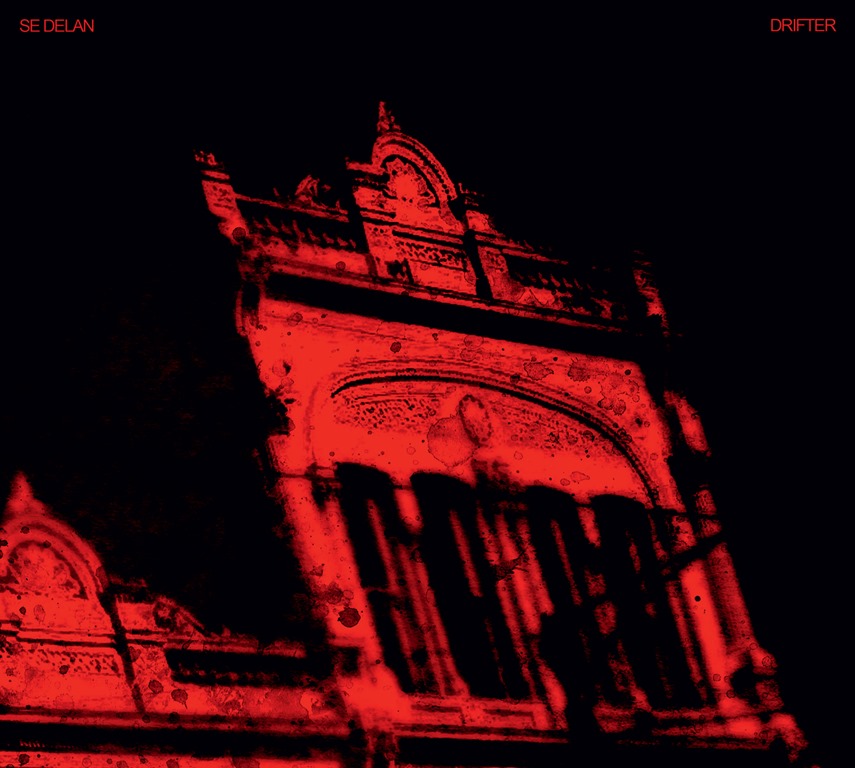
KSCOPE351 da1x12xe digi .indd

Se Delan Online at KScope