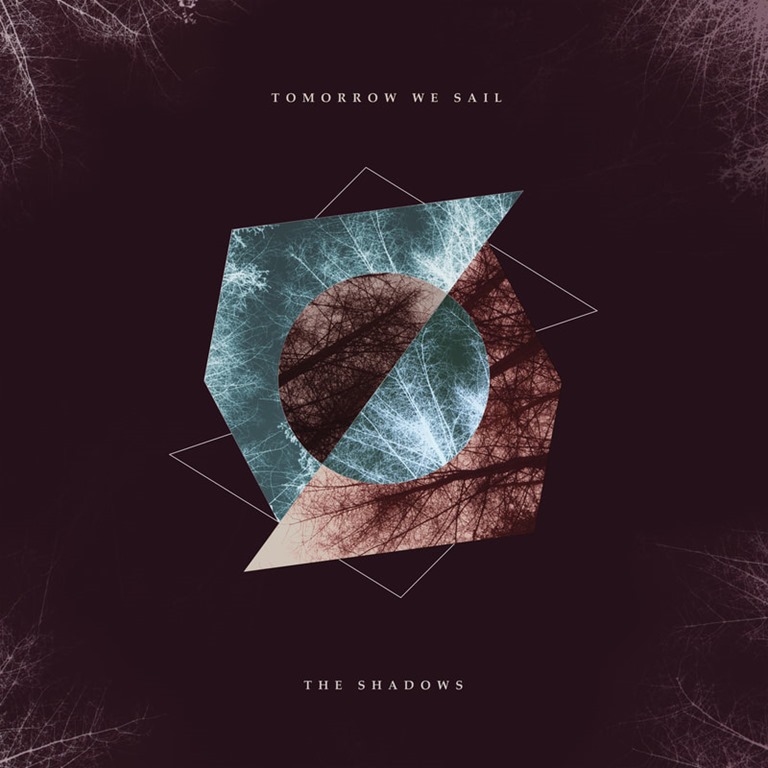
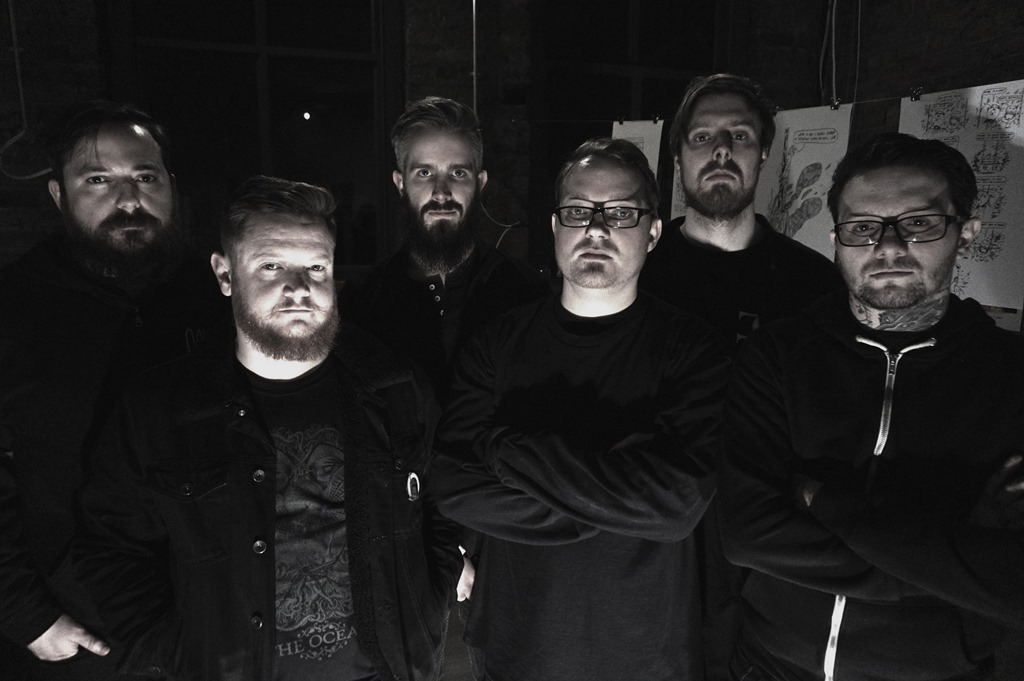
Tomorrow We Sail are a classic example of the kind of band who exist outside of their geography. Based in Leeds, the six-piece aren’t generally renowned as part of the local scene or prominent gig-wise, but have a reach that exists in the ether of the virtual world and into mainland Europe. Four years on from their debut, the collective have evolved their brand of folk-infused string-soaked post-rock into something even more unique.
Subdued, strolling beats and rolling piano provide the rhythmic backdrop to the nagging strings and aching vocals on the opening song, the six-minute ‘Side By Side’. It breaks into a sustained crescendo after just a couple of minutes, but it’s more a case of upping the volume and the intensity than hitting the soaring peaks which characterise so much ‘classic’ post-rock. And perhaps this is the key to the differentials which separate Tomorrow We Sail from their peers, and indeed, any other act. The Shadows is a careful and poised album which exploits the dynamic tropes of post-rock but in a contained fashion. There’s certainly nothing as expansive or sprawling as 2015’s ‘Saturn’, with its twenty-minute duration, or even the single ‘Rosa’ from the first album with its thirteen-minute running time. The Shadows is altogether more concise and all the more intense because of it. Moreover, the context feels different, the slant altered somewhat.
In some respects, the context is that this doesn’t feel like a ‘Leeds’ album. Even when the city was post-rock central a decade or so back, with iLiKETRAiNS (as they were then styled), Vessels and adopted Leeds friends Her Name is Calla all over everywhere, there was nothing this folksy or parameter-pushing as The Shadows, an album which expands the limits of post-rock. ‘The Ghost of John Maynard Keynes’ really pitches the folk aspect of the album to the fore, with a chorus of voices giving the almost shanty-like folk tune a lilting aspect.
There is unspeakable, throat-tightening beauty in the piano-led minimalism of ‘To Sleep’ which calls to mind the very best work of the now-defunct Glissando, and at the same time harks back to their debut.
The Shadows is a well-balanced collection: understated, delicate, melodic, it exists, as the title alludes, in the spaces between light and dark, exploring with deftness and sensitivity the infinite shades between.
Gizeh Records / Wolves & Vibrancy Records – 26th January 2018
Christopher Nosnibor
With the follow-up to ‘Black Fire’, Leeds doom behemoths threaten to go ‘even further into the abyss’ with this three-tracker, built around two towering monoliths. And while they continue to mine the seam of bone-crushingly heavy sludge showcased on their debut release, this new offering vastly expands the territory and reveals new depths, new range, and a real appreciation of texture and tonality.
‘Sun & Moon’ begins gently, an atmospheric drone evolves to a swirling sonic mist. The beat is sedate. And then the first power chords tear through it all and shred it to obliteration. The mangled, grainy metal overload, booming bass, and the gut-wrenching vocal combine to devastating effect, and the contrasts accentuate the power of the seemingly opposing elements as they pull not apart, but together, surging in sonic tidal waves. The track calls to mind Prurient in the way soft, graceful notes – the synths border on shoegaze as they wash and ripple lines of melody – are juxtaposed with truly savage noise and violent abrasion, making for six and a half minutes of compelling and hyper-intense listening.
Intensity isn’t all about duration, through, and while Hundred Year Old Man are very much an act for whom the expansive is their favoured territory, they prove here that they’re equally capable of condensing the force and atmosphere into more succinct compositions. ‘A Year in the North Sea’ may be but an interlude piece, but with dense, rumbling towers sound building around swelling organs and soaring choral voices, it forges drama on a scale of Karl Orff’s ‘Oh! Fortuna’, before twittering birdsong is carried into the distance on a solar wind.
All of this is just prelude, however, to the title track, the nine-minute ‘Rei’, a work of crushing weight and monumental enormity in every dimension. While the Neurosis comparisons are as just as they are inevitable, the mid-section locks into a bass-driven loop that grinds like Swans circa 1984, battering at the senses and bludgeoning the listener with brutal repetition and an overwhelming density of sound. Paul Broughton’s voice is a raw-throated howl of infernal anguish, the lyrics inaudible and impenetrable, but the delivery conveying more than mere words ever could, articulating a primal pain.
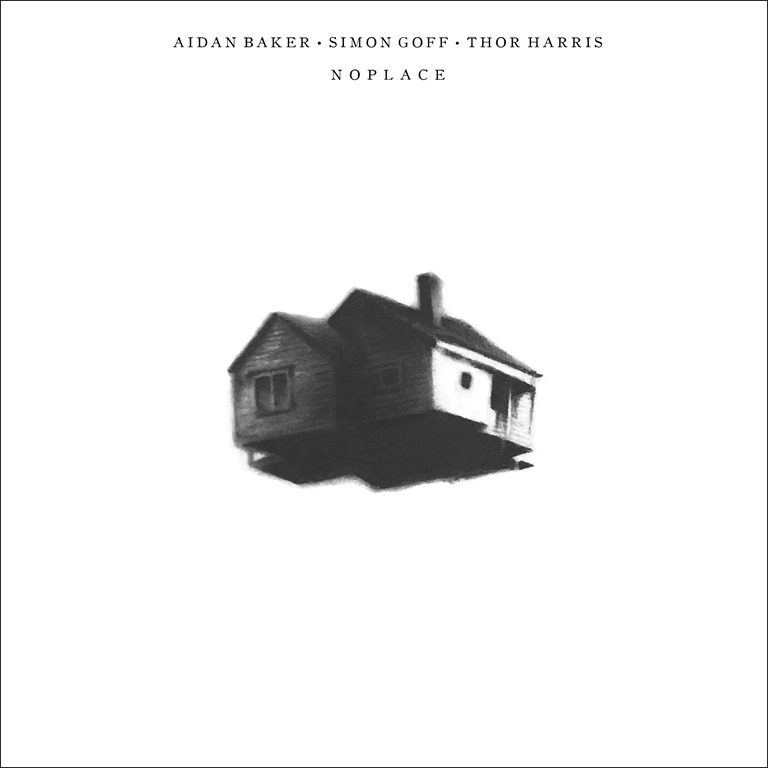
This is certainly quite the collaborative lineup, featuring as it does Aidan Baker (Nadja / Caudal / B/B/S/), Simon Goff (Molecular, Bee & Flower), and Thor Harris (Swans, Shearwater, Thor & Friends). What renders Noplace all the more impressive is that it’s an improvised work, recorded in a single day.
As the press release recounts, ‘having known each other for a number of years and previously contributed to one another’s recordings this trio finally came together as a whole on May 7th 2017 at Redrum Studios in Berlin. In a short, improvised session of just a few hours they set about laying down as much material as possible which was then subsequently edited and re-worked (without overdubs) to form this album.’ And the results are quite something, and I very quickly manage to put aside the thought that the cover art reminds me of the film Up, minus the balloons.
Rippling strings quaver over softly swelling undercurrents while rolling percussion provides a subtle, unobtrusive rhythm as ‘Noplace I’ introduces the album before creeping into the darkness f counterpart piece ‘Noplace II’. And yet it’s very much only the beginning: having been moulded post-recording, the album’s seven individual pieces are structured and sequenced so as to lead the listener on an immersive journey which gradually and subtly moves from one place to entirely another.
‘Red Robin’ builds a pulsating, looping groove overlaid with creeping stealth. Its repetitious motif may owe something to the hypnotic cyclical forms of Swans, but its trance-inducing sonic sprawl also alludes to a hypnogogic reimagining of dance music – and this filters into the spacious ‘Noplace III’, which draws together expansive ambience and, in the distance, shuffling, tranced-out beats, to create something that stands in strange, murky Krautrock / dance territory. Yes, it sounds electronic. Yes, it sounds unique, but at the same time, yes, it sounds familiar in terms of the individual genre tropes. It’s ‘place’ is precisely ‘noplace,’ in that it belongs nowhere specific, yet appeals on many different levels and in many different ways.
Interweaving motifs continue to feature in ‘Tin Chapel,’, but the rhythm here is much more prominent, a weighty four-four bass/snare beat driving a linear road through the sweeping, strings that glide from mournful to tense. The locked-in psyche-hued desert rock bass groove pushes the piece forwards, while at the same time holding it firmly in one place. In turn, it tapers into the bleak, murky expanse that is ‘Northplace’.
The final composition, ‘Nighplace’, brings things down and almost full circle as the percussion retreats into the background amidst a wash of elongated drones which ebb and flow softly.
Noplace certainly doesn’t feel improvised, and while it’s remarkably cohesive, as well as possessing a strong sense of structure, it also reveals a remarkable range, both sonically and compositionally. And irrespective of any context, it’s an engaging and immersive aural experience.
Otto Lindholm is based in Belgium. More pertinently, he plays double pass and is an electronic producer. Divided into four colour-inspired, long-form movements, the press release informs us that Alter takes off from Lindholm’s previous work (a self-titled album released in 2015), and ‘pushes the already abundant palette of sounds even further’. It also references Greek chamber-doom merchants Mohammad by way of a touchstone, but suggests that Lindholm’s latest may focus more attention on textures and melody.
Alter is very much a slow burn, to the extent that it crawls from the speakers with the first track, ‘Fauve’, which starts low and slow and gradually burrows deeper, with a long, low, resonant bass throb providing the undercurrent over which tremulous strings brood and sweep. ‘Lehener’ is sparser and more tentative-sounding, exploring more the space between the sounds, as the notes pulse and decay. The bass rolls in by stealth, before a range of sounds, all attenuated to different tones, textures and frequencies, as well as modulations. The notes rub against one another as they shift in different times and spaces.
At ten and a half minutes, ‘Alyscamps’ is the album’s longest piece, and Lindholm explores dark spaces through shuddering sonic shapes in slow collision.
The final composition, ‘Heliotrope’, is perhaps the most conventionally ‘orchestral’ of the four, and the one which offers the lightest of mood, with bowed bass and strings combining to create a delicate and graceful feel. But there’s a magnificent fluidity about Lindholm’s compositions, and these moments of levity emerge but briefly from the sombre atmospherics, before being subsumed into shades of grating dissonance.
The structures may be obscure, but there is a definite sense of form lurking behind the shape-shifting ambience of Lindholm’s work. And through those near-subliminal structures, which tease at the senses and inch into the subconscious, Lindholm achieves something which reaches beyond the listening experience and into another realm altogether.
‘Black Fire’ is the debut single from Leeds doom / sludge metal six-piece Hundred Year Old Man. The press release suggests it’s ‘the perfect introduction to the Hundred Year Old Man world’. It’s ten and a half minutes long.
It was actually recorded some time in 2015 or 2016 and first saw the light of day in February 2016, but it’s only now that it’s getting an official release. But then, with music like this, it seems only fitting for things to move at a tectonic pace. You can’t rush this kind of thing, and no, I’m not being sarcastic. When it comes to producing megalithic doom epics, there has to be a certain attention to detail, to structure, to tone. Because the way sound interacts with sound matters: at volume, notes resonate against one another, frequencies rub and reverberate and they have a physical and well as cerebral impact. Every moment on this monumental piece is honed to perfection, to achieve maximum sonic impact. Each shuddering power-chord hangs and simmers for what feels like an eternity, vibrating the ribs, the lungs, the colon.
As titles go, ‘Black Fire’ may well be a doom / sludge / metal cliché of the highest order, but by the same token, it sets an expectation that Hundred Year Old Man fulfil with consummate ease. It is, of course, the sound of beards and hoodies and tattoos.
And it’s a punishing, brutal trudge. The guitar sound is so thick, the bass sounds like the tearing of a corrugated cardboard box, and the weighty throb is completed with a nihilistic holler that’s more Godflesh than anything else that comes to mind. There are some well-placed changes of tempo that provide vital dynamics, and when they hit a groove it’s solid and hard. There’s a lot of promise here, and with a 12” EP threatened for early 2018, maybe they’ll get around to a full-length album before I’m a hundred myself.
Because this is a Gizeh release, it’s beautifully presented, housed as it is in tri-fold card sleeve with subtle, minimal artwork. While the front cover is difficult to be certain about, the interior tryptic shows a panoramic landscape of a wide glacial valley somewhere in Britain. Observing the division of the fields draws the attention to the relationship between physical and human geography, and this all feels somehow fitting in the framing of Through the Sparkle.
And because this is a Gizeh release, the music it contains is delicate, haunting, sparse yet rich and contemplative. Through the Sparkle sees French ensemble Astrïd collaborate with American pianist and composer Rachel Grimes to spin seven contemporary classical compositions which massage the senses almost with the softest of touches.
Through the Sparkle is not an ersatz pastoral suite, but does keenly conjure a certain, if indefinable, natural spirit. The piano work is exquisite in its subtlety, rippling gently beneath tapering woodwind on ‘The Theme’, while on ‘Mossgrove & Seaweed’ notes lap evenly and lightly to create an air of lightness, of rapid yet serene movement, natural and fluid. It’s a flickering, shimmering sonic tension that shifts and changes shape over its duration,
Nothing about these pieces feels forced or intrusive. They’re the sonic evocations of dappled shade through leaves on a sultry, sunny August afternoon, a light breeze and the full spectrum of verdant hues – albeit with the shades muted by the distance of fading memory. There’s nothing about Through the Sparkle which feels overtly or calculatedly centred around a sense of nostalgia, but a sad, aching beauty – intangible but distinct – will inevitably evoke a certain wistfulness. And so it is that a degree of melancholy drapes itself around the hushed, rarefied atmosphere of the compositions on Through the Sparkle.
A sombre tone overarches the slow march of ‘The Herald en Masse’, which slowly breaks into an uplifting wash of rhythmic sound. It may not have quite the intensity of Swans, but it’s in the same sphere as it rises toward an almost transcendental sway.
Hesitant notes hover at the start of ‘M5’ and the rich, resonant and loamy tones call to mind latter-day Earth. Its sparse arrangement conjures a spacious atmosphere and pulls the listener’s attention into the details of the tone, texture, reverb and a sense of the individual notes breathing in the space around them.
‘Hollis’ brings a graceful melody that’s sad because it’s beautiful, while ‘M1’, the second-half counterpart to ‘M5’ – feels very much about the space between the notes as brief notational sequences cascade from a softly picked acoustic guitar before silence follows. There’s something almost flamenco about the picking of the strings and the way the notes resonate against one another.
The mournful tones of the final track, ‘Le Petit Salon’ are haunting in their understated discord, as piano and strings drift in different directions over percussion which fade in and out. It’s all about progression and movement.
Through the Sparkle balances shimmering, softly shining upliftingless with shifting shadows. It’s an easy yet rich listening experience which brings with it a sense of the way in which music can enrich the soul.
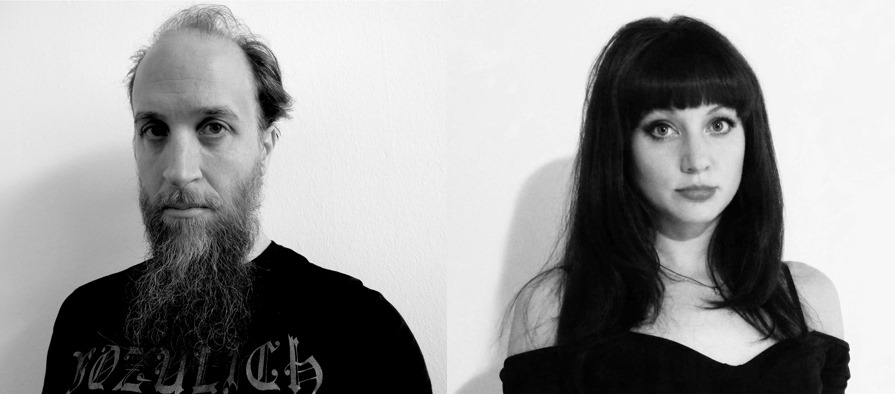
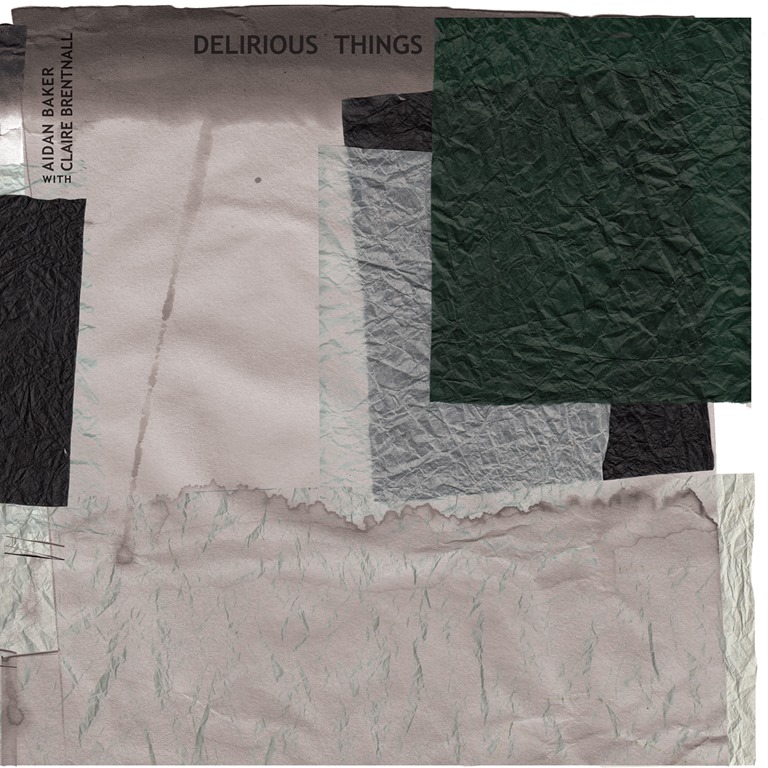
The premise of this collaboration between Aidan Baker and Claire Brentnall of Manchester-based purveyors of ethereal dark pop, Shield Patterns, is neatly summed up in the press release. It’s not an indication of lethargy to quote directly and at length but a recognition of the fact that a label or PR has the best handle on what it’s doing, and is every bit as capable of articulation as a journo. So much so, that there are those who also have a handle on the possessive apostrophe, for which respect is due. So, ‘Delirious Things is an exploration of Aidan Baker’s interest in 80s-influenced cold-wave, shoegaze, and synth-pop from such recording artists as Factory Records’ Durutti Column, Joy Division, and Section 25 and 4AD’s Cocteau Twins and This Mortal Coil’.
‘Combining song-oriented tracks with abstract interludes, the primary instrument on Delirious Thingsis a 1980s Casio synthesizer, rather than Baker’s usual guitar, though the synth is processed through his usual guitar effect pedals, creating heavy, layered washes of droning synth sounds overlaying electronic rhythms and pulsing bass lines. Baker is joined by guest vocalist Claire Brentnall, whose voice is reminiscent of Liz Fraser and Kate Bush but still distinctly her own.’
It’s a curiously hushed, tempered work and it’s the overall sense of quietness which is its most striking feature. We live in a loud world. As I noted when reviewing Jeffrey Roden’s Threads of a Prayer – Volume 1, I find it increasingly difficult to find the time and space to listen to quieter, more contemplative music: the ‘noise’ of the fast-paced society in which we now live is no longer a metaphor, and it’s evermore difficult to find a moment’s peace, metaphorically or literally. I’m not in a position to offer empirical evidence to substantiate the correlation between the pace and volume of life with the increasing prevalence of mental health issues because I’m a) a lazy journalist b) too busy to invest time on such detours while researching album c) struggling with my own anxieties (aren’t we all in our various ways, whether we admit it or not?). All that said, it’s perhaps also worth noting that despite the bewildering quantity of releases I receive to review, either physically or digitally, the number of works which dare to explore such low volume registers are few and far between. This means that while often being barely audible in some settings, such releases stand out alone by virtue of their difference. But, significantly, Delirious Thingsalso stands out on merit.
Delirious Things is an album which is rich in atmosphere, but there’s something about it which feels uncomfortable and radiates a subtle but inescapable sense of discomfort. It takes a while to ascertain precisely what it is that’s awkward and vaguely discombobulating about it. Superficially, the songs are spacious, atmospheric dreamworks, th tructures loosely defined, the sounds partially abstract, the emotions they convey as fleeting and ephemeral as the recollection of the sensations and images of a dream on waking.
There’s an icy fragility about the songs, and Brentnall’s breathy vocals – as much reminiscent of Cranes’ Alison Shaw and Toni Halliday of Curve as the common touchstones of PJ Harvey and Kate Bush – are captivating yet, at the same time, also subliminal in their power. Laid down in layer upon harmonising layer, her voice is everywhere, and drifts from every corner of the music and even the silence between the sounds. This is nowhere more true than on the album’s vaporous final track, ‘Shivering’, which delicately glides beneath the skin and brushes at the bones and the soft matter beneath. The funereal ‘Dead Languages’ has echoes of late Joy Division or Movement era New Order, and distils its sonic elements to a stark minimalism that’s spine-tinglingly powerful.
Beneath the surface, ripples of tension radiate and currents of darkness surge, silently but powerfully. Baker utilises stereo panning to optimal effect and subtle details like a fractional lag between beats across the left and right channels are incredibly effective, particularly when listening through headphones (which is strongly advised, because it facilitates optimal appreciation of the detail, while also reducing the bled of noise from the outside world, be it the babble of work colleagues, the hum of the boiler or the whirr of the laptop fan: reducing extraneous interference is essential in order to absorb the meticulous detail of this album). There are fractional delays between some of the beats between the channels. The effect is barely perceptible, but nevertheless a tiny bit disorientating. Of course, once you’ve noticed this, you can’t unnoticed. It’s impossible to tune out. But tuning in and embracing the It’s when one begins to look closer into the album’s detail that its true magic discloses itself.
On the surface, it’s a collection of quiet, calm, opiate-slow songs with a misty, hazy quality. How does this, and the referencing of the Cocteau Twins reconcile with 80s-influenced cold-wave, shoegaze, and synth-pop? Again, it’s in the detail: Delirious Thingsincorporates stylistic elements of all of the above, but reconfigures them, so, so carefully. The album’s success lies in the way it draws together recognisable genre trappings and familiar stylistic tropes and renders them in a fashion which is similar enough to be still familiar and yet different enough so as to be unfamiliar. What is different about this? you will likely ask yourself. In the mixing – the pitching of the beats way down in the mix, the way in which the sound is scaled down and paired back and stripped out of made for radio / iPod compression and exists with a very different set of production values. This gives Delirious Things a feeling of freshness, and ultimately renders it a triumph of artistic vision over commercial conformity.
Aiden Baker’s name features on a staggering number of releases, and while Nadja – the duo consisting of Baker and bassist Leah Buckareff – may only be one of many side-projects, the discography they’ve amassed since 2003 is substantial, to say the least. On The Stone is Not Hit by the Sun, Nor Carved With a Knife, they offer three immense ambient doom tracks which make for a welcome addition to that discography.
‘The Stone’ opens the album with a deep, slow bass. A delicate guitar is soon obliterated in a deluge of overdrive. Over the course of the track’s imposing twenty-two minutes, they build a pounding groove, the drum machine and bass in combination emphasising the heavy rhythms. Baker’s vocals are low in the mix, and with the textured, picked guitar chords, they straddle the grinding abrasion of Godflesh and the majestic shoegaze of Jesu. The contrast between the mechanical, industrial drum sound and the rich, organic sound of the guitar is integral to the sound, while the space between the notes is a core aspect of the composition: the stop / start mid-section of ‘The Stone’ jars the senses.
‘The Sun’ provides the album’s colossal, megalithic centrepiece. It takes its time to rise, and a steady, soft, meandering clean guitar and gentle, reverb-heavy vocal owes more to psychedelia and shoegaze than ambient or doom. But there’s a simmering tension that builds slowly but surely. The textures and tones gradually transition from clean to distorted, before drifting out into an extended ambient segment. Yawning drones roll and rumble: these are vast expanses of sound, twisting out toward an infinite horizon. And when the guitar and bass return, it’s with an even greater, more crushing force. The drums are distant, partially submerged by the snarling, thunderous bass and immense guitar which carries the listener on am oceanic expanse of sound.
A subtle, amorphous drone hovers atmospherically through the final track,’ Knife’. Arguably the album’s most ‘pure’ ambient passage, it’s hushed, mellow, almost soporific and marks a real contrast with the previous two tracks. There’s a part of me that, on first hearing, found ‘Knife’ a shade disappointing in context of the album as a whole: ‘The Stone’ and ‘The Sun’ set a certain expectation that, at some point, devastatingly heavy, thunderous bass, crashing drums and cinematic drone guitar will hit like a landslide, but it simply doesn’t happen. However, on reflection – and this is an album which requires much reflection – it’s a well-judged change of form. In confounding expectation on the final track, Nadja show that they’re not tied to formula.
In exploring the contrasts of volume, texture and mood, The Stone is Not Hit by the Sun, Nor Carved With a Knife is a more considered and ultimately rewarding work.
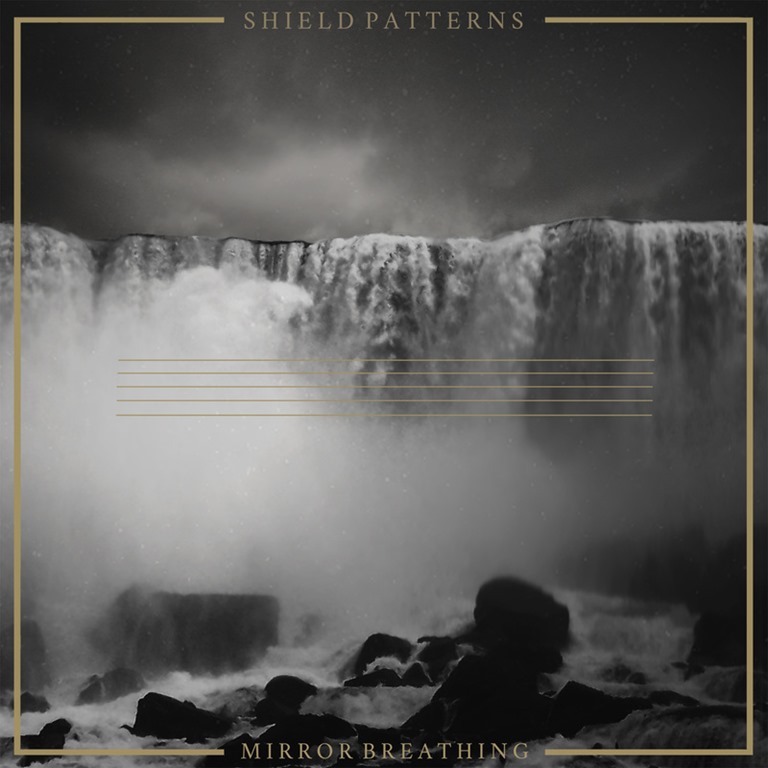
Richard Knox’s musical career is marked by works which are ponderous and atmospheric. Howeevr, his latest venture in colaboration with Claire Brentnall, is distinguished by a leaning toward material which feels more focused, compositionally, and more direct. It’s all relative, of course, and Mirror Breathing is, as the title implies, a work which is hazy, misty, the songs grasping, just for a second, at the ephemeral and reflecting the moments back, refracted and rarefied. Following on from debut album Contour Lines (2014) and 2015’s Violet EP, Mirror Breathing marks a step further into dark pop territory, although dark is indeed the operative word here, and it’s clear that in Brentnall he’s found the perfect collaborator: a person with not only an amazing voice, but an equal understanding of what it takes to forge ponderous, nuanced, atmospheric music. It’s not a matter of drawing out which each brings to each composition: Shield Patterns are built on collaboration and intuition, more of a case of a creative space emerging from a collective ‘third mind’ than the simple coming together to two musicians.
The musical backing the pair create is atmospheric, and captures elements of light and shade which contrast magnificently; dark, rumbling low-end and industrial scrapes are tempered by ethereal ambient sounds of indeterminate origin. Claire Brentnall’s breathy vocal hangs, spine-shiveringly, over the drifting soundscape. The whole production is draped in a soft-focus feel, a mist which partially obscures the shapes and forms and renders them vague, unfamiliar and ambiguous. This ambiguity and unfamiliarity is an unsettling sensation, and while the graceful vocals superficially soothe, the emotional tension and overall sonic disquiet ultimately leave the listener pulled in different directions, peering into the shadows and wondering what lies just out of view. Arrhythmic percussion echoes in the dark, detonations which send shuddering vibrations through the ground. There’s a stark beauty to ‘This Temporary Place’ that calls to mind Zola Jesus, and elsewhere, dark industrial grumbling tremors contrast with the dreamy, otherworldly atmosphere of ‘Cerulean’.
Julia Kent is an artist who has a tendency to crop up in all sorts of places and with remarkable frequency: a respected solo artist in her own right, she is also a one-time member of Black Tape for a Blue Girl, as well as performing as a member of Rasputina and Anthony and the Johnson, he cello work on three of the tracks here adds further texture to the arrangements. Ultimately, though, it’s the balance of the instrumentation which really makes the album work: there’s a lot going on, with many incidental sounds blended in, but it’s seamless and no one aspect or sound dominates at any point.
Again returning to the connotations of the title, if the image of a steamed mirror can be read as a twist on the ‘smoke and mirrors’ metaphor, then there is an element of deception in the way the compositions seem sparse, but are in fact constructed from manifold layers which form strata of remarkable sonic depth and density. The drums may be distant-sounding and low in the mix, but they roll like thunder. In Claire’s vocals, you don’t hear every word, but you feel them. Sometimes she soars so high as to be barely audible to the human ear. Sometimes, it’s less about the actual lyrical content than the delivery, and her voice as of and in itself conveys more than mere words ever could. There’s a quality in Claire Brentnall’s voice which communicates on a subconscious, subliminal level. Her voice echoes in the recesses between the beats, drifts along, enveloped in the gauze-like textures, and occupies invisible spaces between the notes. Hers is a voice which is delicate, but by no means weak; yet the strength of her delivery lies in her ability to convey vulnerability.
From the alluring ‘Dusk’ to the dolorous chimes of ‘Blue Shutters’ and the sinister depths of ‘Balance & Scatter’ with its dark jazz intimations, via the tranquil and sedate(d)‘Sleepdrunk’, the songs conjure scenes of both anguish and ecstasy and often explore the pull of existing in both states simultaneously. Haunting, hypnotic and disquieting, Mirror Breathing is an impressive work that warrants time for thought and reflection.
On her first album since 2009, Christine Ott presents eight pieces which touch on a range of moods and emotional states. While the piano is the central instrument, the multi-instrumentalist calls on a host of additional players to incorporate strings, drums and harpsichord to create a suite of music that’s beautifully detailed. In some respects, Only Silence Remains resides in the neoclassical bracket, but equally, there are elements of post-rock and avant-garde here, and ultimately, it boils down to being music. Exquisite music, at that.
Indeed, what’s perhaps most striking about Only Silence Remains is just how subtle yet simultaneously deep it is. That most probably sounds like a contradiction, but in a time when so much music is very much geared toward instant gratification, the hook, the immediate grab, and even orchestral works are so often centred around a certain hook, whether or not associated with a major film – and more often than not, they are associated with a major film, earning endless airplay on Classic FM – Only Silence Remains is an album which requires time and contemplation.
Only Silence Remains is certainly of a standard that would sit comfortably on any film soundtrack, but in many ways, it’s above that kind of mass-market reduction of anything that’s vaguely classical in its form to ‘soundtrack’. Only Silence Remains is a magnificently singular work, and is also, in its own right, simply a magnificent work.
‘Raintrain’ moves from a sad, lone accordion to a woozy, strolling jazz-informed double bass via a delicately dropping piano. From mournful shanties to pastoral hues, Ott evokes life, in all of its colours, expressing ups and downs and myriad in-betweens.
The nine-minute ‘Tempête’ begins dark and haunting, before a chorus of, inhuman strings rise, shrieking against scribbling insect walls of sound, plunging into unseen depths down, down, into the bleak ‘Disaster’. Featuring a narration performed by Casey Brown in a cracked monotone, until finally, a lone piano drifts into silence.
Skipping lightly from twinkling wonderment to brooding drama, she demonstrates a musical intuition that’s truly exceptional. To describe or define the ways in which the music reaches in and touch the listener’s soul is nigh on impossible: it simply does.


 Aural Aggravation