Posts Tagged ‘Gizeh Records’

Gizeh Records – 4th April 2025

Christopher Nosnibor

Returning for their eighth album, A-Sun Amissa, purveyors of drone-centric ambience centred around founder Richard Knox pull back from the rather larger avant-rock sound of 2024’s Ruins Era to concentrate once more on ‘unsettling drones and claustrophobic atmospheres’. Knox is joined for the third successive release by Luke Bhatia and Claire Knox, indicating that this is a fairly stable lineup, and perhaps this has been a factor in the album’s exploratory, evolutionary approach.

The promise is that the record’s ‘washed out and ethereal sound drags electric guitar, clarinet, voice and piano through pillows of reverb and distortion to build heaving, desolate dronescapes. Moving through dense, oppressive passages of sound and diffusing into sections of gloomy, haunting restraint. We Are Not Our Dread is filled with majestic, textural detail. It envelops and, at times, smothers you before releasing just at the right moment, resolving in a billowing, melancholic, distorted reverie.’

The first thing that strikes me – as is often the case with any project centred around Knox – is the evocative nature of the title. Perhaps I’m feeling uncommonly sensitive right now, but this one in particular lands with an unexpected impact, and as much as the implication is one of positivity – no, we are not our dread, our dread does not define us or dictate our lives – there is equally the emphasis on the fact that we have that dread. And not you, or I, but us, together, collectively. And so it is that dread become the focus, that thing which looms large over not only the title or the album, but our lives. Why do we have this dread? It would not be an overstatement that the pandemic changed everything: the world that we knew lurched on its axis and no-one knew how to handle it. And since then, insanity has run free. 9/11 may have rattled the rhythm of life for a time, but not it seems that the entire world spent the pandemic years just waiting to wage war, and now nothing is safe or predictable – not your job, your home, your ability to post stuff online. You don’t need to be a prominent protestor or social agitator to attract the wrong kind of attention. The dread hangs over every moment now. We thought we had seen the worst when COVID swept the globe and lockdowns dominated our lives, and began to breathe a collective sight od relief when things began to retract, as we looked with optimism toward the ‘new normal’. But who ever anticipated this today as the new normal the future held?

We Are Not Our Dread consists of four fairly lengthy instrumental compositions, and ‘Electric Tremble’ arrives in a dense cloud of ominous noise which immediately builds tension, and if the rolling piano which drifts in shortly afterwards is gentle, even soothing, the undercurrents of rumbling discord and distant thunder which persist maintain a sense of discomfort which is impossible to ignore.

Ever since his early days with Glissando, melding post-rock with ambient tropes, Knox has had an ear for the unsettling, deftly manoeuvring elements of the soft and gentle with the spine-tingling. And while the eleven-minute ‘All The Sky Was Empty’ is a quintessential work of epic post-rock abstract ambience, rich in texture as it turns like a heavy cloud billowing and building but without an actual storm breaking, instead dispersing to offer breaking light and a sense of hope, the wandering clarinet brings a vaguely jazz element to the sound.

‘Sings Death or Petals’ arrives on trails of feedback and rumbling guitar noise, and is immediately darker, and those dark undercurrents continue with crackles and rumbles and elongated drones which persist beneath the ghostly, ethereal voices and reverb-heavy piano and picked guitar notes. At times, this bears the hallmarks of latter-day Earth, but at the same time there’s a less structured, less motif-oriented approach to the composition, which leaves much open space. I still can’t choose between death or petals here. It builds to a churning whorl, before the final track, ‘Our Hearts Bent As Crooked Lightning’ stirs from a rippling array of simmering noise and evolves into a colossus of rumbling drones, and, over the course of ten-and-a-half minutes, grows supple with softer waves of expansive synth which remind you to breathe again. For all the fuzz and broad swells of abstract, buzzing noise that’s equal parts gripping and soothing, the overall effect is sedative, and welcome.

We Are Not Our Dread leads the listener through some challenging moments, and as each listener experiences works differently, as I hear the final soaring strains of ‘Our Hearts Bent As Crooked Lightning’ this strikes me personally as dark and challenging. The intentions may be quite different, but this is undeniably a work which is sonically ambitious, spacious, resonant. Even as the tension lifts, the mood remains, like a dream you can’t shake, like the paranoia that persists even when you’ve dome nothing wrong.

That We Are Not Our Dread is true, and so is the fact that, to quote from Fight Club, you are ‘not your job. You’re not how much money you have in the bank. You’re not the car you drive. You’re not the contents of your wallet. You’re not your fucking khakis.’ And you are not your dread. It may at times possess you, but this, this is not it. This, however, is a great album.

AA

a1068739543_10

Gizeh Records – 28th March 2025

Christopher Nosnibor

I sometimes wonder if Aidan Baker has secretly mastered cloning, since he has seemingly pursued multiple careers simultaneously. He’s been active for some time, it’s true, but even the compressed version of his bio makes for quite the read:

As a member of Nadja, Hypnodrone Ensemble, Noplace Trio, Tavare and a host of other projects and solo endeavours, Baker’s prolific output remains vital as he continues to explore a vast terrain of sounds and genres across a 30 year musical career.

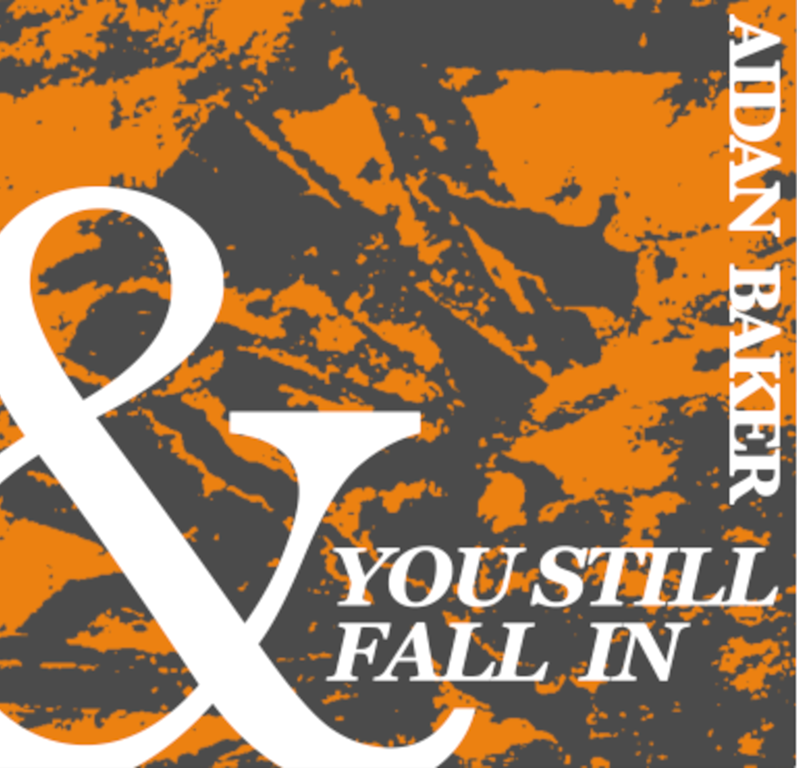
His latest work, & You Still Fall In, we learn, was recorded at Baker’s home studio in Berlin, and ‘hints at the mood and songcraft of the likes of Midwife, Hood, Stina Nordenstam and Movietone. The album is a compelling listen, stripped down to mostly electric guitar and vocals and moving at a distinctly glacial pace. The intimacy of the hushed tones and muted textures lean into a dark, hypnotic and gentle stillness that lingers in the air…’

That fact that this is a truly solo work, with Baker taking care of guitar, bass, drum machine, and vocals is perhaps key to its low-key, introspective atmosphere. Intimate is the word: on the title track which raises the curtain on this soporific sequence of compositions, the acoustic guitar strum hovers to a drone, wavering in volume, seeming to drift, seeming to warp, to fade, you can hear fingertips swiping on strings between frets, and Baker’s vocal is but a mumble; you hear sound, but the words don’t fall free to clarity.

‘Drowning Not Waving’ blends rumbling bass distortions with glitching drum machine and an air of uneasiness: the experience is every inch the struggle the title suggests. And that title… the phrase may have become a popular adaptation of the line from Stevie Smith’s 1957 poem and a metaphor for depression, but to momentarily reflect on the actuality of this all-too -common experience is to recognise the extent to which we, as a society, still – STILL – fail to identify a person in crisis. ‘Cheer up, it might never happen’, we hear often. But it does happen. Even well-meaning friends will diminish the spasms of crisis with ‘well, my life’s shit or probably worse, actually’ type responses. And each such response is like a hand on the head, pushing down. And yes, I speak from experience, and not so long ago I was out for a walk in an attempt to find some tranquillity, some headspace, some time with my thoughts. A dog, off lead, ran up to me and began barking and hassling. Its owners called it back and then groused at me for my failure to smile and thank them. “Ooh, someone’s lost their smile,” the guy said loudly, purposefully so that I could hear. No fucking shit. But you know nothing about my life. My wife died recently and I am not in the mood for being hassled by dogs, and I owe you twats nothing, least of all a smile. I continued on my way without a word, let alone a smile, and there was no point in waving. I was simply drowning. The moral? People may have stuff going on you know nothing about, so don’t be a twat. And anger is only a few degrees along from depression. Music has a boundless capacity to inspire the most unexpected responses.

Things stray into even more minimal, lo-fi territory with ‘You Say You Can See Inside Me’, which captures the spirit of Silver Jews and the soul of some of Michael Gira’s solo recordings. It’s muffled, droning, barely there, even. And yet, somehow, its sparsity accentuates its emotional intensity. There’s almost a confessional feel to this, but it’s a confession so mumbled, either through shame, embarrassment, or plain unwillingness.

On the surface, & You Still Fall In is a gentle work, defined by mellow, picked acoustic guitar and vocals so chilled as to be barely awake – but everything lies beneath the surface. And the surface isn’t as tranquil as all that: ‘When The Waves They Parted’ may be defined by a rippling surge but there’s discomfort beneath the ebb, and the reverb-soaked crunch of ‘Still Cold from the Rain’ is bleak and lugubrious.

Although presented as two separate pieces, ‘Thin Film Interface’ is a continuous thirteen-minute expanse of murky ambience with lead guitar work which soars and echoes over a shifting sonic mist. It hovers in the background, yet simultaneously alters the texture and colour of the air, relaxing but with an unresolved tension beneath.

& You Still Fall In is a difficult album to place – but why should that be necessity? A lot happens, an at the same time, it doesn’t. & You Still Fall In is sparse, drifting between acoustic and altogether simpler acoustic instrumentation. But instead of dissecting the details or reasoning, I’m going to point to the album, and simply say ‘listen to this’. Because it’s simply incredible.

AA

cover

Gizeh Records – 3rd November 2023

Christopher Nosnibor

While Christine Ott has maintained a steady flow of works over recent years – her fifth album arrives just two years after Time to Die – her latest offering has been a long time in the making. For example, we learn that ‘Die Jagd nach dem Glück’ (The Pursuit of Happiness) is an extract from her original composition for Lotte, mon amour, a film-concert created in 2014 based on 4 short films by Lotte Reiniger, a German director from the first half of the 20th century.’

It’s pitched as ‘a collection of twelve pieces for solo piano, twelve impressionistic miniatures, instrumental and cinematic fractals celebrating the beauty of life…

Éclats (Piano Works) is a kind of mirror image to Chimères (pour Ondes Martenot) (2020, Nahal Recordings).

‘Pluie d’arbres’ introduces the album with magnificently weighted, perfectly paces, rolling notes which balance grace and tension, and it’s a beautiful and engaging composition that comfortably slots into the ‘classical’ bracket not simply by virtue of its being a piano piece, but the delicacy of it all, and the way it articulates changing moods intuitively and with a depth of spirit.

The individual pieces follow one another in such a way as to create the impression of their being written to flow together, and while the tempo and tone may shift during the course of a single piece – there are flurries and flutters, moments of airy levity like the morning sun filtering through a curtain wafting on a gentle early summer breeze, notes coming suddenly in tinkling cascades – the album as a whole feels like a single, continuous piece. Rather than any one track being ‘dark’ or ‘light’, they each run through a succession of sensations, turning on a pinhead from brooding to playful, uplifting to reflective.

There’s an honesty about this, which speaks to the human condition. Yes, you may have good days and bad days, but most days are a series of peaks and troughs, highs and lows, unexpected and near-immediate switches that some about as the result of various but specific interactions – or, indeed, sometimes, a lack thereof. Éclats feels real because it doesn’t try to be any one thing, but more taps into the unpredictability of life. And Ott plays in such a way as to bring all of this out through the music, through her connection with the keys.

At times sad, at times uplifting, at times, it simply is… and this is the real joy of the experience of listening to Éclats. At its lightest, it carries you on rippling sonic clouds and pokes at the sky: at its darkest, it hangs heavy in your stomach. It’s hard not to be drawn in and fully engaged with this set of pieces, and it will take you anywhere if you let it.

AA

Eclats_DIGITAL_Artwork

Two years after Time to Die, French composer Christine Ott returns to Gizeh Records with her fifth album, Éclats (Piano Works), a collection of twelve pieces for solo piano, twelve impressionistic miniatures, instrumental and cinematic fractals celebrating the beauty of life.

‘Étreintes’ is available on all streaming platfroms now and Éclats (Piano Works) is out November 3rd.

Listen to ‘Étreintes’ here:

AA

a1066363075_10

Gizeh Records – 30th June 2023

Christopher Nosnibor

In this sense, Bleaklow is a rather different proposition, and in some respects, the instrumentation is a significant factor in the shape of the sound, with Claire contributing ‘Voice, Nord Electro, Yamaha PSS-170, field recordings, Moog Taurus’, and Richard contributing ‘Electric gtr, drones, field recordings, Yahama PSS-170, Moog Taurus’. But by the same token, there is something about anything Richard Knox does which has something of a signature – not a signature sound as such, more of a signature feel, which comes from the kind of wispy ambience and dense atmospherics.

The overall effect of Bleaklow’s debut, Glume, is mellow, amorphous washes of cloud-like sounds drifting softly on invisible air currents, but there are moments where the textures are coarser, more abrasive, and these provide vital contrast. ‘Husk’ scrapes in with a wash of distorted guitar before tapering tones supple piano and vocals, layered to a choral effect surge and swell.

Claire’s voice by turns evokes Kate Bush and Cranes, haunting, ethereal, and as much as this sits in the post-rock bracket from which Richard and Gizeh emerged back in the early 00s (the label put out not only the The Heritage, the debut mini album by Her Name is Calla, but Knox also put out a super-limited CD of ‘Condor and River’ in a crazy corrugated card sleeve, as well as Arrivals, the debut album by worriedaboutsatan, wrapped in a chunk of blown vinyl wallpaper, which looks and feels amazing but is a real bugger to store… but I digress) it also very much harks back to 90s shoegaze, with a heavy debt to Slowdive and My Bloody Valentine, but then again, it’s impossible to listen to this without recourse to The Cocteau Twins. If this sounds like a catalogue of touchstones, it’s testament to how deftly they draw on myriad elements and whip them into a sonic souffle with the texture of candyfloss – not that this is particularly sweet, but it is lighter than a feather, lighter than air. And nowadays, the packaging is a little less DIY, but still very much focused on sustainability: the packaging for Glume is a recycled cocoa-card sleeve, whereby the ‘recycled card is made from 40% Post Consumer Waste and 15% natural fibres (by-products derived from the food processing industry which would otherwise go to landfill.) Turning a waste product into a natural, GMO free, raw material derived from nuts, fruits etc, resulting in distinctive colour shades’. It’s not just commendable, environmentally: it taps into the physicality of a releasing music and rendering the physical release a work of art rather than a commodity of plastic in plastic.

Everything on Glume happens at a sedate pace, and everything melts slowly together. The chances are that at some point, you’ve sat, stood, or even laid on the grass and simply looked at the sky and watched the clouds slowly shifting shape, rabbits and elephants becoming elongated and increasingly deformed, until they’re no longer rabbits or elephants, but abstract shapes stretching and fading to formlessness. The songs on Glume are by absolutely no means formless, but the sounds are like mist and the structures are supple. It’s a magnificently realised work: textured, detailed, nuanced.

It may not be bleak, but it’s dark, and it’s got detail. Bask in it.

AA

a0373089653_10

Gizeh Records – GZH101 – 22nd January 2021

Christopher Nosnibor

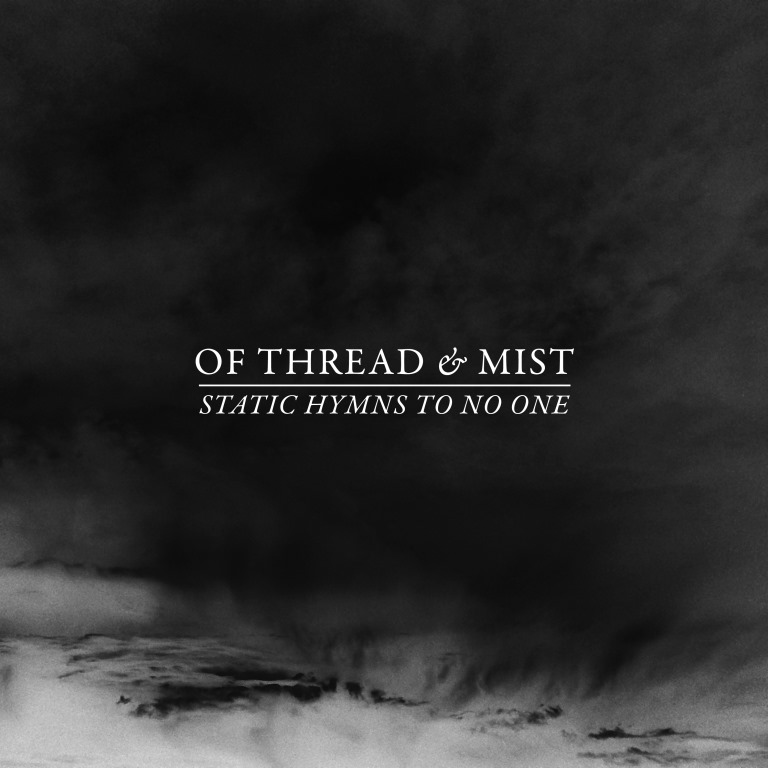
Gizeh label founder Richard Knox already has a quite remarkable resume of musical projects, often running simultaneously or overlapping. With Shield Patterns currently quiet and A-Sun Amissa standing as his primary collective vehicle, Knox’s contributions to collaborative works over recent years have been numerous, but to fill a gap – or more likely scratch another itch – he’s stepped into the (half) light with a new solo project, Of Thread & Mist. A fair summary is that the project sounds exactly as the name suggests, and one might say representative of the Gizeh ‘house’ style’ – evocative, haunting, juxtapositional, but also evasive, intangible, ephemeral.

Static Hymns contains two longform tracks: the first, ‘Grace and Truth Perish’ has a running time of eighteen and a half minutes, while ‘A Face Full of Drunken Ticks’ is a colossally sprawling thirty-two-minute epic.

The formulation of the album centres around music ‘composed by Knox then deconstructed and manipulated via hand-made tape loops, beaten-up 4-Tracks and modified cassette players’. There’s very much a sense of artistry around the manipulation of the material, an almost avant-garde collaging, repurposing, reconfiguration, destroying – or at least disfiguring – in order to build anew.

There is something old, faded, slightly damaged about the warped, wavering tape drones that seep tentatively from the speakers to begin with, creating a sense of unease, a certain degree of disorientation, a feeling that something isn’t quite right about the way the different layers of sound rub against one another without quite connecting. It’s a slow, trickling turn as gradients of sweeping waves of sound, broad in spectra and subtly textured like pale watercolours spreading into one another, and the edges blur into indistinction.

This type of cinematic, atmospheric ambient drone is very much Knox’s signature, and he’s long demonstrated a knack for slowly shifting from light to shade and back through almost granular gradation, but where Static Hymns stands out is its almost collage-like approach in places. The different elements overlap, and not always comfortably – and this is very much in their favour in the way in which they challenge the recipient: this is no simple drone-over-and-out, but an album that proffers a sensory challenge, and as such, demands more attention than so many exercises in background drift that occupy the ambient sphere.

Toward the end, the sound again begins to waver, waxing and waning, tapering and yawning, stretching and fading in and out unpredictably, as if slowly degenerating, degrading. There are a number of abrupt false endings as the sound fragments into evermore brief flickers. It stutters, it yawns, and finally, it is done – gone, ended.

But when the sound ends, the reflection begins. Static Hymns is an album that invites reflection in the silence which follows the final notes.

AA

GZH101_Digital_Sleeve

Gizeh Records – August 28th 2020 – GZH98

Christopher Nosnibor

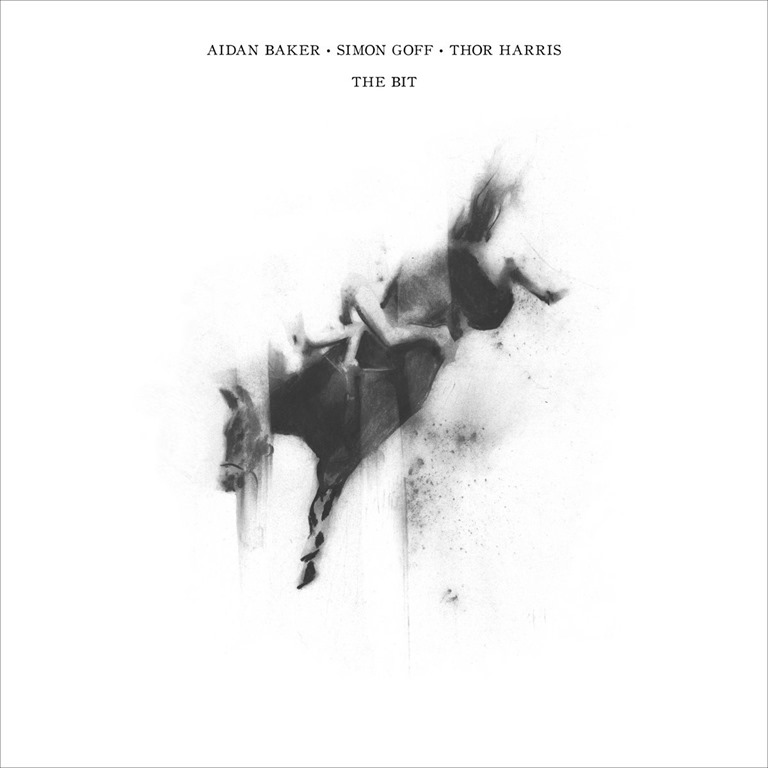
Three years on from Noplace, the unassuming supergroup known only by their actual names, comprising Aidan Baker (Nadja / Hypnodrone Ensemble), Simon Goff (Jóhann Johannsson / Hildur Gudnadottir) and Thor Harris (Swans, Shearwater, Thor & Friends) reconvene for a second instalment of improvisational work created in just a single day. On this occasion, they took advantage of a day off while on tour to record at Voxton Studios in Berlin

The Bit is an edited rendition of that session.

According to the press release, ‘The Bit finds the trio painting with a lighter touch than on its predecessor. Thor Harris’ motorik beats still underpin the music but the atmospherics take a more prominent role and there is a pure and cohesive path to be found throughout the record. Much like on Noplace, Baker’s guitar and Goff’s violin weave together beautifully, forming a deep bed of melody, ambience and reverb.’

There’s an equine theme to many of the titles, specifically ‘The Bit’, ‘Canter’ and ‘Gait’, but the loping drums and slow-moving ambient drone that defines the sound isn’t particularly evocative of the theme.

Of the six real-time compositions, the first five are quite succinct, around the three or four-minute mark, with only ‘Gait’ – a sparse, minimal piece that slowly throbs and pulsates while feathery notes drift down gently in a wide space – drawing out past seven minutes.

‘Springenden’ is a beautifully detailed piece, ostensibly a modern classical work consisting of rippling piano, quavering strings and a soft background wash of synth, which prefaces the twenty-two-minute finale, ‘Wild At Heart’. It’s essentially an expansive ambient work, which whispers, wisps and turns with an understated grace, twisting and turning as a slow beat booms into the rarefied atmosphere. It’s an expansive, exploratory piece that’s murky, ominous, and suspenseful. And the thing about suspense is that you never know what’s around the corner. There is no revelation in the rumbling low tones and wailing, dawning drones that emerge and taper down during this longform piece which descends to distortion and dissonance as the sound thickens and grows grainier. It’s a gradual dilapidation and makes for an intriguing and subtle listening experience.

AA

a2947139286_10

Gizeh Records – 3rd July 2020

Christopher Nosnibor

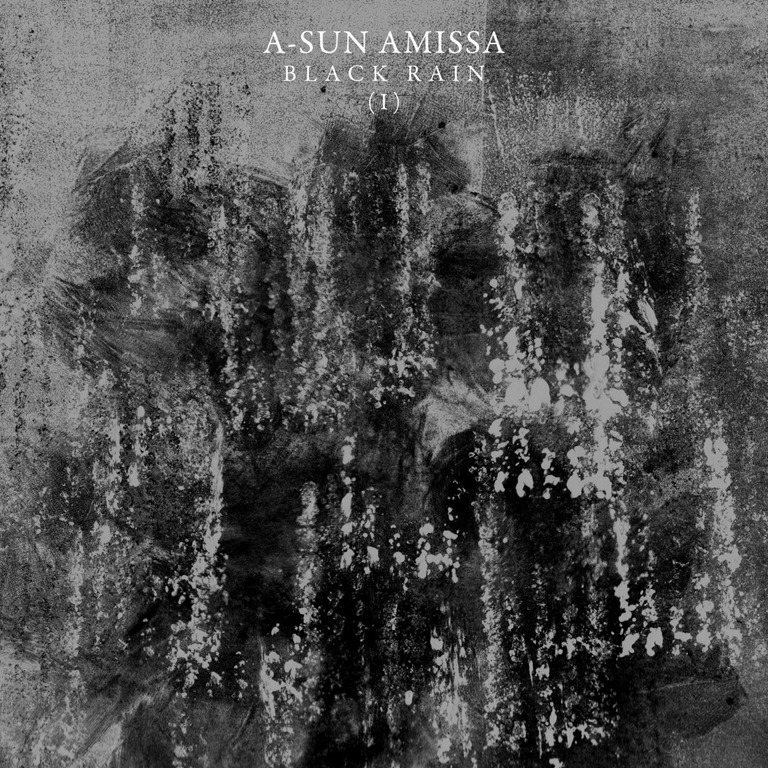
Presumably, Black Rain (I) is the first in a series, and contains three extended pieces – each of around a quarter of an hour – which were written and recorded by Richard Knox during the early months of 2020. Focusing on a more ambient and cinematic approach, Black Rain offers another texture to the A-Sun Amissa palette.

The blurb explains its relatively swift assembly, whereby ‘the record was written over a three month period where Knox had a self-imposed deadline of completing one piece of music per month to then be released digitally with immediate effect at the beginning of the following month. A deliberate move to be more impulsive and instinctive during the writing process and, for him, a new way of looking at releasing a record.’

For all that, nothing about the music here feels remotely rushed. The mood, meanwhile, is in some senses difficult to gauge: it’s not overtly melancholy, but there’s a wistful air to the delicately-arranged compositions.

The first of the three compositions, ‘The Sea’s Collapse’, isn’t a heavy, dramatic piece, but a deep, slow-turning ambient work that possesses a sense of grandeur in its gradual pulls back and forth, tapering down to a muted piano and the softest of washing drones that form a barely-present aural mist. It takes an eerier turn in the dying minutes, a combination of scrapes and extraneous wind-like howls whistling in the distance

The rhythmically-paced piano gives ‘Out Past the Dark’ a clearer sense of structure, as the trailing ambient notes hover in the background. While shifting and evolving over the course of the track, the cyclical chord motifs that surface and subsequently fade create a sense of movement.

‘Pulling Feathers from a Swan Song’ is sparser, and also darker in tone than the others. Long, brooding notes emerge from a slow-swirling murk, and while it’s graceful in its epically-proportioned brooding, there’s a sense of finality in the air that passes between the notes. And yet that finality does not intimate gloom or despair, but sad, weary acceptance of passing.

AA

a3372551981_10

Gizeh Records – GZH99 26th June 2020 (Digital) / 25th September 2020 (LP/CD)

Christopher Nosnibor

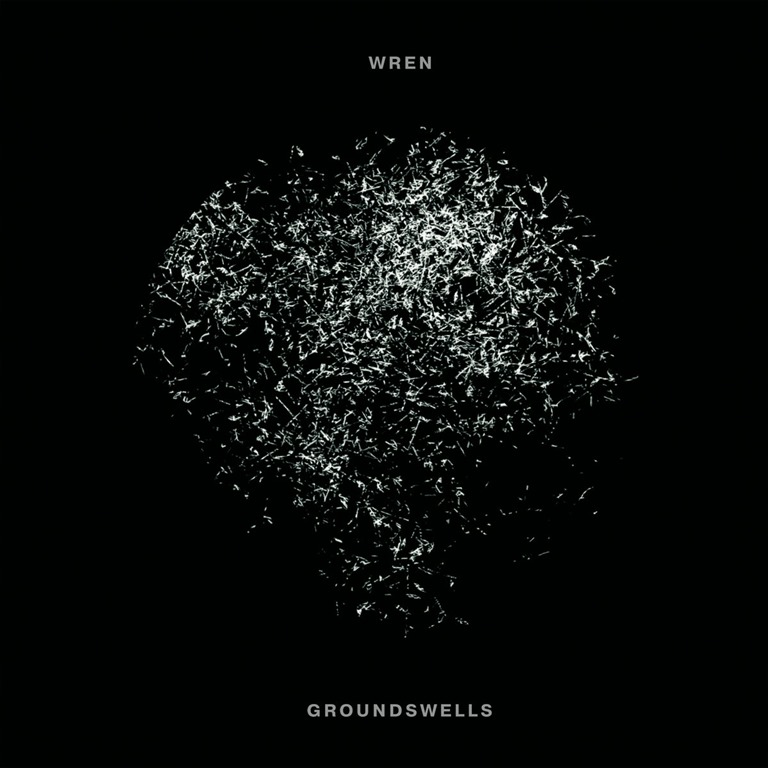
Wren’s third album – or ‘third chapter in Wren’s seasonal lore exploration’ as the press release puts it – is their first on Gizeh, and promises ‘six melancholy-shrouded sonic ruminations [which] swell between intimate performances devoid of adornment, and evolving soundscapes of auditory ruin’. And pitched as being of interest to fans of Godflesh, ISIS, Kowloon Walled City, Neurosis, it does the job of bringing slow-burning slow-trudging metal with an emotionally-articulate aspect and certain musical nuance.

The first megalithic sonic slab to assail the listener is the nine-minute ‘Chromed’, an epic battery of guitar and anguished vocal, and it piledrives in with a repetitive chord sequence, there are heavy hints of Amenra, and it’s the grainy, earthy quality that’s most reminiscent of Neurosis. There’s a lot of space here between the crushingly weighty power chords that drive, hard, low, and slow, less like a battering ram and more like a tank driving against a wall: slow, deliberate, and completely devastating.

There is detail, there is texture, and there is space within the broad parameters of this ambitious work, giving moments of respite and pauses for reflection between the raging infernos of fury that flare upwards toward the skies from the troughs of gloom. And yes, Groundswells is gloomy, dark, lugubrious, the soundtrack to motional trauma and swings from anguished introspection to annihilative rage.

If the album’s entirety could be encapsulated on a single track, it would be the dynamically-flexible ‘Subterranean Messiah’, which stretches out beyond ten minutes as it works it was way though a series of peaks and troughs, venturing into a range or mood-spaces and sonic terrains to forge a compelling sonic journey that’s utterly immersive. Jo Quail adds layers of subtlety and not to mention sonic depth with her cello work on the track also.

The final song, ‘The Throes’ is a grinding dirge, Godflesh played at the pace of Swans’ Cop. But amidst the torture, punishment, and the anguish – those excoriating vocals and that shrieking lead guitar that battles against the dense, slow chug and grind coalesce to form a perfect prism of pain, the psychological expressed through the physical.

If the band’s name suggests something soft, delicate, melodic, then Groundswells tears those expectations to shreds in the most obliterative way. It’s simultaneously harrowing and beautiful, and an all-consuming experience.

AA

a3321068616_10

Gizeh Records – 25th October 2019

Christopher Nosnibor

Although having contributed to various projects and collectives, including a number of independent soundtracks that have appeared through Gizeh, it’s been a while since Christine Ott last released anything as a primary artist. Nanook of the North, a collaboration with Torsten Böttcher, who brings hang drum, kalimba, and didgeridoo to Ott’s diverse array of instruments.

Nanook of the North is another soundtrack to a film which ‘tells the daily life of the Eskimo family living in Hudson Bay. Fights for life, constant shifts, fishing, seal hunting… The spectator shares the life of the family of the far north’.

As a release, this has been a long time in coming, having been first commissioned in 2013 by La Rochelle International Film Festival.

From the first strike of percussion, which sends a low, rippling hum on which eerie atmospherics build in layers like thick mist, the pair conjure highly evocative soundscapes. Pairing piano with non-western instrumentation makes for some fascinating and utterly compelling combinations, with unusual melodies taking shape along the way. Whereas many soundtracks place the compositional emphasis on atmospherics and vague structures, Nanook of the North stands out for its tendency toward keenly co-ordinated structures and definite tunes brimming with chiming melodies.

There are moments of brooding, shade that contrasts with the unexpected levels of light that fill this album, and ‘Walrus Hunting’ balances drama and playfulness through the incorporation of jazz tropes. Elsewhere. ‘Winter’s Coming’ conveys the ominous sense of darkening days and a creeping chill, while ‘Et le blizzard’ is surprisingly calm and soothing as opposed to the tempest one would reasonably expect. But then, the silence of a blizzard can be a strangely tranquil experience.

The range on Nanook of the North is impressive: it’s expressive and conveys such an array of moods and spaces, while at the same time retaining a compositional and instrumental coherence. And while the places these pieces speak of are bone-breakingly cold, the listening experience is most heart-warming.

AA

GZH93DP-Digital-Sleeve