Posts Tagged ‘Experimental’

28th April 2017

My first encounter with Cinema Cinema was in 2012, when I received their sprawlingly epic double album Manic Children and the Slow Aggression for review, and landed an interview for Paraphilia Magazine with Ev Gold. Not only was it a remarkable album, but Ev proved to be a great interview subject: enthusiastic, affable, conversational, and I recall him singing ‘cinema, cinema,’ as he explained the origins of the band’s name to me. I didn’t recall the scene, but I knew the film in question: the dark, Belgian-made, parodic documentary, Man Bites Dog. As the press info accompanying the release of their latest album, ‘after years of explaining… the duo felt compelled to further affix it to their story by naming the new album after the film.

With the band’s gear – including all of their guitars – being stolen just two days into the recording sessions, Man Bites Dog is testament to the sheer determination and bloody-mindedness of one of the hardest-working bands around. Brooklyn duo Ev and cousin Paul Claro have gigged pretty much relentlessly since their formation, and it’s on the road that the material has been evolved and honed. This adherence to the punk ethos, based on the simple premise of two guys in a van, showing up, plugging in and playing hard. So, using borrowed gear, the album’s recording went ahead regardless. Never mind making lemonade from lemons, the very existence of this album proves that Cinema Cinema thrive in the face of adversity, and are completely unstoppable.

Man Bites Dog continues the trajectory of its predecessors, from the aforementioned Manic Children and through 2014’s Night at the Fights. That is to say, it’s a noisy, guitar-driven beast of an album, that veers wildly between crunching riffs and expansive experimental space-rock sections. On this outing, they expand their sound with the addition of saxophone, courtesy of NY jazz musician Matt Darriau.

The first track, ‘Bomb Plot is a lurching, low-slung racket, a crazed hybrid of US hardcore punk and math-rock, with a snaking groove and a fuck-ton of other stuff going on too.

‘Run Until Your Out’ packs a pot-punk vibe in the verses, then explodes into a roaring grunge chorus. It’s a complete riot, and while all sorts of incidentals whizz and whirr in the background and Gold comes on like Jello Biafra one moment and Kurt Cobain the next, it’s remarkable just how direct and accessible it is. It’s no small achievement that they can pen and perform a song that possesses such an overt pop sensibility without sidelining either their full-throttle rock sound or reining in the experimentalism. And it’s this fine-honing that makes Man Bites Dog their most powerful and potent work to date.

‘Exotic Blood’ represents the album’s first foray into more overtly experimental territory: a six-minute stoner rock work out, there’s a hefty riff, but it’s warped and bends all over the place in a way which invites comparisons to Melvins – until the sax comes in and takes it somewhere else completely while a whole heap of stuff goes off in every direction. Indeed, the album’s mid-section marks quite a change in tone from the opening salvoes, with the discordant riffs, tinged with free jazz flavours and riven with unpredictable tempo changes swathed in drifting noise and wandering sax. ‘You talkin’ to me?’ Gold yells dangerously on ‘Taxi Driver’, another song which reflects the duo’s equal appreciation of film and music. It’s also a song which chops and changes and stops and starts and judders and drives. The end result is little short of deranged: tense and strange and forceful, it packs a lot into a short time.

The thunderous, trudging ‘Mask of the Red Death’ is the soundtrack to a truly purgatorial experience that breaks into a monster stoner riff that’s hard to resist, picking up the pace and beefing up the density until hitting a frenetic peak around four minutes in. The obligatory ‘Shiner’ improvised jam track – the album’s closer being the fifth in the series – typically explores the band’s most experimental tendencies, and it’s nine minutes of angular guitars, wild effects and even wilder sax.

It all adds up to a focused, concise and yet still strangely divergent album, and in this way, Man Bites Dog is perhaps the most perfect encapsulation of Cinema Cinema’s sound, scope, and ethos to date.

 

coverart_only_3500px

Bearsuit Records – 24th March 2017

Christopher Nosnibor

Talk about a car crash. This split release between Swamp Sounds / Uncle Pops & The Dumbloods isn’t so much a hybridised sound clash as a head-on train wreck. Bearsuit Records can be relied upon for giving a platform for the most eccentric crossover works going, and this meeting of Japanese electronic/experimental musician, Yuuya Kuno, aka Swamp Sounds, and Scottish musician/artist, Douglas Wallace, aka Uncle Pops & The Dumbloods certainly fits the criteria.

You might broadly call it an experimental avant-disco / elecro album, but then you might equally call it pretty much anything you like, because it’s a brain-bending whirlpool of stylistic elements, thrown together with a wild and reckless abandon, with no regard for the effect it may have on the listener’s psyche.

And so it is that shrill analogue tweeking and frenetic, messy electro beats crash into a wall of screeding, mangled noise that pulses and throbs. The first half of the album belongs to Swamp Sounds, and the opener, ‘Marionette’, piles more ideas and juxtaposing elements into a dizzying three and a half minutes than seems even halfway sane.

When Uncle Pops takes over for the second half and things down to a more sedate groove, the overloading static abates, but as on ‘Harry Smith’s Paper Planes’, there’s still weird, woozy note bending in abundance, along with interruptions of extraneous noise and unexpected incidentals, tempo changes and myriad pan-cultural influences in the mix.

The split works well, as it means it’s not all crazy, deranged noise and mental overload: while switching between shuffling, low-key passages and cinematic sonic bursts, ‘Portrait in an Egg Cup’ brings both atmosphere and impressively expansive aural vistas, and by placing Swamp Soinds’ more manic stuff on what would effectively stands as side one , the album gradually tapers into more ambient territory over the course of the later tracks.

Exploring deep into the seam of the strange and excavating new layers of the uncanny, it’s all spectacularly oddball and wilfully weird, but without being smug or irritatingly zany in execution.


Swamp_Sounds-Uncle_Pops_Front_Cover

Editions Mego – EMEGO226 – 24th February 2017

Christopher Nosnibor

The latest work from Florian Hecker, A Script for Machine Synthesis is described as ‘an experimental auditory drama and a model of abstraction’. The press release continues, explaining that ‘A Script for Machine Synthesis presents a complex simplicity that spirals in an unending manner as an audio image of the uncanny valley. It is the third chapter in the trilogy of text-sound pieces Hecker has collaborated with the philosopher Reza Negarestani. A resynthesized voice outlines procedure as procedure itself unfolds… The suggestive encounter with a pink ice cube is a conceptual point of departure for a scene in which linguistic chimeras of descriptors are materialized through synthetic trophies, mental props and auditory objects. Exeunt all human actors, A Script for Machine Synthesis is an experiment in putting synthetic emptiness back into synthetic thought.’

I’m reminded of a number of theory-based text works centred around automation and abstraction, ranging from William Burroughs’ cut-ups and Brion Gysin’s permutations, to Philippe Vasset’s 2005 novella, ScriptGenerator©®™, via Stewart Home’s experimental audio piece, ‘Divvy’, which used computer-generated voices to read the two simultaneous narratives. The concept of the removal of the author from the creative process is nothing new, and while a robotic takeover may have been more greatly feared in science fiction works of the 1970s and 1980s, the fact of the matter is that the threat is greater now than ever before – but people are generally too wrapped up in reality TV or killing themselves just to make ends meet and to pay the bills that the technological developments of the last decade or so have gone largely unnoticed: instead of a seismic shift, the takeover has been gradual and insidious.

A Script for Machine Synthesis exists in a strange territory between territories, or, more specifically, times. While drawing heavily on the paranoias – and, by its sound, technologies – of preceding decades, it’s very much a contemporary work in terms of its concept if not so much its rather retro-sounding execution.

A Script For Machine Synthesis is not an album one listens to for its textual content: it is a drab, monotonous work which centres – aside from the introduction and credits – around a single track some fifty-seven and a half minutes in duration. Slightly fuzzy monotone voices narrate the process of the process in the style of technical manuals, and lecturing a highly complex theory in the driest, dullest of styles, while bubbling synths and electronic scratches and bleeps provide distracting incidentals which aren’t quite distracting enough to break the monotony. It’s hardly riveting from a sonic perspective, either. At points, the words become practically inaudible as digital distortion and file corruption disrupt the audio. Skittering, warping interference do more than interfere with the audio flow, but create a certain cognitive dissonance which engenders a sort of subliminal tension: I find myself growing twitchy and jittery, manifesting in increasingly awkward head-scratching, and a difficulty in sitting still. It could just be a unique individual response, ad of course, any experiment will produce different results with different subjects, but sitting by candlelight with a relaxing pint, I can’t readily identify any other factor which may explain my growing discomfort.

This is, of course, the ultimate synthesis of theory and practice, and more than anything, the experience of listening to A Script For Machine Synthesis bears strong parallels to the digitally-generated screeds of text published by Kenji Siratori in the late 90s and early years of the new millennium. That is to say, it’s a concept work which, while far from enjoyable, is undeniably admirable in its audacity and its absolute commitment to explore the concept at its core to its absolute end. This is art.


Hecker - Script

SOFA – SOFA 555 – 13th January 2017

Christopher Nosnibor

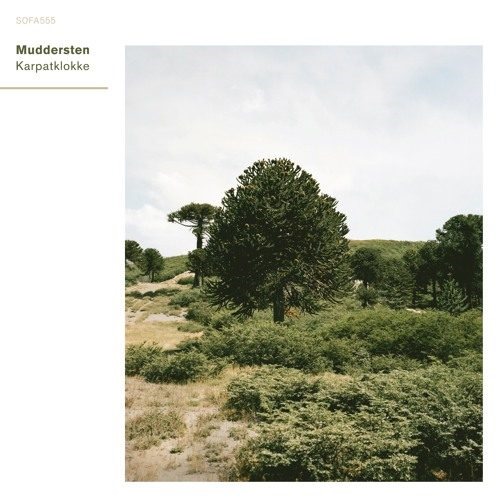
It’s no secret that I have a real penchant for what the man on the street – and most of my friends, and certainly the uncultured crets in my dayjob would brand ‘weird shit.’ Indeed, it’s fair to say that Aural Aggro’s primary raison d’être is to give coverage to the obscure, weird shit that exists way, way off the radar. It’s not necessarily that I’m being wilfully perverse: oftentimes, I will simply find that the supposedly weird shit resonates with me on some subconscious level, in the way that only music can. But then there are some releases that I appreciate because they’re plain bizarre. Muddersten’s Karpatlokke is an album that appeals on both levels, in that sonically, it’s intriguing, unusual, dark and intense, and conceptually, and in its construction, it’s utterly perverse.

‘Muddersten is a type of mudrock whose original constituents were clays’, the press release explains. Perhaps it was creative misprision on my part, but I immediately began to envisage the trappings of an obscure subgenre, a bastard offshoot of sludge metal, or a hybrid born out of crust punk. This would ordinarily make more sense, contextually, than the literal meaning which in fact applies here.

The second release to land with me in a week to feature Martin Taxt and his microtonal tuba, the instrumentation listed in the creation of this creeping compost-based composition is nothing if not unusual: Håvard Volden plays (relatively) conventional instruments, the guitar and the tape loop. Taxt, along with his microtonal tuba, contributes electronics. And then there’s Henrik Olsson, master of objects, friction, and piezo. I had to look up piezo. Precisely how one renders music from abstractions is unclear, but this strange union, which finds the trio conjure an album which is ‘all about the hydraulic’ and is preoccupied with the movement of moisture through clay and soil and its absorption by plants, is a successful one. And, for the second time in a week, I’m compelled to contemplate the line in Marvell’s ‘To His Coy Mistress’ which refers to ‘vegetable love’. Karpatlokke could well be a definite soundtrack to the Aristotelean reading of the concept.

The sounds the trio produce are appropriately earthy, although by no means overtly or conventionally musical in their nature. As such, the music does not feel as if its mechanical origins are instruments as man-made as guitars, tape-loops and electronics. Although predominantly organic-sounding, there are some pretty gnarly tones to be found here: droidal, digital squeaks and bleeps ping rapidly around sharp-edged bursts of sound. Drips and groans counterpoint dark, growling rumbles. ‘Kjempeløk’ grinds out a heavy, trudging vibration, thickly abrasive. Slow-motion scrapes turn through glitchy, crackling rhythms on ‘Stjerneskjerm’, as strings bend, bow and slowly slip the sprockets of time. It’s an unsettling work, evoking slow, creeping movement and evolutionary growth, amplified: the sonic equivalent of a nature documentary shot in high-definition, with ultra-close-ups, the frames sped up and slowed down to render in the sharpest relief the brain-bendingly awesome occurrences which take place daily in the natural world, unnoticed and invisible to the naked eye.

Each track’s title refers to a plant: ‘Stjerneskjerm’ translates as ‘Astrantia major’, commonly known as ‘master wort’, and the impressive-sounding ‘Blodstorkenebb’ is in fact a composition inspired by the rather humble Geranium sanguineum, aka bloody crane’s-bill or bloody geranium. Yes, this dark, dank, swirling noise which gnaws as the intestines and churns at the cranium is inspired by a bloody geranium. Which why it’s a great, if extremely unusual, album. Well worth digging out.


Muddersten – Karpatklokke

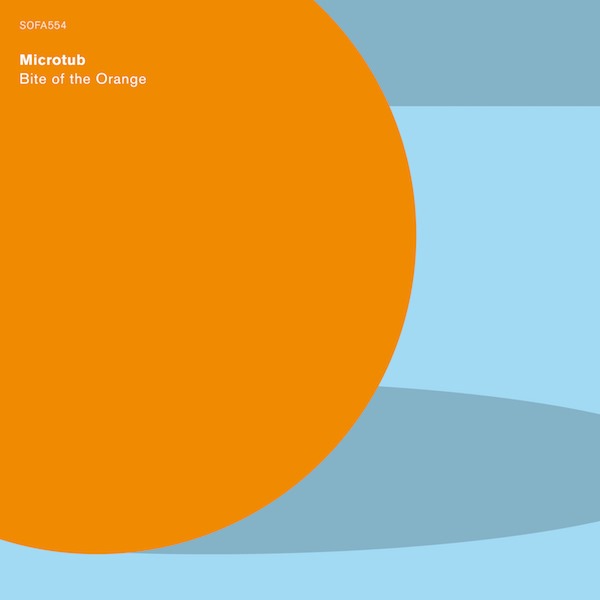
Whereas many microtonal explorations manifest as tiny, pinging blips, Microtub’s Bite of the Orange is constructed using immense, elongated notes. Perhaps somewhat obscurely and tangentially, I find myself considering Andrew Marvell’s poem ‘To His Coy Mistress’, specifically the following couplet:

My vegetable love should grow
Vaster than empires, and more slow.

No, not on account of the popular tumescent implications most readings of the lines offer: I’ve even explored the mirthsome connotations of Marvell’s emerging bulbous courgette during undergraduate seminars in an attempt to draw some kind of engagement from a room of late teens who really couldn’t give a crap about Elizabethan poetry, but that’s not why Bite of the Orange evokes Marvell in my mind. Instead, I’m drawn by the poem’s allusions to the Aristotelean connotations of a love borne out of the vegetative soul, as commented on at length by Lawrence Burton in his magnificent Anatomy of Melancholy, one of my favourite 17th Century texts (largely, it’s true, on account of Burton’s magnificent language). Burton makes a connection between the ‘vegetative soul’ and ‘natural love’; a love which is a slow-growing, evolutionary condition.

Granted, an orange is not a vegetable, but, like this slow-growing love, Bite of the Orange moves at an almost imperceptible pace, organic. Microtub’s slow, microtonal explorations require patience, and it’s only through time that a true appreciation of its qualities and its sonic depths can be truly appreciated.

The three tracks seep into one another, both in terms of the structures of their titles, and sonically. ‘Violet Man’ ventures into the dark, its low rumblings feeling their way through subterranean territories and poking the deepest recesses of the mind, and the three long-firm tracks combine to offer a full, panoramic perspective on the nuanced tonalities three microtonal tubas can create.

Bite of the Orange is not an album of action. It is an album which unfurls, creeping, revealing its aspects in greater detail the more closely one listens.

Microtub

Ideologic Organ – SOMA025 – 10th February 2017

Christopher Nosnibor

The accompanying press release is instructive and informative as to the premise of the latest offering from The Necks. Entering their thirtieth year of their existence, the trio continue to innovate and to create music which expands the parameters of jazz music:

The latest document from this long-running ensemble, Unfold, presents itself as a double LP, with four side-length tracks. A deliberate absence of numbered sides hands a substantial swatch of participation over to the listener, allowing her to navigate his own path through the soundscape at hand. The shorter length of the vinyl format, far from being a constraint upon the members of the ensemble, instead offers them a more compact horizon to contemplate, wherein the distance travelled is recalibrated to more immediate and dynamic textural concerns.

The title is appropriate, in that it gives a fitting indication of the nature of the compositions. Although the vinyl format is pitched as being a ‘shorter’ format, the fact that each track occupies a full side of this double album means that each piece still has a running time of between fifteen and twenty-one minutes. And unfold is what they do: gradual evolutions, slow unfurlings and near-imperceptible outspreadings which creep from sparse to near-overwhelming.

‘Blue Mountain’ begins with a delicate piano, but over time builds in depth, tension and pace to a sustained crescendo that never quite breaks. It simmers long and leisurely, cymbal crashes rising in intensity, resembling an intro to a track on a recent Swans album. I mean this as a compliment: it’s a lengthy piece, but there’s movement, there are dynamics, there’s a tangible sense of trajectory.

Noodling Hammond keys wander over a slow, pulsating undulation on ‘Overhear’, and it’s hypnotic and mellow. Perhaps the most overtly ‘jazz’ composition, it also encapsulates perfectly the wide-ranging elements The Necks incorporate within their music. Bongos bubble up jittery rhythms while the trilling organ notes meander and weave, intersecting time signature s forging an increasing sense of spatial disorientation over time.

The tribal rhythms which dominate ‘Ride’ slowly but surely increase in pace, raising the tension as the elongated, barely perceptible notes hang in slow suspense. Ultimately, the pace reaches a frenetic peak, before collapsing into arrhythmia , a conglomeration of discord and distempo, and the fourth track, ‘Timepiece’ is nothing short of a bewildering chaos of percussion, discord and orchestrated dissonance. Against the clattering rattle of drums and more, bass notes resonate and xylophone notes ring out in different directions, and over time, it becomes increasingly unsettling disorientating, difficult.

Unfold is by no means an easy album. It’s by no means a ‘jazz’ album in conventional terms. But in terms of an album which bounces off the wall in myriad unexpected directions freeforming and freewheeling as the musicians explore interpersonal musical boundaries, it’s the epitome of jazz. It’s also really rather good. Well, it is a Necks album, after all.

The Necks - Unfold

6th December 2016

Christopher Nosnibor

Some reviews are seemingly fated. This is one such review: I was slow to get started, and then, having spent several evenings working on a detailed critical analysis, exploring the album’s wild eclectism on a more or less track-by-track basis in a discourse of some eight hundred words, my laptop crashed and most of the work was lost, with the only available version being a collection of notes which were days old. How it happened, when my word processor is set to autosave every five minutes, I have no idea. Thanks Microsoft.

Still, this is an Ashley Reaks album, and a man who can produce three albums in a year – and continue to produce art, and to gig relentlessly, under difficult personal circumstances – deserves the same kind of unbowing attitude from a reviewer.

Because it’s an Ashley Reaks album, anything can happen. And it will. And it does. Following on from Reaks’ ‘punk album’ This is Planet Grot (and a remarkable credible and impressive punk album at that), Growth Spurts, on the one hand, could be considered a return to more familiar territories. But then, on the other, it could justifiably be tagged his ‘jazz album’. The familiar elements of reggae and post-punk inspired dub are present and correct, but this collaboration-based collection of tunes also brings in some wild jazz stylings. The collaborative element is also key here, not only to appreciating Growth Spurts, but to understanding Reaks as an artist, at least as much as it’s possible to grasp such an idiosyncratic and singular individual.

Like his collage artwork, his music is a mish-mash of elements drawn from here, there and everywhere, often bolted together at weird angles and demonstrating incompatible proportions and lines of perspective. He has very much his own slant on things, and his approach is also very much his own: Reaks is one of the few artists who consistently produces work which has the capacity to surprise, to confound, and, occasionally, confuse – which is a healthy response to something which is so staunchly unconventional. You get the impression that Reaks’ raison d’être is to produce art which surprises and confounds himself, as much as any notional audience. His mindset appears to be that if it’s not fresh, unexpected, and if it’s not sincere, then it’s worthless. Collaboration, when done right, yields an output which is greater than the sum of its parts, and draws out facets of each contributor which may not otherwise be known.

As such, Growth Spurts is a world away from his previous collaborative effort, Cultural Thrift (2015) with poet Joe Hakim, on which Reaks stepped toward the rear portion of the stage to provide a background accompaniment (which in itself was a departure given Reaks’ propensity for dizzying soundclashes). Five of the ten pieces – it would be wrong to refer to this as a collection of songs, given that they feature spoken word and poetry – feature writers and poets from a broad and diverse range of backgrounds. They’re disparate characters, as varied as Reaks’ own sources of input, hand-picked to contribute to the album.

The result is dizzying, a rollercoaster journey through a vast swathe of cultural terrain. Each of the collaborative pieces is distinct and different, and finds Reaks attentive to the style of the different speakers. And as the strange, strangles vocal cacophony which introduces the album’s first track, the oddly ominous prog-dub drum‘n’bass neoclassical jazz mixup that is ‘Divorced from the Body’ shows, he’s digging deep to locate new and unexpected hybrids. And yet, amidst the chaos, he still whips up some killer hooks – something so many experimental / genre-smashing artists completely overlook in their quest to innovate, to dazzle with their imagination and technical prowess.

‘The Gentle Art of Ignoring’ with Sylvie Hill is the most outright jazz track on the album, and her sassy vocal delivery and confident Canadian accent brings another sharp dimension to an album which displays almost infinite dimensions, but there’s just so much to take in. But if you need a pointer for where to start, start with the basslines. The crashing jazz-influenced drum ‘n’ bass drumming, the wild brass, the myriad perspectives of the different vocalists all slot into place over those low-down basslines that stroll and groove and leap and boogie. Get on down.


Ashley Reaks - Growth Spurts

Aurora – ACD5084

Christopher Nosnibor

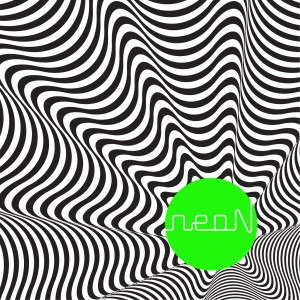
The cover suggests a blinding trip of an album, the sonic equivalent of an immense op-art extravaganza. Ensemble neoN, a collective of twelve Oslo-based musicians present on their debut release performances of compositions by an array of luminaries in the experimental / avant-garde music world, chosen for the uncompromising and original nature of their work. And while the collective’s objective is to ‘initiate, produce and perform music that reflects current trends in music and other art forms’, and to do so with a spirit of youthful conventionalism, they’ve set themselves well beyond the mainstream as far as fashion goes, and have produced an album that shows a lot more restraint than the lurid dayglow Digipak would imply.

Their rendition of Kristine Tjøgersen’s ‘Travelling Light’ heralds the ensemble’s arrival in bold fashion, and sets the tone, manifesting as an energetic sonic excursion that grabs the attention and holds it in a firm grip. Twangs and pings whip into space like a squash ball pelting into zero-gravity while long, quavering drones rise and decay.

There’s a keen element of playfulness which runs through Jan Martin Smørdal’s experimental composition ‘My Favourite Thing’, which toys with the tropes of orchestral soundtrack pieces with an avant-garde bent. Clamouring strings and creeping fear chords meet with marching drums and

The choice of ‘Monocots’ by Oren Ambarchi and James Rushford as the album’s centrepoint is well-conceived: the rippling acoustic guitar hangs in a fuzzy mist while a minuscule sound, like the trickle of water, continues to run through the silent sections.

Alvin Lucier’s epic ‘Two Circles’ is an exercise in uncomfortable droning minimalism. It doesn’t do much, and nor is it required to do so. Instead, it highlights the multi-faceted nature of the ensemble’s playing skills, and taken collectively, these five pieces are well-considered and well-executed. And the liner notes by Jenny Hval make for a nice bonus, too.


Ensemble neoN

Unsounds – 54U

Christopher Nosnibor

This is one of many releases I’ve been sitting on – figuratively speaking – for a long time without getting round to playing. I tend to listen to CDs while at work in my day-job, and digital promos at home (because I can’t stream or download on work systems), and while I can stuff a bunch of regular CDs into a jiffy and carry them to and from the office, the packaging of this release made it simply impractical. That, and the fact I had to battle long and hard with myself to resist the urge to burn the thing.

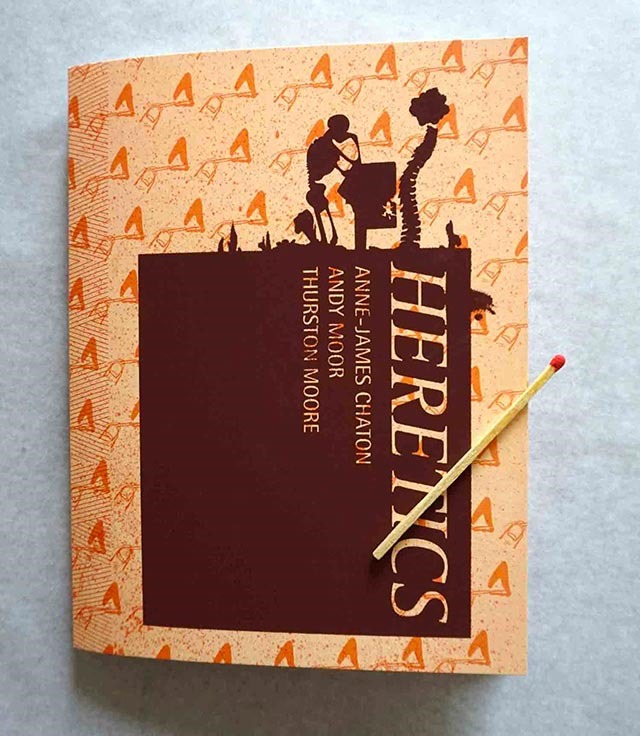
It’s not that I have any kind of objection to any of the artists in this three-way collaboration, or take issue with its premise, namely a series of portraits of radical heretical figures from across history, spanning Caravaggio and the Marquis de Sade, to William Burroughs and Johnny Rotten. In fact, it’s a concept I can get on board with, and for months I’ve looked at the magnificent packaging, a box-type affair which folds out to reveal a CD, a DVD and a book containing all of the words to the tracks – some in French, some in English, some in a combination of the two – forming a rich linguistic tapestry. Published in an edition of just 1,000 copies, including 26 lettered copies, it’s a work of art, not a disposable piece of trash. But the box is a giant flip-front matchbook. The front cover is made of fine sandpaper, and glued inside the flap, on its own, stark and inviting is a match, a full fore inches long. What would be more in keeping with the spirit of the project than burning it without hearing so much as a note, and reviewing the sound of the fire taking hold and the rustle of art burning, the colour of the dancing flames and the texture of the ash? It would hardly be Watch the KLF Burn a Million Quid, but nevertheless… I’m a pussy. I was also too curious to explore the contents of the package. And having heard the album and watched the film, there was no way I could even pretend to burn it. I’m weak. I’m no heretic.

Chaton, Moor and Moore are no heretics, either: they’re artists who appreciate heretics. It’s not always obvious to whom each piece relates, and perhaps a priori knowledge of the individual heretical figures is beneficial, as is an ability to translate French. ‘The Things that belong to William’ does not mention Burroughs by name. However, the bilingual text, in referencing ‘a Paregoric Kid’, ‘Pontopon Rose’, ‘Joselito’, ‘Bradley the Buyer’ and a host of characters and scenes from Naked Lunch and beyond, the connection is clear – to those versed in the author’s work. ‘Poetry Must Me Made By All’ is, then, presumably, a dedication to Comte de Lautreamont, pro-plagiaristic precursor of the Surrealists, Situationists and Neoists, as well as the cut-up technique of Burroughs and Gysin.

Textually – these are texts and not lyrics, delivered in a spoken word / narrative form – it’s an erudite work, researched, intertextual, referential. Sonically, it’s no more immediate. Oblique, obtuse, challenging: these are the first descriptors which volunteer their services in untangling Heretics.

‘Casino Rabelaisien’ is a tense effort, with angular guitar clanging perpendicular to a gritty, awkward bass grind. Chatton remains nonchalant and monotone amidst the chaotic no-wave cacophony. ‘Dull Jack’ begins with Thurston’s voice alone, before churning guitars slither in. There are no regular rhythmic signatures here, no ‘tunes’, no hooks or melodies: instead, this is a set which uses instruments in a more abstract way, conjuring uneasy atmosphere and often simply attacking the senses.

With the guitars of Moor and Moore duelling, playing across one another as much as with one another, the effect is jarring, uncomfortable. Both players employ atonality and discord within their performances, and when discordant passages collide, it’s a brain-bending experience.

Heretics is a work which delivers on its promise and conveys the spirit of the outré, unconventional artists who inspired it. It is, in addition, a true work of art. Don’t burn it.

Heretics