Posts Tagged ‘experience’

Mortality Tables – 16th May 2025

Christopher Nosnibor

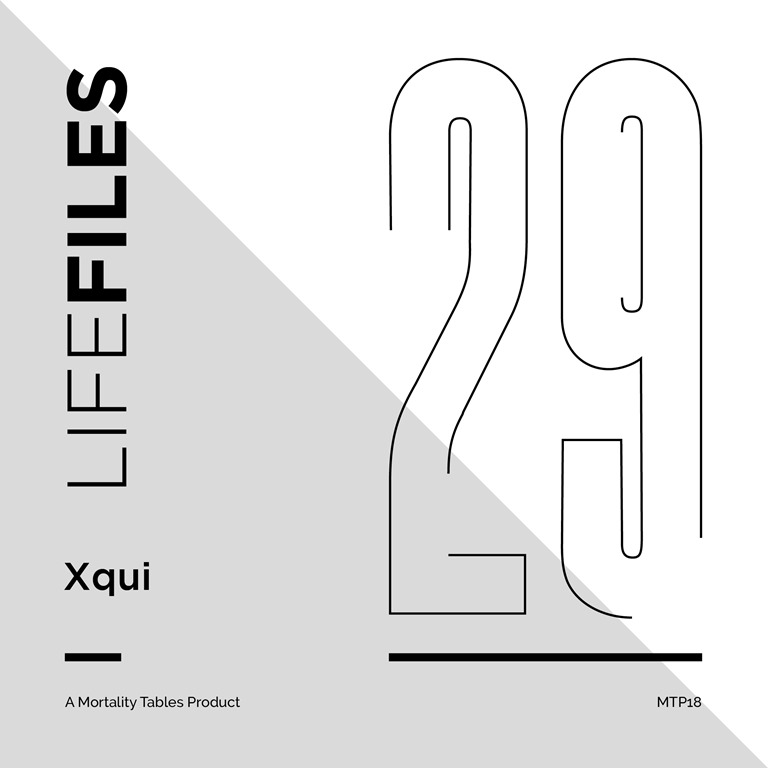
Just three weeks after the previous instalment in the extensive LIFEFILES project from Mortality Tables, now in its third season, comes what promises to be the final instalment for now. And all proceeds from this release will be paid to CALM – the Campaign Against Living Miserably. It seems fitting, given that life can often feel relentless, amped-up stress and bewilderment, and the LIFEFILES series has presented, over its duration, works which take the listener into audio representations of calmer environs. I write this as someone who has, in recent years, factored a daily walk into their routine, as much for the mental health benefits as for the physical exercise. A change of scenery, particularly in open spaces and away from crowds, can be a transformative experience.

The premise of the series, for anyone who hasn’t seen any of my previous coverage, is that the artist is given a field recording, captured by Mat Smith, who runs the label, to respond to in any way they feel appropriate. For this release, the accompanying notes record that the two tracks have been constructed using ‘Source recordings made by Mat Smith at Charing Cross Underground Station on 27 November 2021, as part of a Hidden London tour of disused areas of the station and areas not normally accessible by the public.’

In addition, there’s an excerpt from Smith’s journal, from the same date, which reads as follows: “…walked around the old station section of the Jubilee Line that isn’t used any longer, went into a construction tunnel underneath Trafalgar Square which had a bend in it to avoid the foundations of Nelson’s Column, and then finished up in a ventilation shaft above the Northern Line platform…”

Xqui’s treatment of the recording is interesting, taking the form of the ‘classic’ experimental work, the likes of which you’ll find on labels like Editions Mego, with a single longform track occupying each side. The first, ‘Charing Cross Underground’, captures the voice of what may be a tour guide, spun out in reverb and glitching echo, while trans rumble in the distance, before slowly melting into ambient abstraction. It’s like hearing the ghosts of the underground, rising up through the disused tunnels, calling out to the present to remind us of the past beneath our feet. There are flickers of chatter, as if, here in the present, we continue to talk without ever stopping to listen. Voices warp, slow, slur, distort, and it makes for an unsettling fifteen minutes.

‘Reverb Underground’ goes slower, more spacious, more echoey. I had half-expected something resembling a dub version, but instead, Xqui slows and stretches everything beyond recognition, creating a slow-motion blur, a crawling ambient drone. The sound simply hangs, dense, suffocating. Time stalls, and you find yourself floating, in suspense, in a fugue state, as the sound lifts free of context and embraces pure abstraction.

What Xqui manages to convey on this release is a sense of history, of space, of time, and the way we’re so busy rushing about in our daily lives that we never pause to contemplate the echoes of the past which exist, and linger all about us.

AA
cover

Mille Plateaux – 22nd March 2024

Christopher Nosnibor

What’s often fascinating to me as someone who writes about music quite extensively, is to observe the avenues other writers explore, particularly when engaging with music that’s ambient, obscure, or otherwise difficult to take a hold of and to pin down. This fascination is amplified when the music, either by its inherent nature, or by virtue of explanatory words from the artist, has a foundations in a theoretical or conceptual context.

Achim Szepanski has been tasked with a challenge when it comes to the notes to accompany

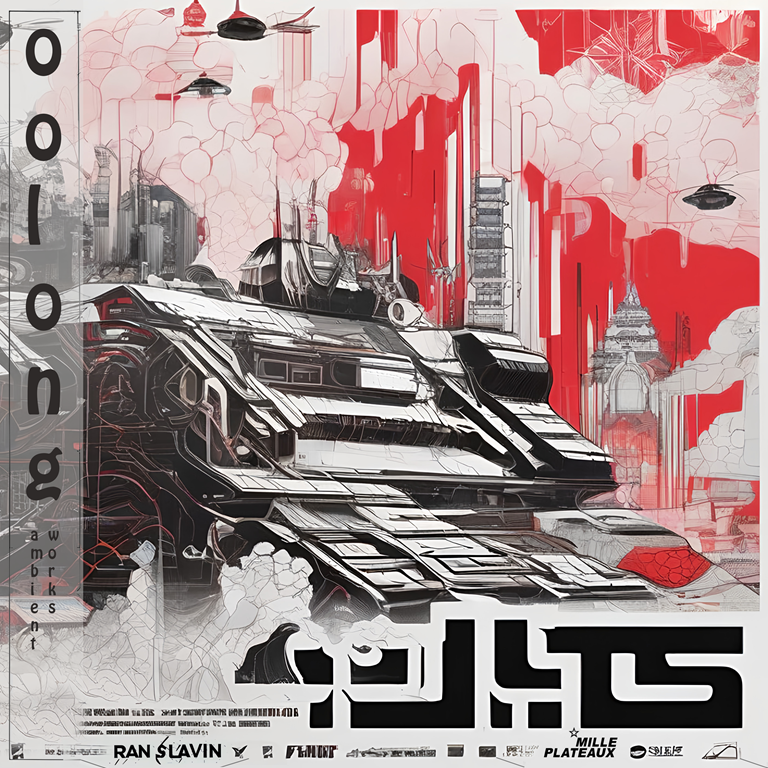
Oolong: Ambient Works, which is the 17th studio album from multi disciplinary artist Ran Slavin, which is pitched as ‘a 74 min drone-ambient-minimal-symphonic infused LP that takes after various teas in the far east.’ To heighten the experience, each track is accompanied by ‘a slow and atmospheric visual journey shot by RS in East Asia and the total can be experienced in total and joined as an immersive 74 minute journey.’

Szepanski helpfully explains the layered meanings in the translations of the word ‘oolong’, and expounds the complex interconnections of tea and dragons through a filter of Felix Guattari (which isn’t entirely surprising, given the label releasing it). He grapples with ‘the minimalist concept of tea architecture’ and the way in which ‘Not only the centripetal, but also the centrifugal orientation of the sound is imaginary.’

While the visuals clearly form an integral pat of the project overall, I shall preserve my focus exclusively on the audio release, and in advance of this draw the distinction between audio created to provide a soundtrack, and visuals created to accompany an audio work, because while Szepanski discusses at length the relationship between the visuals and the tea path and the simultaneous limitations placed on the work by the visuals and their capacity to enhance the experience, Oolong: Ambient Works is an audio release or an ambient persuasion, as the title suggests.

The seventy-four minutes is divided into eight individual pieces, with titles such as ‘Grand Jasmin’ and ‘Assam Jungle; as well as others which are less overtly tea-derived, like the first composition, ‘Time Regained’. It’s fifteen minutes of slow-simmering ambience, the levels of which fluctuate and catch, the glitches rupturing the smooth surface of the soft sonic fabric.

Szepanski makes an important point when he writes ‘It is impossible to know exactly what the individual sounds signify. Sometimes it might be the intention to hear the sounds of nature. But it’s not a question of identifying its source and its effect.’ And so we come to what is, for me, the crux of the ambient listening experience, whereby the source of the sounds is far less significant than what the listener hears. Not even what I hear as a listener, although I can only speak and interpret for myself, and the beauty of this experience is that however much Slavin strives to imbue this work with meaning, it cannot be imposed. Slow pulses bring a rhythmic element to this otherwise abstract piece, which is deeply calming, but occasional warps jolt the listener from their state of tranquillity like a prod.

‘Butterfly of Ninh Binh’ flits by with crackles and scratches by way of disturbance, and the introduction of static and ersatz surface noise to recordings is a curious one, as something which only became a feature with the advent off digital audio. Those who have come to vinyl since the renaissance are less likely to relate, since vinyl is now a plush commodity and not something people leavy lying around or use as a coaster or whatever as was commonplace in the sixties, seventies, eighties. But such interference is integral here: Slavin’s approach to ambience on Oolong is subtly different, and introduces just enough dissonance and discomfort for it to be not entirely comfortable.

The ten-minute ‘Ruby Ceylan’ is soft and ripping repetitive and hypnotic, but something – perhaps the abstract moans, perhaps something else – is just off.

Iroh, in Avatar: The Last Airbender, is a keen advocate of the calming properties of Jasmine tea, and I get a far stronger Jasmine connection from this – the original animates series, that is – than from ‘Grand Jasmin’ here – the album’s shortest track is subtle and soothing, but also marks a change of texture with a thumping beat which echoes away hard and fast beneath its slow-swelling outer layers.

‘Himalayan Flower’ unfurls slowly and with pronounced percussion, before the ten-minute ‘Summer Monsoon’ brings the album’s conclusion. A slow, mesmeric, soporific cloud of ambience passing by, with occasional clangs and abstract interruptions which echo through the drift, this is a real; eyelid-drooper which suggests it’s time to sleep, or time for a coffee.

AA

MP69_front

26th September 2022

Christopher Nosnibor

Ever spend time scratching your head wondering what a song or band remind you of, and drawing eternal blanks? Yeah, I get it a lot: I put it down to exposure. Too much music to process.

This is by no means my first introduction to Arcade Fortress: we’ve featured three of their previous singles here on these pages, and I personally described ‘Sabotage’ as ‘a fully-realised anthemic beast of a tune’. And I stand by that, too.

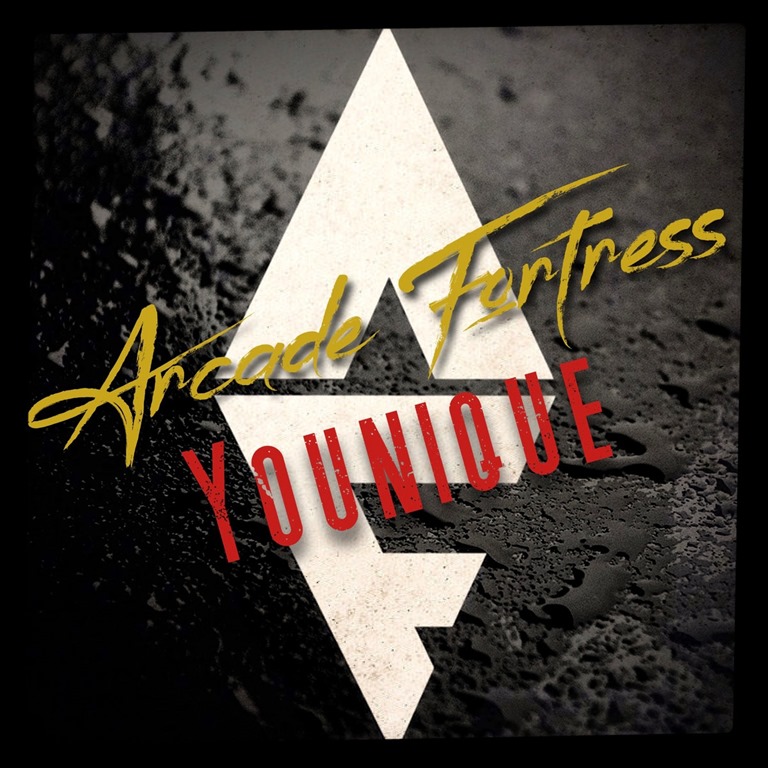
Younique the album finds them powering into the title track by way of an opener, there are samples seeping from the corners as they thrust away at a punk / rock / pop hybrid sound with incendiary energy.

Younique may not be unique by any stretch, but then nor is it derivative, and my ponderance for comparisons is a frustrating distraction but simply a habit of mine. I can’t help but try to place references, lifts, nods. It’s perhaps because there’s so much going on and Younique is such a melting pot of all things from 90s grunge to post-millennial punk-pop that placing any of it specifically is nigh on impossible, and as a result, what you’re faced with is the vibe, and it’s deep retro.

They encourage us, the listener, to sit back, relax and enjoy a rollercoaster of a ride over 12 anthemic rock tracks, but it’s not as easy as all that. The slow-burning Sabotage’ sits four tracks in and there’s no questioning its anthemic enormity, and I can’t help but think of a grungier take on the sound of Depeche Mode circa Ultra, perhaps, when they were grittier and more guitar-driven.

But there’s a lot happening here. It’s not all absolutely killer: ‘Alan Bell’ gets a bit emo and lightweight, and elsewhere, and ‘Killing Time’ sits between Weezer and 80s hair rock, while ‘Tangible’ throws an area-friendly curveball. In contrast, the driving ‘Uppercut’ is more reminiscent of Therapy? circa Troublegum and its tense, taut, and totally kicks arse, as does the riff-driven ‘Strontium Dog’. ‘Dark Seeds’ is more of a punky / hard rock crossover.

It’s not always easy to make a casting vote, and it’s not always fair to get off the fence when it comes to weighing up maters of opinion and taste. Ultimately, Younique finds Arcade Fortress packing some solid tunes, and that’s hard to argue, regardless of taste.

AA

a0586434423_10

Mamka Records – MAM01 – 1st November 2018

Christopher Nosnibor

‘Language becomes sound, and sound becomes language. Out of the fragmentary, the density is weaved. From the depths of the fragile, the whole is born. Time structures are questioned and assembled through loops. Field recording from Mexico meet Osojnik’s singing. Spoken language turn into melodies, whole noise turns into bittersweet rancheras.’ The words from the text – more of a short essay – which accompanies this release resonate: as a long-time student and practitioner of cut-up methodologies, I’m a firm believer in the unusual power of the fragmentary, the capacity for those broken, ruptured pieces of discontinuity to unlock experiences and emotions direct approaches to narrative and the channelling of experience cannot. similarly, I’ve long maintained that the language of sound has the capacity to transcend the language of words, to touch deep and difficult parts of the soul and the psyche irrespective of the tongue or tongues in the listener’s ken.

And so it is that the first release on Mamka records, the label established by Maja Osojnik – whose work I’ve not only covered previously but greatly admire – is something really quite special. My download arrives – personally addressed, handwritten, stamped, embellished – all the way from Vienna, in an envelope 7” square and therefore resembling a 7” single, accompanied by a six-sided press release packed with words far more engaging than the usual hyperbole. There’s also a numbered cut-vinyl print, 7” square included in the package, and it all adds up to a multisensory experience – sonic, tactile, visual – which above all conveys a real sense of commitment, a passion, to making something tangible, something that’s not ephemeral or disposable, but something that matters. The medium is the message, and Maja has found a way – labour-intensive as it is – which goes beyond the medium of the audio release to create… art. The same approach applies to the ‘commercial’ release, a 7” available in a super-small run of 150 copes, only 120 of which are available for public consumption. But better target a small, passionate niche than a large indifferent mainstream if art is your pursuit.

Finding a way to render digital media tactile, visual, and above all, personal, in giving the digital listener a large portion of the vinyl experience, Maja is quite possibly breaking new ground, or at least standing at the forefront of something new. For me, it’s less about nostalgia and more about recovering some of what’s been lost with the demise of physical media.

Said release finds Maja performing with Rdeča Raketa (together with Matija Schellander, she’s integral to the duo who go by the name of Rdeča Raketa) and author Natascha Gangl to deliver a brace of tracks – very much a replication of the classic 7” A and B sides.

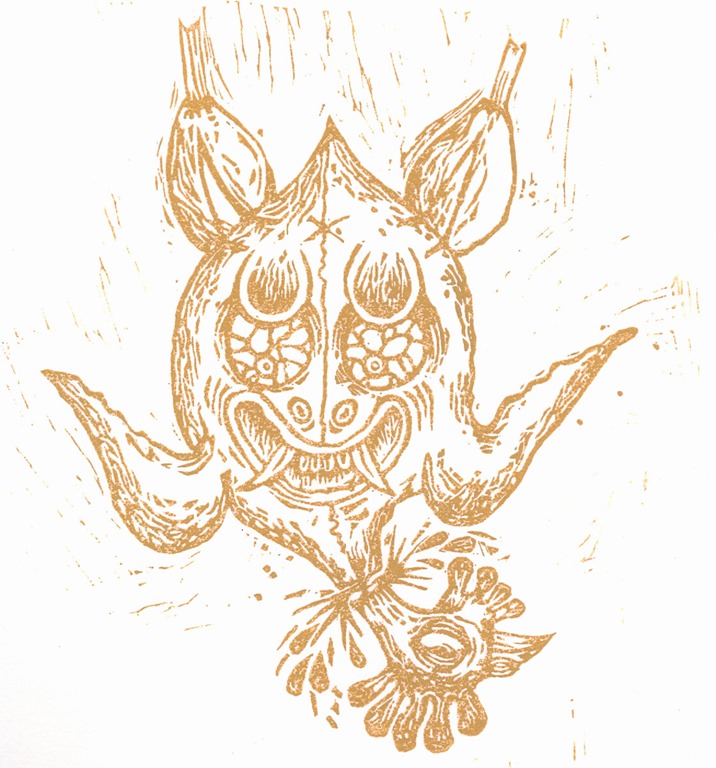
‘Chicken’ opens with a frenzy of analogue synth noise. It simmers to a grating buzz and pulsating electro beat before Maja barrels in with a deep-throated monotone with a barrage of lyrics about a chicken in her heart which bleeds and bleeds, and while clucking electronic bleeps twitter and bleep here, there, and everywhere. It’s weird, it’s noisy, it bumps and thrums, but still has an off-kilter pop sensibility partially submerged in the layers of noise and oddness.

‘Die Toten’ (that’s ‘the dead’ in translation) is rather less accessible, but no less intriguing, engaging, or odd, and in fact, introduces a new level of strangeness to proceedings. It’s low, slow, lugubrious.

Simultaneously weird and wonderful, ‘Chicken’ is everything you want – and need – by way of an introduction to partially-accessible, highly idiosyncratic, and extremely engaging weird shit.

AA

Natasha Gangl & Rdeča Raketa – Chicken