Posts Tagged ‘electronica’

empreintes DIGITALes – IMED 17141

Christopher Nosnibor

The background:

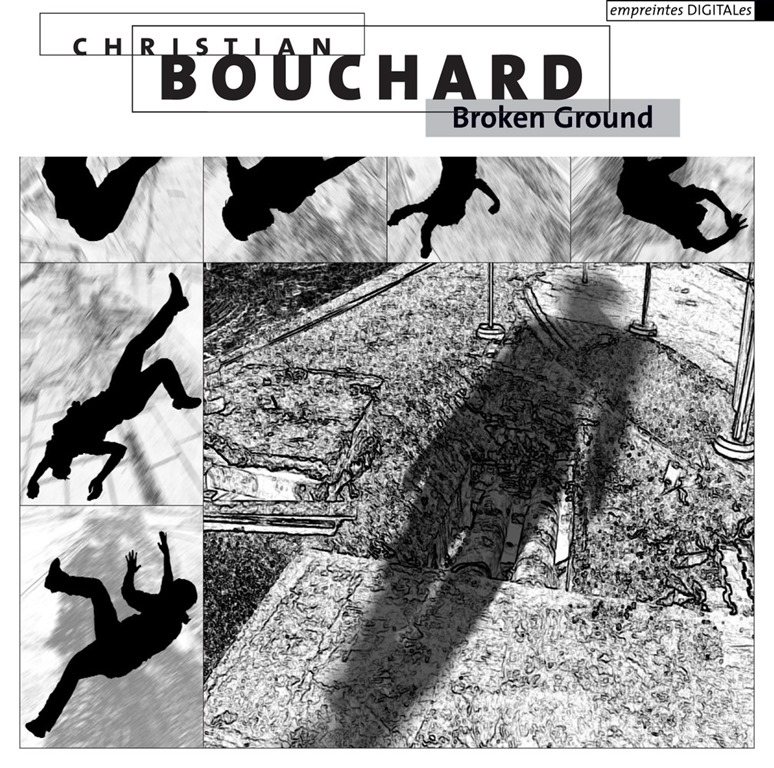
The exhibition Broken Ground looks at seven cities over ten years, and how redevelopment infrastructure changes our perception of cityscapes. These cities could be anywhere (everywhere). Reconstructed from the opportunities of street level construction, I treat the sites more like stage sets, where there are props, actors, entries and exits, and evidence through the debris, disarray, shadows of figures and randomness throughout.

In our contemporary world the works have taken on hybrid references of displaced people from war zones, or natural disasters that fill nightly newscasts in the media.

The review:

It’s an unsettling work. An apocalyptic, post-nuclear work. An album that lurks under the shadow of the bomb. It’s an album for unsettled times, a soundtrack to a return to the distrust of cold war politics and a global culture defined by social and political division, fear, uncertainty and mass murder. Broken Ground is a dark album for dark times.

From the very outset, Bouchard manipulates dark, throbbing layers of undulating, yawning drones and grating tidal waves of noise, dragging them across birdsong-like tweets of analogue twitters, sounding like a corpse in a tarpaulin being hauled down gravel drive at sunset. Yawning, drawling harmonica-like notes drift lazily, and somehow awkwardly, stretched and distended, over groaning low to mid-range backdrops: almost-familiar sounds are bent out of shape and rendered unfriendly. ‘Intergranular Attack’ goes in low, snake-like whispers and bleak monotone narrative samples deliver reports of atomic science with a detached clinicality, and the theme is revisited in the fragmented, fractured post-apocalyptic time capsule that is ‘Resistant Materials’.

Dark tones creep and hover, while washes of snarling noise and contrails of feedback linger amidst screeds of sharp-edged sheets of sound and washes of nebulous noise. Glitchy, crackling beats thud disconcertingly through a stammering hum on ‘Hysteries’, and the scratchy oscillations of ‘Voids Patterns’ offers a fresh take on spacey / spaced out reverby darkness.

Broken Ground finds Bouchard exploring well-trodden experimental fields and offering something new. Charming chimes assume an ominous demeanour; voices drift, detached in empty space. There is no comfort or solace to be taken from their presence: they’re distant, disconnected, out of reach, perhaps by light years. You may be receiving, but there’s no way to make two-way contact: you’re lost in a wave of pink noise and a fizz of rolling static.

As in space, so on earth: each person sitting, alone, boxed in: connected in the virtual world but never more alone and isolated now. Tapping out comments and messages, condolences and sympathy for the displaced and the damaged reported by the media: it’s merely mechanical. You feel nothing for them, you feel nothing for yourself: you’re numb, a drone. You don’t really connect. You’re floating in virtual space.

The voices, stammering, echoing in fractured snippets of different languages from the speakers are no more familiar than the voices from around the world, beamed to your computer and smart phone. This is the world of dislocation and dis-ease Bouchard depicts with such precision on Broken Ground. It’s awkward and uncomfortable, but looking in the mirror always is.

Christian Bouchard – Broken Ground

Christopher Nosnibor

There’s nothing shameful about pop music per se, and there’s no two ways about it: a good hook is a good hook, and however much you – or I – might adore obscure noisy shit of the most punishing velocity, there’s no substitute for a killer chorus, well-delivered. So, enter Chess Smith. She looks the part, and sound it, too.

So how’s ‘Queen of the High Held Head Walk’ for a tongue-twister of a song-title? It’s the first we’ve heard of Chess Smith here at Aural Aggro but hopefully, it won’t be the last. A sharp-edged, dark-pop tune, it’s the lead track from her six-track EP of the same title, and melds a heavily chorused / flange-treated Curesque bassline to a hard-edged 80s disco beat. Smith’s vocal is strong without being shrill, as she delivers a powerful message of self-affirmation.

The other tracks are far from weak, showcasing a pop talent with a heavy 80s influence, benefiting from 21st century production values. The seething dark electro of ‘Pinocchio’ offers up an undulating rhythmic force, and as a whole, this EP shows more than a little promise: there’s a confidence and coolness about Smith’s presentation which suggests she’s got big prospects.


Chess Smith - Queen

Bearsuit Records – 9th December 2016

Christopher Nosnibor

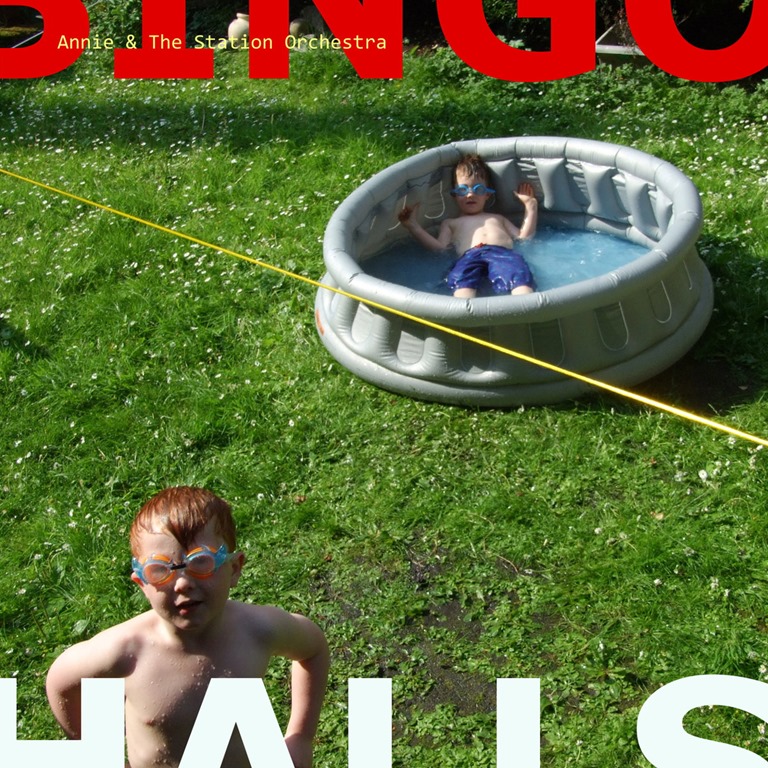
It begins with an immense drumbeat and a warped guitar that calls to mind early Swans as it warps and distorts… but then, behind a piston-pumping mechanoid beat, it all goes a bit Stereolab. Within a minute, I’m feeling confused, disoriented, as chimes hang gracefully in the air above a demonic, guttural snarl and discordant synth chimes and eerily chirpy whistles. What the actual fuck is this? And how does the music relate to the title, or vice versa? Nothing about the album is remotely evocative of plump older women with their eyes down, smashing away with their dabbers in the bustling pursuit of the next line, and nor does it conjure any images of the 70s heyday of the bingo hall, the smoke-hazed babbling equivalent of the WMC. Annie & the Station Orchestra’s Bingo Halls is an entity unto itself.

Pitched by the label as ‘a little experimental and challenging in places’, it’s also sold as being ‘very melodic, playful and pretty accessible in its predominantly instrumental context.’ These things are all relative, of course and this is a Bearsuit Records release: these guys are all about the far-out, the whacky, the weird – something I salute them for. There is, most certainly, a degree of melody and accessibility about this release but don’t think it’s some kind of Justin Beiber / Lady Gaga / Little Mix bollocks.

‘King of the Idiots’ is a brilliantly-engineered electro-pop instrumental with a dark edge, minor chords played on analogue synths wend their way over a thumping programmed beat that says ‘1984’. It builds and swerves and builds some more until it’s ascended to the position of towering space-age electro-rock. The lilting melody of ‘The Return of Banjo Williamson’, which amalgamates elements of oriental chimes with a thrumming bass and juddering electronic beats, quite unexpectedly evokes the spirit of latter-day Cure before going all weirdy Muzak electro.

Doodling, noodling guitars and synths, drenched in echo, place the album somewhere between electronica, Tangerine Dream style ambient Krautrock and post-rock. Is there a term yet for electronic post-rock? If not, there bloody ought to be, and someone needs to let me know what it is, like, yesterday. It’s not as if worriedaboutsatan haven’t been straddling these very genre divides for around a decade. Still, Annie & the Station Orchestra offer something that’s distinctive and unique, and while elements of the various tracks lean towards a range of identifiable genre trappings, the overall effect is one of abstraction, of immediate distraction, and of stubborn non-conformity. This makes for an album that’s idiosyncratically innovative, and stands proudly in a field of its own.


Annie & the Station Orchestra – Bingo Halls

Fabrique Records – FAB060CD – 14th October 2016

Christopher Nosnibor

Whatever is present, there is always an absence of something, even if the absence is of nothing. What absence ends on Jana Irmert’s debut album, which comprises six pieces created with a combination of field recordings, experimental electronic sounds, and voice, is unclear. But then, clarity is not Irmert’s objective: End of Absence is subtle, nuanced and atmospheric, a project designed to stir the imagination.

The title track opens the album with a thick bussing hum of feedback, which mutates into an eternal, mid-tone drone. The sparse beats and monotone spoken word of ‘Bagful’ sits somewhere between Young Marble Giants and Throbbing Gristle, the thunking percussion whips through the stark minimal grind. Elsewhere, on, ‘Obstacles’ a barrelling wind of white noise, burred with scraping metal-edged electronic distortion, blows into silence. Long, rumbling tones hang and swirl like mist around hisses and hums.

Irmert’s interests are the vague, irrational, less tangible aspects of existence, and these manifest in the compositions which make up End of Absence. Immense washes of sound, like tidal waves of static, crash against virtual shores on an imaginary world. drawing from a broad sonic palette, Irmert inspires an almost paradoxical sense of engaged detachment, in which the listener cannot help but bring something of themselves to complete the listening experience. In such an exercise in inclusivity, both artist and listener are fully present, and so we arrive at the end of absence.

Jana Irmert - End of Absence

This Is It Forever – TIIF031 – 25th November 2016

Christopher Nosnibor

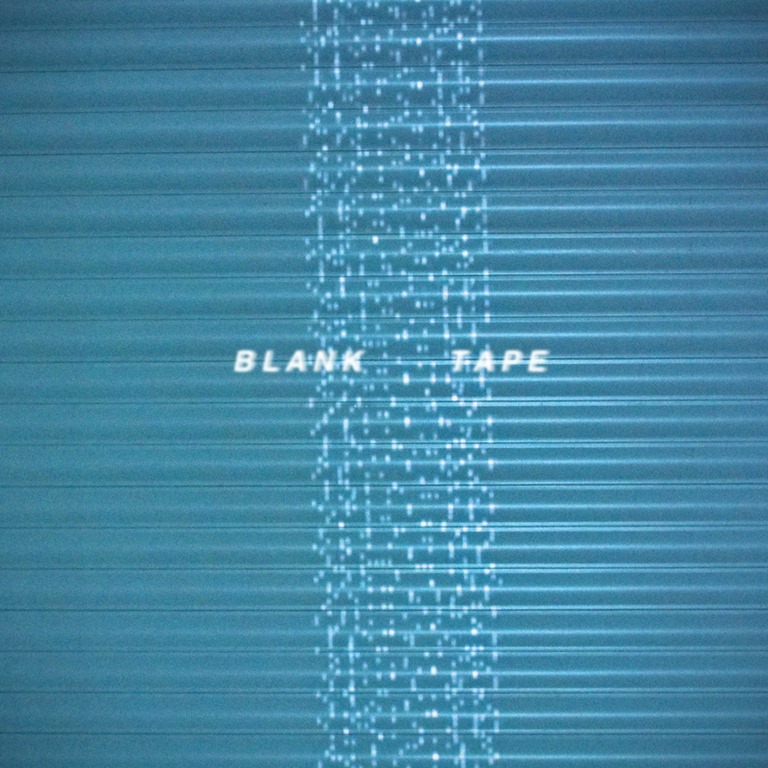
I’ve long been a fan of worriedaboutsatan: on their emergence in 2006, their, a hybrid of ambient and low-key dance music, fused with a rare focus on dynamics, positioned them as purveyors of some kind of electronic post-rock. No-one else was doing anything quite like it. With couple of EPs and an album under their belts, the duo – Gavin Miler and Thomas Ragsdale – morphed into the more overtly techno Ghosting Season. Returning but briefly with a single in 2010, it wasn’t until last year’s second album proper that they really made their return. Now it seems that while marking their tenth anniversary, they’re making up for lost time. And still no one else is doing anything quite like what they’re doing.

Opener ‘A Way Out’ immediately trips against expectations, beginning with tweeting birdsong n chiming piano notes which build anticipation of a slow-building piece that blossoms as layers emerge fluidly. Instead, it ends swiftly an abruptly, with the beat-driven trancey electronica of ‘The Violent Sequence’ taking things in a radically different direction. It’s anything but violent, at least on the surface, but as is often the case with worriedabotsatan’s layered, nuanced arrangements, there’s something menacing hiding beneath the surface.

‘This Restless Wing’ introduces vocals to the mix, courtesy of the gliding falsetto of Vincent Cavanagh of Anathema. If the idea of the wilfully low-key duo going all-out for the big-name collaboration as a lure to the album seems incongruous, it’d worth bearing in mind they’ve previously been featured on various TV shows, and, more recently, the immensely acclaimed Adam Curtis documentary, HyperNormalisation. In other words, nothing is beyond the realms of worriedaboutsatan. And nor should it be: these guys are masters of stealth, and Blank Tape is an album which wears many cloaks.

‘Forward into Night’ approaches almost invisibly, building a dense, murky atmosphere. The ticking cymbals create a tension, while the sparse beats are subdued, and ‘Lament’, a collaboration with Bristol electro duo Face+Heel, is haunting, ethereal. The album’s second track to feature vocals, it’s sparse and understated, and Sinead McMillan brings something unique to the song’s dynamics. The filmic qualities of the piano-led title track are undeniable and it’s a compelling piece which contrasts with the bubbling synths of the closer, ‘From a Dead Man… Part 2’ which plays out the album and drives it home with a return to pulsing beats, undulating sub-bass and rippling synth motifs.

Blank Tape is still distinctly worriedaboutsatan, but also marks quite something of a departure from its predecessor, Even Temper. It’s a lot less beaty, for a start, and a lot less bassy. The samples are virtually non-existent. Moreover, while it’s still richly textured, the textures here are smoother, the frequencies less geared toward eliciting an unprovoked physical reaction. It’s perhaps the sparsest and most minimal work they’ve created to date, but it’s highly detailed and if anything, its subtlety represents a new advancement and refinement of their approach to music-making.

Blank Tape is by no means an immediate album. It’s an album to absorb, ponder and reflect on, and which yields more with repeat listens. It’s certainly not an album made for TV, but these are strange times. This is the instrumental soundtrack to those times, and the next few years will surely see TV being made for this music. Blank Tape will likely see the band achieve the world domination they deserve by subliminal means.


ALBUM COVER

clang records – clang47 – 9th December 2016

Christopher Nosnibor

With Band Ane, Ane Østergaard has created her own musical world: armed with a singular magpie mindset and a laptop, she has spent the last decade incorporating elements of ambient, musique concrete, pop and avant-garde, Anish Music is essentially a genre unto itself.

If 2014’s Anish Music Caravan was an other-worldy exploration into unknown sonic territories, there’s a definite sense of order and structure to this outing: the three tracks which make up the EP Anish Music V form a triptych of complimentary and successively evolutionary pieces.

Beginning with a crackle and crystalline ambient tones, ‘Borrowed’ understatedly commences an EP which transitions effortlessly and imperceptibly through a shifting soundscape formed with delicate layers. Together, these layers create a sense of density, and a growing weight. Around the mid-point of the Spooneristic ‘Vultimerse’, a rumble of thunder peaks in a dark crescendo. It’s powerful, forceful, yet still texturally detailed and multi-faceted. It’s here that Ane transcends genre boundaries, stepping above ambience to foreground instrumental music. There’s a rare boldness about it.

‘The Pool’ is an expansive work, gentle washes of sound are rent with the dense roaring jet of a rocket taking off before floating, bleeping and crackling. Ane’s vocal appears on the EP for the first time, a haunting, ethereal whisper which drifts in and out on a soft ripple of humming ambience.

In some respects, it’s difficult to really summarise the qualities of Anish Music V, and even more difficult to present an objective critique. This is music which gently goads the listener’s senses and operates on something of a subliminal level. It’s a rather pleasant experience.


Band Ane - V

Kranky – 11th November 2016

Christopher Nosnibor

In researching and considering Loscil’s latest offering, I returned briefly to the previous album, 2014’s Sea Island. An album that was broadly ambient, it was also firmly a work of electronica, an album that was big on ideas, and engaging rather than immersive or entirely background.

Monument Builders expands on this, and while texture and tone continue to play central roles in the formation of the individual pieces which make up the album, it’s also an album on which the individual tracks are built on dynamic and contrast, and the structures of each piece are clearly defined. While the overarching tone is gentle, subtle, there’s much variation between the tracks, and the way in which sounds suddenly emerge in the foreground means there is a continual sense of movement within each piece and across the album as a whole.

Delicate beats thump like a heartbeat against the ticking clock: the soft notes which form a repeating motif through ‘Drained Lake’ may not in themselves build tension, but there’s something beneath the surface. All is not well, all is not calm. You sit, on edge, as an elongated drone undulates like a distant siren wail.

‘Red Tide’ is very much rhythmic in its focus, a cyclical synthesised bass loop – part Kraftwerk, part ‘I Feel Love’ – forms the spine of the track. ‘Anthropocene’, the album’s penultimate track, stands as something of a companion and counterpart to this, with a similar bubbling motif murkily pulsating beneath, while mournful brass conjures black and white or sepiatone scenes of bygone days. It’s an interesting contrast well executed.

Monument Builders is very much a ‘next stage’ work, which continues to expand Loscil’s sonic horizons in a host of directions. But equally as important as recognising the artistic developments, one has to consider the listening experience, and this is ultimately where Monument Builders triumphs. In switching between background and foreground musical dynamics and building and reducing the degrees of tension, Scott Morgan (aka Loscil) has masterfully created a work which demands attention without being excessively obtrusive.


KRANK204_10x10_300dpi

n5MD – MD248 – 16th September 2016

Christopher Nosnibor

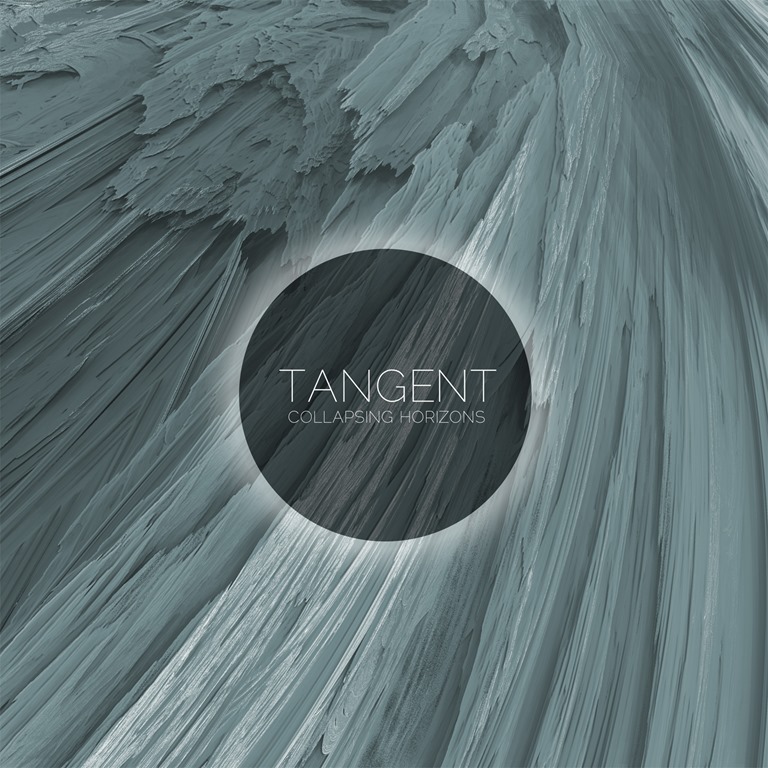
The arrival of Collapsing Horizons piqued my interest considerably: the cover art gives away little, but the write-up for the Netherlands-based duo describes their sound as ‘deep ambient’. I’m more than familiar with dark ambient, but just what constitutes deep ambient? On the basis of this album, the depth refers to both the emphasis on the lower ranges, as billowing winds funnel beneath the upper tones and bassy beats resonate low in the mix, and also the contemplative nature of the music. The sounds in themselves do not create dark, foreboding atmospheres, and the broad sonic brushstrokes are, in the main, light, gentle, delicate and soothing. And yet there is detail: a lot of detail. Microbeats and subtle, but fuller, beats pulse in the background, while crackles and scratches bring texture.

Occasionally, as on ‘Gravitational Singularity’, rumbling bass and immense rhythms drive what one might call abstract drum ‘n’ bass grooves at a low BPM. Elsewhere, the dulcimer chime and stuttering rhythm of ‘Fracture’ also alludes to the trappings of drum ‘n’ bass, dissected and deconstructed to its sparsest of forms. And yet there are juxtaposing sensations of light and dark, with shadows moving cloud-like across the surface. There’s a definite sense of movement within each of the compositions (as the title suggests: these horizons are in the process of collapsing: they are not yet fully collapsed: this is not a past-tense work), and while the pace is at times tectonic, there are some nice, dainty oscillations and some soft, descending chimes that intimate more progressive leanings, as well as sharing ground with the likes of Tangerine Dream. Then again, ‘Hyperbolic Motion’ incorporates static and space-age bleeps over a heavy, stuttering kick beat that resembles a palpating heart, creating a subtle tension and a sound more closely related to minimal techno.

Because the individual tracks are comparatively short – only two extend beyond the five-minute mark – and are mastered separately instead of running together to forge a large, single body of sound, Collapsing Horizons feels much more focused than many ambient works. The individual tracks are distinct sonically, too, with clear identities, and the structures therefore are more self-contained and do not require the listener to absorb and assimilate the album as a whole. The effect of this is that Collapsing Horizons succeeds in holding the attention, and feels quite concise despite its forty-eight minute running time.

Tangent Online

Tangent - Collapsing Horizons

Gizeh Records – GZH68 – 2nd September 2016

Christopher Nosnibor

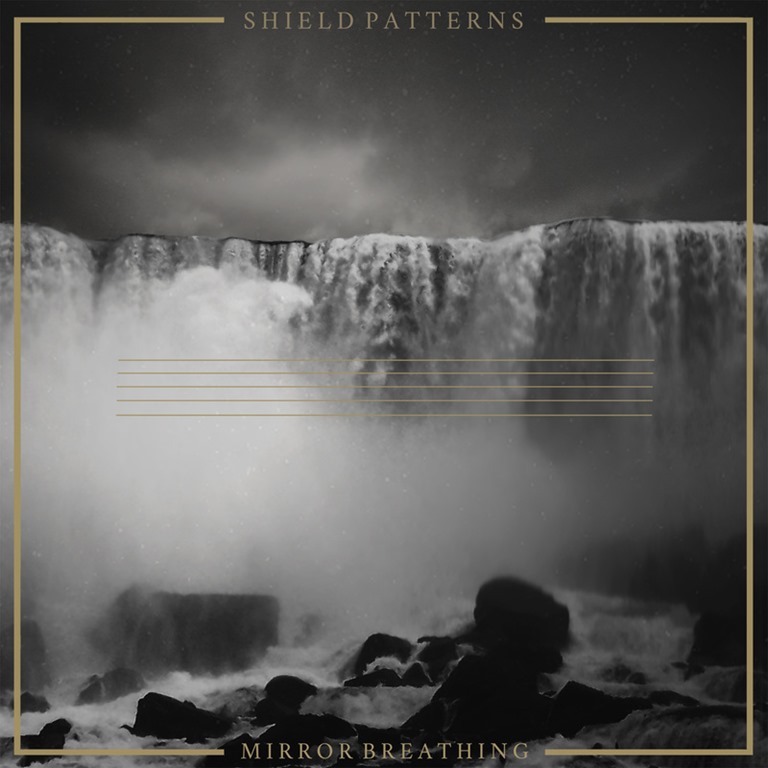
Richard Knox’s musical career is marked by works which are ponderous and atmospheric. Howeevr, his latest venture in colaboration with Claire Brentnall, is distinguished by a leaning toward material which feels more focused, compositionally, and more direct. It’s all relative, of course, and Mirror Breathing is, as the title implies, a work which is hazy, misty, the songs grasping, just for a second, at the ephemeral and reflecting the moments back, refracted and rarefied. Following on from debut album Contour Lines (2014) and 2015’s Violet EP, Mirror Breathing marks a step further into dark pop territory, although dark is indeed the operative word here, and it’s clear that in Brentnall he’s found the perfect collaborator: a person with not only an amazing voice, but an equal understanding of what it takes to forge ponderous, nuanced, atmospheric music. It’s not a matter of drawing out which each brings to each composition: Shield Patterns are built on collaboration and intuition, more of a case of a creative space emerging from a collective ‘third mind’ than the simple coming together to two musicians. 

The musical backing the pair create is atmospheric, and captures elements of light and shade which contrast magnificently; dark, rumbling low-end and industrial scrapes are tempered by ethereal ambient sounds of indeterminate origin. Claire Brentnall’s breathy vocal hangs, spine-shiveringly, over the drifting soundscape. The whole production is draped in a soft-focus feel, a mist which partially obscures the shapes and forms and renders them vague, unfamiliar and ambiguous. This ambiguity and unfamiliarity is an unsettling sensation, and while the graceful vocals superficially soothe, the emotional tension and overall sonic disquiet ultimately leave the listener pulled in different directions, peering into the shadows and wondering what lies just out of view. Arrhythmic percussion echoes in the dark, detonations which send shuddering vibrations through the ground. There’s a stark beauty to ‘This Temporary Place’ that calls to mind Zola Jesus, and elsewhere, dark industrial grumbling tremors contrast with the dreamy, otherworldly atmosphere of ‘Cerulean’.

Julia Kent is an artist who has a tendency to crop up in all sorts of places and with remarkable frequency: a respected solo artist in her own right, she is also a one-time member of Black Tape for a Blue Girl, as well as performing as a member of Rasputina and Anthony and the Johnson, he cello work on three of the tracks here adds further texture to the arrangements. Ultimately, though, it’s the balance of the instrumentation which really makes the album work: there’s a lot going on, with many incidental sounds blended in, but it’s seamless and no one aspect or sound dominates at any point.

Again returning to the connotations of the title, if the image of a steamed mirror can be read as a twist on the ‘smoke and mirrors’ metaphor, then there is an element of deception in the way the compositions seem sparse, but are in fact constructed from manifold layers which form strata of remarkable sonic depth and density. The drums may be distant-sounding and low in the mix, but they roll like thunder. In Claire’s vocals, you don’t hear every word, but you feel them. Sometimes she soars so high as to be barely audible to the human ear. Sometimes, it’s less about the actual lyrical content than the delivery, and her voice as of and in itself conveys more than mere words ever could. There’s a quality in Claire Brentnall’s voice which communicates on a subconscious, subliminal level. Her voice echoes in the recesses between the beats, drifts along, enveloped in the gauze-like textures, and occupies invisible spaces between the notes. Hers is a voice which is delicate, but by no means weak; yet the strength of her delivery lies in her ability to convey vulnerability.

From the alluring ‘Dusk’ to the dolorous chimes of ‘Blue Shutters’ and the sinister depths of ‘Balance & Scatter’ with its dark jazz intimations, via the tranquil and sedate(d)‘Sleepdrunk’, the songs conjure scenes of both anguish and ecstasy and often explore the pull of existing in both states simultaneously. Haunting, hypnotic and disquieting, Mirror Breathing is an impressive work that warrants time for thought and reflection.

Shield Patterns - Mirror Breathing

Rock is Hell – RIP67

Christopher Nosnibor

This one’s been out a little while now but has only recently landed with me. I can’t feel too much guilt: Regolith aren’t exactly the fastest of movers, however you look at it. They’ve been going for a full decade, and despite having racked up a substantial catalogue of EPs and split releases, it’s taken until now to get around to a proper album (although, arguably, 2009’s Music for Hot Air Balloon, with its three tracks spanning a full hour, would constitute an album by most people’s reckoning). Musically, they’re not exactly about pace, either, trading in crawling ambient drone of almost incomprehensible proportions.

Their debut album proper isn’t exactly about the immediate hit, the hooks or the general accessibility, either, and necessarily requires time to engage, cogitate and digest.

I is a monster work: a double album comprising just four tracks. And the sound is as immense as the album’s duration, inching toward the 80-minute mark, with each of the tracks clocking in around 20 minutes in duration. But it’s not just about the length: feel the weight. The sounds may be produced electronically using analogue synths and a vast array of effects, and Regolith may describe themselves as ‘tech freaks’, but the material is heavily steeped in the tropes of doom. Having spent my childhood living on the flight path of the takeoff / landing of the RAF Vulcans, I feel qualified to make the analogy of the drones sounding like jet engines rumble and roar, a spectrum of lower-end frequencies that focus on the ribcage, the particle-splitting noise is also more than enough to terrorize the most dulled eardrums. ‘Platinum’ sounds like my young recollections of the Falklands War. The molecule-destroying, air-shredding sound engulfs the listener; the experience is immersive and annihilative.

‘Comet Tails’ is a far sparser affair, echoed beats decaying into the void, the space between the sounds comparable to the distance between planets. Gradually, as slowly as a planet on the outer reaches of a solar system orbits its sun, a low drone begins to rise and swell, a dark, large sonorous body of sound, a black hole cruising closer with inexorable determination. The hum continues to grow until its edges begin to distort and disintegrate and bleeds into ‘Star Trails’. One benefit of hearing this in a digital format is the two tracks do run together. Of course, the downside is simply that however enormous the sound, the full enormity can only really be conveyed via the medium of vinyl, and ideally on a decent set-up with a solid amp and some fuck-off powerful speakers. It’s an album that has the capacity to make the earth move.

The sound is more than fitting for a band named after ‘a layer of loose, heterogeneous superficial material covering solid rock, which includes dust, soil, broken rock, and other related materials and is present on Earth, the Moon, Mars, some asteroids, and other terrestrial planets and moons,’ and whose objective is to create ‘music on a geological scale; music of mountains, shifting like glaciers, slow and relentless processes on grand timescales’. The tracks on I are at once heavy on the ground, and beyond gravity, simultaneously tectonic in their movement and of galactic proportions.

Regolith

Regolith Online