Posts Tagged ‘Dynamics’

15th August 2025

Christopher Nosnibor

In recent years, the field of doom has expanded in terms of range, and has, at the same time, become rather more populous. One suspects in part that because these are pretty fucking dark times, increasingly, people are turning to dark music to articulate their own challenges, and to navigate the world around them. One welcome development is the number of female-fronted doom bands with vocalists who bring not only powerful voices, but a strong emotional force to the heft of the instrumentation.

Amnesiak pitch themselves as ‘Alternative Doom Rock’ – a subtle but necessary distinction from the proliferation of doom metal, which is something rendered clearly on this, their debut album. Containing just seven tracks, the longest of which is just under five minutes in duration, and with a couple that clock in at under three, it’s a concise document – and that’s welcome, because unlike so many other releases in the genre, which can at times be indulgent and err towards the overlong, and leaving you feeling drained, Arkfiend leaves you hankering for more.

The instrumental intro track, ‘Deamoniacus’ is something of a trope nowadays when it comes to heavy music – and screamy post-hardcore – but here it works differently, with samples reverberating in torturous extreme stereo, the sounding of the muttering clamour of a fractured internal dialogue which crowds the mind with discomfort, paving the way for the slow, majestic ethereal grandeur of ‘Archfiend’, which blends sepulchral doom with soaring vocals which float to the skies. ‘Flamed In Solitude’ plunges into darker territory, with dingy guitars squirming queasily over loping percussion. Layered vocal harmonies contrast with the thick guitars and booming bass, and those vocals sit between doom and folk, elevating the song to unexpected heights.

The dynamics of each song is something special, and the stylistic interplay sets them apart from their peers. ‘Pillory Of Victory’ is theatrical, gothic, dramatic in a theatrical sense, but also in an intense real and immediate sense – and at two and a half minutes there’s a moment where the riff skews and things take a sinewy turn for the more discordant, before the riff returns, hard and heavy. And yeas, I’m one of those people who obsessively pinpoints the moment when a song switches, when it moves from ‘yes!’ to ‘woah, fucking yes!’ – and it all comes down to a second or so. I’ve digressed, but so have Amnesiak, until they come around to the churning riffery of ‘Bootlicker’, which is truly monumental. Everything comes together here, and this is track of the album. For all its dirty guitar grind and dark lumbering riffery, it’s majestic, epic, a song that fills you up and lifts you up with its power. The final track, ‘The Last Rattle’ is a perfect balance of light and dark, weight and melody, reflective and sad and uplifting in equal measure. The quality of the songwriting, and the attention to detail on display here is quite something.

Arkfiend places Amnesiak comfortably alongside Cold in Berlin and Cwfen – and that’s a strong recommendation.

AA

a4008843204_10

Christopher Nosnibor

Being restricted to live shows within walking distance of one’s house really does change one’s perspective and selections. As much as it also significantly limits my options, I’m fortunate to have no fewer than three venues within this range, and spotting that The Royal Ritual – a band I’ve long been aware of but have never witnessed live – were playing at one of them provided more than enough of a poke to get out.

It’s not exactly heaving. That is to say, come 8:15, it’s still pretty quiet, even for a Wednesday night. But then, I noticed that York was conspicuously quiet all day today: driving almost empty roads to a near-dead Tesco was as welcome as it was strange earlier in the day. The first week of the school summer holidays, and it seems everyone has buggered off – apart from the tourists clogging the town centre, which was far from quiet in the afternoon. But tourists tend not to seek out relatively unknown alternative bands playing a mile or two out of town. They should. Live music is as integral to a city’s nightlife as its pubs and bars and so on. I once ditched a conference dinner in favour of a gig when visiting Stirling, having clocked that maybeshewill were playing, and in the process, discovered And So I Watch You from Afar, who absolutely blew me away, plus I got to explore a new venue. It was a memorable event, and one which has stuck with me. It’s unlikely the alternative would have had quite the same impact – and while I’ll never know, as someone who’s uncomfortable dining with strangers and making small talk, I’m as comfortable with my choice now as then.

Comfortable isn’t really my default, and caving crawled out of my bunker, this is an evening I’m quite content to hide in a dark corner with a pint and observe.

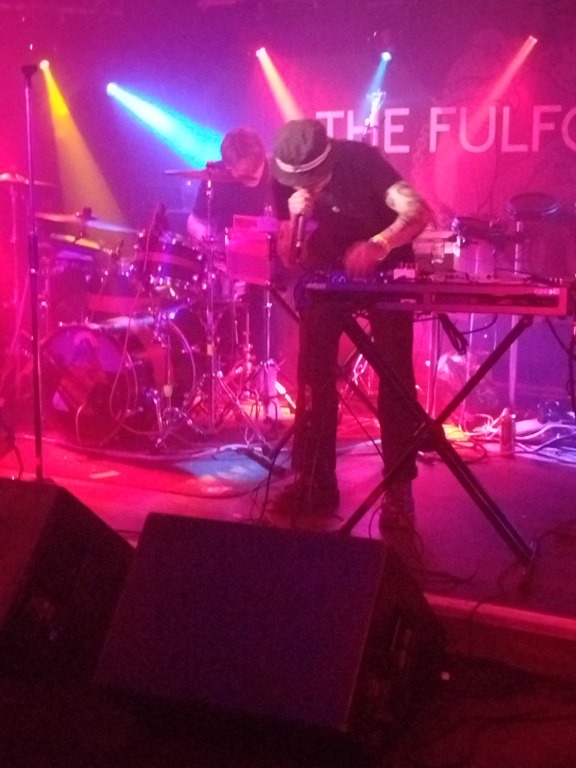
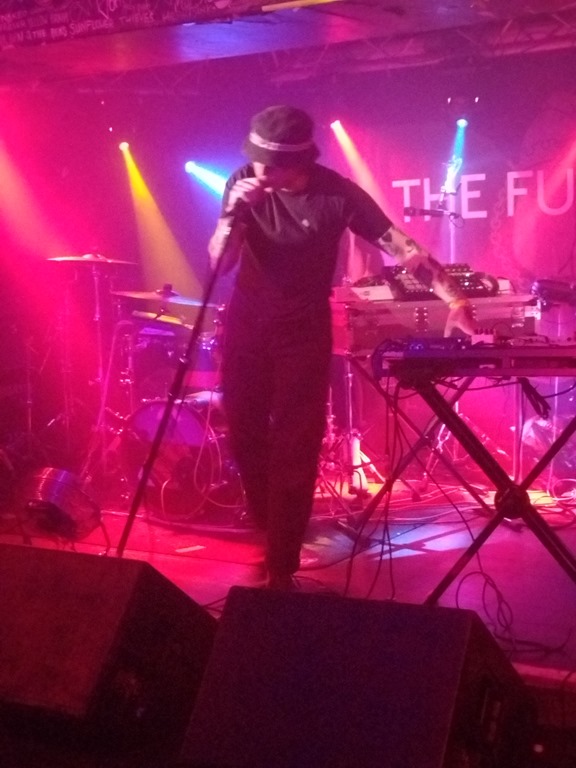
Material Goods are a last-minute replacement for Dramalove. It’s a solid, blank name which suits the duo’s style, which comprises some heavy, complex synth work paired with live percussion – and quite outstanding live percussion at that. The processed vocals are a bit muffled, but overall, the sound is dark and dense and the drums really cut through it with energy and force. Essentially, their palette is 90s alt rock, a bit NIN but with a vague dash of nu metal, and a bit Filter, too. Multitasking and a vast amount of gear affords the singer limited scope for movement on stage, but the sound has a really good, strong energy, despite the songs being pretty downtempo and downbeat.

IMG_20240724_200808IMG_20240724_200818

Material Goods

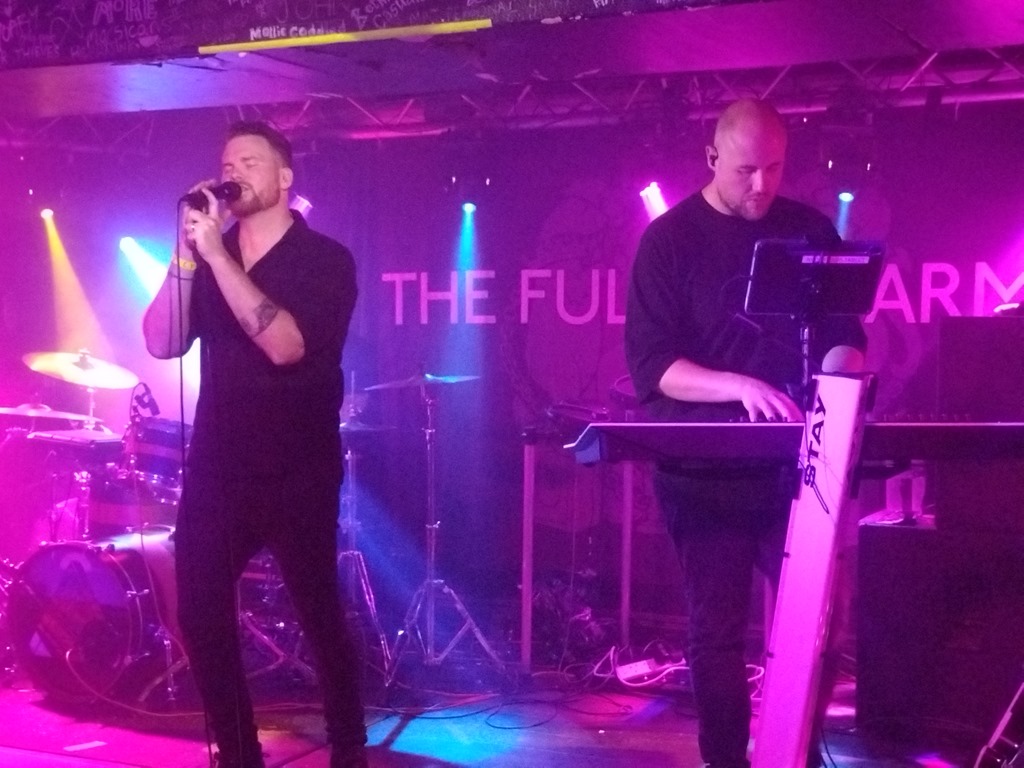
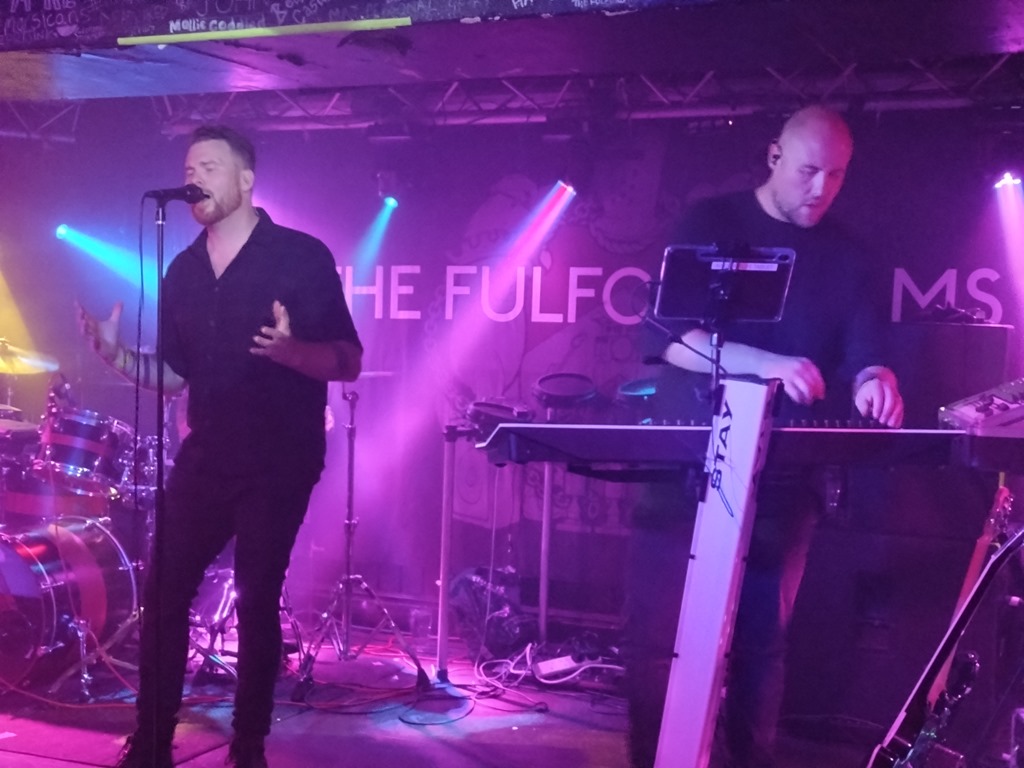
With Material Goods overrunning and Neon Fields also possessing an immense amount of flash-looking tech which needed setting up, we’re fifteen minutes behind time when they take to the stage. Sonically, they’re astonishing. Playing a hundred-and-twenty-five-capacity pub venue, they sound like half a million quid’s worth of gear in an arena. And the songs match it. They sound like they look: black clad, tattoo bands, neatly-trimmed beards, big, soaring emotional outpourings… And completely lacking in soul. Christ, this guy’s level of emotional trauma is enough to raise the blood pressure to induce a heart attack. Wracked with anguish and all of the pain of the lovelorn, the love-torn… And yet it’s all articulated so blandly, everything is so slick, and so one-level. The theatre soon wears thin, and I start to forget I’m listening to it while I’m listening to it. It doesn’t help that there’s a group of four people bang in front of me gabbing on and pricking around, pulling faces, play-fighting, the guys trying to impress the birds by demonstrating their strength by lifting one another up… they get shushed by a fan but even the absence of their distraction doesn’t really improve the experience. There’s some earnest, meaningful falsetto, and the penultimate song had some cliché tribal drumming, and they wrapped up their bombastic set ten minutes after the headliner was due on.

IMG_20240724_21083420240724_210849

Neon Fields

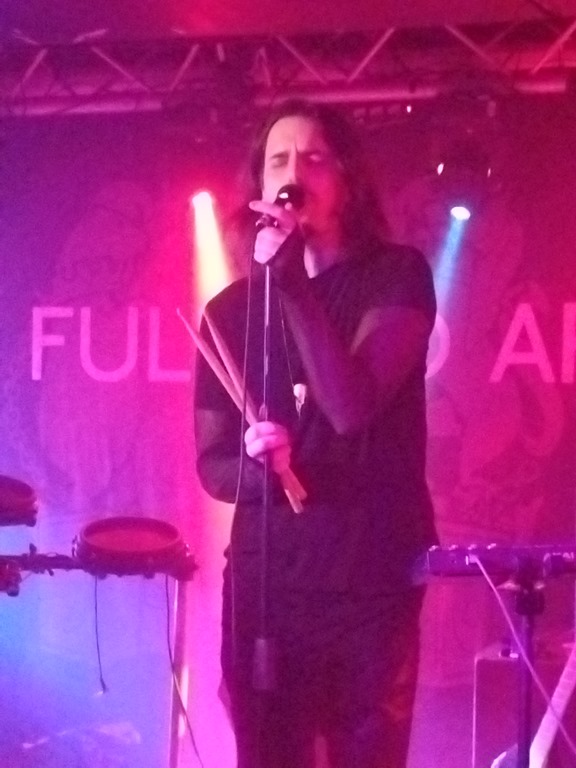
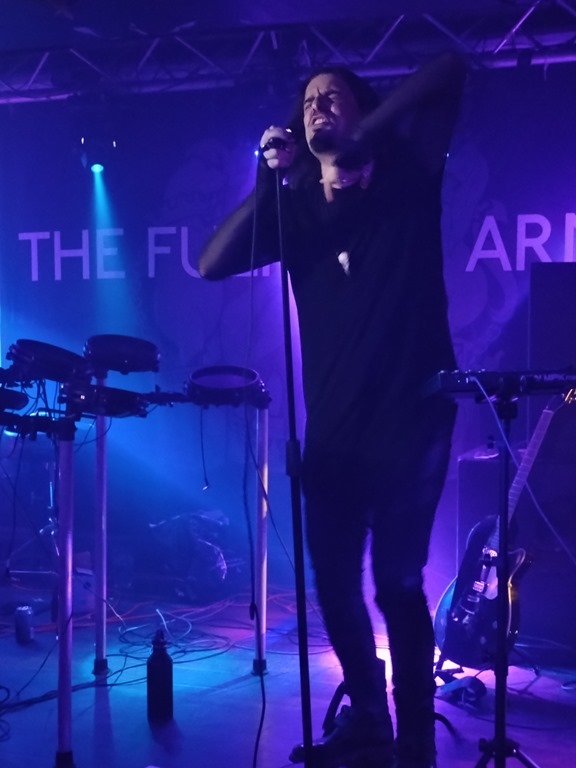
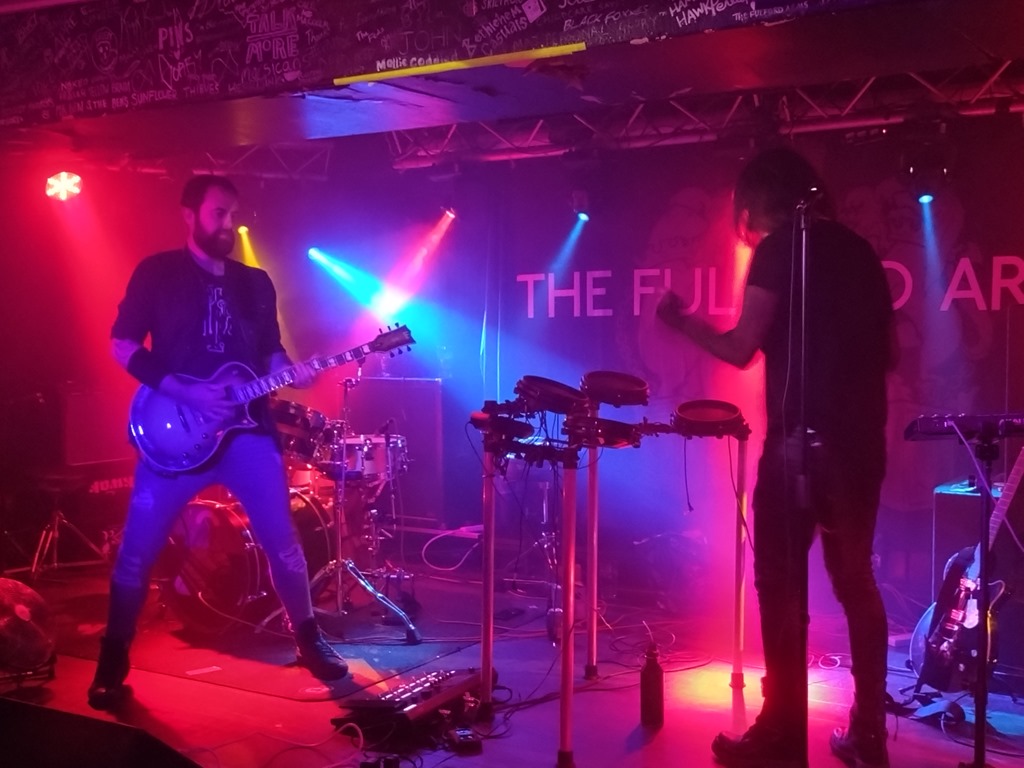
The Royal Ritual are also a duo who have an extremely ‘produced’ sound. But their approach to production owes more to the methods of Trent Reznor as pioneered in the early 90s on Broken and The Downward Spiral, balancing gritty live guitars with synths and fucked-up distortion and harnessing their tempestuousness in a way that creates a balanced yet abrasive sound. David Lawrie plays live electronic drum pads in addition to the sequenced beats, adding dynamics and live energy to proceedings, and flitting between the drum pads, synths, and mic stand, he’s incredibly busy throughout the set. But something about Lawrie’s delivery highlights everything that was absent on Neon Fields, and just carries so much more weight: the whole package brings a rush of adrenaline propelled by that emotional heft and solid force.

Objectively, the feel is very Stabbing Westward, and goes hard NIN at times in its combination of guitar, synths, and sequenced and live electronic drums. The Royal Ritual are strong on dynamics and atmosphere, and Lawrie is an intense and compelling performer.

IMG_20240724_22045120240724_22154320240724_220550

The Royal Ritual

He does break out of the moody persona to thank other bands and plug merch, but what do you do? In the current climate, bands sadly need to plug the stall. The fact that David steps out of broody tortured soul for two minutes of affable chap may seem hard to reconcile, but then, this perhaps speaks more of the human condition than remaining ‘in character’; people are complex and conflicted, multifaceted and inconsistent. And this is what truly lies as the heart of tonight’s performance by The Royal Ritual. Digging deep into the complexities of the psyche, there’s something about the duo’s performance that gouges into the flesh and demands contemplation.

Septaphonic Records – 7th October 2022

Christopher Nosnibor

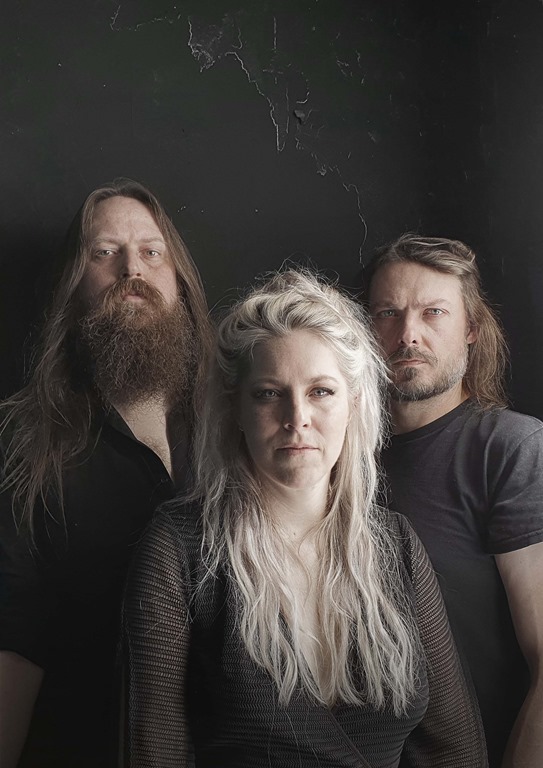
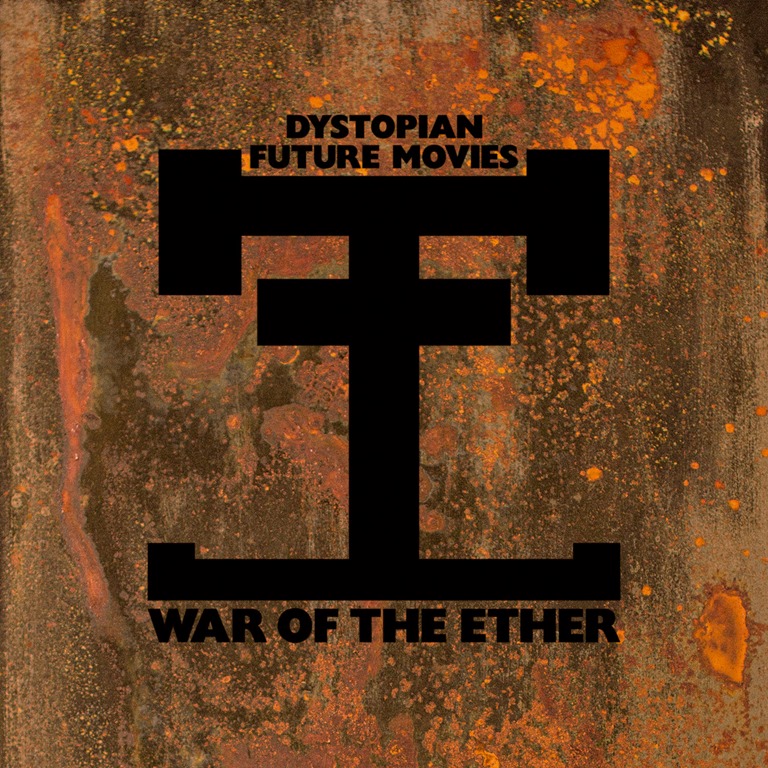
While Dystopian Future Movies’ ‘difficult’ second album, Inviolate, took a full three years to land after debut Time, their third, War of the Ether crashed in after just over two, and it’s an immense sonic documents that the Nottingham trio have compiled in this time.

Back in the spring of 2020, I wrote of Inviolate that ‘Everything about Inviolate is bigger, bolder, more pronounced and yet more nuanced, shaper and more keenly felt and articulated. And every corner of the album is imbued with a sense of enormity, both sonic and emotional: Inviolate feels major-scale, from the driving riffs to the heartfelt human intensity.’ That amplification is again true of War of the Ether. Dystopian Future Moves’ previous releases amply demonstrate a band with both an interest in and a knack for the cinematographic, the dramatic, so it stands to reason that they should extend these focal elements here.

This time around they’ve drawn inspiration from little-reported but truly horrifying events which took place at the former Catholic-run Tuam Mother and Baby Home in songwriter Caroline Cawley’s native Ireland, where 796 skeletons found in the grounds after suspicions were raised by a local historian in 2012. As the press release explains, ‘to hide the shame of pregnancy outside of wedlock, women were sent to homes like this all over the country – forcibly separated from their mothers, many of the children died in infancy due to neglect, and some were trafficked for adoption to the US. The country is still dealing with the fallout from these discoveries.’

War of the Ether is not a joyful record. It is, however, a record with real depth, and imbued with real emotion, as well as an aching sense of tragedy. And, as has been established as Dystopian Future Movies’ signature style, it’s an album which balances riffs and restraint, and is built on atmosphere and menace. They promise an album that ‘explores a wide range of genres from prog and shoegaze to doom-metal, noise-rock and folk,’ and don’t disappoint.

DFM 3 Portrait Photo 2000px WEBSIZE

War of the Ether opens – somewhat daringly – with the ten-minute spoken word crawler that is ‘She From Up the Drombán Hill’. For the most part, it’s sparse and spare, tingling guitars gently rippling behind the narrative – but there are bursts off noise, and it swells and grows and when it kicks in, it kicks in hard with piledriving riffage. The dynamics absolutely blow you away – exactly as intended. ‘Critical mass’ is appropriately titles, starting out with a haunting, echoed clean guitar and delicate drums rolling in the distance as a backdrop to Cawley’s aching, melodic vocal as it stretches and soars, and ‘The veneer’ is a magnificent slow-burner that builds to a shimmering sustained crescendo which unusually fades at the end. Against the weight of the subject matter and brooding instrumentation, it feels somewhat frivolous to focus on a fade, but it serves to highlight the many ways DFM are outside trends and exist in their own space. This is never more apparent than on the dreamy but serrated buzzing shoegaze of the title track.

For all its darkness, War of the Ether is a remarkably accessible album – not on account of its myriad hooks and killer choruses, but because it is simply so strong on melody and so utterly captivating. And because, as they demonstrate admirably on ‘No Matter’, the album’s shortest and most overtly structured song – they do have a real knack for snagging the listener with the combination of tunefulness and megalithic riffery. And then, the final track, the eight-and-a-half-minute ‘A Decent Class of Girl’ brings together all aspects of the album in a powerful accumulation of sedate, strolling psychedelia and climactic crescendos that optimise the impact of both.

Magical, majestic, and immensely widescreen, the scope of War of the Ether is simply breathtaking, and leaves you feeling stunned. Awesome in the literal sense.

AA

DFM 3 Album Cover Artwork 1500px

19th November 2021

Christopher Nosnibor

For a time, Maybeshewill were one of the definitive acts during the golden age of post-rock – and here in 2021 it’s possible to reflect and appreciate that the mid-noughties really was a peak time for the genre. Certainly in the circles I moved, every gig was wall-to-wall post rock, or otherwise there was at least one instrumental act on the bull, brimming with chiming guitars and epic crescendos. They were good times, too, and however quickly it moved from fresh to formulaic, there was a sense of excitement about this music you could lose yourself in. It felt like a moment in time, it felt like a movement, and it was exciting, particularly in Leeds and particularly around The Brudenell, which felt like something of an epicentre with its growing profile. But then again, smaller venues like The Packhorse were also showcasing so many emerging acts all doing that Explosions in the Sky thing.

During this time, Maybeshewill were one of the bands that stood out: while exploiting the template, they also expanded it with the use of strings and samples – plus, they were simply bloody good. And they still are. The title is, perhaps, an allusion to the fact that having called it a day, spent, back in 2016 they have decided to return to both the live forum and recorded a new album.

This recent reanimation was unexpected, but perhaps the last thing we expected to open Maybeshewill’s long-awaited comeback album is a thumping sequenced drum and squelching synth bubble. But then it yields to a rippling piano and a wash of surging, soaring strings and immediately we’re transported to a space of expansive, emotionally-charged instrumental post rock. The three and a half minutes of ‘We’ve Arrived at the Burning Building’ is perfect Maybeshewill – dramatic, expansive, dynamic.

Lead single ‘Zarah’ is up next, with samples lifted from the premier speech from MP Zarah Sultana at its core. It first perfectly into the early arc of the album, and it’s a great track, and anyone who says music and politics shouldn’t mix is wrong. Musicians have a platform that is theirs to use as they see fit, and to see Maybeshewill using their platform in this way is encouraging.

The strings really dominate the arrangements on this album, but there’s a lot of texture and a lot of detail, and propulsive drumming shapes the structures of the songs. ‘Complicity’ is exemplary, as it transitions from a driving swell to a loping, contemplative mid-section that slows the pace before exploding into a fill battery of strings, a barrage of live and electronic percussion, looping piano and driving guitars. Yes, it takes you back at least, if you were there at the time – but it also feels perfectly contemporary and forward-facing.

‘Invincible Summer’ alludes to both Krautrock and 80s AOR with its motoric beat and looping synths and clean guitar that nags away crisply, while ‘The Weight of Light’ is one of those tunes that simply makes you sag with sadness. It possesses an aching beauty, and the surging crescendo is simultaneously uplifting and utterly crushing. There’s a lot going on: ‘Refuturing’ takes a twist into mellow jazz territory, while ‘Green Unpleasant land’ makes a further political statement without words, a gnarly tempest of guitar-driven disquiet.

If the chiming, rolling, mellow ripplings that build to a thunderous storm on the seven-minute-forty-five ‘Even Tide’ is classic post—rock to the point of cliché and bordering on historical with its use of soaring guitars and sustained crescendos, then the brass is very much a departure, and it paves the way for the final salvoes of the seven-minute ‘The Last Hours’ that spirals and soars into the truly epic territories, and the rolling, piano-led ‘Tomorrow’, that sweeps in a wave of optimism.

Together these two tacks draw the album to an exhilarating yet measured close. It’s everything that’s defined the band over the course of their career, making this a most welcome return and an outstanding addition to their catalogue.

AA

a0585002003_10

Send The Wood – 28th January 2018

James Wells

Antagonism Of The Soul represents the culmination of five years of work or French metal act Insolvency (a name that’s more suggestive of a punk band, perhaps, although it’s clearly been no hindrance to their connecting with an audience on their home turf).

If the instrumental intro track, with its cinematic strings, rolling piano and brooding atmospherics, all woven together to form a mellifluous melody is a shade cliché, it sets a degree of expectation for the album as a whole.

Insolvency’s style is centred around contrast and juxtaposition and the uptempo. The clean / guttural vocal interactions which define the sound is matched by driving, distorted rhythm guitar chug and soaring, melodic and highly technical lead work. There’s a lot of technical proficiency on display here, as it happens: the rapidfire drumming is dynamic and intense, and there are tempo changes galore, meaning the songs feel as if they’re in constant transition. So, while the elements are commonplace, the execution and the delivery are far from it. Insolvency pack an awful lot into each of the five-minute segments, and these miniature epics are finely honed, and the production does them justice: it’s polished, but not so overly slick as to sand off the edges. It’s crisp, but still has bite, and balances aggression and emotional resonance.

There are hooks and some epic choruses, but they’re never overplayed, and for all of the heavy metal thunder, there are elements of prog and atmospheric post-rock in the mix. It all equates to an album with depth and range.

AA

Antagonism of The Soul Artwork