Posts Tagged ‘drones’

Cruel Nature Records – 28th November 2025

Christopher Nosnibor

November always feels like plunging into an abyss. It’s the month when , after the clocks change on the last weekend of October, the darkness encroaches at an exponential pace, while, simultaneously, the weather deteriorates and temperatures suddenly drop. I struggle with November, and I’m by no means alone in this – but the darkness and muffling cold brings with it a blanket of isolation, too.

Listening to the debut album proper by Songe in this context makes for a heavy experience. And it’s the context that counts here, because in reality, Daughters is largely calm and spacious rather than dark and oppressive.

The Anglo-French duo consisting of Gaëlle Croguennec and Phoebe Bentham formed in 2023 ‘upon stumbling on a lonely church piano’, and, we learn that ‘Songe explores what it means to live in a postmodern world that feels rooted in destruction’.

This resonates. Right now, it feels as if the world is on a collision course. The so-called ‘great pause’ of the pandemic seems more, in hindsight, as if it was a time during which tensions built and nations pent up rage ready to unleash the moment the opportunity arose. Some of this a matter of perception and distortion, but the bare fact is that the last COVID restrictions were lifted here in the UK on 21 February 2022, and Russia invaded Ukraine three days later. The pandemic, for many, felt apocalyptic. It wasn’t simply the deaths, the fear, but the impact of the restrictions, which didn’t suddenly dissipate the moment those restrictions lifted. The end of restrictions felt like a deep-sea diver coming up for air, the aftereffects akin to the case of the bends. While we were recovering our breath and dealing with the cramps, Russia invaded Ukraine, and from thereon in it’s felt like an endless succession of disasters, storms, and then – then – the annihilation of Gaza.

Musically, Daughters – on which the duo deliver a set of ‘vibrant and experimental soundscapes using a variety of e-pianos, pedals and theremin, pairing a traditional playing style with bit-crushed granular delays to create a soaring top line met with ethereal vocals’ – is by no means dark, bleak, or depressing. In fact, quite the opposite is true. It’s a delightful set of compositions.

But sometimes, the more graceful, delicate, uplifting the music, the harder it hits. And on Daughters, Songe reach some dark and hard-to-reach places. From the most innocuous beginnings, the epic, nine-minute ‘Warmer, Hotter’ swells to a surge of discordant churn beneath soaring, ethereal vocals. The piano-led ‘Ashes’ borders on neoclassical in its delivery, and is rich in brooding atmosphere. ‘Heol’ begins with distorted, discordant harmonics, with frequencies which torment the inner ear. Gradually, through a foment of frothing frequences and fizzing tones, bubbling undercurrents rise. Haunting vocals rise through the mist, the haze, the dense and indefinable drift. It’s ethereal, spiritual, bewildering in terms of meaning.

Waves crash and splash before soft, rippling piano takes the lead on penultimate track, ‘Eveil’. It’s graceful, majestic, emotive – but not in a way which directly or obviously speaks of the album’s subject or context. The vocals are magnificent, but the words impenetrable. It works because of this, rather than in spite of it. It’s slow, subtle, powerful.

It’s not until the final composition, ‘Wraith’, that we feel the emotive power of a droning organ, paired with saddest of strings, that we really feel the depth and emotion al resonance of Daughters. As it fades in a brief reverberation, I find myself feeling sad. No, not sad: bereft. This is an album that takes time to take effect, to soak in. It deserves time to reflect.that time.

AA

AA
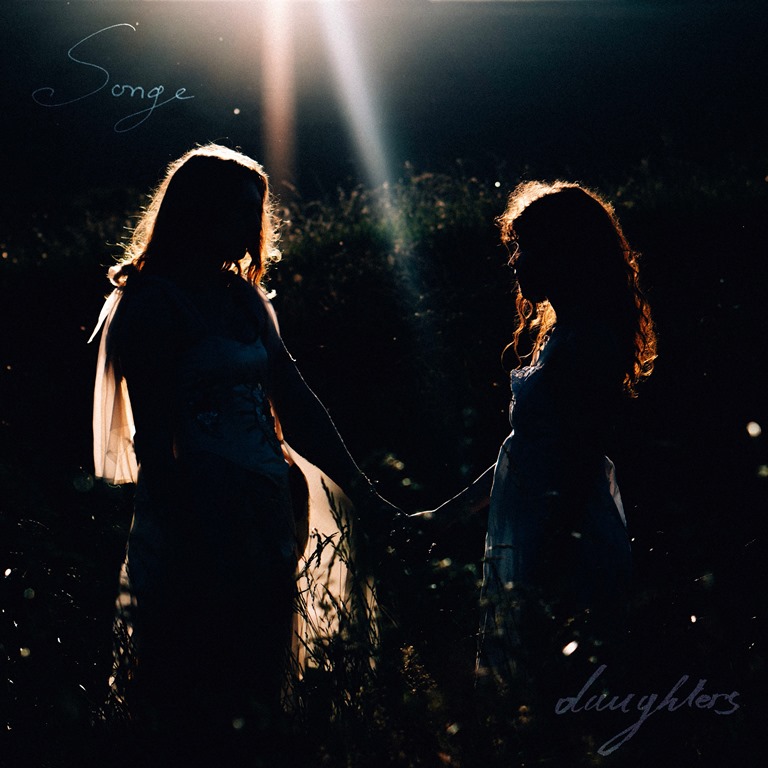
cover

16th June 2025

Christopher Nosnibor

Gintas K’s latest offering was recorded live, using computer, midi keyboard and controller in January 2025, and first released by Japanese label Static Disc in May.

It’s worth perhaps mentioning that ‘Breakcore’ is – and I shall shamefully quote from Wikipedia here – ‘is a style of electronic dance music that emerged from jungle, hardcore, and drum and bass in the mid-to-late 1990s. It is characterized by very complex and intricate breakbeats and a wide palette of sampling sources played at high tempos.’ In the main, not really my personal field of expertise, or particularly within the remit of Aural Aggravation.

But this is a Gintas K album, and the nine pieces are typical of his style, combining experimentalism and the application of software and midi / laptop setup, producing a range of glitchy, frothy, gurgly sounds which stop and start intermittently, unpredictably. His live and improvised works always come with a sense of unpredictability, of spontaneity, while bearing his distinctive sounds. One of the key focuses within K’s work is on detail, zooming in on microtonality, granularity. When I say it sounds ‘bubbly’ or ‘frothy’, I mean it’s the sound one might consider the equivalent of the visual experience of slowly swirling a latte or a pint of ale, or hyperfixating on the bubbles in a bath. This is not, however, the gentle swill and flow of currents, but a frenzied effervescence, like the reaction between bicarbonate of soda and vinegar. And look long enough and hard enough, and patterns begin to emerge.

Listening to the bubbling blitzkrieg of digital clicks, beeps, and fizzing of any work by Gintas K can be stimulating to the point of eye-popping discombobulation. It’s almost too much – and this is nevermore true than the experience that is Breakcore. There are beats present – but they’re composed not of beats in the conventional sense, being neither rhythmic nor percussive, either from an analogue source or a digital sampled source or emulation. These are flickers, pulses, rapidfire stutters, hard sounds which replicate the essence of a beat without being a beat, per se. For example, those of a certain age may recall the successive ‘pink-pink-pink’ chattering digital babble of dial-up. Few would necessarily consider those sounds beats in context, but… yes, they have a certain beat-like quality. And this is how the beats often emerge from the clicks and pops, moans and drones or another quintessential Gintas K demonstration of circuit meltdown as an artform.

I had never considered his work in a ‘dance’ context before, and still wouldn’t: one feels as if the title is perhaps a shade ironic. But the tempo is certainly high and the beats are complex and intimate, emerging as they do from the thrum of what sounds like a revving engine, the whirr of an old hard-drive, the click of a CD driver whirring into action. Every second of this release sounds like some kind of digital or mechanical malfunction, as tempos whirl and blur, drawl and slow. Scrunching, crunching, twanging, springing, stammering and stuck, it’s a relentless attack of wrong sounds. But emerging from all of it, there are erratic beats, like a succession of deliberately jarring jazz fills and simply wild judders.

It is relentless, and it’s complete overload. The nine tracks run for a total of twenty-nine minutes: its intensity is such that you feel as if your brain is starting to melt after the first ten. In short, Breakcore is truly wild, and it’s not remotely easy or accessible – but it absolutely encapsulates everything that defines what Gintas K’s does.

AA

AA

cover

Room40 – 3rd January 2025

Christopher Nosnibor

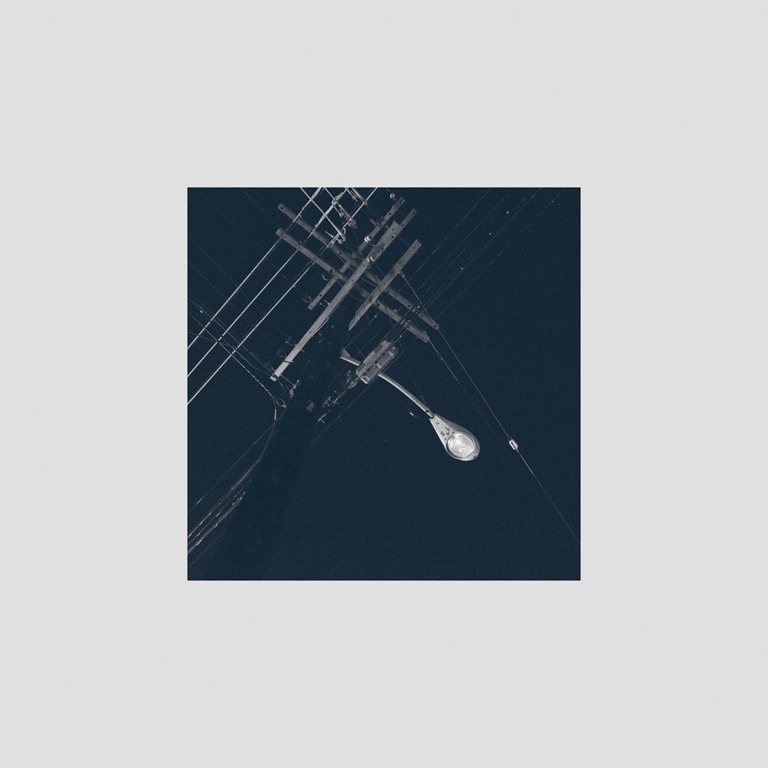
Ian Wellman’s works are usually responses to environmental issues, be they derived from articles covering global matters or more immediate or personal situations. His latest, Can You Hear The Street Lights Glow, sits very much in the latter category, as he details in the accompanying notes, which I shall quote in full:

I moved to Pasadena during the fall last year. One of the first new sounds I noticed were the mercury-vapor street lights that filled the air as the sun went down every evening. Under the sidewalks, exhaust vents hummed along to the song of crickets and the rumble of traffic. Being away from the inner city, more individual details in the soundscape emerged.

As a way to explore the new area, I walked around at night with my equipment. I placed geophones and contact mics on every metal surface I could. I ran electromagnetic sensors across electronics accessible by the sidewalk. I put mics out on quiet streets, behind shopping areas, and in parking lots. I felt very compelled and inspired to listen and learn about my new home. Can You Hear The Streetlights Glow? is the result of these listenings.

Certainly, the first part of this is something I find quite specifically relatable – not due to relocation, but to finding myself suddenly discovering a heightened awareness of my immediate surroundings. Like many people, I used to walk around with earphones in, listening to music to cut out the noise around me. This was essential on my daily commute, as listening to music as I walked through town created a separation between home and work, and while on the bus from town to the office, it shut out the babble of other people, and created a barrier between myself and anyone from work on the bus who may have been inclined to strike up a conversation. And on the way home, the same was also true but listening to music also helped me decompress – or mirror my angst – after a day in a noisy open-plan office. Lockdown changed that. I suddenly felt the need to be alert in case of approaching runners or cyclists or people kicking off in queues for the supermarket because someone wasn’t observing the two-metre rule or otherwise losing the plot over COVID restrictions. In short, I was scared – terrified, even. Not so much of the virus, but other people. I felt I needed to be on high alert at all times, because people are simply so unpredictable. One byproduct of this was that when I left the house form my allotted hour of exercise, I became acutely aware of the quietness – the absence of the thrum of traffic, the absence of chatter, and in their absence, I could instead hear the wind, birdsong, my own footsteps. In fact, I could hear everything. In the quiet, the small sounds were suddenly so much louder. The quiet wasn’t nearly as quiet as it first seemed. It was the aural equivalent of one’s eyes growing adjusted to the dark.

The auditory voyage of discovery Wellman charts on Can You Hear The Streetlights Glow bears clear parallels to my experience, but takes things a step or three further with his use of an array of equipment in order to capture sonic happenings in these spaces and his interrogation of the sounds in order to reach a deeper, more intimate understanding of his environs.

The results are quite fascinating, and range from a cluster of brief snippets, of under a minute and a half to just over two minutes, to more expansive segments – 5G Antenna Power Box is almost five and a half minutes, and ‘Mercury-vapor Lights’ is a full twelve and a half minutes in length. The titles of the pieces are location-specific, and some are quite evocative in themselves – notably ‘Time Depleting on Bird Scooter’ and ‘Gas Pipes Behind Smoothie Shop’. On the one hand, they’re utilitarian in their descriptions; on the other, they create an image of a filmic world in which sound events happen in particular places.

Most of those sound events are different levels of hum and drone, but these varying levels of low-level throbbing serve as reminders of how mankind has interfered with the naturally-occurring sounds which are the true sounds of the outdoors. While I am likely to note the hum of the power lines as I pass a pylon, and so on, I am still attuned to the wind in the trees, the scurry of squirrels. The sounds on Can You Hear The Street Lights Glow are all entirely man-made, mechanical, and despite Wellman’s relocation to a more rural setting facilitating the opening of his ears, the locations are all noteworthy for their constructed, non-natural nature. People may interpret this differently, and Wellman’s intentions may have been different again, but the leading thing I take away from this is just how hard it is to truly escape the mechanised world we’ve made. But equally, Can You Hear The Street Lights Glow is a document which highlights the extent to which even in silence, there is sound – lots of it.

AA

a1805176232_10

Mortality Tables – 24 December 2024

Christopher Nosnibor

There’s something about Christmas that really does send people spiralling in one of two directions. The people who absolutely love it seem to love it just too much to be considered sane, and this year has been one of the worst I can remember for people actually buying chocolate and putting their trees up almost immediately after hallowe’en. Amusingly, I’m seeing them taking down their trees and decorations from Boxing Day, declaring that they’ve had enough now. Well, it’s hardly surprising after three months. I really for feel sorry for the kids of these deranged households: it must be quite confusing for them, not least of all seeing their parents troughing whole selection boxes to themselves in November as they effervesce about the Christmas spirit and plaster their hedges, bushes, trees, and house frontages with lights – which is as trashy as it is environmentally unsound (‘oh, we use green energy, it’s 90% nuclear now!’) – only to tear them down a whole tend days before twelfth night. But these are the kind of people who call what they do – things like going to work and parenting – ‘adulting’ and piss and moan about it on social media, while posting pics of their decorations at the start of November. And it’s cunts like these who make me loathe Christmas with a passion I didn’t even know I possessed. They spoil it for more moderate, more sane people – and people who just despise other people and herd mentality twattery in general.

And so I’m with Mat Smith, the main man behind Mortality Tables, and am one hundred percent into ‘Grouch Thoraces (II)’, pitched as ‘The festive sentiments of a misanthrope, processed into dark and enveloping ambient texture. An updated version of a release from 2023’. In fact, I consider this to be a release that stands alongside – in spirit, if not necessarily sonically – with my own Festive Fifty noisework, released on December 20th. Against the tidal wash of syrupy, saccharine Christmas tunes – shit covers or endless rereleases or just the same toss that’s been the staple of the airwaves since the 70s and even earlier – nothing says ‘fuck this commercial Christmas shit’ like some dark noise.

‘Grouch Thoraces’, released on Christmas Eve in 2023 was a dank, murky cut, presenting just shy of five minutes of the most rumbly dark ambience. This year – to use a phrase I despise almost as much as the cheery festivity fanatics who bounce around the office in Christmas jumpers and Deely boppers or reindeer antler headbands and start arranging secret Santa and team drinks and buffets from the middle of November – Smith has doubled down on his anti-festive sentiments with a reworked ‘Grouch Thoraces’: this time it’s even darker and danker and almost eight minutes in length. It’s a churning, disorientating mess of stuff thrown together, found sounds and elongates drones twisting together to forge a thick morass of unsettling, uncomfortable noise. According to the credits, there’s a vocal by Carroll Spinney, but it’s submerged in the slow-sinking swamp. There are chimes clattering in the dark whorl of purgatorial noise, but they sound like the ching of broken decorations swinging in a post-apocalyptic nuclear wind as the survivors crawl, blind, skin peeling, through the ruins of what little remains.

On its own merits, this is a strong dark ambient work with a certain edge: in context, it speaks. Fuck this festive shit, fuck this commercial shit, fuck the obligation to socialise: let’s celebrate stepping back from it all and just getting through it, without feeling the need to pretend that we love any of it. We misanthropes need to stand together.

AA

a0412538683_10

25th January 2024

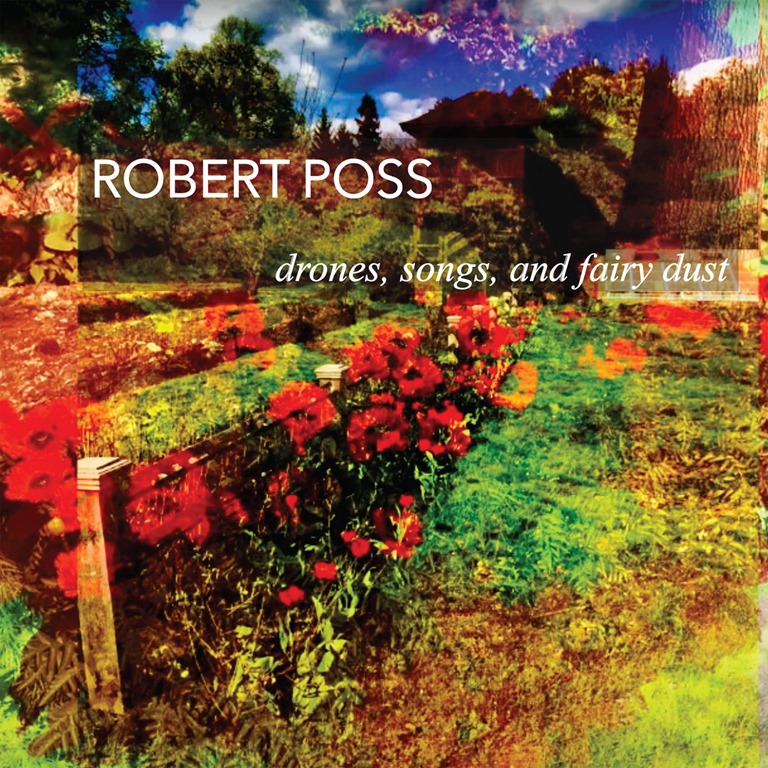
With Band of Susans, active between 1986 and 1996, Robert Poss curved an arc from the New York noise scene towards more of a shoegaze sound. With releases on Blast First and Mute, and featuring a pre-Helmet Page Hamilton on second album, Love Agenda, not to mention a reputation for eardrum-shatteringly loud live performances, the band unquestionably achieved more in terms of influence and cult cred than commercial success (something their final album, Here Comes Success (1995) seemed to acknowledge in its title). But what qualifies as success? Capitalist culture and media tell us that success is a career, promotion, cash, holidays, cruises, bug house big car. But that’s because these are the status symbols capitalism tells us we should aspire to. How about having enough to be ok, a home you like and feel comfortable in, having friends, knowing yourself and being comfortable in your own skin, and having the freedom to do things which give you pleasure? It’s a question of values: what do you value more, time, or money? Status, or the satisfaction of being true to yourself?

There seems to have been a fair bit made of fellow BoS alumni Karen Hagloff’s return to music making in recent years, but not so much about Robert Poss’ sustained output since the band called it a day. But then again, Poss has spent a career being somewhat overlooked and vastly underrated. Both his songwriting and style of playing is quite distinctive and unusual – quirky seems a reasonable adjective, and is certainly not a criticism. The notes on bandcamp note that ‘The release is dedicated to composer/filmmaker/photographer Phill Niblock, a long-time mentor, colleague and friend.’ The timing of this certainly renders this dedication particularly poignant, and also highlights the way in which exponents of avant-gardism feed off one another and evolve one another’s ideas in different directions.

The Niblock connection certainly sheds additional light on Poss’ approach to composition and sound, favouring drones and repetition over rigid verse/chorus structures and progression, and Drones, Songs and Fairy Dust does very much contain, as the title suggests, a miscellany of bits and pieces, ranging from exploratory wanderings to fully-formed songs using conventional ‘rock’ format of guitars, bass, and drums – and on some, there are even vocals, notably the punchy post-punk cut ‘Your Adversary’, which marks a change of style with its murky production and blustery drum machine backing.

The first of these, ‘Secrets, Chapter and Verse’ is a title which could easily be on a Band of Susans release and the song carries that Band of Susans vibe – jangly indie but played loud – and I mean LOUD, with strolling bass running back and forth and up and down beneath the layers of guitar, the vocals low in the mix and serving primarily functional capacity – sonic placeholders.

‘Out of the Fairy Dust’ combines jangling indie and ambient drone and in many respects does carry echoes of ‘Here Comes Success’ – but also Love of Life era Swans – at least until about halfway through where it takes a sudden turn into deeper folk territory. It’s quite a contrast with the deep, ultra-droney sonorous ambience of ‘Foghorn Lullaby’.

Like the epic solo workout that is ‘Hagstrom Fragment’, which comes on like some legs akimbo 90s rock, ‘Skibbereen Drive’ lunges into rock mode, and follows the chord sequence of ‘Flood II’ from The Sister’s of Mercy’s Floodland – and sounds very like it, with its cold synths and crisp drum machine, but without the acoustic guitar detail and lead guitar line. It’s a real contrast to the epic dronescape of ‘Into the Fairy Dust’, on which the drums are a million miles behind the drone as they clatter and roll away, onwards, ever onwards, but also almost entirely submerged in the mix. Elsewhere, with its snarling synth grind, ‘S Romp’ sounds like Suicide doing dirty disco, and ‘Trem 23’ – well, it takes us back to the 23 enigma.

Drones, Songs and Fairy Dust showcases a remarkable diversity of styles, and it’s neither as dry nor as dark as all that, with ‘Imaginary Music On Hold’ presenting a most whimsical feel. As a collection, it never fails to be interesting, or enjoyable, and showcases Poss’ eclecticism and range, and there’s pleasure to be had from listening to a collection of work by an artist who never feels constrained or compelled to confirm to a given genre or mode. It’s something that seems to trouble many people, not least of all labels and critics, that an artist’s creations are based on the pursuit of creative endeavour and interest rather than assigning themselves a category by which they must live. The flipside of this is that it may not feel particularly like an album it its own right, but more like a collection of demos and ideas – and just as the title summarises the contents as three separate elements – Drones, Songs and Fairy Dust – so it feels like it contains the seeds of three separate and distinct projects – a droney one, an indie one, and a dark rock-orientated one. It would be exciting to witness those three projects realised, but what we have here, regardless of future intent, is a document of forward-facing music-making and an artist whose sole priority is doing his own thing. This is, ultimately, the ambition for any artist: to create without concern for commercial matters. And Drones, Songs and Fairy Dust is an exemplary product of creative freedom.

AA

a2882047316_10

Thanatosis – 7th May 2022

Christopher Nosnibor

Within Reach of Eventuality is the debut album by Swedish duo David Bennet & Vilhelm Bromander. Their notes on the album state that ‘Following a semi-open score, the duo is treating elements such as complex textures, non-pitched sounds, microtonality, beatings and intense pauses in an improvisatory and careful manner’.

I’m not entirely sure what that means, and I’m not certain of the meaning of the album’s title, either. It feels like it almost carries a sense of significant import, but then is equally so vague as to be almost abstract. And in a way, it’s representative of the four pieces on the album. There’s a grainy scratching flicker of extraneous noise running along in the background during ‘Part I’, like a waterfall in the distance, while in the foreground, elongated drones – atonal strings or wavering feedback – hover around the pitch of nails down a blackboard. Occasionally, more conventionally ‘orchestral’ sounds – emerge fleetingly – gentle, soberly-paced percussion, string strikes and soft woodwind, and it comes together to create a somewhat ominous atmosphere.

It’s a hushed, minimal ambience that fades out towards more sonorous drones that ebb and flow across ‘Part II’, and as the album progresses, the interplay between the tones – and indeed, atones – becomes more pronounced, and also more dissonant and consequently more challenging, as long, quivering, quavering drones rub against one another.

The structures – such as they are – become increasingly fragmented, stopping and starting, weaving and pausing. There is a sense of a certain musical intuition between the players, the rests coming at distances that have a sense of co-ordination, if only as much to confound expectation as to sit comfortably within it. In other words, Within Reach of Eventuality feels like a semi-organised chaos, and as it slowly slides towards the conclusion of the sixteen-minute fourth part, the sound thickens, the volume increases, and the atmosphere intensifies, become more uncomfortable in the process. And in this time, the meaning becomes clearer when it comes to understanding their approaching the sonic elements in a ‘careful manner’. There’s nothing remotely rushed about Within Reach of Eventuality. The notes are given space and separation, room to breathe. It all feels very considered, very restrained: it’s no improv free-for-all, there are no frenzied climaxes or blasting crescendos. Instead, they demonstrate a sharp focus on a fairly limited range of sounds and spaces, and the result is an album that has a strong cohesion.

AA

a4211091835_10

4th April 2021

Christopher Nosnibor

With Illusion, The Long Night threaten ‘a sonic journey capturing the deep melancholy sound of things that are likely to be wrongly perceived or interpreted by the senses, adding that ‘Consisting of massive drones, chants, and field recordings, Illusion paints the picture of darkness trying to find a light in one’s consciousness.’

I’ve been struggling with certain things in recent months. Many things, if I’m honest. Reading books has been one, and listening to song-based music has been another. Concentration has been a real issue. Flitting back and forth in a daze through news items I haven’t the focus to read in their entirety, I see the theme of ‘long Covid’ as a recurring topic. But equally, I find that people I am in regular and frequent contact with – work colleagues, mainly – are feeling utterly drained and devoid of motivation. None of them has suffered from Covid-19, and I can’t help suspect there’s more of a long-term lockdown malaise that’s taking its toll on people. I’ve felt restless, listless, lacking in concentration, unable to face tasks that are beyond my comfort zone, and have immersed myself in domestic chores and cooking, outside my turgid dayjob.

And so it is that I’ve found solace in more ambient sounds. Their abstraction offers a certain escapism, and the right ambient sounds have an immersive quality that offers a distraction from everything else. Illusion is both abstract and immersive. For the most part it rumbles and drones without any real sense of direction, and that’s perhaps its strongest asset as it creates a sonic space in which to wander, lost, adrift, but away from the world.

On ‘Untold Mind’ and the murky morass of ‘Forgotten Time’, monastic voices rise ethereally from the grey smog, but for the most part, Illusion is a thick fog of amorphous, substanceless abstraction that drifts and eddies around without direction or any real sense of form. The nine-minute ‘The Myth of Now’ is a cavernous drone of immense depth and resonance that hangs heavy shadows with intermittent glimpses of light, but the overall experience is unsettling, as dark tones rumble and rise from the dark depths.

Illusion may be little or nothing more than its title suggests, but it is all we need for now as we cling to desperately to whatever we cen. And this is worth clinging on to.

AA

274259