Posts Tagged ‘Drone’

Dret Skivor – 1st September 2023

Christopher Nosnibor

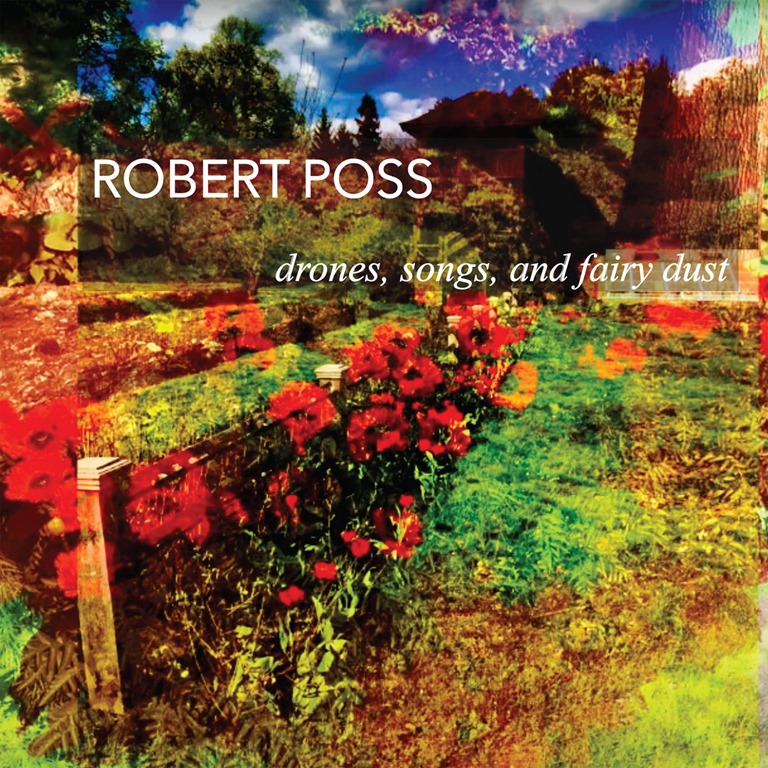
This twenty-two-minute continuous composition is ‘A consideration and contemplation of the stupidity of people who have more money they could ever spend and fritter it away on dick-waving projects instead of paying the tax they should be paying and contributing to society’, adding ‘Billionaires shouldn’t exist at all and we need to start having this conversation.’

Yes. Yes. And yes. It’s been something I’ve been silently raging and experiencing existential agony over in recent months. During the summer, half the planet was on fire. Meanwhile, tax-avoiding billionaires were jetting off into space and planning cage fights to settle the argument of who’s the bigger testosterone-fuelled egotistic manchild.

August saw Oregon flooded following hurricane Hillary and a billion-dollar plus restoration project in its wake: the same week, Virgin Galactic was jetting people into space for fun at a cost of around half a million dollars a ticket. If the ticket fees had been put towards the recovery operation, they’d be well on the way. But these cunts just don’t care. Fuck the plebs in their flooded homes: they’ve all got multiple penthouses well above sea level and they’ve earned their jollies – through the labour of the people who have so little, and some who have even lost everything.

I suffer corpuscle-busting rage at people who jet off on skiing holidays bemoaning the lack of snow. They’re one of the primary reasons there is no snow. How fucking hard is it to grasp? And if cars and planes are heavy polluters, launching rockets is off the scale. Not that they give a fuck. They’ll be dead before the earth becomes inhospitable to human life, and their hellspawn will have all the money and can go and live on Mars, so everything’s fine in their megarich world.

It begins with a grand organ note, as if heralding the arrival of a bride or clergy…and so it continues. On… and on. Five minutes in, and very little has changed. Perhaps some light pedal tweaks , a shift in the air as the trilling drone continues, but nothing discernible. The note hangs and hovers. It fills the air, with the graceful, grand tone that is unique to the organ, a truly magnificent instrument – and I write that with no innuendo intended, no reference to the Marquid de Sade submerged for my personal amusement here.

Admittedly, I had initially anticipated something which would more directly articulate my frothing fury at the fucked-up state of the world, but begin to breathe and relax into this rather mellow soundtrack… I start to think that this abstract backdrop is the salve I need to bring my blood pressure down, and think that perhaps this is the unexpected purpose of this release… but by the ten-minute mark, I find myself bathed in a cathedral of noise, and before long, it’s built to a cacophonous reverb-heavy blast which sounds like an entire city collapsing in slow-motion. And this builds, and builds. Fuck. I’m tense again. I feel the pressure building in my chest, the tension in my shoulders and back aches. It makes sense. This is the real point of this recording. Everything is fine until you log onto social media or read the news, and you see the state of things. Momentarily, you can forget just how fucking terrible everything is, how the world is ruined and how there is no escape from the dismalness of everything, and how capitalism has driven so much of this, creating a life stealing hell for those who aren’t in the minuscule minority.

Fact: 1.1% of the population hold almost 50% of the global wealth. A further 39% of wealth is held by just 11% of the population. 55% of the world’s population hold just 1.3% of the wealth between them. So remind me, how is capitalism working for the world? Trickle-down economics is simply a lie as the wealthy retain their wealth and simply grow it. Liz Truss may think that the UK importing cheese is ‘a disgrace’, but this statistic is mind-blowing.

Eighteen minutes in and my mind is blown, too. It feels like it could be part of the soundtrack to Threads. It’s a dense, obliterative sound, a blowtorch on a global scale, the sound not of mere destination, but ultimate annihilation. It seems fitting, given the future we likely face.

AA

a0916419313_10

Sonoscopia sonos – 15th September 2023

Christopher Nosnibor

Trobollowitsch is certainly a name that sticks in the mind, and so it was that back in 2016, I penned a piece on Roha by the Austrian Sound artist. At the time, I struggled to really connect with his conceptual compositions.

This latest offering finds him working with Thomas Rohrer, a Swiss musician, who ‘plays the rabeca, (a Brazilian fiddle), and soprano saxophone’, and whose work ‘is largely based on free improvisation, but also engages in a dialogue with traditional Brazilian music.’

The collaboration between the pair actually began in 2017, but they didn’t begin work on any recording until January 2021, when, according to the bio, ‘they embarked on a duo project combining Trobollowitsch’s rotating mechanical turntables equipped with branches, wood and dried leaves with Rohrer’s soprano saxophone, small objects and rabeca… During their collaborative recording process, renowned singer Sainkho Namtchylak from the Tuva region contributed her captivating, versatile voice, which she has used to great effect in a variety of musical genres, including jazz and electronic music.’

Given their diverse background and different modes off operation, this collaboration was always going to be not only eclectic, but a collision of diversity, and the question would always be to what extent do they compliment one another, or otherwise pull in such different directions as to render the work more of a competition than a collaboration? Given that both Trobollowitsch and Rohrer are credited with ‘recomposition’ of several tracks, there’s a sense that this effort is defined, if not by friction as such, then by differences, and a working method which entails dissecting and reconstructing, a restlessness and dissatisfaction.

Crackling static and an electrical hum are the key elements of the title track. It’s somehow both spacious and claustrophobic, and as the sounds rumble and echo around, you feel like your shut right in a small room – more like a walk-in cupboard – as the serrated buzzes and grinding drilling sounds fizz and fret all around, gradually warping and twisting, sometimes ballooning and others shrivelling. Suddenly, I jump. Is that my phone vibrating? No, it’s not, it’s a vibration puncturing the third wall, something that sounds like it’s in the room rather than coming from the speakers, which are by now emanating shrill blasts of feedback.

The sound collaging on this album is something else, leaping into the three-dimensional at the most unexpected moments, and the sounds and textures constantly shifting to forge a work which is more than music, more than sound: this is something you feel, not emotionally or cerebrally, but physically: it makes your fingers tingle and move in a quest to grapple with the details. Sometimes those details are dark and demonic, as on the unsettling ‘Ovaa’. The vocals are rasping, gasping subterranean, subhuman grunts and gasps, strangled cackles that cark and bleat and croak and claw up from the sewers. It’s pure horror.

There are undulating, stuttering low-end bumps, there are hornets the size of buzzards as your car breaks down and your skull slowly crumbles as your brain struggles to process everything… anything. This is a soundtrack to something that simply shouldn’t exist; it’s aa soundtrack to your worst nightmares, as yet unimagined.

The production, the panning, the listening experience of interacting with this in the way it’s intended is terrifying and surprising in equal measure, as tweets and twitters occupy the same space as thunderous thumps and insectoid skitters and metallic scrapes and… there’s a lot going on, and it all makes for in accumulate and intense and really rather difficult sort set – not really of compositions, but largely incoherent audio processes. The accumulations and stacking of the sounds is by no means truly random or haphazard, but their assemblage creates as experience which feels altogether more happenstance. It’s a scrappy, scratchy, stop-start mangling of noise, and at times, it’s scary and strange, at other’s it’s ominous and eerie. It’s unsettling, and difficult to absorb. It’s incredible.

sonos#26A_front

illereye / Eyeless Records – 28th July 2023

Christopher Nosnibor

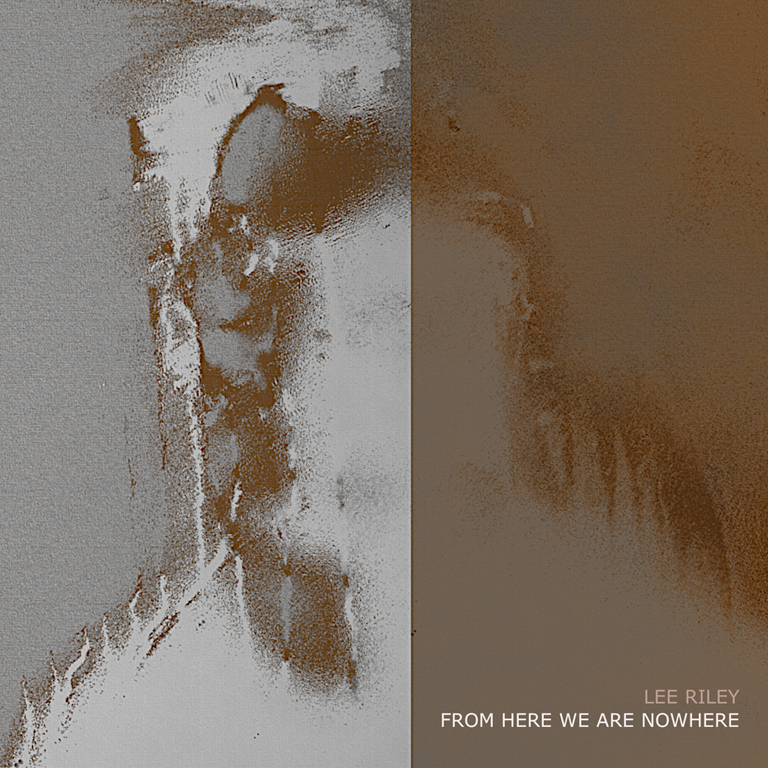
Lee Riley’s works include only minimal information about their inspiration or methodology, often coming only with the advice of ‘loudspeakers or headphones’. This is sound advice – if you’ll pardon the pun – not least of all because try as I might, I have never yet succeeded in listening to anything telepathically. This no doubt sounds incredibly facetious, but I’m only partly joking. With my inbox bursting with more new music than I could ever listen to in ten lifetimes, and that’s assuming a lifetime is a couple of centuries, I often find myself lamenting my inability to simply absorb all of the music by some kind of cerebral osmosis. I have sat and visualised a method whereby I place electrodes to my temples and the files simply transfer, or even a large syringe by which the music could be injected into me. I have similar visualisations about writing. Speech to text dictation programmes simply aren’t enough, it’s not practical for the most part. Since I compose most of what I write in my mind while walking along or doing other things, what I need is thought to text, by which the ideas simply appear on the screen. Way more useful than the AI shit that’s supposedly taking over.

With no detail to contextualise the title, or the sound contained therein, From Here We are Nowhere leaves us to interpret for ourselves, and before I hit play, I feel a sense of pessimism descend upon me from the inference of the phrase. The future is bleak… we are nowhere… lost, adrift, or worse, the connotations are there of ceasing to exist. Perhaps it’s my habit of having news channels on in the background while I go about my day, while I work my dayjob, while I cook on an evening, on mute but with subtitles, and the last week or two have elicited a sense of impending apocalypse. And I ask myself, why has it taken till now, when half the world is either melting or on fire to take climate change seriously. So where do we go from here? Probably nowhere.

The six pieces on this album take the form of dense, suffocating drones: the title track thrums and throbs like a thick, acrid smoke that engulfs your entire being, five-and-a-half minutes of muffled tones that grow in tension. Shards start to scrape and funnel near the end, but then it’s gone, just beyond reach. There is something illusive about this album. It feels as though there are forms to be found, but they’re submerged. ‘Lifting Undertow’ is ominous, and the scrunching scrapes and rattles are menacing, reminiscent of a sensation I experienced in a recurring dream as a child, perhaps most easily described as the visual disturbance of a migraine manifesting in an aural form. It’s all very quiet and low-key, making you feel quite detached from the plane on which the sound is playing out, and this is true of the album as a whole. ‘Undoing These Knotted Times’ is a long, low, sonorous undulating buzz that’s sedative and soporific, but also uncomfortable and queasy, as bleary and blurry as the cover art suggests. As that final note hovers and fades, a desolation grips harder: is there really any scope to undo these knotted times? Or is this simply a painful paradox?

The idea of ‘Staring Through Lit Skies’ feels optimistic, evoking perhaps a sunrise, but the reality is that the serrated drone and scrapes of feedback are more like looking at the searing sun through the smoke of a wildfire. It’s painful, and damaging, and it saps your strength as the only dawning is the realisation that we are all doomed.

I feel in my limbs and in my lungs and in my heart as the final trails of ‘No One Knows What’s Inside’ dissipate into the thick, claggy atmosphere following a crackling hum of distortion and grumbling, and then, there is nothing. And here we are, as we find ourselves… nowhere.

AA

cover

Consouling Sounds – 26th May 2023

Christopher Nosnibor

Size matters. Or at least, scale does, if you’re measuring epic. You can’t do epic by halves, and that’s a fact. And when an album weighs in with just five tracks but has a running time of almost forty minutes, you know you’re in proper epic territory (and that it certainly isn’t an EP masquerading as an album). And this is one hell of an album, and it goes beyond epic.

As the bio explains, TAKH emerged from ‘The fruitful collaboration between The Black Heart Rebellion and Echo Beatty’s Annelies Van Dinter on the People album was the beginning of a new musical story. After the end of TBHR Alexander, Annelies, Emeriek and Pieter went deeper in their quest to write music reflecting the true emotions of the musicians. After about one year of free improvisation, TAKH created something truly unique. The idea was very simple: to release the result of the collaboration without pre-orders and announcements…’

There is absolutely nothing out there on-line which provides a precursory listen to this album, and that in itself is beyond rare in an age when bands – and labels – hype releases to the nth degree. More common is that you’ll have heard every track weeks before the release, and this makes TAKH’s stealth approach all the more welcome. It takes us back to the days of before the Internet, when you’d read about a band in Melody Maker or hear about them from a mate or on the sixth form stereo – the means by which I introduced my friends to / tortured my friends with Swans and Godflesh during breaktime.

Swans are one of the bands listed as influencing TAKH, and it shows in the compositions, and to some extent, the musical arrangements, not least of all the way the final track echoes latter-day Swans in their hypnotic, immersive swells of sound.

‘Salomonne’ enters in a swathe of ancient Eastern mysticism, long, trilling vocal drones and esoteric spiritualism which sets the atmosphere before the arrival of the drums, bass, and rasping vocals. In combination, the tension builds as does the sense of vastness, and you feel an endless desert and sky spreading before you, extending infinitely to the vanishing point at which the two meet and fade in a haze. It slowly trudges, shimmering, simmering, and burning, to its weighty climax. It’s metal, but not in a particularly recognisable form.

The percussion dominates the droney ‘Unabashed and knowing’: if The Cure’s Pornography comes to mind, it’s a fair comparison, but this actually feels more like The Glitter Band paired with Joujouka and the triptastic done of a digeridoo. Around five minutes in, seemingly from nowhere, rising like a desert storm, the dual vocals rise up climactically to deliver something resembling an impassioned chorus, even bearing a semblance of a hook, before being drowned in a rising wave of sound: part shoegaze, part eddying panic and a sense of unfamiliarity, and all propelled by a relentless percussion., before ultimately fading to a heavy elongated drone.

The album’s shortest song is also perhaps its most conventional: a crawling bass and plodding beat pin ‘Drôme’ together, and the vocal passages are intersected with a chiming nagging guitar motif before the tension breaks – or more cracks a little – around four and a half minutes in. Perhaps it’s just me and I’m a little cracked, but the break into the light makes you want to cast your eyes to the skins and open our arms, not necessarily expecting a response but to simply absorb.

‘Azure Blue’ has a warped sea-shanty feel to it, amidst the crushing post-rock crescendos which surge and splash. Spread out over almost seven-and-a-half minutes, it’s a beast, albeit one that’s subdued and contemplative.

The album concludes in reflective style, with the ten-minute ‘Hair of a Horsetail’. Captivating vocals, at once ethereal and earthy, quaver over a slowly wavering drone. It’s a duet of sort, and one which delves into deep and ancient spirituality. The bass rolls in around the midpoint, from which the song builds, making for a climactic closure to an album that’s powerful, while often understated. It has so many levels, so many layers, so many depths; at once uplifting and exhausting.

TAKH - S T Cover

Sacred Bones – 19th May 2023

Christopher Nosnibor

It’s been fourteen years since there was new music from Khanate, the experimental doom outfit featuring members of Sunn O))), OLD, and Blind Idiot God. It’s perhaps not surprising that my social media feeds have been bursting with the news of the surprise arrival of their fifth album on digital platforms ahead of a physical release next month– and because it landed from nowhere overnight, you couldn’t say it was eagerly anticipated, but it’s got a lot of people excited.

As you would expect, given the members’ main projects, and the previous Khanate releases, To Be Cruel is an absolute monster, with just three tracks spanning a full hour. You don’t tune in to Khanate for snappy pop tunes.

The first chord hits like an atomic bomb, blasting from the speakers with such force it’s almost enough to floor you, and rising from the sustain, crackling synth notes, then another sonic detonation that’s so hard and loud it hurts. Many of the tones and tropes of To Be Cruel are heavily redolent of the crushing doom drone of Sunn O))), but as the first piece, ‘Like a Poisoned Dog’ abundantly evidences, Khanate are different. This difference may be less apparent to the casual listener, but the stop/start power chords and skewed, sinewy shards of feedback are cut from a different sonic cloth, and if Sunn O))) are renowned for their indebtedness to Earth, there are elements woven in here which seem to owe more to early Swans, and while I wouldn’t necessarily want to speculate on whether the album’s title is some kind of response to Swans’ 2014 album To Be Kind, there is some kind of contextual interface here, in that both acts are pushing parameters within a longform song format.

And then there are the vocals: it’s a good seven minutes before Alan Dubin makes his first contribution: the song takes another swerve, the blistering blast simmers down and as he howls and roars, the feel is a cross between the darkest of mangled metal and brutal hardcore. And his manic screams are powerful and affecting. He sounds troubled, but in a way that conveys the kind of tortured mental suffering that’s common to many: it’s a primal howl of rage ad anguish that we struggle to unleash, and so to hear this is to feel emotions channelled by proxy, and as much as it hurts, it’s a release.

‘It Wants to Fly’ takes it to the next level, presenting almost twenty-two minutes of pain. The guitar is slow, crushing, punishing. What can you say? It hurts. It’s also minimal in arrangement but maximal in volume: this is first-gear BPM, with decimating feedback between the crushing chords. At the same time, it’s doomy and ominous as well as raging, making for a powerful cocktail of weight and raw emotion. There is no question that Khanate bring both.

And so it is that the album’s third and final track, the twenty-minute title track, is twenty minutes of low drone and tortured screaming that sounds like a breakdown captured on tape as Dubin yelps and screams about spiders against a sparse backing of a distant rumble and clanging guitar. ‘Look! In the closet!’ he shrieks in what sounds like abject terror. You dare not look. You don’t even want to hide under the bed: you just want to leave the house. The composition takes its time, it hums and drones, and in time, it hits and it hurts, and in some way you wish you could be Dublin, you want this release to have a channel into the unhinged. But you’re stuck on the outside, an observer to what sounds like either the ultimate catharsis or mental disintegration.

Ground down to nothing beyond and anguished screams and squalling feedback, this is bare bones, the sound of desperation. It isn’t pleasant, and there is simply no room to breathe: this is dark, dense torturous, and it’s exactly what fans have been waiting fourteen years for.

AA

a3411741448_10

Midira Records – 5th May 2023

Christopher Nosnibor

Aidan Baker is one of those artists whose output is almost impossible to keep pace with – but the more remarkable thing is that for all of this hyperproductivity, the standard of work is of an unstinting quality. Recorded between 2020 and 2022, Engenderine – a double CD – lands almost simultaneously with Trio Not Trio, the first in a series of five albums on Gizeh Records, and just as Baker is gearing up for a tour with Nadja, the ‘ambient doom / dreamsludge, / metalgaze’ duo he is one half of.

To pause for breath for a moment, it’s worth stepping back and running through the context of this, which is worth quoting:

‘The neologism ‘engenderine’ comes from Lydia Yuknavitch’s The Book of Joan, a futuristic/dystopian/cli-fi retelling of the Joan of Arc story, and describes beings partially composed of pure energy capable of manipulating matter who, amongst a largely devolved human population, might be considered post-gender and a new evolutionary step.

‘Other song titles come from phrases and images from Tricia Sullivan’s duology Double Vision and Sound Mind, surrealistic fantasies about the nature of reality and perception and, like The Book of Joan, the possibilities of manipulating those.

‘Musically, the songs on Engenderine began as a series of slowly evolving ambient guitar loops – a bed layer of reality, so to speak – over which were layered bass, drums, and organ parts. These instrumental additions – the trappings of perception, signifiers, metaphorically speaking, our attempts to codify perception – incorporate traditional rock structures and progressions but are stripped down to a sort of somnambulant minimalism that might encourage introspection, a meditative background, uneasy listening, as much as they demand attention.’

It really is extremely uneasy listening. It’s perhaps as well it is, for the larger part, ‘background’, because the two CDs, while only containing eight tracks in all, span almost ninety minutes. We’re not quite in Sunn O))) or latter-day Swans territory, but still…

The first track, ‘Baby Dragon Slaughter’ pitches a long, unchanging organ drone note against a growling doom guitar and stop-start percussion which crashes hard. It’s hypnotic, paralysing, and I can imagine some might toss in a Doors comparison, but that’s only on account of the organ and the slightly trippy vibe, because it’s not only nothing like The Doors, but infinitely better.

If you want comparisons – because pretty much everyone seems to work on the premise that everything sounds like something else and recommendations – mostly algorithmic and based on purchases or streams, depending on the platform, Engenderine sits in the low, slow, doom-drone bracket of Sunn O))) and Earth 2. And this is indeed some ultra-low frequency shit. The first track on Disc 2, ‘Resurrection of the Child Army’ features some melodic, trilling pipe sounds around seven minutes into its nine-and-three-quarter-minutes gloomy, thick humming drone, is something you feel as much as you hear, and it resonates through the intestines and vibrates eternally.

The bass on ‘Calabi Yau Manifestations’ is pure dub, floor-shakingly dense, dark, minimal but quiveringly heavy, and it dominates the erratic drum clatters and rumbling roar of a drone that sounds like a jet engine warming up several miles away. Having experienced jet engines nearby, trust me., this is a good thing, but the rumble is unsettling. And then there’s ‘Dorvay’, which seems to take its cues from The Cure circa Pornography, with its hefty percussion dominating the sound.

Engenderine isn’t an album for a track-by-track, blow-by-blow critique: the tracks melt into one another and it’s an album that needs to be experienced as an album – and in context, that’s a continuous droning hum of murky noise without any clear sense of shape or form.

The second disc feels lower, slower, darker and more difficult: the erratic jazz drum-work on ‘Fear Sculptures’ is difficult to digest and assimilate – but then again, so is Engenderine as a whole. It’s just so much dark and difficult droning to chew on that it leaves you feeling low on energy, sapped, physically and mentally. But this isn’t about entertainment, and artistically, Engenderine is an outstanding exploratory / concept work.

AA

MD136_front

Christopher Nosnibor

This was supposed to be the perfect bookend to the year: after Percy supported Soma Crew at The Crescent in May, the roles were to be swapped tonight following the release of Percy’s new album, Monorail, in June. But sadly, it wasn’t to be, on account of Percy’s drummer Jason royally fucking his back.

Gigs at this time of year are always a risk, and not only on account of the potentials for injury (as the icy pavements on the way only highlight): the fact that it’s hard sub-zero means a lot of people can’t face wrapping up again after work to turn out on an evening, and then there all of the obligatory work / mates drinks and all that cal. Throw in Steve Mason playing across town and this one was always going to be a gamble, but despite the headliners’ late withdrawal, it’s a respectable crowd who witness The Rosettas emerging sounding stronger than the last time I saw them at the end of September. The sound is solid, buzzy, grungy.

The singer’s confidence leans into arrogance throughout, and not just in ignoring advice sagely dispensed in my coverage of said show in September, while actually mentioning the recommendation not to drop a cover as their second song, they slam in with a faithful rendition of Blur’s ‘Song 2’ as the second song of the set. But it makes sense, and it is well played, as is the majority of the rest of the set. I suspect the singer’s suffering from a cold or something that gives his voice quite a ragged edge, but actually, it sounds decent.

Rosettas

The Rosettas

Unfortunately, technical issues and a lack of organisation means the set ends abruptly and somewhat chaotically, but they played with enthusiasm and were a lot less reliant on covers, and ultimately made the best of a less than ideal situation.

They seem to clear out and take half the audience with them, but, undeterred, Soma Crew take the stage and drench it with sonorous droning feedback. Then they build into a single chord dragging for all eternity as the muffled drums plod away in the back and they hit peak hypnotic. And then the tremolo enters the mix and the volume steps up with the arrival of the snare drum and…. and… and… the set drifts, and my mind drifts, and it’s a most pleasant experience. Time hangs in suspension. ‘Mighty Forces’ is indeed mighty, and the mid-pace one chord chugs are supremely soporific. Everything is measured, mellow, hazy. Everything comes together to conjure a thick sonic mist, and it’s absolutely magnificent. It’s also seriously loud, as I come to realise about two-thirds of the way into the set. When did that happen? Did it get louder? Perhaps. Probably. I can’t help but feel that Soma Crew are seriously underrated, and tonight they really hit all the sweet spots at once.

Crew 2Crew 1

Soma Crew

Leeds trio Nervous Twitch are worthy headliners, and launch into their set without a word, no fuss, not a single note of level checking. Pow! It’s proper, unfussy, old-school punk, three and four chord thrashes played with big energy, and they’re as tight as any band you’ll hear. Sure, with a female singer (who also plays bass), they invite obvious comparisons to X-Ray Spex and Penetration, and as much as they’re punk, they’re catchy and poppy at the same time, and ultimately, they’re good fun.

Twitch 2Twitch 1

Nervous Twitch

There are, of course, many bands playing in the next fortnight, in every city across the nation. Some will draw crowds, others less so. While I enter temporary hibernation, it feels like an appropriate time to reflect, and to celebrate the venues we’re fortunate to still have, and the fact that while times remain tough, 2022 has at last seen live music return to the social calendar. And for all the other shit we’re surrounded by – I can’t even begin the list – this is something we can be immensely grateful for.

Midira Records – 25th November 2022

Christopher Nosnibor

This album is, as the title suggests, a soundtrack work. Although released under the moniker Houses of Worship, it’s essentially the second album by Thisquietarmy x Hellenica.

The summer of 2020 saw Eric Quach (thisquietarmy) and Jim Demos (Hellenica) come together to record a collaborative album, which emerged as Houses of Worship, described as ‘an epic work of experimental industrial ambient, is an ode to dying buildings and the unwelcome gentrification of neighborhoods’.

This, the follow-up, came about after they ‘played their first concerts in the streets of Montreal from inside of a cube truck. These performances were filmed and recorded to produce "TQAXHLNKA: MIGRATION,” a twenty-two-minute experimental art documentary and an accompanying soundtrack. The film simulated the cautionary tale of what the Montreal arts and music scene could look like in a post-pandemic world. As the title suggests, it reflects the highly concerning exodus of artists constantly being divided and pushed out further from their community.’

At twenty-two minutes in duration, it’s a minute short of the magic spot, but this is a magnificently atmospheric work that goes beyond dark ambience and ventures into the vastly cinematic, space-drifting expansiveness that transports the listener beyond the terrestrial domain.

The album contains more audio than the film’s running time, and drags the listener through a bleak journey which articulates via the medium of sound the themes and scenes which preoccupy the duo, who explain, ‘With the current struggles linked to the pandemic restrictions, we have seen the acceleration of the gentrification process in neighborhoods where the heart of these activities takes place. As a result, a multitude of venues, studios and artistic spaces – places used for exchanging ideas with our peers and building communities meant to inspire and nurture our souls had to shut down.’

The tone is dark, the textures industrial, yet tinged with echo-heavy melancholy, a combination of anger, emptiness, and sadness. The soaring drones inspire a certain elevation, while the gritty grind is the sound of construction, regeneration. Gentrification is the face of capitalism eating itself; having run out of new ideas, it’s simply fallen into a cycle of recreation and rehashing. Upscaling, upwhatevering, it’s all about selling the new version of the same od shit at a higher price to the same saturated market. When will enough ever be enough?

Meanwhile, capitalism follows the former tropes of the avant-garde, destroying to rebuild, and Migration is the soundtrack to that.

There are lots of drones, lots of dolorous tones, lots of scraping, sinewy mid-range and gravel-grabbing, churning lower spectrum sounds, as well a haunting piano and infinite empty space. The titles paint the picture in themselves, and it’s dark, smoggy, sulphurous. ‘Total Waste Management’; ‘Polytethylene Terephthalate’; ‘Oil Terminal Tank Farm’ are all evocative of stark industrial scenes.

‘Industrial Estate Bird’s-Eye’ is a haunting wail, presumably of a theremin – over a low, throbbing drone that’s reminiscent of Suicide, and elsewhere, the duo conjure thick, billowing clouds of doom that sound like Sunn O))) behind a power station, as dense rumbles ripple forth. The twelve-and-a-half-minute finale, ‘Throbbing Magnetics’ fulfils the promise of its title, a bucking beast of claustrophobic, crushing gloom, and you feel yourself dragged into the sludge of that relentless, interminable cycle of collapse and construct.

It’s an accomplished work, but a depressing one, and listening places to the fore the abject nature of late capitalism, and the fact that any attempt to save the planet is futile in the face of the onslaught of bulldozers. Redevelopment has nothing to do with environment, only profit, and hard as you might rebel, as strongly as you may protest, you’re powerless against the big money. It’s not a conspiracy, it’s the sad truth. Houses of Worship recognise this. They may hope for better, but Migration is not a protest record, but the sound of grim acceptance.

AA

a3486628679_10

2022 has been a phenomenally active year for Greg Anderson as The Lord. Having previously shared standalone track releases, he then released his debut solo album Forest Nocturne in Summer followed by a collaborative album with Petra Haden, Devotional, in October.

Now, he is heard in collaboration with David Pajo in a brand new track, "Nazarite", which sees the two musicians meet over ominous arpeggios and spoken word segments in this new track which Greg suggests is a "gateway" to more collaborations in the future.

Greg says, "I’m beyond honoured to have been able to collaborate with David Pajo for this ever evolving output as The Lord. Slint remains one of the most important bands ever to me. I composed the music for ‘Nazarite’ as a love letter to Slint that exemplifies my obsession and devotion. David’s brilliant response to my humble offering is clear proof of his genius."

David Pajo says, “In Tennessee, I played a bit of acoustic guitar on the Goatsnake song ‘Another River To Cross.’ It was then that I realized we had a perfect working dynamic. We seem to be able to push an idea from nothing into solid shape, without much effort or ego. I trust Greg’s ear and musical sense implicitly—he’s fearless.”

Listen to ‘Nazarite’ here:

a2264078713_10

2nd September 2022

Christopher Nosnibor

UK duo Thraa consists of Sally Mason and Andi Jackson, whose bio states that ‘Working without the constrictions of a traditionally structured song, this duo improvise around meditative drones, combining Sunn 0))) influenced guitars with soaring vocals. Making single take recordings, they capture an organic sense of sound that has cavernous textures with minimalism at heart.’

In some respects, this debut EP brings us full-circle in terms of drone evolution, and it’s fitting in the most appropriate, and planetary sense. The most successful and celebrated purveyors of drone, Sunn O))) famously took their moniker as a reference to drone/ doom progenitors Earth, who will, in certain circles, be forever remembered for the tectonic grind of their epic second album, Earth 2, from 1993, which contains just three tracks spanning some seventy-three minutes, with nothing but guitar and bass feedback stretching out, crunching along at a glacial pace and carrying the weight of entire continents. It’s hard to believe that this release will ever be surpassed for all that it is, with two of the three tracks stretching out around the half-hour mark with no shape or form, only an endless, grating, grumbling grind. Into Earth connotes a return to base material, a slow collapse, even a decay into compost form, but also hints at a sonic slide toward this territory carved out by the original and definitive drone act some twenty-nine years ago.

Thraa intimidated at the shape of things to come in June with the release of ‘Move Among Them’, which is the first of the EP’s four tracks. It’s swampy, sparse, beginning with an awkward, gurgling, wheezing, a kind of tentative snuffling grunt in the bass region before soaring, sculpted feedback howls and churns metallic—tinged clouds of scraping ambience. It probably sounds like a contradiction on paper, but hear me out: the screeding layers blur into a whirl without definition and tumble into a vortex of abstraction, and in doing so, create the sound closest to that early Earth whorling wall I’ve heard from any other band.

The title track lacks even more overt form, spurs of guitar feedback screeching as it breaks loose from the dense, rippling wall of undifferentiated noise. There are strong elements of Metal Machine Music here, but it’s around the midpoint that a slow, rhythmic piano emerges, along with a haunting understated vocal from Sally that’s half-buried beneath the noise of explosions and / or tidal waves. It’s both dolorous and ethereal, and BIG | BRAVE comparisons aren’t out of place here, either.

Everything coalesces after the subdued scrape and low-end rumblings of ‘Elgon’ on the seventeen-minute finale ‘Over Warm Stones’. Nothing different happens as such: there is only more, in terms of duration, and in terms of atmosphere. The snaking, rattling notes that swell and shimmer provide a sparse, textured backdrop to a quivering, evocative vocal performance.

Into Earth may not offer anything new, per se, but does provide a strong contribution to the canon of emotive, evocative ambient drone / doom which features vocal, which in this instance are essential to the experience, and it’s an experience which is compelling, immersive, heavy as hell and at the same time heavenly, before it collapses into a landslide of feedback that stretches out to the horizon.

aa

a3764076389_10