Posts Tagged ‘Drone’

“Golem Mecanique touch[es] upon the ashes and fibres of back metal and the DNA of gothic music, literature, sorcery, and most of all—poetry.”  – Stephen O’Malley

The last words that poet and visionary film director Pier Paolo Pasolini said in his final interview were “Siamo tutti in pericolo”; translated: we are all in danger. Pasolini was then brutally murdered on a beach in Italy, a case which is still cold today.

On this album, named after the man’s final public words, Golem Mecanique loses herself on that same Italian beach alongside his body and translates her observations and mourning into a devastating musical landscape. Siamo tutti in pericolo will be released via Stephen O’Malley’s Ideologic Organ label on 14th March.

Siamo tutti in pericolo is dangerous, conveying the darkness and uneasy nature of both the art Pasolini created when he was alive and the circumstances of his murder.  In her early teens, Golem taped the Pasolini film Accatone when it was shown on television and watched it the next day after school. In her words, “it was an earthquake!”,

Immediately leaving a great impression on her as it was unlike anything she had ever seen before. She describes the feeling she has when watching a Pasolini film as “silent violence” – a cold and radical response which calls into question her beliefs about the behaviour of people and lies and truth. She hopes to evoke this feeling with her music – a melding of beauty and dread.

Today, she shares the track ‘La Notte’ from the album…

AA

a1734767960_10

Ideologic Organ – 10th January 2025

Christopher Nosnibor

It’s already looking like 10th January is going to be an intense date in terms of the sheer volume of releases. Time was when January was something of a quiet spell for new music, as everyone recovered from the Christmas glut, and labels tended not to release much since people were skint. It also used to be the case that unexpected releases would sneak unexpectedly high in the charts, especially the UK singles top 40, with remarkably low sales figures, usually with cult acts with savvy labels whacking out a release that would have barely scraped the charts any other month – White Town’s ‘Your Woman’, released 13th January 1997 and hitting number one in the UK and going top ten globally – however briefly – is a classic example.

There’s no danger of Nate Wooley registering on any charts with Henry House, released on the Ideologic Organ label, curated by Stephen O’Malley of Sunn O))) legend, and home to a long line of truly magnificent avant-garde and otherwise most unusual musical works, of which this is very much one. That’s not because it’s not good, it’s just that the nature of charts has changes beyond recognition over the last thirty years. There is also the statistic which recently came to light that there was more music released on any single given day of 2024 than during the entirety of 1989. It’s a pretty staggering statistic, and one of many factors when considering just how difficult it is for artists to make a living from making music. Something I have touched on previously is the fact that simultaneous with this explosion of output, culture has become both more homogenised and more fragmented. In terms of the mainstream, this homogenisation has facilitated the advent of multimillionaire and even billionaire ultra-megastars like Taylor Swift – but at the other end of the spectrum, there are tens of thousands of artists releasing music on Bandcamp and Spotify with no backing or publicity whatsoever, to be heard by maybe five people.

But we need music that’s unpopular, that isn’t created with any commercial intent, and we very much need labels like Ideologic Organ to provide a platform and to point us toward the cream of those artists who may not otherwise reach the audience they so richly deserve.

And as an album containing a single composition split into five parts, described as ‘a recurring dream song’ with a running time of some eighty minutes, this is a work which is very much non-commercial in every way.

As the accompanying notes detail, this is a work which combines ‘closely tuned instruments and sinetones, tape-music editing techniques, field recordings, and voice,’ providing the context that ‘this eighty-minute, five-part song cycle is an evolutionary step away from the spontaneity of the free jazz/noise aesthetic usually found in the music of Nate Wooley. Henry House expands on the ecstatic, durational work found in Wooley’s Seven Storey Mountain, a six-part composition that has been premiered over the last ten years by an ensemble that now includes multiple drummers, guitarists, a twenty-one-person choir, and the composer on amplified trumpet. But its ritual is more serene, more natural, slower.

Henry House is the first long-form piece that doesn’t feature Wooley’s trumpet. It is also the first to be constructed around his poetic writing. Wooley weaves a strange funeral mass for a fictional everyman from isolated phrases culled from essays, poems, and non-fiction written by Wendell Berry, John Berryman, Joseph Mitchell, and Reiner Stach. After organizing the fragments into a dream narrative, Wooley rewrote the text dozens of times, manipulating the stitched-together story until only glimpses of its sources remained.’

It’s ten minutes into the twenty-minute opener, ‘Acacia Burnt Myrrh’ that the poetical oration begins, with the words spoken by Mat Maneri. He speaks in a calm, not entirely flat, but level tone, of geometry, of space, of time. The words conjure abstractions, images, moods, against backdrops of elongated hovering hums, oscillator-driven quivering drones. The words are audible, but comparatively low in the mix, and it’s not always easy to stay focused on the narrative, such as it is: instead, the mind focuses on absorbing the atmosphere. There’s a lot of that, and Henry House is an immense project with near-infinite dimensions. Megan Schubert’s faster-paced, more driven-sounding delivery is quite a contrast to Maneri’s, and from these counterpoints, the album grows in terms of dynamics and depth.

So much happens: listening to Henry House is like reading a book which contains stories within the story, and illustrations in a range of styles. No two tracks are really alike, and the arrangements change across the course of each piece. It draws you into a dark fairytale, a unique world which isn’t exactly scary, but unsettling because it feels unfamiliar, dissonant. The fact that two of the pieces bear the same title only add to the bewilderment. Horns and drones radiate between the narrative segments, and the final piece, ‘Aleatory Half Sentences’ is led by some flighty piano work, which trills and flickers against a heavy, nagging, low-level hum. It’s one that really takes some time to process, but it’s very much worth the effort.

AA

a3180996504_10

True Blanking – 1st December 2024

Christopher Nosnibor

No-one will be surprised to learn that I spend little to no time listening to mainstream or chart music anymore. I say anymore, as growing up, this was my first access to music, just as it was for anyone else growing up in the 80s. Top of the Pops, the top 40 on a Sunday night on Radio 1, The Chart Show (which even had an ‘indie chart’ rundown)… This was a time when ‘alternative’ bands scored top 40 singles. People of a certain age always hark back to the revelation that was seeing Bowie perform ‘Starman’ on Top of the Pops, and seeing Marc Bolan. For me, I have formative recollections of Killing Joke on Top of The Pops… Divine… The Sisters of Mercy. I didn’t necessarily know what to make of these artists at first, but they made an impression. And after the Top 40 in a Sunday, there was the request show with Annie Nightingale, which played all kinds of stuff… and this was, I suppose, a route which led towards John Peel, reading Melody Maker… Now, to find anything different, outside of the mainstream takes effort – but equally, unless you’re already actively engaging with it, one has to actively seek it. Since The Internet became the dominant medium, terrestrial radio has seen its role and reach significantly diminished.

But from the little contemporary pop I have heard in recent years, I’m acutely aware of how songs have got shorter, how intros are abridged to the point of non-existence, how diving straight into the chorus as soon as possible is the objective. Delayed gratification? Forget it. Build-up? Huh? Albums?

Outside the mainstream, in evermore fragmented circles, artists have been pulling in the opposite direction. Albums designed to be played in sequence, containing songs with long intros and slow buildups are actually in favour.

Fear of the Object’s Leaves never fall in vain is an object which would likely strike fear into the heart of anyone unaccustomed to non-mainstream music. It’s a rumbling, dark ambient work, entirely devoid of beats, and almost of vocals (featuring as it does features the poem “Democracy Destruct” by David Henderson, produced by Kjell Bjørgeengen at Harmolodic Studios in 2003), and contains just the one track, which has a running time of over fifty minutes. There’s no ‘getting to the chorus’ on this epic slab of sonic abstraction.

Leaves never fall in vain, which takes its title from Japanese poet Chori (1739-1778), is a live recording, which documents a concert at Kunstneres Hus (Artists ́House) in Oslo October 2023. It features an expanded lineup, featuring original members Aimeé Theriot on electric cello and Ingar Zach on vibrating membrane/transducers, with the addition of Inga Margrete Aas on double bass. Not that you would know from the sound alone that there is a double bass in the mix – or indeed, any single, specific instruments. The instruments all melt together to create a free-flowing – or, perhaps more accurately, free-trickling – babble of sound, which is simultaneously busy, bubbling, with top-end activity frothing and scraping like a mountain stream, but with long, slow currents of droning mid-range flowing sedately beneath. There are passages where, perhaps, the sonorous tones of the cello are discernible, but in the main, it’s a conglomeration of sounds meshing together – layered, certainly ranging in tone and frequency, with a foam of treble which pressures the top-end of the aural spectrum at times, not to mention the nails-on-a-blackboard incidental scrapes. In places, the interweaving feedback takes on a texture like Metal Machine Music on heavy sedatives, and as much as the interplay between the performers is remarkable, so, it has to be said, is their patience. It takes a certain skill to hold your nerve and play a piece out like this. And the longer they maintain this slow-roiling, minimal-yet-dense drone, punctuated by occasional crackles and rips, the tenser it becomes.

Henderson’s poem arrives in the final minutes, a spoken-word piece which stands, stark, dry, crisp, and clear, and unaccompanied, after the instruments have died away and fallen to silence. It’s a powerful work in its own right, and placed as it is, hits with unanticipated impact. As the silence takes over the space occupied by sound for the best part of an hour, you’re left feeling affected, and somehow altered. The power of Leaves never fall in vain lies in is understatement, its subtlety. But also, its duration is a factor, being as if the entire track was an extended intro to the passage of poetry. Buildup, delayed gratification… alien to the attention-deficit age in which we live, Leaves never fall in vain stands out for existing in another world completely.

True Blanking 04 front

Dret Skivor – 1st November 2024

Christopher Nosnibor

Procter’s been at it again. The only artist I know who can go on tour and play under different guides doing different music – or ‘music’ – depending on the booking. Not that anything he does is commercial or has any kind of mass appeal: it comes down the question of if you’re on the market for harsh noise or something a bit gentler. And how he’s back from one of his excursions, here we have new studio work, which clearly didn’t make the merch table – released in a limited physical edition of just three hand-painted CDs.

One might wonder just how far it might be possible to push the concept of Fibonacci Drone Organ, but since the mathematical Fibonacci sequence is endless, so it would seem are the limits of this project. This particular outing, with a title inspired by Ken Loach, does mark something of a departure for FDO, being less droney and more barrelling bassy murky noise. It’s also more overtly political – nothing new for Dave Procter, but usually something reserved for his other projects.

‘Disenchanted with the state of the fucking world? You’re not alone’ he writes. ‘This is a synthesised reflection of the current state of my brain. I hope it brings you some peace.’

How much peace one can expect from longform tracks entitled ‘war war death death’ and ‘american client state’ it’s hard to really know, but I for one can relate to Proctor finding solace in the cathartic release of creating dense noise. Because there comes a point where words are not enough: indeed, there are no words. In fact, I derive some comfort – small as it is – from this release. It does indicate that the state of Dave’s brain isn’t the best, but with the US election looming and the very real possibility that Trump could become president again, I can’t help but feel a combination of gloom and outright terror. In recent months, as the war in Ukraine has rumbled on, and the hell on earth in Gaza has escalated, and escalated, and escalated, and Israel’s nauseating genocidal mission continues to be funded by the West, it’s felt like a growing weight in the atmosphere. I’ve found myself tense and on edge. Everything is wrong. ‘I find no peace,’ as Thomas Wyatt wrote.

It feels as if the world was waiting for the pandemic to pass, and as if during the successive lockdowns, world leaders were simmering, festering, building their fury to unleash the moment restrictions were listed. Recent years have been painful, and as Procter’s brief notes indicate, there are many of us who are struggling, powerless, as our governments continue to push the line of Israel’s ‘right to defend itself’. No-one would deny that right, but no rational person would agree that a death toll of almost 44,000 – with many tens of thousands of women and children, not to mention other civilians in that figure – is proportional, or merely self-defence. While news outlets do report these figures – which are, it has to be said – beyond nauseating – there is no compassion in the reporting. Deaths are but numbers, the words ‘humanitarian crisis’ but words. The images of smoke and dust and devastation are horrifying, but to actually be in the midst of it, with no safe places to go, as schools and hospitals are targeted, is beyond imagination.

It’s in this context that Procter has created two grey, grating, heaving and ugly tracks, one fifteen minutes in duration, the other over twenty-three.

‘war war death death’ is bleak, and dense. There’s the heavy whip of helicopter blades at the hesitant start of the track, which gradually emerges as a long, wheezing, churning drone, resembling the rumble at the low end of the mechanical grind of the first Suicide album. And this is pretty much all there is. And from this minimal piece emerges a sense of desolation, particularly as the end, which concludes with just rumbling static – and nothing. Devastation. Dust. Annihilation.

‘american client state’ is again, heavy a serrated edged, humming drone that hovers, panning and circulating like a malevolent drone. It’s pitched in the range that really gets under your skin and penetrates the skull, not in an exhilarating way, but instead slowly wears down the spirit, dissolving any sense of motivation. The monotone hum seems to somehow articulate, in ways that words cannot, the sense of powerless I personally feel, and suspect others do, too. There’s something empty in the monotony, not to mention a squirming discomfiture. What can we do?

All digital sales money from this release will go to the Palestinian Medical Relief Society, and while it may be a drop in the ocean, and while what needs to happen is for aid to actually be allowed to be delivered – something which will require an intervention which is long overdue – something, anything, is better than nothing.

Often, there’s a droll humour to Dave Procter’s work, but apart from the title, the higher the monkey climbs, the more you see of his arse is a bleak work, and a depressingly droney as it gets. But it provides an outlet, an expression through which to focus that release, and reminds us that we must hope against hope for better ahead.

AA

a1192190513_10

Mortality Tables – 25th October 2024

Christopher Nosnibor

Some time in the last decade or so, genre distinctions simply exploded to the point of obsolescence. People – many people, and I won’t deny that I’m not immune or above doing so – will spend endless hours quibbling over categories. Is it post-punk or goth? It is doom or stoner doom? Country, or Western? Or both? It does seem that the ever-fragmenting microgenre, once the domain of dance, with its infinite focus on detail, has more recently become a battleground within metal – but then, a friend recently described an act as being ‘Jungle adjacent’ and I felt my brain begin to swim. What I suppose I’m driving at is that artists themselves are breaking out of genre confines and the place we find ourselves now is a point at which anything goes. But listeners – not to mention labels and journalists – or perhaps especially labels and journalists – find themselves clawing desperately to define whatever it is. There have to be benchmarks, touchstones, comparisons. We’re simply not attenuated to music which doesn’t conform to some parameters or others. This is one of a number of reasons that I tend to try to focus my attention on what a work does, what it actually sounds like, the sensations and emotions it elicits and other more tangential provocations – because the way we respond to music tends to be personal, and instinctive, intuitive. One may react immediately, and enthusiastically to a punch in the guts from an overdriven guitar, or may instead feel a greater emotional stirring from something soft and delicate, be it an acoustic guitar, a harp, or a flute. In summation, one’s first instinct is not to assess whether or not those opening bars belong to a specific microgenre, at least when it comes to a ‘blind listening’ experience.

But then there’s always a spoiler, and here I find myself facing a ‘spontaneously-created acoustic punk techno EP made with a dripping tap’. What the hell do you do with that? How do you prepare for listening to something so far beyond the outer limits? Personally, I start by pouring a large vodka, and putting the light off.

The EP features four tracks; two versions of the title track, plus two versions of the longer ‘Water Sink Song’. The former centres around a relentless thudding beat, clearly derived from a dripping tap, with swishing, swashing, gurgling watery noises and other scraping and thumping and crashing incidentals. There’s nothing quite like taking the sounds from one’s surroundings and manipulating them in order to forge new sounds, and new sonic experiences. It’s life, but not was we know it. Or, perhaps it’s too close to life as we know it.

“Matt Jetten and I made the track in the sink at work,” says BMH’s Kate Bosworth. “The tap was leaking and we managed to get to it minutes before the engineer did. The original is in mono, but our mate Stuart Chapman (Terminal Optimism) suggested we ‘do a Beatles’ on it and bring it into stereo by duping and layering and adding effects etc. All in all, the process was very quick.”

‘Water Sink Song (End Dark Train 21st October 2024)’ features a haunting vocal which drifts mistily over a swampy swell and a thick wash of static, as well as more watery sounds, like heavy rain and swashing, glooping, the disconcerting sounds of ingress in a storm. The shuddering electronic rhythms call to mind Suicide, but with an esoteric folk twist; one can almost picture the performance of a pagan ritual at a stone circle in a torrential storm – but then stammering vocals cut through in a rising tide of mains hum and buzzing electricals. Synths buzz and crackle at the fade. The ‘Original’ version (17th October 2024) is more heavy rainfall and water running from a roofs onto gutters – or the sound of a number of men urinating hard onto a corrugated shed roof. Thuds, clatters, clanks, trickles and sprays, a bottle or jar filling at pace; the incidental sounds, the additional layers, are wet and uncomfortable.

It may be that my response is as much coloured – a hazy amber – by my recent experiences of a trip to Castlerigg stone circle in a saturating downpour, and a train journey whereby the train was rammed solid with rowdy football fans, who, unable to make their way to the broken toilets, resorted to urinating in water bottles and Costa coffee cups, which they left on luggage racks and on tables, while cheered on by mates passing more cans of cheap shit lager and a bottle of lager along the carriage.

Jetten’s vocals are breathy, semi-spoken, and there’s a sense that they’ve been recorded quietly in the bedroom of a flat or terrace, trying not to disturb the neighbours. There’s an element of triumph in the tone as Jetten announces the title, as if he’s utterly pumped by the experience – or something seedier.

As an experimental work that encapsulates the DIY ethos, this is a quality example of the kind of weirdness that can only happen independently. It’s perverse, and imaginative, and it’s different. Oh, and all proceeds go to Kidney Cancer UK.

AA

a4195200752_10

Cruel Nature Records – 25th October 2024

Christopher Nosnibor

Mike Vest’s output continues to be nothing short of staggering. He’s played with a host of bands – great bands at that – Bong, 11Paranoias, Drunk In Hell, Blown Out – to name but four, and Discogs records a total of one hundred and sixty credits, with a hundred and nineteen of them being for instruments and performance.

Sear is the latest album from Vest’s ongoing solo project, Lush Worker. The accompanying notes promise a work ‘Blending smouldering guitar explorations with old-school noise psychedelia,’, and an album which ‘showcases Vest’s signature maximalist guitar sound mixed with heavy riffs and drone-rock atmospherics. A blissful yet intense listening experience.’

With stoner doom merchants Bong, Vest explored, in detail, droning riffs over longform formats: 2018’s Thought And Existence contained just two tracks, each just shy of twenty minutes in duration. Around the same time, Vest released Cruise as Lush Worker, a half-hour long behemoth, and he’s continued to pursue epic soundscapes.

Sear is perhaps the most epic yet.

Momentarily, on noting the title, I thought of the Swans album, which spans a full two hours, and its monumental title track. But a single letter makes all the difference. While a ‘seer’ is one who sees, a visionary, with all of the connotations of spirituality and mysticism, ‘sear’ is to scorch, burn, or to fry meat at a high heat. And over the course of thirty-eight monumental minutes, Vest spins forth guitar work which blisters and peels, the sonic equivalent of white-hot sheet metal. At first, drums thump away, almost submerged as if engulfed by a flow of molten lava. The squalling wall of noise heaves and howls, while sibilant sounds like whispering voices of the dead burst like pockets of has rupturing from the seething sonic miasma.

Long, meandering lead work emerges over time, the most spaced-out trippy solo seeping out over a thick, grainy backdrop of droning overdrive, from which strains of feedback break through, before everything gradually sinks into a swirling soup of feedback and distortion, the rhythm having collapsed.

The experience is somewhat akin to listening to Metal Machine Music and Earth 2 simultaneously, but that’s only an approximation of everything that’s going on here. While there’s no overt structure to Sear, there is a strong sense of ebb and flow, and each time the immense sound tapers off for a time, it gradually rebuilds to a point that seems even denser and more intense than before. Around the twenty minute mark, the percussion is back, and there is later upon layer of yawning drone which swirls into an eternal vortex. And the fact that it does go on for what feels like forever is essential to the fullness of the experience. A burst of this may give a flavour, but ultimately, Sear is designed as a fully immersive work, and indeed, it is.

For all the detail here – there are so, so many layers and textures to this – it’s the immense drone that sucks you in and leaves you staring into space. It’s like the cyclical growing hum of ten thousand didgeridoos, amplified and reverbed, and over time, the sounds seems to bend and twist, and it feels as if your very perception is warping as it slowly melts out of shape.

After half an hour, the drums once again stop, and an eight-minute wind-down begins. It’s another lifetime of slow-shifting blurring shades as darkness gradually descends and silence finally follows.

AA

cover

Dret Skivor – 4th October 2024

Christopher Niisnibor

Unlike Record Store Day, which has been hijacked by major labels and swamped with overpriced reissues to the point that it no longer benefits any of those it was initially intended to, Bandcamp Friday is something I wholly endorse.

Bandcamp’s model is rather different from other streaming services in that it provides a platform whereby people can pay to actually own the music, be it in digital or physical format. While purchase is available through some – Apple, Amazon – rates for artists aren’t great. Many people have ditched physical media form reasons of convenience and space, but the trouble with streaming – and this doesn’t only apply to music – is that it can be removed from a platform at zero notice, which is irksome when you’re halfway through a series or really want to watch a particular movie… or want to listen to an album. The Internet is not the infinite, permanent archive of everything ever we were promised it would be around twenty-five years ago, and the reason for this can essentially be summarised in one word: capitalism.

Maintaining a site costs. Everything costs. The Internet and – especially streaming services – do not exist for the benefit of either artists or end users, at least not anymore. But here, Bandcamp Friday represents the best of the Internet, in that all proceeds go to artists. And artists deserve, and need, to be paid. Because we need art. It may be massively underappreciated and taken for granted as wallpaper, but humanity needs creative art to survive. It does not need capitalism: if anything, capitalism is strangling culture and, moreover, killing the planet. Art predates not only capitalism, but houses, farming, even language.

This does mean that every Bandcamp Friday finds my inbox even more swamped than usual with notifications of new releases, and the run-up means a significant influx of emails for review of simply notification, and it can be quite overwhelming.

It’s with almost clockwork consistency that Swedish obscure noise label Dret Skivor drop a new release on Bandcamp Friday, and this one is no exception, arriving in the form of a collaborative work between the notorious cult noisemaking vehicle that is Legion of Swine and bøe under the portmanteau moniker of BØESWINE.

In classic Dret form, bøeswine offers two longform tracks – ‘bøe’ and ‘swine’ – each of which runs for approximately twenty minutes and occupies a side of the ultra-limited cassette release. And so it is that ‘bøe’ groans and drones and groans and clanks and clatters out an amorphous mess of noise with sparks of tinnitus-inducing treble cutting through the endless hum and scratching distortion for a full nineteen and a half uncomfortable minutes. It’s pretty harsh, and darkly uncomfortable. More than harsh noise, this level of churning grey noise is hard on the ear: it’s like standing next to a cement mixer at the edge of a demolition site as every window is smashed by a wrecking ball. Once ‘bøe’ has assaulted the eardrums and left you in a state of physical and psychological ruination – and it will, it’s that dingy, grindy, mangled, abrasive – we come to the twenty-one-and-a-half-minute ‘swine’, another monster epic driven by dark noise, strains of feedback and fizzing electronics, and this time it’s amped up to the power of eleven to render THE nastiest noise.

It’s a relentless force, as harsh as an atomic detonation in your back yard. So much noise, and so relentless. And I love it. Yes, it’s uncomfortable, unyielding, positively painful. But musical experiences are simply entertainment of they don’t test. This is like the ultimate test, a work of the darkest, most fucked-up, unstructured noise. Any comparisons to Throbbing Gristle are entirely valid. Bøeswine is equally punishing and magnificent.

AA

boeswine for bandcamp

Thanatosis Produktion – 30th August 2024

Christopher Nosnibor

Reconnecting with Microtub via their new album takes me back: a year or two into doing this reviewing thing, I began to find myself with access to a whole array of experimental music the likes of which I never knew existed, as released on labels like Editions Mego and Room40. Revelation is an understatement. It was the opening of the doors to a whole new world – a world where albums would contain a single track of ten to twenty minutes on each side, or otherwise a raft off really short snippets of what sounded like digital code, or… well, anything.

I thought I’d heard it all, having explored Metal Machine Music and picked up a stack of grindcore releases where a 7” EP packed in anything up to a dozen tracks and still had more playoff than a three-minute pop single. Pah. I knew nothing, and my tastes were so, so narrow.

Suddenly, my eyes were opened to new vistas, and I even learned that I didn’t actually hate all things jazz, and I lapped up all of these crazily inventive exploratory releases. Among them, Microtub stood out because I was simply blown away – and also somewhat amused – by the very idea of a microtonal tuba. What even is that? What does it look like, and who came up with the idea? And how on earth were there three players off this instrument who managed to find one another and come together to form a creative unit?

I still don’t have all of the answers to these questions, but Thin Peaks is the sixth album by Robin Hayward (UK/DE), Peder Simonsen (NO), and Martin Taxt (NO), and it contains five pieces: the four comparatively short compositions, ‘Andersabo’ (parts 1-4), which occupy side A, and the seventeen-minute title track which fills side B.

As ever with such works, the process is both interesting and integral when it comes to appreciating its evolution and final emergence, as well as the timespan from conception to release:

‘Initially developed during an artist residency in Andersabo, Sweden, the two pieces ‘Andersabo’ and ‘Thin Peaks’ underwent several adaptations before being recorded in 2022. The pieces draw on the acoustic phenomena of half-valve combinations, creating distinctive timbres and harmonic spectra based on the unique half-valve signature of each tuba. Whilst ‘Thin Peaks’ hockets between the pitches arising from a single half-valve combination, each of the four movements of ‘Andersabo’ results from a different half-valve combination, sometimes resulting in surprisingly consonant harmonies.’

A fair bit of this sounds quite technical to me, but technical knowledge and ability isn’t essential when it comes to listening – it may help, but I suspect many ‘technical’ musicians would find the way in which they use their extreme technical skills to create sound which doesn’t necessarily confirm to many people’s concept of ‘music’. The pieces on Thin Peaks are droney, often a shade atonal, a little dissonant, and almost completely without structure when compared to either conventionally-shaped rock, pop, etc., or even jazz or classical. There are no crescendos, no hooks, no… no nothing to grab a hold into. It’s a whole other realm when it comes to conceptions of what constitutes music. It isn’t an easy in. Abstraction is simply not part of musical convention or what our brains are generally attenuated to process. But if you can open your ears and enter this other sonic realm, it can be enriching in the most unexpected of ways.

Thin Peaks is intriguing, its sparse arrangements and contrasting tones acting simultaneously like a scarification and soothing of the faculties. Breathe slow, and go with the flow…

AA

THT35 front

Tidal Wave Records – 6th September 2024

Christopher Nosnibor

Advance single cuts ‘Indeterminate’ and ‘Distant Glows’ whetted the appetite for III, the latest long-player from the cumbersomely-monikered purveyors of swirling psychedelic rock with a propensity for motorik rhythms. And the album does not disappoint.

Sure, there’s an element of formula here: sprawling psychedelic rock may have its roots in the 60s, but the 90s revival really cemented the form, and since then, it’s just kept on coming in wave after wave: it’s never really been totally on trend, but it’s never been out of favour, either. But when done well, it’s utterly enthralling, and Huge Molasses Tank know exactly what they’re doing here.

After a short, shimmering keyboard-led intro, first single ‘Bow of Gold’ wafts in like a heat haze, a steady, trickling melt of tone and texture – mellow, bleached-out hues ripple as the guitars bend and drift, bleeding into the mid-paced flow of the cloudlike ‘Tenuous Form’, where I’m reminded of Nowhere-era Ride, but also – perhaps less well-known but no less worthwhile – The Early Years. Time simply floats into a passing drift, and in your mind’s eye you see vintage photographs and movie clips, the oversaturated colours glaring and the details, the faces and forms blurred. Five minutes, six minutes, as you become immersed within the hypnotic flow of each song, time and reality evaporate in a sonic haze. It’s beautiful. Compelling and calming in equal measure, you start to feel your limbs loosen.

I’ve no great insights or exploratory reflections to posit here, no theories or musings: I simply find that music of this ilk hits a certain spot. You can sit back and let it unwind, and unwind with it. The original 60s sound may have been revived in the 90s, but since then it’s been a cyclical return to the space in between these as the past is filtered through endless contemporary filters and refractions, and receded further into the distance.

‘Indeterminate’ brings the synths to the fore and is more assertive and overtly Krautrock in its stylings, but still possesses that essential depth and dynamic which drives the more guitar driven songs – among which the penultimate track, ‘The Fall’, stands out with some solid riffery in the wake of the more dreamy, drifting, less overtly structured lower-paces ‘Eerie Light’. Yes, here they bring to energy and some pace, highlighting the album’s range. But for that range, III is a coherent work which pulls together the corners of all things psychedelic, and its quality is consistent – and it sure is a groove.

AA

a0971484828_10

Christopher Nosnibor

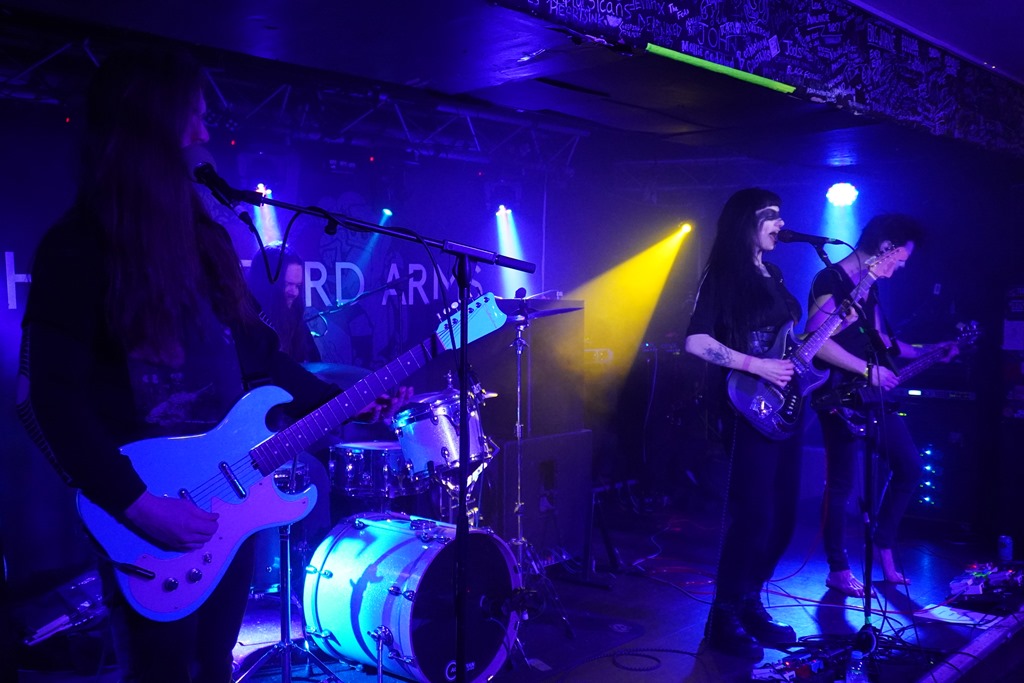
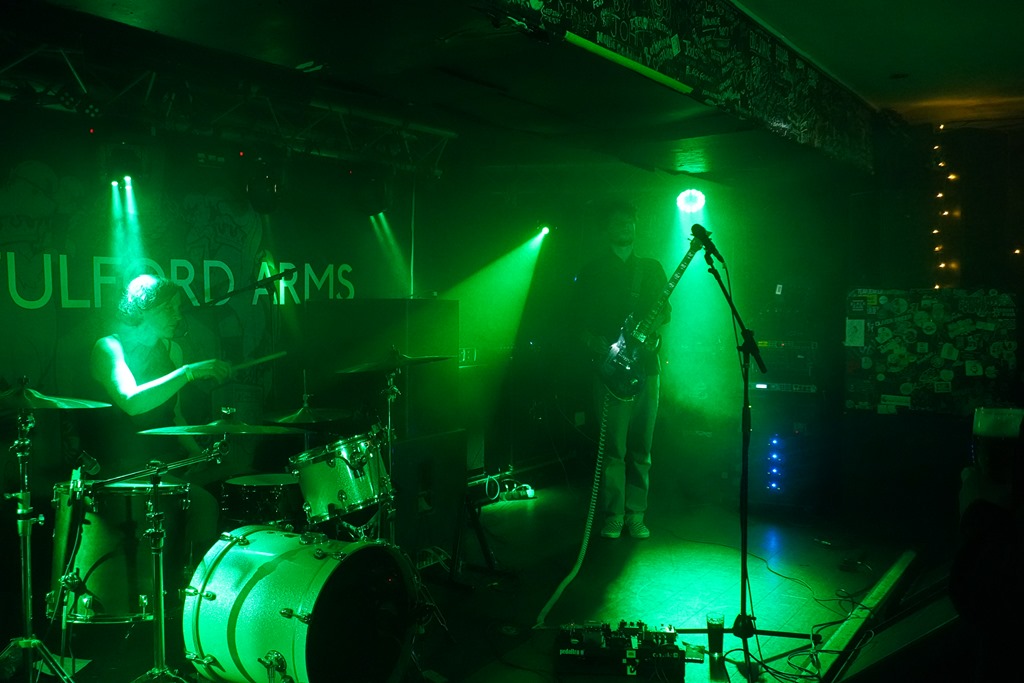
Sometimes, I get a little fixated on an idea. And the last few days, with social media and pretty much every news outlet pounding the story around the Oasis ‘dynamic pricing’ debacle, I’ve found myself viewing the gigs I attend in a slightly different light. More to the point, I’ve come to consider them in a ‘vs Oasis’ context, and so tonight, at a show presenting three local bands, where I knew a fair few people, with a few beers in me, found myself frothing enthusiastically “three bands for a fiver! And £4 pints!”. I do sometimes – often – worry about how I come across to people in social settings, but sod it. I think I’d rather be irritatingly excited than perpetually surly, and I always shut up and watch when bands are actually playing.

But enough of my social anxiety. Let’s focus on this: three bands for a fiver. £4 pints. You simply cannot go wrong. Tonight, the bands are set up on the floor in front of the stage, meaning that the 75 to 100 attendees are packed in tighter, and what could be a large space with a lot of room and not much vibe is transformed: there’s a heightened level of buzz and a real connection and intimacy in standing mere feet from the bands. If all the bands are absolute shit, you’ve paid a fiver: less than the price of a pint in many places. If one band is even halfway decent, you’re up on the deal.

Now consider forking our £150, or even £350, or even more, to see Oasis. And imagine of it isn’t the best gig of your life. You’re going to be gutted. I mean, you probably deserved it for being an Oasis fan in the first place, but I’ll keep that criticism in check for now. But imagine paying a fiver and standing close enough to the bands that you can pretty much smell them, and they’re all absolutely outstanding. So good that you think ‘I’d pay £20 for these’, and all three bands are of that standard. Imagine. We don’t all have to imagine. Sometimes, it’s possible to take a punt and be at one of those magical events. Like, imagine seeing Oasis at King Tut’s for a fiver. You’d feel like you’d won the lottery. The point is that there are little gigs like this all around the country every night of the week. And in convincing myself I should go out tonight, despite not having a stitch to wear, I found a band who really, really hit me. This is how it goes with making revelatory discoveries: you know nothing about an act, have no expectations, and are utterly blown away when they prove to be absolutely fucking awesome. But that isn’t even the best bit: the best bit is – and here’s the spoiler – that all three bands were absolutely top-drawer.

Up first were Fat Spatula, who I’ve maybe seen a couple of times and thought were decent – but tonight shows that something has happened since I last saw them. They could reasonably be described as making lively, uptempo US-influenced indie with some strong dashes of country. Their songs are infectious and fun, and. quirky, occasional nods to the sound of Pavement… But then, also a bit jazzy, a bit mathy, a bit Pixies, with sudden bursts of noise. They boast a aturdy rhythm section with 5-string bass and tight, meaty and incredibly hard-hitting drumming. The last song of the set, with its solid baseline and monster guitar-driven chorus, reminded me of DZ Deathrays. And they’re ace. And so, it proves, are Fat Spatula.

IMG_20240905_20082120240905_200423

Fat Spatula

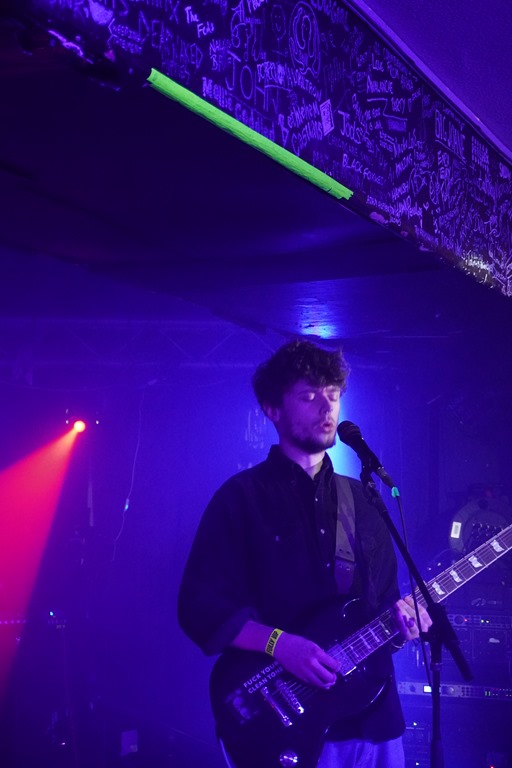
As often happens to me, and has since I started gig-going well over thirty years ago, midway through the set, some massive bugger stands.in front of me and proceeds to rock both back and forth and side to side, occasionally adjusting his man-bun. It’s usually the tallest person in the room, but the singer from Needlework is one of the tallest bastards I’ve seen in a good while and he spends the set hunched over the mic stand, from time to time plucking percussion instruments from the floor and tinkering with them, and sometimes plonking the keyboards in a Mark E Smith kind of fashion.

IMG_20240905_205416IMG_20240905_205355

Needlework

The guitarist, meanwhile, is wearing a Big Black T-short, and is a major contributor to the band’s angular sound as they collectively crank out some truly wild and wholly unpredictable mathy discord. With clanging, trebly guitar, incongruous clarinet, and monotone semi-spoken vocals… and the guts to shush audience talking in quiet segment, they’re something else. It’s jarring, Fall-like, a bit Gallon Drunk with cymbals, shaker, cowbell all in the mix more than anything, their lurching, jolting racket reminds me of Trumans Water. No two ways about it, Needlework is the most exciting new band I’ve seen in a while. Speaking to a few people after their set, I’m by no means alone in this opinion. With the right support and exposure, some gigs further afield and all the rest, their potential is immense, and 6Music would be all over them. The world needs Needlework, and you probably heard it here first, but credit has to go to Soma Crew for putting them on.

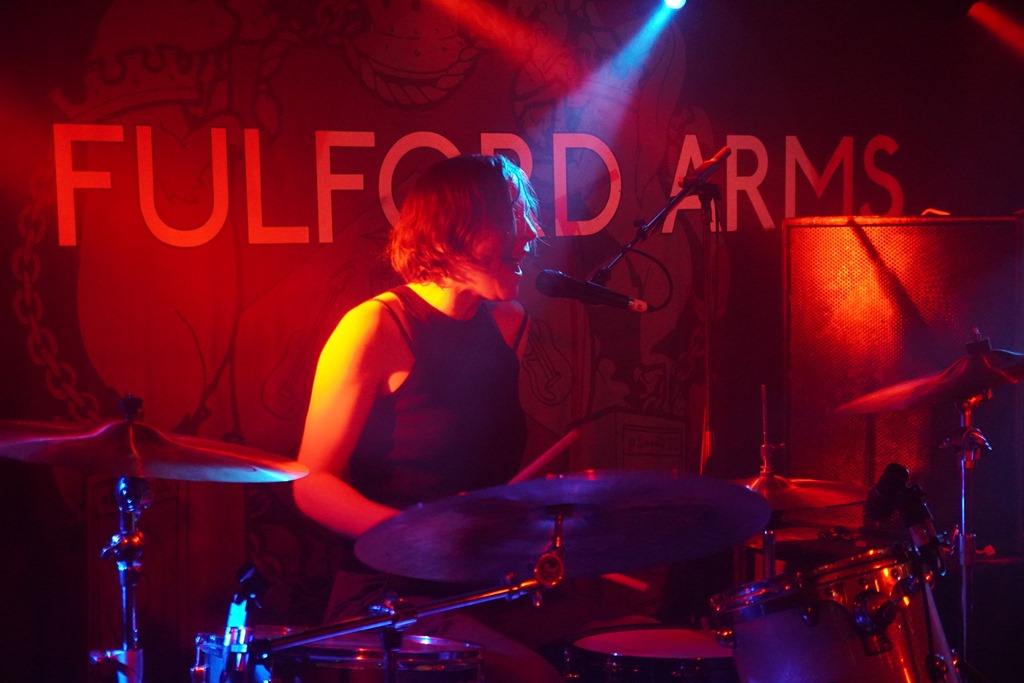
Soma Crew – go for the slow hypnotic minimal intro, admitting afterwards they they’re a shade nervous following the previous acts. They’re honest and humble, and not in a false way: it’s clear that they’ve selected support acts who will make for a good night rather than make themselves look good – but because all three acts bring something quite different, there’s none of the awkwardness of any band blowing the others away. Besides, they very quicky get over those initial nerves, and crank it up with the big psych groove of ‘Sheltering Sky’, and in no time they’re fully in their stride. New song ‘Wastelands’ is haunting, and again – as is their way – built around a nagging repetitive guitar line and pulsating motorik groove, where drums and bass come together perfectly. The four of them conjure a massive sound. At times the bass booms and absolutely dominates, while at other points, everything meshes. Bassist Chris stands centre stage sporting a poncho that Wayne Hussey would have been proud of during his stint in The Sisters of Marcy, and once again, I find myself absolutely immersed in their performance.

IMG_20240905_221249

Soma Crew

So, to return to the start: three bands for a fiver. All three provided premium-quality entertainment. Sure, people go to see heritage bands in massive venues for huge sums to hear familiar songs, but it’s a dead-end street. Where does the next wave of heritage bands with familiar songs come from if no-one goes to see the acts who are playing the small venues? Do the £350 Oasis tickets provide – to do the maths – an experience that’s seventy times better, more enjoyable than a night like this? I’m not about to prove either way, because my argument is obviously rhetorical. THIS is where it’s at if you truly love live music. And I will say it again: three bands for a fiver: cheaper than a pint in most places these days. And three great bands, at that.